
This week, we'll consider the topic of striae treatment with light therapy. We've also added our latest articles and videos on light therapy to this newsletter.
Striae are also simply known as stretch marks. These striae are scar tissue, in a sense, with narrow streaks or bands that are created in the skin because the lower skin layers are stretched or shrunk too quickly!
Bart, the author of this newsletter, has striae on the hips and shoulders. The cause is strength training and rapid weight gain at an early age. Other common reasons for striae are becoming overweight/obesity, and pregnancy, but genetic and hormonal disorders can also cause this condition.
Hope you're all having a wonderful start of 2026, and that you've made the most out of your New Year's resolutions!
Let's go:
New Review On Treating Striae With Light Therapy And Other Strategies
Just review on countering striae, which is just out - Jan 20 2026. Reviews aggregate and analyze earlier studies on a given topic. Here, the researchers looked at many different therapies for reducing striae, which apparently affect a whopping 56% of the human population somewhere on their bodies:
"Striae distensae (SD) is a common cutaneous condition with an estimated incidence of 56%, associated with rapid skin expansion, hormonal changes, and genetic factors. While traditional treatments (e.g., topical tretinoin, various lasers) exhibit limitations, non‐ablative fractional laser (NAFL), injectable fillers, alpha hydroxy acids (AHAs), and combination therapies have emerged as promising modalities, though certain aspects require clarification."
So common treatments include anything from topical compounds such as vitamin A (tretinoin), to lasers, fillers, acids, and more. And yet, lasers at 1,565 nm - a rare wavelength - turn out to be the hot treatment modality for reversing striae in this review:
"Efficacious treatments include alpha hydroxy acids, injectable fillers, 1540 nm Er:Glass laser, 532 nm Nd:YAG laser, picosecond lasers, intense pulsed light, and combination therapies (e.g., fractional microneedling/CO2 laser + PRP). 1565 nm NAFL exhibits favorable efficacy, safety, and tolerance, with enhanced outcomes in combinations."
Let's explore that statement about "Non‐Ablative Fractional Laser (NAFL)". Non-ablative here means that the underlying tissue isn't removed. And "fractional lasers" here is a type of pulsing that create controlled heat increases.
The 1,565 nm wavelength here falls in the middle-infrared (MIR) range, above the NIR that's commonly used on photobiomodulation. The MIR wavelengths of 1,927 nm and 1,940 nm are also often used for this goal, as they don't penetrate deeply like NIR and therefore create a lot more heat and/or pressure/disturbance in the skin layers, unlike NIR.
(NIR can't be used for this goal as it ventures easily into the body. NIR is therefore less useful for disturbing scar tissue! Check our wavelength/dosing guideline update for 2026 for more background info)
But back to the study. Several strategies actually work for "Striae" or "Striae Distansae" - as the skin condition is called in full. Here's what researchers write about different outcomes:
"The management of [Striae Distansae] is evolving towards individualized combination strategies. Fractional microneedling plus [Platelet Rich Plasma] and fractional CO2 laser resurfacing with PRP achieve good results in [Striae Distansae] rubra and alba, while 1565 nm NAFL represents a significant advance in minimally invasive treatment"
So the 1,565 nm MIR laser is easy to apply here, and non-invasive. Platelet-Rich Plasma (PRP) applications generally need a medical professional, for instance, as blood needs to be drawn and then processed outside the body, and finally reinjected into the tissue.
The problem with striae is that other treatment methods are imperfect. Alpha hydroxy acids (AHAs) topical products are an example here. causing exfoliation. But often these need to be applied for months straight, ideally by a dermatologists at higher concentrations. At home, AHA formulations are dosed differently and work less well.
Microneedling by a physical therapist is another strategy, but once again, you can't apply this easily on your own! The same is true for injectable fillers by dermatologists or other professionals.
Now, the researchers also write about an ablative laser, that removes tissue from the skin, at 2,940 nm and 10,600 nm. These don't work on all striae, however.
Hence, you end up with the 1,565 nm MIR lasers for striae. Here are the details of that 1,565 nm laser, and what makes it special versus, say, 810 nm or 1,060-70 nm NIR light:
"The 1565 nm NAFL's core innovation lies in its mid‐infrared wavelength (1550–1565 nm), which has a lower water absorption coefficient (5 cm−1) compared to ablative lasers like CO₂ (800 cm−1), allowing diffuse thermal effects rather than ablation . This promotes collagen synthesis via heat shock protein (HSP70) and TGF‐β pathways while inhibiting MMP‐1 degradation"
So, 1,565 nm is less well absorbed by water than the 900 - 1,100 nm range, and therefore causes more skin disturbance. If you want to treat deep tissues such as the brain or muscles, that principle is counterproductive. But if you want to disturb scar tissue, that 1,565 nm wavelength is very helpful instead!
Now, the conclusion of the researchers is complex. The 1,565 nm laser isn't the only tool in the arsenal. Instead, shockwave and Platelet-Rich Plasma (PRP) injections work really well too, as well as some other combinations. The researchers conclude by saying that:
"1565 nm NAFL promotes dermal collagen remodeling through precise thermal stimulation and shows significant advantages in improving atrophic striae, epidermal thickness, and pigment uniformity. Combination therapies (such as NAFL combined with β‐glucan or PRP) can further enhance the synergistic efficacy. In the future, it is necessary to optimize the precise matching of energy‐depth‐interval through multi‐center studies and explore artificial‐intelligence‐based personalized plans."
So a lot more research is needed. But for now, the 1,565 nm laser application, ideally by a medical professional, can help you reduce the prominence and visibility of striae! I, Bart, will potentially check this option out in the future, not only for striae around my shoulders and hips, but maybe also for old teenage acne scar tissue on the face that's visible when I don't have much of a tan.
Onward and upward, with light therapy! One more reason to be super excited for the future in this space...
Here Are Our Latest Light Therapy Insiders' Articles:
Every single article that we've published recently - you can find the videos in the article itself:
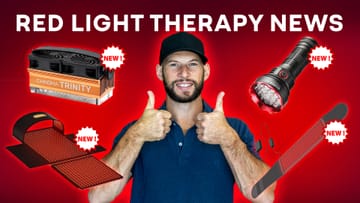
- The Exciting New Red Light Devices and Innovations Coming in 2026 - Here's the great Alex Fergus with the latest science, products, news, gossip, Q&A, and everything in between! Get the most important Jan 2026 news and updates of the industry!
- Red Light Therapy for Cognitive Performance: Exciting New Science and Practical Guidance - a huge interview by Bart with Sarah Turner, specifically on using red light therapy for things such as processing speed, memory, planning ability, willpower, etc. In short, using light therapy for cognitive performance!
- Welcome to the Light Therapy Course - the name says it all, the launch of our 100% free premium course, that digs deep into the science, how to use devices most effectively, the best protocols for many goals, and a LOT more!
- The 3 Red Light Therapy Mechanisms You Should Know About - Here's Bart's article on the 3 main mechanisms of red light therapy, and the pros and cons of that thinking style of assuming light therapy has main mechanisms in the first place. This is quite a brain breaker and recommended if you like in-depth science!
Also, Check Out Some Of Our Other Content:
Below you'll find some of our best content that you shouldn't miss:
Light Therapy Advanced Science Course (JUST LAUNCHED!)
Join Bart's 100% free advanced science light therapy course above, where he takes deep dives into many different topics, such as mechanisms, neurology (Alzheimer's, Parkinson's, etc), exercise recovery, skin beauty & rejuvenation, and much more.
Some of the topics are only published in that course, such as UV light risks and benefits, addiction, anxiety, depression, and more. So join HERE!
Red Light Therapy Buyers Guide
 Alex Fergus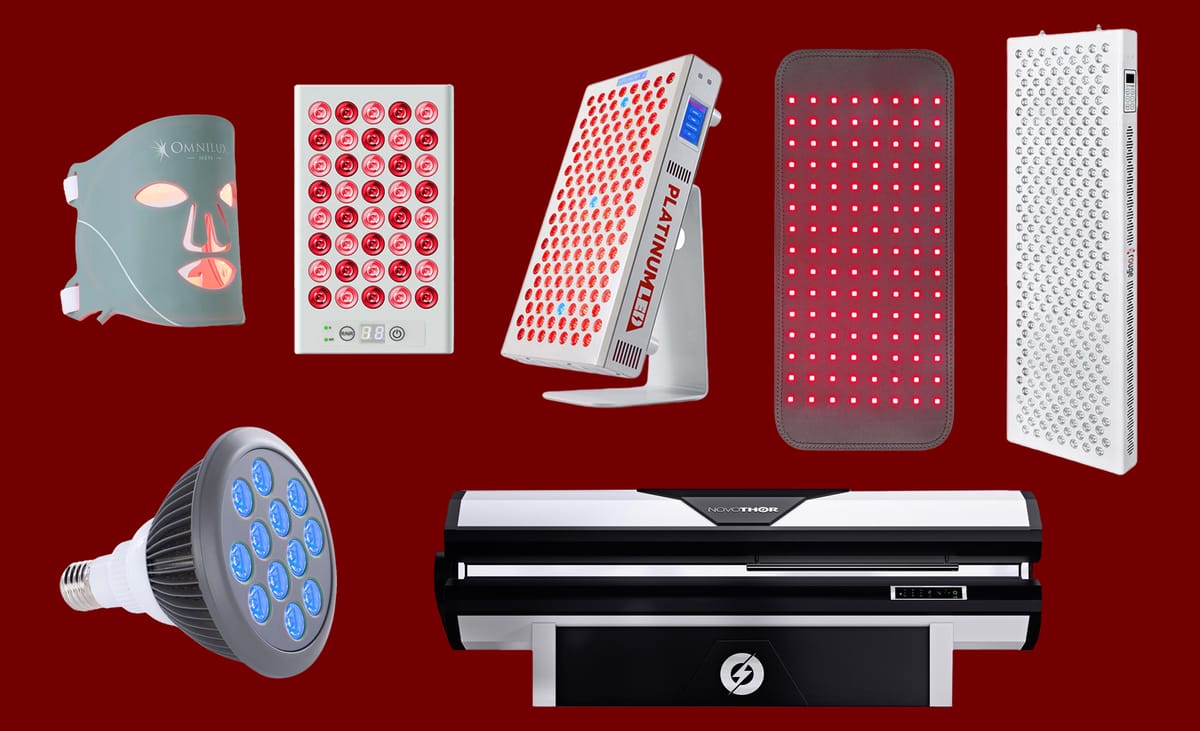
Red light therapy uses red and infrared light to achieve a biological effect. Dive into this topic and select a device that's right for you.
LED Mask Shopping Tool


My extension shopping tool compares all of the world's best (and not so good!) Red Light Masks.
How To Use Red Light Therapy 101: The Best Guide For Starters
 Alex Fergus
You have your device? Let me help you use it.
Red Light Panel Shopping Tool

My extension shopping tool compares all the world's best (and not-so-good!) Red Light Panels!
Exclusive - Discount Codes, Deals & Recommendations
 Alex Fergus
Shopping for a red light device? Use this resource to save! We've got deals for most of the big and best brands out there...