
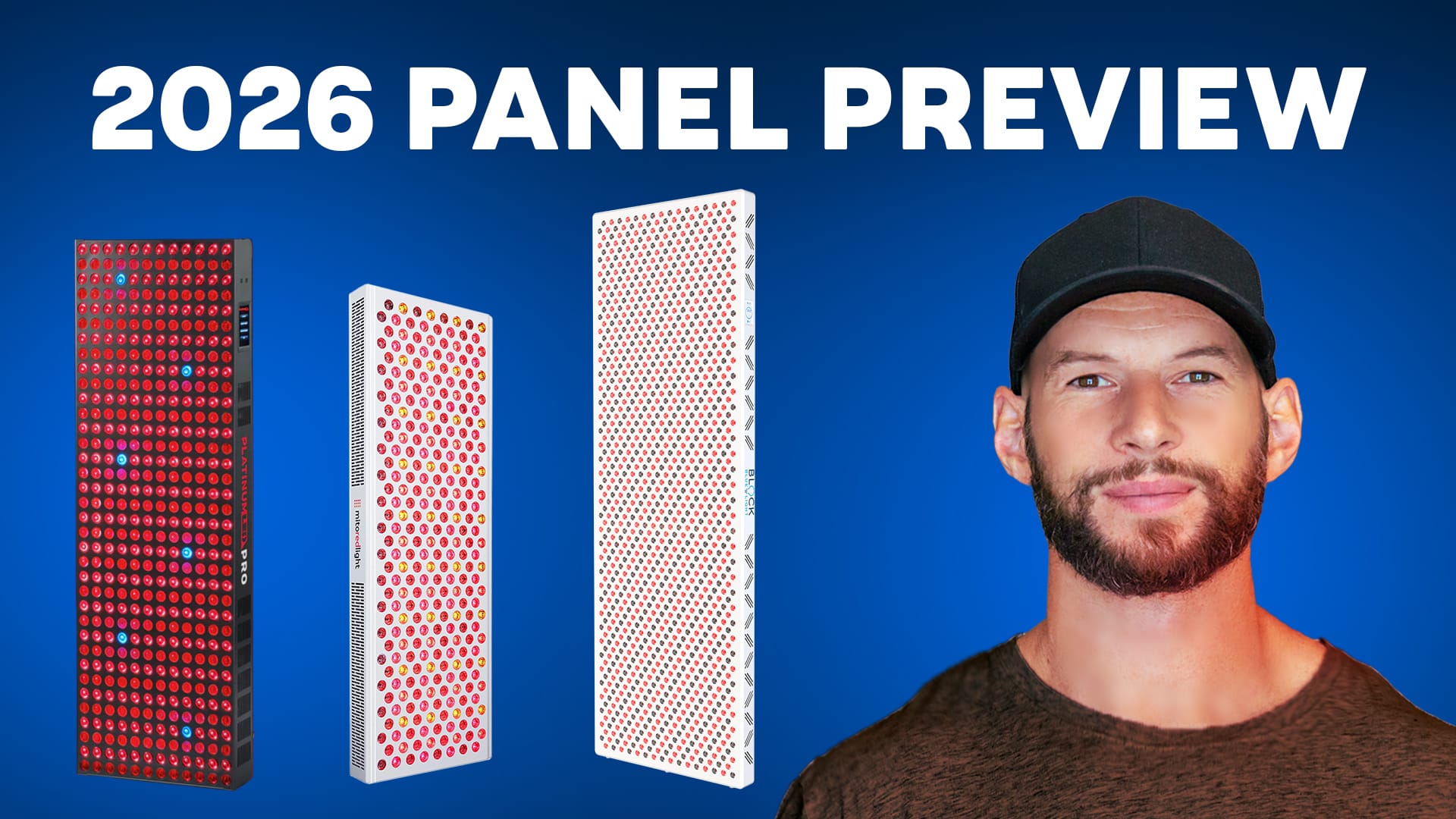
The market for red light therapy panels is shifting fast. New wavelengths, higher power outputs, smarter controls and some genuinely novel ideas are arriving as manufacturers chase both clinical credibility and consumer appeal. I follow product launches closely, I review panels, and I work with a few brands — so I try to separate marketing from meaningful upgrades. Below is a practical, no-nonsense look at what has already landed, what’s arriving in 2026, and what features actually matter when you are choosing red light therapy panels.
Why These Updates Matter
Not every spec bump improves outcomes. A shiny new wavelength or a higher wattage number can look great on a spec sheet, yet have little practical effect if the energy going to that wavelength is negligible or if the wavelength choice is poorly balanced. When evaluating red light therapy panels, think about three fundamentals:
- Wavelengths — The most clinically supported windows are around 630–670 nm and 810–850 nm. Other wavelengths can be useful, but they should not displace the bulk of the therapeutic power.
- Power density and dose — More power can reduce session time or allow treatment from further away, but there are diminishing returns. Balance matters.
- Design and usability — LED layout, user interface, pulsing options and modularity influence how often you use the panel and how effective it is for multi-panel setups.
Recent Launches (Late 2025): What To Know Now
Several brands finished 2025 with line updates that set the stage for 2026. The real question is which changes are meaningful rather than marketing gestures.
PlatinumLED Biomax Pro Series
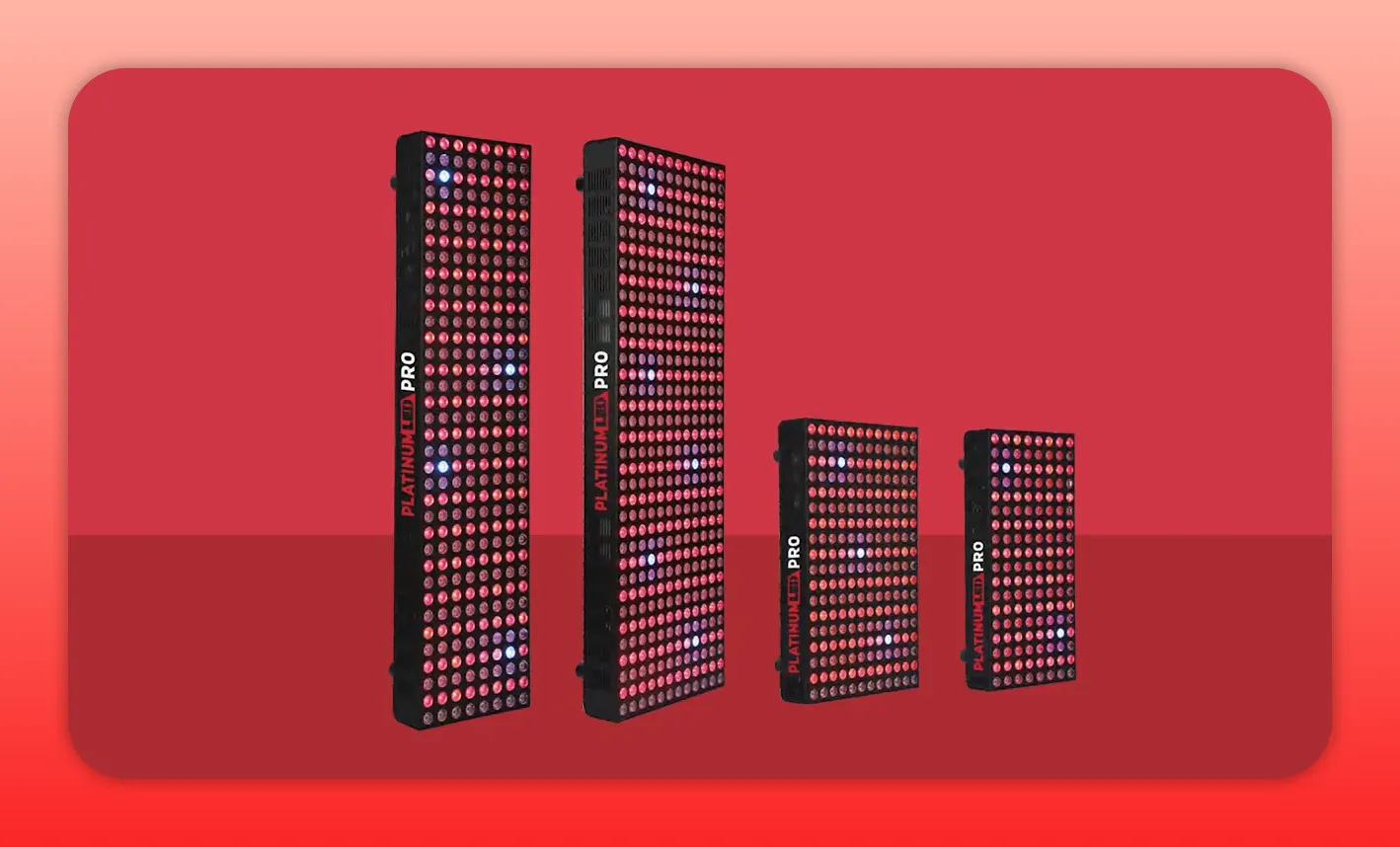
The Biomax Pro range pushed PlatinumLED’s offerings in two obvious directions: more power and more features. The company redesigned the internals and increased output, added a zero-gap LED layout that brings diodes right to the panel edge, and introduced pulsing plus more advanced controls.
Practical positives: the zero-gap design is a clear win for multi-panel setups because it minimises the dead zone where panels join. Higher power can be useful if you want shorter sessions or to treat an area from further away.
Caveats: I believe we are approaching a point of diminishing returns on raw power for consumer use of red light therapy panels. Twice over I have gone beyond what I consider necessary for typical therapeutic outcomes. Also, PlatinumLED continues to use single-chip LEDs which produce a polka-dot effect of concentrated wavelengths; some users dislike that uneven appearance. Lab data shows their 1060 nm and blue channels are very low in delivered power. Those wavelengths might be useful on paper, but as implemented they look more like box-ticking marketing features than core therapeutic additions.
Mito Red Light MTO Adapt 4.0
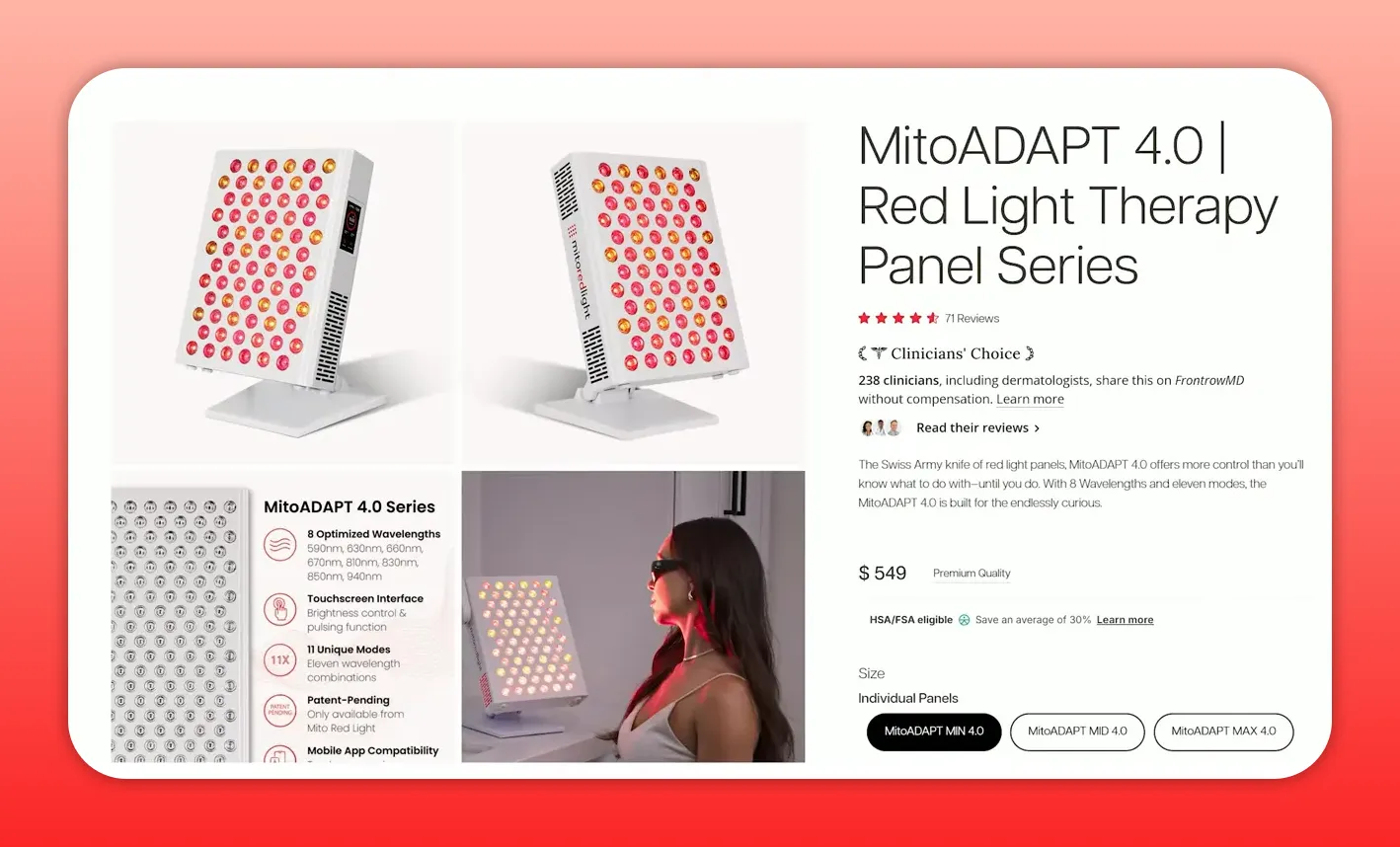
Mito’s new Adapt 4.0 introduces eight wavelengths and keeps the 590 nm amber, which can be helpful for certain skin benefits. They also added 940 nm, a relatively unique choice among consumer panels. The unit adds a touchscreen control and 11 presets.
Practical positives: the 590 nm addition is sensible for skin-focused use. The touchscreen and presets are user-friendly, and the dual-chip LED layout remains an industry standard for decent wavelength mixing.
Caveats: 940 nm is interesting, but the research base is thin compared to the core red and near-infrared windows. It may be a curiosity more than a gamechanger. If you are selecting red light therapy panels for evidence-backed outcomes, prioritise power in the cytochrome c oxidase windows (630–660 nm and 810–850 nm).
Mito 5.0 Series (EU Focus)
A European-focused fifth generation arrived with a redesigned shape, more LEDs and six wavelengths. It looks like a practical, user-focused change with slightly higher output and four preset modes.
Caveat: currently these models ship primarily inside the EU. That could change, but for US buyers this line is less accessible right now.
What’s Lined Up For 2026
Several companies are preparing significant updates. Some are incremental; others claim more radical improvements. Here are the ones to watch.
Block Blue Light: Sixth Generation
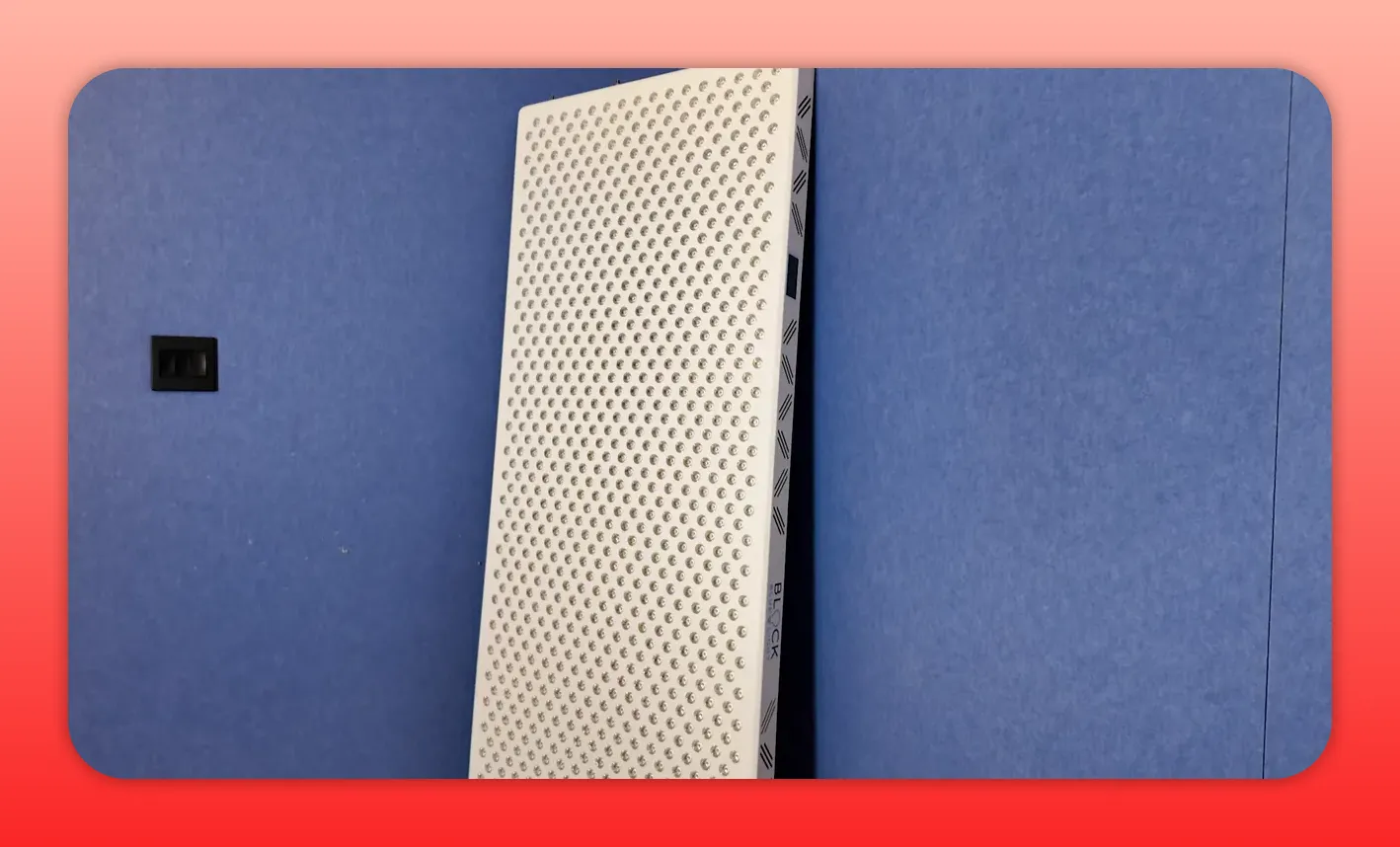
Block Blue Light quietly rolled out a sixth-generation update on one of their largest panels during Black Friday and confirmed the rest of their upgraded lineup is due in mid-2026. The headline is more power and an expansion to seven wavelengths, now including 590 nm and 640 nm.
Interesting detail: the claimed internal wavelength split appears relatively even — roughly 16–17% going to 590, 660 and 630, with 13–14% across the infrared band and about 9% to 1060 nm. Until independent testing confirms it, those percentages look promising compared with panels that add niche wavelengths at token power levels.
Why it matters: if a company maintains a sensible power distribution — prioritising the cytochrome C oxidase windows while adding measured amounts of other wavelengths — the result is a versatile, evidence-friendly panel. Block Blue Light has a strong track record of metric transparency, so their 6G range is worth watching if you want robust red light therapy panels.
Rumoured “Magic” Product
There are whispers in the industry about a company developing something truly novel — a panel that could force reviewers to rethink how panels are compared and used. Details are scarce and timelines uncertain, but expect the usual long lead time from concept to shipping. Manufacturing, testing and accreditation take months, not weeks. If it delivers on the promise, it could change certain expectations of what red light therapy panels can do.
 Alex Fergus
Other Big Players: Are They Updating?
ROUGE
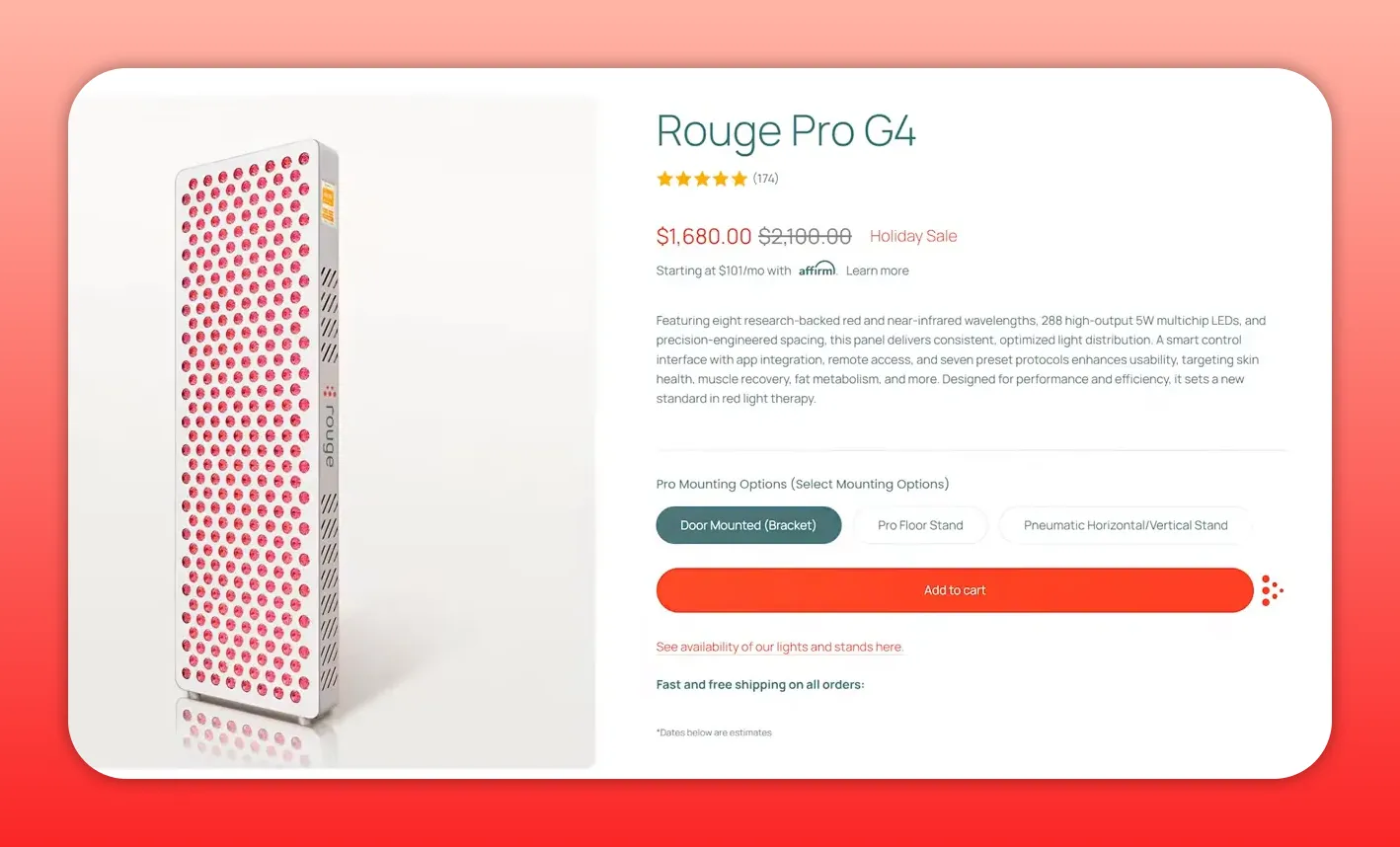
ROUGE’s G4 stood out as an excellent balance of features, wavelength control, pricing and warranty. It sold well and remains a strong option. I haven’t seen evidence of an imminent refresh; they may be content letting the G4 dominate the market for now.
Hooga

Hooga’s Ultra line represents solid value at a lower price point. There are no clear signs of an immediate new generation from them, but that does not mean work is not underway behind the scenes. As with most manufacturers, iterative development tends to run one or two product cycles ahead.
Practical Buying Advice: How To Choose Among New And Existing Panels
The upgrades in 2026 mostly fall into two categories: sensible technical improvements and cosmetic additions. Here is a checklist to use when comparing red light therapy panels.
- Prioritise Wavelength Balance: Make sure the bulk of output sits in the 630–670 nm and 810–850 nm windows. Other wavelengths are bonuses, not substitutes.
- Look For Real Power Data: Don’t rely on brand wattage alone. Look for measured irradiance at common treatment distances and data on delivered power by wavelength if available.
- Consider LED Type: Dual-chip LEDs mix wavelengths better and reduce the polka-dot effect of single-chip designs. Single-chip panels can still be effective but expect uneven visual output.
- Think Modularly: Zero-gap designs and thinner bezels make multi-panel setups more practical with less wasted space between units.
- User Interface And Presets: Intuitive controls and useful presets increase the likelihood you will use the device consistently. Touchscreens and smart-modes are now common, but implementation quality varies.
- Pulsing And Protocol Options: Pulsing is available on more panels. It may or may not be beneficial depending on the condition and the exact pulsing parameters, but it adds flexibility.
- Warranty And Support: Panels are an investment. A solid warranty and responsive support are worth paying for.
Specific Scenarios: Which Panel Type Is Right For You?
Not all buyers have the same priorities. Here are common use cases and what to favour when selecting red light therapy panels.
Short Sessions With Minimal Fuss
Look for higher irradiance across the core wavelengths. Higher power reduces session time and can be helpful for busy users. Just be mindful of the diminishing returns and safety.
Skin-Focused Use
Panels that include 590 nm and strong 630–660 nm output are appealing. For aesthetic applications, surface-targeted wavelengths and even coverage matter more than raw wattage.
Muscle Recovery And Deeper Tissue Work
Strong output in the 810–850 nm infrared window combined with decent session durations produces the best evidence for deeper tissue benefits. Panels with balanced infrared power and good irradiance at a practical distance are preferred.
Budget-Conscious Buyers
Value lines like Hooga’s Ultra are compelling. Prioritise wavelength balance and warranty over flashy extras you might never use. A slightly slower panel with the right wavelengths will often deliver better results than a cheaper, gimmicky model.
Common Misconceptions And Marketing Red Flags
The market contains noise. Here are a few claims to treat skeptically when shopping for red light therapy panels.
- “More watts = better results”. Not always. Dose and wavelength matter more than raw wattage numbers. Excessive power can be a solution in search of a problem.
- “Unique wavelength X is essential”. Novel wavelengths can be interesting, but their benefits must be supported by credible evidence and adequate delivered power.
- Token wavelengths. When a brand adds a new wavelength but sacrifices power to the core wavelengths, the addition can be cosmetic rather than functional.
- Opaque testing. Legitimate brands publish irradiance measurements and test data. Lack of transparency is a reason to be cautious.
My Practical Recommendations
If you already own a well-built panel from a reputable brand and it covers 630–670 nm and 810–850 nm with reasonable irradiance, you likely do not need to upgrade yet. If you are buying new in 2026:
- Prioritise panels that clearly report measured output by wavelength and distance.
- Consider zero-gap or thin-bezel designs if you plan multiple panels.
- Choose dual-chip or mixed LED architectures for more even wavelength mixing unless you prefer a specific single-chip layout.
- Be skeptical of panels that advertise rare wavelengths but provide negligible power to them.
Looking Ahead: What I Want To See In Next-Gen Panels
My wishlist for future red light therapy panels focuses on practical gains:
- Clear, independent power-by-wavelength data that consumers can easily compare.
- Better mixing of wavelengths to avoid spotty coverage on skin.
- Smarter dosing tools built into the panel or companion apps so users get appropriate doses for different goals.
- Modular systems with minimal dead space between panels to build coverage without gaps.
- More focus on affordable panels that still prioritise the evidence-backed wavelengths and sufficient irradiance.
Final Thoughts
2026 looks set to bring incremental improvements across the board for red light therapy panels, with a few potentially meaningful upgrades from brands that prioritise measured performance. The most valuable changes will not be exotic wavelengths or headline wattages but sensible distribution of power across the proven red and near-infrared windows, improved panel layouts, better transparency and user-friendly controls.
If something genuinely novel appears — a panel that changes how we think about dose, wavelength mixing or clinical application — it will be worth a closer look. Until then, focus on wavelength balance, transparent testing and practical usability when choosing a panel.
What would you include on your dream wishlist for the next generation of red light therapy panels?
Found This Interesting? Look At These Articles
🔴 The Red Light Therapy Facial Fat Loss Link: Myth Or Reality?
🔴 Does Red Light Therapy Help Scars? The Science
🔴 Red Light Therapy For Skin: Beauty Benefits, Potential Complications, And More
🔴 Psoriasis With Red Light Therapy: Potential Game-Changer?
Have You Seen These Reviews
🔴 Rouge G4 Pro Review: Most Advanced Red Light Panel Yet?
🔴 Best Red Light Panel Yet? Block Blue Light Mega Review
🔴 $800 Red Light Mask Has Lasers… But Why?
🔴 Omnilux Contour Mask Review: Still Worth It in 2025?
Alex's Bio
Alex Fergus wrote this blog post. Alex is an ISSN Sports Nutrition Specialist, Fitness Professional, and certified Superhuman Coach who continues to expand his knowledge base and help people worldwide with their health and wellness. Alex is recognized as the National Record Holder in Powerlifting and Indoor Rowing and has earned the title of the Australian National Natural Bodybuilding Champion. Having worked as a health coach and personal trainer for over a decade, Alex now researches all things health and wellness and shares his findings on this blog.