
So a super important study just came out - Jan 2026 - on using red and NIR in indoor lighting. We'll take a deep dive into that study today, specifically on visual performance.
We've also added our latest articles, course updates, and much more below!
Human Visual Performance And Indoor Lighting Study: Why You Need Red And Near Infrared (NIR) Light
Earlier in 2025, a major study by Prof Glen Jeffery showed that light penetrates the thorax. Now, the same professor has a new study on indoor lighting and visual performance.
The abstract of the study showcases really well what's at stake here, and why you may want to supplement your indoor lighting with red and NIR. Let's break that abstract down line by line:
"The 420–450 nm dominant in LEDs suppresses respiration while deep red/infrared (670–900 nm) increases respiration in aging and some diseases including in blood sugar regulation.
Yes, the same researchers also concluded earlier that 670 nm red shone on the upper back lowers blood sugar levels. But in this new study, the researchers go a step further:
Here we supplement LED light with broad spectrum lighting (400–1500 nm+) for 2 weeks and test colour contrast sensitivity. We show significant improvement in this metric that last for 2 months after the supplemental lighting is removed. Mitochondria communicate across the body with systemic impacts following regional light exposure. This likely involves shifting patterns of serum cytokine expression, raising the possibility of wider negative impacts of LEDs on human health particularly, in the elderly or in the clinical environment where individuals are debilitated. Changing the lighting in these environments could be a highly economic route to improved public health."
Basically, you supplement indoor lighting with red and NIR, with an incandescent bulb. This then leads to improvements in visual accuracy with regard to eye health. That effect lasts, even if the supplemental lighting is removed, for up to 2 months.
Most indoor LEDs have the huge problem that they only supply the body with light peaking near the blue wavelengths. That light can be considered unhealthy in a way, even during the day, because the blue light is never counterbalanced by much red, and often zero NIR.
As you may know, red and NIR are always present in sunlight when blue is present. In the morning, red and NIR are even predominant and there's less blue light available, on a relative basis. By the way, if you want more info on this topic, check:
 Alex Fergus
The researchers state what the problem is with isolated blue light exposure, such as 420 nm light - present in many indoor bulbs:
" Short wavelength exposure in animals in the range of 420–450 nm reduces mitochondrial function, which provides the energy for physiological performance in the form of adenosine triphosphate (ATP). This short wavelength light reduces mitochondrial complex activity and ATP production, in a highly conserved manner. Hoh Kam et al. showed a significant decrease in mitochondrial enzymatic activity in fruit flies for complexes I-IV under 420 nm light"
So, mitochondrial function goes down with this blue light. And you don't have the healing red and NIR wavelenghts to counterbalance that mitochondrial effect.
The researchers state other effects, such as weight gain and eye damage as well, with this exposure - again, the full text is free to read. Fruit flies live shorter when exposed to blue light, with a whopping 50% reduction compared to complete darkness.
But let's go into the study. This study was carried out in England during the wintertime, when it's cloudy and dark most of the time outdoors. Here's the indoor lighting exposure of the study participants:
"Subjects worked approximately 8 h a day 5 days a week and travel to and from work via public transport that was illuminated by LED devices. Most subjects did not leave the building in which they worked during the working day in these months. For those that did it was commonly for less than 15 min at lunch time. Within the work environment subjects were free to move around. Here the internal lighting they experienced was consistently LED based. Hence, natural daylight exposure during this latter part of the year was limited. We could not control for weekend exposure, however subjects homes were consistently illuminated with LEDs and because the weather in the UK at this time of year is inclement, their time outside buildings can be expected to be limited."
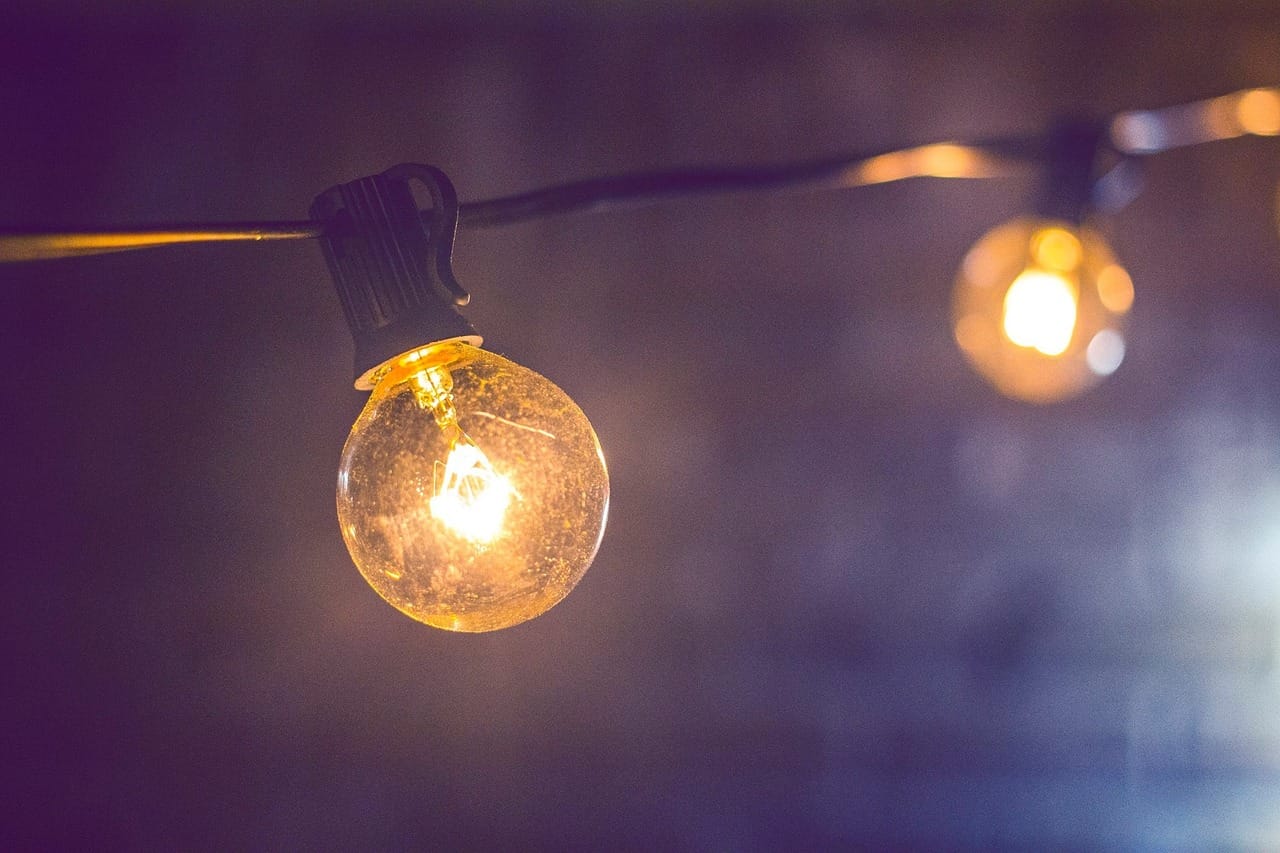
The researchers then introduced the old-fashioned Edison incandescent lamps near the desk of the participants. That light bulb is shown at the top of this article. These are the heat-producing lights that emit lots of red and NIR, but also MIR and FIR - and hence you feel that light as heat on your skin. Here's the very simple study setup:
"They were given the incandescent lighting for 2 weeks and, while they spend the majority of their time working near these lights, they were free to move around and leave their desks as they wished. The introduced light showed a high degree of reflectance from the work surfaces."
Easy peasy...
And here you can see the original working environment of these study participants, with the fluorescent lighting that emits similar wavelengths as most modern LED bulbs:

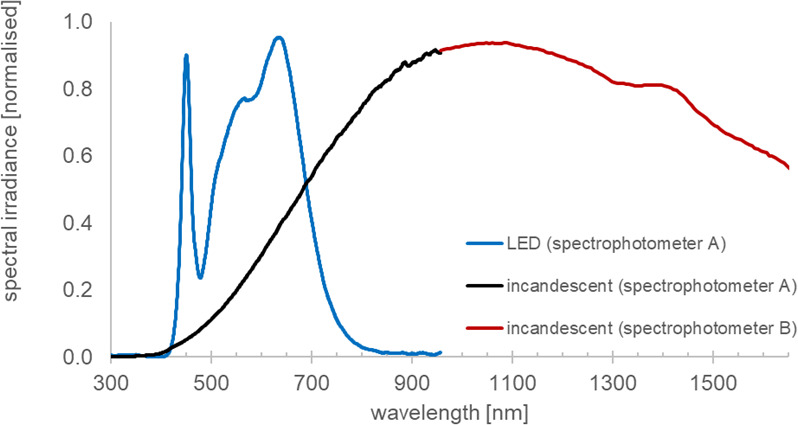
Next up, here's the light spectrum of the new incandescent bulbs, versus the fluorescent (made from LEDs here, apparantly) overhead light:
Then, the most shocking outcome of the study was THIS:
"Exposure to 60 W incandescent luminaires, which have a wider spectrum than LEDs extending into the infra-red1, resulted in significant improvements in visual performance in all experimental subjects across both the protan and tritan visual ranges. Improvements in both tritan and protan were of the order of 25%. Hence, significant improvements were uniform across visual ranges"
You can see that color vision improves for 2 weeks, and then drops off slightly at week 4 and 6, when the incandescent lighting was no longer present:
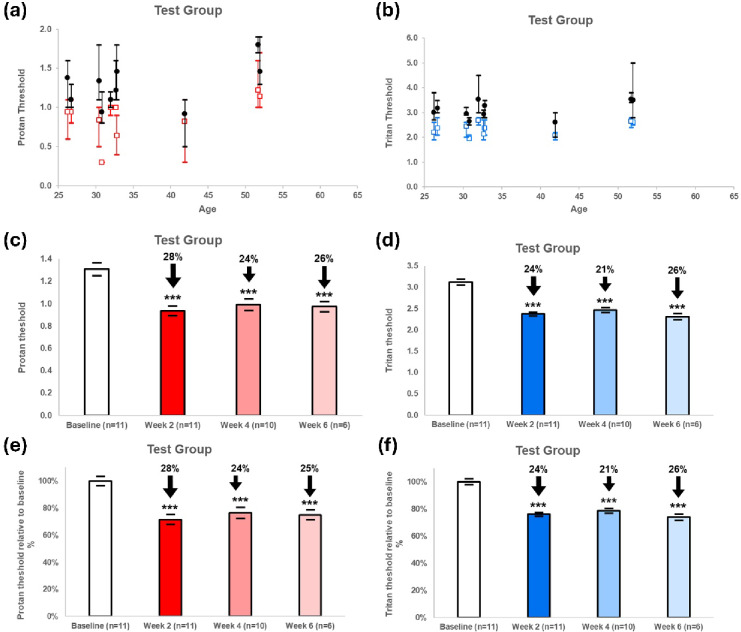
These results of introducing incandescent lighting into the indoor working environment thus lasts for weeks, even if the lighting is removed. This is great, as it entains, through biological mechanisms, that the mitochondria may not be the only active pathway here, but other ones such as transcription and growth factors. And, the control group didn't have this improvement - so there's that.
The implications?
The researchers are quite critical although diplomatic - and write:
"Likewise, development of the Edison filament luminaire, common until approximately the year 2000 had a spectrum similar to sunlight. However, around 2010 LED lighting with its highly restricted spectrum (350–650 nm) and energy saving characteristics became common, resulting in a loss of infrared light in the built environment"
Sure, that makes sense. If all of our ancestry your and my ancestors were exposed to full spectrum light mostly, or red/NIR-rich campfire, it's a different dynamic with LED indoor lighting.
This is thus a sign that blue-green-only LED lighting may be harmful and is ideally counteracted by red and NIR.
Want a simple solution here?
Use the Block Blue Light indoor SAD lamp, which is lightyears ahead of most of the competition, when you're working indoors in an office all day. Alex has created a great review of this device below:
 Alex Fergus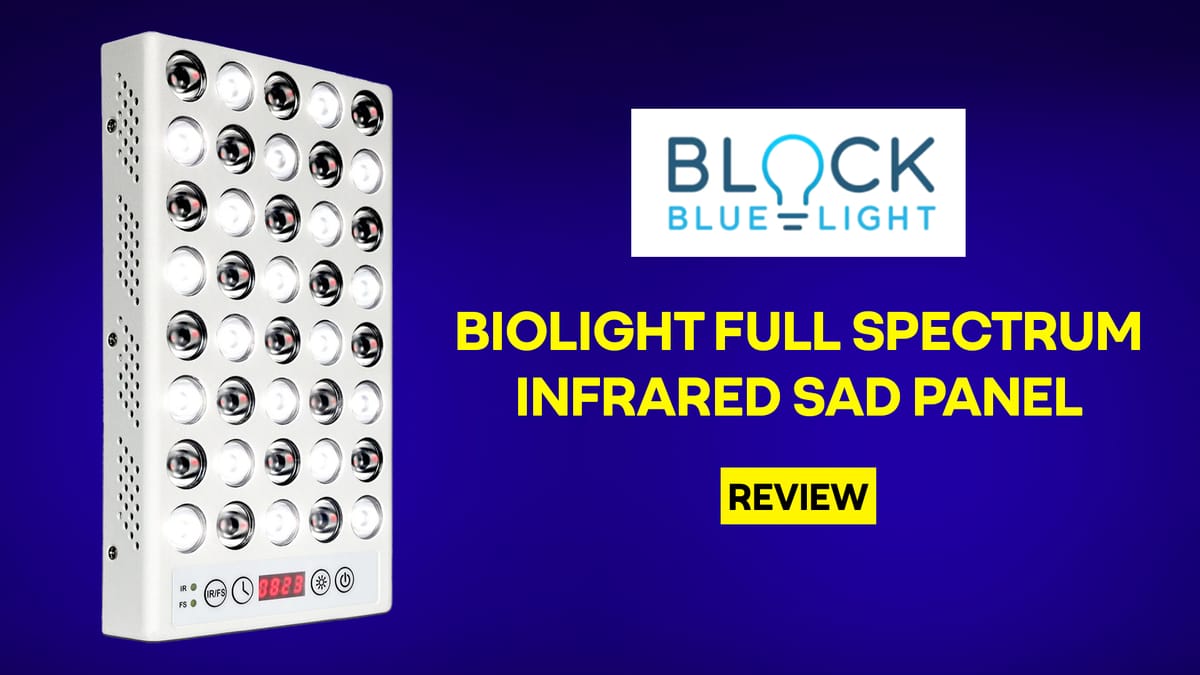
You can also try your local warehouse or online shop for incandescent or halogen bulbs - these are great too. Want an even deeper dive? Check the free full text of the study - as the discussion section contains many more implications about the light therapy!
Here Are Our Latest Light Therapy Insiders' Articles:
Every single article that we've published recently - you can find the videos in the article itself:
- The Biggest Red Light Buying Regret (And How to Avoid It) - Alex tells all about his biggest regrets with light therapy after almost 10 years of experience! I (Bart) still know talking to Alex about this topic in 2017, and since then, it's become the niche that we work in every day. Hint: Be careful buying a small device because you may eventually regret it!
- Can Red Light Really Improve Oral Health? - This is Bart's deep dive, into light therapy for dentin hypersensitivity, injection pain, and periodontitis, with light therapy. All the important studies on these topics are covered here!
- The Exciting New Red Light Devices and Innovations Coming in 2026 - Here's the great Alex Fergus with the latest science, products, news, gossip, Q&A, and everything in between! Get the most important Jan 2026 news and updates of the industry!
- We just released 2 new episodes in our light therapy course, that's 100% free and taught by Bart. Check out that course HERE - these are episodes on UV light and oral health.
- Red Light Therapy for Cognitive Performance: Exciting New Science and Practical Guidance - a huge interview by Bart with Sarah Turner, specifically on using red light therapy for things such as processing speed, memory, planning ability, willpower, etc. In short, using light therapy for cognitive performance!
- Welcome to the Light Therapy Course - the name says it all, the launch of our 100% free premium course, that digs deep into the science, how to use devices most effectively, the best protocols for many goals, and a LOT more!
Also, Check Out Some Of Our Other Content:
Below you'll find some of our best content that you shouldn't miss:
Light Therapy Advanced Science Course (JUST LAUNCHED!)
Join Bart's 100% free advanced science light therapy course above, where he takes deep dives into many different topics, such as mechanisms, neurology (Alzheimer's, Parkinson's, etc), exercise recovery, skin beauty & rejuvenation, and much more.
Some of the topics are only published in that course, such as UV light risks and benefits, addiction, anxiety, depression, and more. So join HERE!
Red Light Therapy Buyers Guide
 Alex Fergus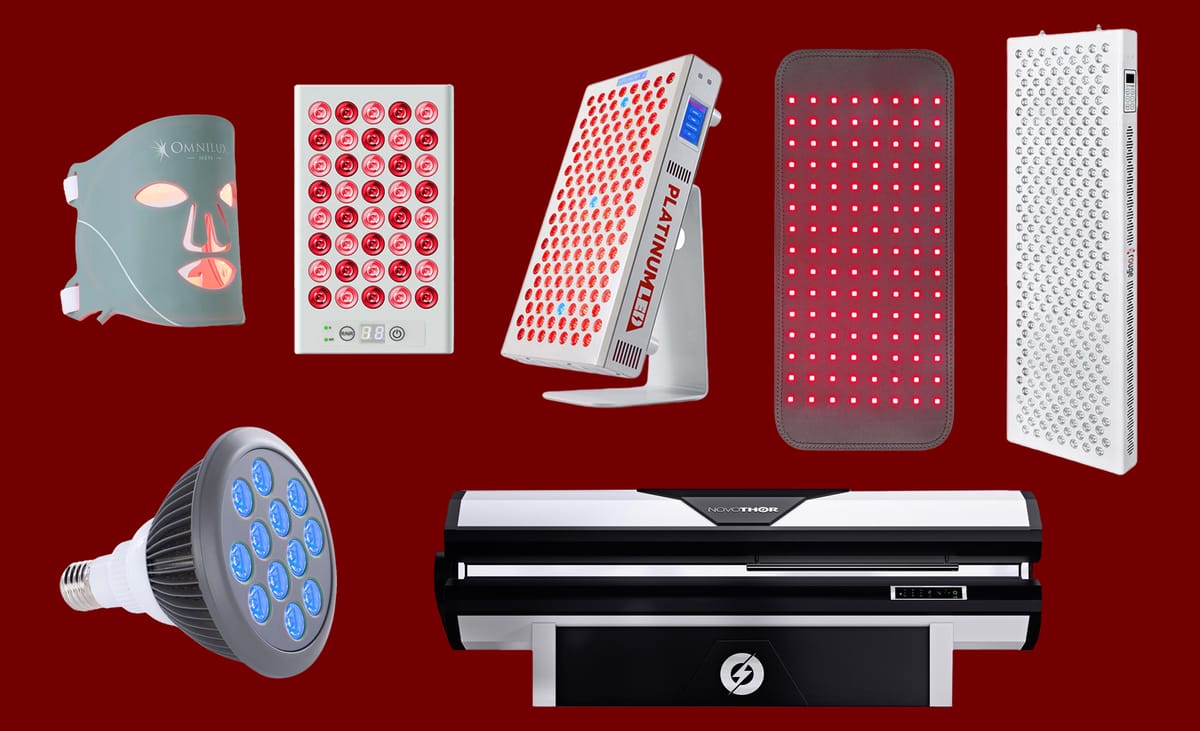
Red light therapy uses red and infrared light to achieve a biological effect. Dive into this topic and select a device that's right for you.
LED Mask Shopping Tool

My extension shopping tool compares all of the world's best (and not so good!) Red Light Masks.
How To Use Red Light Therapy 101: The Best Guide For Starters
 Alex Fergus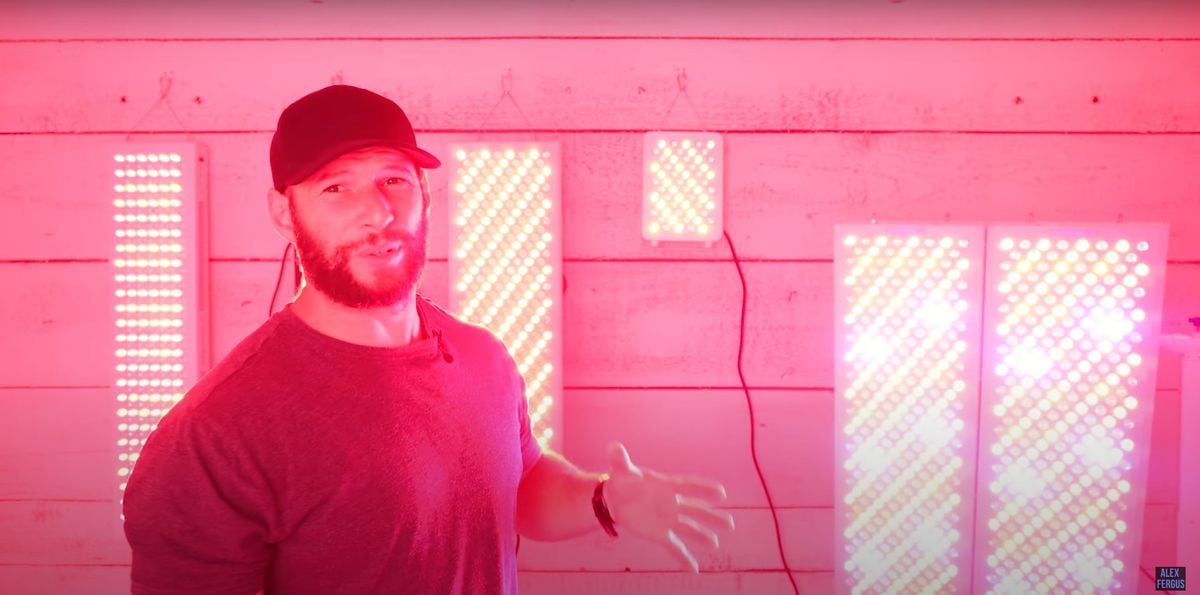
You have your device? Let me help you use it.
Red Light Panel Shopping Tool

My extension shopping tool compares all the world's best (and not-so-good!) Red Light Panels!
Exclusive - Discount Codes, Deals & Recommendations
 Alex Fergus
Shopping for a red light device? Use this resource to save! We've got deals for most of the big and best brands out there...