
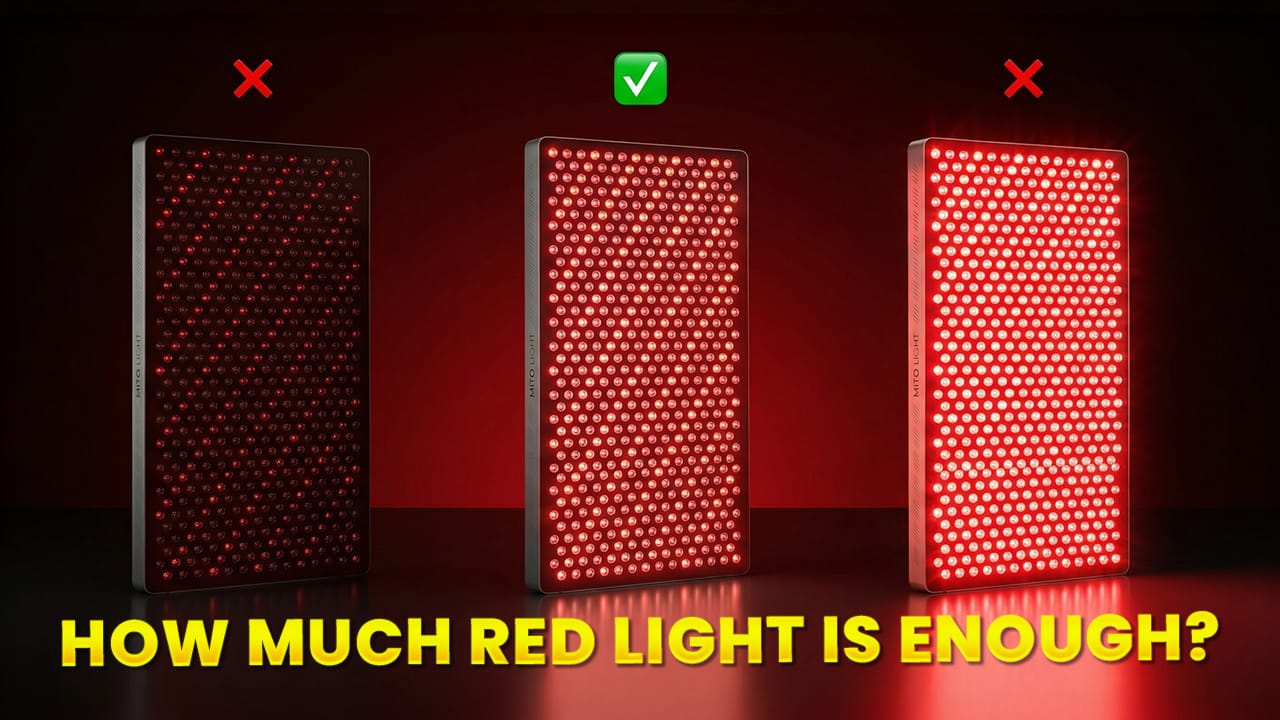
Red light therapy works, but the how and how much are more complicated than most summaries make them sound. The core idea is simple: dose matters, wavelength matters, and both vary by goal and by person. Below, I break down the key concepts in plain English, show how to convert device outputs into usable doses, and give practical starting guidelines you can adjust based on your response.
Red Light Dosing & Wavelengths Explained Simply
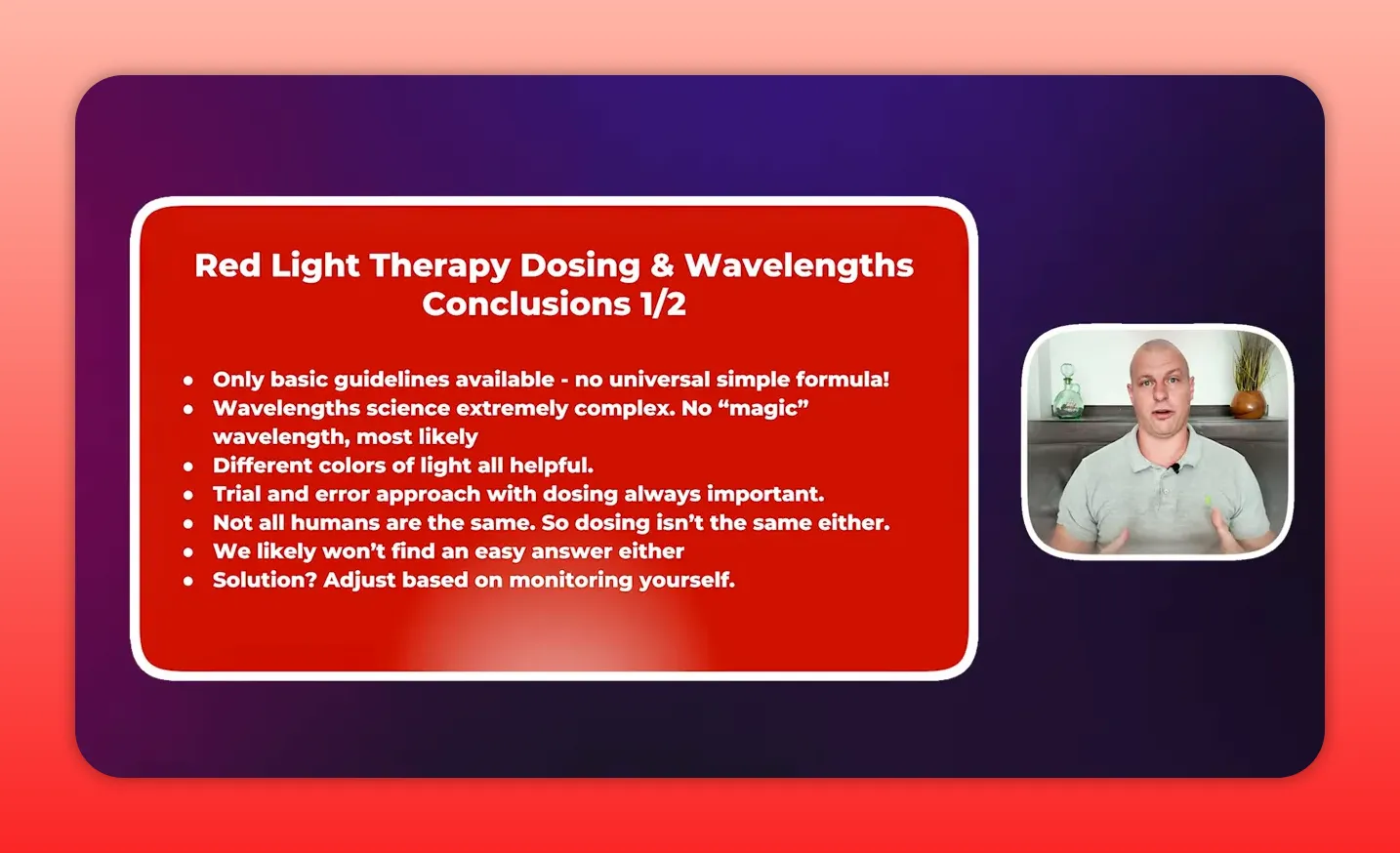
Quick overview — what to take away
- Dosing is a starting point, not a law. Use recommended joules per cm² as a beginning, then tweak up or down depending on results.
- No single magic wavelength. Some wavelengths (810 nm, 1064 nm, etc.) have more studies behind them, but multiple wavelengths often work better together.
- Measure and calculate. Device output (mW/cm²) tells you how long to treat to reach a target energy (J/cm²).
- Full-spectrum exposure is valuable. Sunlight plus panels that include blue, green, amber, red and near-infrared cover more biology than red/NIR alone.
Why dosing matters
Treating with light is like taking a medicine: too little and you get no benefit; too much and you can provoke unpleasant effects. Because humans are biologically diverse, there isn’t one dose that’s perfect for everyone. The sensible approach is:
- Start with a reasonable guideline for your goal.
- Track outcomes for several weeks.
- If you see adverse effects (for example, headaches), reduce dose or session length.
- If you see no benefit after a fair trial (2–4 weeks), consider increasing dose, session length, or frequency.
How dosing is reported — mW/cm² → J/cm² (the practical maths)
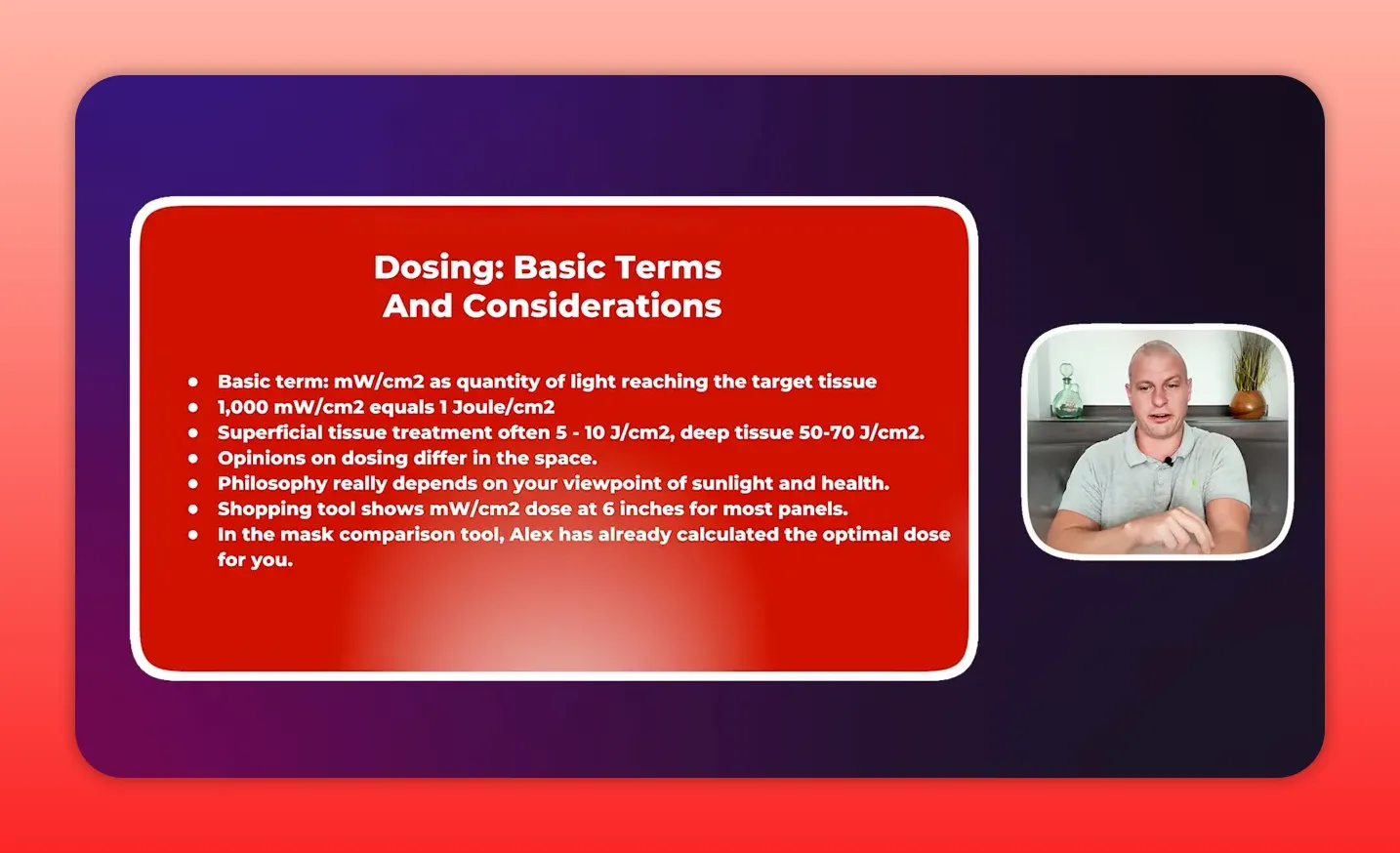
Device outputs are commonly measured in milliwatts per square centimetre (mW/cm²). Energy delivered equals power times time, so to convert to the energy dose you want (joules per cm² or J/cm²):
J/cm² = (mW/cm² × seconds) / 1000Concrete examples make this simple:
- If a panel emits 1000 mW/cm² (which is 1 W/cm²), then 1 second of exposure delivers 1 J/cm².
- If a panel emits 100 mW/cm², it takes 10 seconds to deliver 1 J/cm² (because 100 × 10 = 1000).
- If a panel emits 100 mW/cm², one minute (60 s) delivers 6 J/cm² (100 × 60 / 1000 = 6).
Common starting ranges (use as starting points)
- Superficial targets (skin, shallow wounds): 5–10 J/cm² per session is a common starting range.
- Deeper tissues (muscle, joint, brain penetration goals): 50–70 J/cm² is often cited, though some practitioners recommend higher values for specific goals.
These are broad guidelines. You will see different figures across studies and experts—some recommend much lower doses, others higher (even up to 100 J/cm² for specific deep targets). The right answer depends on the goal, device output, wavelength, and the individual.
Discount Codes & Deals
Wavelength ranges and basic effects
Wavelength determines which molecules and photoreceptors respond. Here are the practical bands to recognise:
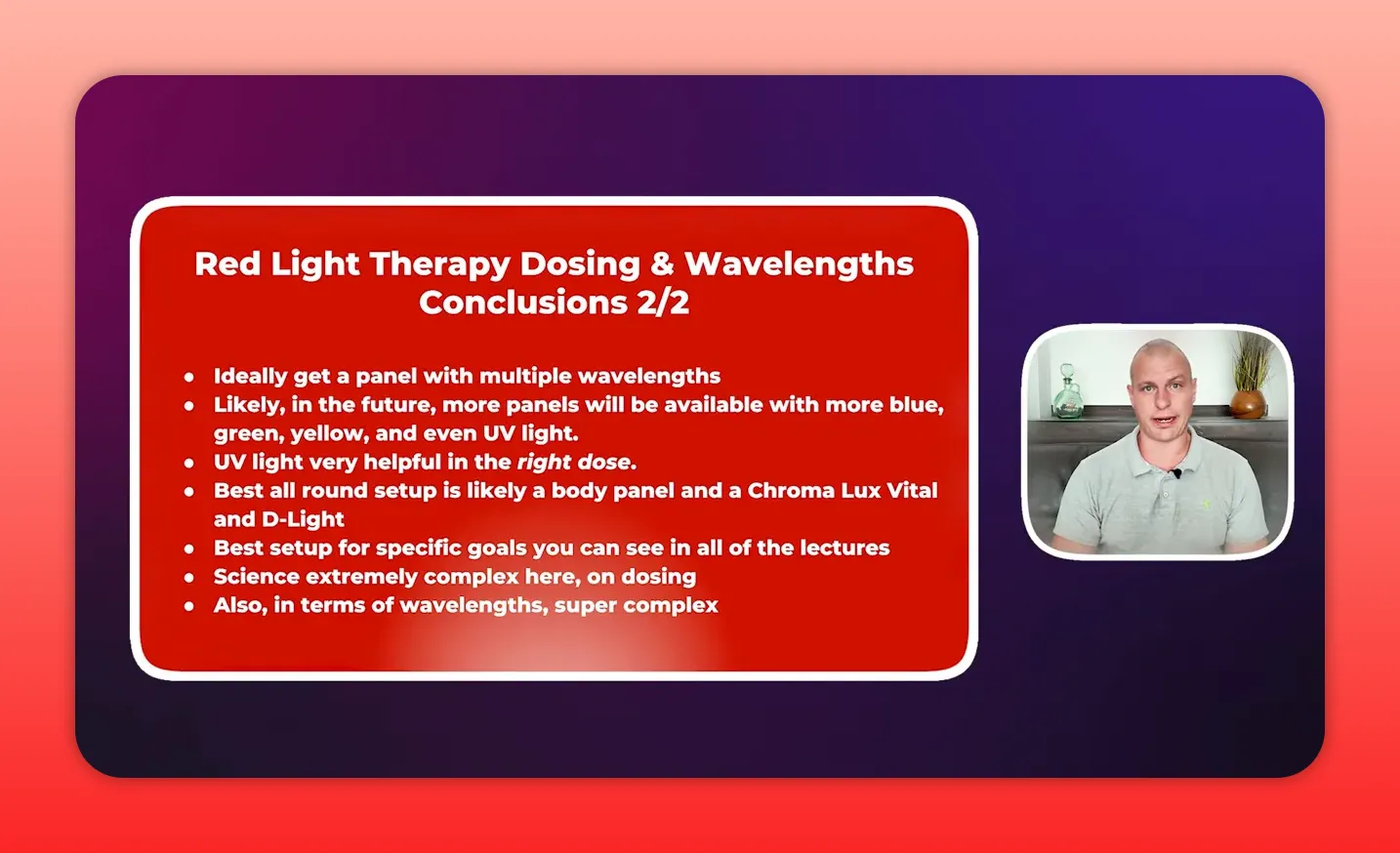
- Ultraviolet (UV): <400 nm — strong effects on skin and melanin; use cautiously and build dose slowly.
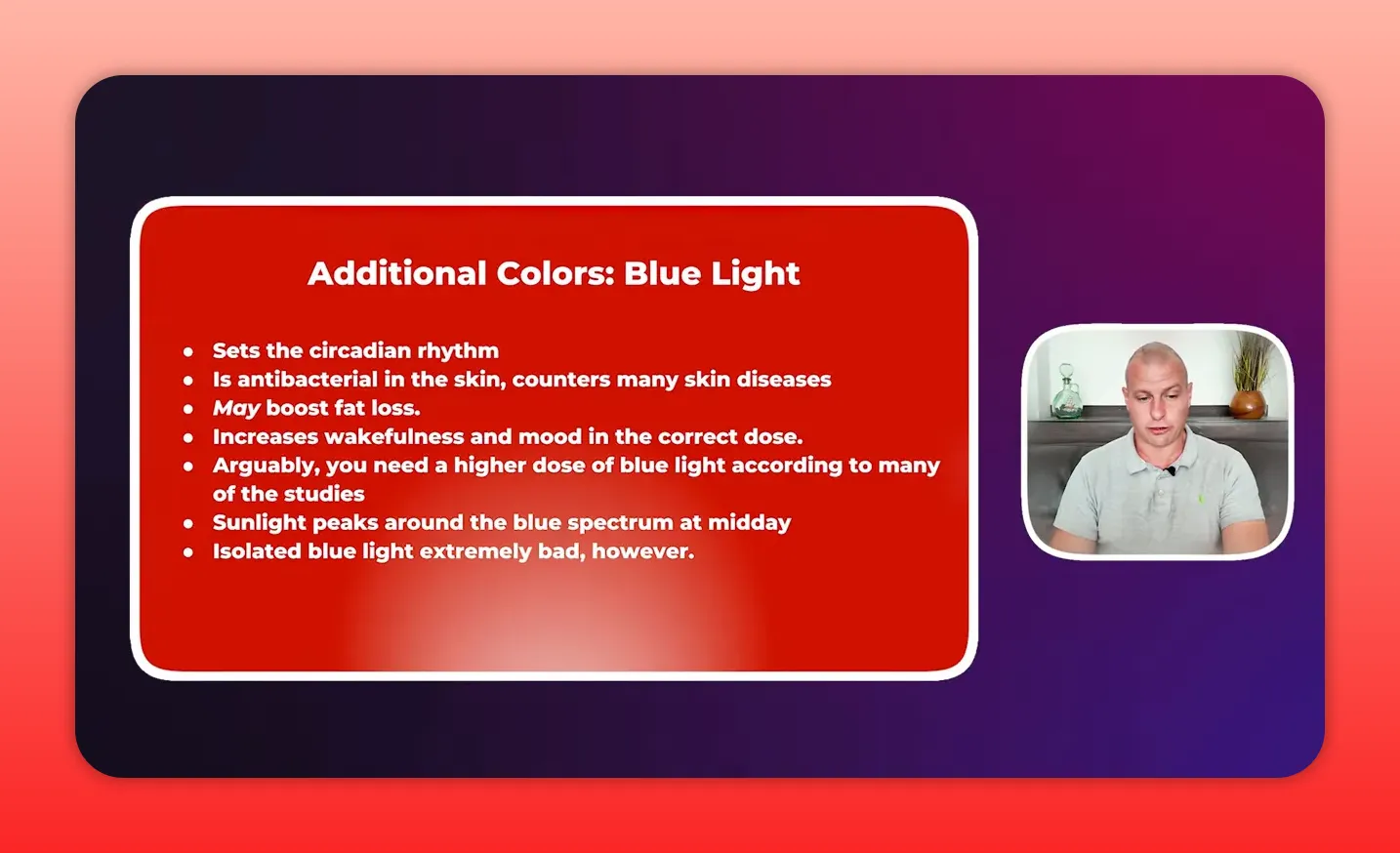
- Blue / Violet: ~400–500 nm — circadian signalling, antimicrobial effects on skin, mood/wakefulness when used during daytime; avoid heavy exposure before bed.
- Green / Amber / Yellow: ~500–600 nm — emerging evidence for pain reduction, circulation, metabolism and some eye/skin effects.
- Red: ~600–700 nm — classic photobiomodulation effects in skin and shallow tissues.
- Near-infrared (NIR): ~700–1100 nm — deeper tissue penetration; many clinical studies use 810 nm, 830 nm, 850 nm and also longer NIR wavelengths like ~1064 nm or 1070 nm.
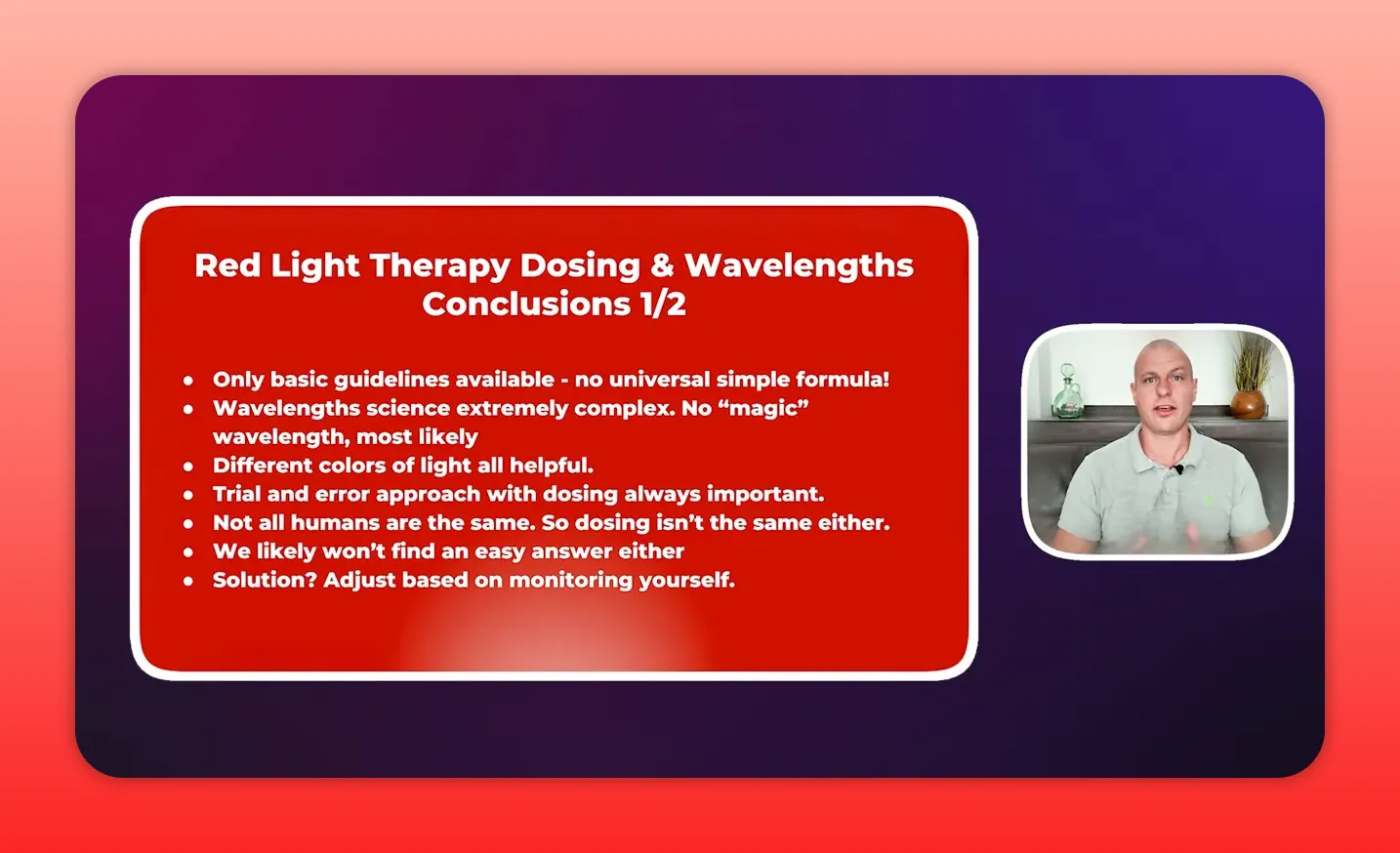
Important note: no single wavelength does everything. Some wavelengths have far more published studies (810 nm is heavily studied). But different wavelengths trigger different receptors and pathways, so combining wavelengths often gives broader benefits.
Blue, green, amber and UV — short notes
- Blue light — strong for setting circadian signals via the eyes and skin, has antimicrobial effects for skin conditions such as acne, can boost alertness and mood during daytime. Avoid blue exposure close to bedtime.
- Green light — early evidence suggests benefits for pain reduction, headaches, fat loss and circulation. Research is smaller but growing.
- Amber/yellow — emerging for skin health, metabolism and even hair/eye benefits; some manufacturers now include stronger amber bands.
- UV — powerful effects on skin and melanin but carries burn risk. If using UV therapeutically, build exposure gradually and use devices designed for controlled dosing.
Why things are more complex than a simple formula
Biology is not the physics of falling objects. Human variation (muscle fiber composition, mitochondrial coupling, skin pigmentation, age, condition and many other factors) means responses differ between individuals. Examples:
- Some people develop headaches from an initial brain-targeted protocol; lowering session length can solve this and allow gradual increases later.
- Symptoms can return when treatment stops; many conditions benefit from ongoing, repeated sessions like a regular habit—similar to exercise.
- Different goals (Alzheimer’s, Parkinson’s, osteoarthritis, muscle recovery) have different dose ranges reported in studies; the best evidence-based dose for each goal requires reviewing the specific literature.
Practical shopping and setup tips
- Look for multi-wavelength panels. Panels that combine red and NIR — and ideally include some blue/green/amber options — cover more pathways.
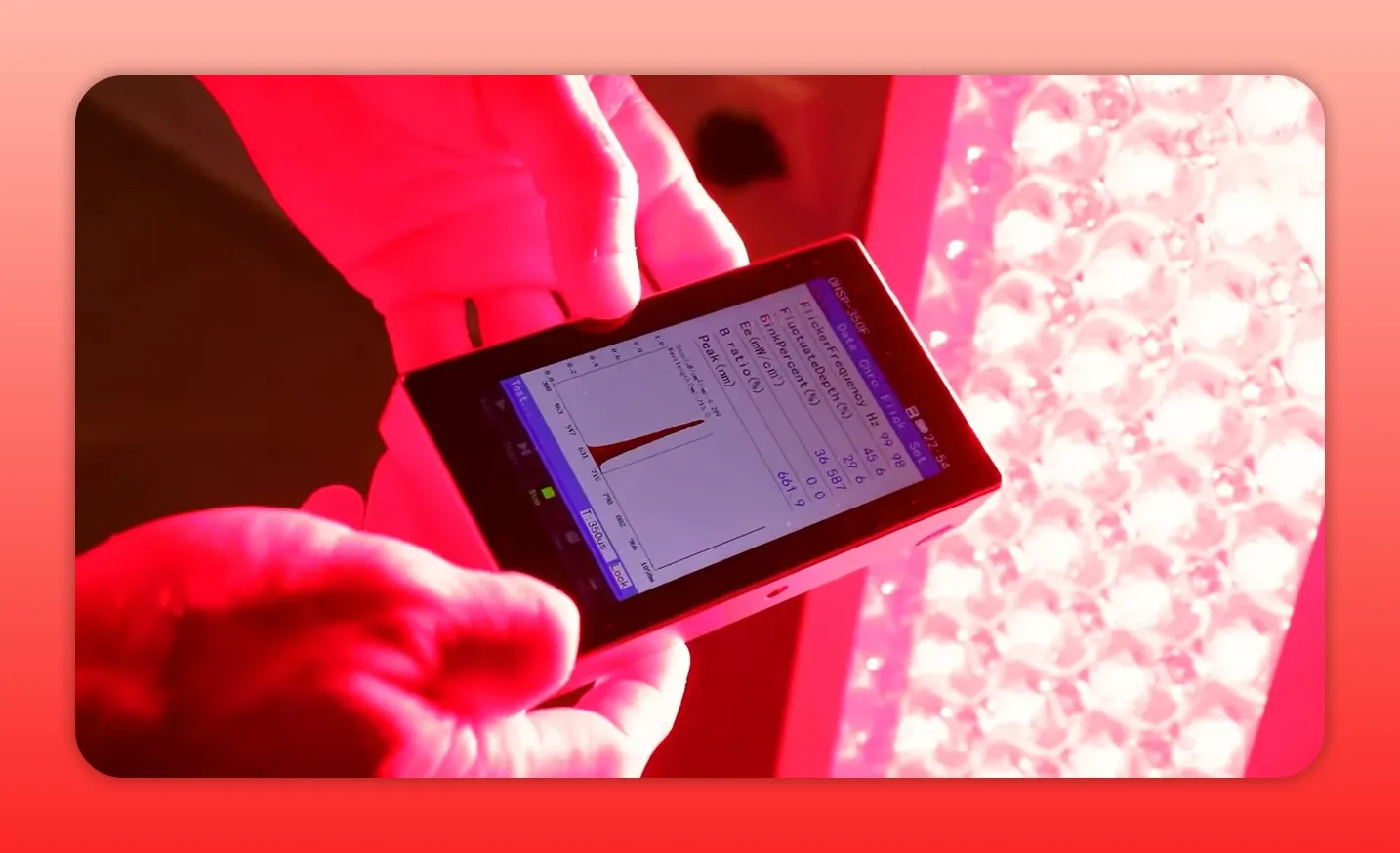
- Check the measured output at a standard distance. Many manufacturers report mW/cm² measured at 6 inches. Use that figure to calculate session time.
- Measure time per area, not whole-device time. Joules per cm² is an area metric. If you want 50 J/cm² to a specific joint, calculate time for that spot based on local intensity.
- Include sunlight when practical. Natural sunlight provides a broad spectrum (blue and green peaks midday) that supplements device-based therapy.
Quick reference: common conversions and examples
Conversion formula:
J/cm² = (mW/cm² × seconds) / 1000

Examples:
- 100 mW/cm² → 1 minute (60 s) = 100 × 60 / 1000 = 6 J/cm²
- To reach 50 J/cm² with 100 mW/cm²: seconds = (50 × 1000) / 100 = 500 s ≈ 8.3 minutes
- 1000 mW/cm² → 1 second = 1 J/cm², 10 seconds = 10 J/cm²
How to progress with a protocol
- Choose a starting dose for your goal (use the ranges above as a guide).
- Treat consistently for 2–4 weeks while noting benefits and side effects.
- If negative effects appear, reduce session time or frequency and retest after a couple of weeks.
- If no benefit and no side effects, increase dose or session length gradually.
- Keep treatment as a habit for chronic or recurring issues rather than a one-time fix.
Final takeaways
- Dosing and wavelength are both important but not trivially simple. Use the joules-based conversions to translate device specs into practical session times.
- Start with conservative, evidence-informed ranges (5–10 J/cm² superficial; ~50–70 J/cm² for deeper targets) and adjust based on personal response.
- Prefer multi-wavelength approaches. Red and NIR are central, but blue, green, amber and controlled UV add different, meaningful biology.
- Monitor, iterate, and maintain. Treat it like a training habit: consistent sessions, attention to outcomes, and gradual adjustments deliver the best long-term results.
If you want to get more precise for a particular condition, checking goal-specific reviews will give the best evidence-based dosing for that target. Treat the guidelines above as starting tools: measure your device, calculate time, test, and refine.
Found This Interesting? Look At These Articles
🔴 The Red Light Therapy Facial Fat Loss Link: Myth Or Reality?
🔴 Does Red Light Therapy Help Scars? The Science
🔴 Red Light Therapy For Skin: Beauty Benefits, Potential Complications, And More
🔴 Psoriasis With Red Light Therapy: Potential Game-Changer?
Have You Seen These Reviews
🔴 Rouge G4 Pro Review: Most Advanced Red Light Panel Yet?
🔴 Best Red Light Panel Yet? Block Blue Light Mega Review
🔴 $800 Red Light Mask Has Lasers… But Why?
🔴 Omnilux Contour Mask Review: Still Worth It in 2025?
Bart's Bio:
This is a post by Bart Wolbers. Bart finished degrees in Physical Therapy (B), Philosophy (BA and MA), Philosophy of Science and Technology (MS - with distinction), and Clinical Health Science (MS), has had training in functional medicine, and is currently head researcher at Lighttherapyinsiders.com
Frequently Asked Questions
What is red light therapy?
Red light therapy uses red and near-infrared wavelengths of light to support normal cellular energy and recovery. It’s often referred to as photobiomodulation (PBM). If you're comparing devices and brands, you can check the discounts page for current deals and recommendations.
How does red light therapy work?
Red and near-infrared light can be absorbed by mitochondria in cells, which may help support ATP production and normal cellular repair processes.
What wavelengths are used in red light therapy?
Most red light therapy devices use wavelengths roughly between 630 nm and 880 nm. Common wavelengths include 630 nm, 660 nm, 810 nm, 830 nm, and 850 nm.
What’s the best red light therapy panel?
The best red light therapy panel depends on coverage needs, power output, wavelengths, and budget. Before buying, it's smart to check the discounts page to compare brands and deals.
Red light panel vs mask: which should I choose?
Red light panels usually provide broader coverage and higher power output, while masks are designed primarily for facial skin treatments.
What does low EMF mean for red light therapy devices?
Low EMF refers to lower electromagnetic field emissions around a device. Some buyers prioritize this feature when comparing devices.
How long should a red light therapy session last?
Many users begin with sessions of around 5–10 minutes per treatment area and adjust based on device power and distance.
How often should you use red light therapy?
Common routines range from 3–5 sessions per week depending on the goal and device strength.
Is red light therapy safe?
Most consumer red light therapy devices are considered safe when used according to manufacturer guidelines.
Who is Alex Fergus?
Alex Fergus is the founder of Light Therapy Insiders and reviews red light therapy devices with a focus on practical buying factors.
Where can I find red light therapy discount codes?
You can check the discounts page to see the latest red light therapy discount codes and deals.
Do red light therapy discount codes expire?
Yes. Most brands rotate discount codes during promotions and seasonal sales. If a code stops working, it's best to check the discounts page for the latest offers.