In today's newsletter, we talk about red light therapy and heat. Heat has been a huge topic of discussion, as some in the space have said that "red light therapy doesn't include heating of the tissues" in any way, in the industry. Today we explore that argument and why we think it's invalid.
We've got more content on this topic coming up very soon on our website as well, exploring it in much more detail.
And, as always, we've also added our latest content below! Here we go:
Red Light Therapy & Heat: Classical 2023 Publication
The topic of red light therapy and heat has been very controversial - as some in the space claim that red light therapy and heat are opposing forces, and that "real" red light therapy only entails that the tissues aren't heated.
Nevertheless, we disagree with that statement and think that there's always some heating of the tissues, whenever you expose your skin and other tissues to red and near-infrared light.
Enter Mark Cronshaw and his research team. Dr Cronshaw has been a bit of a rockstar in the space, with some great recent publications. We still have to interview him for our YouTube channel, which will hopefully come soon.
But one of the most seminal publications of Cronshaw is about heat generation during high-intensity red light therapy or "photobiomodulation". You can check that 2023 study here, which uses in vitro or "Petri dish" research:
 Mark Cronshaw
(The full study is also available for free HERE)
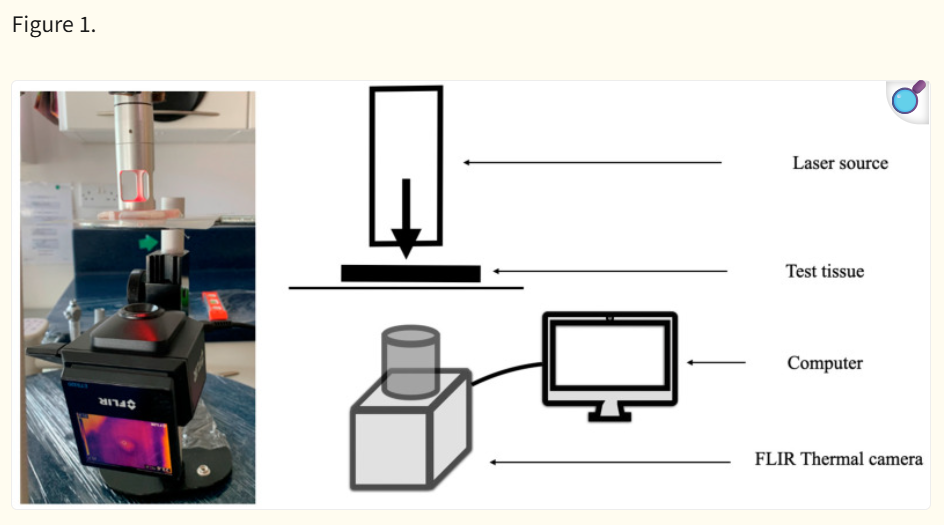
Here, Cronshaw and his team used lean pork tissue to measure temperature increases, with different device setups and wavelengths. And, the abstract of the study describes the dynamic of the temperature increases well, with different effects of different wavelengths:
"Results acquired at similar parameters of irradiance indicated that the application of the 980 nm wavelength was associated with the highest rise in temperature, which decreased with other wavelengths in the order 980 > 1064 ≈ 650 >>> 810 nm (p < 5 × 10-20). All wavelengths assessed were associated with a significant temperature increase, and with the exception of 810 nm, all exceeded the threshold of a 6 °C rise within the prescribed parameter limits"
So in plain English, 980 nm leads to the biggest increase in the pork tissue, then 1,064 nm and 650 nm, and then 810 nm. They have a very nice setup, that's described in Figure 1 of the study:
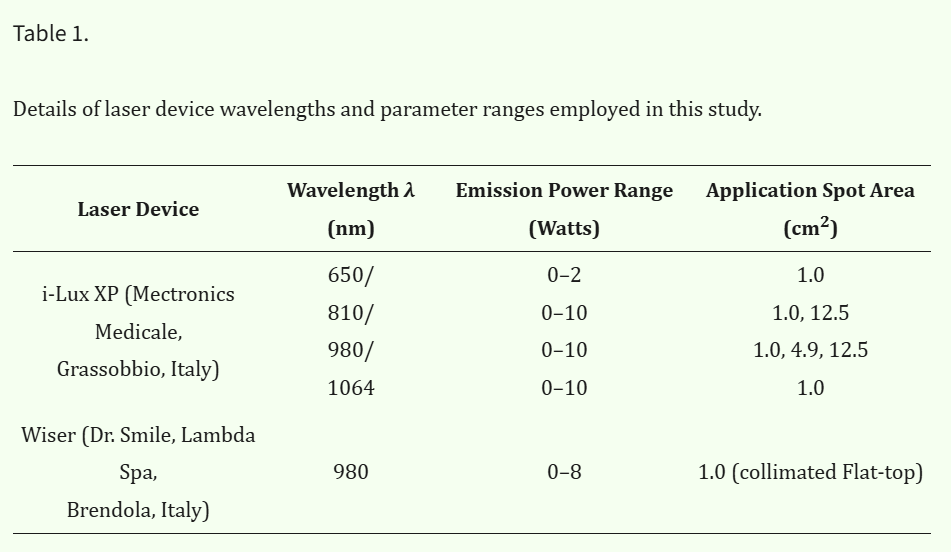
Then, Table 1 describes the different types of lasers used in these studies:
But let's take a step back and consider why you don't want huge temperature increases during light therapy. The answer is very obvious - you'll eventually get uncomfortable and have pain when the skin temperature rises too quickly.
The cutoff points here are 43 degrees Celsius (109 F) and 45 Celsius (113 F). We all know what happens at these temperatures, as we've probably burned ourselves with fire in the past.
But the true complexity is a bit more nuanced. For the heating dynamic, it really matters that the temperature rise isn't too high for too long, or very high for a short time period. Touching an open flame for 0.5 seconds doesn't do much damage to your hand, for instance, but keeping it there for 5 seconds (10X the time), will have harmful effects, if you can even keep the hand in there!
Basically, what you want during light therapy is a controlled increase in temperature that isn't too high for too long. Again, in our opinion, temperature increases are intertwined with light therapy, and it's impossible to use light therapy without temperature increases of the tissue, unless you're actively cooling the tissues.
Also, if you want more discussion on wavelengths, temperature increases, and safe dosing, check this interview out:
 Bart Wolbers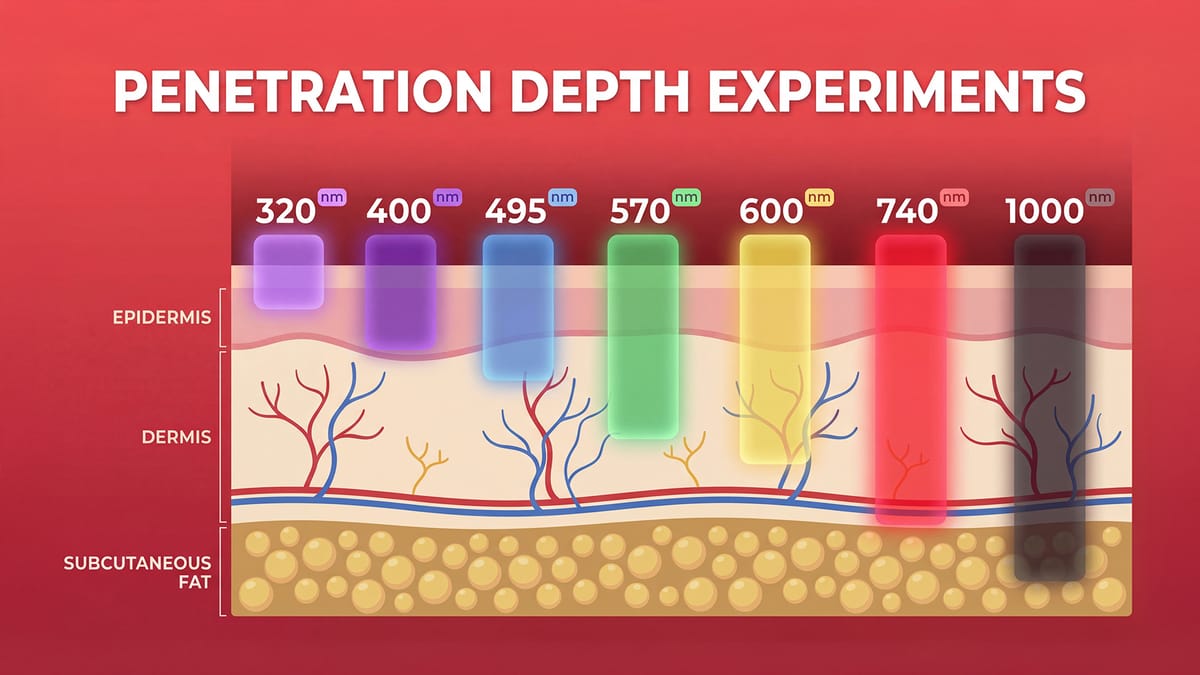
But back to the study on heating. Again, they used high power lasers, which emit a lot more light than the typical LED device, at least in a small area. Here's the outcome of the study:
"Based on the outcome of this study, the inherent issues associated with the Gaussian beam spectral profile with high output and large surface applicators indicates that the choice of wavelength and technique adopted is important for circumventing the overheating of surface and sub-surface tissues, particularly with a 980 nm source. With very large applicators, clinicians should be made aware that the irradiance of the central core of the beam may be 2- to 4-fold higher than the average irradiance. Additionally, for the purpose of achieving reproducibility of studies, a calculation of the innermost third peak irradiance is advisable. At the high powers associated with the larger applicators, the combination of a scanning technique with continuous monitoring of the surface temperature is advocated. "
We learn a few lessons here. First, even with lasers, more light is emitted in the center of the device (or "applicator"). That principle holds true for panels as well. Secondly, some wavelengths such as 980 nm will cause more heating than others. Thirdly, you may want to move a device around to avoid overheating.
What does this mean practically, if you're a medical practitioner or even patient? Well, first, you'll have to move around high-powered devices. We already knew that, as devices such as the Chroma Ironforge necessitate that even. But if you don't, then there's a slow buildup of pain, and the person to whom the light is applied will try to move.
So overall it's quite simple: if you put your hand in a fire, you'll get hurt because you withdraw your hand. With light therapy, at the point at which skin damage is occurring, you'll also pull away. Also, very rarely will you have such big increases of skin temperature, unless you're using a very powerful device such as a high-powered laser (that needs to be moved around) or the Chroma Ironforge I described above.
So all is good! The temperature discussion is less interesting in some regards than others in this space. But because we're getting some comments and criticisms around this topic, it's time to zoom in on the discussion.
And, yes, if you want to learn more, other dynamics are also described in the study, such as beam angle and more. Read the full study if you're interested in that. And wait for our full video to come out on red light therapy and heat on this website!
Here Are Our Latest Light Therapy Insiders' Articles:
Every single article that we've published recently - you can find the videos in the article itself:
- Red Light Therapy News: New Devices, Brain Study & Olympic Athletes Using It - The March 2025 news is here, with new products, science, gossip, Q&A, and everything between. Go read/watch Alex to stay updated on the space...
- Red Light Therapy For Fat Loss: Lose 4-6 Midsection Inches? - Yes, really, you can lose midsection inches with red light therapy. Bart explains the intricate science in great detail in this article...
- Red Light Therapy & Customer Care: Critical Information!! - here's what you need to know about why Alex doesn't include customer care into his reviews. Measuring that outcome is one of the difficulties there - as well as other reasons/domains mentioned in this article!
- Why Light Therapy May Have Life-Changing Effects For TMJ Dysfunction - Here's a huge deep dive of Bart, with lots and lots of science, on why red light therapy is great and inexpensive if used correctly, for countering jaw pain, or jaw dysfunction, commonly called "TMJ"
- Mito Red Adapt 4.0 Max Review: 8 Wavelengths & New Software Explained - Alex's latest review, the MitoAdapt by Mito Red. This is quite an upgrade but not for everyone!
- THIS Device Counters MCI/Alzheimer - Here’s The Data - Here's Bart latest interview with Dr. Neda Rashidi, on some Vielight studies for Mild Cognitive Impairment and Alzheimer's Disease
Also, Check Out Some Of Our Other Content:
Below you'll find some of our best content that you shouldn't miss:
Light Therapy Advanced Science Course (Just Launched!):
Join Bart's 100% free advanced science light therapy course above, where he takes deep dives into many different topics, such as mechanisms, neurology (Alzheimer's, Parkinson's, etc), exercise recovery, skin beauty & rejuvenation, and much more.
Some of the topics are only published in that course, such as UV light risks and benefits, addiction, anxiety, depression, and more. So join HERE!
Red Light Therapy Buyers Guide
 Alex Fergus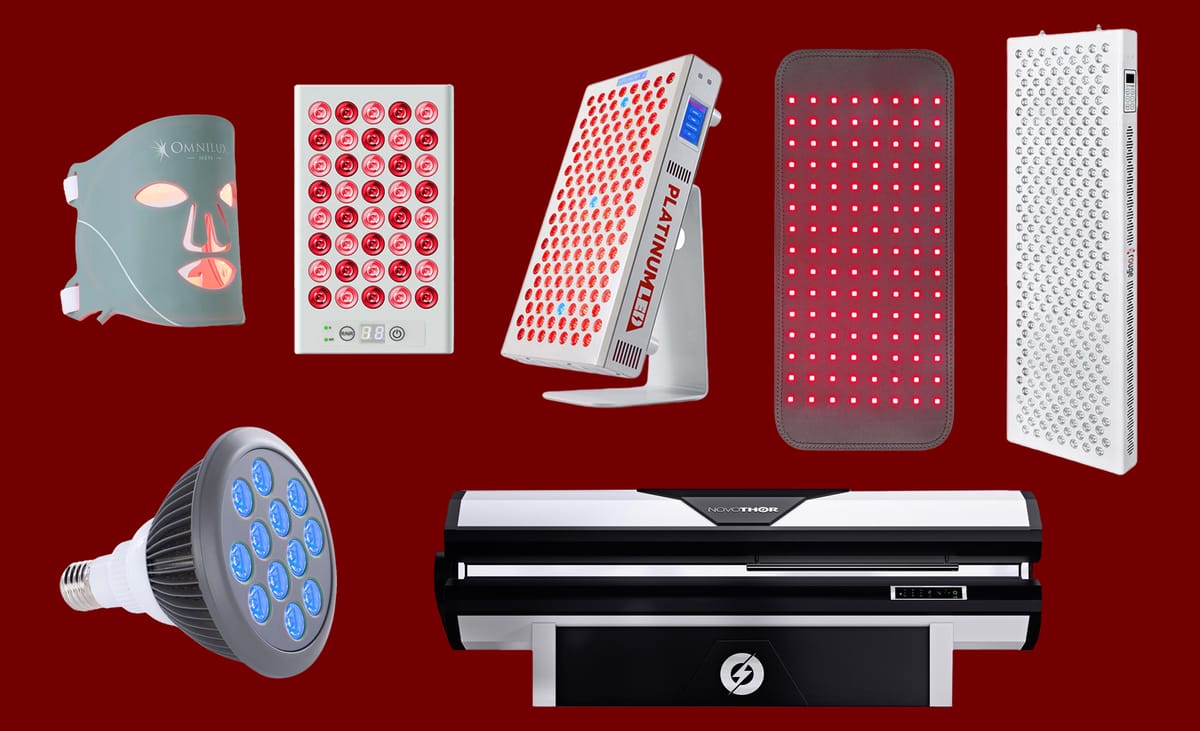
Red light therapy uses red and infrared light to achieve a biological effect. Dive into this topic and select a device that's right for you.
LED Mask Shopping Tool


My extension shopping tool compares all of the world's best (and not so good!) Red Light Masks.
How To Use Red Light Therapy 101: The Best Guide For Starters
 Alex Fergus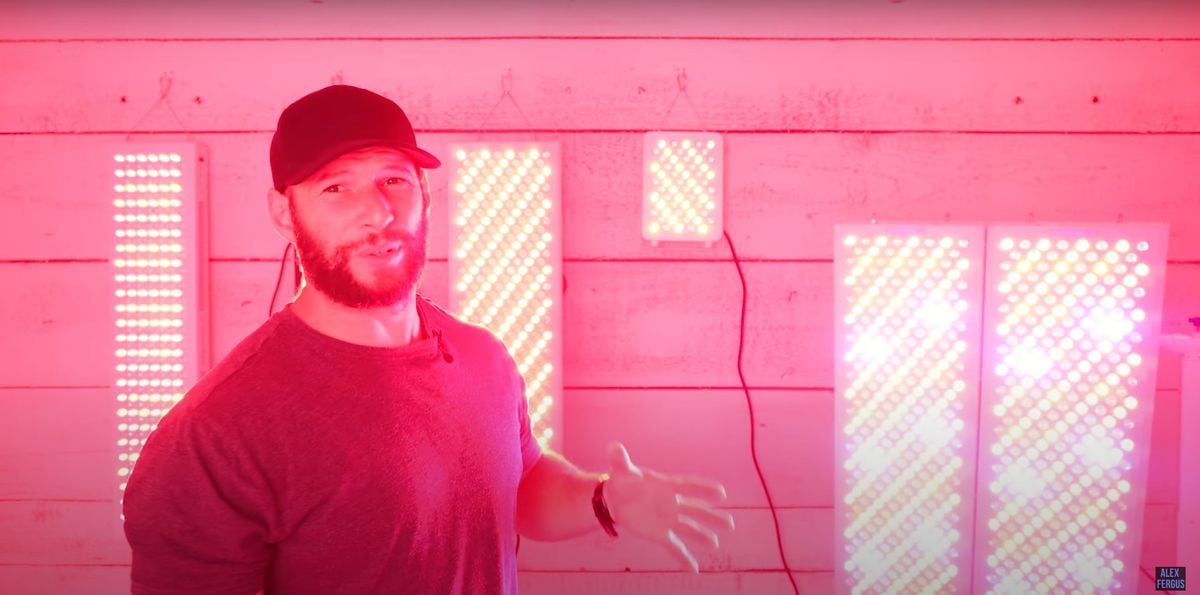
You have your device? Let me help you use it.
Red Light Panel Shopping Tool

My extension shopping tool compares all the world's best (and not-so-good!) Red Light Panels!
Exclusive - Discount Codes, Deals & Recommendations
 Alex Fergus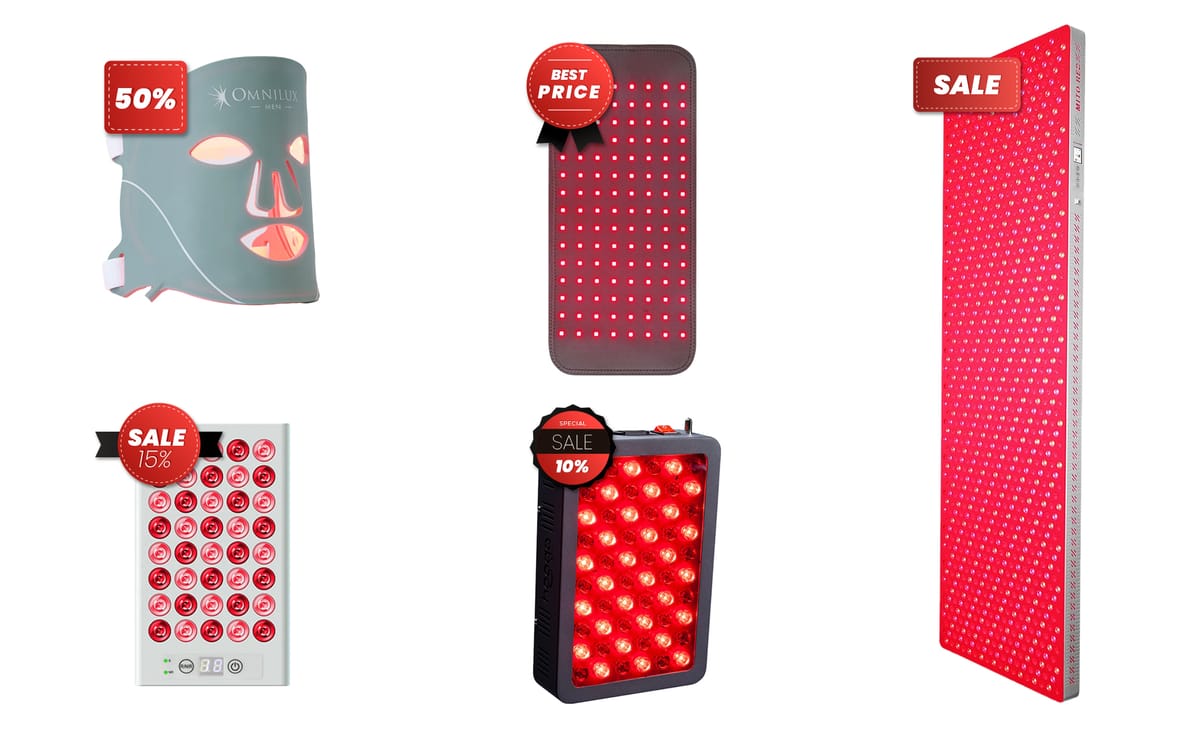
Shopping for a red light device? Use this resource to save! We've got deals for most of the big and best brands out there...