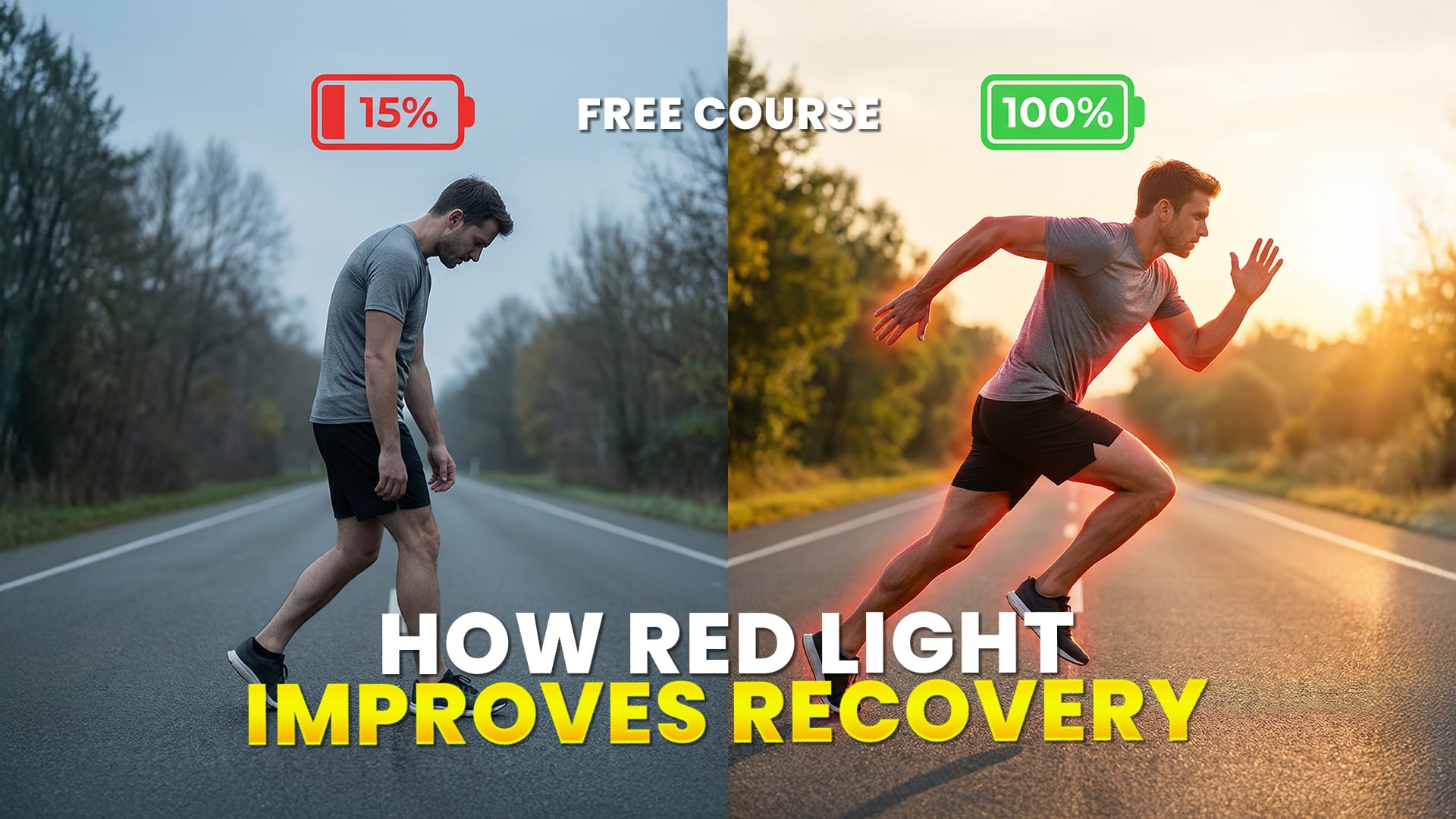
Red light therapy (photobiomodulation) is more than a recovery fad. Used correctly it can boost muscle endurance, reduce fatigue and inflammation, and even improve markers like VO₂ max. The science isn’t perfect, but recent reviews point to consistent benefits—especially when red light is applied locally to the muscle you plan to train and used before exercise.
Key takeaways
- Works best before workouts—often a few hours beforehand produces the strongest performance gains.
- Local treatment > full-body for measurable, acute performance improvements; full-body sessions seem to help sleep more than immediate performance.
- Upper vs lower body dosing: larger muscles (legs) need higher doses than smaller upper-body muscles.
- Near infrared is preferred (around 810–850 nm) because it penetrates deeper into muscle tissue.
- LEDs and lasers both work, but many clinical studies used lasers at targeted points—translate that into consumer LED sessions by focusing the light on the trained muscle.
Why this matters for health and training
Anything that improves strength, endurance or VO₂ max has benefits beyond the gym. Better muscle strength and aerobic capacity are linked with lower risk of chronic disease, better functional capacity with age, and improved day-to-day performance. Even simple measures like grip strength correlate with overall health outcomes, so small gains from red light therapy can compound over time.
What recent reviews say
1. Muscle endurance (young, healthy adults)
Multiple reviews show improved muscle endurance—measured as increased maximum repetitions—after photobiomodulation. Benefits appear similar whether lasers or LEDs are used, which is good news for consumer devices. The outcome is consistent enough that the technique is a practical adjunct for higher-rep training sessions.
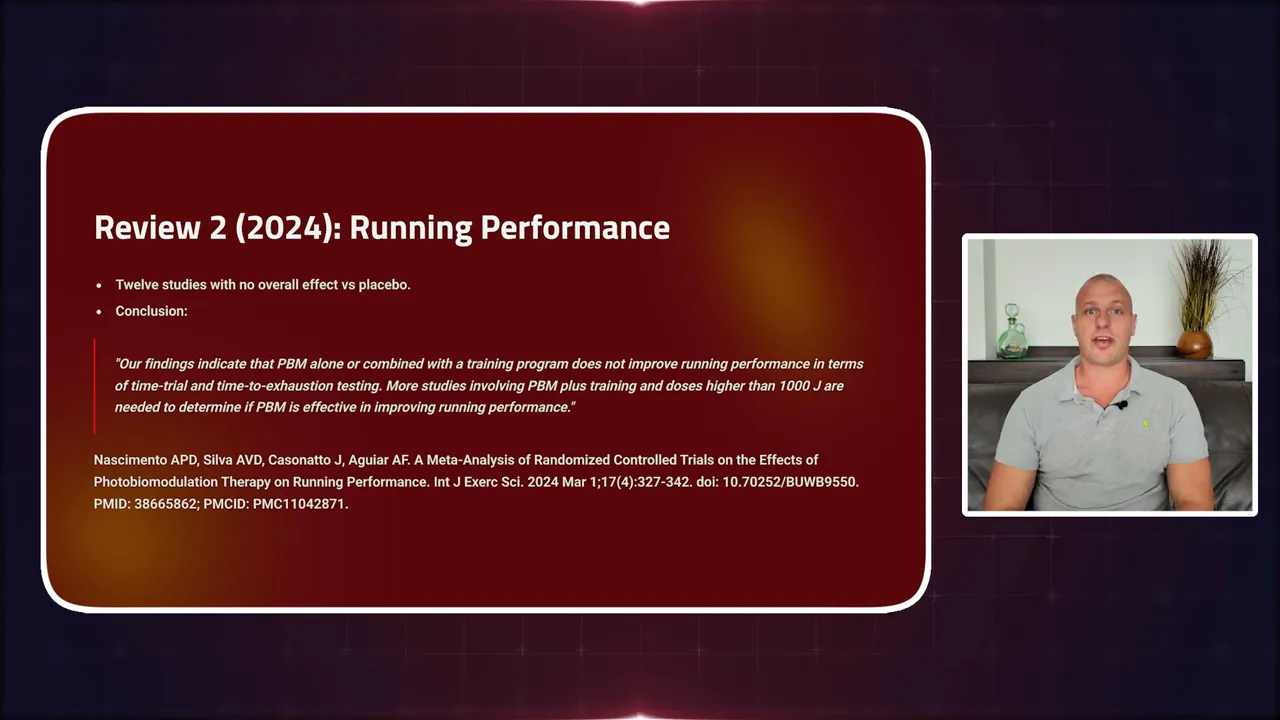
2. Running and aerobic performance
The literature on running is mixed. Some reviews found no statistically significant improvement in time trials or time-to-exhaustion, while others report improvements in VO₂ metrics in some trials. A common theme is dose: studies that used higher energy densities (more joules per cm²) hinted at better outcomes. The heterogeneity of protocols makes it hard to conclude definitively, so runners may need to experiment with higher localized doses.
3. Full-body panels vs local treatment
Full-body panels often do not show acute performance improvements in controlled studies, yet they consistently show sleep and recovery benefits—better sleep quality, reduced resting heart rate and changes in melatonin in some military studies. Since sleep improves training capacity over time, whole-body sessions still have value, but they are less reliable for immediate performance boosts.
4. Older adults
Older adults tend to benefit clearly, especially for fatigue, muscle function and functional performance. Many studies used targeted laser protocols (e.g., multiple high-powered points on a muscle) and reported improvements when red light therapy was combined with resistance training. Translation to LEDs is possible by replicating dose and wavelength as closely as practical.
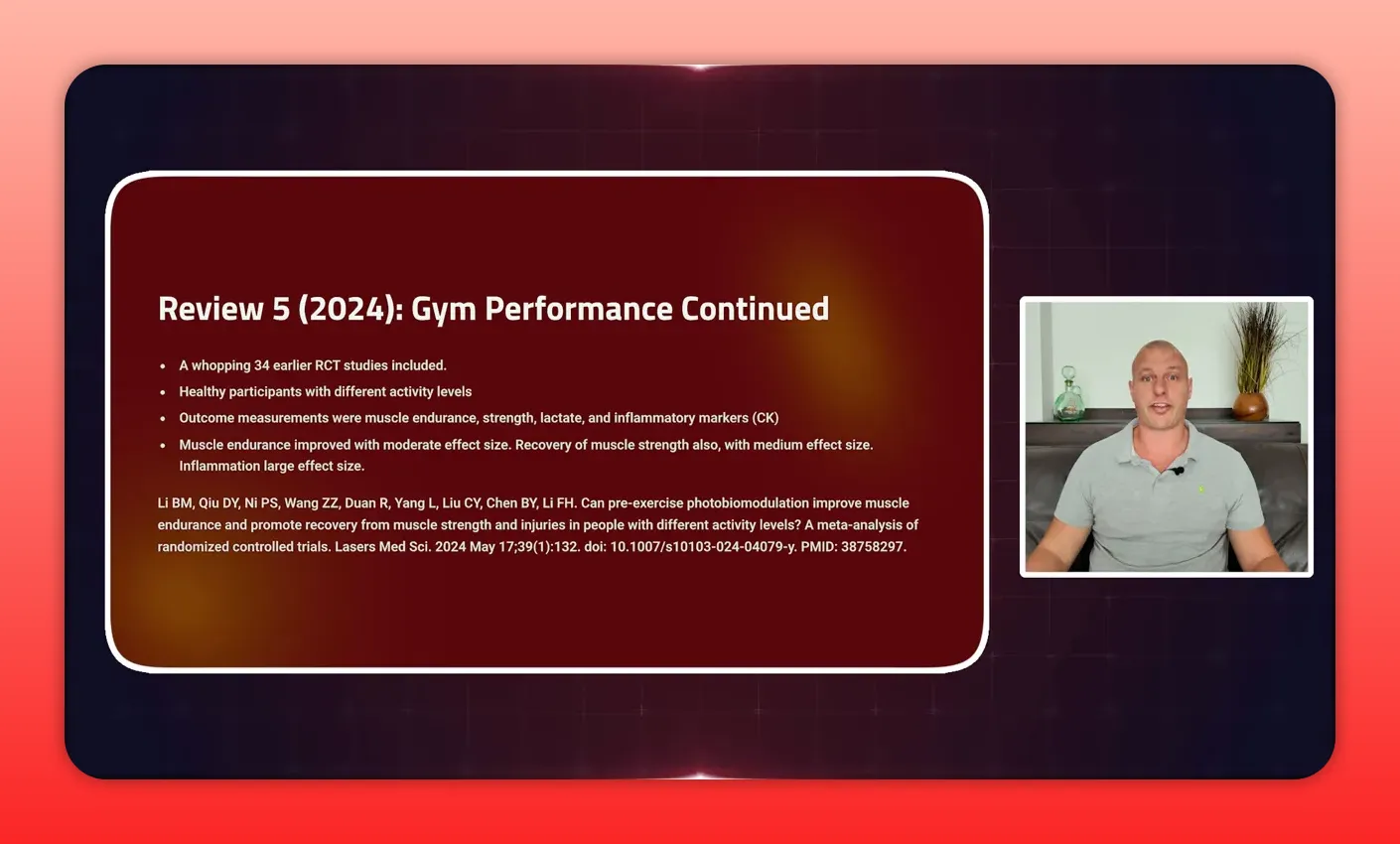
5. Broad gym performance reviews
A large review covering dozens of trials shows moderate effect sizes for muscle endurance and strength, and a strong effect on markers of inflammation. Across studies the best results consistently came from pre-exercise application rather than post-exercise treatment.
Practical guidance: how to use red light for workouts
Timing
- Before training is ideal—aim for a window of a few hours before your workout. Many studies found the most reliable gains when treatment happened prior to training.
- Post-workout treatment can help, but tends to produce smaller immediate performance improvements.
Where to treat
Target the specific muscle group you will train—quads before leg day, pecs and triceps before chest work, and so on. Localised treatment mirrors the laser-point protocols used in many clinical studies and translates better to performance outcomes than a full-body session when the goal is an acute training boost.
Dosing rules of thumb
- Legs (lower body) require higher doses because they are thicker, denser muscles.
- Upper body typically needs lower doses, and often responds well even at modest dosing.
- Wavelengths ~810–850 nm (near infrared) are the most consistently effective.
- If possible, aim to replicate energy density (joules/cm²) used in studies. Where studies reported laser point doses, use a handheld or tabletop LED to cover the same area with comparable total energy.
Device selection
Choose a tool that lets you concentrate energy on the muscle you intend to work:
- Handheld devices and tabletop panels are great for targeted sessions.
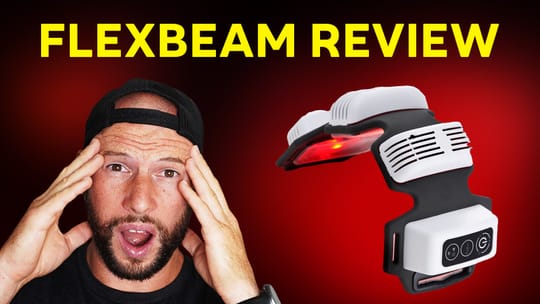
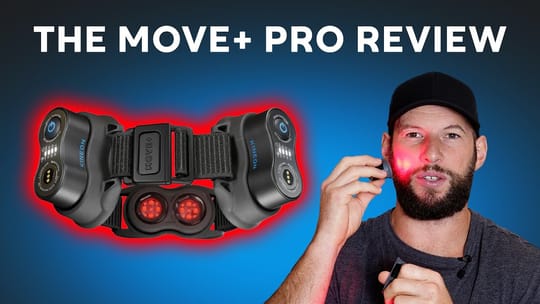
- Wrap-style devices (flex-beam type) or high-powered handhelds (iron forge style) are useful for larger muscles because they let you deliver a higher dose quickly.
- Full-body panels still have a role for sleep and systemic recovery, but they’re usually not the best option if your primary goal is an immediate performance lift for a specific exercise.
Example prep protocol
- Treat the target muscle with a handheld or tabletop unit for a duration that delivers a moderate-to-high dose (follow device guidance to approximate study doses).
- Finish treatment ~2–3 hours before training.
- Warm up as usual; expect to hit one or two extra reps or feel less fatigue during moderate-to-high repetition sets.
Caveats and realities
- Not a substitute for training, sleep, or nutrition. Treat red light as an adjunct tool in a broader program.
- Individual responses vary—group averages in studies show benefits, but some people respond more than others.
- Study heterogeneity is real: different wavelengths, energy densities, devices and participant profiles make it difficult to offer a single perfect protocol.
- Many clinical studies use lasers with point-by-point dosing. Translate those protocols carefully to consumer LEDs by focusing treatment on the same muscle areas and aiming for comparable total energy.
Bottom line
Red light therapy can be an effective, evidence-backed tool to improve muscle endurance, reduce fatigue and support recovery—most reliably when applied locally and before exercise. Prioritise near infrared wavelengths (around 810–850 nm), use handheld or tabletop devices for targeted dosing, and remember that results compound best when combined with solid training, sleep and nutrition.
If you want to optimise a protocol for a specific sport or muscle group, consider tracking small changes (reps, perceived exertion, soreness and sleep) and adjusting dose and timing to see what works best for you.
Found This Interesting? Look At These Articles
🔴 The Red Light Therapy Facial Fat Loss Link: Myth Or Reality?
🔴 Does Red Light Therapy Help Scars? The Science
🔴 Red Light Therapy For Skin: Beauty Benefits, Potential Complications, And More
🔴 Psoriasis With Red Light Therapy: Potential Game-Changer?
Have You Seen These Reviews
🔴 Rouge G4 Pro Review: Most Advanced Red Light Panel Yet?
🔴 Best Red Light Panel Yet? Block Blue Light Mega Review
🔴 $800 Red Light Mask Has Lasers… But Why?
🔴 Omnilux Contour Mask Review: Still Worth It in 2025?
Bart's Bio:
This is a post by Bart Wolbers. Bart finished degrees in Physical Therapy (B), Philosophy (BA and MA), Philosophy of Science and Technology (MS - with distinction), and Clinical Health Science (MS), has had training in functional medicine, and is currently the head researcher at Lighttherapyinsiders.com