
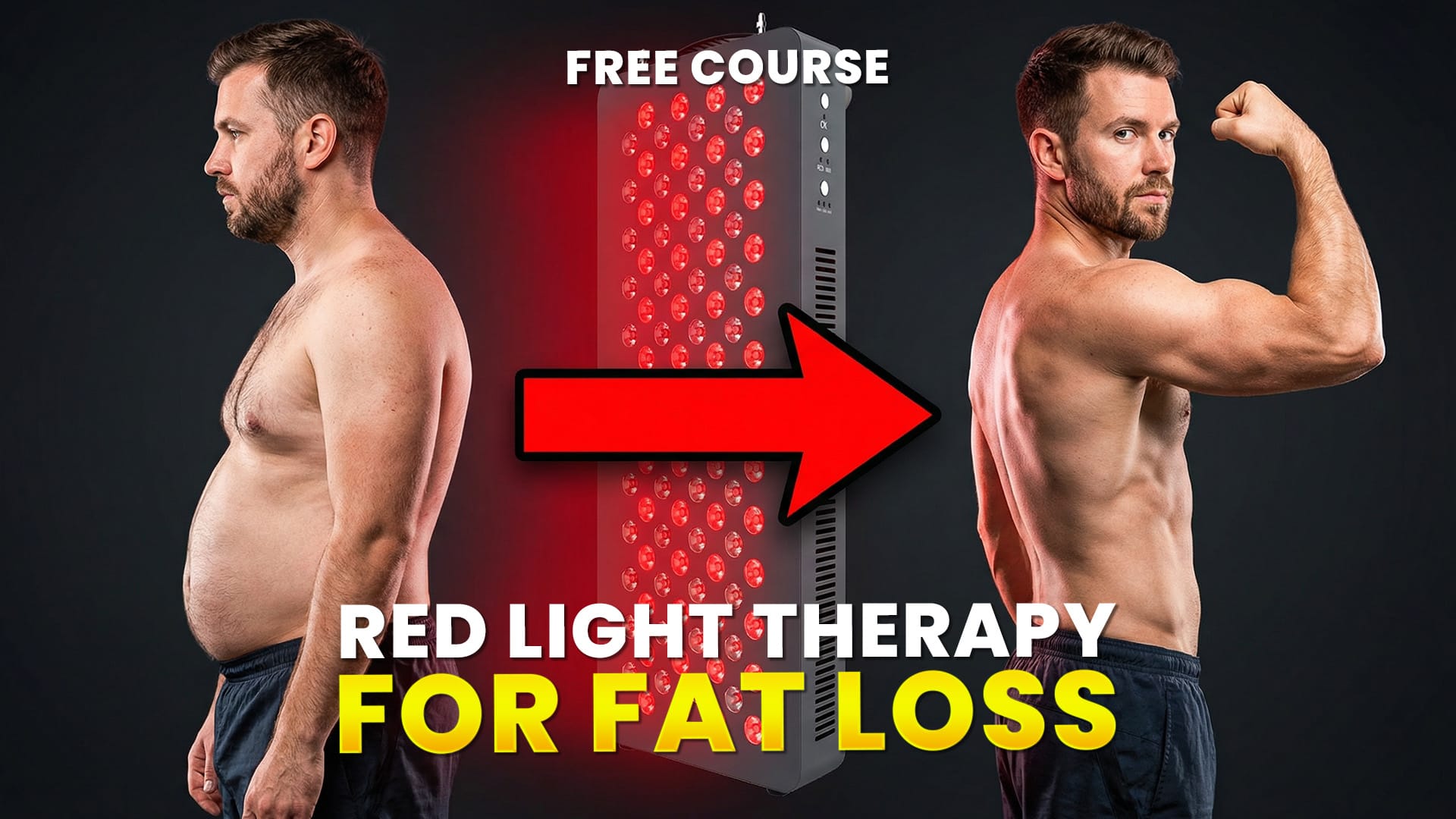
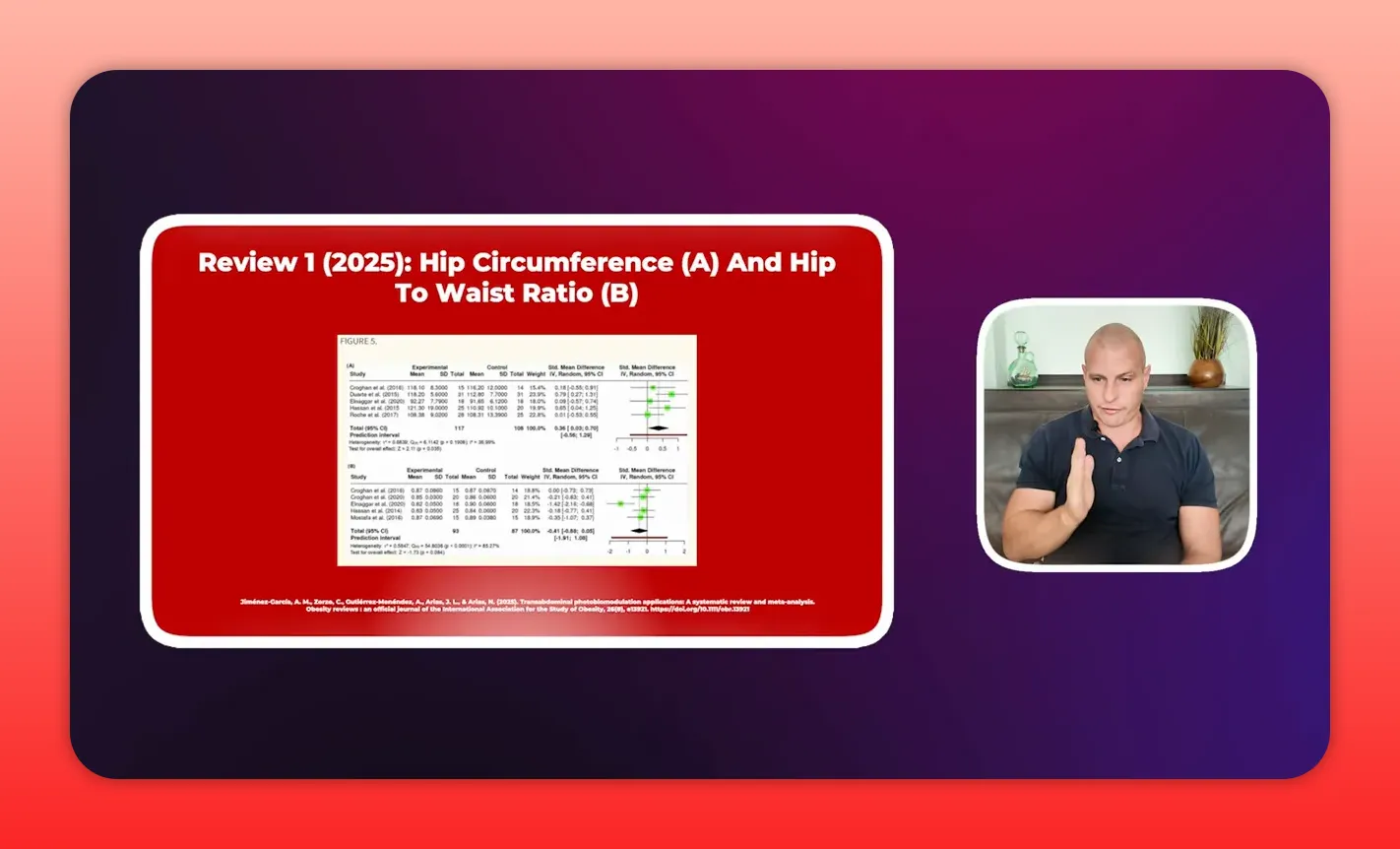
Red light therapy, sometimes called retinotherapy in community conversations, is generating a lot of debate. The evidence is promising: targeted red and near‑infrared light applied to the abdominal area can reduce waist and hip circumference. That reduction often shows up as a change in inches rather than total body weight, suggesting body recomposition — less fat and possibly more lean tissue.
What the research actually shows
Across the published literature (about 24 studies reviewed together, including several animal studies), the consistent findings are:
- Waist and hip circumference decreases — typically a few centimetres (around 2–6 cm in some reviews).
- Little or no change in overall body weight — inches come off while weight often stays similar, suggesting muscle gain or redistribution of mass.
- Some metabolic improvements — reductions in triglycerides and insulin in several studies; animal work shows improvements in glucose control and reductions in visceral fat.
- Minimal side effects — occasional temporary skin redness; no major safety signals reported in these trials.
Key study features to note
Most studies applied light to the abdominal area for relatively long sessions (many use 20–40 minutes). Wavelengths vary, but red light in the ~620–670 nm range often performs best in the published work. A limitation: the majority of studies used lasers rather than LEDs, and many were industry sponsored, so more independent LED panel research is needed.
How red light therapy might cause fat loss
There are a few plausible mechanisms that explain the circumference reductions without large changes in scale weight:
- Fat mobilization — light exposure seems to trigger release of stored fat from adipocytes. That liberated fat likely travels via the lymphatic system into the bloodstream. If it is then burned for energy, you lose fat. If it is not burned, it can be re‑stored elsewhere.
- Body recomposition — simultaneous gains in lean tissue (or improved muscle tone) can offset fat loss on the scale while improving shape and waist:hip ratio.
- Improved metabolic markers — reductions in triglycerides and changes in insulin signalling in some studies suggest improved metabolic health, which can support long‑term fat loss.
- Exercise synergy — red light therapy enhances recovery and may increase muscle endurance and gains. Better training capacity translates to higher energy expenditure and more lean mass over time.
Viewed through a calorie in versus calorie out model, red light therapy can be seen as a tool that increases fat availability and improves metabolic function — but it rarely does the whole job alone. For persistent fat reduction you still need to burn that mobilised fat via activity or a sustained caloric deficit.
Practical application: devices, dosing and placement
Based on how studies were done and what is practical at home, the following approach makes sense:
- Device type — full panels or wraparound devices that cover a broad area are preferred. Handheld spot devices are workable but inefficient for treating an entire abdominal area in a reasonable time.
- Wavelength — aim for red light in the ~620–670 nm range; near‑infrared can work but red shows stronger results in the literature.
- Session length and frequency — many studies used sessions of 20–40 minutes, repeated multiple times per week over periods of 4–12 weeks. A practical starting protocol is 20–30 minutes, 3–5 times weekly, applied to the abdominal region (and optionally lower back).
- Coverage — treat a broad area rather than a tiny spot. Fat loss effects appear systemic and treating the whole torso is more sensible than tiny localised treatments.
Suggested sample protocol
- Device: panel or wrap covering abdomen
- Wavelength: red 620–670 nm (if available)
- Session: 20–30 minutes
- Frequency: 3–5 times per week
- Duration: evaluate progress after 4–12 weeks
How to combine red light therapy with a broader fat‑loss strategy
Red light therapy is best used as one tool in a multi‑pronged plan. Other high‑impact strategies include:
- Nutrition and controlled energy intake — if fat is mobilised but not burned, it can be re‑stored. Consistent diet control produces the necessary caloric context.
- Strength training and aerobic exercise — to burn mobilised fat and to build or preserve lean mass.
- Sleep and circadian alignment — morning light exposure, regular sleep timing, and good sleep quality support metabolic health.
- Breathing, stress reduction and toxin management — chronic stress, poor breathing patterns, and environmental toxins can all impair fat loss.
Because red light therapy can speed recovery and enhance exercise gains, it often multiplies the benefits of a proper training routine.
Limitations and caution
Important caveats to keep in mind:
- Only around 25 clinical and animal studies exist on this topic so far. The research base is small compared with many other interventions.
- Many trials used lasers rather than LEDs, so it is not always straightforward to translate findings to consumer LED panels.
- Several studies were industry sponsored. Independent, high‑quality trials are needed, ideally with controlled diets (metabolic ward designs) and standardised dosing.
- Results vary between individuals — some people see clear reductions in waist size within weeks, others see little change.
- This information is educational and not medical advice. Discuss any major health plan changes with a qualified professional.
Bottom line
Red light therapy is a promising, low‑risk tool for improving body composition, especially around the abdomen. Expect inch loss more readily than scale weight reduction. The best current evidence points to red wavelengths (around 620–670 nm), broad area coverage, and treatment protocols of multiple sessions per week over several weeks.
Use it alongside proven lifestyle measures — diet, strength training, sleep and stress management — to get the most consistent and lasting results. With more LED‑based, independent studies and standardised dosing, we will refine recommendations further. For now, red light therapy is worth considering as part of a sensible, evidence‑informed fat‑loss toolbox.
Quick takeaway
- What it does: reduces waist/hip circumference; supports body recomposition.
- How to use it: red light panel or wrap, 20–30 minutes, 3–5 times/week, treat the abdomen and torso.
- Combine with: calorie control, exercise, sleep, breathing and stress reduction.