
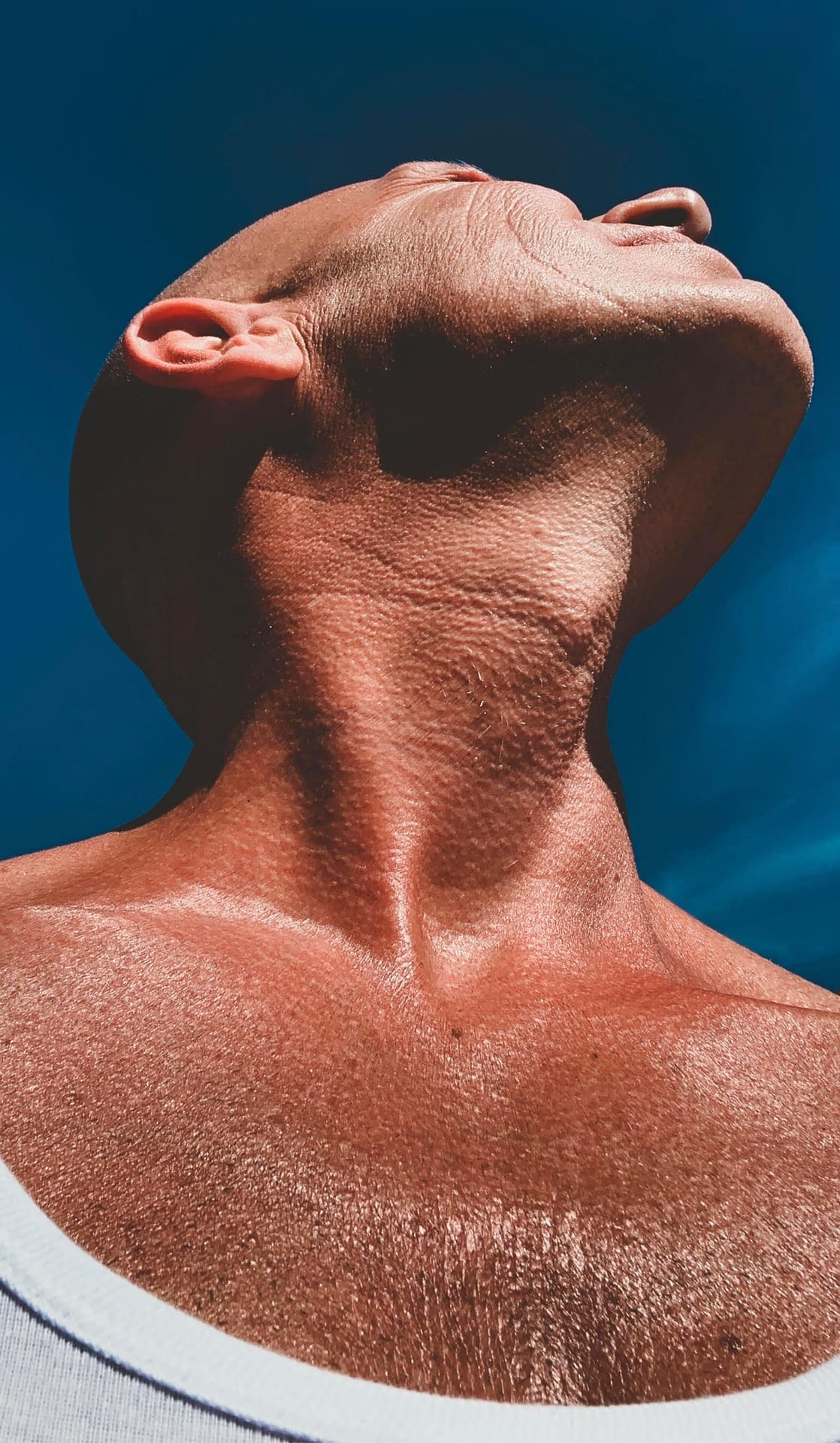
Let's talk about TMD, or "Temporomandibular Disorders" - jaw pain, in short. Well, TMD extends to many other areas than just plain pain, as your ability to speak, chew, and laugh can be impacted.
Excess tension in the jaw is a sign of more than just jaw tension. Jaw tension is a sign of chronic stress, in the same way as very tight trapezius and neck muscles are, or a rapid heart rate because of a stress response.
To clarify: TMD is the disorder here, and TMJ the jaw joint affected by that disorder. And, you won't believe how many people are affected by jaw pain in their daily lives. Hence, I decided to write an article on red light therapy for TMJ. A whopping 135 studies have been published on this topic (1). In my article, I'll look at the most important publications there, and help you with questions like:
- "Can red light therapy help TMJ in the first place?"
- "What are some of the best TMD home treatment devices?"
- "What is TMD treatment in general and how can red light therapy be implemented therein?"
If you're short on time, just read my summary below. If you want to understand all the details of my whole argument, read the entire article!
Here we go:
Red light therapy can have life-changing effects for "Temporomandibular Disorders" (TMD). The main benefit is a 60-70% reduction in pain, as measured by the VAS scale, which ranges from 0 to 100. This effect can be achieved in several treatments over several weeks, generally.
TMD is very prevalent, with some studies showing that 20 - 30% of the human population is affected. For most people, these issues are typically resolved on their own. Sometimes, however, TMD can last for many years and have a significant impact on quality of life.
In TMD, the TMJ joint in the jaw is affected. Many different reasons can exist for that dysfunction, such as stress, depression, anxiety, grinding your teeth at night, structural problems in the jaws or teeth, and more. Often, the TMJ joint and adjacent muscles are affected, as well as other tissues. TMJ problems don't just cause pain, but can also make speaking or chewing more difficult. The TMJ joint is a complex structure with numerous moving parts, and many of these components may require slightly different treatment with red light therapy.
Overall, I recommend proceeding slowly with 3-4 weekly treatments at 5-10 J/cm² on the TMJ joint and adjacent muscles. I provide device recommendations throughout this article. A focus on near-infrared (NIR) is preferred here. For maintenance, continue with one weekly treatment over time. Light therapy treatment not only decreases pain but also improves range of motion and quality of life. For the best results, however, consider other strategies as well, which I discuss throughout this article.
If you need an introduction to what these terms mean, check the following resources:
- What Is Red Light Therapy?
- Red Light Therapy Explained: Basic Terms Guide
- Start Here - Light Therapy 101 & Buyers Guide
- Red Light Therapy Dosing Chart: The Raw Data From Hundreds Of Studies
- Red Light Therapy Dosing: Why It's Complicated!
- Red Light Therapy Wavelengths Benefits: The Ultimate Guide
- How Often Should You Use Red Light Therapy Explained
These resources should give you a basic understanding of how red light therapy works, and the discussions around it!
An Overview Of TMD And TMJ
Let's first introduce the topics of "TMD" and the aforementioned "TMJ". "TMJ" stands for the joint itself in your jaw. "TMD" stands for Temporomandibular Disorders and signifies the health condition. That term sounds extremely complex, but it's simply the dysfunction of the main jaw joint that you can see in the picture below, plus adjacent tissues:
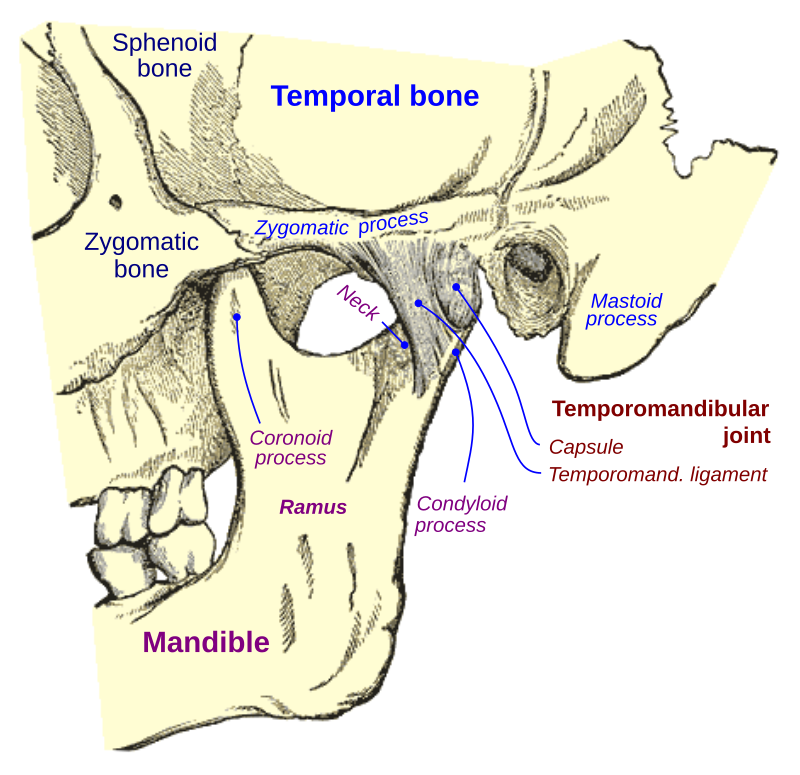
It's the lower jaw, the "mandible", that moves when you chew or speak. The upper jaw, the maxilla, remains static during that process. And, you can see the "Temporomandibular joint" above - that moves when you chew, speak, open your mouth to yawn, etc!
Temporomandibular Disorders (TMD) don't necessarily only involve the joint but can also involve other tissues. For instance, you can have lots of tension in your jaw muscles that causes the TMD.
And while the process of jaw movement that I've listed above sounds very straightforward, it's quite complex! The Temporomandibular joints are among the most complicated in the human body (3).
Here's how a recent study describes the complex dynamic of TMJ movements:
"Temporomandibular joints (TMJ) are one of the most complex joints. Each one is located on one side of the face, and are composed of mandibular fossa, joint tubercle, and condylar process of mandible, separated by an articular disk. To these structures are attached ligaments and muscles, which will provide stability and movement. When TMJs work properly, jaw movements can be performed without pain or discomfort. It is important to mention that the complex formed by both TMJs will confront the maxillary with the mandibular bone and therefore will be related to the occlusion, linking these structures during growth and development." (3).
So, not only are there many moving parts, but your entire health history, including the growth periods of your childhood and adolescence, determines proper jaw development.
The Temporomandibular joints are thus far more than just a simple mechanism: different joint structures and muscles are involved. Therefore, not all TMD and TMJ issues are the same - the structures that are affected determine the eventual complaints (4).
And, because chewing, speaking, and the potential for continual pain all affect everyday living, quality of life is often heavily impacted. Primarily, however, TMJ can be considered a chronic pain condition.
And tons of people are affected.
How many?
Current estimates suggest that approximately 20-30% of adults experience jaw pain (TMD) each year (5; 7). Some other studies, however, posit even far higher numbers:
"The prevalence of TMDs was significantly higher in South America (47%) compared to Asia (33%) and Europe (29%). Larger epidemiological studies of TMDs in African and Australian populations are recommended. " (6)
Not all that TMD is debilitating, however. As with most pain-related conditions, individuals experience varying levels of pain. One person may have slight discomfort, and another person may have horrible pain that keeps them from functioning normally during the day!
You may also have one of the symptoms of TMD, such as jaw clicking. But having merely one symptom doesn't make it an issue, just like a clicking knee doesn't imply that you have arthritis there!
Females are more often affected than men (8). And, younger adults are more often affected by TMD (8). Fortunately, 50% of TMD issues resolve automatically, so if you've got a problem there, it's not an immediate cause for concern (9)! However, once TMD issues are present they are often harder to fix and may take up to several years to find a resolution (9).
Let's explore how you get TMD in the first place:
What Causes TMD? Why TMD Is Multifactorial
As is almost always the case with health conditions, TMD is multifactorial. Therefore, there is no single cause that creates the condition. Here's what a review writes about TMD causes:
"The etiology of the TMD is not clearly known. Still, it is proposed to be multi-factorial, including abnormal occlusion, bruxism, teeth grinding, lip biting, stress, anxiety, joint capsule inflammation, muscle spasm, and abnormalities in the intraarticular disk; dental occlusion is a frequent presentation in individuals diagnosed with TMD. Evidence has linked stress, anxiety, and emotional instability more specifically with individuals with pain. Of note, 75% of individuals with TMD have a significant psychological problem." (10)
Bruxism, there, is teeth grinding. Dental occlusion occurs when your mouth cannot properly close due to misaligned dental structures. So, in plain English, tons and tons of different TMD reasons exist, such as joint degeneration, psychological factors, bruxism, (psychological) trauma, stress, psychological issues, and even psychiatric issues.
That list of TMD causes makes treatment much more difficult (11). You'll need very different treatment approaches when, say, chronic psychological stress is involved, or if there's a structural dental occlusion problem. Additionally, even high-quality studies cannot agree on the risk factors for causing TMD (12). Some studies don't include stress as a risk factor for instance, but do include poor sleep quality.
Other pain conditions, such as fibromyalgia, are sometimes also included as risk factor. Additionally, nutrition may play a role, with nutrients such as vitamin D and magnesium being particularly important. As you can see, TMD is quite multifactorial and there's no easy cause or risk factor to pinpoint!
Current TMJ And TMD Diagnosis And Treatment
Let's say you have had TMD symptoms for longer now, and the issue hasn't been resolved automatically. In that case, tons of conservative treatment options are available (13). Generally, though, you will need an accurate diagnosis for the proper treatment (14).
For example, psychology-based interventions for stress such as Cognitive Behavioral Therapy (CBT) won't work if improper jaw structure is driving your problems. I've explored that topic in great detail in the past, in an interview with a dentist and oral surgeon friend, who alters jaw structure in her clinical practice.
The problem, once again, is that numerous treatment options are available. Here's what a study that looked at previous evidence states:
"Conservative management is recommended for most TMD patients, which includes education, self-care, dental therapy, occlusal splints, intra-articular injections, topical ointments, pharmacotherapy, physical therapy, dry needling, acupuncture therapy, electrotherapy, cognitive behavioral therapy, psychological treatment, and bio-behavioral approach. " (15).
Physical therapy may be a great conservative option here, although I'm a little bit biased as a physical therapist (16). And, when these conservative interventions fail, surgery is typically an option (15).
Again, there's no single correct answer here. If your problem is teeth grinding at night, then a night guard will be a solution. If you're depressed, dealing with that depression as well as possible is likely your best path forward. If you have psychological stress problems, maybe learning meditation or spending more time with your friends will help...
So, there's no easy answer for TMD or TMJ dysfunction treatments! A medical professional can likely help you to take a deep dive into the potential sources of your problem - whether that's arthritis of the joint itself, or tense muscles, or improper teeth or jaw alignment, or something else. A full treatment of that topic lies beyond the scope of what I'm trying to accomplish in this article.
Instead, below I'll argue that if you've got longer-term TMD problems, likely, it's very smart to at the very least test some red light therapy for TMD as it's an intervention that's very cheap to apply:
How (Red) Light Therapy Helps In TMD Treatment
So now I'll explore red light therapy in TMD treatment. Again, more than 130 studies have been published on that topic (1). For now, I won't consider all of these studies individually.
Instead, I'll focus on the most recent reviews published on this topic. These reviews synthesize and integrate numerous high-quality studies on a specific topic. For instance, the first review I'll consider has looked at 44 earlier "Randomized Controlled Trial" studies (17). Those Randomized Controlled Trial studies have an intervention and control group.
Let's check the outcome of these reviews one by one:
Scientific Findings: Breaking Down Red Light Therapy For TMD Reviews
Now, the first review already opens with an incredible statement:
"This systematic review analyzed 44 randomized clinical trials (RCTs) with 1,816 participants, confirming that [red light therapy] significantly reduces pain intensity (60-70 % decrease on the Visual Analog Scale) and improves mandibular function (10-20 % increase in maximum mouth opening). The most effective laser wavelengths ranged from 810 to 940 nm, with energy densities of 3-12 J/cm². Longer treatment durations (>4 weeks) provided more sustained benefits. Compared to occlusal splints, NSAIDs, and TENS, [red light therapy] showed superior or comparable pain relief with fewer side effects. However, variability in laser parameters and protocols remains a limitation." (17)
NSAIDs, here, are painkillers that you can usually get without an MD's prescription in most countries. TENS is a form of electrical stimulation that targets nerves for pain relief.
Most importantly are the wavelengths between 810 and 940 nm, and the precise dose of 3 - 12 J/cm2 per session. And, as you can read above, the effects are extremely strong in general, with a 60 - 70% decrease in the Visual Analogue Scale (VAS). That VAS measures pain intensity from 0 (no pain) to 100 (the worst pain imaginable).
So, let's say you've got extreme pain at 80 out of a 100 VAS points. You'd receive a reduction of 48-56 points, resulting in a 24 - 32 VAS scale. In that case, you've just gone from terrible pain to pain that's decently tolerable, more or less!
A second review is a little bit more skeptical, however (18). Here, researchers write that:
"There has been a recent surge in research around the application of lasers for the management of TMD. Nonetheless, the scarcity of scientific clinical studies with structured laser parameters makes it difficult to draw a more concrete conclusion whether lasers in the treatment of TMD are more effective than traditional TMD treatments. In conclusion, since PBMT is becoming an additional treatment of choice for the management of TMD there is a need for more research especially involving clinical studies with better structured laser parameters." (18)
The study recommends doses of under 25 J/cm² for TMD problems of muscular origin, but much higher doses, such as 100 J/cm² or more if the TMD is caused by joint problems (19). The same review also states that the treatment parameters vary wildly (paraphrasing), making standardization harder. Wavelengths from the 630s nm range to 1,064 nm range are used (19).
Let's move to the next review:
The third review comprises 40 studies in total, of which 27 demonstrate pain reductions for the intervention group compared to the placebo, and 7 out of 15 studies measuring the range of motion in the jaw observed improvements (20). Here, however, predominantly infrared light is recommended, from 780 - 980 nm light (21). The total recommended dose is less than 100 J/cm², which varies significantly from the first review.
Most of the studies here either irradiate the TMJ joint, or the muscles around the joint, or both (21). Wavelengths, power output, pulsing parameters, lasers vs LEDs, and the total doses are all over the place (21). So I understand why other reviews are more critical of this approach.
What the outcome shows to me, however, is that many different treatment parameters can yield good outcomes. The perfect is the enemy of the good here. Here are a few quotes from the researchers, about the varying treatment parameters:
"Thirty-six studies used diode lasers with different wavelengths, including 635 nm, 640 nm, 660 nm, 780 nm, 795 nm, 808 nm, 810 nm, 820 nm, 830 nm, 875 nm, 890 nm, 904 nm, 905 nm, 910 nm, 940 nm, and 980 nm.
[...]
The irradiation mode in the majority of the studies was continuous. Only ten studies reported using pulsed laser irradiation. Different frequencies or pulse repetition rates of 15000 Hz, 1500 Hz, 1000 Hz, 80 Hz, and 10 Hz were used in these studies.
[...]
Among the studies, laser energy density ranged from 0.9 J/cm2 to 300 J/cm2. Energy density in twenty studies was reported below 10 J/cm2 in 13 studies were between 19 to 100 J/cm2, and in five studies was over 100 J/cm2.
[...]
Among the studies, laser power density varied from 0.38 mW/cm2 to 2500 mW/cm2." (21).
So, you can see the difficulty there! There's no easy protocol that you can draw from that overview! Wavelengths, power outputs, etc, are literally all over the place.
I've written about that fact on dosing in the past as well, if you're interested:
 Bart Wolbers
Lastly, a fourth review examined 28 earlier studies and also demonstrated good outcomes for short-term pain relief using red light therapy (22). So far, so good. These four reviews which I've covered here are the most recent publications in the literature, from 2023 onward.
So I'm pretty convinced you're getting good outcomes across the board here!
So, What Are The Optimal Treatment Parameters?
Therefore, it's challenging to select optimal treatment parameters here, as they vary significantly. You'll probably have to experiment with red light therapy for TMD treatment a few times per week and monitor your outcomes.
You probably don't need a huge device here. The LightpathLED torch here seems like an ideal candidate for treating the area:
Also, one of the handheld devices may be a great option here, if you can place that device directly against the jaw. These devices are all extremely low in EMFs:
I'd opt for 1-4 weekly sessions. I recommend starting with a low dose at first. So, try total doses of up to 10 J/cm2 for instance, directly to the skin, for deeper penetration. Over time, you can potentially increase the dose. Higher doses should have a more substantial pain-killing effect.
For optimal results, you'll need to continue treating yourself over time. Over time, it's arguably smart to do at least one weekly session for maintenance.
Please keep in mind that most studies use lasers, so directly copying the treatment protocol is challenging in this case. Some studies show similar outcomes for lasers and LEDs. Generally, the much larger treatment area of LEDs will likely lead to even deeper penetration (23). So lasers aren't necessarily superior to LEDs!
Combining Red Light Therapy With Other TMD Treatments
Yes, I've already hinted that many treatment options exist for TMD. And, generally, I can recommend options here, depending on the cause of the problem. So, if you've got issues with the structure of your jaw or improper teeth alignment, which cause jaw pain, then referring you to a physical therapist won't work.
You'll always have to target the underlying cause of the problems!
The same is true for stress or depression. If you're affected by either of these then it's really smart to target these so that they no longer lead to jaw pain (as in, tension that you hold there!).
And if you grind your teeth, you may need to use a mouthguard at night. And, be very mindful of grinding the teeth during the day - which sometimes also happens!
Easy peasy...
So here are a few good options to combine with red light therapy:
- Physical therapy seems to have good effects for pain, mobility, and side effects such as headaches and tinnitus (24; 25; 26). Learning to self-manage your condition through exercises is the best solution, giving you a lot more control over the condition.
- Several different injections are available, such as with Botulinum Toxin, hyaluronic acid, corticosteroids, and your blood ("Platelet Rich Plasma") (27; 28; 29; 30). I recommend consulting a medical professional about this! However, generally, the injections can have side effects, even long-term, such as corticosteroids, so I don't recommend this as a first course of therapy!
- Occlusal Splints or "mouthguards" - these are necessary if you're ginding your teeth a lot at night. There is fairly strong evidence for these, but, of course, teeth grinding does need to be the issue affecting you (31; 32; 33; 34). The mouthguards can also help in the case of headaches, or jaw misalignment, or other related problems!
- Medication can be used but can be paired with side effects (35; 36). Talk to your doctor about this option!
- Cognitive behavioral therapy (CBT) can help you better manage stress and emotions, thereby leading to reduced jaw tension if that's your primary issue (37; 38; 39; 40). Quality of life and psychological well-being seem to improve with CBT. The downside here is that the intervention can be expensive, as it often requires the guidance of a psychologist or related therapist.
- Surgery - I'm not an expert on this one. Just know that there are milder forms of surgery here, and more invasive ones, all the way to complete joint replacement. Surgeries are high-risk but sometimes the only option left, for instance, if bone deformities are causing the TMD. So, there's not always an easy option!
So far, red light therapy appears to be a promising option, as it has no side effects, can be combined with other therapies, and is affordable.
Want More Red Light Deep Dives, Including Red Light Therapy For Oral Health? Join My Advanced Science Course:

Join my 100% free advanced science light therapy course above, where I take deep dives into many different topics, such as mechanisms, neurology (Alzheimer's, Parkinson's, etc), exercise recovery, skin beauty & rejuvenation, and much more. Here's what you can expect:
- More oral health episodes, with the science on dentin hypersensitivity, injection pain, and periodontal health, broken down on camera.
- My latest take on using light therapy for Alzheimer's, Parkinson's, and other neurodegenerative diseases, updated late 2025.
- Countering joint problems and lowering pain by 20-40%, such as osteoarthritis
- The best light therapy routines to optimize sleep quality and gym performance, leading to significant boosts in these areas.
- Current 2025-26 updates on using red light therapy for skin rejuvenation, and which wavelengths, power outputs, devices, and routines I recommend there.
- All of this info based on peer reviewed reviews, or human RCT studies ideally, broken down by me on camera.
Some of the topics are only published in that course, such as UV light risks and benefits, addiction, anxiety, depression, and more. So join HERE!
Conclusion: Red Light Therapy For TMJ Pain And Function Is Extremely Hopeful!
Yes, from a better quality of life to less pain and better range of motion in the jaw. Red light therapy seems to have extremely promising effects for TMD!
However, further research is needed to determine the optimal treatment parameters. Hopefully, in the next decade or so, you and I will learn a lot more about the ideal wavelengths, total dose, power output, whether pulsing is necessary, treatment frequency, and device that's used. And, hopefully we'll learn how to treat different types of TMD with light therapy.
Seeing that you can often get a pain reduction of 60 - 70%, measured on the VAS scale, is a wonderful development, however! That outcome almost forces me to recommend you universally try red light therapy if you've got jaw problems. A red light therapy device may only cost a couple of hundred USD, but, erasing chronic pain from your life is priceless!
But I hope you're happy! I am, for sure! Red light therapy seems like a game-changer for TMD right now!
Frequently Asked Questions
Lastly, I consider a few frequently asked questions below:
Is Light Therapy Safe For TMD?
Good question - yes, light therapy is extremely safe for TMD and no serious side effects have been mentioned. To minimize risk, however, start slow, with low doses such as 5 or 10 J/cm2. Only work your way up to higher doses slowly if you're not getting any effects from the lower doses. Even at high doses, however, there's no risk of serious side effects, except for feeling a bit tired or not getting any effect at all if you overdo it.
How Does Light Therapy Work For TMD?
Yes, in most cases, light therapy, especially near-infrared light emitted on the jaw joint and adjacent muscles works extremely well for reducing pain and improving range of motion. Dozens of high-quality studies have demonstrated that effect!
Can Light Therapy Completely Cure TMD?
Results vary from person to person, but on average, you'll get a 60 - 70% pain reduction and improvements in range of motion. So, in most cases, TMD isn't fully cured but its intensity and effect on lowering your quality of life is dramatically reduced!
This is a post by Bart Wolbers of Lighttherapyinsiders. Bart finished degrees in Physical Therapy (B), Philosophy (BA and MA), Philosophy of Science and Technology (MS - with distinction), and Clinical Health Science (MS), has had training in functional medicine, and is currently chief science writer.
Found This Interesting? Then You Might Like:
- Discount Codes, Deals & Recommendations - Red Light Therapy
- Dentin Hypersensitivity: Why Red Light Therapy Is A Game-Changer
- How Red Light Therapy In Dental Anesthesia Practices Shows Great Promise
- Oral Wound Healing With Red Light Therapy: Innovative Advancement?
- Photobiomodulation In Dentistry Deep-Dive Interview: Dentist Explains All!
- Red Light Therapy For Oral Health Ultimate Guide: 20 Unique Benefits!
- The Remarkable Role Of Light Therapy In Periodontal Care
- World Federation For Laser Dentistry (WFLD) 2024 Review: The 12 Most Important Ideas And Innovations