
In this article I explore the history of light therapy. I trace light therapy through ancient times, to the 1960s with the first use of lasers for wound healing. We end up in the 2000s, with LEDs becoming super cheap and useful for consumer products. And, I give you a glimpse of the future. If you're short on time, just read the summary below - if you want to view my full argument, keep reading below!
Light therapy is as old as humanity itself. Ancient cultures like Rome, Greece, and Egypt, all practiced forms of light therapy. Intially, light therapy meaned "sunlight exposure", but at the 19th Century, technological developments gave new options. With the emergence of UV lamps, for instance, rickets and other conditions began to be treated.
Then, in the 1960s, lasers began to be used. Endre Mester used the lasers' effect on wound healing, which started the "photobiomodulation" domain. Then, in the 1980s, Tina Karu posited mitochondrial light absorption. That way, you've got a mechanism to explain why red light therapy works - a mechanism that is still in use today. Then, in the 1990s, NASA observed the healing effects of LED lights during space plant experiments.
Those LEDs dropped in price over time, and in the 2010s, the game was on for consumer-grade LED light therapy products. This started with red light therapy panels and other options that were really basic, but have expanded dramatically in scope and goal today in 2025. Right now, there are 8,000+ light therapy studies published, and the future of red light therapy looks extremely promising because it simply works for many goals. Whether it's neurodegeneration, skin beauty, workout recovery and performance, or well-being, there's a benefit for everyone.
If you need an introduction to what these terms mean, check the following resources:
- What Is Red Light Therapy?
- Red Light Therapy Explained: Basic Terms Guide
- Start Here - Light Therapy 101 & Buyers Guide
- Red Light Therapy Dosing Chart: The Raw Data From Hundreds Of Studies
- Red Light Therapy Dosing: Why It's Complicated!
- Red Light Therapy Wavelengths Benefits: The Ultimate Guide
- How Often Should You Use Red Light Therapy Explained
These resources should give you a basic understanding of how red light therapy works, and the discussions around it!
Back To The Roots: The Ancient Uses Of Light for Healing
Light therapy has a history that goes back millennia (1). Ancient Egypt is a prime example there, where sunlight used to be worshipped already (1). The same is true for India (2). The entire tradition dates back 3,500 years ago (2).
Later on, the Greeks had a God that was the personification of the sun, Helios, often loosely associated with Apollo (3). Houses in ancient Rome, just like in Greece, often contained a "solarium" - a place for sunbathing.
Today that picture is very different. Modern humans spend more than 90% of their time indoors (4; 6). That dynamic has shifted very quickly after the Industrial Revolution, when we switched from an agricultural society to an indoor one. Modern office buildings are the quintessential example of that.
And yet, even in the early 20th Century, scientists were aware of that ancient past (5). Nature, one of the top medical and scientfic journals throughout time, writes in 1922 that:
"THE treatment of disease by sunlight is the newest of old things. It was systematically practised by Hippocrates, the Father of Medicine, and perhaps we need not trouble ourselves with questions of priority in our own times. At any rate, the first clinic for the heliotherapy of surgical tuberculosis was opened by Dr. A. Rollier at Leysin in 1903, and at last it would appear that his" (5).
Well, in 2025, 100 years later - at the moment I'm writing this - that's still very much true!
As in 1922, what's old is new again! Very recently, some reviews that integrate earlier evidence on a topic have reappraised the role of sunlight in human health (7; 8; 9).
Even in the Middle Ages, there was some consideration of the health effects of sunlight (10). Numerous health benefits were (correctly) attributed to sunlight back then.
Then, in the age of Enlightenment, Newton first created his theory of color (11). These conceptions were very primitive compared to what we know today, however. For instance, the concept of different primary colors, specifically red, green, and blue, was only discovered in the early 19th Century (12).
Infrared light, that what makes sunlight feel hot on your skin, was only officially discovered in the 19th century (13). Color theory also continued to develop back then (13). And ultraviolet light was discovered around the same time (14).
So that's when your ancestors learned that sunlight wasn't just a uniform thing. Instead, sunlight is made up of different parts of the light spectrum, such as infrared, ultraviolet, and all the visible colors of the rainbow.
And, with the advent of electrification and the light bulb in the 19th century, it also became possible to control that light spectrum much more precisely. So that's where heliotherapy comes in, in the late 19th Century:
The 19th And 20th Century Phototherapy And Heliotherapy Revolution
In the 1800s, so the 19th Century, "heliotherapy" or "sunlight therapy" (remember the Greek God Helios?) re-emerged (15). This principle has been extensively discussed by Prof. Dr. Michael Hamblin, who we've interviewed. Check that interview below - where Prof. Hamblin also discusses that topic around the 14:00 mark:
Hamblin has written very extensively about the health effects of sunlight, including the benefits of ultraviolet light (16). In the later 19th Century, that ultraviolet light was specifically used for controlling different infectious diseases and rickets (a bone condition) (15).
Of course, today you and I know that both infectious disease risk and bone density is very much related to your vitamin D levels, which is created by part of the ultraviolet light spectrum (16; 17; 18).
Hospitals also implemented areas where patients could be exposed to sunlight, for better healing. Here's what historians write about these sunlight exposure areas in the 19th Century:
"During the second half of the 19th century, their numbers expanded massively across Europe, North America and beyond. As they did so, they moved from being the preserve of wealthy paying guests to being the primary means of treatment for rich and poor alike. Funded through a variety of sources, some developed into very organised communities, generating funds through on-site factories and workshops and providing close-knit social lives for their patients. They also became a means to control and quarantine infectious individuals away from the general population." (19).
Then in the late 19th Century, light therapy exploded (15). In 1903, the treatment of tuberculosis with light therapy was then discovered (15). The Nobel Prize in medicine was rewarded in 1903 for that discovery. So, around the turn of the 20th Century, sunlight exposure was a clear part of medicine and integrated into the healthcare system.
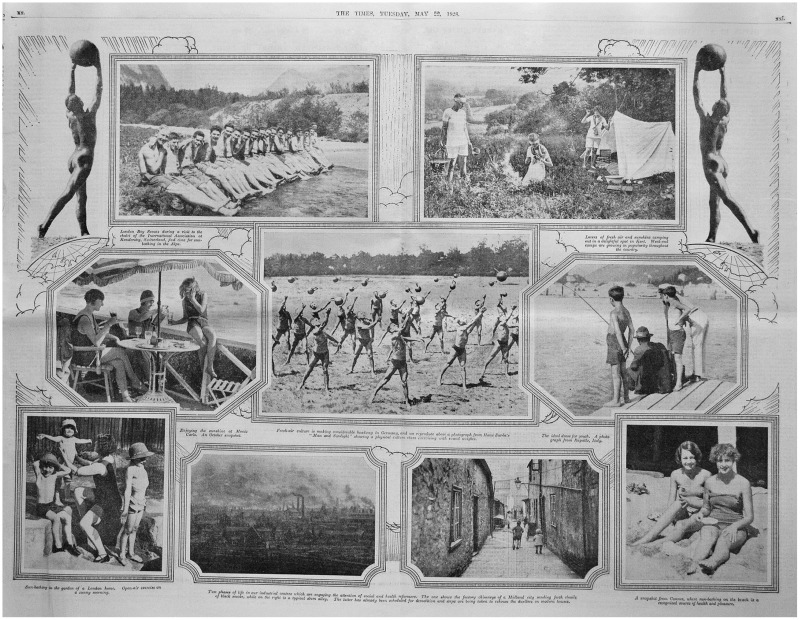
And just like the 21st Century, the 20th Century saw a resurgence of the popularity of sunlight, like their ancient historical counterparts. Below, you can see some pictures from historical sources that are sometimes over a century old (20):
First, soaking up sunlight in the Times in the 1920s:
And, in that same newspapper, a display of a sunlight apparatus - a UV lamp - in the 1920s:
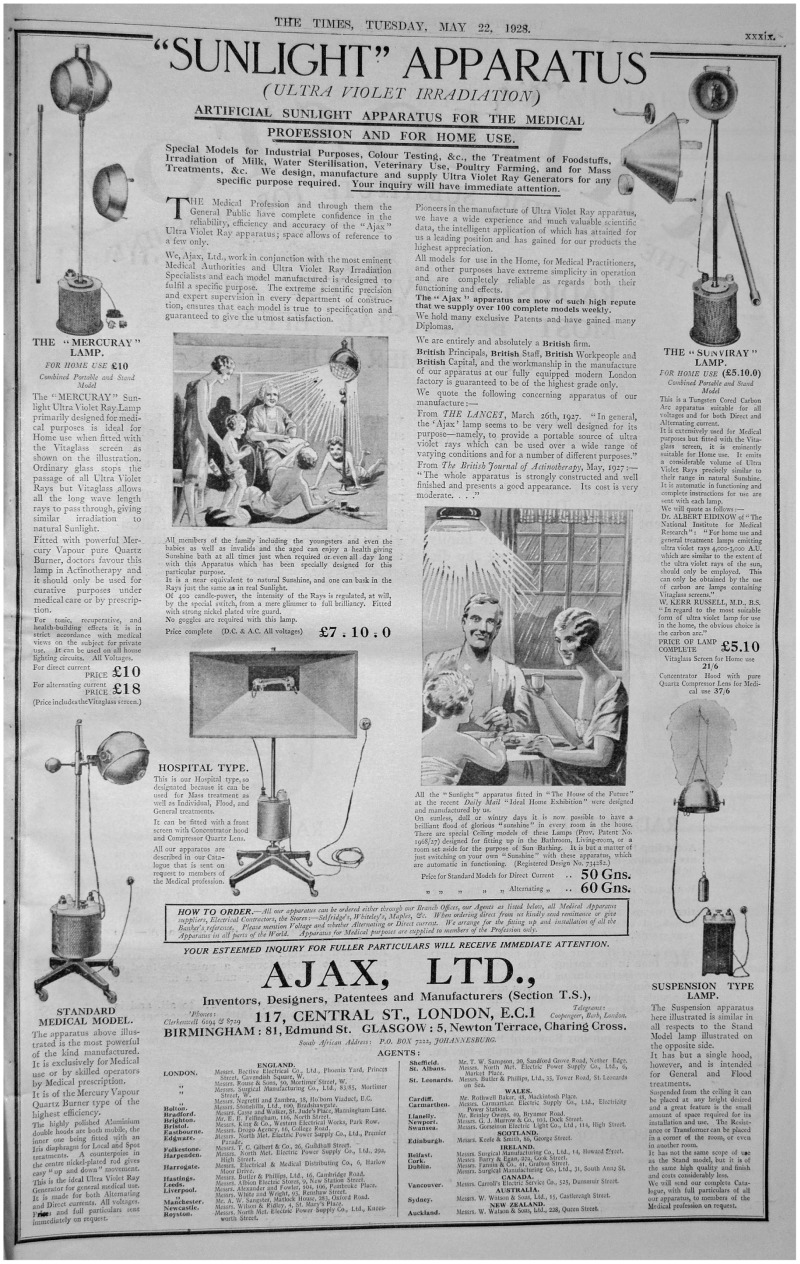
Some of such devices are still in the market today. The "Osram Vitalux" model from the 1930s is an example here - I've personally used that light bulb for ultraviolet A and B supplementation!
However, there's a surprising shift in this narrative regarding the health of sunlight! With the advent of antibiotics, less and less emphasis were placed on sunlight's health effects and the focus shifted towards medication.
So in a sense, the 1940s onward can be considered the "Dark Ages" of light therepy. Medicine and public opinion also became aware of the risks of excessive sunlight epxosure. Today that doesn't sound weird but back then the first links to excessive exposure and skin cancer were found. Here, historians write:
"Nevertheless, it was not until the 1930s that the U.S. Public Health Service began issuing warnings about sun-related health risks. People were cautioned to avoid the midday summer sun, cover their heads in direct sunlight, and gradually increase the time of sun exposure from an initial 5–10 minutes per day to minimize the risk of sunburn.
In the decades that followed, the skin cancer hazards of excessive sun exposure would be extensively studied and mapped. Today, the three main forms of skin cancer—melanoma, basal cell carcinoma, and squamous cell carcinoma—are largely attributed to excessive UVR exposure. Skin cancers became the most common form of cancer worldwide, especially among groups such as white residents of Australia and New Zealand." (21)
The key here is balance. I'll come back to that topic in an upcoming article on ultraviolet light exposure and melanoma (the most dangerous and aggressive type of skin cancer).
So there's that...
The exciting part?
Right when heliotherapy became less prominent, researchers found out some amazing things regarding the biological effects of red and infrared light on health. The focus in science thus shifted away from using ultraviolet light to fix things such as rickets etc, and towards red and infrared:
The Transition From Plant Research To Human Wound Healing
So, how long has red light therapy been around? Let's explore that question:
Here's an exciting background story: Theodore Maiman develops the first laser in the 1960s (22). Then a few years later, it was discovered that wound healing is sped up after shining a laser on tissue. I've written extensively about this topic in the past, such as in my PBM 2024 review - a conference on light therapy.
Here's what researchers write about that dynamic - the discovery of Endre Mester in 1967 of applying lasers to tissue:
"However, Mester’s custom-made ruby laser possessed only a very small fraction of the power possessed by McGuff’s laser. Despite not curing any tumors with his low-power laser beam, he did observe a heightened rate of hair growth and better wound healing in the rats in which he had surgically implanted tumors. This was the first indication that low-level laser light (rather than high power thermal lasers) could have its own beneficial applications in medicine" (22)
Before that, photosynthesis was refined around the 20th century in plant research, as a foundational mechanism (23). But different types of red or near-infrared light, weren't assumed to have any effects on human beings. Different aspects of plants' reaction to light were discovered from the 19th - 20th Century.
Then, in the 1970s, Mester tested light therapy in human beings and found similar results to the rat experiments (24). In the 1980s, moreover, the very famous researcher Tina Karu discovered the cytochrome-C oxidase mechanism in mitochondria (25). Mitochondria are the "energy producing factories" of your cells and are responsible for over 90% of energy created in your body.
Mitochondria don't just respond to energy derived from your food that's broken down. Instead, mitochondria also respond to red and near-infrared light.
However, applications were still limited back in the 1980s. Below you can see the number of publications that emerge over time from the 1980s:
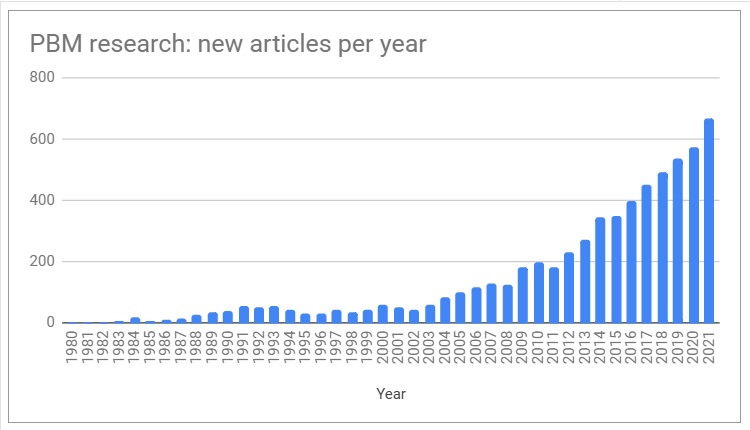
("PBM" here means "photobiomodulation" - what is commonly known as "red light therapy"!)
As of 2025, there are 8,000+ studies on light therapy in total. Even back in 2005, that number was still under 1,000 (26):
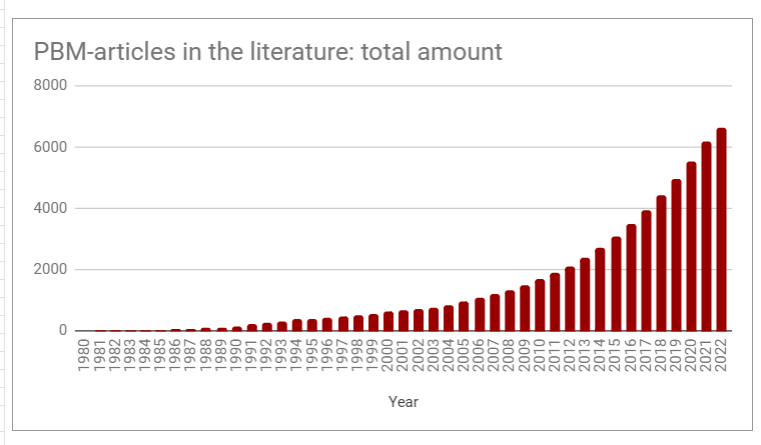
So the light therapy space has grown exponentially since the 1980s. Some of the experts who I've interviewed have experienced that entire period in their academic careers, such as Prof. Samir Nammour in dentistry. I've interviewed Prof. Nammour below, on the developments in dentistry since the 1980s:
 Bart Wolbers
But, let's explore Tina Karu's story in more detail below:
NASA’s "Accidental" Breakthrough
At the same time as Karu had her breakthroughs, NASA and associated organizations and institutions were working on using lights for growing plants in space (27).
Here's what NASA itself writes about the accidental discovery of the effects of different wavelengths in space:
"In the late 1980s, engineer Ron Ignatius worked at a company that partnered with the Wisconsin Center for Space Automation and Robotics (WCSAR), which was funded by NASA’s Marshall Space Flight Center in Huntsville, Alabama. As light-emitting diode (LED) technology entered the commercial market, Ignatius worked with WCSAR to study this new lighting for growing plants in space. In 1989, Ignatius founded Quantum Devices Inc., and Small Business Innovation Research (SBIR) funding from NASA paid the company to complete an LED plant-growth unit that grew potatoes on the space shuttle in 1995.
But the research had a side effect. The LEDs were red and blue because these are the most efficient light wavelengths for driving photosynthesis, and NASA scientists who spent time working with their hands under the lighting found that abrasions on their hands seemed to heal faster than normal." (27).
You may know that plants absorb most light through photosynthesis in the blue and red spectrum:
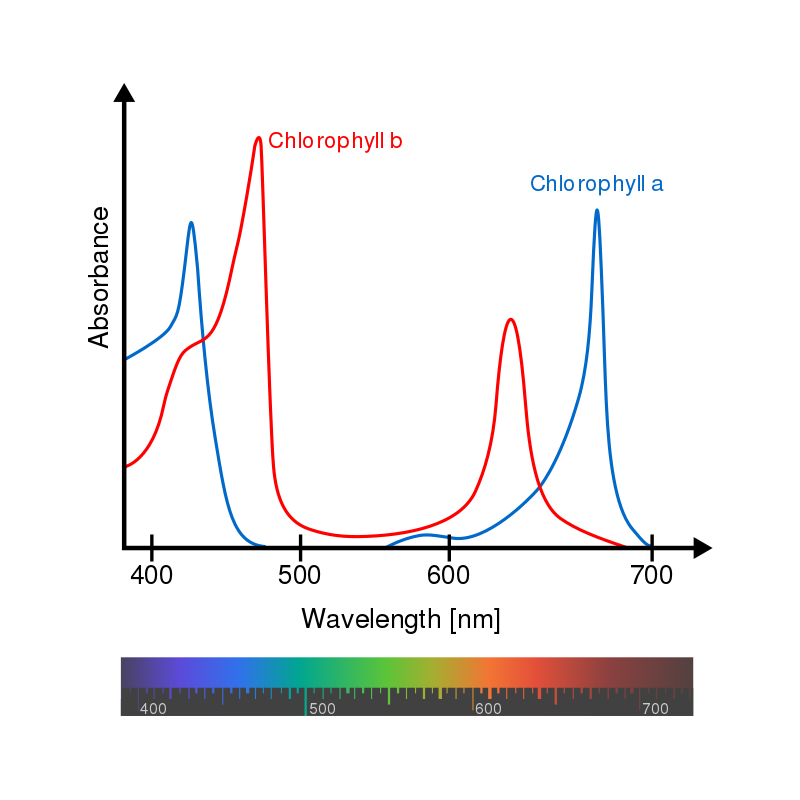
NASA found out that both the blue and red light turned out to have effects on human biology. Space travel and the absene of gravity gave huge problems for different goals such as wound healing, bone health, and others (27). But, NASA started using light therapy in the form of red light to counteract that dynamic.
(Prof. Hamblin, whom I've mentioned before, has written about that dynamic too (28)).
NASA's discoveries led to the further developments of LEDs for light therapy. Keep in mind that since the 1960s, different types of lasers have been the primary tool for applying what is now called "red light therapy". Of course, the LED breakthroughs in space were almost 1:1 translatable to terrestrial life.
The Birth Of Widespread LED Use
The development of light-emitting diodes (LEDs) and their widespread adoption in the 1990s were the result of decades of physics research. These developments, however, began in the 1960s - as did lasers - but there were only red LEDs back then. In the 1970s and 80s, green LEDs were added to that mix and then finally in the 1990s, blue LEDs emerged.
And with that emergence of the color blue in LEDs, it was finally possible to create full-spectrum lighting (29; 30; 31). However, initially, LEDs were still costly. This meant that it was challenging to develop light therapy products using LEDs.
In the 1990s to the 2010s, however, the price of LEDs dramatically decreased. Additionally, with multi-color LEDs and low prices, light therapy became accessible. At first, LEDs were primarily used in plant grow lights.
Then, around 2015-16, I remember seeing the first red light therapy companies using LEDs. I still recall Red Light Man being the first company offering lights with the correct wavelengths for human use (32). Back in the day, I was also following some Facebook groups and influencers, such as Dr. Jack Kruse's community, where they used red light for healing purposes. My good MD friend Neil still has one of the red lights from way back that he uses.
But I digress a bit! So, cheaper LEDs made red light therapy possible. At first, I remember people calling to grow light suppliers and asking them whether they could implement, say, 660 and 850 nm light into these panels. Grow light suppliers would answer people saying that these wavelenghts wouldn't be optimal for plant growth and that the plants wouldn't grow.
(LOL!)
That was the nature of the red light therapy space around 2015 or 2016. Then, in 2017, I started working with Alex and wrote my first article on red light therapy, before I even graduated university. You can still read that original red light therapy article on the Internet History on the older Alex Fergus website.
And that's where it all started. Many different companies started popping up in 2016-17. After Red Light Man, Joovv joined the battle. And then in 2018-19 it was off to the races! Dozens and dozens of companies emerged, and that has increased to hundreds if not thousands in 2025.
The light therapy space is bigger than ever now...
And, likely, the light therapy space will only continue to grow. Here you can see the massive growth of light therapy in the last few years, for instance, when looking at how Google search terms were used:
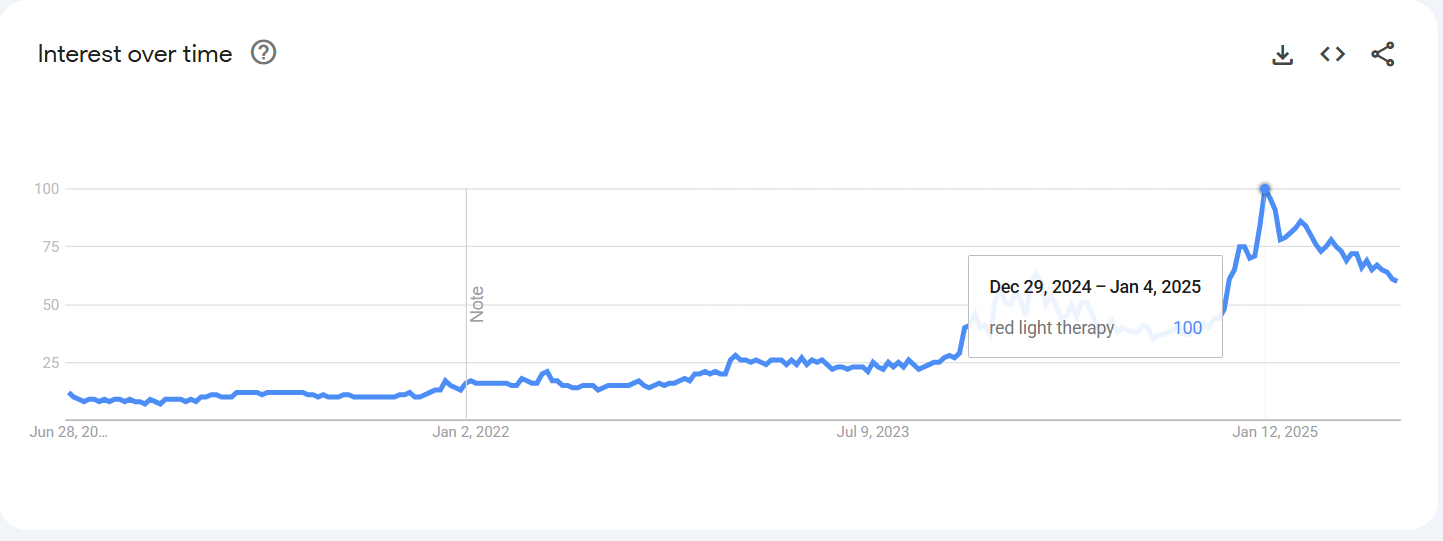
You can't see it but the number of searches for red light therapy has 8X'ed since 2021! So that's huge, huge growth!
Red Light Therapy's Integration Into Modern Medicine
Red light's therapy's integration into traditional medicine has been a slow, slow process. I remember James Carroll from Thor Lasers saying that he'd expected in the 1980s that in a decade, every hospital would be filled with light therapy. You can see the interview with James Carroll below, by the owner of this website, Alex Fergus:
Only recently has "photobiomodulation" or "red light therapy" been integrated into medical procedures and guidelines. An often-cited example here is the use of light therapy for cancer treatment side effects (33). Wound healing is another area in which light therapy treatments are emerging, in Wales in the UK (34).
Overall, there's still very little mainstream implementation of photobiomodulation in medicine today. Usually, the average doctor doesn't know about light therapy or its effects. Although I'm talking to more and more doctors and other medical professionals in our Facebook group, for instance, and other places, who are using light therapy with their patients.
I'm always certain that the dynamic will change, however, in the coming years. And, contrary to what you may be expecting, it's not the expansion of lasers or LEDs in academic circumstances that is driving that change. Instead, it's the consumer market that's growing exponentially, at 50-70% year-over-year in the last few years, that drives the change from the bottom up.
I've been fortunate enough to have had a front-row seat during this dynamic. And millions of customers across the world are currently experiencing life-changing results, which, in my opinion, is sufficient motivation for mainstream medicine to start taking notice of this dynamic.
So, yeah, I think mainstream medicine will be forced to venture more into light therapy because the results that people are getting are undeniable and the dynamic is no longer possible to ignore. Keep in mind that I'm not saying that mainstream medicine has been ignoring light therapy intentionally. Instead, I think the industry is very conservative inherently, and that the standards for the acceptance of new therapies is extremely high because of the Hippocratic oath and other reasons!
Want More Red Light Deep Dives? Join My Advanced Science Course:

Join my 100% free advanced science light therapy course above, where I take deep dives into many different topics, such as mechanisms, neurology (Alzheimer's, Parkinson's, etc), exercise recovery, skin beauty & rejuvenation, and much more. Here's what you can expect:
- My latest take on using light therapy for Alzheimer's, Parkinson's, and other neurodegenerative diseases, updated late 2025.
- Countering joint problems and lowering pain by 20-40%, such as osteoarthritis
- The best light therapy routines to optimize sleep quality and gym performance, leading to significant boosts in these areas.
- Current 2025-26 updates on using red light therapy for skin rejuvenation, and which wavelengths, power outputs, devices, and routines I recommend there.
- All of this info based on peer reviewed reviews, or human RCT studies ideally, broken down by me on camera.
Some of the topics are only published in that course, such as UV light risks and benefits, addiction, anxiety, depression, and more. So join HERE!
The Future Role Of Red Light Therapy In Medicine
So, the future of red light therapy is very bright. Light therapy has started penetrating mainstream medicine and is integrated into some treatment protocols for different conditions today.
Age-related macular degeneration - where you slowly go blind over time - is one example. I believe that tons and tons of applications will be added over time, such as neurodenerative diseases, diabetes, heart and blood vessel conditions, other eye conditions, metabolic issues, pain, and much more!
As you know, the research on light therapy is growing exponentially. And, it's growing exponentially precisely because it works, plain and simple! Sure, red light therapy isn't a panacea, the cure for everything. And you'll always need to keep the pros and cons of red light therapy into account. Different wavelengths of light also have different effects, another important thing to consider.
Nevertheless, I've seen this trend personally when considering red light therapy for dentistry, when I attended conferences on the topic. Dentists believe that red light therapy will be standard practise in the field over time, especially with prices coming down. So you'll see red light therapy as an additional tool used by dentists, just like implants are, or anesthesia - things that weren't around really, in 1900. The very well-founded assumption here is that dentists will routinely apply light therapy in their clinics from 2030-2040 going forward.
And, yeah, there's another dynamic of light therapy being used:
The Rise Of Red Light Therapy In Personal Wellness
Nobody has promoted light therapy more than both the biohackers and the beauty industry. These are two bottom-up domains where light therapy is extensively experimented with, and implemented into people's daily lives!
In a way, that bottom up dynamic is exactly the opposite of what's happening in the top-down dynamic of science. And yet, both mutually support each other. The more consumers start implementing light therapy into their lives, the better the industry will do. And the more science you've got available on red light therapy, the easier it is to promote it as a solution for different goals.
Nevertheless:
The Unpredictable Future Of Red Light Therapy?
Where will the future go with light therapy? You and I don't know. There are always new developments and breakthroughs that couldn't have been forseeen earlier.
This year we've seen light having an effect on blood glucose levels, for instance. Which now makes light therapy for diabetes a promising avenue to start exploring. There are probably half a dozen studies planned on this topic already, and if these also show promising effects, hundreds if not thousands of new studies will emerge in the new century.
Same for neurodegenerative disease. In the last few years, we've seen tons and tons of great studies emerge on Parkinson's, tinnitus, fibromyalgia, and others. Now that the first very promising results are in, the dynamic has shifted. It now makes sense to fund million-dollar studies on these topics, often together with companies that offer red light therapy devices, for overall health!
Again, the future for red light therapy is bright! What the future exactly holds, you and I don't know, but we can say that the future is very bright. We're at the eve of a new evolution or revolution, or whatever you want to call it, and medicine will never be the same...
Conclusion: The Future Is Brighter Than The Past!
With exponentially growing research on red light therapy coming out, the future is bright. And the main reason why so many publications come out on this topic, is because red light therapy simply works across the board!
No matter what the goal or underlying condition, from osteoarthritis to workout recovery to fibromyalgia to Alzheimer's disease and skin beauty, there's a benefit for everyone.
Consumer products in the space are also hot. Every few years, we're seeing the development of new products with new wavelengths, application methods, and so forth. I'll keep following the science on this topic in great detail and keep reporting to you what the future holds!
This is a post by Bart Wolbers of Lighttherapyinsiders. Bart finished degrees in Physical Therapy (B), Philosophy (BA and MA), Philosophy of Science and Technology (MS - with distinction), and Clinical Health Science (MS), has had training in functional medicine, and is currently chief science writer.
Found This Interesting? Then You Might Like:
- Start Here - Light Therapy 101 & Buyers Guide
- Discount Codes, Deals & Recommendations - Red Light Therapy
- Red Light Therapy Wavelengths Benefits: The Ultimate Guide
- The Truth About Sunlight, Red Light & Health: Ra Optics Interview
- Sun Exposure & Melanoma Risk: The Huge Light Therapy Implications
- Red Light Therapy And Its Potential For Diabetes
- Gut Health & Red Light: A Surprising Connection
- Intravenous Light Therapy: Everything You Need To Know