
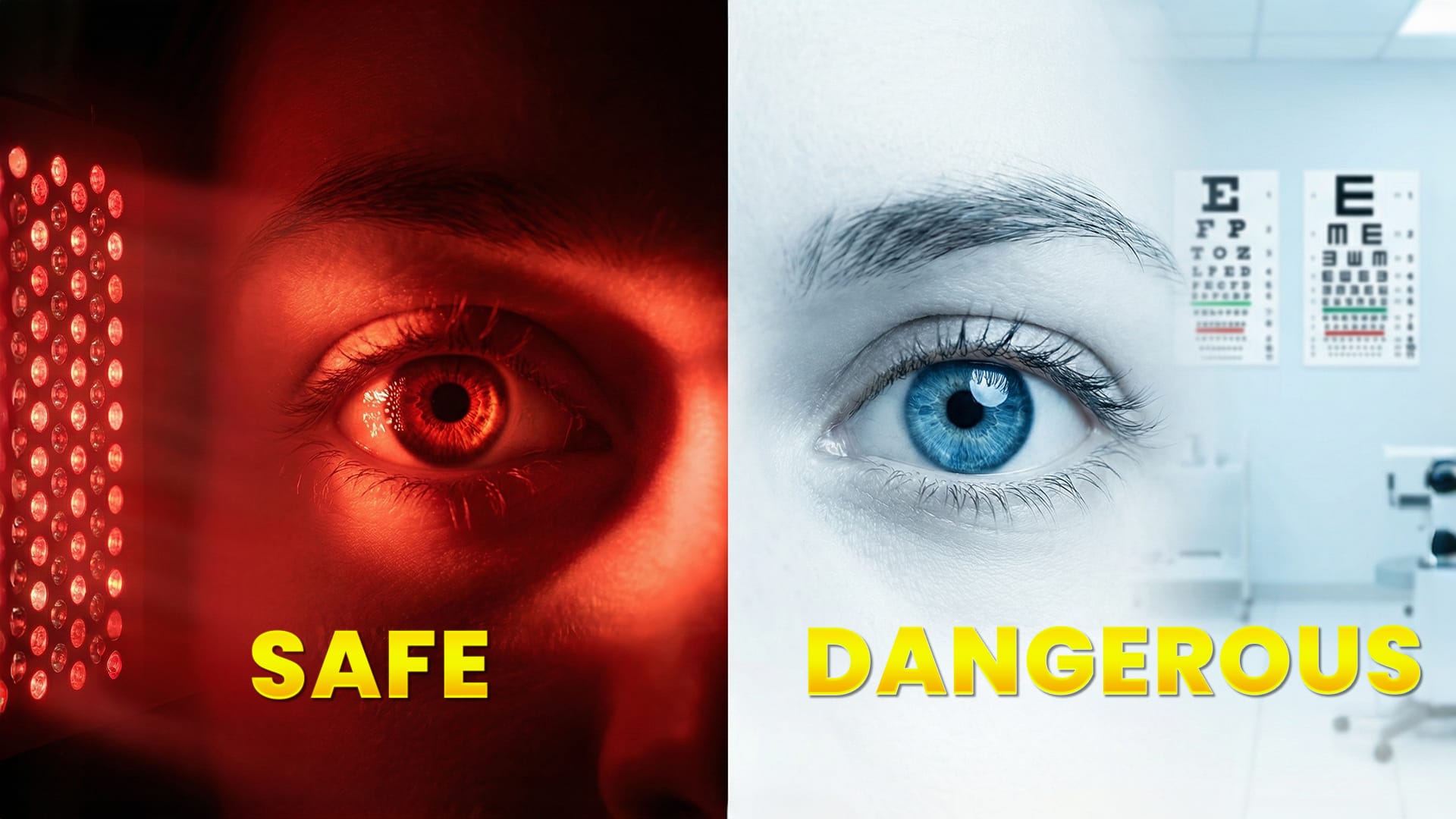
If you're considering using red light therapy (RLT) for your health, one of the top concerns you may have is whether it's safe for your eyes. After all, exposing your eyes to any kind of light, especially at close range, can seem risky. But the good news is that the science shows red and near-infrared light therapy is generally very safe for your eyes - when used properly.
In this in-depth article, Bart dives into the research to uncover the truth about red light therapy and eye safety. We'll cover:
- A conservative, science-backed protocol for using RLT safely around your eyes
- How the light exposure from RLT compares to natural sunlight exposure
- The role of blue light and UV exposure, and how to balance them
- What the research says about eye health in hunter-gatherer societies
- Practical tips for using RLT devices near your face
- Recommendations for supporting overall eye health
By the end, you'll have a clear understanding of whether red light therapy is safe for your eyes and how to use it effectively. Let's get started.
The Conservative Red Light Therapy Protocol for Eye Health
A very conservative protocol for using red and near-infrared light therapy around the eyes is recommended, with a dose of 40-50 mW/cm² for just a few minutes at a time.
This is important because many people worry that any exposure to these wavelengths could be harmful to the eyes. But Bart's protocol is based on a thorough review of the research, and it's designed to be extremely safe.
To put this dose into perspective, Bart explains that it equates to a total exposure of just 3-4.5 J/cm² over the course of the treatment. Compare that to the hundreds or even thousands of J/cm² that outdoor workers and hunter-gatherers are exposed to from natural sunlight every day, and you can see how conservative this protocol really is.
The reason Bart recommends this low dose is that the research shows it's effective for supporting eye health, without posing any significant risk. Studies have found benefits of red and near-infrared light for conditions like age-related macular degeneration, diabetic retinopathy, and dry eye.
And importantly, this dose is much lower than the exposure levels that have been shown to cause any kind of eye damage. So as long as you stick to this conservative protocol, you can feel confident that you're using red light therapy safely around your eyes.
Comparing Red Light Therapy to Natural Sunlight Exposure
Another key point Bart makes is that the light exposure from red light therapy is minuscule compared to what we get from natural sunlight. This is an important context to understand, because it helps put the risks and benefits into perspective.
Bart explains that the average person who works indoors under LED or fluorescent lighting may only get 1-30 J/cm² of total light exposure over the course of a day. And most of that is in the blue light spectrum, which can be stressful for the eyes.
In contrast, outdoor workers and hunter-gatherers who spend significant time in natural sunlight can get 50-100 times more light exposure, including high doses of blue light and UV radiation. And yet, these populations tend to have better eye health overall than modern indoor-dwelling humans.
The reason for this seeming paradox is that our eyes and bodies are actually adapted to handle high doses of natural light. In fact, Bart argues that a certain amount of "stress" from things like UV, blue light, and even heat exposure can be beneficial for eye health and overall health.
So while it's important to be cautious about overexposure, the low doses used in red light therapy are actually far below what our eyes and bodies are designed to handle. As long as you're not staring directly into the light source for hours on end, you can feel confident that the exposure from RLT is safe.
The Role of Blue Light and UV Exposure
One aspect of light exposure that's important to understand is the difference between the various wavelengths, especially blue light and UV radiation.
Blue light, which makes up a significant portion of indoor lighting as well as natural sunlight, can have some negative effects on the eyes. It can disrupt the body's circadian rhythms, contribute to eye strain and fatigue, and potentially cause long-term damage to the retina.
UV light, on the other hand, is the highest-energy wavelength that reaches the Earth's surface. While it's essential for vitamin D production and has other health benefits, too much UV exposure can also damage the eyes and skin over time.
The good news is that red and near-infrared light, which are the primary wavelengths used in red light therapy, don't carry these same risks. In fact, Bart argues that these "healing" wavelengths can actually help offset the negative effects of blue light and UV exposure.
So while it's important to be mindful of your overall light exposure, especially if you spend a lot of time indoors, the low-level red and near-infrared light used in RLT is unlikely to cause any harm. In fact, it may even provide a protective effect for your eyes.
What the Research Says About Hunter-Gatherer Eye Health
The eye health of hunter-gatherer societies, who spend a significant amount of time outdoors in natural sunlight, provides an interesting counterpoint to the eye health issues seen in modern, indoor-dwelling humans.
Despite being exposed to 10-100 times more light, including high doses of blue light and UV radiation, hunter-gatherers tend to have better overall eye health than their indoor-dwelling counterparts. They have lower rates of myopia, age-related macular degeneration, diabetic retinopathy, and other common eye conditions.
The one exception is cataracts, which are more common in these populations. However, Bart notes that cataracts are generally treatable through surgery, and the overall benefits of their outdoor lifestyle seem to outweigh this one potential downside.
This data suggests that our eyes and bodies are actually well-adapted to handle high doses of natural light exposure, as long as it's balanced with the right nutrients, circadian rhythms, and other lifestyle factors. And it provides further evidence that the low-level red and near-infrared light used in RLT is unlikely to cause any harm.
Practical Tips for Using Red Light Therapy Around Your Eyes
If you're interested in using red light therapy for eye health, there are a few practical tips to keep in mind:
- Use a handheld device or stand back from panels: Bart recommends using a simple handheld device or standing 8-10 inches back from a tabletop or wall-mounted panel, to keep the light exposure in the 40-50 mW/cm² range.
- Consider wearing protective eyewear: While not strictly necessary, some people may feel more comfortable wearing protective eyewear, especially if they're standing very close to the light source.
- Start slowly and listen to your body: If you experience any discomfort or negative effects, stop using the light and adjust your protocol. Everyone's eyes are different, so it's important to find what works best for you.
- Combine with other eye-supporting strategies: In addition to red light therapy, Bart recommends supporting eye health through proper nutrition, circadian rhythm management, and other lifestyle factors.
For specific device recommendations, Bart suggests checking out companies like Chroma, Rouge, and Block Blue Light. These brands offer a range of high-quality red light therapy devices, as well as other lighting solutions for supporting eye health.
Supporting Overall Eye Health
While red light therapy is a powerful tool for supporting eye health, it's important to remember that it's just one piece of the puzzle. Bart emphasizes that a holistic approach, incorporating proper nutrition, circadian rhythm management, and other lifestyle factors, is essential for maintaining healthy eyes.
Some key nutrients that have been linked to eye health include vitamin A, vitamin D, lutein, zeaxanthin, and omega-3 fatty acids. Ensuring you're getting enough of these nutrients, either through diet or supplementation, can help support overall eye function and resilience.
Additionally, factors like regular physical activity, proper sleep, and managing blue light exposure can all play a role in maintaining healthy eyes. By taking a comprehensive approach, you can maximize the benefits of red light therapy and support your long-term eye health.
If you're interested in learning more about red light therapy, eye health, and other science-backed strategies for optimal wellness, be sure to check out the Light Therapy Insiders weekly newsletter, as well as the latest reviews and articles on the Red Light Therapy Blog. And if you're ready to dive deeper, you can get instant access to a full Red Light Therapy course for free.
Bart's Bio:
This is a post by Bart Wolbers. Bart finished degrees in Physical Therapy (B), Philosophy (BA and MA), Philosophy of Science and Technology (MS - with distinction), and Clinical Health Science (MS), has had training in functional medicine, and is currently the head researcher at Lighttherapyinsiders.com
Join Bart's 100% free advanced science light therapy course above, where he takes deep dives into many different topics, such as mechanisms, neurology (Alzheimer's, Parkinson's, etc), exercise recovery, skin beauty & rejuvenation, and much more.
Some of the topics are only published in that course, such as UV light risks and benefits, addiction, anxiety, depression, and more. So join HERE!