
Mice Study: Indoor Blue Light Exposure Causing Weight Gain & Why You Need Red & NIR
I, Bart, decided to dig deep into that research team's publications and found another gem: blue light exposure and weight gain in mice! I'll cover that study below as it has huge implications for human health.
Also, we've added the latest articles, news, and much more, in the newsletter below...
Groundbreaking 2025 Mice Study: Blue Light & Weight Gain?!?
This paper was published by Glen Jeffery and his team in Feb 2025. You can read the full text for free.
So here's the counterintuitive outcome - with both 420 nm and 450 nm, measured against a placebo:
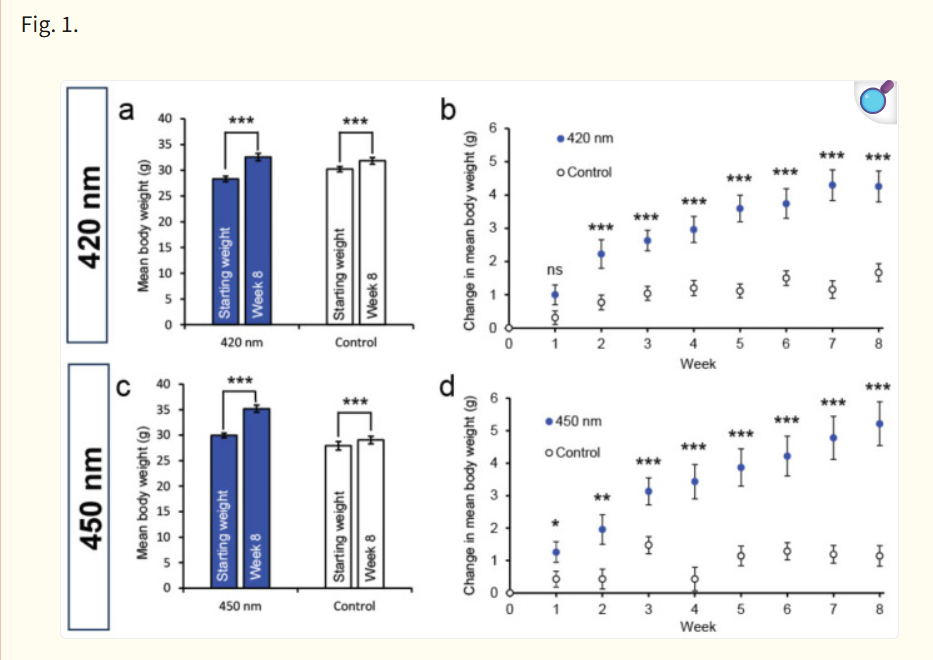
As you can see in the blue columns on the left, the mice exposed to both 420 and 450 nm gain a lot more weight than the mice in the white column on the right.
The researchers explain the mechanisms of this dynamic really well in the abstract (sort of summary) of their paper:
"Mitochondria absorb short wavelengths around 420 nm. This is associated with reduced ATP and restricted mobility. The 420–450 nm range is a significant element of LED lighting and computer monitors. Here we expose freely moving mice to 420–450 nm lighting and show rapidly weight gain within a week. This may be due to reduced mitochondrial demand for circulating carbohydrates. Both groups displayed marked shifts in serum cytokines. Open field mobility was examined. The distance travelled was similar between both experimental groups and their controls. However, both experimental groups showed avoidance of central regions consistent with anxiety-like behaviours. This was significant in the 420 nm group whose wavelength exposure is closer to peak mitochondrial absorbance. These data demonstrate the potential hazards of exposure to specific short wavelengths in the visual range now common in the built environment."
So, there's more than just weight (fat) gain. The metabolism shifts away from tolerating carbohydrates. And cytokines (which can be associated with inflammation) go up. And, the mice display avoidance and stress (anxiety) related behaviors.
In part, the 420 nm is the absorption peak in "Cytochrome C Oxidase" in the mitochondria. We've talked about that topic in great detail in the article below - on how red and near infrared light make that process more efficient:
 Bart Wolbers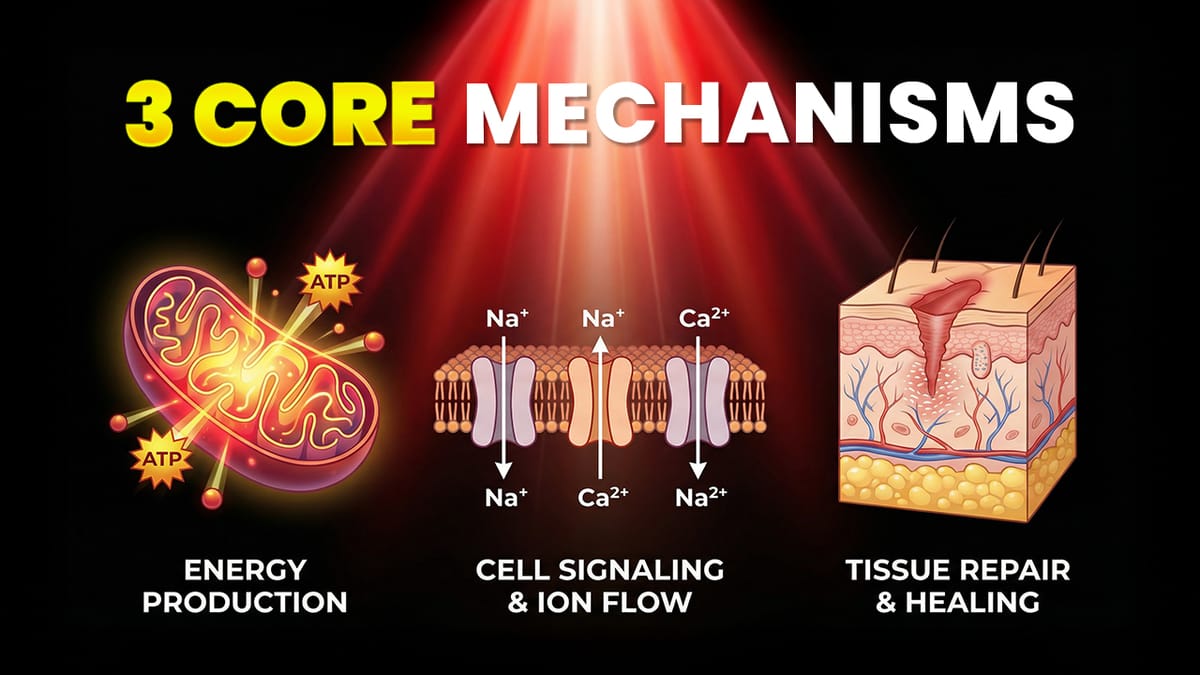
Isolated blue light therapy - which you'll have in many modern indoor LEDs and fluorescent lights - thus have the opposite effect. And, so much so, that the researchers speculate that the energy-creation process in the mitochondria is impeded, less substrates (fats, carbohydrates) is burned, and weight gain is the result!
The solution? Simple. Healthy indoor lighting. Many companies like Chroma (code ALEX saves) and Block Blue Light (discount automatically applied) offer great options here.
But let's get back to the paper. Here's what the paper states about the dyamic of impeding metabolism and energy production:
" Selective retinal exposure [i.e., the area in the back of the eye] to 420 nm at solar environmental levels in mice produces a significant reduction and instability in retinal metabolism, lowering mitochondrial activity and shifting the balance between oxygenated and deoxygenated blood. Here the impact of this light continued for > 1 h after the stimulus was removed. "
So, effects last even after you're out of that toxic light environment. Will this have implications for humans? Absolutely, as we've changed our lighting environment extremely dramatically in the last 100 years, and especially the last 20-30.
In the past, we'd at least have healthy indoor lighting, with lots of red and near-infrared emitted by incandescent and halogen bulbs. But these bulbs are prohibited by law now, in many areas to "save energy". This is one area where saving energy and wanting everything cheaper is not the best for human health.
What's interesting as well is that 450 nm has similar effects to 420 nm - so both are harmful. So that's most of the blue spectrum that's implicated now in these weight gain issues - at least in mice. Of course, ideally, we'd have more experimental setups in humans, where incandescent indoor lighting was tested against blue-dominant LEDs and fluorescent lights.
If you want to go a step further, we can also zoom in on the many behavioral changes that have been noticed - showcasing Figure 4 of the paper:
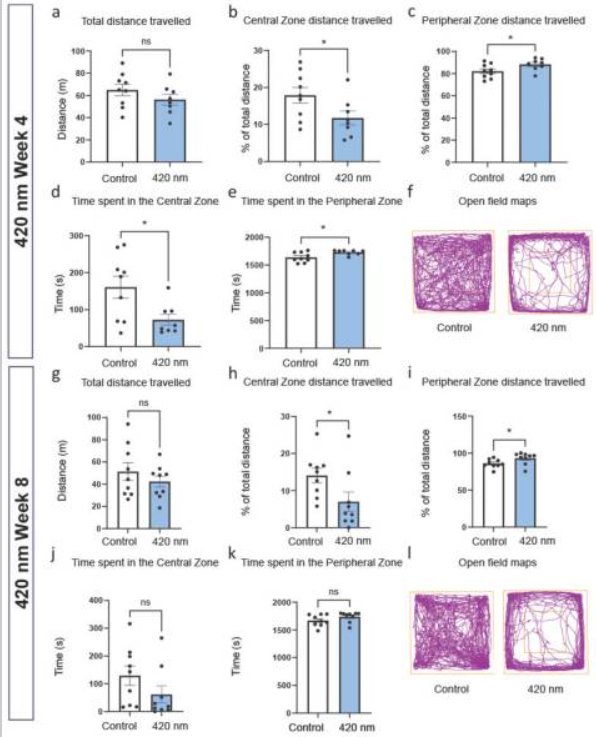
As you can see, the total distance travelled (movement) of the mice changed with blue light exposure. The movement pattern also chaned big time.
Does this have implications for humans? Almost certainly. Would we like to see these claims verified in human studies? Once again, yes!
Nevertheless, there are many more gems in the full text of the paper by the researchers. So check that out if you want more info. Here's a quote, for instance, on the difference between red and near-infrared on the one hand, and blue light on the other hand:
"In bees 420 nm light dysregulates blood sugars resulting in their elevation in a standard blood glucose tolerance test, while 670 nm significantly improves glucose tolerance. Glucose was not monitored in this study, but in light of previous work it is possible that 420 nm and 450 nm both reduced mitochondrial function resulting in reduced demand for serum glucose16. Although similar experiments have not been undertaken in humans, it is established that 670 nm light that increases mitochondrial activity results in increased oxygen consumption and tighter regulation of serum glucose13. While short wavelength exposure has a significant and very rapid impact on human physiology, particularly heart rate and blood pressure1, but it remains unknown if this includes blood glucose regulation."
And, lastly, you don't need to be afraid of natural light exposure. We've got some great articles on sunlight, for instance, where the blue light is always balanced out by red and near-infrared light. Here are some articles on that topic, if you're interested:
 Alex Fergus
 Bart Wolbers
Here Are Our Latest Light Therapy Insiders' Articles:
Every single article that we've published recently - you can find the videos in the article itself:
- MitoHacker 5.0 Review: Wide & Powerful? - Believe it or not, but Mito Light have upgraded their panels again in a new generation! Here's Alex's in-depth review, and why these panels are among the top contenders for the top, especially if you live in the EU.
- Is Red Light Therapy Safe for Your Eyes? - We're getting tons of questions about red light therapy and eye safety, so Bart decided to go through all of the data and give you lots of calculations and science - demonstrating how his 40-50 mW/cm2 protocol is very very safe.
- Red Light News February: EPIC Launches, Research & Updates! - the latest products, science, Q&A, gossip, company news, and anything in between from the light therapy space, explained by Alex Fergus!
- Common Red Light Therapy MYTHS Debunked: New Science - Ari Whitten has published an amazing book and Bart just interviewed him about that. The book is co-written with Prof. Michael Hamblin who has been on our show before.
- Celebrities Using Red Light Therapy: 7 Epic Examples 2026 - Yes, this is a more popular topic but we're trying to see whether we can attract a new audience here, with lighter, less science-heavy topics!
Also, Check Out Some Of Our Other Content:
Below you'll find some of our best content that you shouldn't miss:
Light Therapy Advanced Science Course (Just Launched!):
Join Bart's 100% free advanced science light therapy course above, where he takes deep dives into many different topics, such as mechanisms, neurology (Alzheimer's, Parkinson's, etc), exercise recovery, skin beauty & rejuvenation, and much more.
Some of the topics are only published in that course, such as UV light risks and benefits, addiction, anxiety, depression, and more. So join HERE!
Red Light Therapy Buyers Guide
 Alex Fergus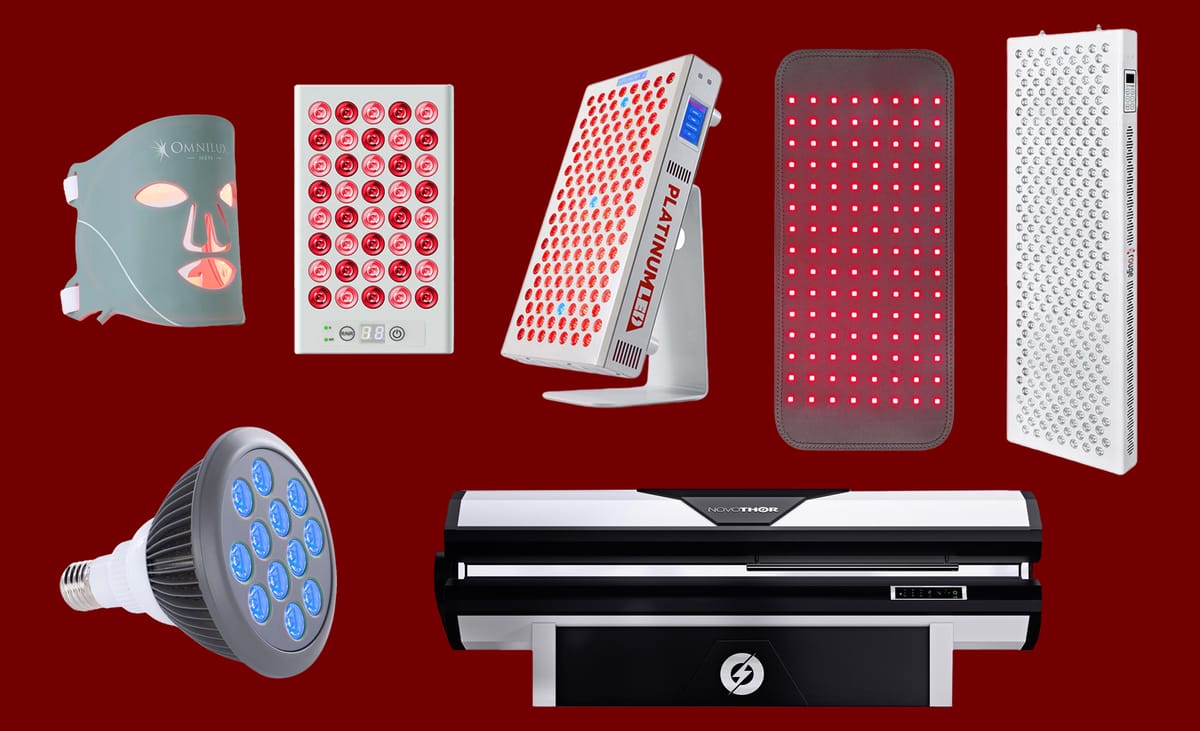
Red light therapy uses red and infrared light to achieve a biological effect. Dive into this topic and select a device that's right for you.
LED Mask Shopping Tool


My extension shopping tool compares all of the world's best (and not so good!) Red Light Masks.
How To Use Red Light Therapy 101: The Best Guide For Starters
 Alex Fergus
You have your device? Let me help you use it.
Red Light Panel Shopping Tool

My extension shopping tool compares all the world's best (and not-so-good!) Red Light Panels!
Exclusive - Discount Codes, Deals & Recommendations
 Alex Fergus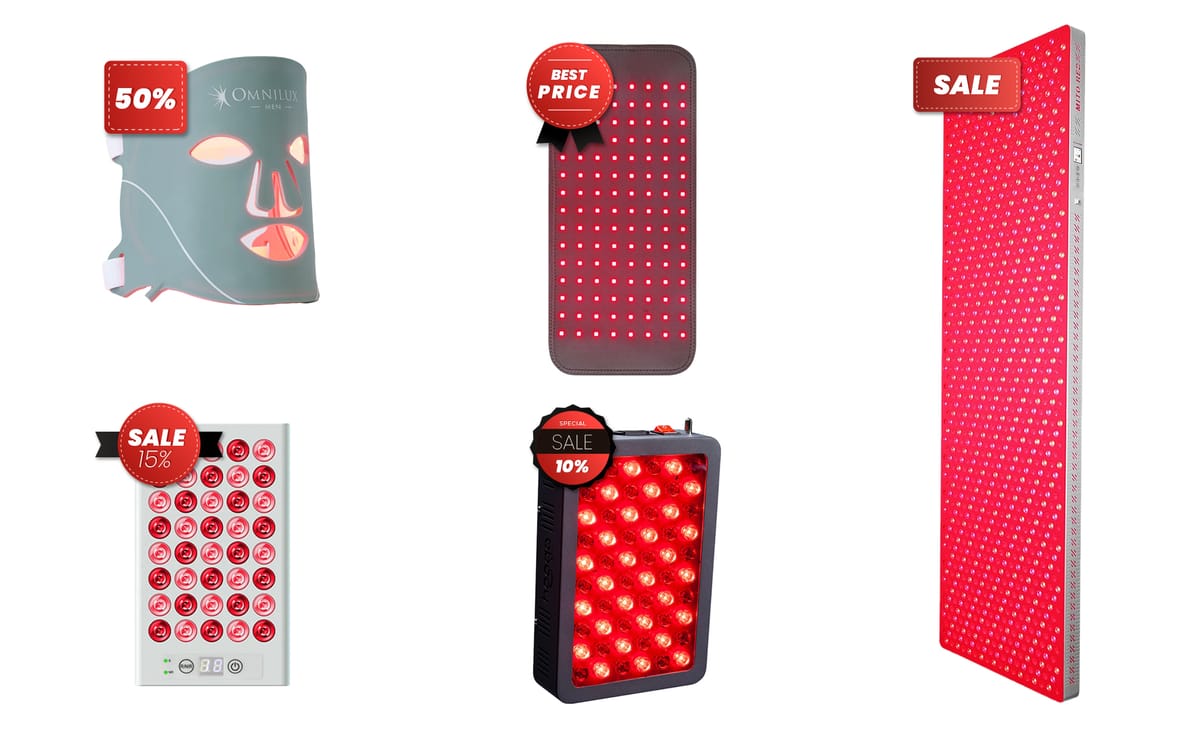
Shopping for a red light device? Use this resource to save! We've got deals for most of the big and best brands out there...