
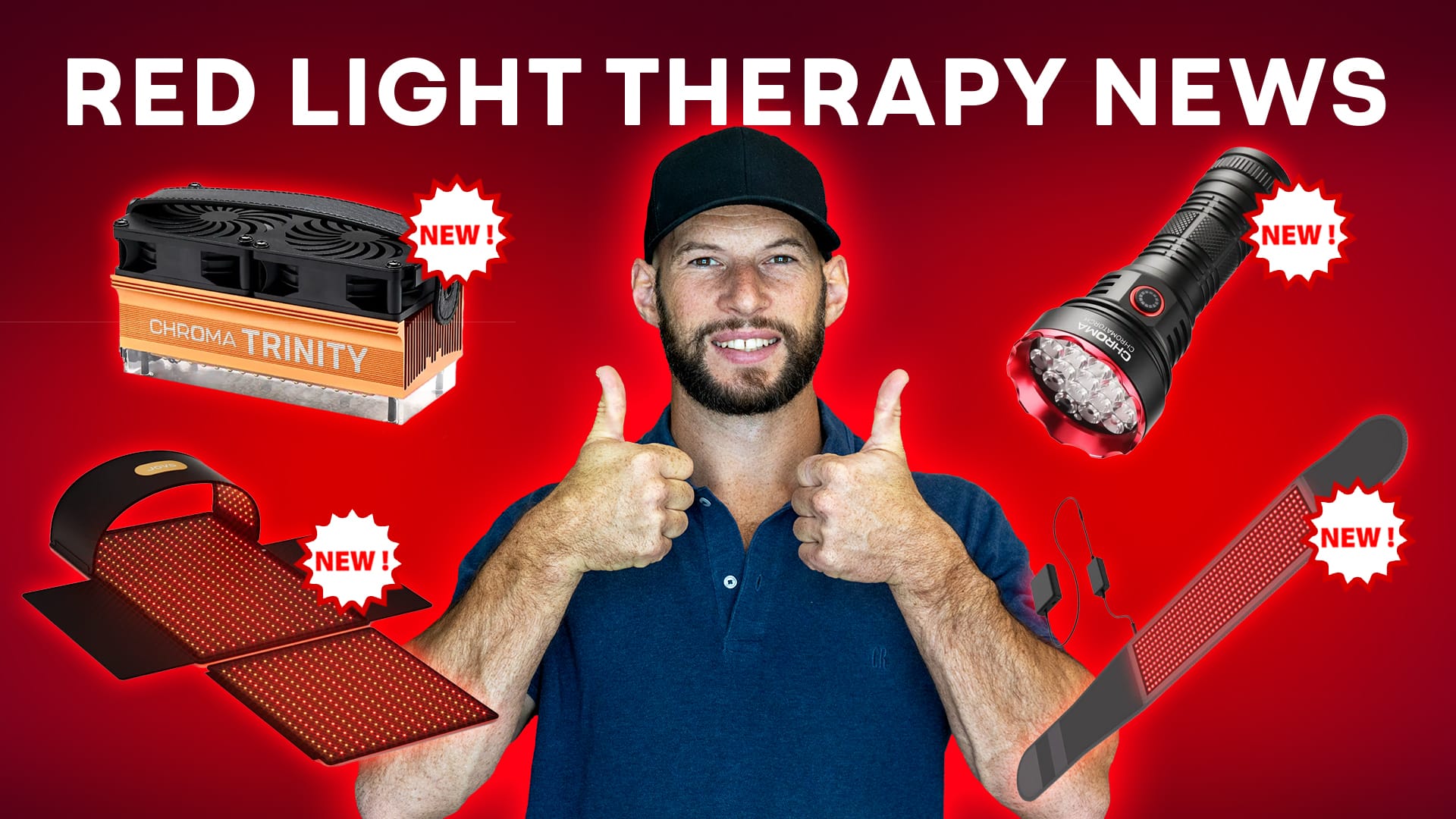
Chroma's Groundbreaking Trinity Device
2026 is shaping up to be a banner year for the red light therapy industry, with a slew of innovative new devices and technologies hitting the market. One of the most highly anticipated releases is the Chroma Trinity, a cutting-edge device that combines three of Chroma's most popular products - the Iron Forge, the Lux Vital, and the Dite - into a single, powerful unit.
The Trinity is truly a marvel of engineering, packing an incredible 11 different wavelengths into one sleek package. From the healing power of red and near-infrared light to the skin-rejuvenating benefits of UV, this device has it all. And with a whopping 5-year warranty, Chroma is clearly confident in the Trinity's durability and performance.
Of course, all of this advanced technology comes at a price - the Trinity retails for a cool $3,300. But for those who are serious about maximizing the benefits of red light therapy, it may well be worth the investment. There's simply nothing else like it on the market right now.
If you're interested in getting your hands on a Trinity, be sure to use the discount code ALEX to save 8% off your purchase. And keep an eye out for the upcoming review - it'll be putting the Trinity through its paces to see if it lives up to the hype.
Chroma's Expanding Product Line
But the Trinity isn't the only new offering from Chroma. The company has also unveiled its Chroma Torch, a powerful handheld device that delivers deep red (670nm), near-infrared (810nm), and far-infrared (850nm) light. This versatile tool is perfect for targeting specific areas of the body, whether it's sore joints, muscle aches, or other localized issues.
And that's not all - Chroma is also branching out into the world of sun exposure and skin health. The company is now selling a line of merchandise that promotes the benefits of safe, responsible sun exposure. While this may not be for everyone, it's a fascinating new direction for the brand.
To get your hands on the Chroma Torch or any of Chroma's other products, be sure to use the discount code ALEX for 8% off your order.
The Latest from Hooga, Block Blue Light, and Kineon
Of course, Chroma isn't the only company making waves in the red light therapy space. Hooga has a new $300 belt on the market, which may be of interest to those looking for wearable options. While I didn't seem overly impressed with this particular product, I am planning to do more reviews and comparisons of belts and pads in the coming year.
Block Blue Light, meanwhile, is rolling out its sixth-generation pedal range, with the Ultimate, Mega, and smaller panels all getting an upgrade. I had a chance to test out the Ultimate panels during a recent trip to New Zealand, and I was impressed by the sheer power and warmth of the devices.
And let's not forget about Kineon's Move Plus Pro 2.0, which is now available for pre-order. I recently interviewed one of the co-founders, and they are excited about the various improvements and tweaks that have been made to this popular device.
If you're interested in any of these products, be sure to check out the links. Block Blue Light offers a 15% discount, PlatinumLED has a 5% discount on their BioMax panels, and Hooga is offering 12% off their devices.
JOVS Innovative Full-Spectrum Sleep Tech
One of the most intriguing new products on the horizon is JOVS full-spectrum red light sleeping pod. This innovative device is designed to bathe the user in a range of wavelengths, from 590nm all the way up to 1200nm. That's a far cry from the typical single-wavelength red light therapy devices we're used to seeing.
According to JOVS, this full-spectrum approach is more effective at promoting relaxation, sleep, and overall well-being. And the fact that it's integrated into a sleeping pod or bag makes it even more convenient for users to incorporate into their daily routines.
This product is understandably exciting, and I am hoping to get my hands on one for a full review. If you're interested in trying out JOVS full-spectrum sleep tech, be sure to use the discount code ALEX to save 10% on your purchase.
The Power of AI-Powered Guidance
One of the most intriguing developments in the red light therapy space is the free AI-powered "Help Me" tool that's available on the Light Therapy Insiders website. This innovative tool allows users to get personalized guidance and recommendations on everything from product selection to usage protocols.
This tool has been receiving rave reviews from users, with no one seeming to have anything negative to say about it. And the best part? It's completely free to use, at least for now. So if you're feeling overwhelmed by the sheer number of red light therapy products and options out there, be sure to check out the "Help Me" tool and let it guide you to the perfect solution.
Industry News and Safety Concerns
Of course, it's not all sunshine and rainbows in the red light therapy world. There was a recent news story out of Canada, where Health Canada issued a warning about the Chroma Lite device and its potential for causing skin reactions due to its inclusion of UV light.
This is a cautionary tale for companies in the red light therapy space, as the use of UV light can be a tricky and potentially dangerous proposition. It's clear that regulatory bodies are keeping a close eye on these types of devices, and companies need to tread carefully.
On a more positive note, there was also an article from PlatinumLED defending their use of single-chip LEDs. This is an ongoing debate in the industry, with some companies arguing that dual-chip LEDs are superior. PlatinumLED, however, has the data to back up their claims, and it plans to take a deeper dive into this topic in the near future.
The Latest in Red Light Therapy Science
Of course, no discussion of the red light therapy industry would be complete without a look at the latest scientific research. In this case, a study used simulation models to explore the effects of wavelength, power density, and skin tone on the penetration of transcranial and intranasal photobiomodulation.
The key takeaways from this study are as follows:
-
A maximum of 15% of the energy from a light source on the forehead is delivered to the cortex, and only 1% from intranasal application.
-
Caucasian skin allows the highest energy accumulation compared to Asian and Black skin tones.
-
810nm wavelength is optimal for transcranial application, while 1060nm is best for intranasal.
-
Darker skin tones may benefit more from the higher-wavelength near-infrared light, as it is less impacted by melanin.
This research highlights the complexity of dosing and protocol development in the world of red light therapy. As mentioned in the past, there is no one-size-fits-all solution - factors like skin tone, wavelength, and power density all need to be carefully considered to achieve optimal results.
The Future of Wearable Red Light Devices
One question addressed was the relative lack of wearable red light therapy devices on the market. While there are a few options, such as the Endolite and some small wrist/neck-mounted devices, the technology hasn't really taken off in the way one might expect.
The main reason for this is the lack of research on the efficacy of wearable devices. Intravenous light therapy has shown promise, but using a device outside the body to deliver the necessary power density and exposure time is a different challenge altogether.
That said, I believe that as the technology continues to evolve and more research is conducted, we may see a rise in the popularity of wearable red light therapy devices. For now, though, the focus seems to be on larger, more powerful panels and handheld devices that can deliver the proven benefits of red light therapy.
What's Next in the World of Red Light Therapy?
As for what the future holds, there is a lot of exciting content in the works. I am planning to dive deeper into company reviews, conduct more interviews, and explore the latest scientific developments in the red light therapy space.
Some of the highlights I mentioned include:
-
A follow-up interview with Tom Kerber, exploring wavelengths, dosing, and penetration in even greater depth.
-
A comparison of hard-shell and soft "shower" masks, examining the pros and cons of each approach.
-
My 2026 predictions video, where I shared some bold guesses about the future of the industry.
And of course, you can always stay up-to-date on the latest red light therapy news, reviews, and resources by subscribing to the Light Therapy Insiders newsletter. It is constantly curating the best content and sharing it with its audience.
So, whether you're in the market for a new red light therapy device or simply want to stay informed about the latest developments in the industry, be sure to keep an eye on the Light Therapy Insiders website and its YouTube channel. The future of red light therapy is bright, and 2026 is shaping up to be a truly exciting year.
Found This Interesting? Look At These Articles
🔴 The Red Light Therapy Facial Fat Loss Link: Myth Or Reality?
🔴 Does Red Light Therapy Help Scars? The Science
🔴 Red Light Therapy For Skin: Beauty Benefits, Potential Complications, And More
🔴 Psoriasis With Red Light Therapy: Potential Game-Changer?
Have You Seen These Reviews
🔴 Rouge G4 Pro Review: Most Advanced Red Light Panel Yet?
🔴 Best Red Light Panel Yet? Block Blue Light Mega Review
🔴 $800 Red Light Mask Has Lasers… But Why?
🔴 Omnilux Contour Mask Review: Still Worth It in 2025?
Alex's Bio
Alex Fergus wrote this blog post. Alex is an ISSN Sports Nutrition Specialist, Fitness Professional, and certified Superhuman Coach who continues to expand his knowledge base and help people worldwide with their health and wellness. Alex is recognized as the National Record Holder in Powerlifting and Indoor Rowing and has earned the title of the Australian National Natural Bodybuilding Champion. Having worked as a health coach and personal trainer for over a decade, Alex now researches all things health and wellness and shares his findings on this blog.