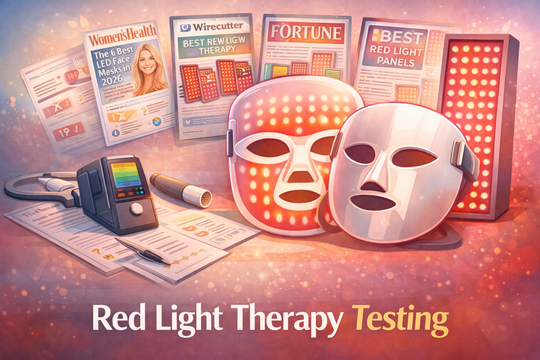

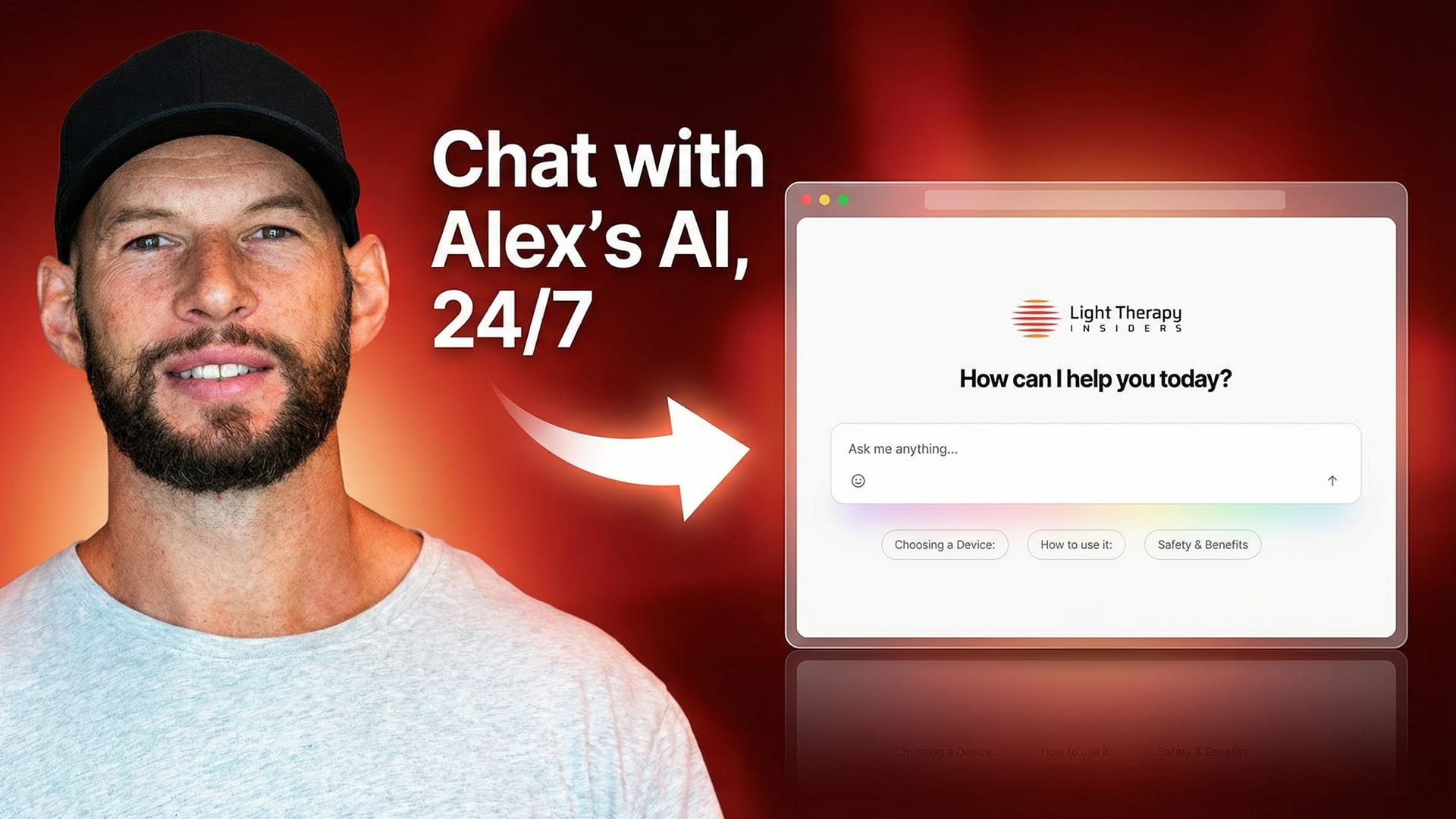
Imagine having a red light therapy assistant that combines years of testing, raw device notes, comparison guides and peer-reviewed science — then gives you fast, personalised recommendations. That is exactly what this tool does: a practical, conversational expert that helps you cut through the hype and find the right device, protocol, or deal for your needs.
What This Red Light Therapy Assistant Is
This is an AI-powered chat tool trained on seven years of device testing, hundreds of internal notes, comparison charts and the scientific literature on red and near-infrared light. It looks at real, measured specs (wavelengths, power output, usability), company details (shipping, warranty) and clinical evidence, then returns clear recommendations tailored to your budget, body size and goals.
How It Works
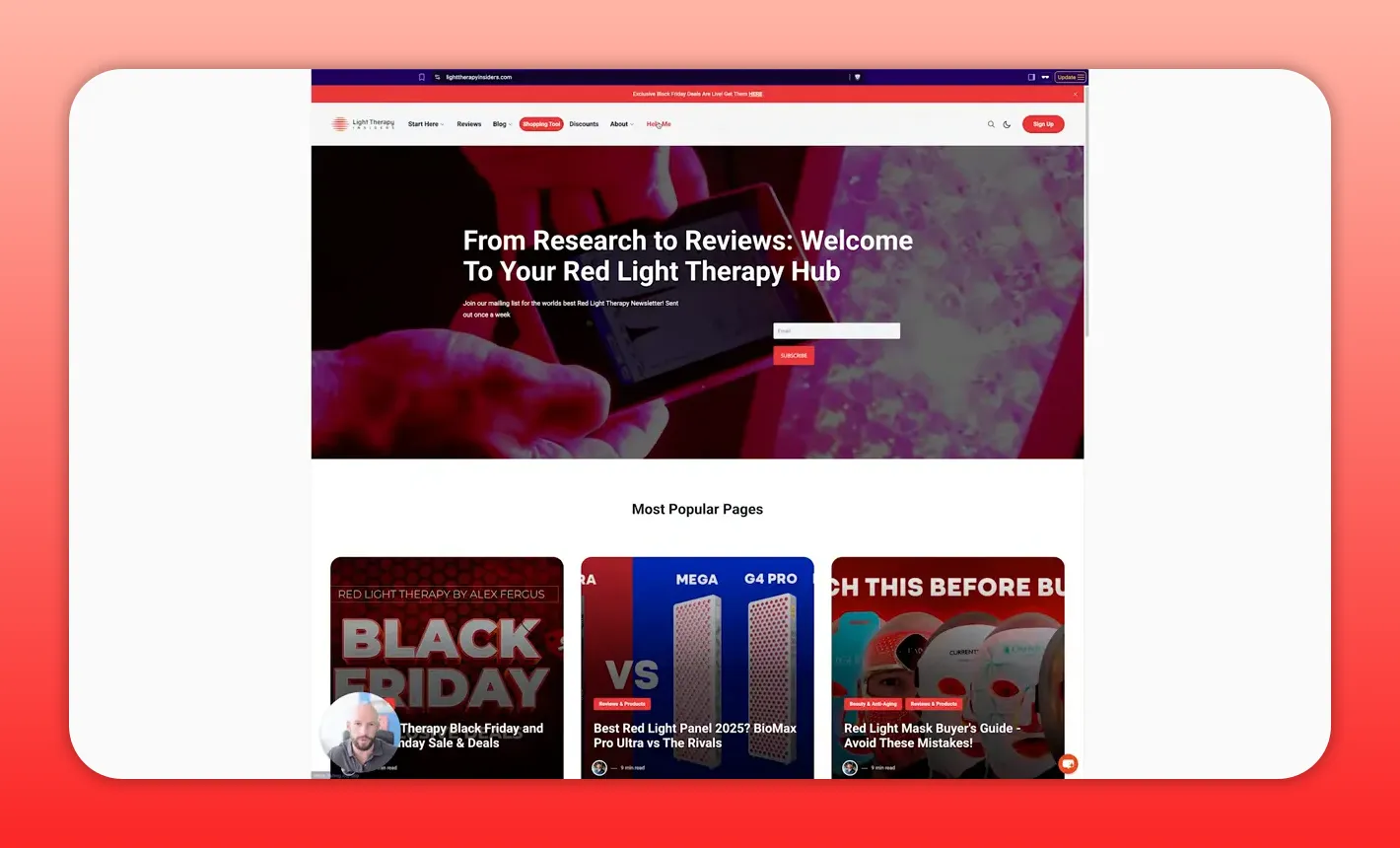
Think of the red light therapy assistant as a second brain that:
- Analyses product specs and real test results
- Cross-references peer-reviewed studies for specific conditions
- Filters recommendations by budget, size, and regional availability
- Displays direct purchase links and any current discounts
Real-World Examples
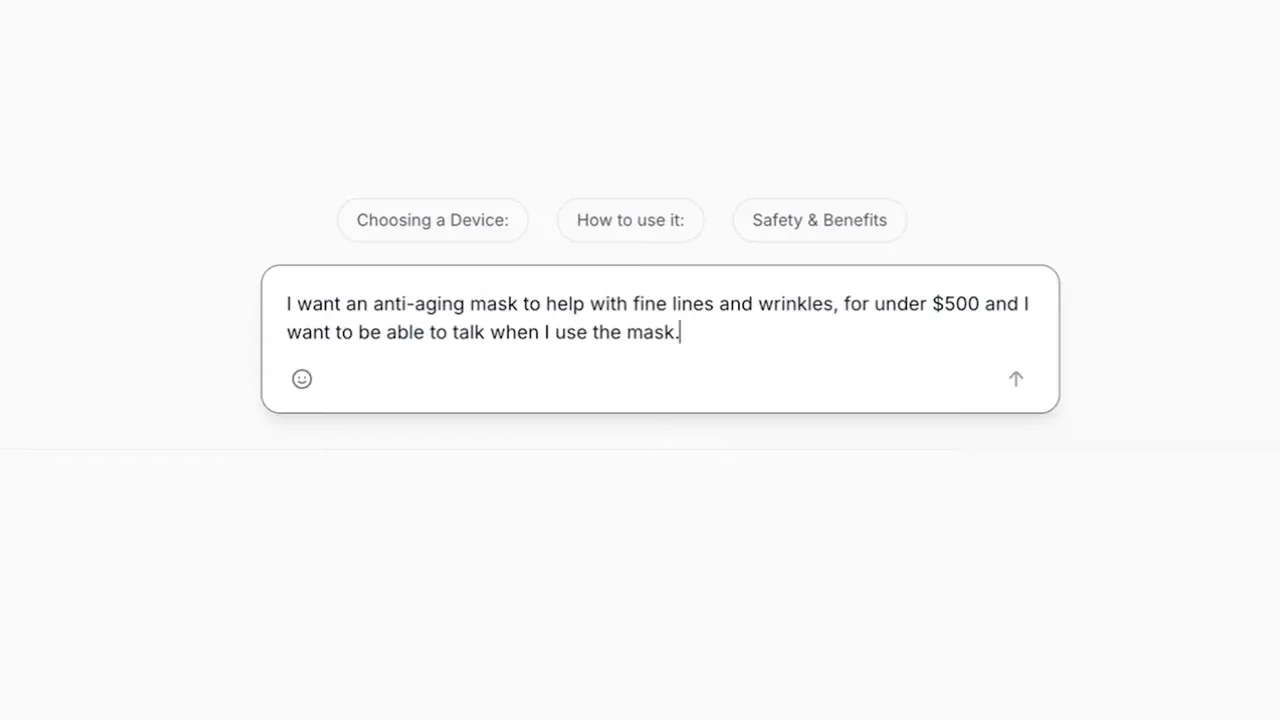
Try asking for an anti-ageing mask under £500 that still lets you talk while wearing it. The assistant highlights what matters, lists the best-fit options and explains why each device is suitable. It will flag questionable wavelengths — for example, a 615 nm mask is unlikely to be as effective as devices in the tried-and-tested 630–670 nm range.
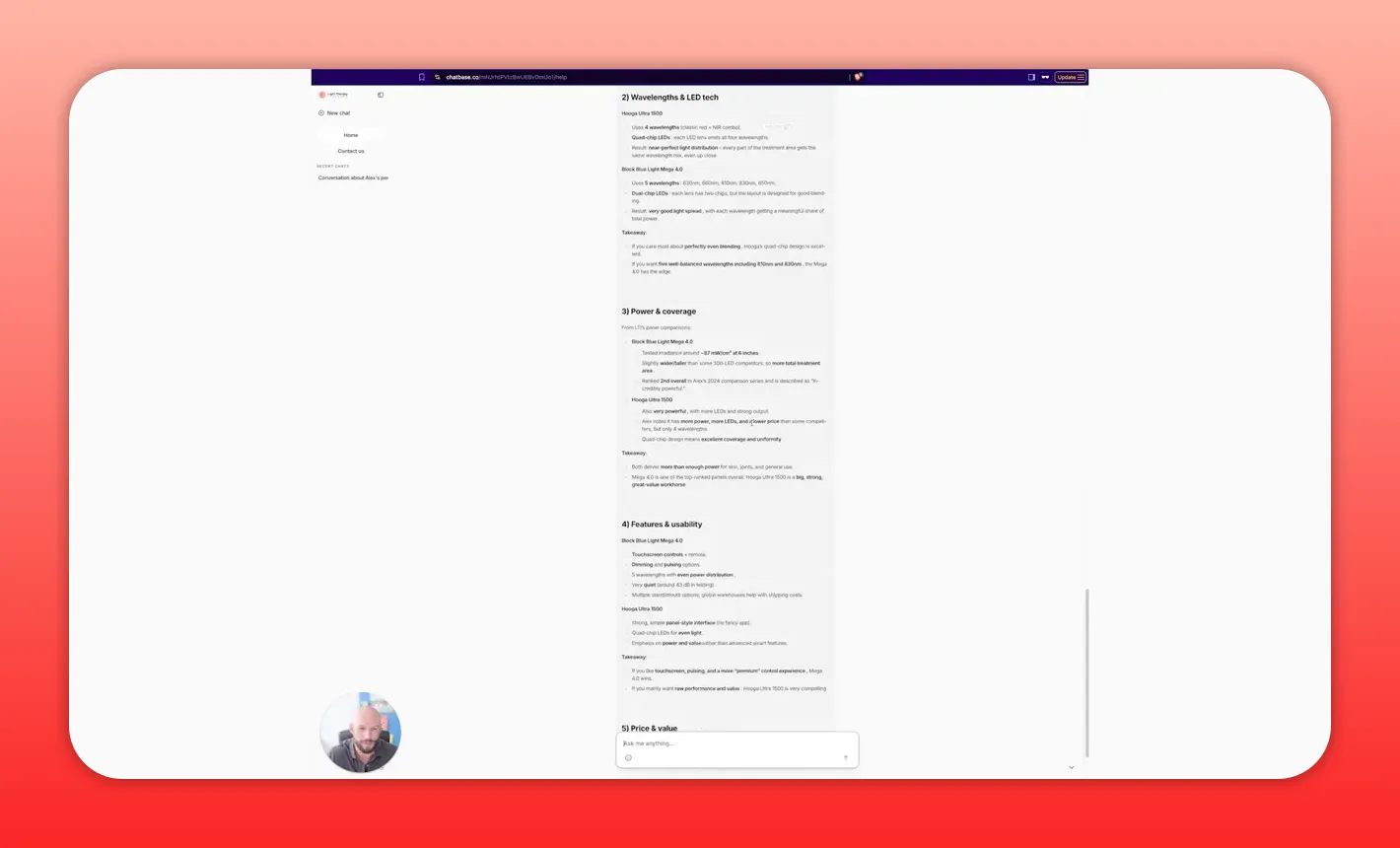
If you have two shortlisted panels, the red light therapy assistant can produce a side-by-side breakdown covering wavelengths, power, features, usability and value, then make a recommendation based on your priorities.
What You Can Ask
- Which mask is best for fine lines and my skin type?
- Is this panel powerful enough for my rehabilitation needs?
- How should I use the device I already own for a specific condition?
 Alex Fergus
Limitations And Important Caveats
While powerful, the red light therapy assistant has limits. It only evaluates devices that have been tested and logged in the database. New or generic Amazon devices without validated specs might not get a reliable recommendation unless you provide accurate performance data. This tool is not a replacement for medical advice. For serious medical conditions consult a healthcare professional.
How To Try It
The tool is free to use and requires no sign-up. Type your requirements, budget and any device details you already have, and the assistant will return tailored results with explanations and links to current offers. If something looks wrong or you find a bug, feedback is welcome to help improve accuracy.
Final Notes
If you want fast, evidence-backed device guidance without sifting through marketing fluff, the red light therapy assistant is designed to save time and reduce overwhelm. It blends measured device data, years of testing experience and scientific literature into one easy-to-use chat. Give it a try and see how much clearer choosing and using red light therapy can be.
Found This Interesting? Look At These Articles
🔴 The Red Light Therapy Facial Fat Loss Link: Myth Or Reality?
🔴 Does Red Light Therapy Help Scars? The Science
🔴 Red Light Therapy For Skin: Beauty Benefits, Potential Complications, And More
🔴 Psoriasis With Red Light Therapy: Potential Game-Changer?
Have You Seen These Reviews
🔴 Rouge G4 Pro Review: Most Advanced Red Light Panel Yet?
🔴 Best Red Light Panel Yet? Block Blue Light Mega Review
🔴 $800 Red Light Mask Has Lasers… But Why?
🔴 Omnilux Contour Mask Review: Still Worth It in 2025?
Alex's Bio
Alex Fergus wrote this blog post. Alex is an ISSN Sports Nutrition Specialist, Fitness Professional, and certified Superhuman Coach who continues to expand his knowledge base and help people worldwide with their health and wellness. Alex is recognized as the National Record Holder in Powerlifting and Indoor Rowing and has earned the title of the Australian National Natural Bodybuilding Champion. Having worked as a health coach and personal trainer for over a decade, Alex now researches all things health and wellness and shares his findings on this blog.