
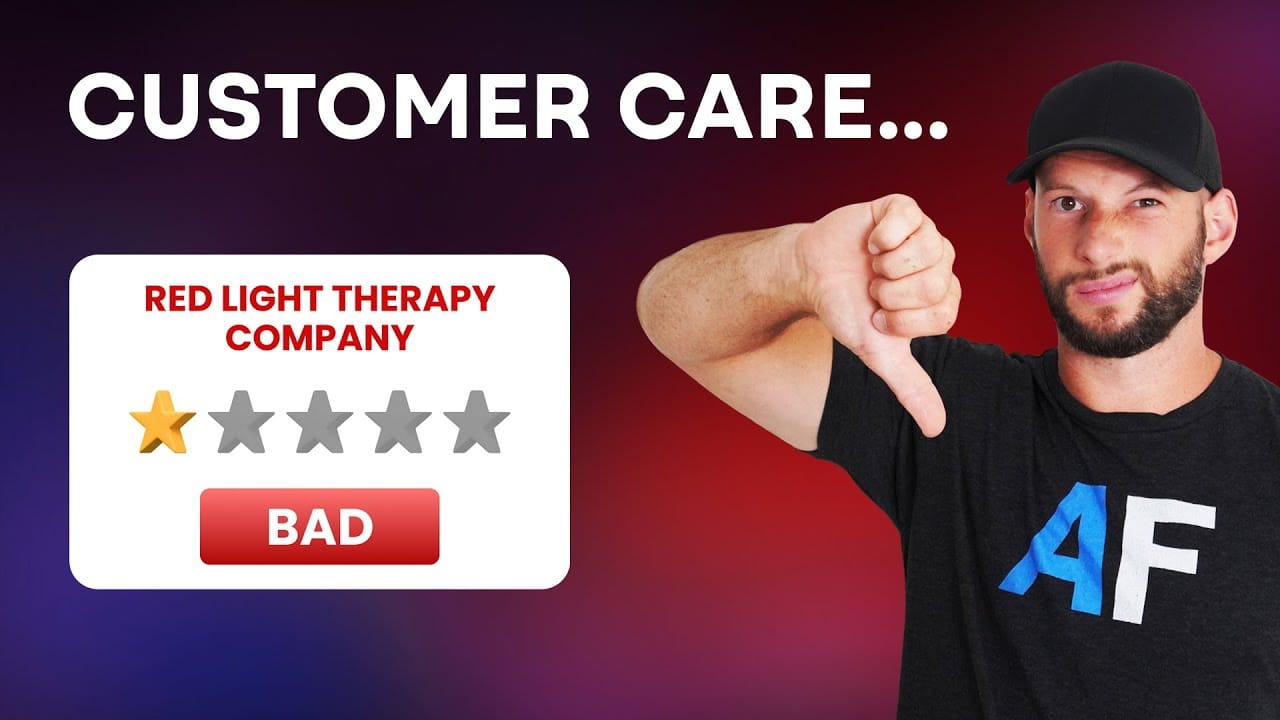
Let’s say you’re finally ready to invest in a red light therapy device. You’ve done the research, narrowed down your options, and maybe even watched a few of my reviews. Then you stumble across a comment online: “I had a terrible customer service experience with this company — avoid at all costs.”
Suddenly, that confidence disappears.
It’s a completely valid concern. When you’re spending a decent amount of money on a health device, you want to know the company behind it will actually support you if something goes wrong. So why don’t I include customer service ratings in my reviews? After years in the red light therapy space and interactions with countless customers and brands, there are some important reasons — and they’re probably not what you’d expect. Below are my 5 reasons.
The Challenge of Measuring Something Subjective
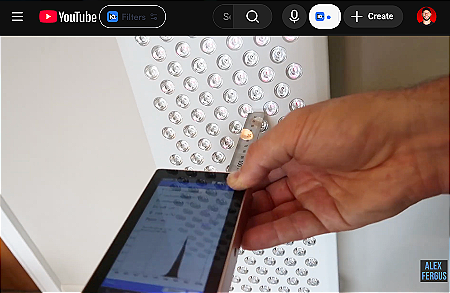
If you’ve followed my reviews for a while, you’ll know I’m very numbers-driven. I use spectrometers to measure wavelengths, EMF meters to measure electromagnetic fields, sound meters to measure noise, and spreadsheets for comparisons — everything I can quantify, I do.
That’s because numbers are reliable. They’re consistent. They let you compare products objectively and make informed decisions.
Customer service, on the other hand, doesn’t work like that.
How do you measure it in a way that’s fair and repeatable? One person’s frustrating experience doesn’t necessarily reflect the reality for thousands of other customers. Without a consistent way to quantify customer care — the same way we can measure irradiance or wavelength accuracy — it becomes incredibly difficult to include it in a product review without introducing bias.
If there were a robust, data-driven method to evaluate customer experience across brands, I’d gladly incorporate it. It would strengthen reviews and help buyers. But right now, there simply isn’t a reliable way to do that.
My Experience Isn’t the Same as Yours
There’s another complication that most people don’t consider: my interactions with companies are fundamentally different from those of a typical customer.
Because I run a red light therapy review channel, brands know who I am. If I contact support, the conversation often gets escalated internally. Sometimes it goes straight to senior staff or even the CEO. And in many cases, companies reach out to me first.
Naturally, that creates a best-behavior dynamic. They want to make a good impression because they know I’ll be discussing their products publicly.
I do everything I can to remove that bias and focus purely on the device itself when reviewing. But the reality is unavoidable — my customer service experience with a brand is not representative of what most buyers will encounter. Including it would give a distorted picture rather than an accurate one.
Sign Up For The Light Therapy Insiders Newsletter!
Everything you need to know about red light therapy science, news, dosing, product reviews, and more
👉 Join the NewsletterWhy “Mystery Shopping” Isn’t the Solution
A common suggestion is to place anonymous orders under a different name and document the entire process like a mystery shopper. It sounds sensible on the surface.
But a single transaction is still just one anecdote.
Maybe there’s a courier delay unrelated to the company. Maybe the support staff is short-handed that week. Maybe an address formatting issue causes confusion. These kinds of variables can affect any order, even with excellent companies.
To produce meaningful data, you’d need dozens of purchases across multiple regions, times, and products — essentially a full-scale research project. That quickly becomes impractical in terms of cost and logistics.
So while mystery shopping has some merit, it still doesn’t provide a reliable, scalable way to judge overall customer service quality.
The Problem With Customer Comments and Emails
Another idea is to analyze feedback from customer comments, emails, and messages. I do see plenty of these. But there’s a well-known bias in this kind of data.
When everything goes smoothly — the device arrives, works as expected, and continues working years later — most people simply carry on with their lives. They don’t feel compelled to write a detailed positive review.
But when something goes wrong, people understandably speak up.
That means feedback channels naturally skew negative. For every complaint you see, there may be dozens or hundreds of satisfied customers you never hear from.
There’s also the scale issue. Larger companies selling far more units will inevitably generate more complaints in absolute numbers. That doesn’t necessarily mean they provide worse service — just that they have a bigger customer base. Comparing raw complaint counts between brands quickly becomes misleading.
And what about new companies with no complaints yet? It wouldn’t be fair to automatically assume they have excellent service simply because there’s no feedback available.
Why Review Websites Don’t Solve It Either
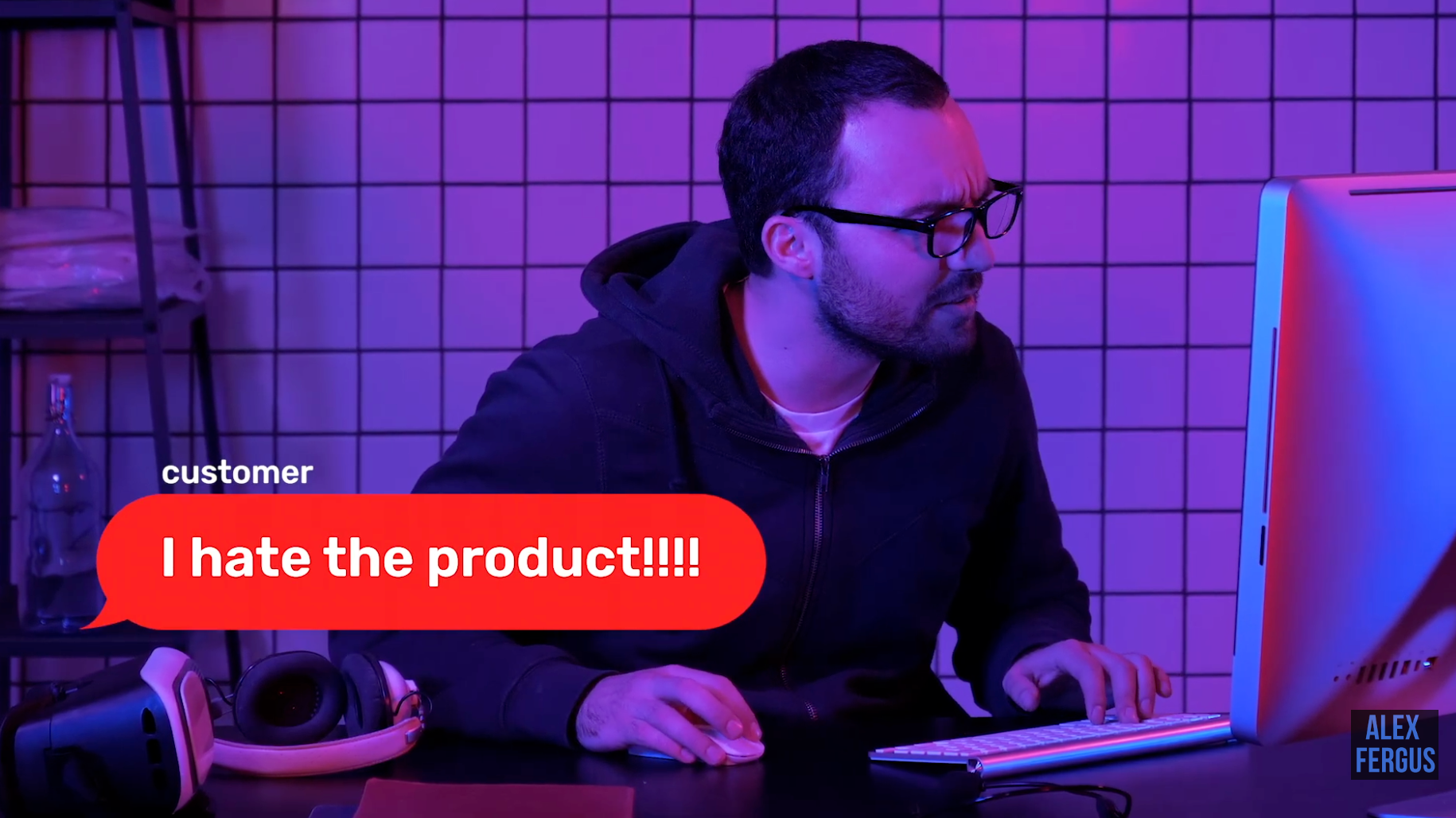
Some suggest looking at independent platforms like Trustpilot or the Better Business Bureau. I have checked these.
What you often find is a small handful of reviews — sometimes fewer than ten — for companies that have sold thousands of devices. That’s nowhere near enough data to draw confident conclusions about overall customer care.
It’s also worth noting that such platforms can have structural limitations. For example, some organizations offer paid accreditation or listing, raising questions about how independent the ratings truly are.
The bottom line is that a few scattered reviews on third-party sites don’t provide a statistically meaningful or balanced picture of a company’s support quality.
A Practical Workaround for Buyers
So, where does this leave you if you’ve found a device that looks ideal, but you’re still nervous about after-sales support?
Here’s the approach I recommend — and it’s something I’ve effectively been doing for years.
If you purchase a product I’ve recommended and run into problems — whether with the device, delivery, warranty, or communication — reach out. Leave a comment or contact me directly with the details.
After many years in this space, I’ve built strong relationships across the industry. I’ve seen most common issues before. In many cases, I can help troubleshoot, point you in the right direction, or escalate the matter through contacts if needed. Sometimes simply having an informed intermediary makes resolution much easier.
It’s not a perfect system, and I’d much prefer a world where customer service could be measured as cleanly as irradiance or wavelength output. But given the limitations, this approach provides an extra layer of reassurance without introducing misleading ratings into product reviews.
Focusing Reviews Where They’re Most Reliable
Ultimately, my role in reviews is to analyze what can be measured and compared objectively: performance, output, coverage, usability, and value. That’s where consistent testing can genuinely help you choose the right device.
Customer service absolutely matters — but it’s influenced by too many variables and too little reliable data to include fairly in a standardized review score.
So my advice is simple: choose the product that best fits your needs based on solid performance data. And if any issues arise afterward, you’re not navigating them alone.
That extra peace of mind can make all the difference when investing in red light therapy.
Found This Interesting? Look At These Articles
 Bart Wolbers
 Bart Wolbers
Have You Seen These Reviews
 Alex Fergus
 Alex Fergus
Alex's Bio
Alex Fergus wrote this blog post. Alex is an ISSN Sports Nutrition Specialist, Fitness Professional, and certified Superhuman Coach who continues to expand his knowledge base and help people worldwide with their health and wellness. Alex is recognized as the National Record Holder in Powerlifting and Indoor Rowing and has earned the title of the Australian National Natural Bodybuilding Champion. Having worked as a health coach and personal trainer for over a decade, Alex now researches all things health and wellness and shares his findings on this blog.