
Many people who use red light therapy eventually ask the same question:
Should you combine red light therapy with an infrared sauna — or use them separately?
Both therapies have strong evidence behind them. Sauna bathing has been linked with improved cardiovascular health, detoxification, and longevity. Meanwhile, photobiomodulation (red and near-infrared light therapy) has been shown to support mitochondrial function, recovery, brain health, and the reduction of inflammation.
So what happens when you combine them?
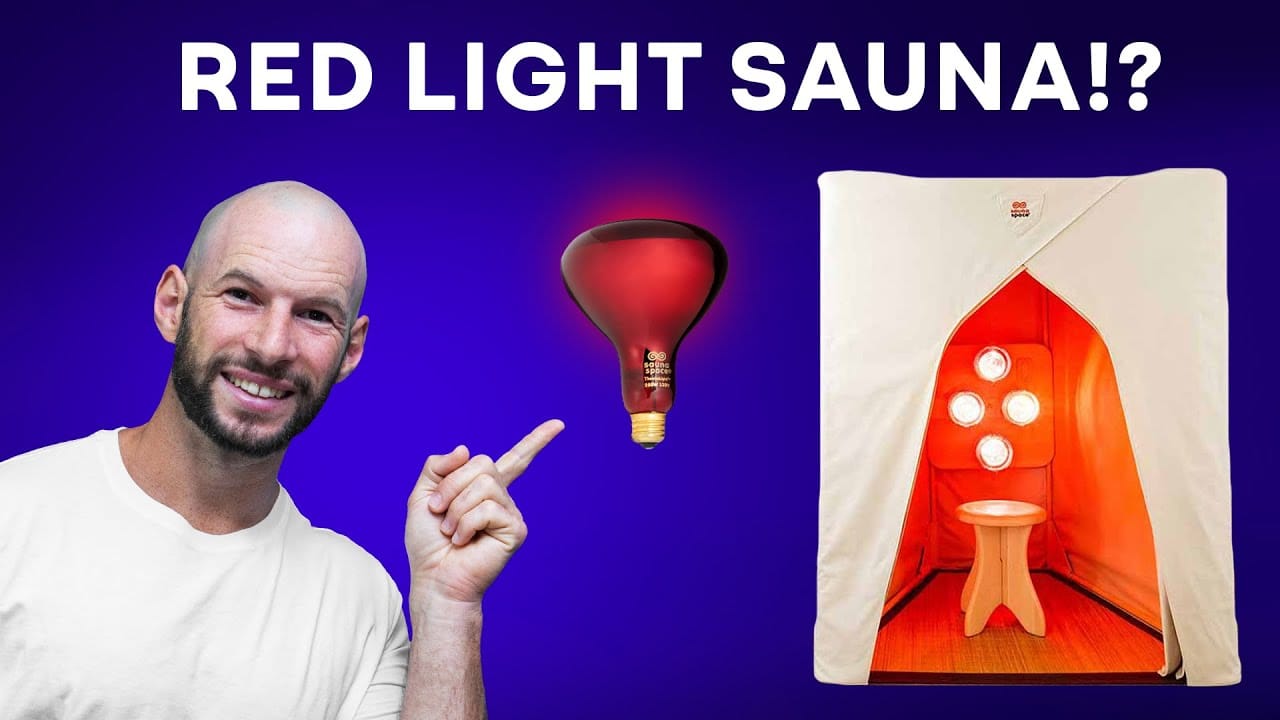
In this episode, I sit down with Brian Richards, founder of Sauna Space, to explore the science and philosophy behind light-powered saunas. We discuss how incandescent light sources mimic aspects of natural sunlight, why near-infrared wavelengths are so important, and whether combining heat and light therapy creates a synergistic effect.
Show Notes
Brian Richards founded Sauna Space after struggling with adrenal fatigue, insomnia, and low energy. While researching natural approaches to improve his health, he discovered the long history of sauna therapy — and the surprisingly old technology of light-based saunas using incandescent bulbs.
After building his own prototype, Brian noticed improvements in sleep and recovery. That experiment eventually led to the creation of Sauna Space, a company focused on combining near-infrared light therapy with radiant heat to mimic natural sunlight exposure.
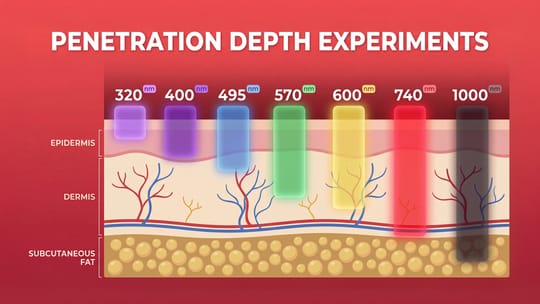
In this conversation, we explore how incandescent light produces a broad spectrum of wavelengths, how near-infrared penetrates deeper into tissues than far-infrared heat, and why combining photobiomodulation with sauna therapy may enhance the benefits of both.
Key Topics Discussed
Brian Richards’ health journey and the founding of Sauna Space
Brian explains how adrenal fatigue, insomnia, and low energy pushed him to research sauna therapy and natural health approaches.
Why sauna therapy has such strong longevity research
We discuss studies linking regular sauna use with lower risk of cardiovascular disease, dementia, and improved overall healthspan.
How incandescent light mimics aspects of sunlight
Unlike narrow LED wavelengths, incandescent bulbs emit a broad spectrum of red and near-infrared light similar to natural sunlight.
Why near-infrared light is critical for photobiomodulation
Near-infrared wavelengths penetrate deeper into tissues than visible red light, allowing them to reach muscles, joints, and even brain tissue.
How heat and light therapy may work synergistically
Brian argues that photobiomodulation increases mitochondrial energy and circulation, which may help the body tolerate sauna heat and improve detoxification.
Near-infrared vs far-infrared sauna technology
We compare traditional saunas, far-infrared saunas, and radiant heat produced by incandescent bulbs.
Why Sauna Space uses custom incandescent bulbs
Brian explains the design of their hand-blown bulbs, which produce higher near-infrared output than standard heat lamps.
Resources Discussed
✨ Explore Sauna Space and their incandescent light therapy sauna systems: https://sauna.space, use the discount code ALEX for 11% discount.
✨ My review: SaunaSpace Photon Review: Red Light & Sauna Combination!?
🎧 Prefer to Listen?
Find Alex Fergus – Light Therapy Insiders on your favorite platform:
Frequently Asked Questions
What is red light therapy?
Red light therapy uses red and near-infrared wavelengths of light to support normal cellular energy and recovery. It’s often referred to as photobiomodulation (PBM). If you're comparing devices and brands, you can check the discounts page for current deals and recommendations.
How does red light therapy work?
Red and near-infrared light can be absorbed by mitochondria in cells, which may help support ATP production and normal cellular repair processes.
What wavelengths are used in red light therapy?
Most red light therapy devices use wavelengths roughly between 630 nm and 880 nm. Common wavelengths include 630 nm, 660 nm, 810 nm, 830 nm, and 850 nm.
What’s the best red light therapy panel?
The best red light therapy panel depends on coverage needs, power output, wavelengths, and budget. Before buying, it's smart to check the discounts page to compare brands and deals.
Red light panel vs mask: which should I choose?
Red light panels usually provide broader coverage and higher power output, while masks are designed primarily for facial skin treatments.
What does low EMF mean for red light therapy devices?
Low EMF refers to lower electromagnetic field emissions around a device. Some buyers prioritize this feature when comparing devices.
How long should a red light therapy session last?
Many users begin with sessions of around 5–10 minutes per treatment area and adjust based on device power and distance.
How often should you use red light therapy?
Common routines range from 3–5 sessions per week depending on the goal and device strength.
Is red light therapy safe?
Most consumer red light therapy devices are considered safe when used according to manufacturer guidelines.
Who is Alex Fergus?
Alex Fergus is the founder of Light Therapy Insiders and reviews red light therapy devices with a focus on practical buying factors.
Where can I find red light therapy discount codes?
You can check the discounts page to see the latest red light therapy discount codes and deals.
Do red light therapy discount codes expire?
Yes. Most brands rotate discount codes during promotions and seasonal sales. If a code stops working, it's best to check the discounts page for the latest offers.