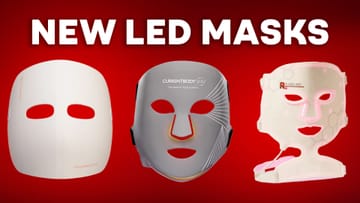

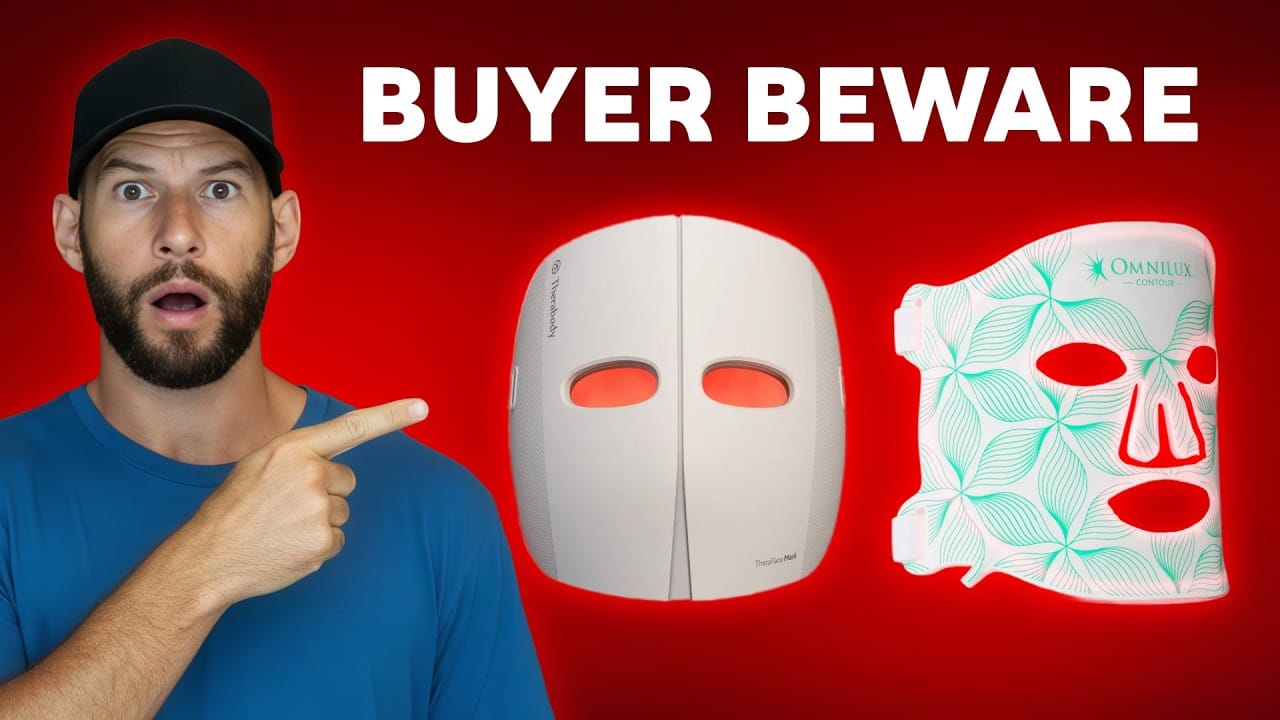
If you are shopping for a red light therapy mask, the choices can feel endless: dazzling color panels, fancy apps, lasers versus LEDs, soft shell versus hard shell, and a hundred price tags.
A smart purchase requires looking past the marketing and focusing on what actually produces results. This guide breaks down the nine most common mistakes people make when choosing a red light therapy mask and gives practical, evidence-based advice so you can buy with confidence.
Buying a red light therapy mask for anti-aging or glowing skin? Avoid these 9 buyer mistakes that waste money and limit results.
Why The Right Red Light Therapy Mask Matters
A good red light therapy mask delivers therapeutic wavelengths and enough energy to the skin to stimulate collagen production, improve circulation, and support skin health. A poor choice wastes money and time, or worse, can lead to disappointing results. Use this article as a checklist to evaluate options and avoid buyer traps.
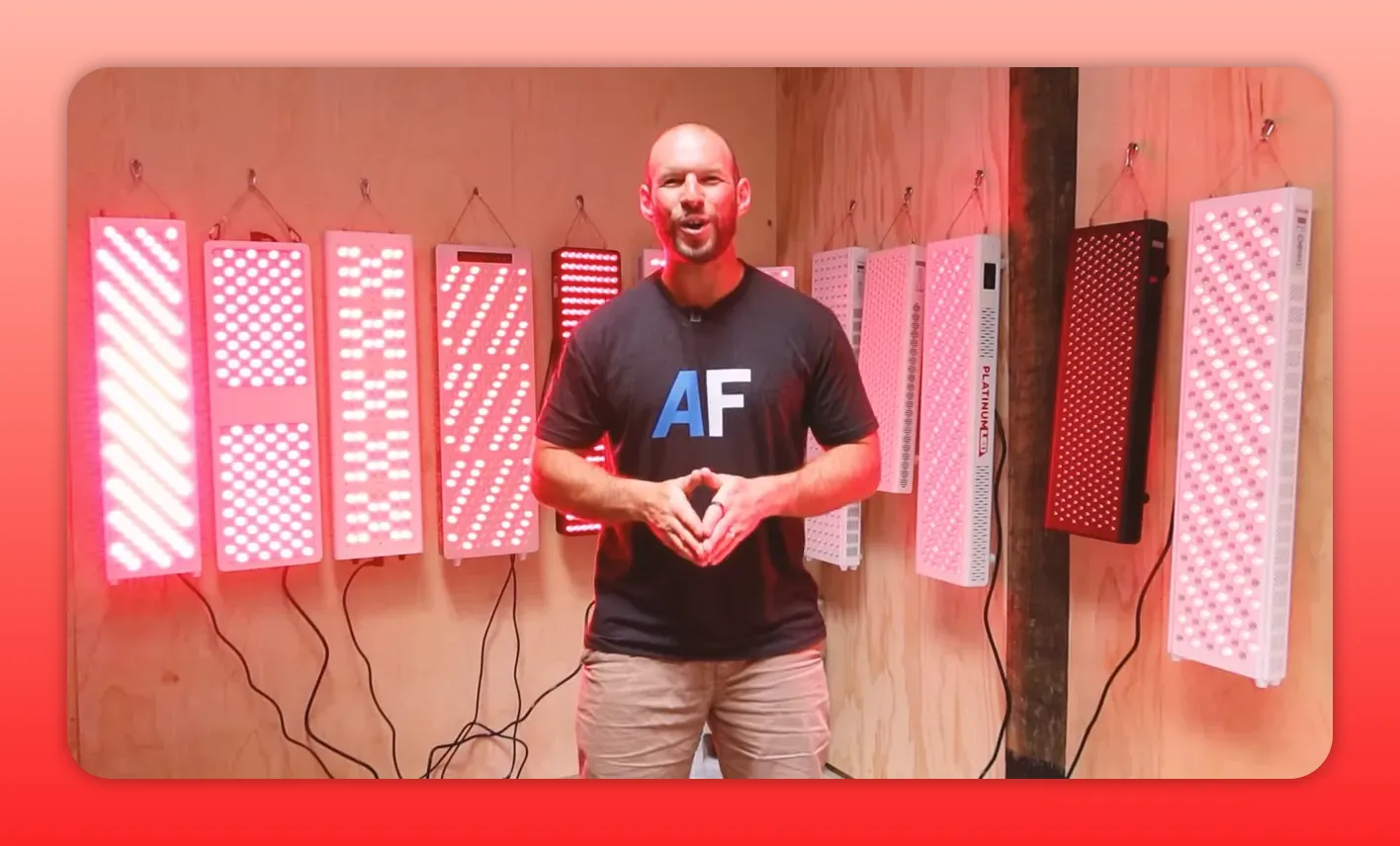
Mistake 1 — Falling For the “7-in-1 Colors” Marketing
Many products advertise multi-color modes or a rainbow of lights as if more colors equal better results. That is not how photobiomodulation works. For skin rejuvenation, the research shows that only a few wavelengths consistently deliver benefits:
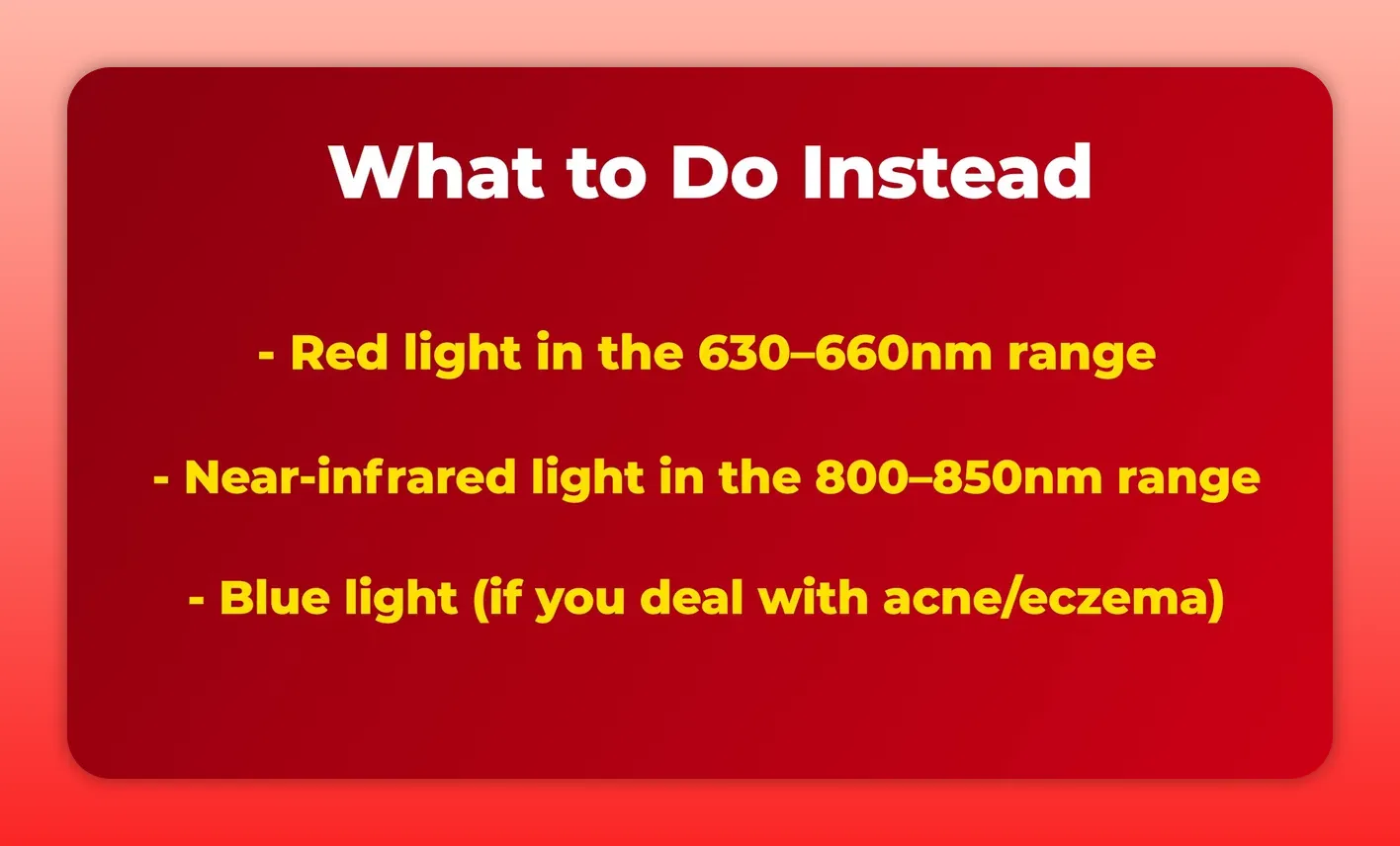
- Red light: typically 630–660 nm for epidermal stimulation and collagen signaling.
- Near infrared (NIR): usually 800–850 nm for deeper dermal and subcutaneous penetration to support circulation and collagen remodeling.
- Blue light: useful for acne and some inflammatory skin conditions like eczema.
Other colors, such as purple or pink, are often just blends of red and blue added for aesthetics. Amber has limited evidence and is rarely essential. The practical takeaway: prioritize a red light therapy mask that reliably emits red (≈630–660 nm) and, if possible, near infrared (≈800–850 nm). If you have acne or eczema, opt for a mask with a blue-light option that can be turned off when not needed.
Mistake 2 — Ignoring The Power Specs
Light color alone does not equal effectiveness. The amount of light energy delivered to the skin matters. Two identical-wavelength masks can produce very different outcomes because of differences in power output and dose.
Key terms to know:
- Radiance (mW/cm²): power per unit area arriving at the skin.
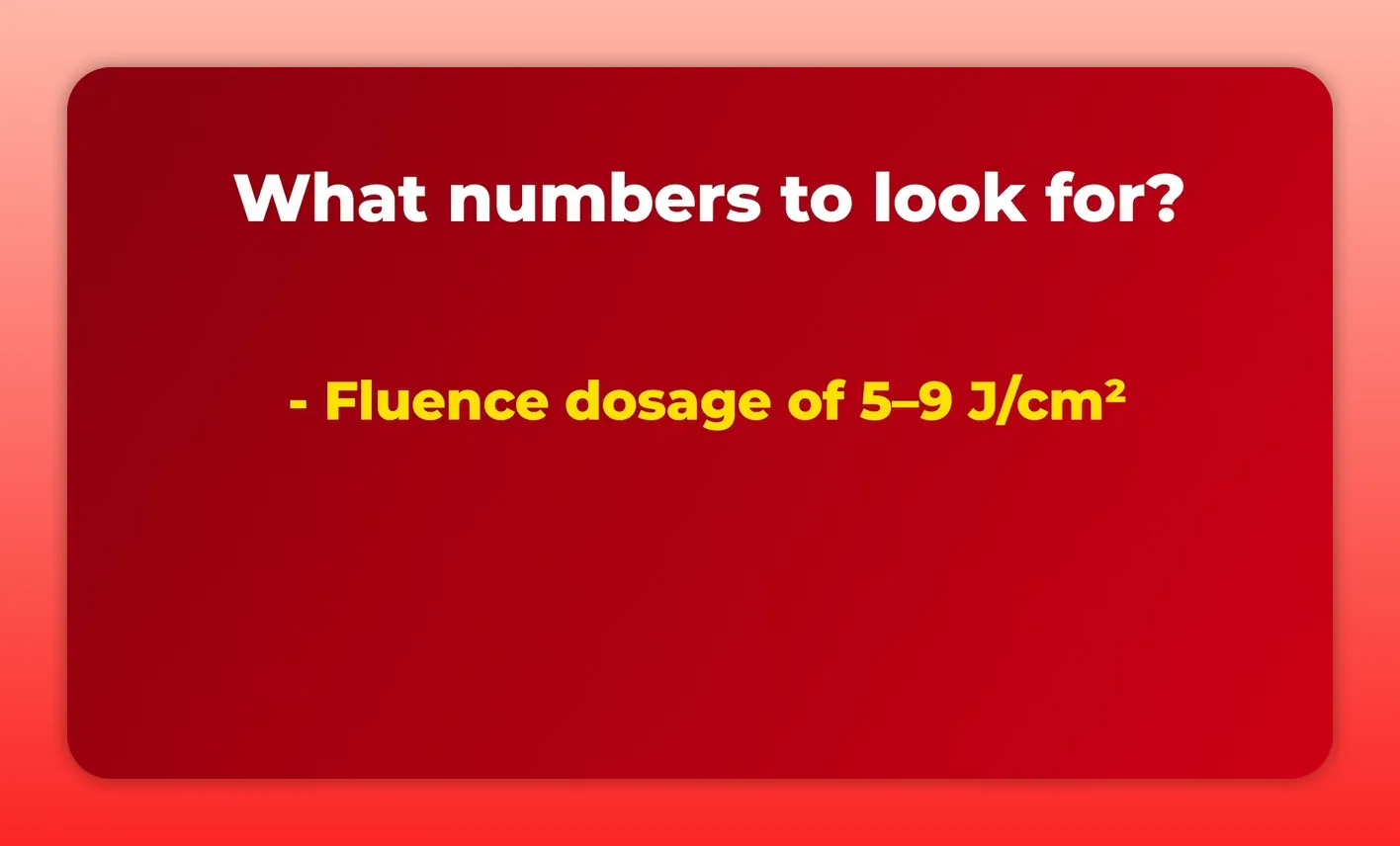
- Fluence or dose (J/cm²): energy delivered over the treatment time. Aim for cumulative fluence in the range of 5–9 J/cm² per session for facial skin benefits.
 Alex Fergus
If manufacturers don’t publish fluence, they may list radiance. Reasonable radiance numbers for masks are roughly 15–50 mW/cm². Be skeptical: many companies' claims are imprecise.
After independent testing, some pricey masks still fell short, while many mid-priced models hit the sweet spot. If a mask is too powerful, short sessions or reduced intensity settings often fix that. If it’s underpowered, no amount of time will produce reliable results.
How to Evaluate Power When Specs Are Missing
- Look for published radiance or fluence values.
- Read independent tests and reviews that measure output rather than relying on manufacturer copy.
- Prefer brands that provide measured results or third-party lab reports.
- If unsure, choose products with a generous returns policy so you can test and return if it underdelivers.
Mistake 3 — Thinking That More LEDs Automatically Means Better
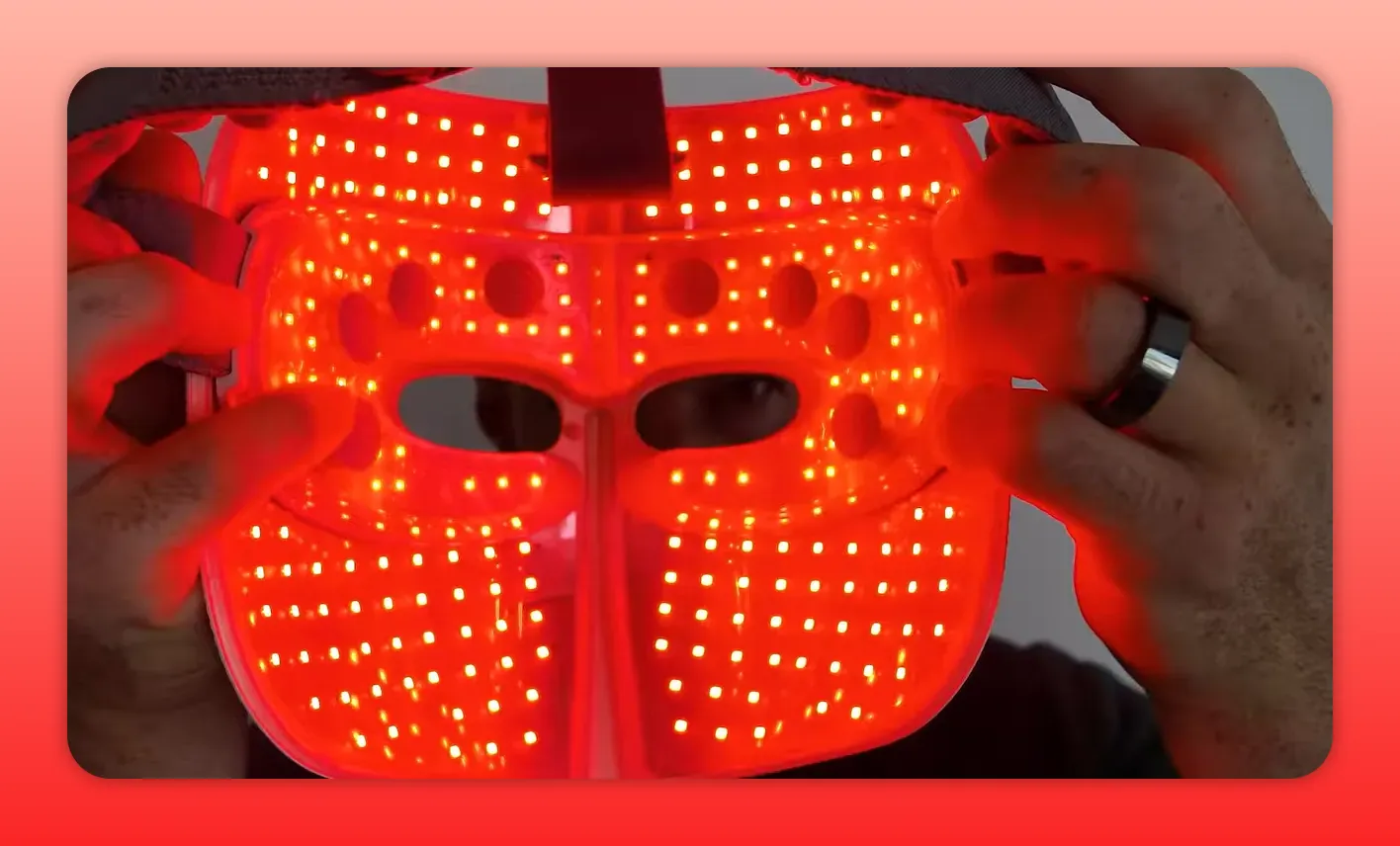
Coverage matters. You want an even spread of light across the face so every zone receives consistent energy. But the raw LED count can be misleading for two reasons:
- Some manufacturers count LED bulbs while others count LED chips inside each bulb. A “100 LED” claim may mean 100 diodes or 100 bulbs with multiple chips per bulb.
- Arrangement and spacing are critical. Clustering LEDs densely on the cheeks while leaving gaps around the nose and forehead yields uneven treatment.
Choose a red light therapy mask with thoughtfully distributed LEDs that target the entire face. A mask with fewer LEDs but uniform coverage and appropriate power is often better than a high-LED-count mask with poor distribution.
Get Exclusive Black Friday Red Light Therapy Deals
Join our insider list for subscriber-only access to the biggest discounts of the year — up to 50% off top panels, masks, and devices trusted by thousands.
👇
Unlock Black Friday DealsSubscriber-only • Biggest discounts • Trusted brands
Mistake 4 — Skipping Near Infrared Altogether
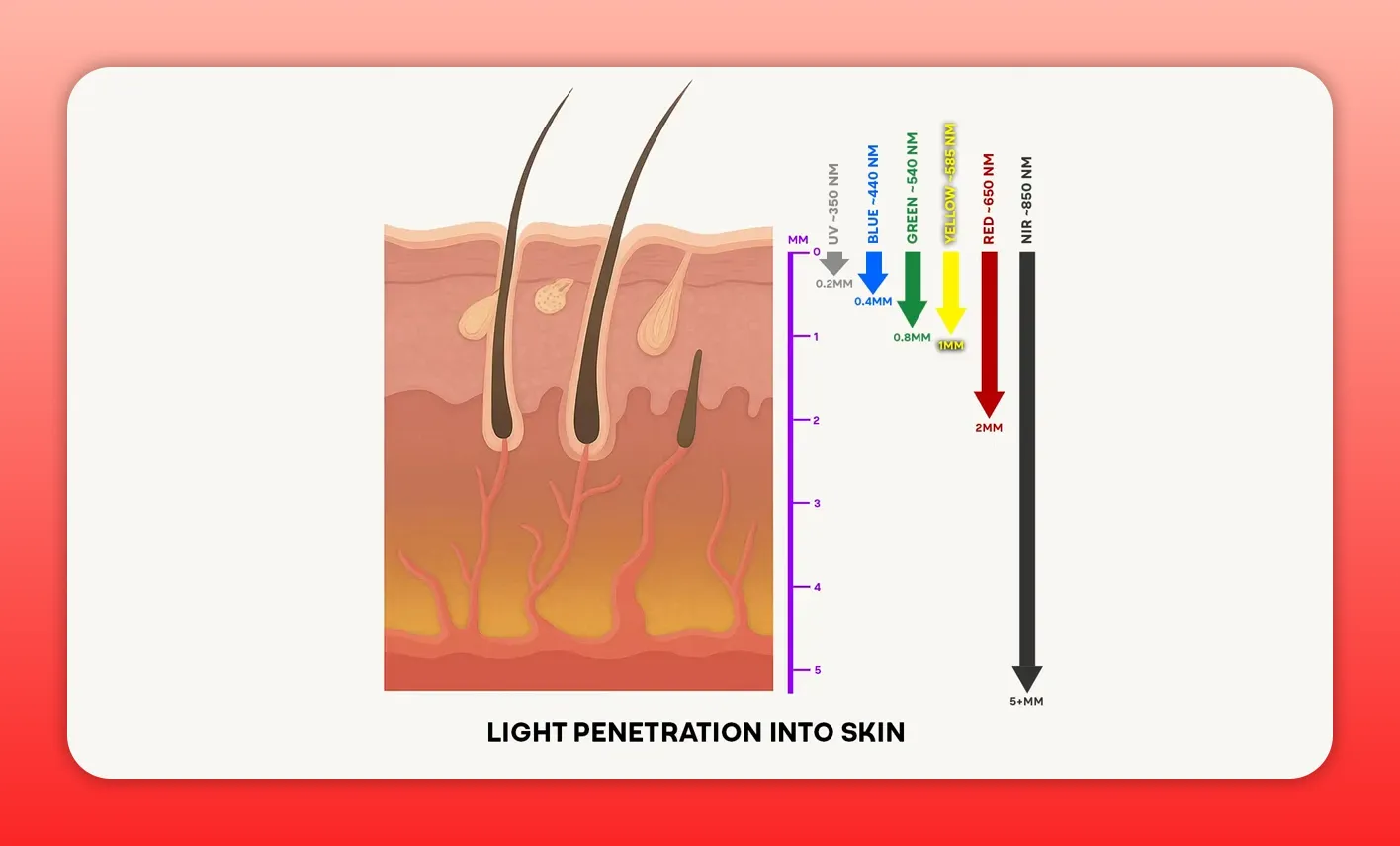
Near infrared (NIR) is invisible to the eye, which is one reason some buyers skip it. That is a missed opportunity. NIR wavelengths penetrate deeper than visible red light, reaching the dermis and superficial subcutaneous layer. The benefits include:
- Improved microcirculation and oxygen delivery to skin tissue
- Enhanced collagen synthesis and remodeling
- Potentially stronger anti-aging effects when combined with red light
Some masks omit NIR entirely. Avoid those if your goal is anti-aging or deeper skin repair. Also, look for masks that let you disable NIR if desired. A small number of users report hyperpigmentation with excessive high-powered NIR exposure, so having an on/off option is helpful.
Mistake 5 — Overlooking Comfort And Fit
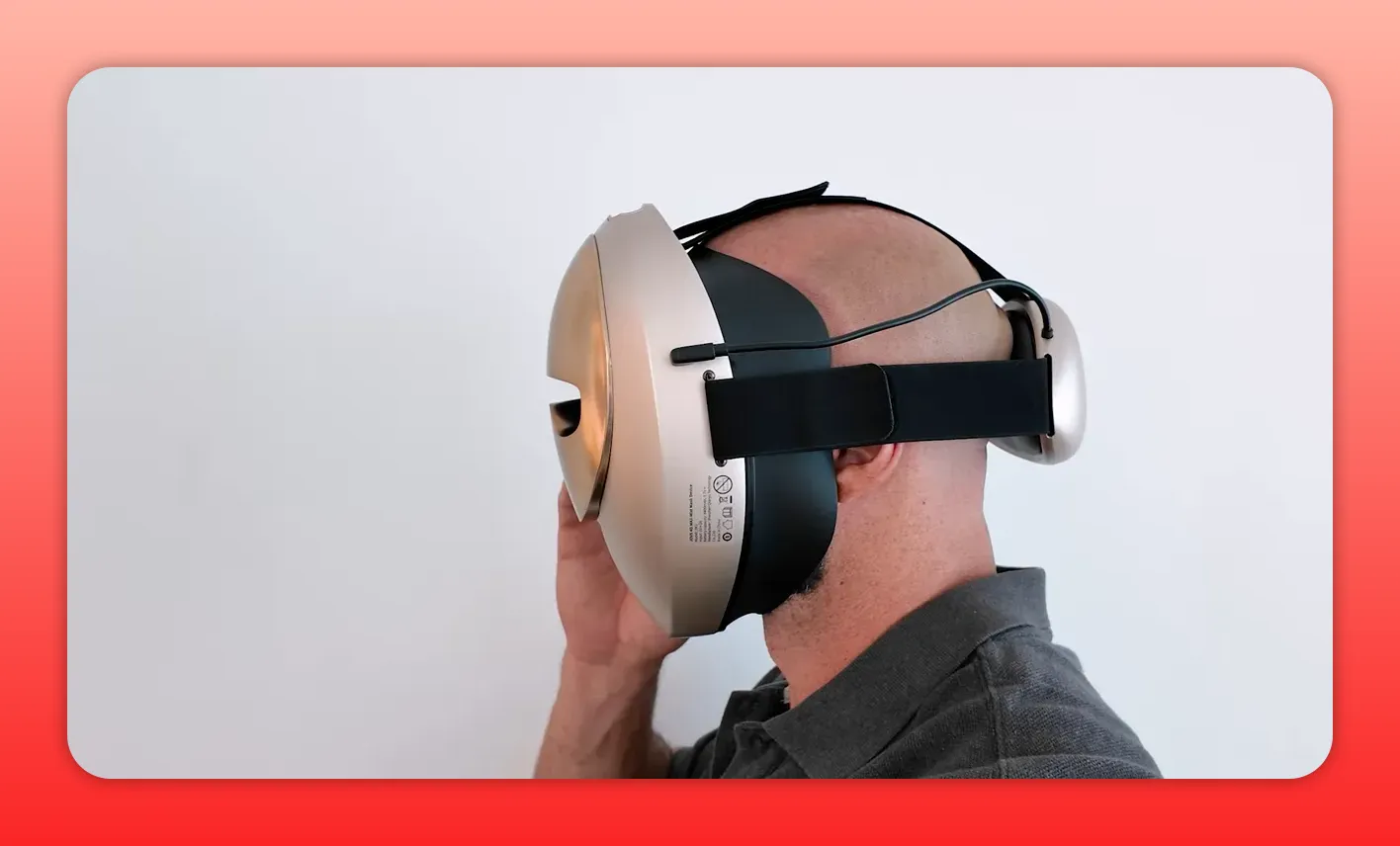
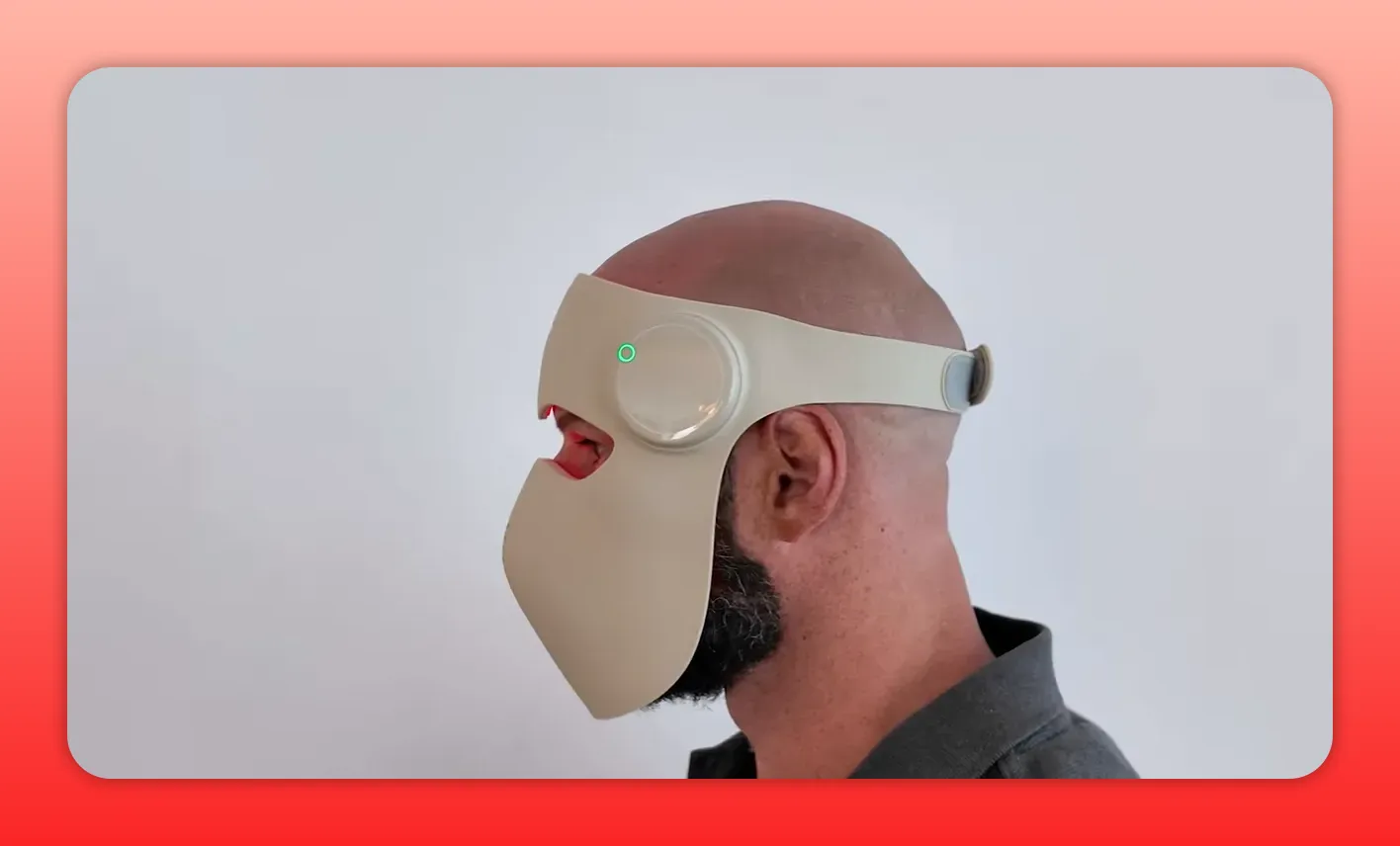
An effective mask must be wearable. A bulky, heavy mask that is a nuisance to put on will end up collecting dust. Comfort and fit issues are common, particularly for people with larger noses or broader faces. Many masks are designed with smaller facial proportions in mind, which can cause pressure points and discomfort.
Questions to ask before buying:
- Is the mask soft-shell or rigid hard-shell?
- Does it feel balanced on the face or nose-heavy?
- Are the eye openings and breathing space suitable for reading or moving around?
If possible, check community feedback for fit notes. Join user forums or groups and search for comments on the specific mask. If you cannot try before buying, choose a vendor with an easy returns policy.
Mistake 6 — Not Thinking About How You Will Use It
Usage patterns vary. Some people want to relax lying down with the mask on; others want to be productive—walk around the house, chat, or do chores while wearing the mask. These preferences impact the type of mask you should buy:
- Corded masks: Often higher-power but tethered to a power source. Best for dedicated sessions in one place.
- Cordless masks: Battery-powered with an onboard controller. Great for mobility and short sessions on the go.
- Eye and face openings: Larger openings allow vision and easier breathing, while full-face designs favor immersive, stationary use.
Think about whether you need to see, speak, or move while using the mask. That will guide choices about eye cutouts, shell type, and power configuration.
Mistake 7 — Buying From Companies With Poor Warranty or Return Policies
After testing many products, it’s clear that warranties and returns matter. Warranty lengths range widely—from six months to three years—and return windows vary from 14 days to 100 days.
If you are unsure whether a red light therapy mask will help you, opt for vendors that offer long trial periods and easy returns. You should start seeing skin changes within 2–3 months with consistent use; a short 14-day return window does not give you enough time to evaluate results.
Other red flags:
- Restocking fees on returns
- Unclear warranty terms
- Companies that disappear after a short time in the market
Choose established brands or merchants with a reputation for customer service and clear return paths.
Mistake 8 — Assuming More Expensive Means Better
Higher price does not guarantee higher performance. In the red light mask market, markup often reflects marketing budgets, packaging, and nonessential features like complicated apps. Independent testing reveals many mid-price masks outperform some premium-priced options.
Rules of thumb:
- Excellent masks can be found near the $300 price point.
- Spending more than $400 is rarely necessary for effective red light therapy mask performance unless you want very specific advanced features.
- Look at measured performance, not the price tag or glossy marketing materials.
Mistake 9 — Getting Distracted By Lasers vs LEDs
Lasers sound premium and can be expensive, but they are not necessarily better for full-face skin therapy. Laser light is coherent and focused into a small area, which is excellent for targeted treatments like a specific joint or a patch of tissue. For a full-face approach, lasers can be a disadvantage because they do not spread the light evenly across a larger area.
LEDs deliver broad, diffuse light and are ideal for covering the entire face. For most cosmetic and anti-aging facial goals, LEDs are more practical, less expensive, and often more effective in real-world use.
Bonus Buying Tips
Beyond the nine mistakes, here are several practical tips to help finalize a purchase:
1. Blue Light: Keep the option to turn it off
If your mask includes blue light, confirm that you can disable it. Excessive blue light exposure—especially if you already spend time in front of screens—can be harmful to skin health. Use blue light only when treating acne or specific inflammatory conditions.
2. Travel Considerations: Soft Shell vs Hard Shell
Soft-shell masks are lightweight and packable, perfect for travel. Hard-shell masks can be bulkier and more prone to damage. If you plan to take a red light therapy mask on the road, prioritize portability and protection.
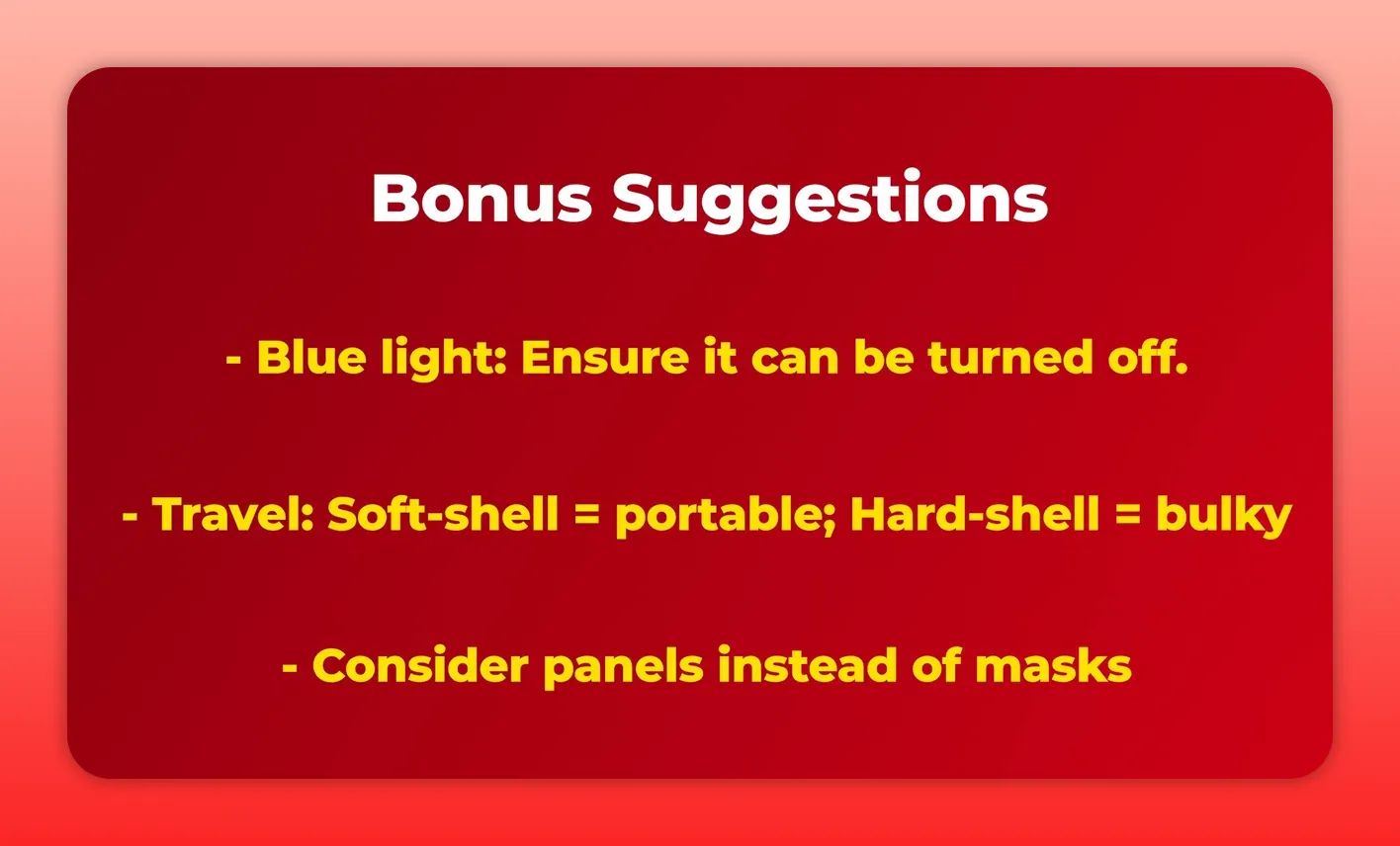
3. Consider A panel Instead Of A Mask For Value
If budget and value are primary concerns, a red light therapy panel may offer more bang for your buck. Panels cover larger areas, can treat other body parts, and often cost less per treated area. The tradeoff is portability: panels require a power source and a setup space, and they are less convenient for casual, mobile use.
4. Track Dosages And Routine
Whatever mask you choose, track the wavelength, radiance, and session time. Keep a simple log of sessions and skin changes. Consistency is key; photobiomodulation shows cumulative benefits over weeks and months, not overnight miracles.
A practical buying checklist
Use this checklist to compare finalists before purchasing a red light therapy mask:
- Wavelengths: red (630–660 nm) and NIR (800–850 nm) included?
- Power specs: radiance and recommended dose published or independently tested?
- LED distribution: even coverage across the face?
- Comfort: soft vs hard shell, nose fit, straps, breathability?
- Usage: corded or cordless? Eye openings? Mobility needs?
- Warranty and returns: at least a 30–60 day trial recommended; longer warranty preferred.
- Price versus measured performance: does the mask deliver measured output for the price?
- Technology: LEDs preferred for full-face; lasers useful only for targeted therapy.
- Optional blue light: can it be turned off?
- Travel needs: consider soft-shell masks or panels depending on goals.
Final Thoughts
Buying a red light therapy mask does not have to be overwhelming. Focus on the fundamentals: correct wavelengths, reliable power and dose, even LED distribution, comfort, and sensible warranty/return policies. Avoid getting dazzled by rainbow lights, inflated LED counts, or the assumption that the most expensive option is the best. For many people, a mid-priced mask with solid specs will deliver excellent results.
Keep a habit of regular use, monitor your skin over 8–12 weeks, and be ready to tweak session times to suit the mask’s power. If you are unsure about a model, prioritize vendors who give you time to test it and return it if it does not meet expectations.
Use the practical checklist above when evaluating options and you will be far more likely to end up with a red light therapy mask that delivers real, lasting benefits for your skin.
Found This Interesting? Look At These Articles
🔴 The Red Light Therapy Facial Fat Loss Link: Myth Or Reality?
🔴 Does Red Light Therapy Help Scars? The Science
🔴 Red Light Therapy For Skin: Beauty Benefits, Potential Complications, And More
🔴 Psoriasis With Red Light Therapy: Potential Game-Changer?
Have You Seen These Reviews
🔴 Rouge G4 Pro Review: Most Advanced Red Light Panel Yet?
🔴 Best Red Light Panel Yet? Block Blue Light Mega Review
🔴 $800 Red Light Mask Has Lasers… But Why?
🔴 Omnilux Contour Mask Review: Still Worth It in 2025?
Alex's Bio
Alex Fergus wrote this blog post. Alex is an ISSN Sports Nutrition Specialist, Fitness Professional, and certified Superhuman Coach who continues to expand his knowledge base and help people worldwide with their health and wellness. Alex is recognized as the National Record Holder in Powerlifting and Indoor Rowing and has earned the title of the Australian National Natural Bodybuilding Champion. Having worked as a health coach and personal trainer for over a decade, Alex now researches all things health and wellness and shares his findings on this blog.