
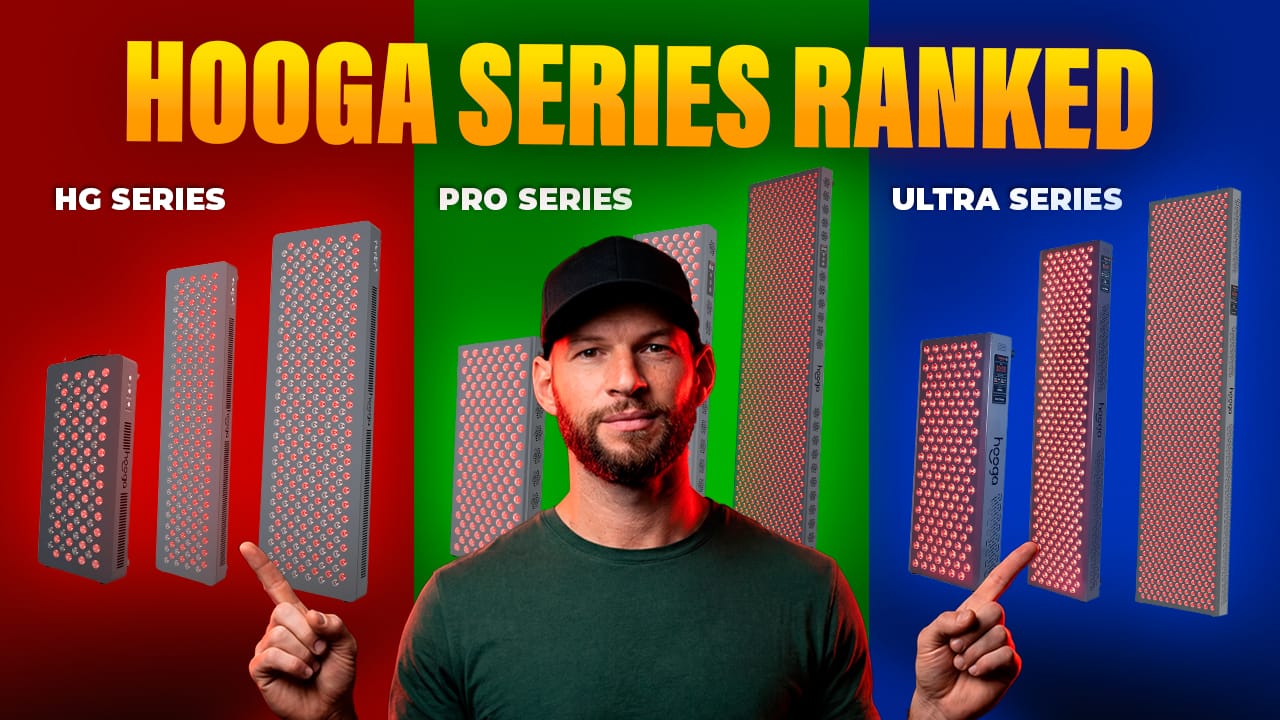
If you’ve been looking at Hooga red light therapy panels, chances are you’ve run into the same question many people ask:
Which series should I buy — HG, Pro, or Ultra?
At first glance, the names don’t make it obvious. Each lineup has different features, different price points, and different target users. Without a clear breakdown, it’s easy to feel unsure about which one actually makes the most sense for your needs.
After testing many red light therapy panels over the past several years—including multiple Hooga devices—I’ve noticed the same confusion come up again and again. Some people overspend on features they don’t need, while others buy a panel that later limits them.
So in this guide, I’ll walk you through the three Hooga panel series in simple terms—what they offer, who they’re best for, and which models stand out.
👉 https://aferg.co/cheatsheet
Why Hooga Panels Are So Popular
Hooga has built a strong reputation in the red light therapy space largely due to its pricing and accessibility.
For years, their panels have been known as some of the most affordable ways to get started with red light therapy. Even as the market has grown and new premium features have appeared across the industry, Hooga has maintained a lineup that spans:
- Entry-level budget panels
- Mid-range feature upgrades
- Premium high-performance models
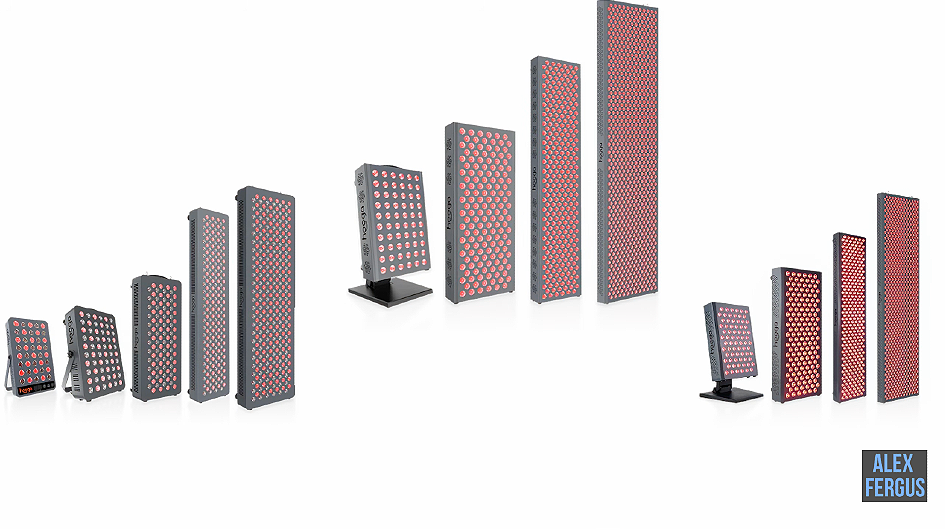
Today, the brand offers three clear tiers:
- HG Series — Entry level
- Pro Series — Mid-tier upgrade
- Ultra Series — Premium flagship
Each tier serves a slightly different type of user.
The HG Series: A Simple, Budget-Friendly Entry Point
The HG series is Hooga’s most affordable lineup.
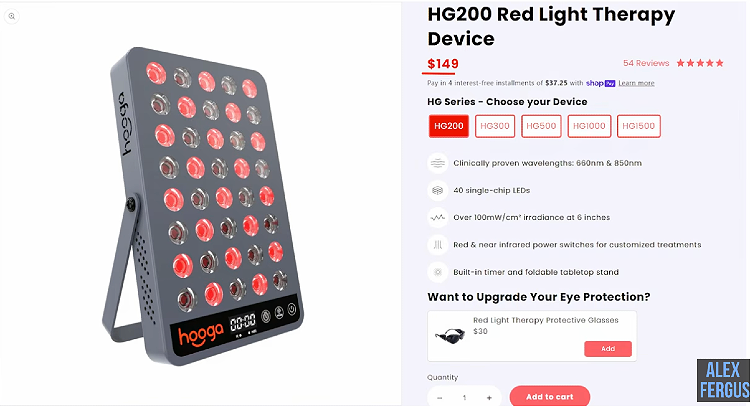
Prices typically range from about $149 to $899, making it one of the easiest ways to try red light therapy without spending thousands.
These panels focus on the fundamentals.
What you get
HG panels include two well-researched wavelengths:
- 660 nm red light
- 850 nm near-infrared light
These wavelengths are among the most widely studied in photobiomodulation research and are commonly used for skin health, muscle recovery, and general wellness applications.
However, the HG lineup keeps things intentionally simple.
Features include:
- Basic on/off switches
- Single-chip LEDs
- Limited mounting or stand options
- No pulsing modes
- No modular panel connectivity
These panels also use lower-cost LEDs, which may cause, some flicker.
During testing, the HG300 panel produced roughly 55 mW/cm² of irradiance, which translates to a strong therapeutic output relative to its price. From a value perspective, this equates to roughly $7.80 per watt, making it an excellent entry-level option.
Who should choose the HG series?
The HG series is ideal if:
- You’re new to red light therapy
- You’re on a tight budget
- You simply want a basic, functional panel
It delivers the core wavelengths and adequate power without the extra features. However, if you want a more premium experience, more wavelengths, or the ability to expand your setup later, you’ll likely outgrow this series fairly quickly.
The Pro Series: A Practical Upgrade
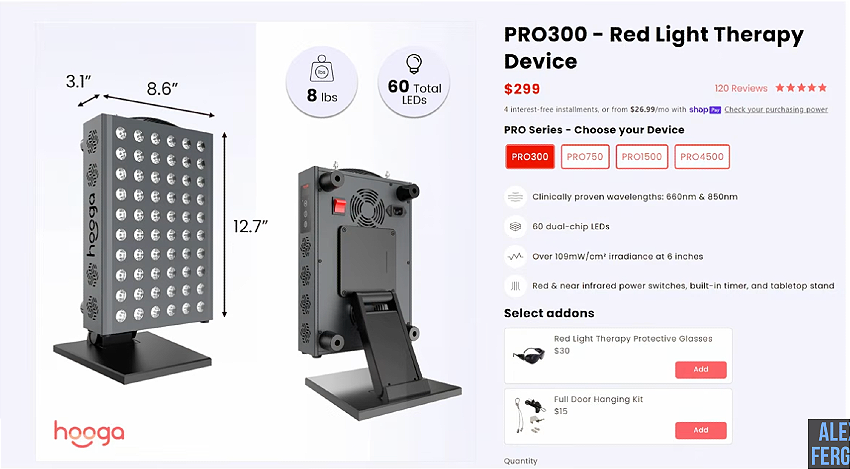
The Pro series sits squarely in the middle of Hooga’s lineup. Pricing ranges from roughly $299 to $3,100, depending on the panel size.
While the wavelengths remain the same as the HG lineup—660 nm and 850 nm, the Pro series introduces several meaningful upgrades.
Key improvements
Pro panels feature:
- Dual-chip LEDs for improved light distribution
- Flicker-free LED technology
- Modular connectivity, allowing multiple panels to connect together
- Expanded stand and mounting options
The dual-chip LEDs mean each diode contains two emitters, improving light spread across the treatment area compared to the single-chip LEDs used in the HG series. Another major benefit is expandability. If you purchase one panel now, you can later connect additional panels and control them together. This makes it much easier to build a larger or full-body setup over time.
When testing the Pro 300, irradiance measured around 50 mW/cm², similar to the HG models. Because of the higher price point, the cost per watt rises to about $10 per watt.
So the Pro series isn’t about more power—it’s about better features and usability.
Who should choose the Pro series?
The Pro lineup is best for people who:
- Want a higher-quality panel experience
- Plan to expand their setup later
- Prefer flicker-free LEDs
- Want stand options or modular systems
If you think you might eventually want multiple panels or a larger therapy setup, the Pro series is often the smarter long-term choice.
The Ultra Series: Hooga’s Premium Line
The Ultra series represents Hooga’s top-tier offering.
Historically, the brand focused on low-cost devices, so the launch of the Ultra lineup marked a major shift toward more feature-rich, premium panels.
Prices range from roughly $420 to $4,200, depending on size.
What makes Ultra different?
The biggest upgrade is the expanded wavelength coverage.
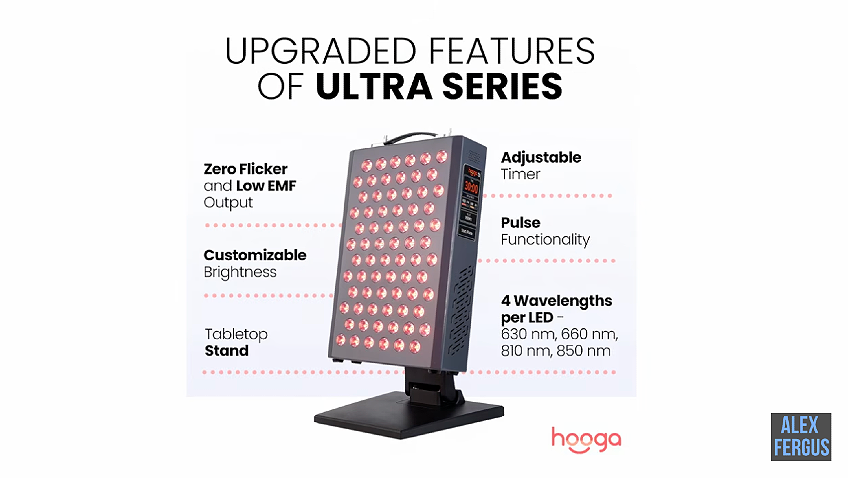
Ultra panels include four wavelengths:
- 630 nm red
- 660 nm red
- 810 nm near-infrared
- 850 nm near-infrared
Each LED uses quad-chip technology, meaning a single diode can emit all four wavelengths. This improves light distribution across the treatment area, since every LED contributes all wavelengths simultaneously.
The Ultra series also introduces a variety of premium features:
- LCD control screen
- Remote control operation
- Adjustable intensity levels
- Independent wavelength control
- Pulsing modes
- Modular connectivity
- Flicker-free LEDs
Testing the Ultra 360 produced around 60 mW/cm², slightly higher than the HG and Pro equivalents. However, the cost per watt climbs to roughly $13, reflecting the additional features rather than purely increased power.
👉 https://aferg.co/cheatsheet
Who should choose the Ultra series?
The Ultra lineup is best suited for people who want:
- The most advanced features
- Multiple wavelengths
- premium controls and customization
- The highest-end Hooga experience
However, if your primary goal is simply getting effective red and near-infrared exposure, the HG or Pro models may already deliver everything you need.
My Standout Panel Picks From Each Series
If I had to recommend one panel from each lineup, here’s what stands out.
Best HG Panel: HG200
The HG200 is a fantastic entry-level panel.
It’s compact, affordable, and includes a built-in stand. At around $149, it’s one of the lowest-cost ways to start experimenting with red light therapy. It’s also a convenient secondary panel for travel, office use, or bedside sessions.
Best Pro Panel: Pro 4500
The Pro 4500 is the “go big once” option.
With 900 LEDs, it provides extensive coverage and strong output. It also supports modular expansion and multiple stand configurations. At roughly $3,000, it delivers serious performance without stepping into Ultra-level pricing.
Best Ultra Panel: Ultra 1500
The Ultra 1500 hits a sweet spot between performance and price.
It contains 300 LEDs, providing solid coverage for partial-bodydue to its treatments while remaining manageable in size. At around $1,400, it provides the Ultra series’ premium features without the massive cost of the largest panels. Many users eventually pair two units together to achieve near full-body coverage.
Common Mistakes People Make When Buying Panels
After years of reviewing red light therapy devices, I’ve seen a few recurring mistakes.
Buying more features than you need
Some people jump straight to the Ultra lineup only to realize they never use features like pulsing modes or advanced controls. In reality, most clinical research has been performed using just 660 nm and 850 nm wavelengths, which are available in the HG and Pro series.
Extra features are nice—but not always necessary.
Choosing a panel that can’t expand later
On the other hand, some people buy a large HG panel, only to wish later that they could expand their setup. Since HG panels lack modular connectivity, upgrading your system later becomes more difficult.
If you think you might want a multi-panel setup someday, the Pro series is often a safer choice.
Comparing Hooga With Other Brands
While Hooga offers excellent value, it’s always worth comparing other manufacturers before making a final decision.
For example, some newer panels—like the Rouge G4 series—offer expanded wavelength coverage.
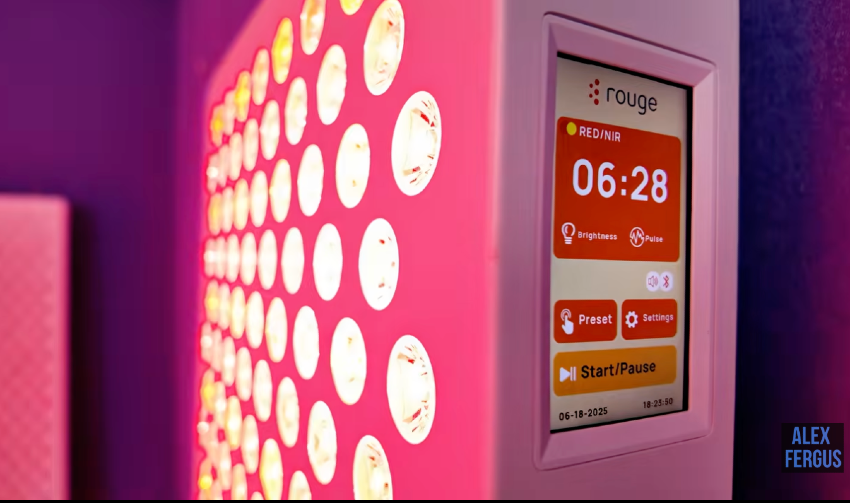
Rouge panels include up to eight wavelengths, including: 630, 650, 660, 670, 810, 830, 850, providing solid coverage for partial-body and 1060 nm
Some also feature smart preset modes that automatically adjust intensity and wavelength combinations based, on your goal.
Other brands worth considering include:
The right choice ultimately depends on your budget, the features you care about, and how you plan to use the panel.
Final Thoughts
Choosing between the HG, Pro, and Ultra series ultimately comes down to how much you want to invest and what features matter most to you.
A simple rule of thumb:
- HG Series — Best for beginners and budget buyers
- Pro Series — Best for expandability and mid-range upgrades
- Ultra Series — Best for advanced features and premium setups
All three lines deliver therapeutic red and near-infrared light. The real difference lies in the features, flexibility, and user experience.
If you’re unsure, starting with a smaller panel and expanding later is often the most practical approach.
Items Mentioned
⭐ Hooga- 10% OFF, discount appears when you click this link
👉 https://aferg.co/hooga-rlt
⭐ Rouge Red Light Panels — code ALEX for 5% off!
👉 https://aferg.co/rougecare
⭐ Block Blue Light — 15% off automatically applied at checkout
👉 https://aferg.co/BlockBlueLight
⭐ PlatinumLED — 5% Off BioMax Panels via discount link
👉 https://aferg.co/redled
⭐ Mito Red Light - for 5%. The code will auto-generate when you click the link.
👉 https ://aferg.co/7d221
You May Like These Reviews:
⭐ Rouge Red Light Therapy Review: Is It Worth the Investment?
⭐ Better Than Red Light Therapy Masks? My Top Picks
⭐ Europe's Best Red Light Therapy Panel [Review & Comparison]!
⭐ Red Light Therapy In Europe & UK: Your BEST Options
Alex Fergus wrote this blog post. Alex is an ISSN Sports Nutrition Specialist, Fitness Professional, and certified Superhuman Coach who continues to expand his knowledge base and help people worldwide with their health and wellness. Alex is recognized as the National Record Holder in Powerlifting and Indoor Rowing and has earned the title of the Australian National Natural Bodybuilding Champion. Having worked as a health coach and personal trainer for over a decade, Alex now researches all things health and wellness and shares his findings on this blog.
Frequently Asked Questions
What is red light therapy?
Red light therapy uses red and near-infrared wavelengths of light to support normal cellular energy and recovery. It’s often referred to as photobiomodulation (PBM). If you're comparing devices and brands, you can check the discounts page for current deals and recommendations.
How does red light therapy work?
Red and near-infrared light can be absorbed by mitochondria in cells, which may help support ATP production and normal cellular repair processes.
What wavelengths are used in red light therapy?
Most red light therapy devices use wavelengths roughly between 630 nm and 880 nm. Common wavelengths include 630 nm, 660 nm, 810 nm, 830 nm, and 850 nm.
What’s the best red light therapy panel?
The best red light therapy panel depends on coverage needs, power output, wavelengths, and budget. Before buying, it's smart to check the discounts page to compare brands and deals.
Red light panel vs mask: which should I choose?
Red light panels usually provide broader coverage and higher power output, while masks are designed primarily for facial skin treatments.
What does low EMF mean for red light therapy devices?
Low EMF refers to lower electromagnetic field emissions around a device. Some buyers prioritize this feature when comparing devices.
How long should a red light therapy session last?
Many users begin with sessions of around 5–10 minutes per treatment area and adjust based on device power and distance.
How often should you use red light therapy?
Common routines range from 3–5 sessions per week depending on the goal and device strength.
Is red light therapy safe?
Most consumer red light therapy devices are considered safe when used according to manufacturer guidelines.
Who is Alex Fergus?
Alex Fergus is the founder of Light Therapy Insiders and reviews red light therapy devices with a focus on practical buying factors.
Where can I find red light therapy discount codes?
You can check the discounts page to see the latest red light therapy discount codes and deals.
Do red light therapy discount codes expire?
Yes. Most brands rotate discount codes during promotions and seasonal sales. If a code stops working, it's best to check the discounts page for the latest offers.