
If you want the skin and anti-aging advantages of red light therapy but would rather not wear an LED mask, there are excellent alternatives. Below I break down six practical options — from clinic-grade systems to wallet-friendly gadgets — with clear pros, cons, and who each device suits best. My aim is to help you choose the right tool for your skin goals, budget, and lifestyle.
🏆 Quick Answer: What's the Best Alternative to a Red Light Therapy Mask?
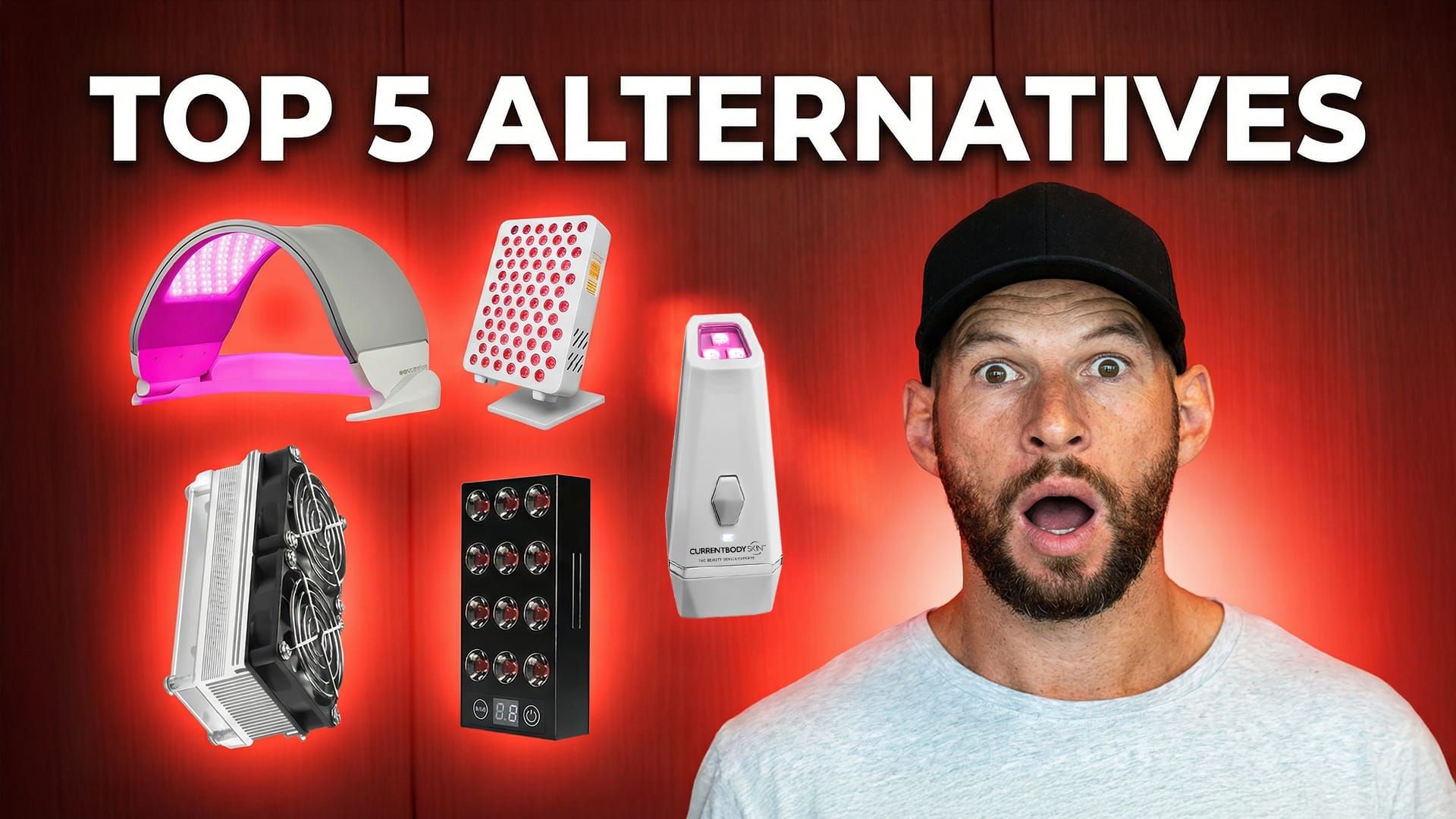
If you want the skin benefits of red light therapy without a mask, I'd choose a tabletop panel like the Rouge G4 for coverage, power and multi-use value. For travel and a lower budget, the Rouge G4 Nano is my go-to. The trade-off is that panels and handhelds are less targeted than a mask for some jobs, and the clinic-grade Dermalux Flex MD is expensive and not portable.
- Best overall: Rouge G4 Tabletop Panel. Great balance of coverage, power and versatility, including muscle and joint recovery. Check the price
- Best for travel: Rouge G4 Nano. Pocketable, battery-powered and my go-to mask alternative that travels well. Check the price
- Best clinic-grade: Dermalux Flex MD. Even coverage across face, neck and chest, but expensive and not portable. Check the price
- Best budget: CurrentBody Anti-Blemish LED Pin. Cheap spot-treatment tool for acne, with no near-infrared for anti-aging. Check the price
- Best Red Light Therapy Panels of 2026: 11 Panels Put to the Test
- Interactive lab data for all 11 panels
Why Consider Mask Alternatives?
Masks work, but they bring a few trade-offs: limited coverage around the nose and eyes, sweat buildup, a fixed fit, and often awkward portability. Alternatives can offer wider coverage, shorter treatment times, multi-use functionality for sore joints or sunburn, and devices that are easier to travel with.
How I Evaluated These Devices
The main things I look at are: wavelengths (what the device actually emits), power/coverage, practical usability, and portability. For skin and anti-aging you generally want red and near-infrared wavelengths in the ~630–660nm and ~800–830nm ranges. Blue light (around 415nm) is useful for acne control but irrelevant for anti-aging.
1. Dermalux Flex MD — Clinic-Grade, At-Home Flex Panel (~$2,000+)
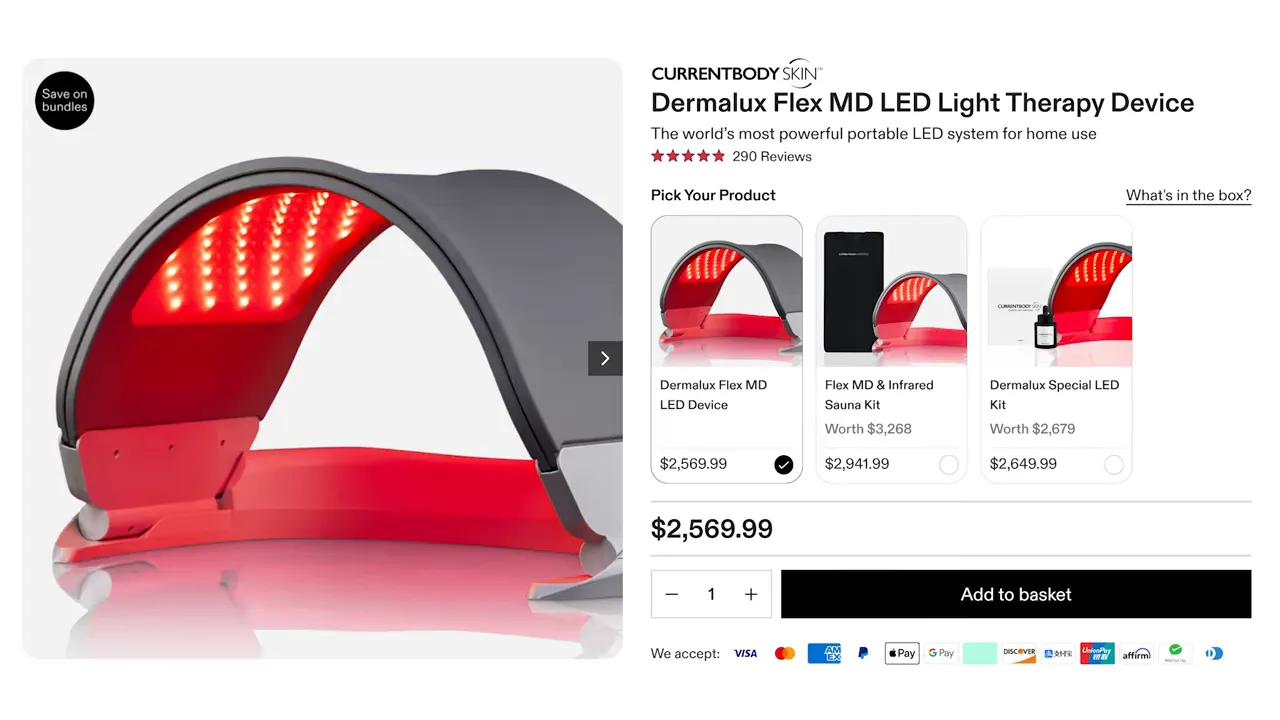
This is a high-end, flexible clinic-style panel designed for home use. It combines three core wavelengths: 630/633nm red, 830nm near-infrared, and 415nm blue for acne control. Coverage is excellent — even spread across the entire face, neck, and chest — so you avoid the blind spots masks sometimes create.
You can get $250 off with code ALEXFLEX on Dermalux US and UK.
Pros: clinic-grade build, multiple wavelengths, even coverage. Cons: expensive, not portable, and sessions are more "lie down and zone out" than something you can do while moving around. If budget isn’t a concern and you want spa-like sessions at home, this is a solid choice.
2. Rouge G4 Tabletop Panel — The Sweet Spot (~$600)
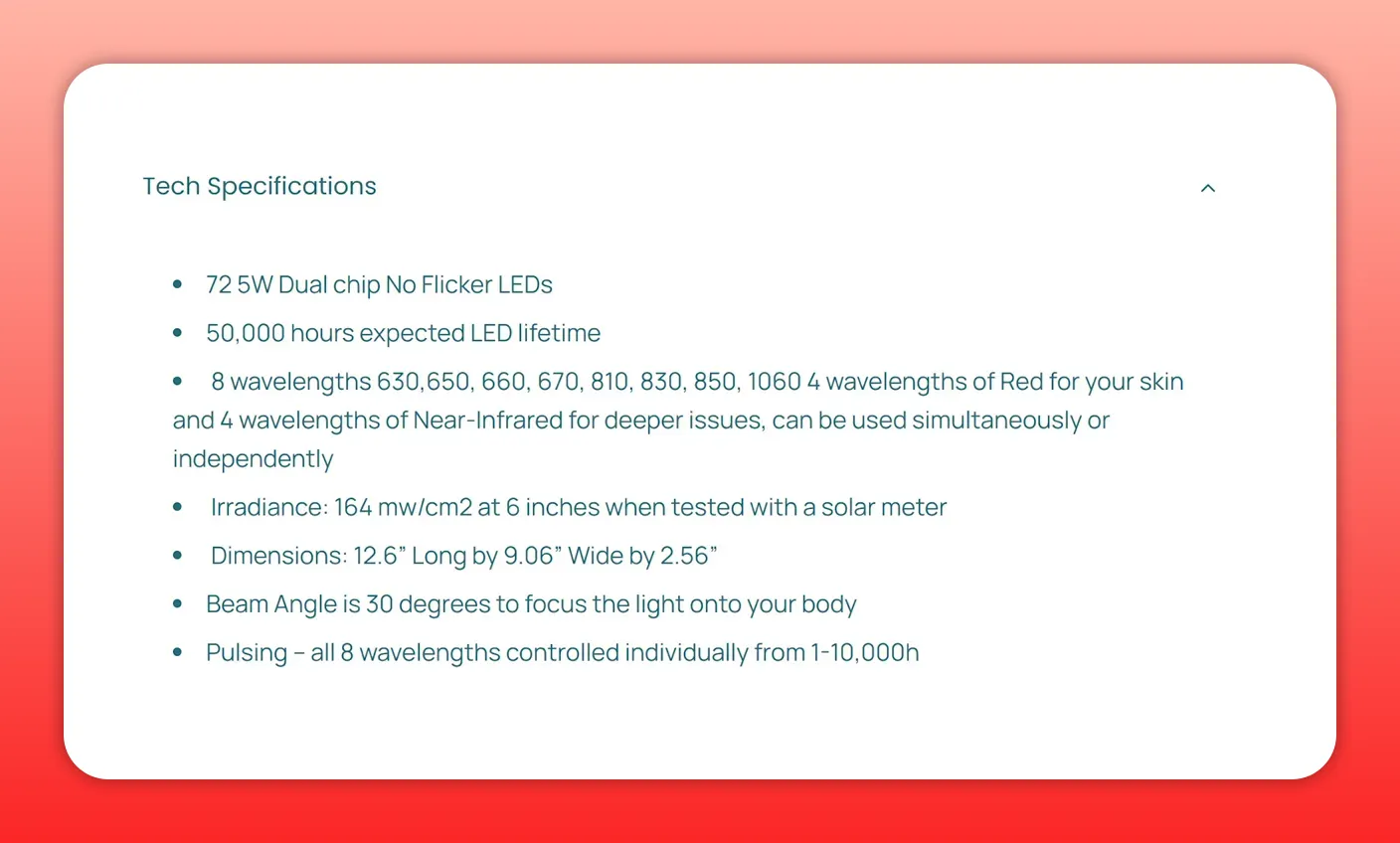
A tabletop panel that I consider a great value proposition. It has 72 dual-chip LEDs and multiple wavelengths, including a mix of red and near-infrared (it even includes 1064nm). The built-in stand and preset skincare mode make it easy to get consistent treatments.
Why I recommend it: size, power, and versatility. You can treat head-to-chest areas quickly, and it doubles as a therapy panel for muscle, joint, or sunburn recovery. Panels like this strike the best balance of coverage, treatment time, and multi-use utility.
 Alex Fergus
3. Chroma Radiance — High-Intensity Handheld (~$390)
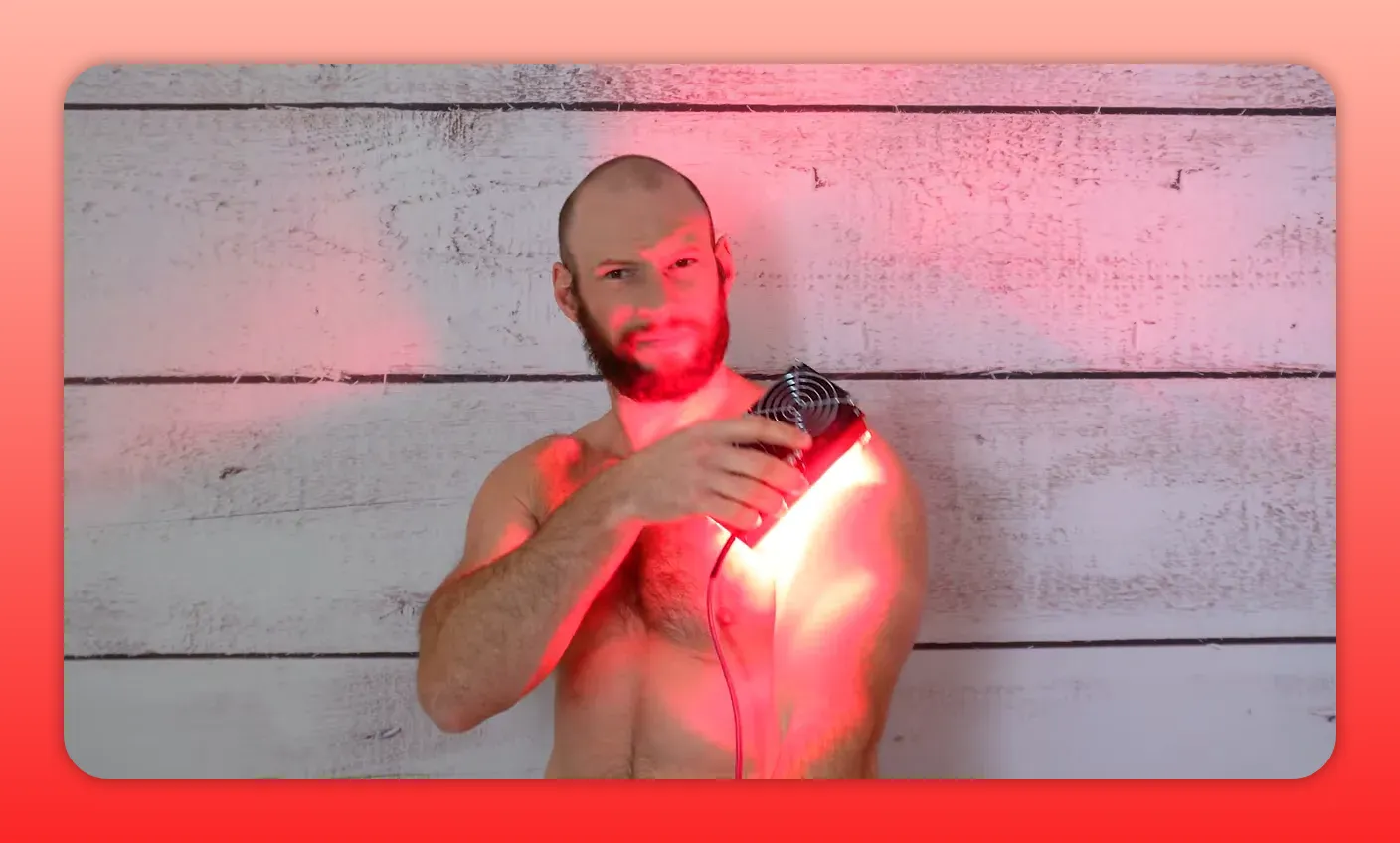
The Chroma Radiance is a powerful handheld device engineered for very short sessions (they advertise 30–90 seconds). Its spectrum blend favors 660/630nm for surface-level skin work but also includes an unusual 405nm violet component rather than the more common 415nm blue for acne.
The caveat: high intensity is not always better. Think of it like cooking — cranking the power to shorten time can lead to poor outcomes. I haven’t measured its exact output, but if you choose a high-intensity handheld, be cautious with dosing. It’s bulky and plug-in only, so portability is limited despite being handheld.
4. Rouge G4 Nano — Pocketable, Reliable, My Go-To (~$250)
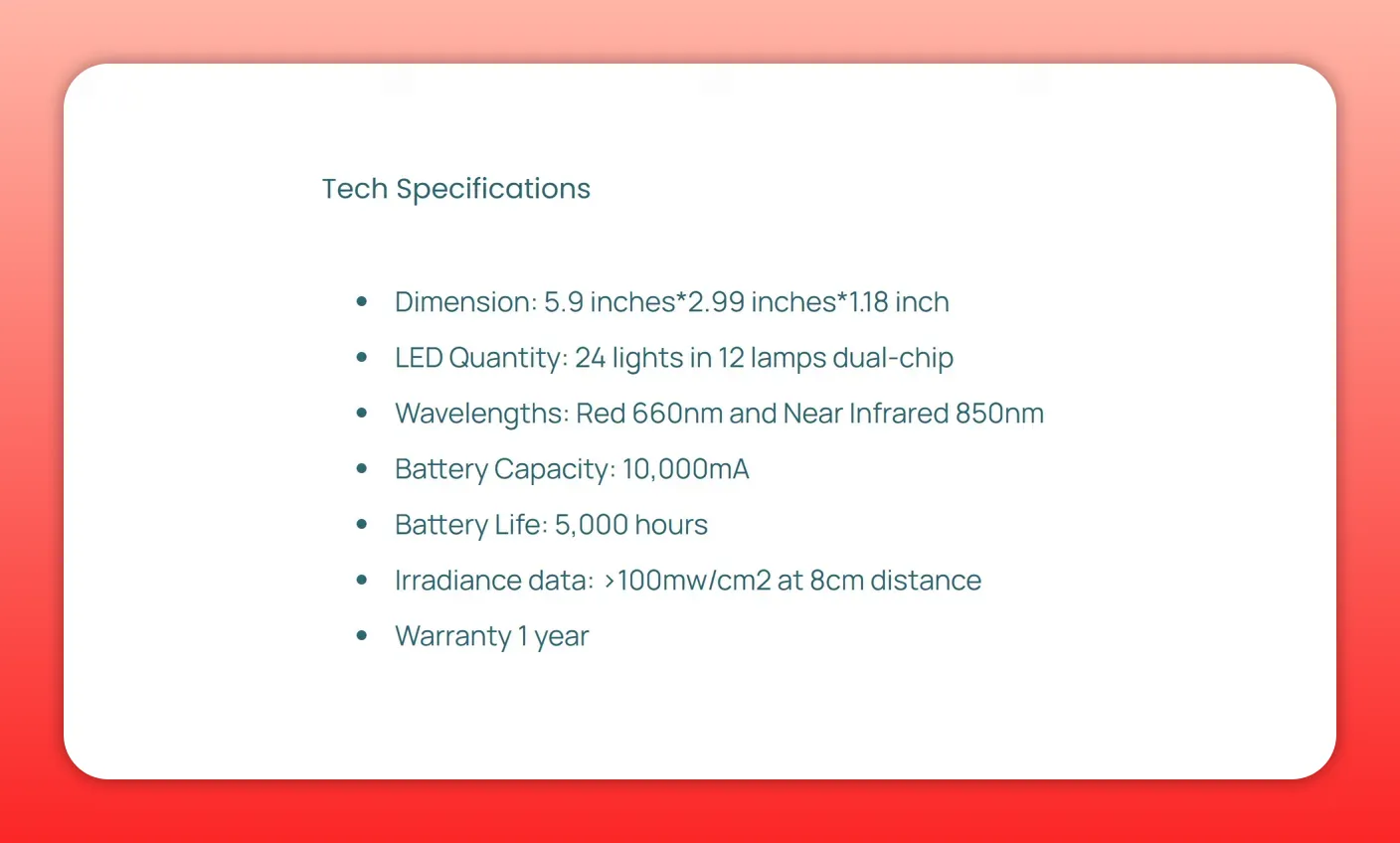
This one I keep in rotation. The Nano is roughly the size of a thicker phone, battery-powered, and excellent for travel. It emits strongly in the 660nm and 850nm bands — not my absolute top picks (I prefer 630 and 830nm for anti-aging), but close enough to be effective.
Strengths: portability, battery operation, ease of use. You can hold it for five-minute sessions, move it six to nine inches away for broad coverage, or bring it closer for shorter, more focal work. If you want a mask alternative that travels well and won’t break the bank, this is the best compromise.
5. CurrentBody Anti-Blemish LED Pin — Budget Targeted Tool (~$80)
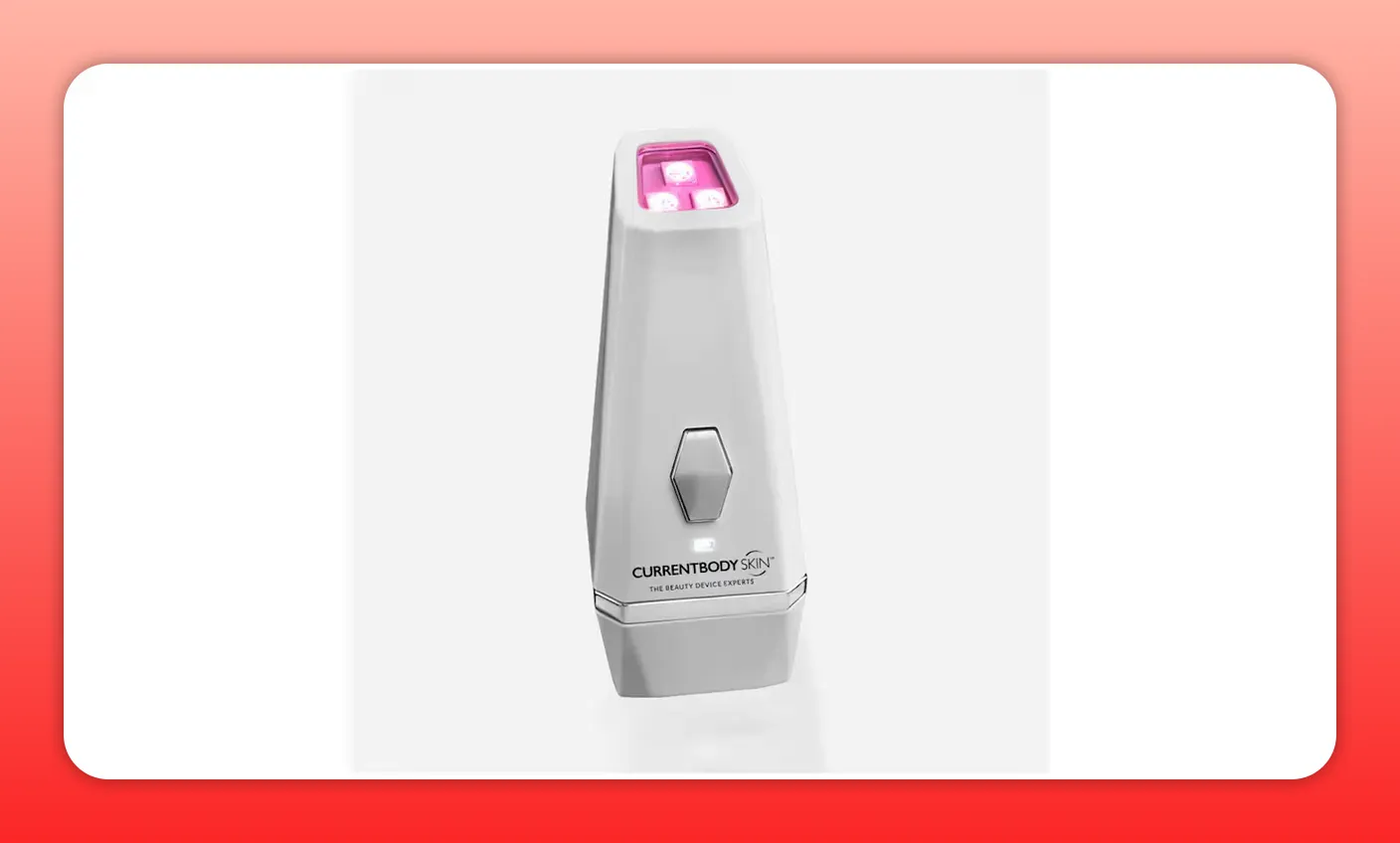
If you’re on a strict budget or only need targeted acne control, this tiny pin device does the job. It has six LEDs combining blue and red light. It’s not suitable for full-face anti-aging (no near-infrared), but it’s handy for spot treatments or quick touch-ups under the eyes.
Use cases: travel backup, spot treatment for pimples, or a cheap entry-level device to try out the technology. Remember that only a subset of adults need blue-heavy devices for acne, so don’t buy blue if you only want anti-aging benefits.
6. Mystery Mask: Status Update
When I first wrote this, a new mask was on the horizon but had faced delays. If you prefer a mask, my current picks are in What LED Mask Should I Buy in 2026?, and the highest-scoring mask I've tested is the Mito Red Light MitoGlow. Want to be first to hear when I test something new? Join my insiders list.
Practical Tips For Effective Red Light Therapy
- Pick the right wavelengths: Aim for red (~630–660nm) + near-infrared (~800–830nm) for anti-aging. Blue (~415nm) is for acne only.
- Watch dose and time: More power doesn’t always equal better results. Very short, ultra-high intensity sessions risk negative effects. Find a balanced dose.
- Think about coverage: Panels offer an even spread and multi-use benefits. Handhelds and pins are great for portability or spot work.
- Consider multi-use: If you want therapy for joints, muscle pain, or sunburn, a larger panel is more useful than a face-only mask.
Which Option Should You Choose?
If budget allows and you want full-coverage, multi-purpose therapy, choose a tabletop panel like the Rouge G4. For portability and travel, the Rouge G4 Nano is hard to beat. If you want clinic-grade spa sessions at home and cost is no object, the Dermalux Flex MD delivers professional coverage. For targeted acne or a low-cost entry, the CurrentBody pin is practical.
Final Thought
There are excellent mask alternatives across price points. The best choice depends on whether you prioritise coverage, portability, wavelength specificity, or multi-use functionality. Keep in mind the wavelengths and dosing principles above for safe, consistent results with red light therapy.
If you want help matching a product to your goals and budget, there are interactive tools and comparison guides that use years of reviews and science to recommend devices tailored to your needs.
Alex's Bio
Alex Fergus wrote this article. Alex is the founder and head reviewer of Light Therapy Insiders and has tested and reviewed red light therapy devices since 2017. He measures the devices he reviews with a calibrated spectroradiometer, and in 2026 he had 11 popular panels independently measured at LightLab International (see how we test). He shares his testing with more than 90,000 subscribers on YouTube. Alex is also an ISSN Sports Nutrition Specialist, fitness professional and certified Superhuman Coach, and worked as a health coach and personal trainer for over a decade.