

We're getting tons of questions about red light therapy and cancer, specifically "can red light therapy cause cancer"? And that's an extremely valid concern that requires an answer!
So in this article, I decided to cover all the existing scientific literature on red light therapy and cancer. I do want to make a huge disclaimer before you read any further in this article:
As far as methodology goes, I've included all 200 + studies from Vladimir Heiskanen's Excel sheet for my work. I didn't cherry pick any studies here. Heiskanen's Excel sheet lists just under 200 studies right now, on light therapy and oncology. I won't go over these studies in detail, as most of them are animal or in vitro ("in the glass" - laboratory Petri Dish studies).
If you're short on time, you can just read the summary below. If you want the full details of my argument, then, of course, read the entire article!
Red Light Therapy And Cancer Summary:
Generally, however, red light therapy does have a decent evidence base for counteracting some of the side effects of cancer treatments. Some lower-quality human studies also show no increase in cancer risk or growth. However, we need higher quality cohort or "randomized controlled trial" studies here (with a control and intervention group) to definitively showcase causality. And even if such costly studies are carried out, there will still be some uncertainty in this area, as different cells respond to light therapy differently.
For cancer prevention, your best bet is to focus on the many lifestyle and nutrition risk factors. I would say that cancer is a complex of diverse diseases with unique risk factors, progression, and responses to treatment. Leading cancers worldwide include lung, breast, colorectal, prostate, and stomach. Lifestyle factors, such as smoking, obesity, alcohol use, inactivity, and poor diet, play significant roles in risk. You can often cut your risk by 60 to up to 90% by influencing lifestyle factors.
Again, this is not medical advice, but in specific cases I would recommend red light therapy for cancer treatment side effects. You'll have to talk to your doctor about this goal. A lot more research is needed in my opinion before we can make a judgement on what the effects are on cancer risk and progression.
Important Comments
- What Is Red Light Therapy?
- Red Light Therapy Explained: Basic Terms Guide
- Start Here - Light Therapy 101 & Buyers Guide
- Red Light Therapy Dosing Chart: The Raw Data From Hundreds Of Studies- Red Light Therapy Dosing: Why It's Complicated!
- Red Light Therapy Wavelengths Benefits: The Ultimate Guide
- How Often Should You Use Red Light Therapy Explained
These resources should give you a basic understanding of how red light therapy works and the discussions around it!
What Is Red Light Therapy?
First up, a short introduction into what red light therapy is. If you're familiar with red light therapy, feel free to skip this section and read my introduction to cancer below.
Me and others have written extensively about red light therapy before - as its the main topic of this website - and would recommend beginners to check the following articles:
- What Is Red Light Therapy?
- How To Use Red Light Therapy 101: The Best Guide For Starters
- Red Light Therapy: What’s The Ideal Distance from Skin?
- Start Here - Light Therapy 101 & Buyers Guide
Simply put, with red light therapy, you shine red and near-infrared light at your skin. That light ventures into your body, and different wavelengths of light penetrate more superficially or deeper.
You may know about the light spectrum in physics. That light spectrum contains the colors violet, blue, green, yellow, orange, and red. These colors make up the "visible light spectrum". Red, from that visible light spectrum, is used in red light therapy.
Besides the visible light spectrum, there's also light that is invisible to the naked human eye. "Infrared" and "ultraviolet" light make up that invisible light spectrum. Infrared light is mostly responsible for the hot feeling you get when you're out in the sun, and the ultraviolet light helps create vitamin D in your skin and can give you a sunburn–I'm overimplifying a bit though!
How Red Light Therapy Works At A Cellular Level
Nonetheless, the red light therapy has tons of different effects in your body. First of all, it improves overall cellular function by boosting the efficiency of your mitochondria.
Mitochondria are the energy factories in your cells. I've extensively written about how red light affects mitochondria in the past. Mitochondrial health plays a huge role in your overall health, as every process in your body is dependent on energy. Without energy production, you're basically dead!
Nevertheless, mitochondria have far more functions than just energy production alone. Mitochondria also play a role in the defense of the cell, for instance, and the immune system.
And, once mitochondrial health deteriorates–here you'll end up with fewer and smaller mitochondria–your overall health is weakened as well. Mitochondria also contain their own DNA that's different from the DNA in the center of your cell. You inheret that DNA from your mother alone.
In time, without proper repair, the mitochondrial DNA becomes divergent across the body. Disease is then the end result. But by maintaining the health of your mitochondrial DNA, such as through proper sleep and other lifestyle factors, your overall health is maintained as well.
So that's where red light therapy comes in.
There's a huge effect of red light therapy on many processes in the cell. Red light therapy lowers chronic inflammation that lays at the basis of many modern diseases, for instance. Red light therapy also lowers oxidative stress - which speeds up aging and cell damage if it's excessive. And, through both these mechanisms, red light therapy improves energy production in your cells.
With greater energy production, cell function improves. Just think about when you were a teenager - you were bristling with energy. With age, the energy production of many people goes down, and in a large part that's becuase mitochondrial function goes down with age.
The changes in mitochondrial DNA can bring many chronic diseases over time, such as neurodegenerative disease, diabetes, cancer, and heart and blood vessel conditions. Upholding mitochondrial function prevents that deterioration, and red light therapy is thus an amazing tool in the toolbox here!
Red light therapy helps your body create new and bigger mitochondria. And, red light therapy changes what parts of genes are activated or not - thereby even a single red light therapy session can have long-lasting effects!
I will say that red light therapy shouldn't be the only tool in your toolbox. Optimizing sleep quality, minding your day and night cycle (circadian rhythm), movement, exercise, proper nasal breathing (unless you're above 90% of your max heart rate), avoiding toxin exposure, and a healthy diet are all important tools.
So I'm not claiming red light therapy is the only tool you need!
But, red light therapy can be amazing for overall health. And we've had many people in our Facebook group state that they've gotten life-changing effects from red light therapy!
Next up, let's consider cancer and its deep complexities:
Cancer Introduction: An Extremely Complex Topic
So there's not one such thing as "cancer" - in the same way there's no one such thing as "pain". Many different types of pain exist - such as neuropathic pain, osteoarthritis and rheumatoid arthritis, back and neck pain, and others! In all these instances, there are different tissues affected, different biological mechanisms, a different role for the brain and nervous system, and so forth!
So there's no one such thing as "pain". And there's no one such thing as "cancer".
Squamous cell carcinoma in the skin, for instance, has a totally different character than leukemia, which again is totally different from prostate or breast cancer. But first, let's check out some basic cancer statistics, that helps you navigate the field:
Cancer Statistics Basics
Cancer is defined as uncontrolled proliferation of transformed cells subject to evolution by natural selection - and is the 2nd leading cause of mortality worldwide! Mortality has been declining, fortunately, in developed countries, because of early detection and better treatment.
Different cancers exist, and some of the leading ones are lung, breast, colorectal, prostate, and stomach cancers. In all of these cancers, your lifestyle and nutrition play a major role in your risk of getting these. Lifestyle choices such as obesity, lack of activity, smoking, and excess alcohol consumption (minimal consumption is fine) play a significant role in your risk profile.
Cancers differ from each other, however, and are not all the same. Different cancers have different risk factors, growth rates, risk of spreading, and respond to treatments differently. If you want to control your risk, you're far from powerless, and often you can lower risk in the high double digits by changing your lifestyle.
So here's a definition of cancer (1):
"Cancer is a disease of uncontrolled proliferation by transformed cells subject to evolution by natural selection. We believe this definition captures the essence of the majority of previous and current definitions. To the simplest definition of cancer as a disease of uncontrolled proliferation of cells, our definition adds in the adjective "transformed" to capture the many tumorigenic processes that cancer cells adopt to metastasize. To the concept of uncontrolled proliferation of transformed cells, our proposed definition then adds "subject to evolution by natural selection." The subject to evolution by natural selection modernizes the definition to include the genetic and epigenetic changes that accumulate within a population of cancer cells that lead to the lethal phenotype. Cancer is a disease of uncontrolled proliferation by transformed cells subject to evolution by natural selection."
The uncontrolled growth of cancerous cells - that is damaing - and its potential spread to other parts of the body is thus only one part of the definition.
There's been tons of focus on cancer, and with good reason, as it's the second most common reasons people die worldwide (2). Heart and blood vessel conditions are reason number one here.
Fortunately, death due to cancer is decreasing, at least in developed nations (3). Each year, about 20 million people get cancer and just below 10 million people die of cancer or treatment side effects (4).
In the US, lifestyle changes such as lower smoking rates, and the early detection of cancer, is driving the decrease in cancer risk (3). Some cancers, such as prostate cancers, are increasing in incidence, however, in the US (5; 6). Nevertheless, cancer treatment options are evolving and there's somewhat of a bright story here, as researchers write:
"This progress increasingly reflects advances in treatment, which are particularly evident in the rapid declines in mortality (approximately 2% annually during 2016 through 2020) for leukemia, melanoma, and kidney cancer, despite stable/increasing incidence, and accelerated declines for lung cancer. In summary, although cancer mortality rates continue to decline, future progress may be attenuated by rising incidence for breast, prostate, and uterine corpus cancers, which also happen to have the largest racial disparities in mortality." (5).
So, even more dangerous cancers such as melanoma (the most dangerous type of skin cancer) and leukemia have become more treatable.
Nevertheless, the fight against cancer is far from won on a worldwide scale (4)! Here's the worldwide perspective, on current trends and future developments, in relation to cancer:
"Approximately one in five men or women develop cancer in a lifetime, whereas around one in nine men and one in 12 women die from it. Lung cancer was the most frequently diagnosed cancer in 2022, responsible for almost 2.5 million new cases, or one in eight cancers worldwide (12.4% of all cancers globally), followed by cancers of the female breast (11.6%), colorectum (9.6%), prostate (7.3%), and stomach (4.9%). Lung cancer was also the leading cause of cancer death, with an estimated 1.8 million deaths (18.7%), followed by colorectal (9.3%), liver (7.8%), female breast (6.9%), and stomach (6.8%) cancers. Breast cancer and lung cancer were the most frequent cancers in women and men, respectively (both cases and deaths). Incidence rates (including NMSC) varied from four-fold to five-fold across world regions, from over 500 in Australia/New Zealand (507.9 per 100,000) to under 100 in Western Africa (97.1 per 100,000) among men, and from over 400 in Australia/New Zealand (410.5 per 100,000) to close to 100 in South-Central Asia (103.3 per 100,000) among women."
So there's that. Let me return to the statement I made earlier, on that different cancers vary wildly from each other.
Lowering Cancer Risk Through Lifestyle & Nutrition
I do want to say something about your overall cancer risk, and lifestyle and nutrition. This topic is important, in my opinion, because tons of people in the general public seem to assume that whether they get cancer is outside their control, except for maybe a few factors.
So let's explore that topic:
Let's talk about lung cancer (7; 8; 9; 10). Smoking is the biggest risk factor for lung cancer by far! So if you want to reduce your lung cancer risk, don't smoke! For further decreasing your lung cancer risk, ensure that you're only breathing in the gases that are naturally present in air, such as nitrogen, oxygen, CO2, etc. So, avoid toxins such as asbestos, arsenic, radon (from natural radiation sources), and polluted air (7).
An estimated 15 - 25% of lung cancers happen in people who have never smoked (8). Second hand smoke and air pollutants play a major role there (8). So even though lung cancer is a huge problem and perhaps the leading cause of cancer worldwide, most people should be able to control their risk big time!
How about breast cancer?
The risk factors for breast cancer are completely different than those for lung cancer (11; 12; 13; 14; 15). Breast cancer is the most common cancer diagnosed in women under 40 (11). Nevertheless, here too you are far from helpless. Here are some numbers (16):
- Physical activity reduces your risk by about 20%
- A normal BMI reduces your risk by 5 - 30%
- Alcohol consumption increases your risk by 3 - 5%
- Smoking increases your risk by about 10 - 15%
- Passive smoking increases risk by 15 - 68%
- Night shift work by 50 - 100% (my estimate on the data (again, for details check: 16))
- Hormonal contraception by 5 - 20 %
- Young pregnancy, such as at 2o - 24 years old, halves your risk.
- Breastfeeding reduces your risk by about 5%.
So we've got an incredible amount of data already on how to reduce your risk. Please note that smoking is a risk factor, but not nearly as strong for breast cancer as it is for lung cancer.
Hence, my point about different cancers being unique in their risk factors, development, treatment, and so forth. Depending on your genetics, you may also want to emphasize different lifestyle interventions (12). Most reviews more or less agree here, and fortunately, much better and less-invasive screening methods have developed over time (13; 14; 15)!
How about colorectal cancer? Here are the risk factors, once more (16; 17; 18; 19; 20; 21). Here are some risk factors you can control (16; 19; 20):
- High cholesterol levels raise risk by 60% (16).
- High alcohol consumption raises risk by about 70% (16).
- Smoking raises risk by 35%, although the change wasn't statistically significant (16). Another review showed a 117% increase in risk, however (19).
- Obesity raises risk by 27% (19).
- A sedentary life doubles risk (20).
- Frequent consumption of sugary drinks triples risk (20).
- A greater reliance on a Western diet (or Standard America Diet) with lots of processed food doubles risk (20).
- Calcium supplements halve your risk - although I recommend consuming calcium from natural sources if possible (20)!
- Other risk factors may be low physical activity, red meat consumption (although I don't think organic, grass-fed meat should be avoided, but processed or meat that's heated in an unhealthy way should!)
And then there's this quote:
"Other potential risk factors included hypertension, metabolic syndrome, ulcerative colitis, chronic kidney disease, dietary factors, sedentary behaviour, and occupational exposure to organic dusts, but these were only examined in one or two studies." (16).
What about prostate cancer? Here too you've got many modifiable risk factors, next to genetics (22; 23; 24; 25; 26; 27):
- A reduced 13 - 51% risk with sufficient physical activity (22).
- Avoiding smoking at 9 - 24% reduced risk (22).
- Smoking and obesity also increase mortality if you've got prostate cancer (23). So these factors lower survival
- A healthy diet is protective against prostate cancer (24). Greater vegetable and tea intake also lower prostate cancer risk, both by around a whopping 50% (25).
- Quitting cigarettes, moving a lot, and having a normal bodyweight are the most important factors (27).
So, that's clear, hopefully! You can influence many of these risk factors for cancer and reduce your chances of getting several cancers massively. And a few options I haven't even discussed or barely, such as vitamin D and circadian rhythm disruptions.
The four different cancers that I've listed above - lung, colorectal, breast, and prostate cancer - are also most prevelant in the world as of this moment! Prevention is still huge for your overall cancer risk, contrary to what many people believe regarding "cancer happening to them". Yes, that's the case sometimes but certainly not always.
If you just stack a few of these lifestyle and nutrition habits, you'll be cutting your risk often by 60 - 90%. Of course, cancer usually only shows up over time, in most cases, so it's the habits you hopefully form in your 20s to 60s that are most protective here! I just wanted to add that information to this article because cancer is often such a doom and gloom topic, where people think they have no option or agency!
Not All Cancers Are The Same
Cancers don't just differ by risk factors that I've talked about above. Let's explore a few dynamics in which cancers can be really different (28; 29; 30; 31; 32; 33; 34; 35; 36; 37; 38):
- The different tissues that are affected. This is somewhat of a no-brainer, as everyone knows that different parts of the body can develop cancer. Here you have "melanomas", from melanocytes that produce melanin - a topic of a previous article of mine! Melanocytes are skin cells. Then there are leukemias of "leukocytes", or white blood cells. And you've got lymphomas, in the lymphatic system, and many other sources.
- The role of genetics. You may have genetic mutations that increase your risk of different types or cancer, or lower it. And, these genes may be activated or not (which the field of "epigenetics" concerns).
- Grow rates differ, often for different cancers but may also differ within the same cancer type. Prostate cancer generally grows slowly, for instance, and leukemia generally grows rapidly.
- The metastatic potential also differs for different cancers. For instance, the basal cell carcinoma in the skin rarely spreads, while there's a higher risk for melanoma. Both are skin cancers!
- Different cancers respond differently to different treatments. I'm no expert in this field so I will say relatively little about standard medical cancer treatment in this article, as you'd get them in the hospital. But suffice it to say, different cancers respond differently to chemotherapy, or immunotherapy, or hormones, etc! I know that prostate and breast cancer are hormone sensitive, for instance, and some do really well on chemotherapy (such as testicular cancer), while others don't (e.g. pancreatic cancer).
- Symptoms will be different too, depending on the cancer type and the treatment. This viewpiont is also common sense. You can imagine that lung cancer for someone who has smoked for 4 decades, is different in terms of symptoms than a brain cancer.
- Risk factors - I've just laid out this case in great detail above! There are some other risk factors that I haven't mentioned sometimes, such as infections for some cancers! Also keep in mind that the risk factor for lung cancer or breast cancer aren't necessarily the risk factors for other cancers, although often some risk factors overlap.
- Different prognosis and treatment. Early-stage detection generally has better outcomes. And, treatment needs to be consistent with the type of cancer, how it responds to different treatment, and the stage the cancer is in, etc. You'll also need different treatment depending on how aggressive the cancer is!
Hence, not all cancers are the same! Why do I spend so much time making that point here? Well, if cancers vary from each other, light therapy for different types of cancers may also have a different impact. Also, light therapy may be more or less applicable depending on the cancer type.
Why?
Well, it's easy to imagine treating-basal or squamous cell carcinoma is easily treatable by light therapy because it's located directly on your skin.
Red Light Therapy And Cancer Reviews
I'll start by going through the reviews on red light therapy and cancer. In medical science, reviews technically have the highest level of evidence (39). I'm getting these studies from Vladimir Heiskanen's Excel sheet (40). Reviews aggregate and analyze previous studies on a given topic.
In the last few years, four different reviews have been published on this topic (41; 42; 43; 44). These reviews are from 2018 - 2022. I'll go over these one by one.
The first study notes that red light therapy can be used for cancer treatment side effects (41). Examples here are oral mucositis - a side effect of radiation or chemotherapy affecting the mouth - which makes eating and swallowing very difficult. The review also ascribes a role to systemic red light therapy treatment in the case of cancer, such as intravenous irradiation. With intravenous irradiation you're targeting the blood supply but to achieve that your skin needs to be punctuated.
The second review includes 67 earlier studies (42). Among these are 43 in vitro (laboratory) studies and 9 studies with humans. The in vitro studies show conflicting parameters, with some good and some poor outcomes. The researchers speculate that the different study parameters explain those in vitro outcomes.
Then there's the following very important quote on the animal and human researchers:
"[Animal] studies and clinical trials with a follow-up period demonstrated that [red light therapy] is safe with regards to tumor growth and patient advantage in the prevention and treatment of specific cancer therapy-related complications. Current human studies, supported by most animal studies, show safety with [red light therapy] using currently recommended clinical parameters, including in Head & Neck cancer (HNC) in the area of [red light therapy] exposure. A significant and growing literature indicates that [red light therapy] is safe and effective, and may even offer a benefit in patient overall survival. Nevertheless, continuing research is indicated to improve understanding and provide further elucidation of remaining questions regarding [red light therapy] use in oncology." (42)
So that's extremely promising! Most of these studies use wavelengths in the 600 - 1,100 nm range (45). Some studies use blue and green light. The issue here, in my opinion, is that none of the studies investigate the long-term effects - most human studies use one to three therapy sessions (45). Please double-check these results yourself in Table 1 of that study (45):
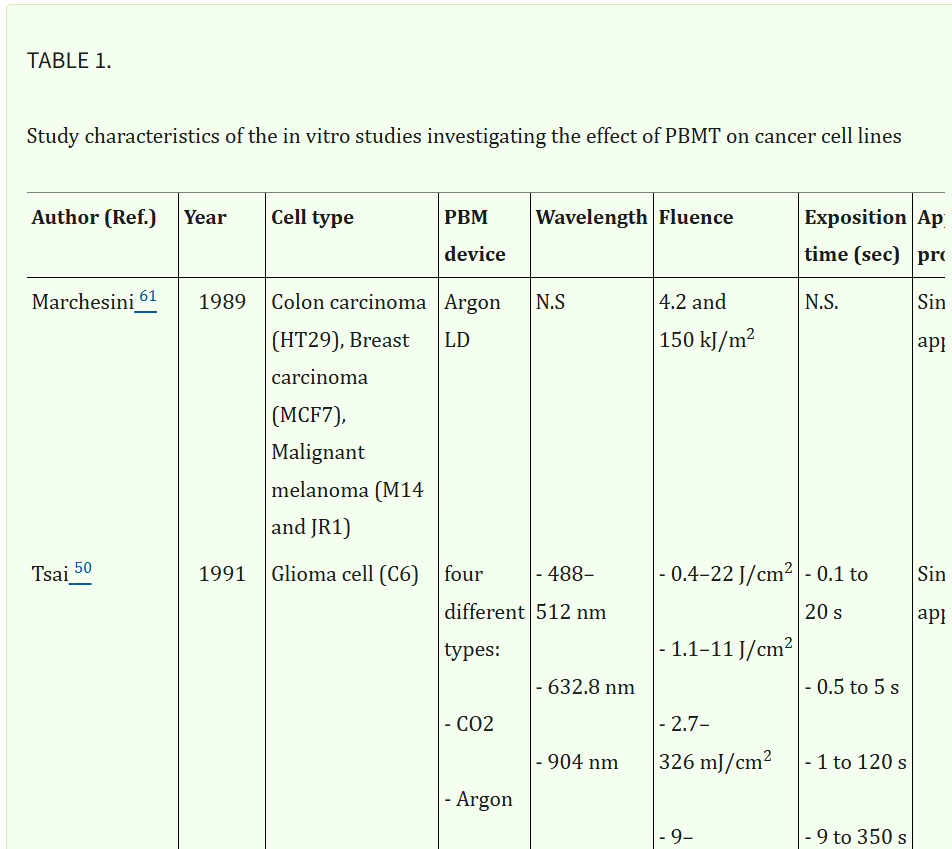
Ideally, in my opinion, these studies would use full-body red light therapy and follow the participants for several months during cancer treatment.
Right now, Table 3 of the review follows people with cancer for a period of up to one month. Here, results are generally positive and survival rate increases overall (45).
That's a great outcome, as "all-cause mortality" is a wonderful measurement of whether a given intervention increases lifespan or not. All-cause mortality is important because it measures the "bottom line", so to speak, without regard to what biological mechanisms may precisely cause these shifts.
It's much harder to check the effects of red light therapy on overall cancer risk, because cancers take much time to develop in many cases. There, we would be better off with cohort studies - such as is done with regards to saunas - where study participants are asked about how often they use red light therapy and then many biomakers such as cancer that develops is tracked over years or even decades!
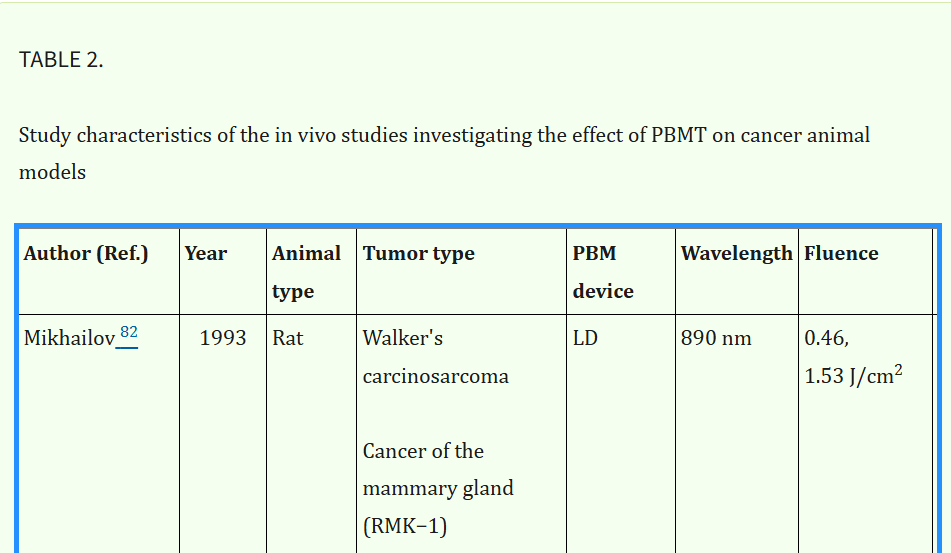
But back to the excellent review I was talking about (45). The good thing here is that we've got animal studies where the animals do have different cancers. These animals are then mostly treated with 650 - 670 nm red light, but some studies also use blue, green, and near-infrared.
In the animal studies, there's a mix between some studies that show inhibited tumor growth, some have a neutral effect, and in a few there is tumor growth or worsening conditions. The results show about a 50-50% pro and contra red light therapy outcome. Again, you can check these results in Table 2 of the article (45):
Then lastly, there's the in vitro studies (45). Here's what researchers write about the topic:
"The wide variety of [red light therapy] parameters utilized in these studies constitutes an obstacle to arriving at meaningful conclusions, [...]. Additionally, even studies using similar parameters can have differing or contradictory results. To wit, some in vitro studies suggest that [red light therapy] may favor tumor progression of oral SCC [an oral cancer] cells by activation of Akt/mTOR pathway, cellular proliferation, and cellular migration, while other studies report a reduction in tumor growth. It is also important to comment that the results suggesting [red light therapy] tumor enhancement were not replicated in other studies. Generally, in vitro studies have limited applicability when compared with in [animal and human] studies where various physiologically active cells and systems interact in the targeted tissue." (45)
I'll come back to these studies later. For now, I'll say I agree that I agree with the assessment of the researchers that the in vitro studies have limited use, especially if you've got animal and human studies on the topic! It's nevertheless important to keep in the back of your mind that the in vitro studies are contradictory and hard to intperet!
Also, it's harder to study red light therapy's effects in some Petri dish in vitro studies because red light therapy already has a strong effect on different cells, the researchers correctly claim (45). You and I already know that red light therapy has strong effects on skin cells, endothelial cells (such as in your blood vessels), stem cells (primordial cells that can differentiate into more specific cells), and immune system cells. This fact makes it harder to study red light therapy on cancer in in vitro studies.
Nevertheless, even regarding the animal studies it's not easy to draw a simple conclusion. Here, the researchers write that:
"The described results indicate that diverse malignant cells may react differently to specific PBM parameters and doses. A possible explanation for this lies in the dissimilarities in the cellular microenvironment between different tumor models, as [red light therapy has a clear effect on the cellular signal transduction pathways." (45)
Still, the researchers claim that the in vitro results are still important, as it shows that the dosing, parameters, treatment frequency etc are important (45). Some cases, such as oral mucositis, show extremely promising results whereby light therapy far outweigh the risk (45). The same is true for anything affecting the oral and neck area.
Here's the final conclusion of the researchers:
"[Red light therapy] (in the red or NIR spectrum by definition) appears safe and successful in the management of cancer therapy‐related side effects. Therefore, PBM should be considered as part of the standard of care for specific oncology purposes. Clinicians should be able to prescribe [red light therapy] by guideline recommendations using appropriate approved parameters of [red light therapy] in a clinical setting. The safety of [red light therapy] concerning the effect on the tumor response and most importantly the benefit of [red light therapy] to patients in the management of cancer treatment‐related toxicities have been shown in in vivo studies and clinical trials. Vigilance remains warranted for applications that have not been adequately documented or without guidelines due to a lack of evidence. Therefore, studies concerning the effect of [red light therapy] on malignant cell protection or enhancement of tumor growth are still needed." (45).
This outcome hopefully shows you why I started my article the way I did. Not all cancers are the same! So there's no simple answer, and whether red light therapy is helpful likely needs to be determined on a case-by-case basis, until we've got a lot more research on this topic. Clinicians need to inform patients about the potential risks of red light therapy treatment.
Next up, let's look at another 2020 review study (43). This review also emphasizes that red light therapy is increasingly used as an aid in cancer treatment, such as in oral mucositis, lympedema problems, skin problems because of radiation treatment (radiation dermatitis), inflammation, and tissue swelling (43). This review too, emphasizes that there's a wildly diverging array of dosing protocols, wavelengths, and so forth, across studies.
Here's what researchers write on treatment protocols:
"However, factors such as wavelength, energy density and irradiation frequency influence the cellular mechanisms of [red light therapy]. Moreover, the effects of [red light therapy] vary according to cell types. Thus, controversy arose as a result of poor clinical response reported in some studies that may have used inadequately planned treatment protocols. Since [red light therapy] may enhance tumor cell proliferation, these will also need to be considered before clinical use." (43)
And here's the crucial follow-up:
"However, the responses have the potential not only for clinical benefits but also for adverse consequences. The clinical implications from a number of these studies were far from being understood, and caution needs to be exercised, particularly with the use of [red light therapy] in oncology." (46).
In some cases, there's established evidence, such as radiation dermatitis, lymph problems, and oral mucositis, to apply red light therapy (46).
The researchers continue with the following statement:
"With the variety of tumor cell, differentiation, cell lines and responses to [red light therapy], designing clinical studies for oncology patients will be challenging. A wide knowledge gap exists between current laboratory findings and clinical applications of [red light therapy] for oncology patients." (46).
So this leads back to my original thesis in the introduction of this article. Cancers differ from each other - and different cancers may respond differently to red light therapy! And even then, with the same cancer type and more or less the same clinical situation, that cancer may respond very differently to different wavelengths, dosing parameters, treatment frequency, and so forth!
There's thus no easy treatment recommendation here! And it's also not a recommendation I'd be willing to risk because of the situation's complexity. The review I've considered above, therefore, also recommends a better study design to show the effects of red light therapy in different cancer-related contexts (46).
Lastly, there's the review by Professor Michael Hamblin (44). This review has more or less the same outcome. Alex Fergus - the founder and owner of this website - has interviewed Prof Hamblin here:
Concerns And Risks: Does Red Light Therapy Stimulate Cancer Cells?
So there's no easy and definitive answer here. I can't tell you. Why? Simply because we don't have the studies on this topic.
To get a good answer here you'd need:
- Longer term studies, where the incidence of cancer is measured over a control and intervention group. As cancer often takes a long time to take hold, carrying out this study will be prohibitively expensive.
- Studies such as a cohort study, where participants are followed for a long time. Here also, it's not easy to spot the cancer, as these studies often takes years if not decades. Sure, you'd get good data, but carrying out this study is still something that will only be done in the far future.
- Yes, there are tons of animal and in vitro studies in Heiskanen's datasheet. But these studies cannot be 1:1 translated to human beings. So, even though there may be 200 animal and in vitro studies on this topic, as human biology is different, especially regarding cancer, there's no easy answer here.
- The fact that red light therapy is helpful for many cancer side effects, or cancer treatment side effects, is promising though. But that fact doesn't inform whether red light therapy has any effect on cancer cell growth.
- There are a few lower-quality studies on this topic, showing no cancer growth, but these aren't of the Gold Standard in medicine of the "randomized controlled trial" with a control and intervention group (47; 48; 49). So I can't give you an easy answer here, to know the answer with full certainty, you'll need these higher quality studies carried out!
- Of course, we can argue from biological mechanisms, but the problem here is that often, these arguments turn out to the wrong in the long run. An example here is almost universally recommending SSRI antidepressants because of "neurotransmitter deficiency". Neurotransmitters are brain signalling compounds, but these aren't always low and many people do poorly on these in the long run. So, even though biological mechanisms may sound really plausible as an argument, they can create a false sense of security
My conclusion? Keep reading:
Want More Red Light Deep Dives? Join My Advanced Science Course:
Join my 100% free advanced science light therapy course above, where I take deep dives into many different topics, such as mechanisms, neurology (Alzheimer's, Parkinson's, etc), exercise recovery, skin beauty & rejuvenation, and much more. Here's what you can expect:
- My latest take on using light therapy for Alzheimer's, Parkinson's, and other neurodegenerative diseases, updated late 2025.
- Countering joint problems and lowering pain by 20-40%, such as osteoarthritis
- The best light therapy routines to optimize sleep quality and gym performance, leading to significant boosts in these areas.
- Current 2025-26 updates on using red light therapy for skin rejuvenation, and which wavelengths, power outputs, devices, and routines I recommend there.
- All of this info based on peer reviewed reviews, or human RCT studies ideally, broken down by me on camera.
Some of the topics are only published in that course, such as UV light risks and benefits, addiction, anxiety, depression, and more. So join HERE!
Conclusion: Why Red Light Therapy For Cancer Needs Far More Research
Yes, I know it's not a definitive answer and not even a great one. But this answer is the best I can do given the number of publications on this topic. I'm not willing to recommend red light therapy in case a cancer is present, or if you want to prevent a cancer, in the absence of good data.
And, honestly, it may take several years before we have reliable data on this topic. As I've stated before, these studies cost a lot to set up and to properly measure cancer risk you'd need to follow study participants for a long, long time.
Fortunately, there's great data on using red light therapy for cancer side effects, such as oral mucositis, radiation damage in neck and facial cancers, etc, so there are lots of developments there. And, hopefully, these studies regarding cancer treatment side effects will also inform us much more in the coming years here! I'll keep following these publications for you!
I also think the answer may not be as simple as a "yes" or "no" outcome, in terms of stimulating cancer cells or the absence thereof. I'm remembered of this quote, on red light therapy's different effects on different cells:
"However, factors such as wavelength, energy density and irradiation frequency influence the cellular mechanisms of [red light therapy]. Moreover, the effects of [red light therapy] vary according to cell types. Thus, controversy arose as a result of poor clinical response reported in some studies that may have used inadequately planned treatment protocols. Since [red light therapy] may enhance tumor cell proliferation, these will also need to be considered before clinical use." (43)
So, yeah, a definitive answer is likely a bit far off in the future. With regards to sunlight and cancer risk, the data also took decades to keep trickling in. Even the World Association for Laser Therapy (WALT), right now, does not recommend directly treating over tumors (50).
So at the very least, cover up if you've got a tumer, and also at the very least, consult your physician before treating yourself with light therapy, if you've got cancer! This is not medical advice and I've written this article for educational purposes only!
Nevertheless, especially regarding prevention, I've made the very strong case that there's lots you can do to lower your risk. So, before all the red light therapy and cancer risk data trickles in, I recommend controlling for all the risk factors that you can control for. Overall, that simply means developing a healthy lifestyle...
This is a post by Bart Wolbers. Bart finished degrees in Physical Therapy (B), Philosophy (BA and MA), Philosophy of Science and Technology (MS - with distinction), and Clinical Health Science (MS), has had training in functional medicine, and is currently chief science writer at Lighttherapyinsiders.com
Found This Interesting? Then You Might Like:
- Start Here - Light Therapy 101 & Buyers Guide
- What Is Red Light Therapy?
- Discount Codes, Deals & Recommendations - Red Light Therapy
- The Red Light Therapy Facial Fat Loss Link: Myth Or Reality?
- Red Light Therapy For Melasma & Hyperpigmentation: Everything You Need To Know
- The Red Light Therapy Facial Fat Loss Link: Myth Or Reality?
- Red Light Therapy Pros & Cons: The Complete List
- Red Light Therapy For Oral Health Ultimate Guide: 20 Unique Benefits!