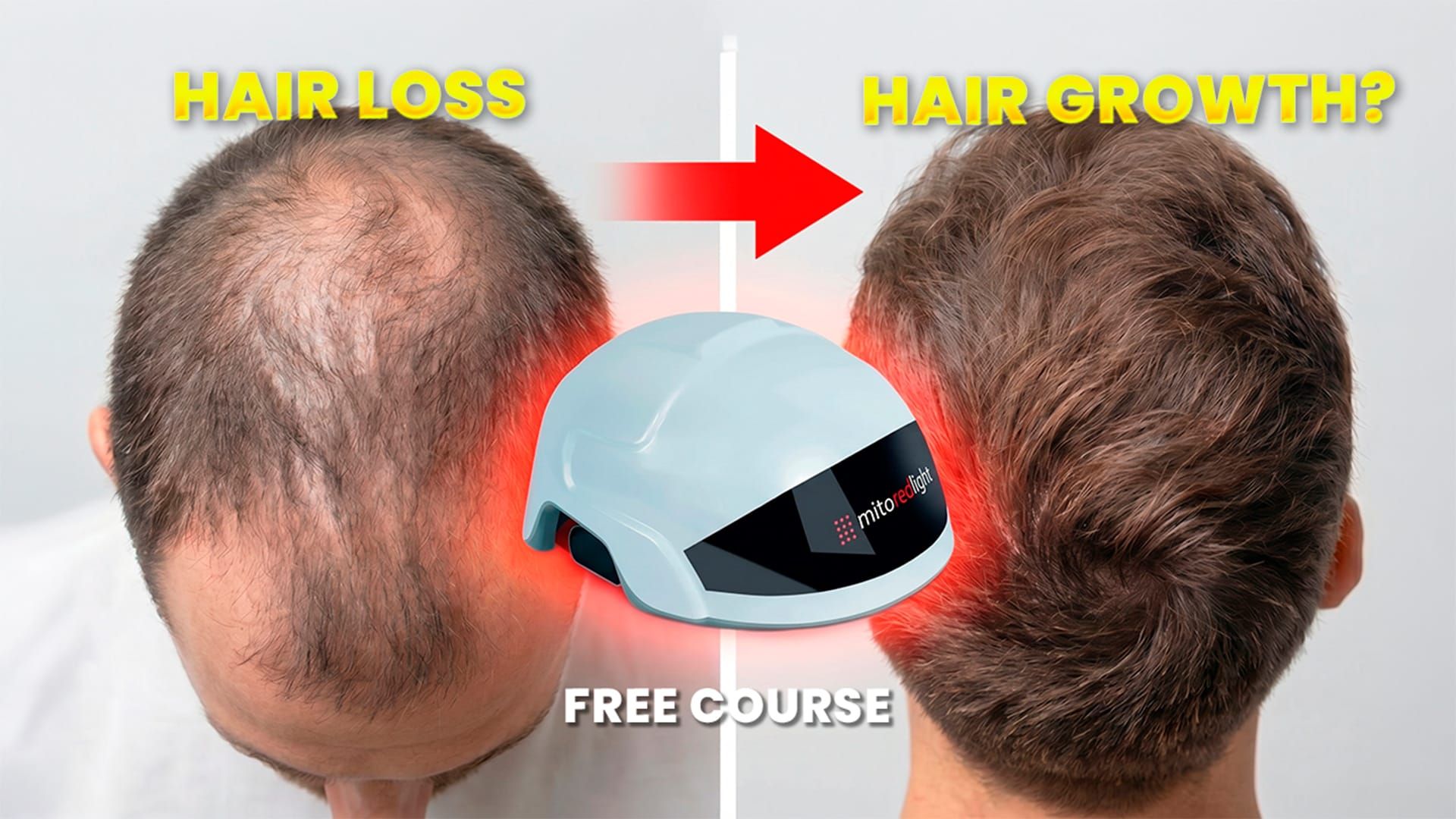
Quick conclusion: Red light therapy is a low-risk, evidence-backed tool for slowing hair loss and improving density and thickness for many people. It works best when started early and used consistently alongside other low-risk strategies such as platelet-rich plasma (PRP), microneedling and PEMF. Medications are often more effective but come with meaningful side effects, so weigh the trade-offs carefully.
Why This Matters
Hair is tied to identity, youth, and perceived vitality. More than half of adults experience noticeable hair thinning during their lifetime. Hair loss commonly affects day-to-day confidence and can cause anxiety or mild depression in up to half of affected people. Statistically, hair loss explains a surprisingly large share of variation in quality of life—research shows up to roughly 35% of variance in some quality-of-life measures.
Women often report stronger psychosocial effects; intimate relationship issues are reported by up to 40% of women with significant hair loss. For men, hormonal treatments can restore hair but may carry side effects that affect mood, focus and body composition. That’s why careful choice of therapy matters.
What Red Light Actually Does
Red light (particularly 630 nm and 660 nm) interacts with scalp tissue and hair follicles to:
- Stimulate hair follicles into the growth phase (anagen).
- Improve local blood flow and vascularization.
- Reduce inflammation and oxidative stress.
- Boost cellular energy and trigger gene transcription that supports growth.
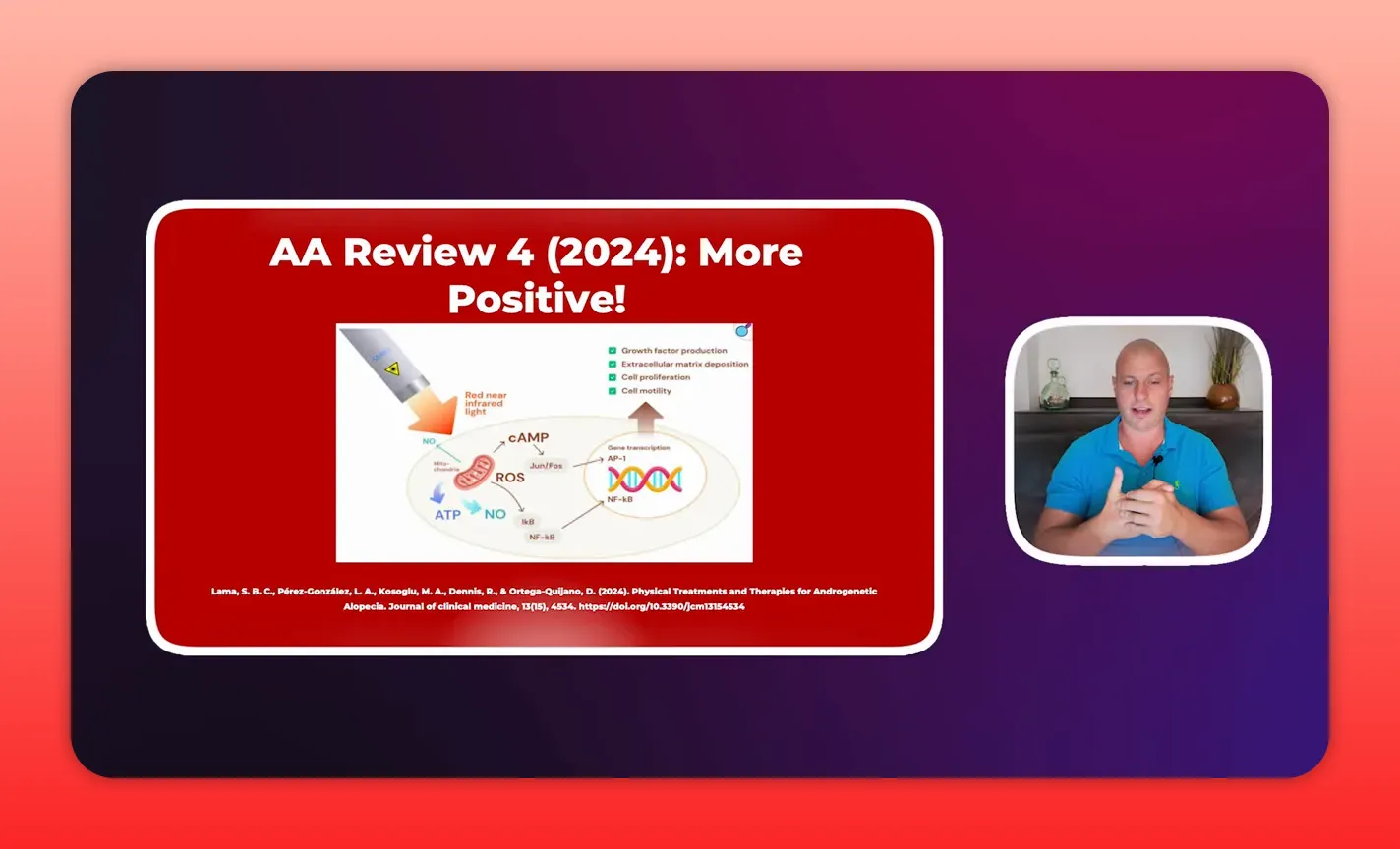
Because most red light used for hair does not penetrate much deeper than about 2 mm, it affects follicles close to the skin surface and is unlikely to have significant effects on the brain (unlike near-infrared devices designed for brain health).
What The Latest Reviews Show (2023–2025)
Recent high-quality reviews and meta-analyses have grown rapidly. Here are the main takeaways from six recent reviews:
- Broad comparison (2025): Red light therapy is FDA-cleared for androgenetic alopecia and shows benefits for both hair density and thickness. The main limitation across therapies is the lack of standardized protocols and large clinical trials.
- Safety and mechanisms: Minimal unwanted side effects—mostly mild scalp redness or itching. Mechanisms include improved blood flow, lower inflammation, and growth signaling.
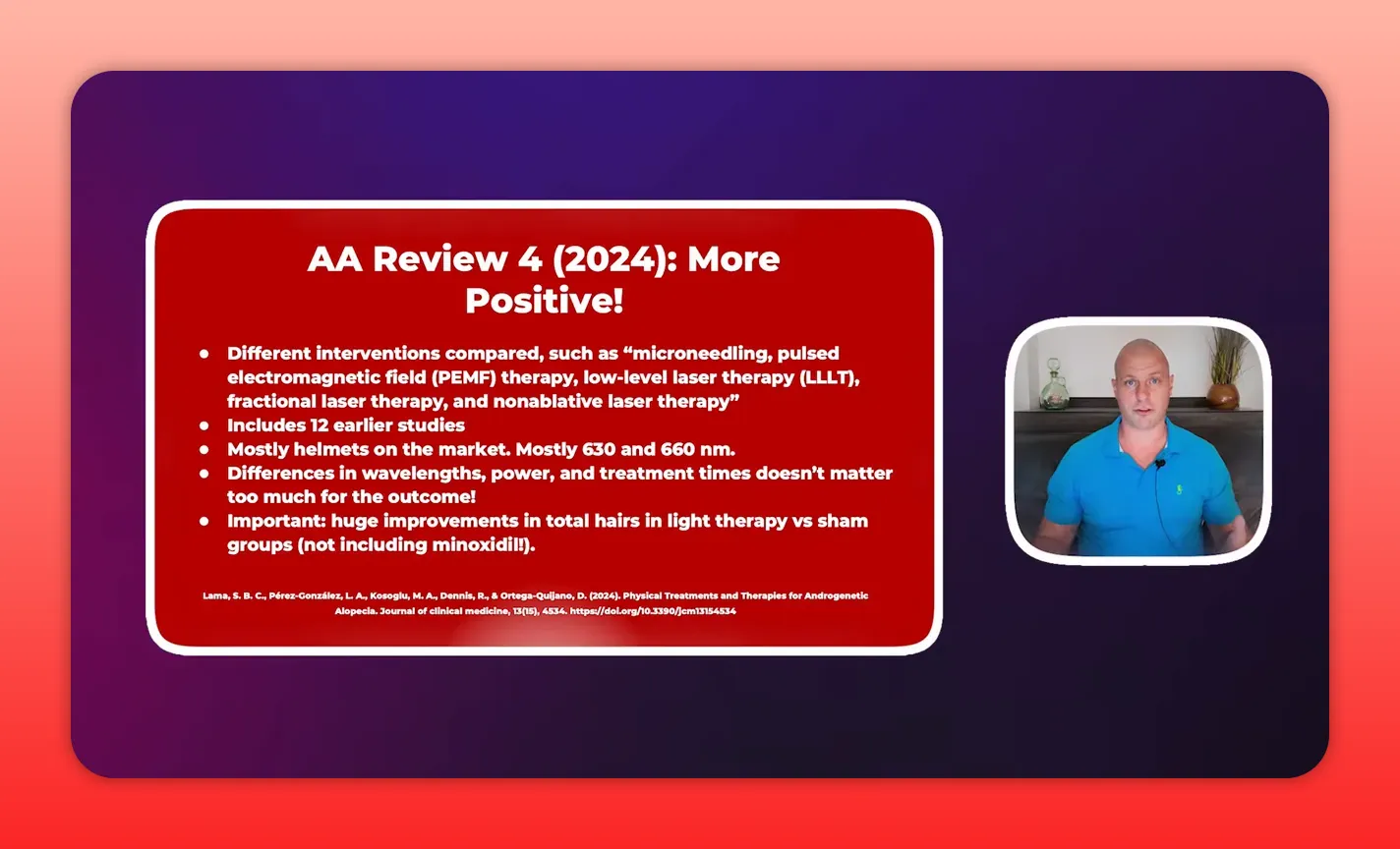
- Red light vs Minoxidil: In pooled studies (34 trials), red light alone and topical minoxidil alone performed similarly; combining them did not reliably add benefit after short treatment/rest cycles.
- Multimodal benefits: Reviews that included microneedling, PEMF and LLLT (low-level laser therapy) found consistent improvements. Most consumer devices used helmets emitting 630/660 nm light, and diverse protocols still produced results.
- Comprehensive review (141 studies): Medications (minoxidil, finasteride, dutasteride) often show the largest effect sizes but also the biggest side-effect profiles. A multifaceted and individualized approach gives the best outcomes.
- Male-pattern alopecia review: Network meta-analysis found dutasteride highly effective but with androgen-related side effects. PRP and red light occupy a middle ground—moderate efficacy with lower risk.
Other Low-Risk Options To Consider First
Before moving to systemic medications, these low-risk interventions have evidence and/or clinical plausibility:
- Platelet-Rich Plasma (PRP): Clinic-based injections using your processed blood. Shows promising results for follicle stimulation and healing.
- Microneedling: Controlled micro-injury increases blood flow, growth-factor signalling and stem cell activation around follicles.
- PEMF (Pulsed Electromagnetic Fields): Emerging evidence for stimulating follicles with very low side effects.
- Hair Transplants: Effective for many, but surgical and not without risk; consider carefully and choose experienced clinicians.
- Lifestyle: Sunlight exposure to the scalp (when reasonable), balanced nutrition, good sleep, smoking cessation and managing metabolic health all support hair health.
Medications: Powerful But With Trade-Offs
Medications like topical/oral minoxidil, finasteride and dutasteride are among the most effective single therapies. However, especially for men, drugs that lower DHT can cause persistent sexual side effects, mood changes and impacts on energy and training. If considering medication, research carefully and discuss risks and benefits with a clinician.
Devices, Wavelengths And Practical Protocols
Key device guidance:
- Wavelengths: Aim for 630 nm and 660 nm red LEDs. These wavelengths have the most consistent evidence for hair.
- Helmet vs Panel: Helmets are generally recommended because LEDs sit directly on the scalp and avoid light loss through hair. Panels can work for people with shaved or very short hair.
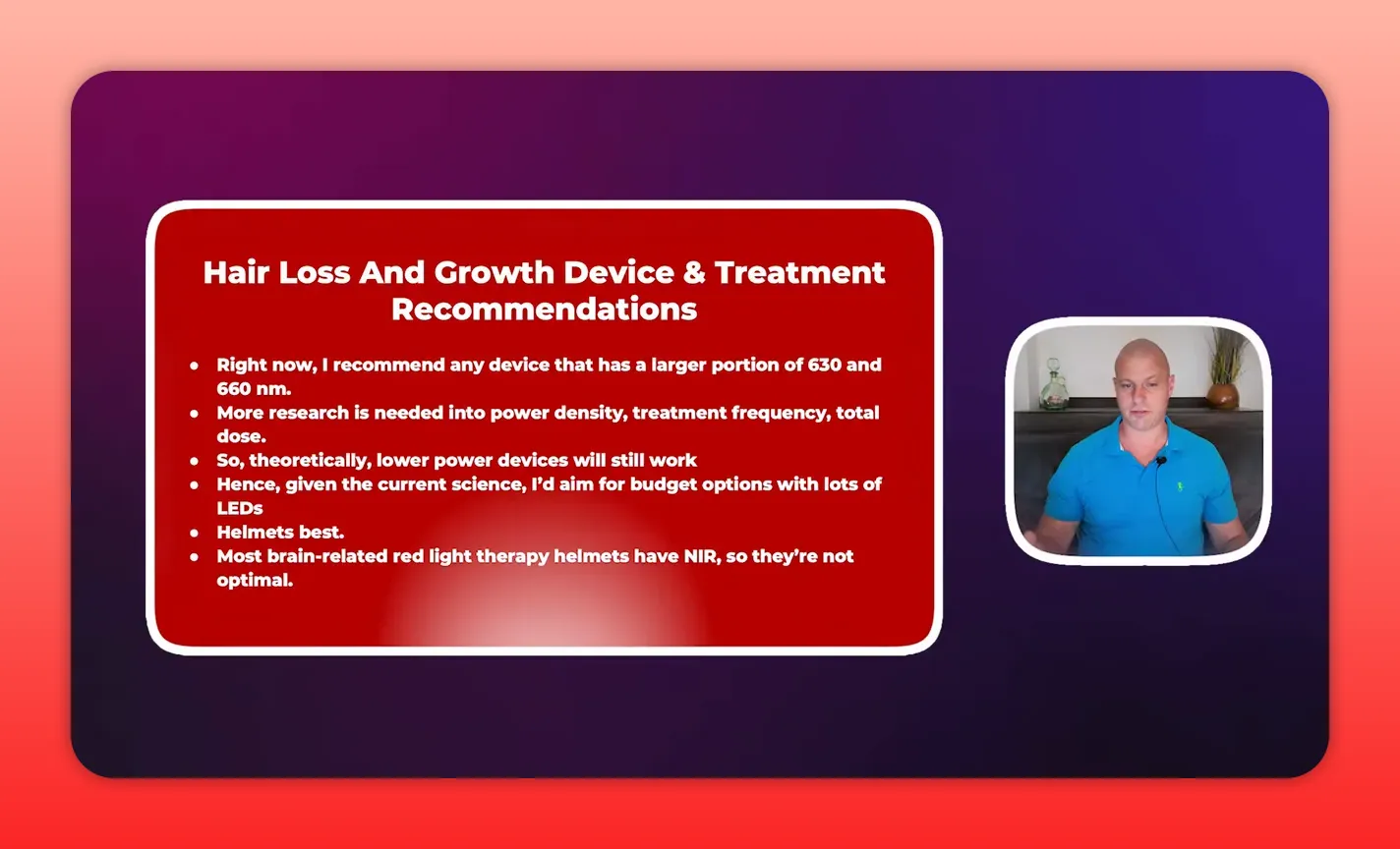
- Avoid near-infrared-only helmets if the goal is hair growth—these use the wrong wavelength range for follicle stimulation.
- Power and dose: Studies used a wide range of doses. Even lower-power devices and modest doses (for example, ~1 J/cm² in older studies) showed effects. Consensus: multiple protocols can work; higher power is not always necessary.
- Duration: Short trials (8–12 weeks) are often too brief. Treat for at least 4–6 months, and for best results, plan for up to a year of consistent use.
- Frequency: Many frequencies work—3 times per week is a reasonable starting point, but adjusting to device instructions is fine.
Device Buying Tips
- Choose a helmet designed for hair regeneration that uses 630/660 nm red LEDs.
- Budget-friendly helmets are usually sufficient—dose isn’t the sole driver of success, and many users report benefits from lower-cost devices.
- If you have long hair, avoid flat panels; the hair will block light reaching the scalp.
Realistic Expectations
Not everyone responds. Anecdotal reports show a mix of outcomes: some people see great regrowth, others modest gains, and some none at all. The earlier you start, when miniaturization is still mild, the better the chance of recovering follicles from a prolonged resting phase back into growth.
Simple 6-Month Starter Plan
- Assess baseline photos and scalp condition. Consider bloodwork if you suspect underlying metabolic or hormonal issues.
- Begin a red light helmet (630/660 nm) 3x/week for 10–20 minutes, depending on device instructions.
- Improve lifestyle: nutrition, sleep, stress management and modest sun exposure to the scalp when safe.
- After 3 months, check the photos. If progress is little, discuss PRP or microneedling as adjuncts.
- After 6–12 months, review outcomes. If the limited benefit and hair loss remain significant, evaluate medication options with a clinician.
Final Takeaways
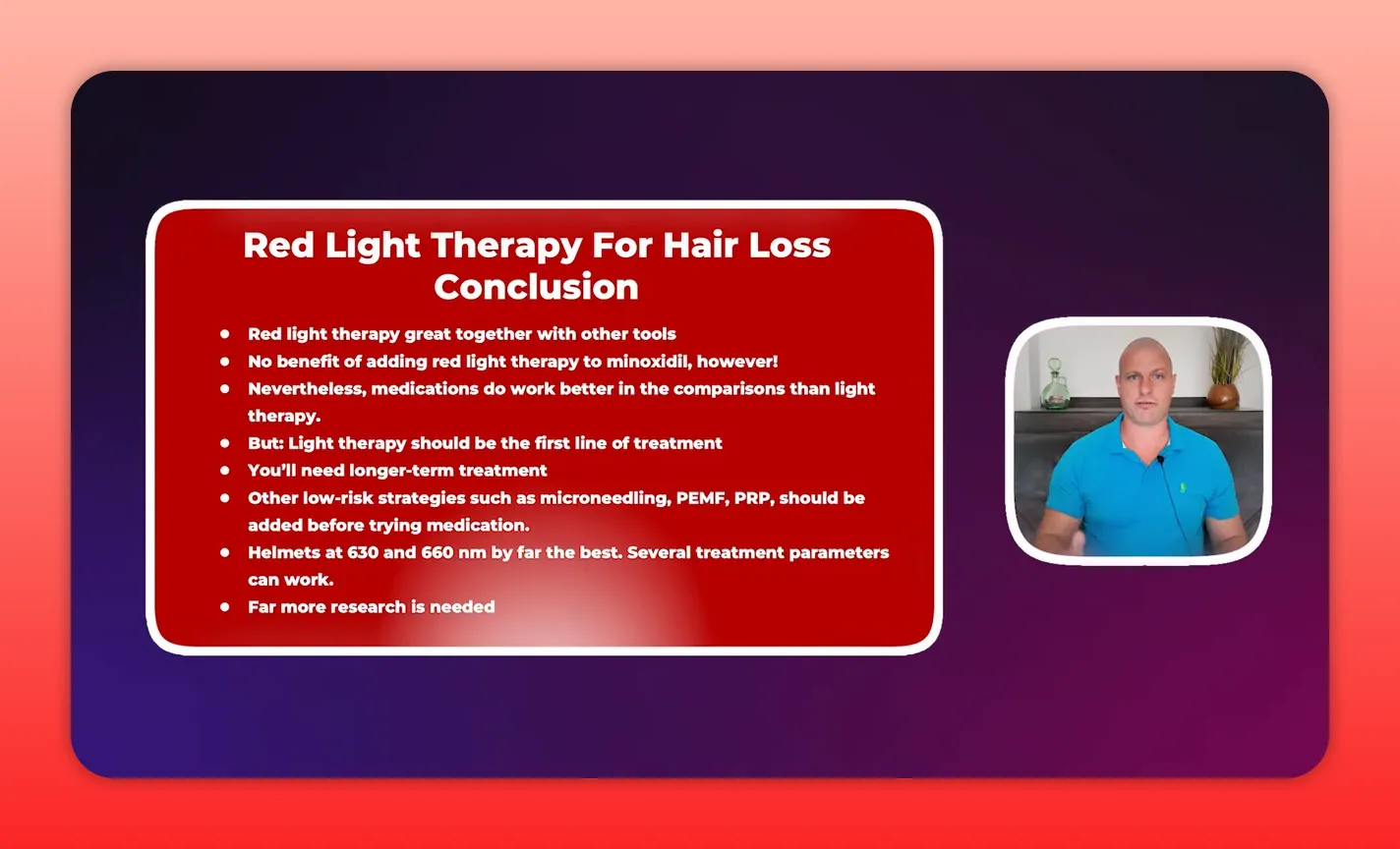
- Red light therapy is a safe, conservative option with growing evidence for improving hair density and thickness.
- Best wavelengths: 630 nm and 660 nm red light.
- Start early and treat long-term: 4–6 months minimum; better results often appear by 12 months.
- Combine thoughtfully: PRP, microneedling and PEMF are low-risk options that can complement red light therapy.
- Medications are effective but carry meaningful risks—informed decisions and clinical guidance are essential.
- Choose a helmet for most users, especially if hair is long; buy a budget-friendly, red-light-only helmet rather than near-infrared devices for hair growth purposes.
If you want help interpreting studies or deciding on a device or plan, ask specific questions about your situation and I’ll respond with tailored guidance.
Below are some of the resources I outlined in my Red Light Therapy for Hair Loss video:
⭐ Red Light Therapy For Hair Loss: Game-Changer Or Not?-
⭐ Red Light Therapy For Hair Growth: Worth The Hype!
Bart's Bio:
This is a post by Bart Wolbers. Bart finished degrees in Physical Therapy (B), Philosophy (BA and MA), Philosophy of Science and Technology (MS - with distinction), and Clinical Health Science (MS), has had training in functional medicine, and is currently the head researcher at Lighttherapyinsiders.com
Join Bart's 100% free advanced science light therapy course above, where he takes deep dives into many different topics, such as mechanisms, neurology (Alzheimer's, Parkinson's, etc), exercise recovery, skin beauty & rejuvenation, and much more.
Some of the topics are only published in that course, such as UV light risks and benefits, addiction, anxiety, depression, and more. So join HERE!