
If you’ve been looking into red light therapy for performance, you’ve probably seen some big claims. Better endurance, more strength, faster recovery. It all sounds great, but when you actually go through the human research, the picture is a lot less clear.
Instead of speaking broadly, it’s much more useful to look directly at the studies themselves. What did they test, and what actually happened?
Download the one-page guide for the study examples,
the parameter ranges, and the device checklist
The 4 Key Human Studies
Let’s start with the strongest human evidence and break it down properly. Not headlines or summaries—just what the studies actually did and what they found.
1. 2022 Meta-Analysis (Best Overall Evidence)
This was a meta-analysis published in Sports Medicine, which means it combined multiple human trials to look for an overall pattern. Importantly, it only included high-quality studies—double-blind, placebo-controlled, and crossover designs—so this is about as reliable as it gets.
The results were mixed but fairly consistent. Red light therapy showed small improvements in muscle endurance in certain controlled tests, particularly cycling-based protocols where participants were trying to last as long as possible.
However, it did not improve strength, sprint performance, running time trials, or swimming outcomes. That’s a key point. Even at the highest level of evidence, the benefits were limited to very specific scenarios, and even then, they were modest.
2. 2023 Cycling Study (Time to Exhaustion)
This study looked at trained cyclists performing repeated time-to-exhaustion tests at their maximum power output. Red light therapy was applied directly to the quads before the session using a controlled dose across multiple treatment points.
The results were one of the stronger positives in the space. Participants increased their time to exhaustion by around 10–12% in the first and second intervals. In a controlled environment, that’s a meaningful improvement and suggests that fatigue resistance may be affected.
However, the effect didn’t continue indefinitely. By the third interval, the benefit had largely disappeared. That tells us something important. This isn’t a compounding effect, and it doesn’t seem to build over repeated efforts.
3. 2016 Running Study (High-Intensity Effort)
This study tested moderately active men performing high-intensity running at around 115% of their VO₂ max, which is well above sustainable intensity. Participants received red light therapy beforehand using both red and near-infrared wavelengths.
The outcome was straightforward. There was no meaningful difference between the red light group and the placebo group. Time to exhaustion remained the same.
This matters because it shows that even in demanding endurance-type efforts, red light therapy doesn’t automatically improve performance. The benefits seen in cycling do not seem to transfer across to running, at least in this type of protocol.
4. 2019 Strength Training Study (Long-Term Adaptation)
This study followed older adults over a 12-week resistance training program. Red light therapy was applied before each session, targeting the quads with near-infrared light.
The results were clear and fairly underwhelming. There were no additional gains in strength, muscle mass, or functional performance compared to the control group.
This is important because it addresses the long-term question. Even if red light therapy has short-term effects on fatigue, it doesn’t appear to translate into better training outcomes over time.
What These Studies Actually Tell Us
When you look at these four studies together, a pattern becomes obvious. Red light therapy may have a small effect in situations where fatigue is the limiting factor, particularly in controlled cycling tests.
Outside of that, the evidence becomes inconsistent very quickly. It does not reliably improve strength. It does not improve sprint performance. And it doesn’t consistently improve performance across different sports.
So the idea that red light therapy is a general performance enhancer doesn’t hold up when you look at the data.
Why the Results Are So Inconsistent
One of the biggest issues in this space is how many variables are involved. Different studies use different wavelengths, different devices, different doses, and completely different testing protocols.
Some studies apply light for a few minutes, others for longer durations. Some target very specific muscle groups, while others use broader exposure. Even small changes in distance or application can significantly affect how much energy actually reaches the tissue.
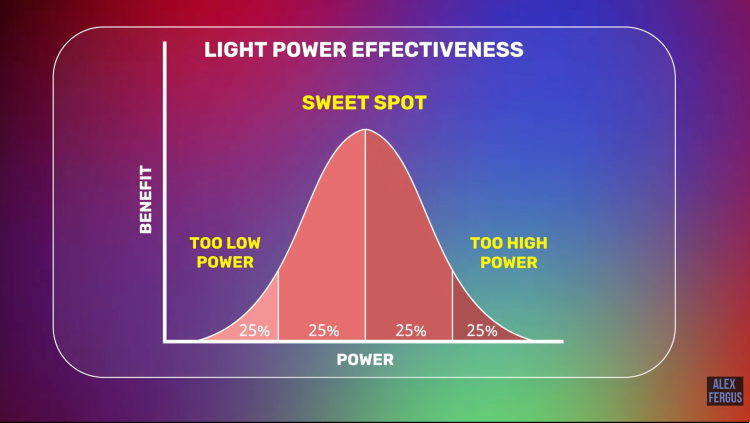
There’s also evidence of a dose-response relationship where more is not always better. Too little light does nothing, but too much may reduce or eliminate the benefit. That makes it difficult to standardize results or compare studies directly.
On top of that, participant differences matter. Trained athletes, recreational users, and sedentary individuals may all respond differently, which adds another layer of variability.
The Likely Mechanism
If red light therapy is doing anything meaningful, it likely comes down to energy production at the cellular level. The main theory is that it temporarily improves mitochondrial function, increasing ATP availability in muscle cells.
In practical terms, that could help delay fatigue during longer efforts. This lines up with the cycling studies, where participants were able to sustain output slightly longer.
However, that mechanism doesn’t necessarily help with strength or explosive performance, which rely on different physiological systems. That’s likely why we don’t see improvements in lifting, sprinting, or high-power output activities.
What This Means in Practice
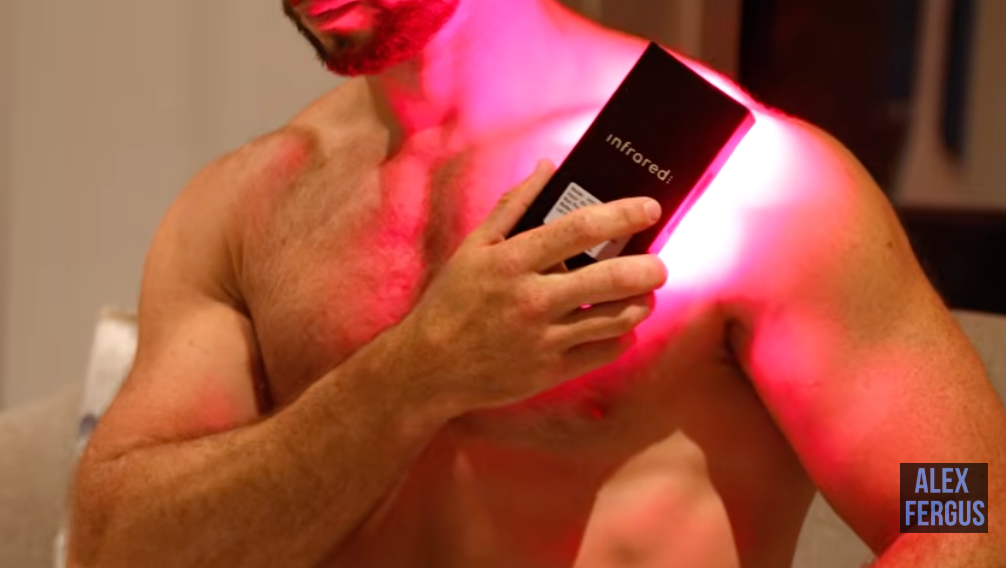
At this point, red light therapy should be viewed as a potential marginal gain rather than a performance breakthrough. It’s not going to replace good training, sleep, or nutrition, and it’s not going to dramatically change your results.
If anything, it may provide a small edge in very specific situations, particularly where fatigue resistance is the main limiting factor. Even then, the effect is not guaranteed and may depend heavily on how it’s used.
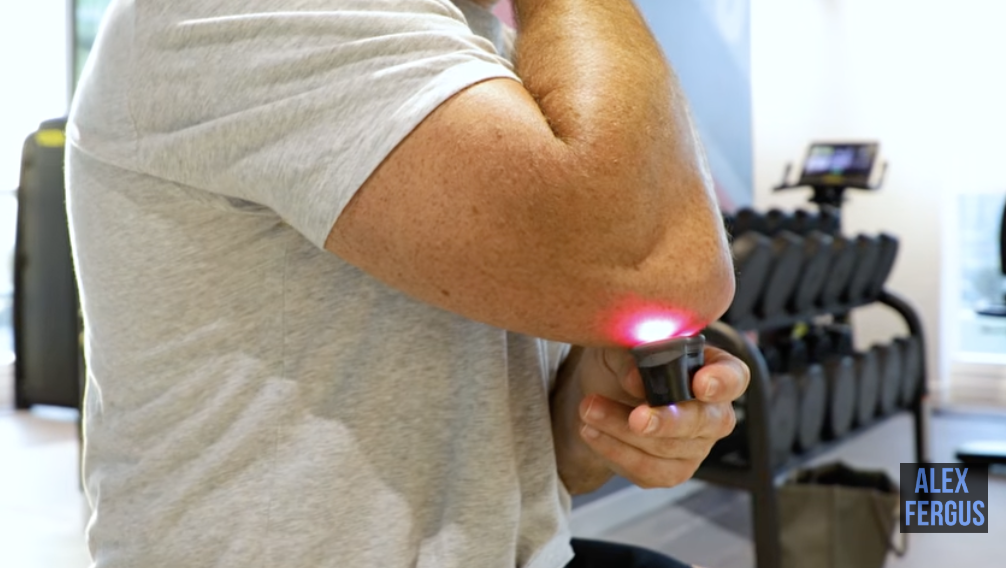
If you do experiment with it, the research suggests applying it directly to the muscles you’re about to use, rather than relying on full-body exposure from a distance. It’s also important to be mindful of dose, because more is not necessarily better.
Suggested Devices
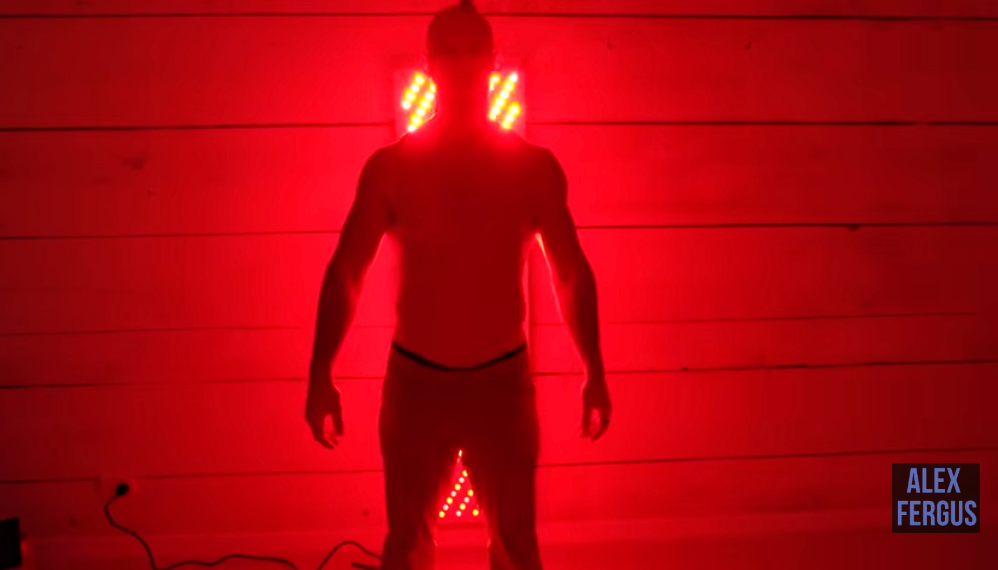
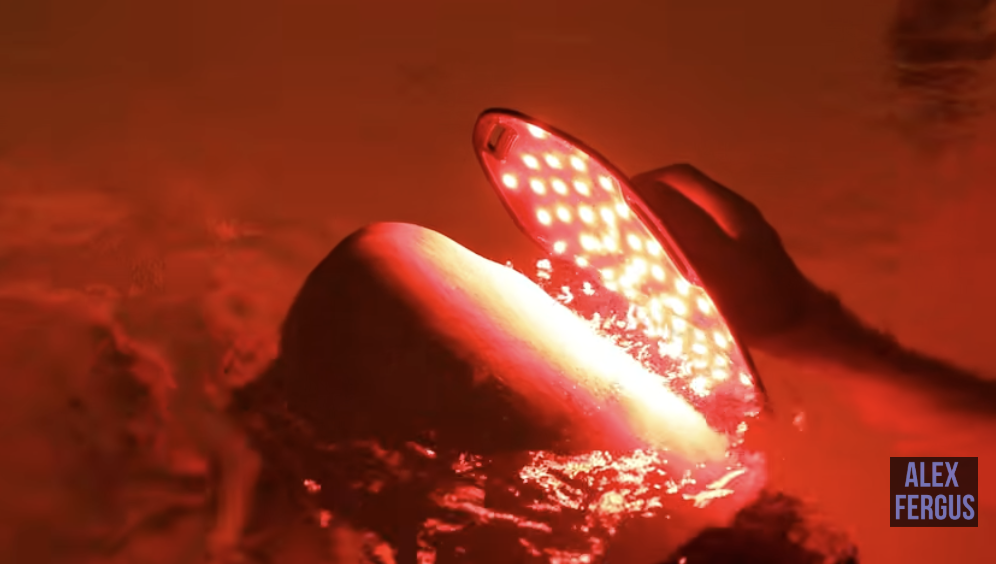
If you do want to test this yourself, I’ve used a few different setups depending on the situation. For full-body use, I’ve mainly used larger panels like the Biomax and the Rouge G4, which I’d run for a few minutes before training. If you want something more practical in a gym setting, smaller targeted devices make more sense. The Kineon Move+ Pro is good for joints and smaller areas, the Rouge Nano is a solid handheld option that can cover more of the muscle, and the Lumaflex pad is useful if you want something strap-based or portable, especially for outdoor or less controlled environments. The key across all of these is that you can apply the light directly to the muscle, which is how most of the research is actually done.
Final Takeaway
Red light therapy is not a shortcut to better performance, and the current evidence does not support the idea that it improves strength, sprinting, or long-term training outcomes.
There is some evidence that it may help you last slightly longer in controlled endurance scenarios, but even that is inconsistent and highly dependent on the setup.
For now, the most accurate way to view it is simple. It’s a tool that may offer a small benefit in specific situations, but it is far from a proven or reliable performance enhancer.
Items Mentioned:
⭐ If you want to grab a Lumaflex, click here: https://aferg.co/lumaflex - discount code ALEX
⭐ If you want a Rouge Care Pro G4 panel or other product, use discount code ALEX at https://aferg.co/rougecare
⭐ For a PlatinumLED BioMax: https://aferg.co/redled - a unique discount code is generated after you click the link
⭐ For a Kineon Move + Pro, Use discount code AFERGUSMOVE for 10% off https://aferg.co/kineon
You May Like These:
⭐ Rouge Red Light Therapy Review: Is It Worth the Investment?
⭐ Better Than Red Light Therapy Masks? My Top Picks
⭐ Red Light Therapy Dosing: UNSOLVABLE Puzzle, Or?
⭐ Red Light Dosing & Wavelengths Explained Simply
Alex's Bio
Alex Fergus wrote this blog post. Alex is an ISSN Sports Nutrition Specialist, Fitness Professional, and certified Superhuman Coach who continues to expand his knowledge base and help people worldwide with their health and wellness. Alex is recognized as the National Record Holder in Powerlifting and Indoor Rowing and has earned the title of the Australian National Natural Bodybuilding Champion. Having worked as a health coach and personal trainer for over a decade, Alex now researches all things health and wellness and shares his findings on this blog.