Sleep quality affects multiple domains —recovery, brain function, mood, disease risk, athletic performance, and longevity. Over the past few years, research on red light therapy for sleep has expanded dramatically.
We now have 10 human studies examining how red and near-infrared light impact sleep quality, melatonin levels, heart rate variability (HRV), stress, and recovery.
Let’s break down what the science actually shows — and how to apply it.
What “Sleep Quality” Really Means
Sleep quality isn’t just how long you’re in bed.
It includes:
- Deep sleep (N3) — physical restoration and recovery
- REM sleep — dreaming, brain repair, memory consolidation
- Sleep efficiency — how much time in bed you’re actually asleep
- HRV during sleep — nervous system recovery
- Melatonin levels — your biological night signal
Improving these markers improves nearly every area of health.
What the Research Shows:
Across the 10 studies reviewed, several consistent patterns emerge.
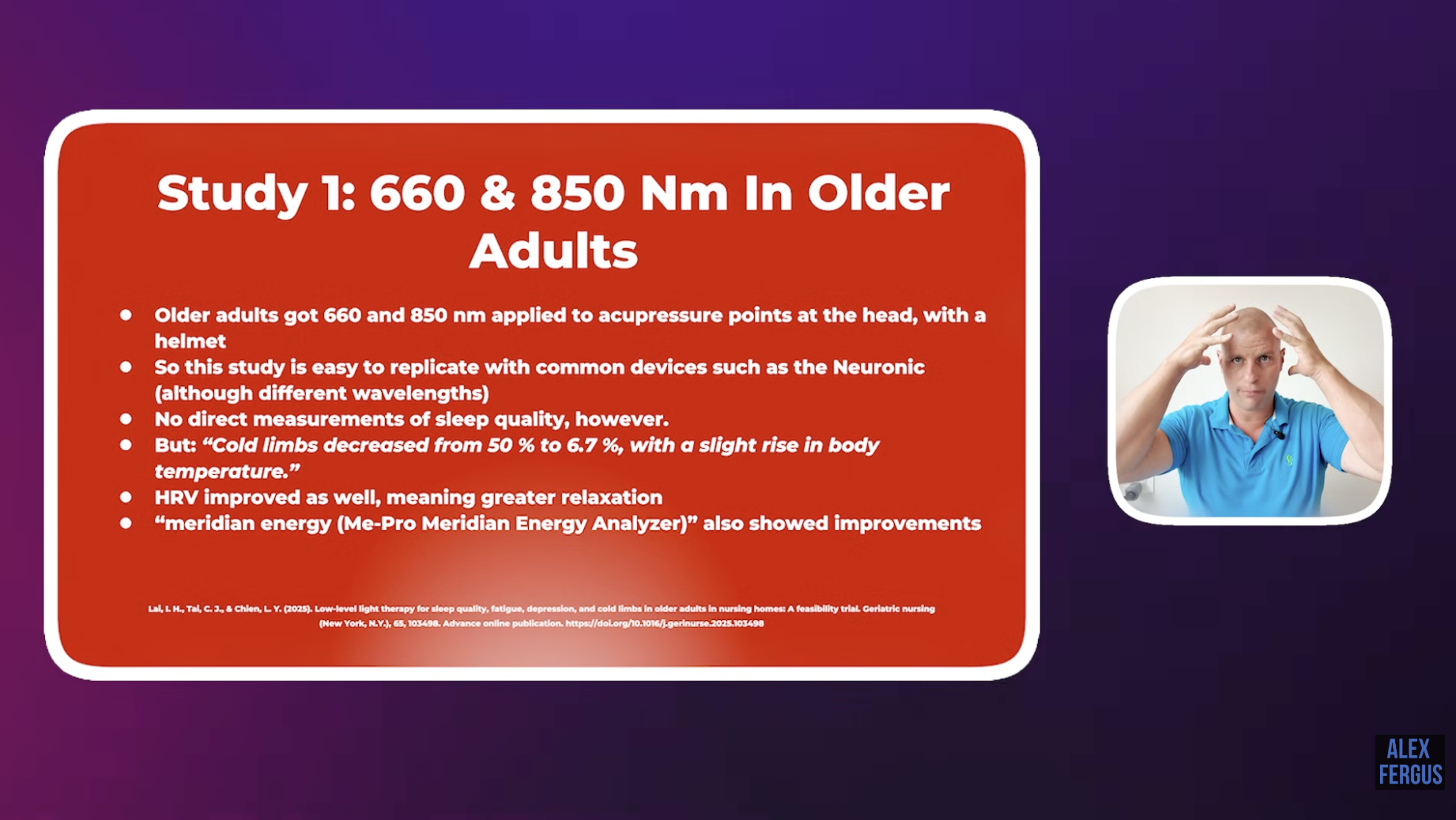
1. LED Light Therapy on Acupressure Points (660nm & 850nm, 2025)
This study employed a helmet device that targeted acupressure points on the head. While sleep was not directly measured, participants experienced significant improvements in body temperature regulation, HRV, and metabolic markers. Cold limb symptoms dropped from 50% to under 7%, suggesting improved autonomic balance — a key driver of sleep quality.
2. Low-Level LED Therapy in Shift Work Nurses (660nm & 850nm, 2025)
Shift-working nurses received 30-minute treatments, three times per week for four weeks. Insomnia scores were reduced by roughly two-thirds, while stress, anxiety, and depression symptoms significantly improved. Results improved each week progressively, indicating cumulative benefits over time.
3. 830nm Photobiomodulation for Shift Work Nurses
Using a high dose (252 J/cm²) applied to the palm and localized painful areas, researchers observed significant improvements in Pittsburgh Sleep Quality Index (PSQI) scores and Athens Insomnia Scale scores. Quality of life and pain levels also improved, suggesting that reducing pain may indirectly enhance sleep.
4. 830nm Therapy in Hemodialysis Patients
In patients undergoing dialysis, 830nm light was applied to the palm and acupressure points. Researchers reported significant improvements in PSQI sleep quality scores. This suggests photobiomodulation may support sleep even in populations with serious chronic health conditions.
5. Intravenous (Blood) Light Irradiation Study
This retrospective study evaluated red-light exposure applied to circulating blood. While sleep outcomes were not directly quantified, improvements in hemoglobin and blood quality markers were reported. Since systemic inflammation and oxygenation impact sleep, this provides indirect mechanistic support.
6. Neck & Brain Wrap Study (660nm, 740nm, 810nm, 870nm)
Participants wore a light wrap targeting the back of the neck and lower brain while wearing Oura Rings for objective tracking. While objective sleep metrics showed minimal change, participants reported significant improvements in subjective sleep quality, mood, and relaxation.
7. 850nm Desk Lamp During Winter Months
In this seasonal study, participants used an 850nm desk lamp five days per week for four weeks during winter. Improvements were seen in mood, daytime alertness, inflammatory markers, and resting heart rate. While primarily focused on daytime function, these changes support better circadian regulation and sleep quality.
8. Full-Body Photobiomodulation in Athletes (660nm & 850nm)
Athletes using a full-body red light bed required approximately 40 minutes less sleep per night while showing improved HRV and recovery markers. The percentage of light sleep decreased, suggesting greater sleep efficiency. This indicates improved restorative quality despite shorter duration.
9. Prefrontal Cortex Photobiomodulation (2022)
After six days of treatment targeting the prefrontal cortex, participants showed significant increases in REM sleep and overall sleep efficiency compared to controls. Cognitive performance improved by 10% on memory and reaction-time tasks, indicating enhanced neural recovery.
10. Full-Body 660nm Therapy in Elite Basketball Players
Over a two-week protocol (30 minutes daily), athletes experienced a 70% increase in melatonin levels and significant improvements in PSQI sleep scores. Endurance performance improved nearly twice as much as in controls. Notably, greater melatonin levels correlated with improved sleep.
Key Takeaways
- Full-body treatments show the strongest effects
- Melatonin increases of 60–70% are possible
- HRV and stress markers improve consistently
- REM sleep and sleep efficiency increase with brain-targeted treatment
- Even localized or inexpensive setups may provide measurable benefit
The evidence now strongly suggests that red light therapy can enhance sleep quality—especially when applied consistently and ideally across the entire body.
What This Means For You
When you zoom out across all 10 studies, a few patterns are very clear.
- Full-body treatments consistently outperform localized treatments.
- Melatonin increases are real — and in some cases dramatic (60–70%).
- HRV improves, indicating better nervous system recovery.
- Even difficult populations (shift workers, dialysis patients, athletes under load) see measurable improvements.
Perhaps most interestingly, better sleep quality sometimes led to needing less total sleep while recovering better. That suggests red light therapy may improve sleep efficiency — not just duration.
When used consistently, red light therapy appears to be an effective tool for improving sleep quality.
Suggested Devices
Based on the research hierarchy:
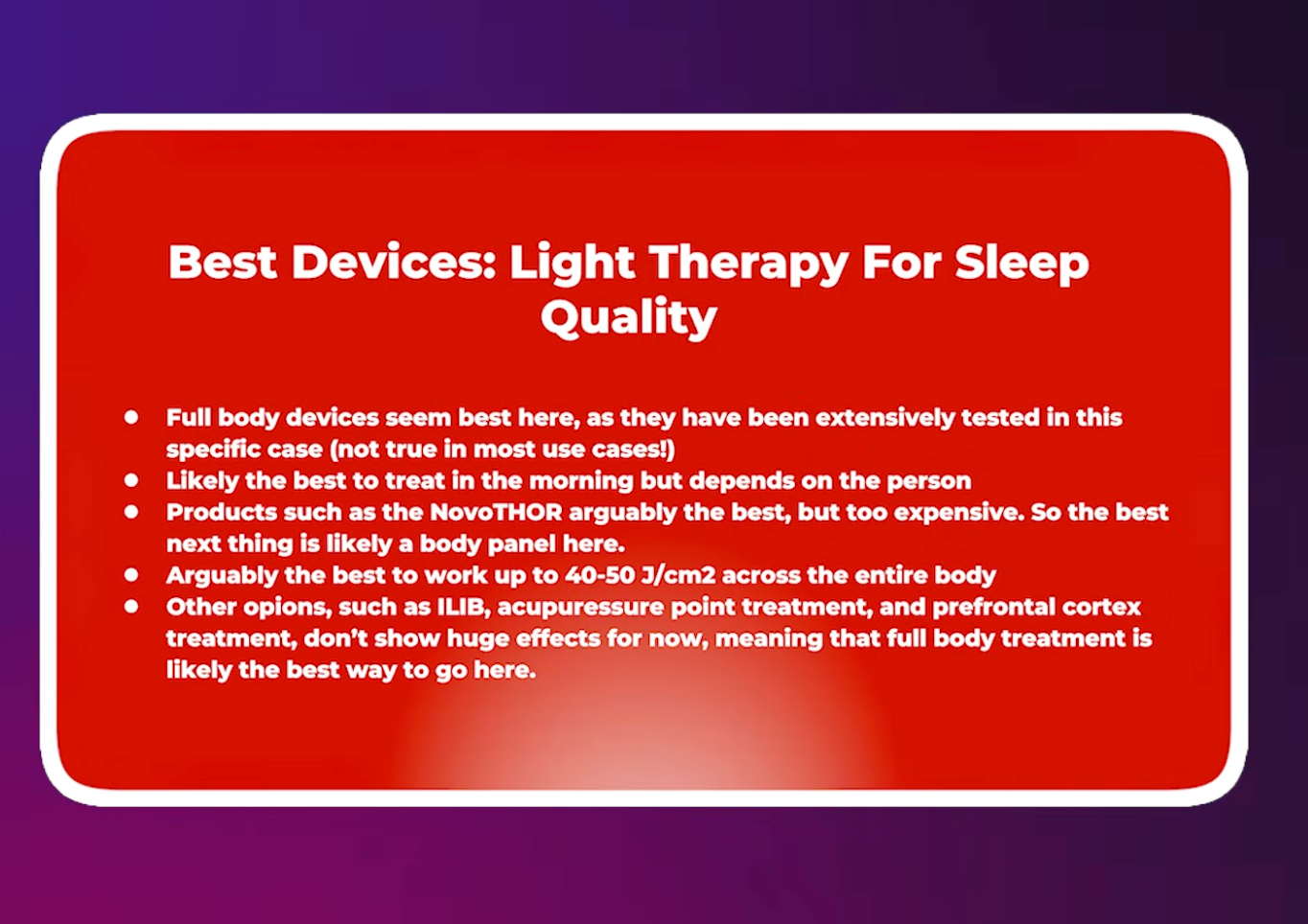
Best Option: Full-Body Panel
If your goal is sleep optimization, recovery, and melatonin support, a full-body panel using 660nm and 850nm wavelengths is the most evidence-aligned choice.
Look for:
- 660nm + 850nm combination
- Ability to deliver ~30–60 J/cm²
- Enough coverage to treat head-to-toe
This setup mirrors the strongest-performing studies.
Second Best: Targeted Brain / Neck Treatment
If full-body treatment isn’t possible:
- Treat the prefrontal cortex
- Treat the back of the neck
- Irradiate blood flow near the carotid arteries
Wrap-style devices or compact panels can work well here.
Budget Option: Blood Irradiation (Wrist or Neck)
Even a small handheld device can be used to irradiate blood flow at:
- The wrist (radial artery)
- The side of the neck
This approach is inexpensive and may still provide systemic benefits due to systemic exposure to circulating blood.
Final Thoughts
Sleep affects nearly every biological system—cardiovascular health, metabolic function, cognitive performance, mood regulation, and athletic recovery.
The growing body of research suggests red light therapy can:
- Improve sleep quality
- Increase melatonin
- Enhance HRV
- Improve REM sleep
- Support recovery
Full-body exposure appears to be most effective, but even localized treatments show promise.
If sleep is the foundation of health — and it is — then optimizing it may be one of the highest-return investments you can make.
Links and Resources:
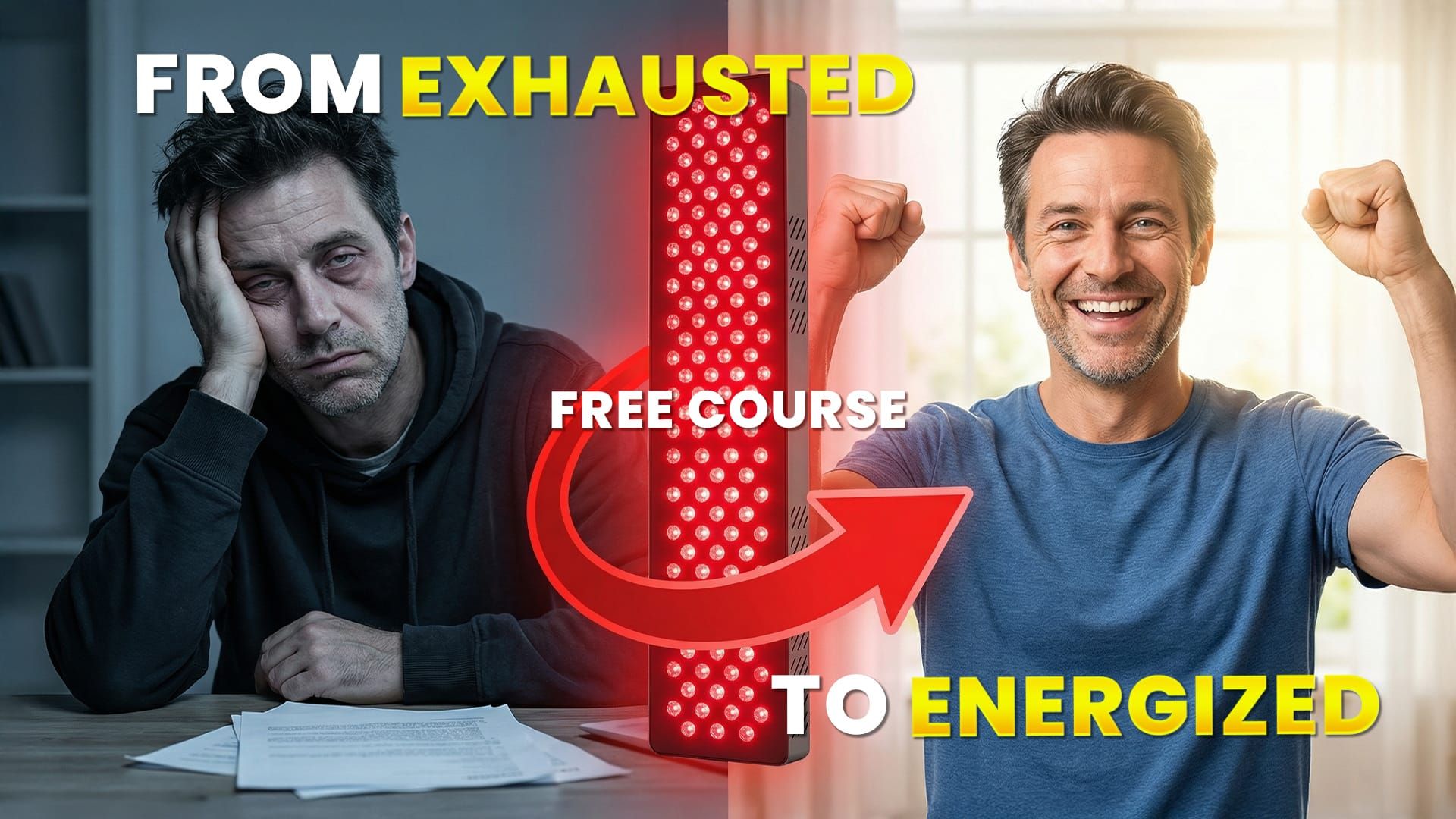
This episode is part of a free red light therapy course. Access all episodes using the link: 👉 https://aferg.co/free-course
⭐ Kineon Move Plus — 10% off with code AFERGUSMOVE and this link: https://aferg.co/kineon
⭐ Block Blue Light — 15% off (auto-applied) use this link: https://aferg.co/BlockBlueLight
⭐ Endolight — use the discount code ALEX: https://aferg.co/weber
⭐ For a Vielight - use code ALEX10 use this link: https://aferg.co/vielight
⭐ LightpathLED - code ALEX for 5% off, here: https://aferg.co/lightpathled
⭐ NovoThor - mention the name "Alex Fergus" to get access: https://aferg.co/novothor
⭐ Verified Deals & Active Discounts are here: https://aferg.co/deals
Found This Interesting? Then You Might Like:
- Red Light Therapy For Sleep: The Science of Sweet Dreams
- How To Use Red Light Therapy 101: The Best Guide For Starters
- Red Light Therapy For Upgrading Your Brain Health
- Light Therapy For Eye Health Update 2025: Current And Future Science
Join Bart's 100% free advanced science light therapy course above, where he takes deep dives into many different topics, such as mechanisms, neurology (Alzheimer's, Parkinson's, etc), exercise recovery, skin beauty & rejuvenation, and much more.
Some of the topics are only published in that course, such as UV light risks and benefits, addiction, anxiety, depression, and more. So join HERE!
Bart's Bio:
This is a post by Bart Wolbers. Bart finished degrees in Physical Therapy (B), Philosophy (BA and MA), Philosophy of Science and Technology (MS - with distinction), and Clinical Health Science (MS), has had training in functional medicine, and is currently the head researcher at Lighttherapyinsiders.com