
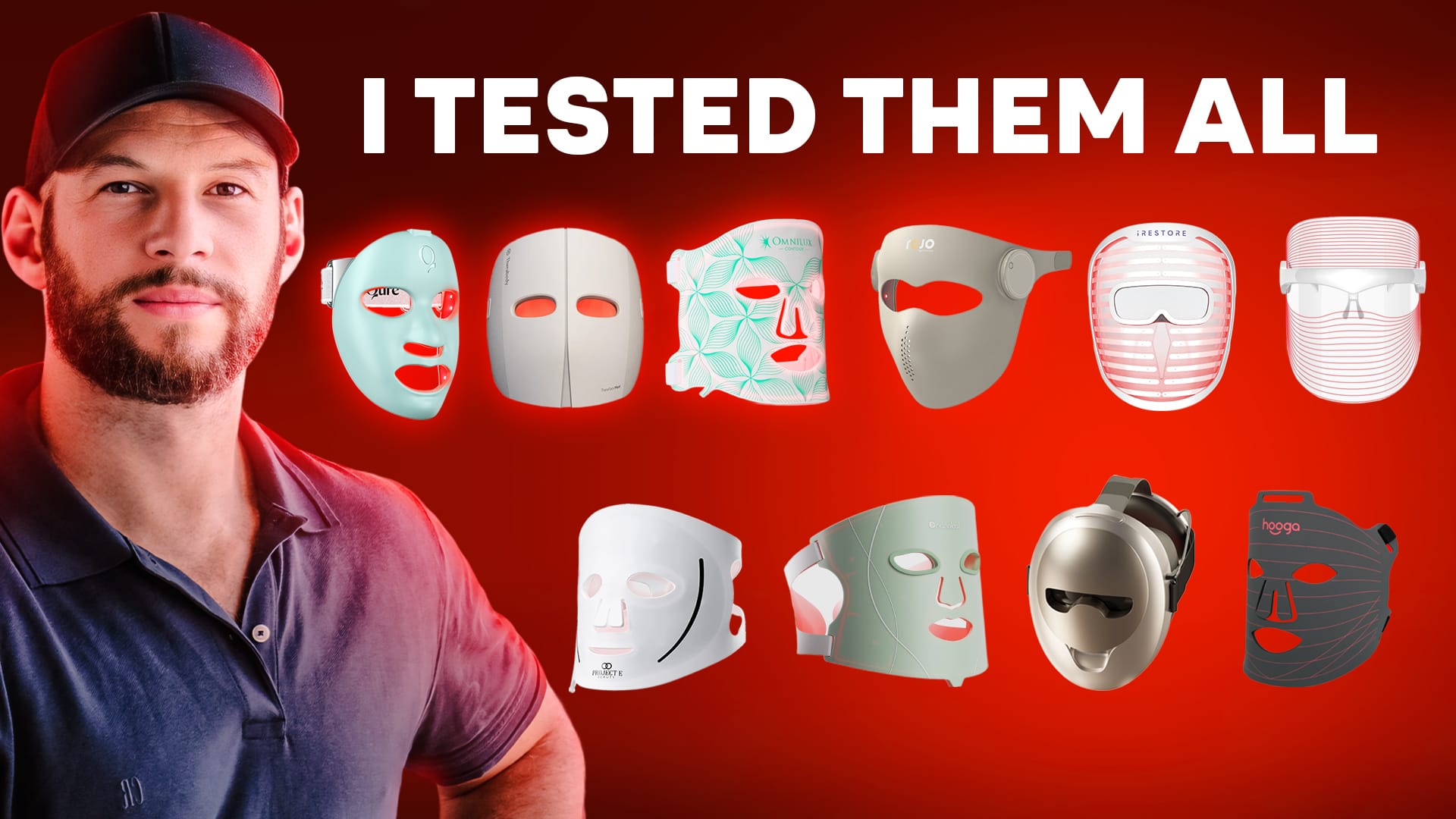
Red Light Therapy Mask Comparing Test is a phrase you'll see a lot in this breakdown because clear comparisons matter. If you are trying to make sense of wavelengths, LED counts, dosing and real-world comfort, this Red Light Therapy Mask Comparing Test lays out what works, what is overhyped and which devices I would recommend — and why.
Why A Red Light Therapy Mask Comparing Test Matters
There is a lot of marketing noise around LED masks. Manufacturers quote wavelengths, show pretty lights and promise big skin results. A careful Red Light Therapy Mask Comparing Test separates the marketing from the meaningful specs: wavelength selection, fluence (how much energy your skin actually receives), coverage, comfort and the little practical details that determine whether you will use a mask consistently.
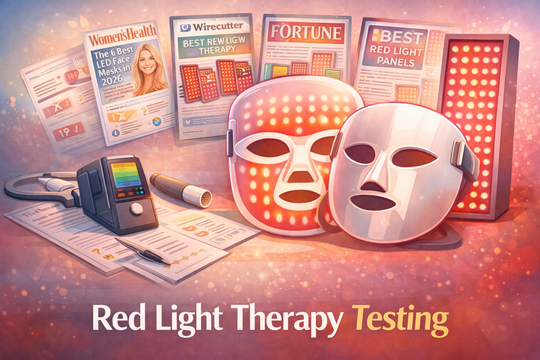
This Red Light Therapy Mask Comparing Test examined 25 masks across four practical categories: comfort and ease of use, therapeutic power, coverage quality, and price and peace of mind. The goal was not to create an absolute score for bragging rights, but to give actionable guidance for different budgets and skin goals.
How The Testing Worked
For each mask in this Red Light Therapy Mask Comparing Test I assessed the following:
- Fit and comfort over repeated sessions.
- Operational simplicity: controller, battery, modes and travel suitability.
- Wavelengths present and whether near infrared was included.
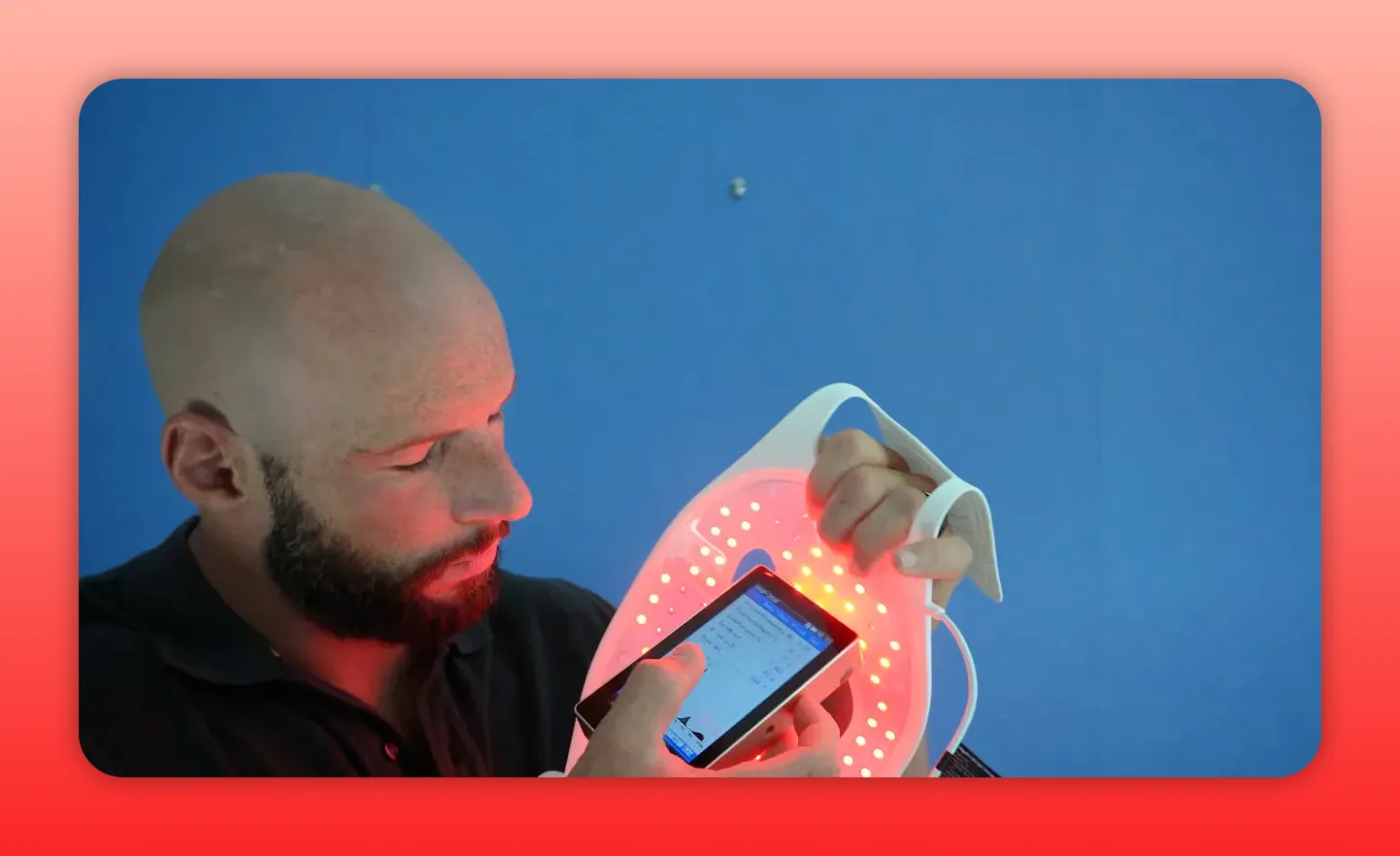
- Actual delivered fluence using a spectrometer, measured across multiple facial zones and calculated over the default session length.
- LED quantity and distribution to map coverage across ten facial zones.
- Price, warranty, returns policy and company track record.
This Red Light Therapy Mask Comparing Test used consistent protocols: multiple readings with a spectrometer at several points on the mask, averaging where needed, then cross-referencing the delivered joules per centimetre squared against published therapeutic windows for skin rejuvenation.
What Counts For Therapeutic Power
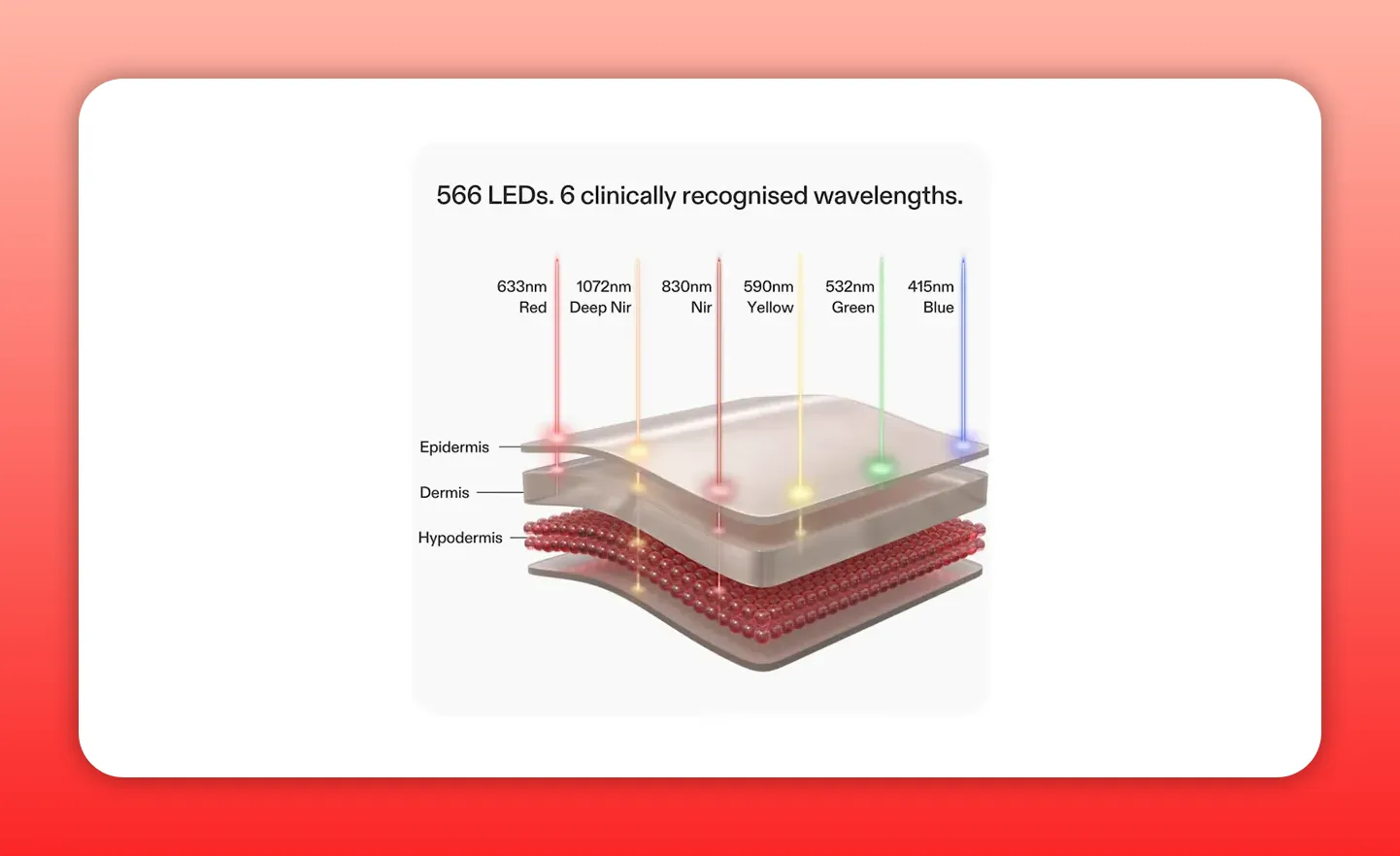
In any Red Light Therapy Mask Comparing Test, therapeutic power hinges on two things: the right wavelengths and the right dose. Wavelengths commonly associated with skin benefits are red around 630–660 nm and near infrared, around 800–850 nm. Blue light adds value for acne and oily skin. Bonus wavelengths like amber and green have emerging evidence for complementary effects.
During this Red Light Therapy Mask Comparing Test I gave points for the essentials: a solid red channel and a quality near infrared channel. Blue light earned additional credit where present. Deep near infrared and extra bands like amber or green gained bonus points because they can increase the clinical versatility of the mask.
Fluence And The Therapeutic Window
Fluence — measured in joules per centimetre squared — tells you how much energy hits the skin during a session. For anti-ageing and skin rejuvenation, the practical therapeutic window I used for this Red Light Therapy Mask Comparing Test is roughly 4 to 15 J/cm², with an optimal sweet spot around 5 to 9 J/cm². Masks far below that are ineffective; masks far above can be wasteful or require timer/intensity adjustment.
Where masks allowed intensity or session time adjustment, a poorly tuned default setting could be dialled into the therapeutic window. In this Red Light Therapy Mask Comparing Test, I scored masks on their default session settings because that represents the experience most users will have when they unbox and press start.
Comfort And Ease Of Use: The Masks You’ll Reach For
Comfort is often the unsung deciding factor. The best-looking specs matter little if a mask is uncomfortable or fiddly enough that it ends up in a drawer. In this Red Light Therapy Mask Comparing Test I prioritised soft-shell masks that mould to the face, effective straps and masks that don't pinch the nose.
- Top performers for comfort and ease were soft, flexible masks with good strap adjustment and no pressure points.
- Masks to avoid from a comfort perspective included several hard-shell or poorly shaped options that pressed on the nose or cheekbones.
Operationally, masks with built-in batteries and simple controllers scored highly. A clear manual, compact design for travel and a reliable controller all moved scores in the positive column. The cure mask performed very well for controls and portability in this Red Light Therapy Mask Comparing Test because its controller and battery are integrated and it is straightforward to use.

Coverage And Quality: Why LED Count And Zone Mapping Matter
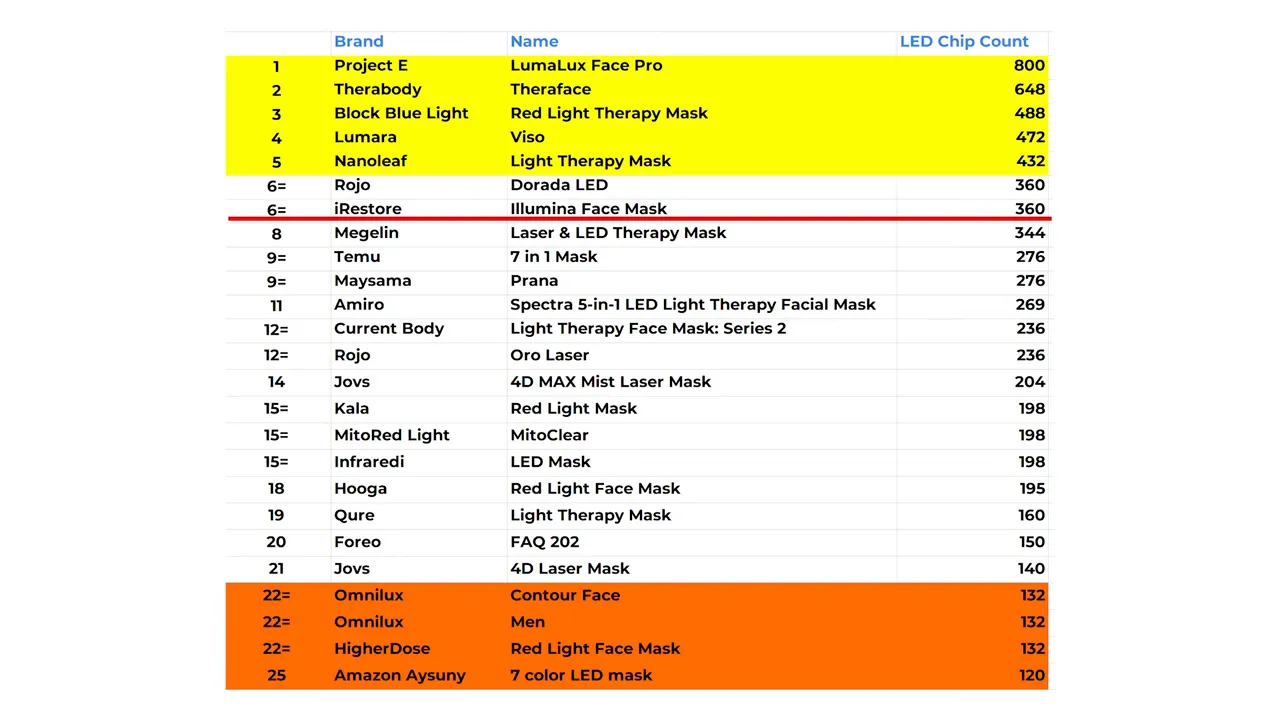
Coverage is where a lot of consumers get tripped up. A mask might list hundreds of diodes, but how those LEDs are distributed across the face matters more than the raw number. This Red Light Therapy Mask Comparing Test measured both the number of LEDs and the actual light distribution across ten facial zones: forehead, temples, sides of eyes, under eyes, nose bridge, nose, cheeks, lips, chin and jaw.
High LED counts generally correlate with better, more even coverage. In this Red Light Therapy Mask Comparing Test I observed that masks with fewer than ~300 chips risked patchy coverage — good on cheeks, weak under the eyes and around the nose. As a rule of thumb I would not settle for fewer than about 350 LED chips if even coverage and eye-area dosing are priorities.

Top Coverage Performers
Some masks stood out for sheer LED quantity and even distribution. These masks consistently scored highest in the coverage section of this Red Light Therapy Mask Comparing Test because they delivered uniform light to all ten zones and showed reliable consistency across repeated measurements.

The Masks That Missed The Mark
Across the 25 devices in this Red Light Therapy Mask Comparing Test there were a few clear disappointments. The worst performers either lacked near infrared entirely or emitted extremely low intensities that fall well under the therapeutic window. Low-cost Amazon and cheaply made imports often offer colourful lights but no meaningful dosing.
Some expensive devices were also surprising misses because they prioritised aesthetics or lifestyle features over delivering therapeutic energy. These masks look premium on the outside but perform poorly when you measure real-world output.

Price And Peace Of Mind: Balancing Cost Against Performance
Price matters. In the Red Light Therapy Mask Comparing Test it was obvious that spending under $100 makes it extremely difficult to find a therapeutic device. The low-cost units often fail to provide adequate fluence or omit near infrared entirely.
Realistic minimum: expect to spend around $150 to $250 for a capable mask. At this level you can get the essentials — red and near infrared wavelengths, an acceptable LED count and a device that will reliably hit the therapeutic window.
- Low budget pick: A straightforward $150 mask that covers the essentials and is comfortable.
- Mid-range sweet spot: $250–$350 devices that balance range, power and coverage.
- Premium options: Devices priced $500 and above often add extra wavelengths, higher LED counts or fanciful features, but you must validate their delivered fluence and warranty before committing.

Warranty, Returns And Company Track Record
Peace of mind combines warranty length, return policy and how long the company has been in business. Masks with 60+ day returns and multi-year warranties deserve a bump in this Red Light Therapy Mask Comparing Test because they give you time to trial the device and a safety net if something fails.
Short return windows (14–30 days) are problematic — results from consistent red light use often require more time to manifest. A good return window shows confidence from the manufacturer.
Notable Updates And Quality Control Lessons
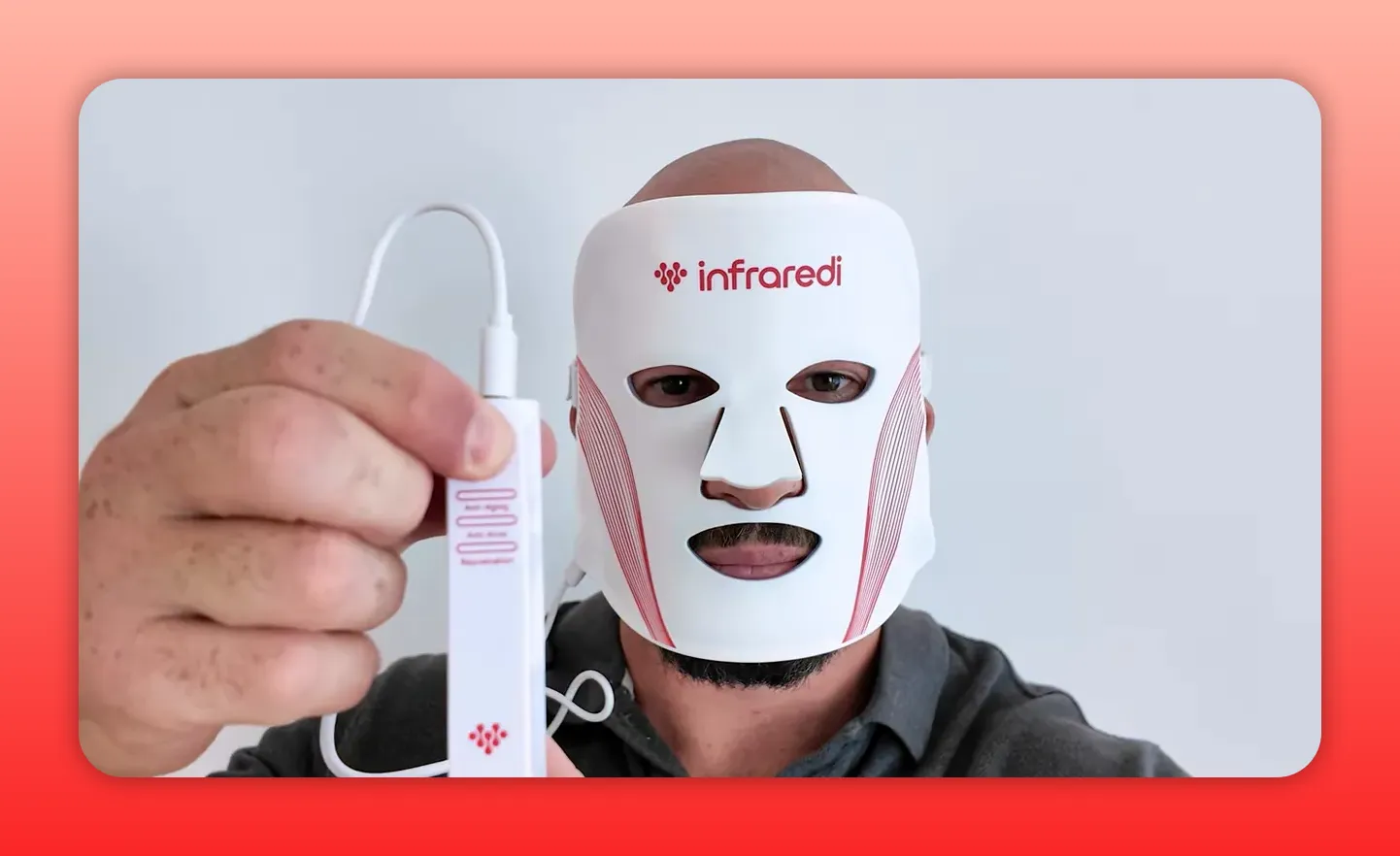
Real-world reliability is as important as specs. In this Red Light Therapy Mask Comparing Test several masks required follow-up notes because of quality control problems or new revisions from manufacturers.
For example, one high-scoring mask in early testing developed problems in the field: strap Velcro came away and the controller experienced charging failures. The manufacturer acknowledged the issues, reinforced straps in later batches, improved the controller and extended warranty coverage. These updates are important to know because they change the calculus in a Red Light Therapy Mask Comparing Test when you consider long-term ownership.

New Releases And How They Affect The Rankings
Manufacturers keep releasing updated versions. In this Red Light Therapy Mask Comparing Test I included an assessment of a recently announced multi-wavelength mask by extrapolating from the known design and published LED count. That new multi-light option features many wavelengths including red, blue, amber and deep near infrared and carries a higher price tag — but it also brings expanded capability for treating a wider range of skin conditions.
Tiered Recommendations From The Red Light Therapy Mask Comparing Test
From this Red Light Therapy Mask Comparing Test, I grouped masks into avoid, bronze, silver and gold tiers based on combined results. Each mask in the bronze tier will likely deliver therapeutic benefit, but gold-tier masks outperformed peers across power, coverage and ease of use.
Avoid
- Devices that emit insufficient fluence or lack near infrared entirely.
- Ultra-cheap imports that function as fashion accessories rather than therapeutic devices.
Bronze
Solid performers that are adequate for many users. They have the right wavelengths and acceptable dosing but might have compromises like smaller coverage or limited features.
Silver
Strong options with better LED counts, more even coverage and good operational controls. These sit in the comfortable middle ground for most buyers in a Red Light Therapy Mask Comparing Test.
Gold
Top picks combine comfort, power, coverage and reasonable pricing. Gold-tier masks deliver clinically relevant fluence across the face and include essential wavelengths plus useful extras like blue or deeper near infrared.

 Alex Fergus
Best Choices By Budget And Skin Goal
One size does not fit all. The summary below is what the Red Light Therapy Mask Comparing Test suggests, depending on your constraints.
Under $200
- Choose a simple mask that hits red and near infrared and is comfortable to wear. Expect basic coverage and fewer LEDs.
- Check the return policy carefully — if the mask only has a short return window, avoid it.
$200–$400
- Best value for most people. Devices in this range from the Red Light Therapy Mask Comparing Test deliver enough LEDs, better distribution and reliable fluence with reasonable warranties.
- These masks are typically the most practical balance between cost and performance.
$400+ Premium
- Expect more wavelengths and higher LED counts. These can be worth it if you want multiple treatment modes or full-face plus jawline coverage with strong delivered energy.
- Validate fluence and warranty before paying a premium.

Practical Tips For Using Any Mask
- Follow the default session only if it puts you in the therapeutic window. If not, reduce intensity or adjust session time.
- Consistent use matters more than occasional long sessions. Most protocols recommend multiple short sessions each week.
- Clean the mask as per the manufacturer guidelines and check straps regularly for wear.
- Use a return window to test the mask over several weeks. Many benefits require time to show.
Common Questions: The Red Light Therapy Mask Comparing Test Answers
How many LEDs do I need? Aim for 350+ chips for even coverage, especially if you care about the under-eye area. Are lasers better than LEDs? Lasers can be powerful but are rarely necessary for home facial masks and often drive up cost without clear real-world benefit. Should I prioritise red or near infrared? Both are important: red helps surface skin structure while near infrared penetrates deeper to promote circulation and collagen production.
Final Verdict From The Red Light Therapy Mask Comparing Test
This Red Light Therapy Mask Comparing Test shows that many masks will produce benefits, but the differences matter. The best home therapy masks combine:
- A strong red channel plus near infrared
- A delivered fluence within the therapeutic window for skin rejuvenation
- Good coverage across the face with sufficient LED density
- Comfort and reliable operation so you will use the device regularly
- Reasonable warranty and a generous returns window
Where price is a major constraint, there are respectable lower-cost options that cover the essentials. For those seeking the best balance of power, coverage and value, mid-range masks in the $250–$350 band often provide the strongest real-world results according to this Red Light Therapy Mask Comparing Test.
Where To Go Next
If choosing a single device still feels overwhelming, use the comparison tools and checklists that map delivered fluence, LED counts and warranties against your budget and skin goals. Use return windows to trial a device for at least 60 days when possible. Prioritise masks that prove they can deliver a therapeutic dose across the face comfortably and consistently.
Red light is a simple, low-risk adjunct to skin care when the device is selected intelligently. Let the data from a comprehensive Red Light Therapy Mask Comparing Test guide your purchase rather than a glossy ad or a celebrity endorsement.
Practical takeaway: Treat the LED mask like an appliance not a fashion accessory. Confirm wavelengths and fluence, test comfort for several sessions, and prioritise companies that back their devices with real warranties and reasonable returns.
Found This Interesting? Look At These Articles
🔴 The Red Light Therapy Facial Fat Loss Link: Myth Or Reality?
🔴 Does Red Light Therapy Help Scars? The Science
🔴 Red Light Therapy For Skin: Beauty Benefits, Potential Complications, And More
🔴 Psoriasis With Red Light Therapy: Potential Game-Changer?
Have You Seen These Reviews
🔴 Rouge G4 Pro Review: Most Advanced Red Light Panel Yet?
🔴 Best Red Light Panel Yet? Block Blue Light Mega Review
🔴 $800 Red Light Mask Has Lasers… But Why?
🔴 Omnilux Contour Mask Review: Still Worth It in 2025?
Alex's Bio
Alex Fergus wrote this blog post. Alex is an ISSN Sports Nutrition Specialist, Fitness Professional, and certified Superhuman Coach who continues to expand his knowledge base and help people worldwide with their health and wellness. Alex is recognized as the National Record Holder in Powerlifting and Indoor Rowing and has earned the title of the Australian National Natural Bodybuilding Champion. Having worked as a health coach and personal trainer for over a decade, Alex now researches all things health and wellness and shares his findings on this blog.