First of all, a very happy 2026! Hope you continue with your great health journey and that we're part of getting you in better health and shape than ever!
Now let's get to business:
An exciting new study was just published in Dec 2025, on using 1,064 nm for boosting brain performance. You can read the full text of the study for free HERE.
The great thing about this study is that it involves healthy participants. For very long, there has been tons and tons of focus on people with nervous system/brain disorders and light therapy. That's somewhat understandable as conditions such as Alzheimer's, strokes, and Parkinson's have such an all-encompassing effect on your overall health.
Here's the study setup that the researchers used - I'll break down this scientific language in detail in a sec:
"Hemodynamics-derived functional connectivity of the [Prefrontal Cortex] in 12 healthy adults was measured using a 48-channel functional near-infrared spectroscopy (fNIRS) during 5-min resting-state and 2-back memory task activation phases, collected at six time points over a 5-day span. A sham-controlled, within-subject crossover design was employed: all participants received both sham and active [Transcranial Infrared Laser Stimulation] in counterbalanced order, with a 4-week washout period between sessions."
Here's that study protocol in plain English:
- Each of the 12 healthy study participants underwent the 1,064 nm light treatment to the brain. That light is transferred through the skull into the brain.
- Participants were either in the intervention group (receiving the real light therapy) or the sham group (receiving light therapy that appeared to be activated). Later on, these two groups switched, so that every study participant received the active treatment.
- There was a 4-week period between either receiving the sham treatment or the real (active) treatment. This way you ensure the light therapy treatment has minimal effect on the later sham intervention, or vice versa.
- The researchers also tested for functional connectivity of the "Prefrontal Cortex" (PFC) - the prefrontal cortex is the CEO of your brain and engages in things such as abstract thought, impulse control, etc. The communication between different parts of the PFC was measured, both at rest and during a brain game.
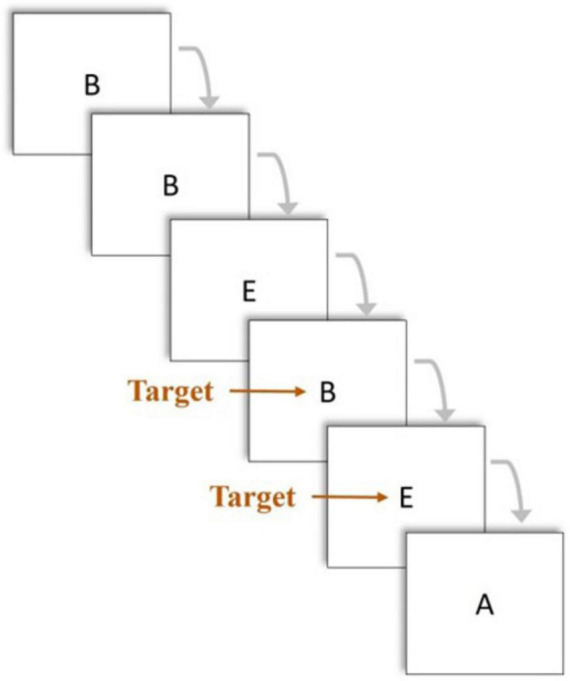
- The dual-n-back brain game was used. Here you have to remember a letter of the alphabet, and the location that letter was placed, 2 steps back. You can see a picture of the dual-2-back below:
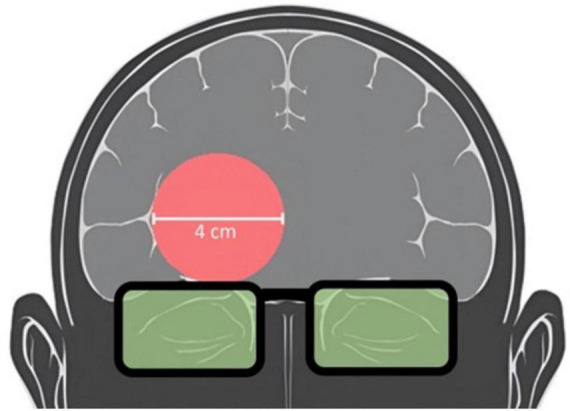
Next up, here you can see the area of the brain that was targeted, on the prefrontal cortex:
And here you can see the device:
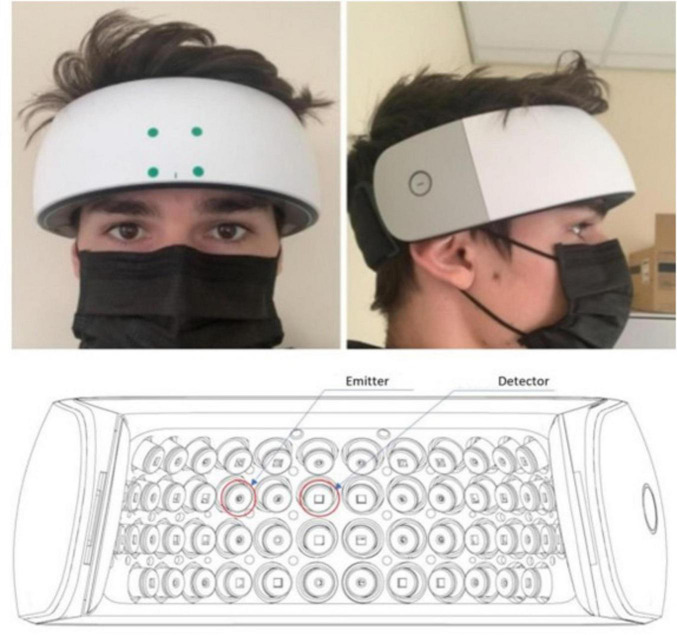
The study setup is excellent, as 1064 nm light (NIR) is invisible to the human eye, and the study participants cannot tell whether it's activated or not!
Now the outcome - the most essential part! Here you can see that brain performance is slightly higher, so that study participants achieve slightly better accuracy on the dual-2-back test, when receiving light therapy to the brain (the red line in the chart below):
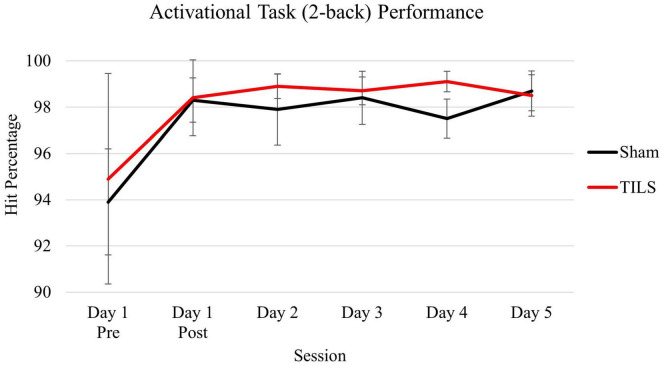
Keep in mind that this effect was reached within a single treatment, and the effects lasted for at least 5 days. Prof Michael Hamblin has often talked about this dynamic, how the impact of a single treatment of light therapy can last several weeks or even months due to gene expression and transcription factors, etc. You can watch an interview with Prof Hamblin HERE.
But back to the study. Functional connectivity in the brain changed as well after the light therapy treatment, during the brain performance test. This effect wasn't found at rest, meaning that the brain needs to be challenged for these changes to be found.
Of the 12 participants, there were five women and seven men, with a mean age of 29.5. So this definitely is a study with young healthy participants.
Many people have been asking us, in our Facebook group, for instance, on whether devices such as the Vielight or Neuronic work well if you don't have a health condition. This preliminary study shows that this is the case and that you may expect benefits even if you're 20 or 40 years old.
And, no the study wasn't perfect. Here's what the researchers write about the study's limitations:
"A 4-week washout period may have been insufficient in eliminating carry-over effects in activation task performance and functional connectivity. Our sample size was insufficient to evaluate the acute effect of TILS on functional connectivity; this question was outside the scope of this study and should be better addressed in future work. The 2-back task, while effective as a source of cognitive activation and increased metabolic demand, was too easy to master and thus resulted in ceiling effects in performance"
These limitations are all interesting as:
- You may have effects that last longer than 4 weeks, even after a single treatment! Again, this is what Professor Hamblin often talks about.
- The dual-2-back test is too easy. Sure, I agree there, and 3 or 4 back would have been difficult for most people. Even I would have trouble with 3 or 4 back right now (remembering a letter and location 3 or 4 steps back) now that I haven't trained that ability actively
- And we need the same study with more participants. So this is a great "pilot study" to measure some initial effects, but the effects need to be confirmed in bigger setups.
Lastly, you may want to know about the treatment protocol. Here too, there are some interesting surprises. Here's what researchers write:
"The monochromatic, continuous-wave light was emitted in a 4-cm diameter circular flat-top beam with an area of 13.6 cm2. The power output was 3.4 watts, and the irradiance (power density) was 250 mW/cm2. Active laser exposure totaled 480 s (8 min of continuous application) directed at a right forehead site centered at the frontal polar EEG electrode placement (Fp2) over the anterior PFC (Brodmann area 10). Fluence dose (energy density) was 120 J/cm2 and energy was 1,632 J. A red guiding light at 650 nm (0.08 mW/cm2) provided a visual aid for the targeting of the stimulation site and remained on for all 8 min of TILS/sham administration. "
The total dose of 120 J/cm2 is quite high, but, the treatment area is quite small, so that's all good. You can learn more about dosing here, if curious. The power output of 250 mW/cm2 is also quite high, but closely aligns with what devices such as Vielight are using locally nowadays.
Want more red light therapy for the brain? Consider some of these articles:
 Bart Wolbers
 Bart Wolbers
 Bart Wolbers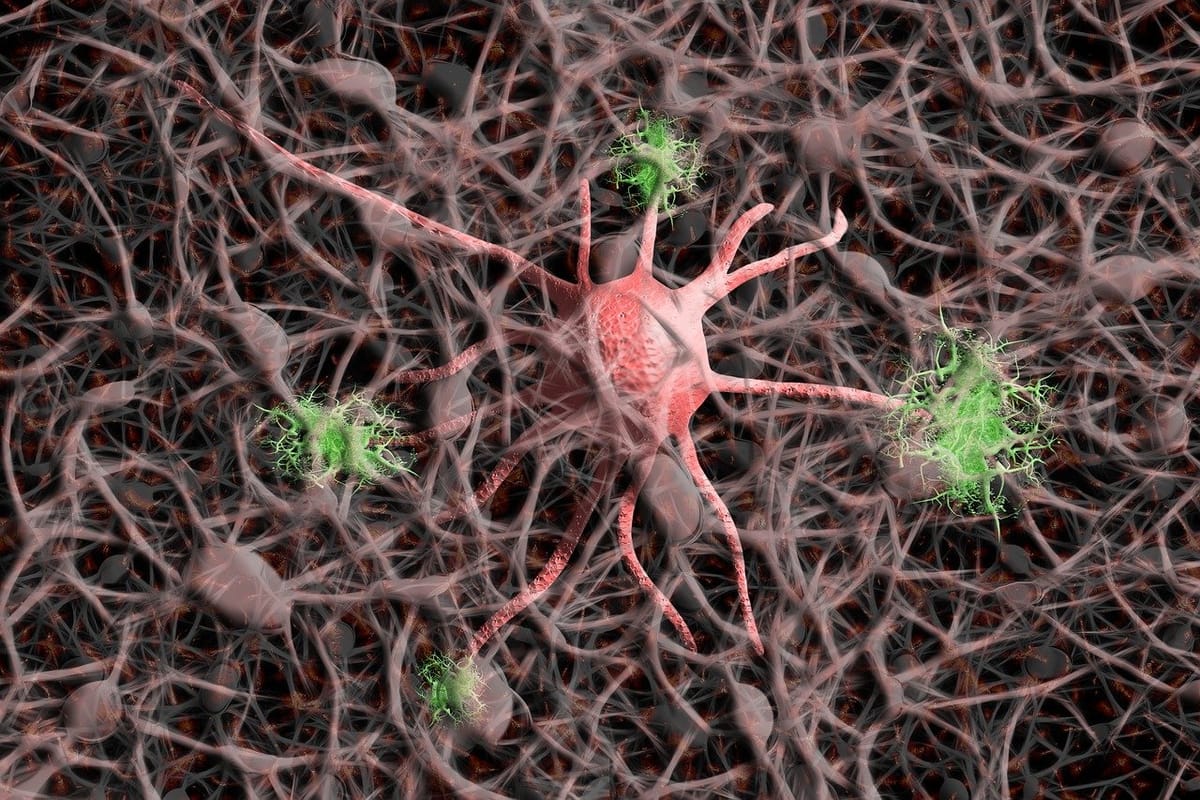
Here Are Our Latest Light Therapy Insiders' Articles:
Every single article that we've published recently - you can find the videos in the article itself:
- Red Light Therapy Wavelengths & Penetration Ultimate Guide - Bart did a huge deep dive interview with Tom Kerber from SunPowerLED, on wavelengths, penetration, dosing, power output, and much more. This is a must-watch if you're a nerd and want to understand these topics better!
- Best Red Light Therapy Products 2025: Honest Picks, Surprises And What Comes Next - Here's Alex's best products, and some great lessons from 2025, for red light therapy. Enjoy! Hope you all had a great run last year!
- Stop Overthinking Red Light Therapy Devices - people are really overthinking red light therapy, and here Alex brings you back to the basics to explain on what to focus on if you're wanting to buy a device!
- Better Than Red Light Therapy Masks? My Top Picks - Here are some of Alex's alternatives for red light therapy masks - not everyone should buy a mask and arguably, for most people, there are far better options available!
- I Trained An AI On 7 Years Of Data: Meet Your Red Light Therapy Assistant - Alex created a hugely important AI version of himself, that knows all of our Light Therapy Insiders website content as well as lots of science. The AI helps you find any answer to any question using the content we've produced over the last few years. Enjoy!!
Also, Check Out Some Of Our Other Content:
Below you'll have some of our best content that you shouldn't miss:
Red Light Therapy Buyers Guide
 Alex Fergus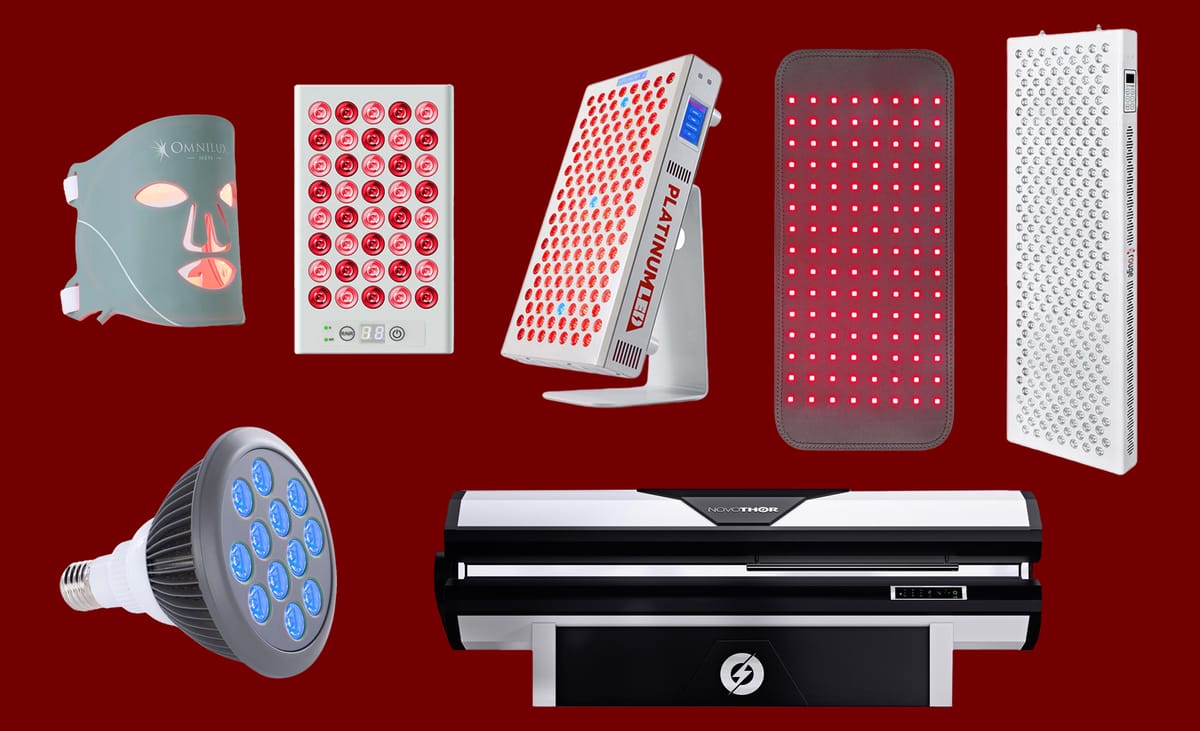
Red light therapy uses red and infrared light to achieve a biological effect. Dive into this topic and select a device that's right for you.
LED Mask Shopping Tool
My extension shopping tool compares all of the world's best (and not so good!) Red Light Masks.
How To Use Red Light Therapy 101: The Best Guide For Starters
 Alex Fergus
You have your device? Let me help you use it.
Red Light Panel Shopping Tool

My extension shopping tool compares all the world's best (and not-so-good!) Red Light Panels!
Exclusive - Discount Codes, Deals & Recommendations
 Alex Fergus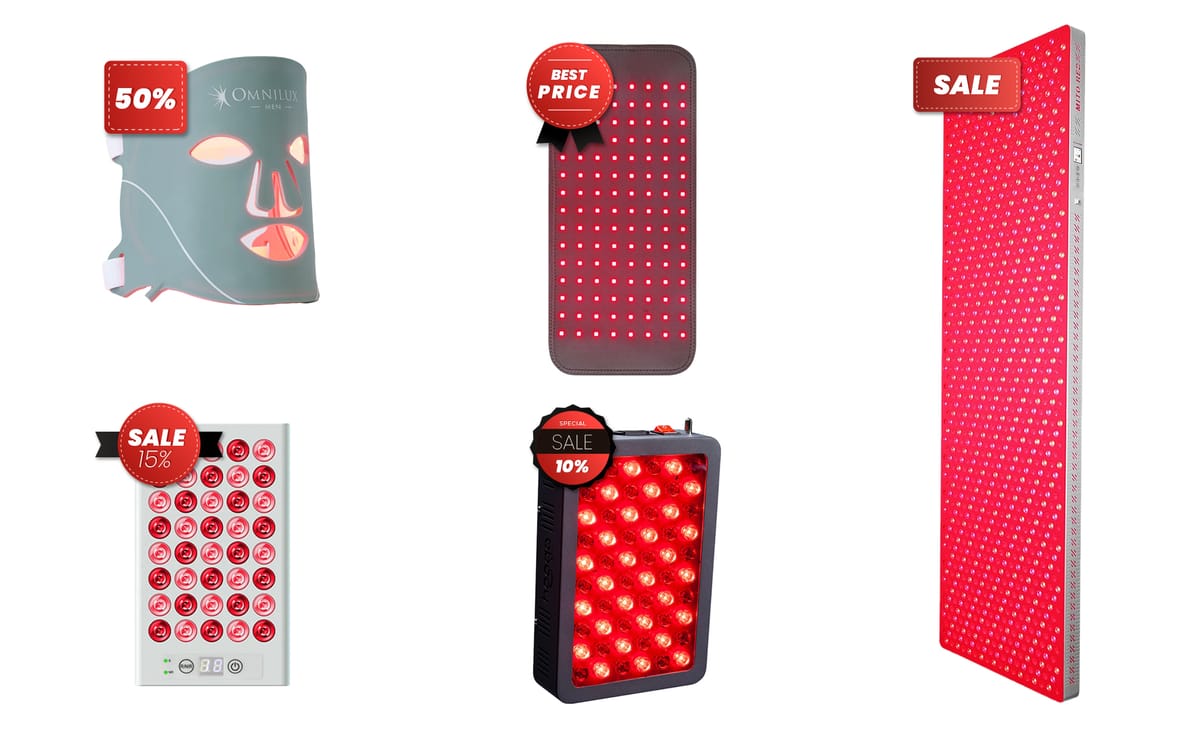
Shopping for a red light device? Use this resource to save! We've got deals for most of the big and best brands out there...