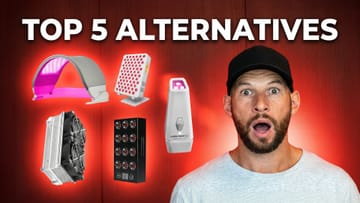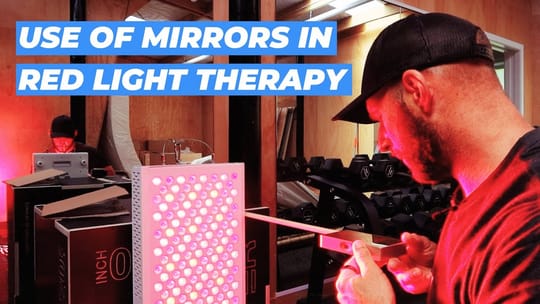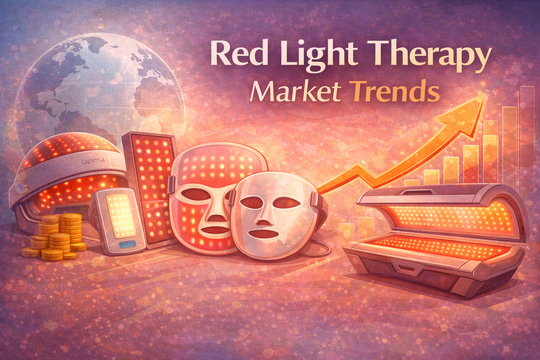

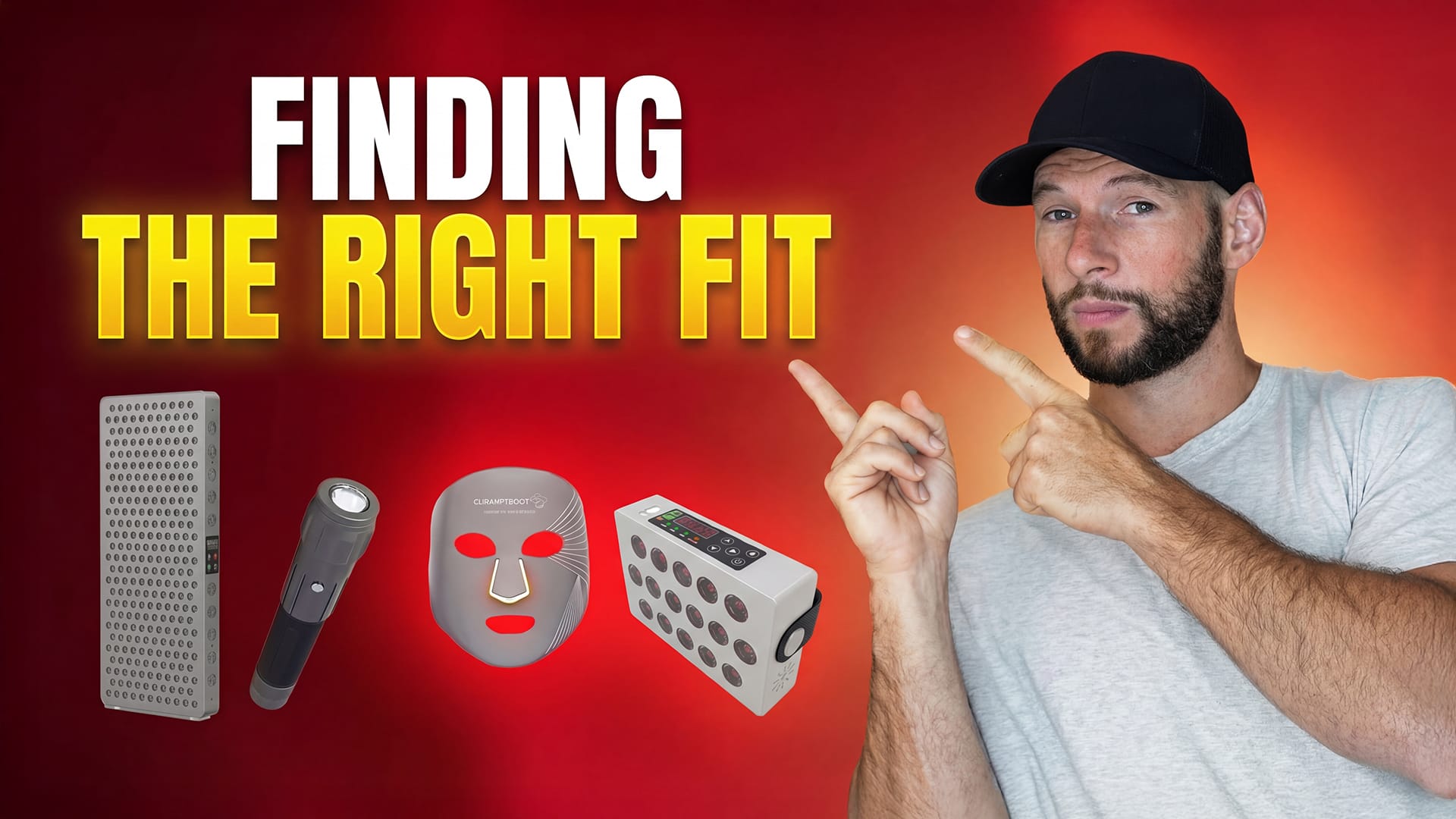
Before you buy any red light therapy device, remember this: you are buying light. Not a brand, not a buzzword feature, not an app or a pulsing gimmick. The core function of every mask, panel, torch, wrap, pod, or full-body bed is the same — deliver therapeutic red and near infrared light to tissue. Choose the applicator that fits your life, budget and goals.
Why The Type Of Device Matters Less Than You Think
People get stuck comparing device types: soft shell mask versus hard shell mask, panel A versus panel B, a torch versus a wrap. The details feel important because they are tangible. But when you strip it back, all these devices are simply ways of shining light on your skin and body to trigger photobiomodulation.
Think of a red light therapy device as an applicator or light source. Want anti-aging for your face? A mask, a panel or a full bed can all do that if they deliver the right wavelengths and dose. Want to treat a sore elbow or knee? The same applies. How you get the light there depends on budget, space and how you want to use it.
How To Decide: Three Practical Filters
Use these three questions to cut through the marketing noise.
- What are you trying to treat? Face only, a single joint, or larger areas?
- What is your budget and space? Can you set up a panel at home or do you need something portable?
- What is your lifestyle? Will you travel with it, use it while reading, or want short standing sessions?
Match Device to Use Case
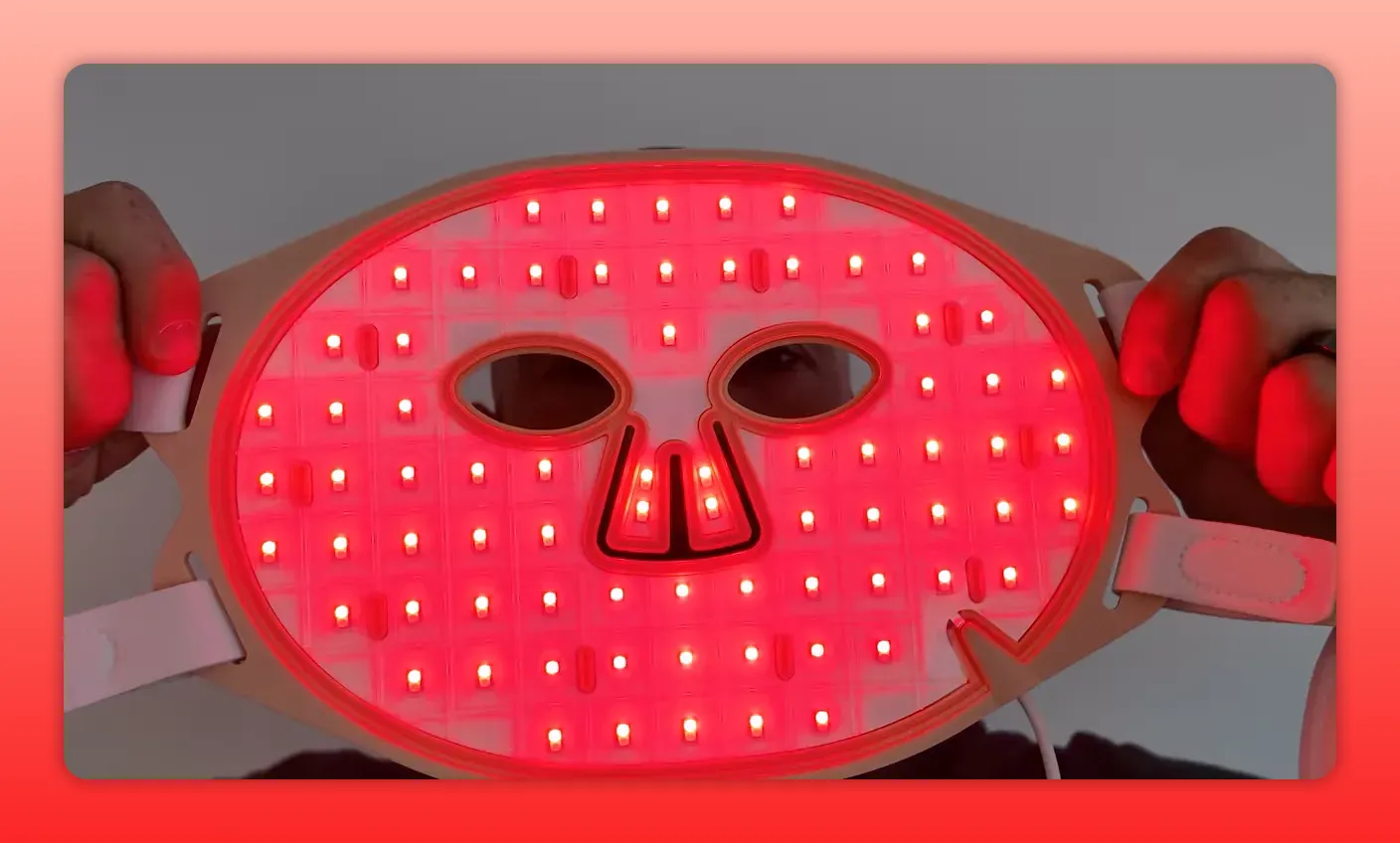
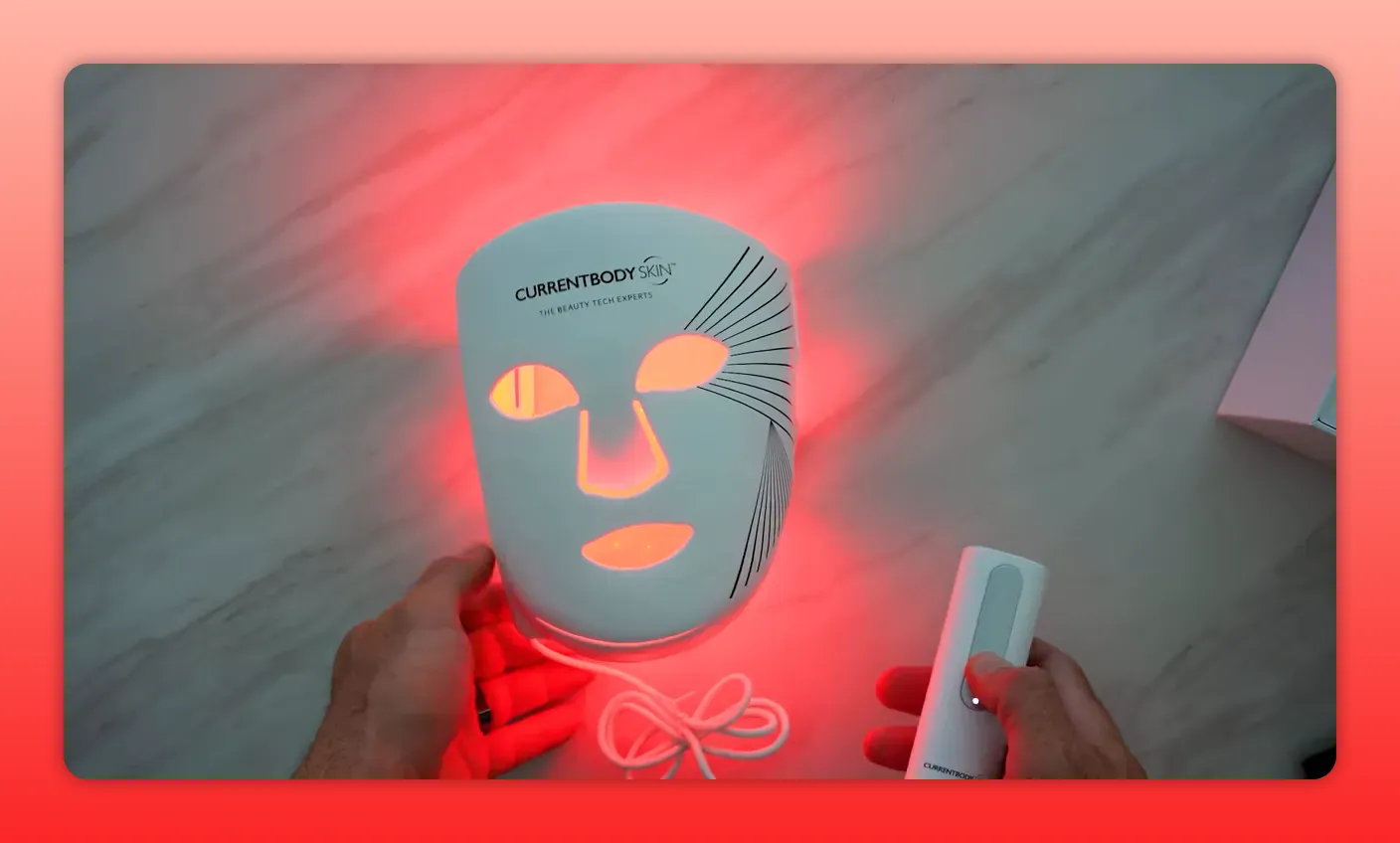
- Face and travel friendly: An LED mask is compact and convenient. Ideal if you want to treat skin regularly while on the move.
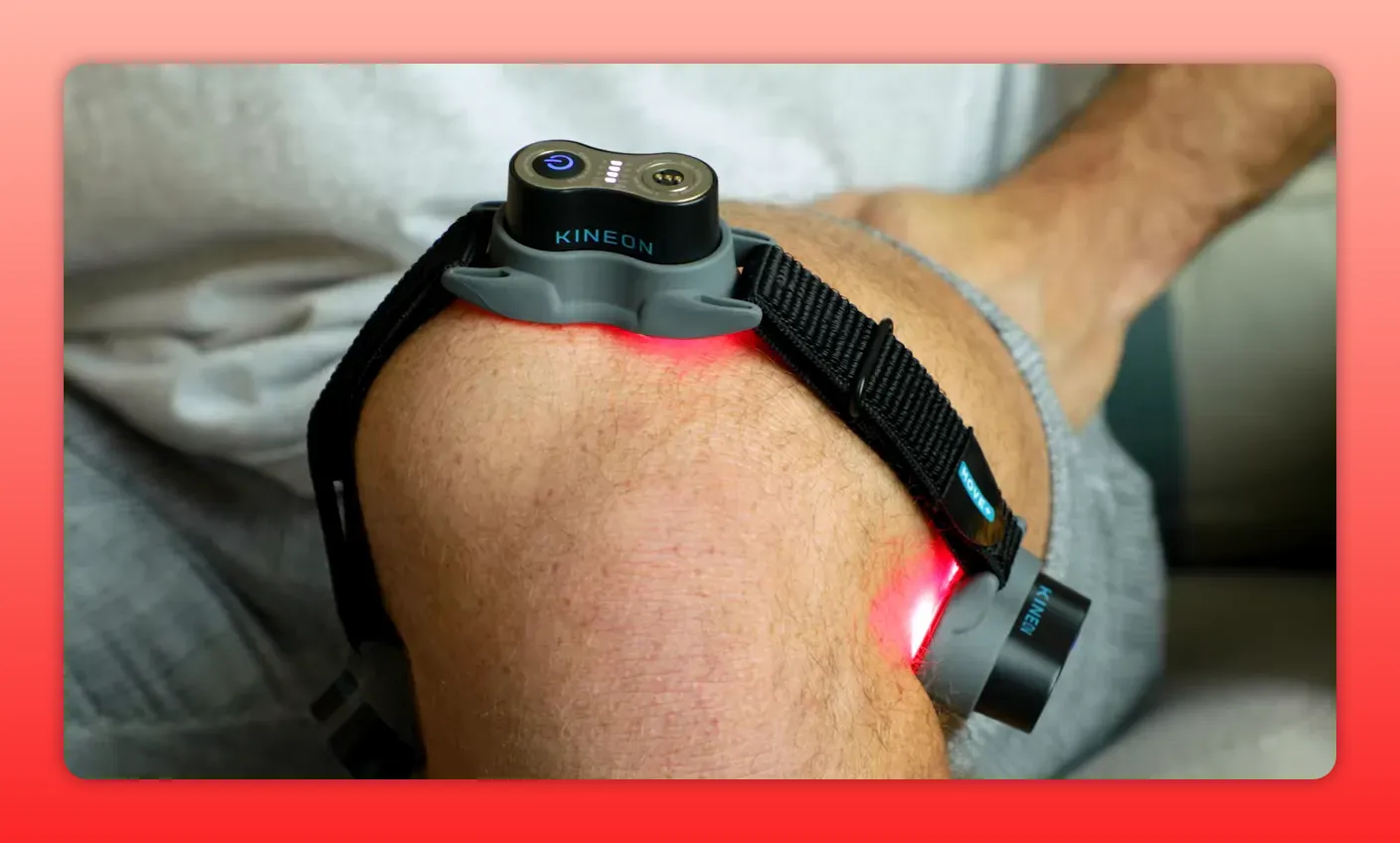
- Single joint or spot treatment: A handheld torch or purpose-built knee device gives targeted coverage and is often faster for that one area.
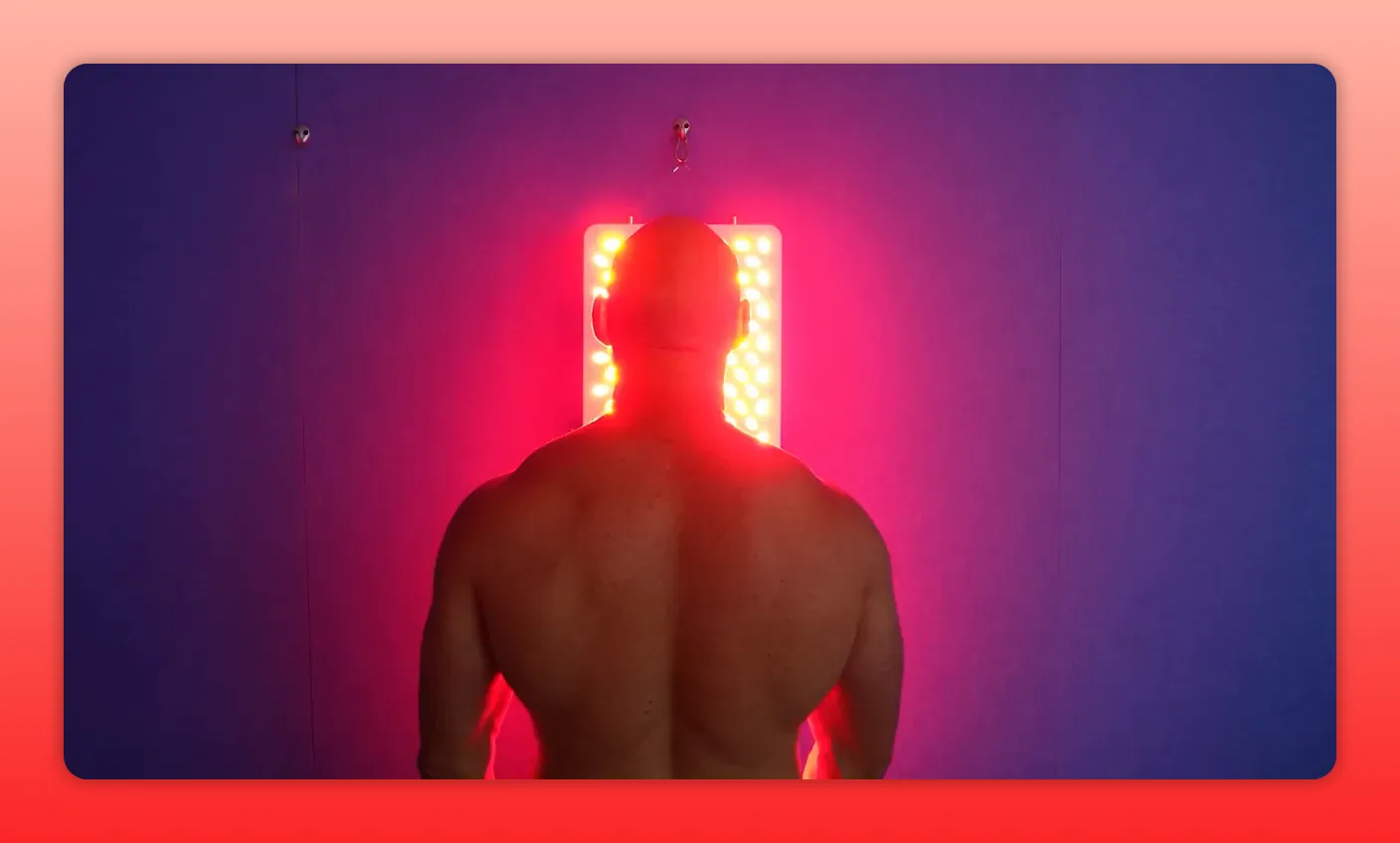
- Full body or maximum coverage on a budget: A panel covers more skin for full body sessions. Buy the largest panel you can afford.
What Really Matters: Wavelengths, Dose, and Consistency
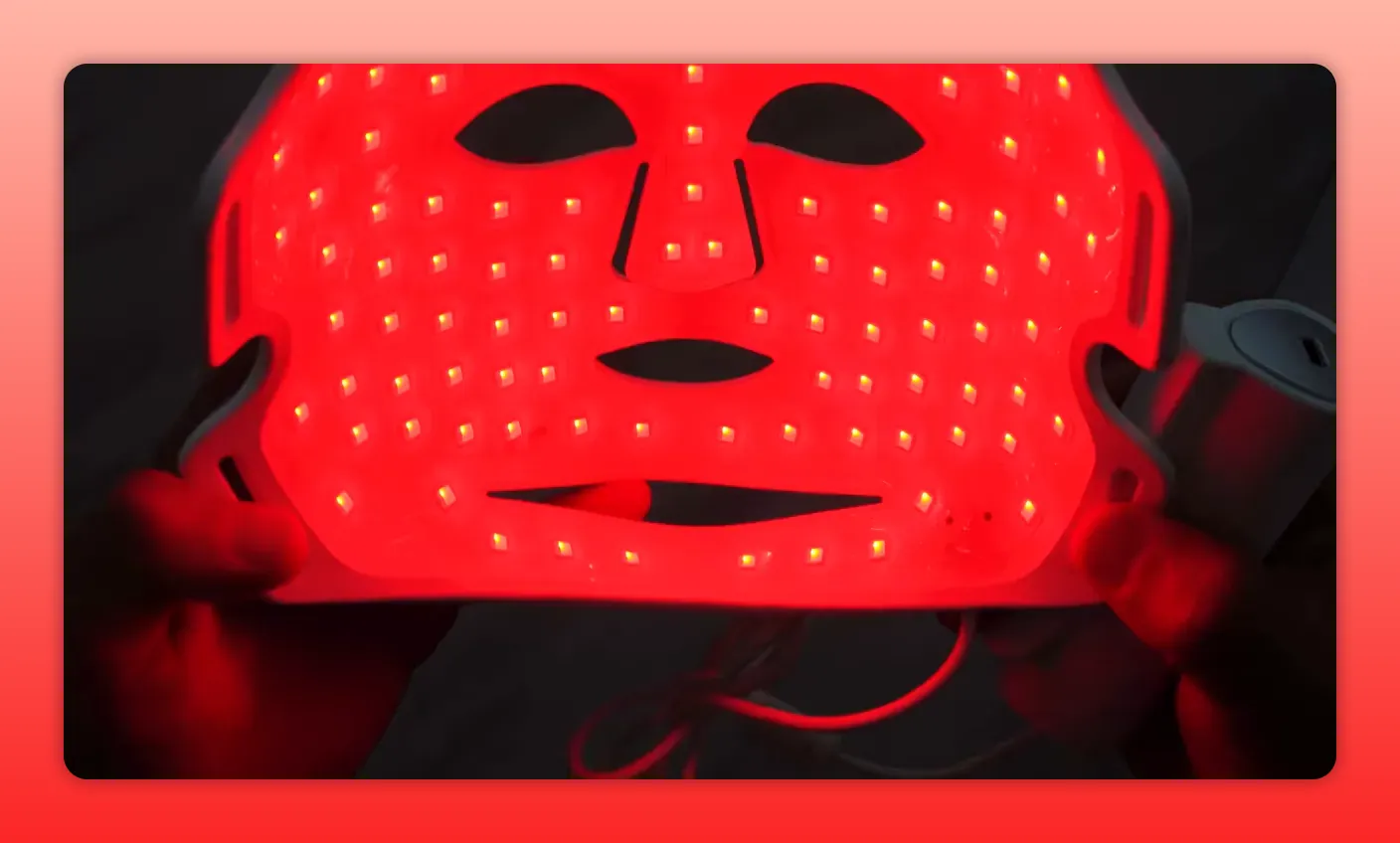
Specs like apps, pulsing modes, or fancy user interfaces rarely change the outcome. Focus on the basics:
- Wavelengths: Common therapeutic wavelengths are in the red (around 630 to 660 nanometres) and near infrared (around 810 to 850 nanometres).
- Dose and time: The amount of energy delivered per area determines the effect. That means power output and session duration matter more than whether the device has an app.
- Consistency: Regular use beats occasional maximal sessions. Pick a device you will realistically use.
Beginner, Intermediate, and Advanced Setups
There is no single right setup. Here are three common levels and what they typically include.
 Alex Fergus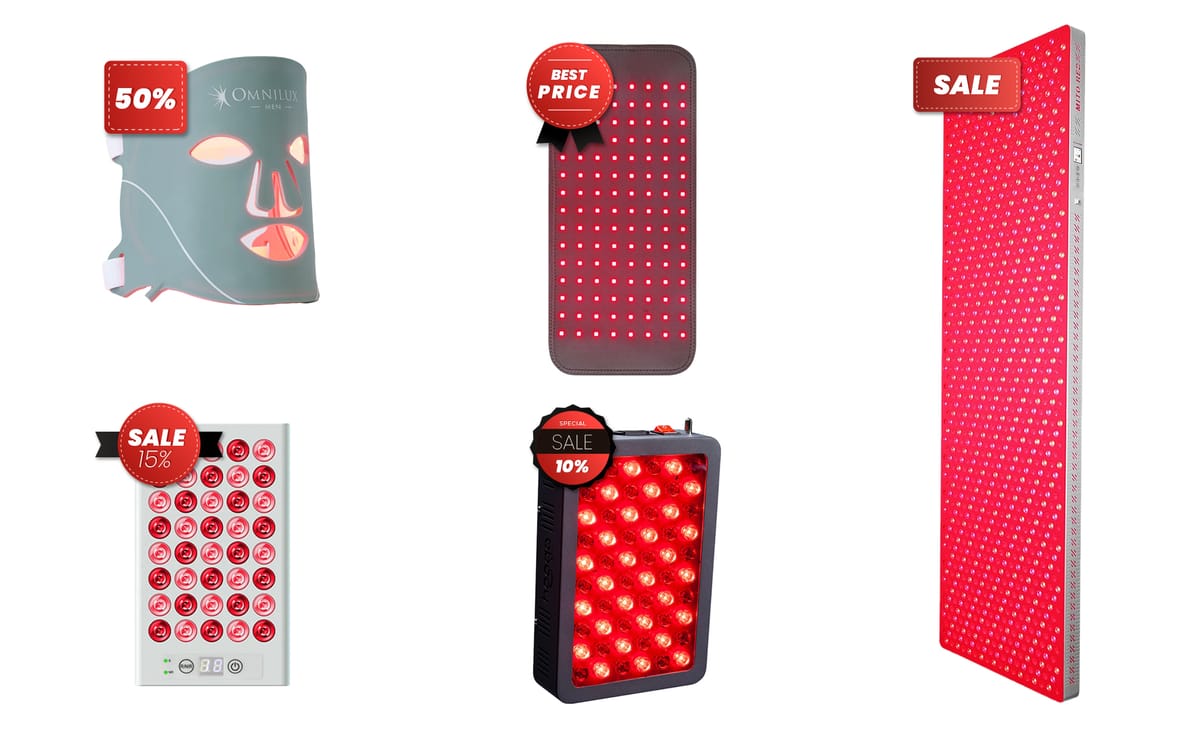
Beginner
- An affordable, single-purpose device such as an LED mask or a small panel.
- Goal: easy daily use for skin or a single body area.
Intermediate
- A mix of devices to match different needs: a travel mask for evenings, a targeted device for joints, and a larger panel at home for short full body sessions.
- Goal: more convenience and coverage without turning it into a hobby.
Advanced
- Multiple specialised devices for every task: lasers, brain-stimulating lights, various masks and a high-end panel for full body sessions.
- Goal: optimisation and experimentation for power users and biohackers.
Simple buying checklist
- Decide what you want to treat and how often you can realistically use the device.
- Choose the device type that fits your lifestyle: portable for travel, panel for coverage, torch for spot treatment.
- Check wavelengths and advertised power output. Prefer devices with red and near infrared options.
- Avoid paying a premium for features you will not use. Apps and pulsing are rarely worth the extra cost.
- Buy the biggest panel you can afford if budget is the main constraint and you want general coverage.
On the subject of brands and models, there are great choices across price points. If you want tailored help, some tools analyse reviews and specs to recommend the right red light therapy device for your needs.
Final thought
Most people get overwhelmed by choice because marketing makes every detail feel essential. It is not. A red light therapy device is a way to deliver light. Pick the applicator that matches your goals, budget and routine, then use it consistently. That simple approach will deliver the benefits you are after without the stress of chasing the next shiny feature.