
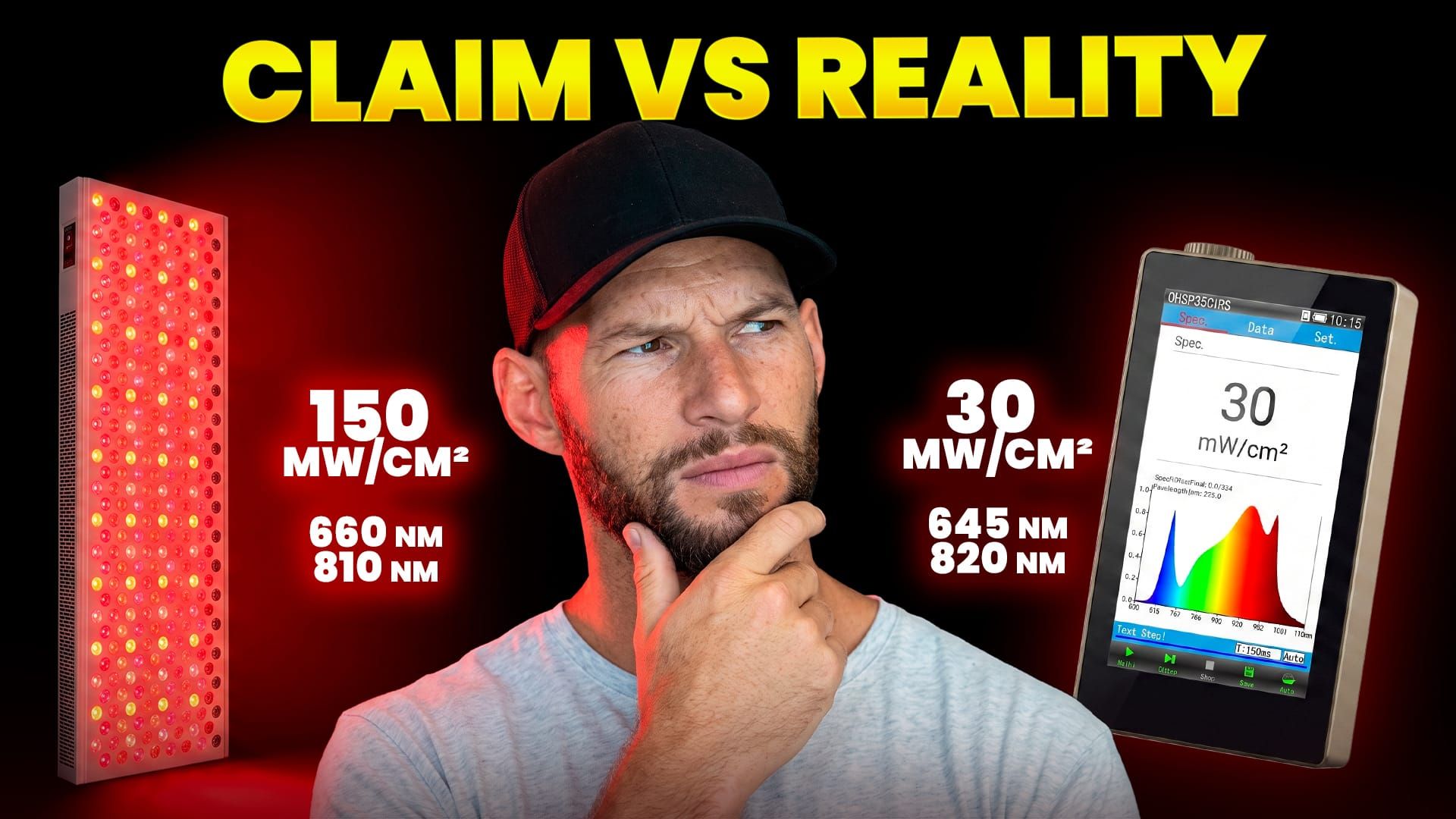
How do you know if a red light therapy device is actually delivering the wavelengths and power it claims? Can you trust irradiance numbers published by manufacturers? And why are some experts questioning the way many companies test their devices?
In this episode, Alex Fergus is joined by Mike Grather from Light Lab International, an independent optical testing laboratory specializing in photobiomodulation and red light therapy devices. Together, they take a deep dive into the science of light testing and explain why understanding these measurements is critical for comparing products fairly or making an informed purchasing decision.
Mike breaks down the differences between irradiance, radiant flux (total power output), wavelength accuracy, and light uniformity in plain English. He also explains why relying on a single irradiance number can be misleading, the limitations of solar meters, and why professional laboratory equipment—including spectrometers and integrating spheres—provides a much more complete picture of a device's true performance.
Alex and Mike also discuss one of the biggest challenges facing the red light therapy industry today: the lack of standardized testing methods. Without consistent protocols, it can be difficult for consumers to compare devices accurately, and manufacturers may report performance figures that aren't directly comparable.
The conversation also covers how light output changes as LEDs heat up, why wavelengths can shift during a treatment session, how panel design affects light distribution across the body, and what measurements consumers should actually pay attention to when evaluating a red light therapy panel.
Whether you're completely new to red light therapy or you've been researching devices for years, this episode will help you better understand the specifications behind the marketing claims and what independent laboratory testing can reveal.
In this episode, you'll learn:
• Why therapeutic red light devices are different from ordinary LEDs
• What irradiance actually measures—and its limitations
• Why wavelength accuracy matters for photobiomodulation
• The problems with using solar meters to test red light therapy devices
• Why average irradiance is often more meaningful than peak readings
• How light uniformity affects treatment quality
• What integrating sphere testing measures
• The difference between radiant flux and irradiance
• Why LEDs lose power as they heat up
• How wavelength peaks can shift during a treatment session
• What independent laboratory testing can reveal that manufacturer specifications often don't
• The biggest mistakes consumers make when comparing red light therapy panels
If you have questions for Mike or would like to hear a follow-up episode covering additional topics related to red light therapy testing, leave a comment and let us know what you'd like discussed next.
Resources Discussed:
⭐ To Reach Mike: LightLab International Allentown, LLC, https://www.lightlaballentown.com/
or email: [email protected]
⭐ Check out Alex's website at: https://www.lighttherapyinsiders.com/