
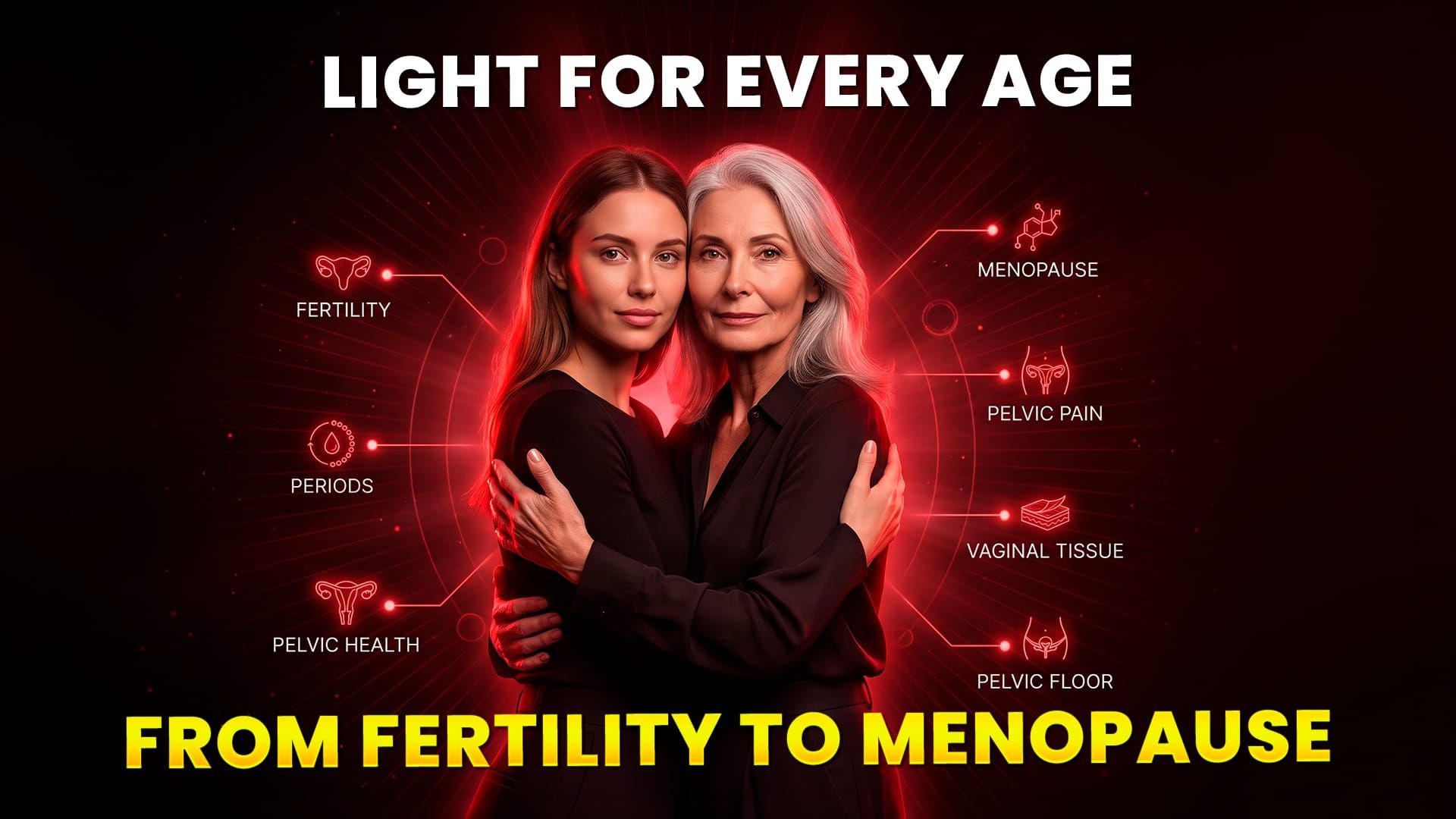
Could red light therapy support fertility, postpartum recovery, period pain, menopause, and other important areas of women’s health?
In this episode of Alex Fergus – Light Therapy Insiders, Bart speaks with midwife and women’s health specialist Tracy Donegan about the emerging use of photobiomodulation for female reproductive health.
They explore the research, Tracy’s clinical experience, the devices she uses, and why targeted protocols matter. The conversation also covers male fertility, pregnancy precautions, C-section recovery, breastfeeding discomfort, pelvic pain, menopause, circadian health, and how long it may take to notice results.
Show Notes
Women have historically been underrepresented in medical research, and photobiomodulation is no exception. Although research into red light therapy for women’s health continues to grow, many questions remain unanswered.
Tracy explains how she uses targeted red light and laser therapy in her work with women experiencing fertility challenges, postpartum wounds, pelvic pain, menopausal symptoms, painful periods, and other intimate health concerns.
She also discusses why treatment must be individualized. The correct device, wavelength, dose, treatment location, and frequency can depend on the person and the condition being addressed. More power is not necessarily better—particularly when working around sensitive tissues or nerve pain.
Key Topics
Red Light Therapy for Women’s Health
Women often have different treatment goals than men. While sports performance and muscle recovery remain popular applications, women may be more interested in period pain, pelvic health, fertility, skin health, menopause, breastfeeding, and postpartum recovery.
Tracy emphasizes that red light therapy should complement appropriate medical care and, when relevant, pelvic floor therapy.
Postpartum Healing and C-Section Recovery
Red light therapy may help support tissue repair, circulation, collagen production, and inflammation management following childbirth.
Tracy discusses using light after perineal injuries and C-sections once bleeding is controlled. Treatment may potentially support more than the appearance of the external scar, as deeper inflammation and adhesions can also affect recovery.
Blue light may offer additional antimicrobial benefits, although postpartum treatment should always be approached carefully and with suitable professional guidance.
Breastfeeding and Nipple Pain
Nipple soreness can make the early stages of breastfeeding extremely painful. Some studies have investigated low-level light therapy for reducing this discomfort.
However, Tracy explains that clinical results do not always match a study’s protocol exactly. Proper breastfeeding support remains essential because light therapy cannot correct positioning or latching problems.
Female and Male Fertility
Fertility is not exclusively a women’s health issue. Male factors contribute significantly to difficulties conceiving, yet the male partner may not receive the same level of testing or attention.
Red light therapy has shown potential for supporting sperm motility, while targeted treatment for women may help create a healthier environment around the ovaries and uterus by supporting cellular energy, circulation, and inflammation regulation.
Tracy generally recommends treating fertility as a shared process, with both partners addressing their light exposure, sleep, nutrition, movement, and overall metabolic health.
Lasers Versus Red Light Panels
Much of the fertility research discussed in the episode used lasers rather than standard red light panels. Lasers can provide more targeted treatment and may penetrate more effectively when placed directly against the skin.
This does not necessarily mean that higher power produces better results. Tracy often uses relatively conservative settings because only a small amount of light may be needed to stimulate the intended biological response.
Pelvic Wands, Menopause and Vaginal Pain
Pelvic red light wands may provide targeted support for women experiencing dryness, tissue thinning, painful sex, pelvic discomfort, or other changes associated with menopause.
Because these devices are placed directly against sensitive tissues, Tracy recommends beginning cautiously. Women with nerve pain should be particularly careful, as excessive treatment may cause a flare-up.
Consistency is also crucial. Using a device once or twice is unlikely to reveal whether the protocol is genuinely helping.
Period Pain and Endometriosis
Red and near-infrared light wraps may offer a convenient, nonhormonal option for period pain. They can also be easier for teenagers to use than a handheld laser because the wrap can remain in place while they relax, watch television, or use their phones.
The warmth and near-infrared wavelengths may support circulation and help manage discomfort associated with painful periods or endometriosis.
Sunlight, Circadian Health and Hormones
Red light devices cannot compensate for an unhealthy light environment.
Morning daylight, regular outdoor “sun snacks,” reduced artificial light at night, and sleeping in a genuinely dark room may all support circadian health. These habits influence sleep, melatonin production, hormones, metabolic health, pregnancy, and potentially fertility.
Tracy stresses the importance of receiving the right light at the right time while still avoiding sunburn and excessive exposure.
Pregnancy and Light Therapy
Red light therapy may offer a nonpharmaceutical approach to certain types of pregnancy discomfort, including lower-back pain, carpal tunnel symptoms, and pelvic pain.
However, the general precaution is to avoid applying powerful red light devices directly over the pregnant abdomen unless treatment is supervised by an appropriately qualified professional. Tracy also advises against exposing newborn babies to intense red light panels due to their thin skin and the lack of sufficient safety data.
Safety and Side Effects
Red light therapy is generally considered low risk when used appropriately, but that does not mean every protocol is suitable for everyone.
Tracy recommends following the manufacturer’s instructions, beginning with a conservative dose, wearing protective glasses when using a laser, and avoiding treatment over suspicious skin lesions. Direct thyroid treatment should only be performed as part of an appropriate thyroid protocol.
Some clients may temporarily feel tired or slightly unwell after treatment. Sensitive nerves can also react strongly, reinforcing the importance of beginning “low and slow.”
How Long Does It Take to See Results?
Tracy generally asks fertility clients to commit to a protocol for approximately three months. This provides time to track changes in cycle length, bleeding, ovulation, hormone levels, follicle development, and other measurable outcomes.
Some women with pelvic or vaginal pain may notice improvements within two weeks, but Tracy does not set that as the expectation. If there are no subtle changes after approximately four weeks, the protocol may need to be reviewed.
Male sperm motility may respond quickly, but supporting the complete sperm-development process requires approximately 70–76 days.
The central lesson is that consistency matters. Red light therapy should also be combined with appropriate nutrition, sleep, daylight exposure, movement, medical care, and other relevant lifestyle changes.
Resources Discussed
✨ Explore Tracy Donegan’s women’s health, fertility, pregnancy, and red light therapy resources: https://tracydonegan.org
✨ Tracy's "The Blog" : https://blog.tracydonegan.org/blog/best-red-light-pelvic-wand-for-women
🎧 Prefer to Listen?
Find Alex Fergus – Light Therapy Insiders on your favorite platform: