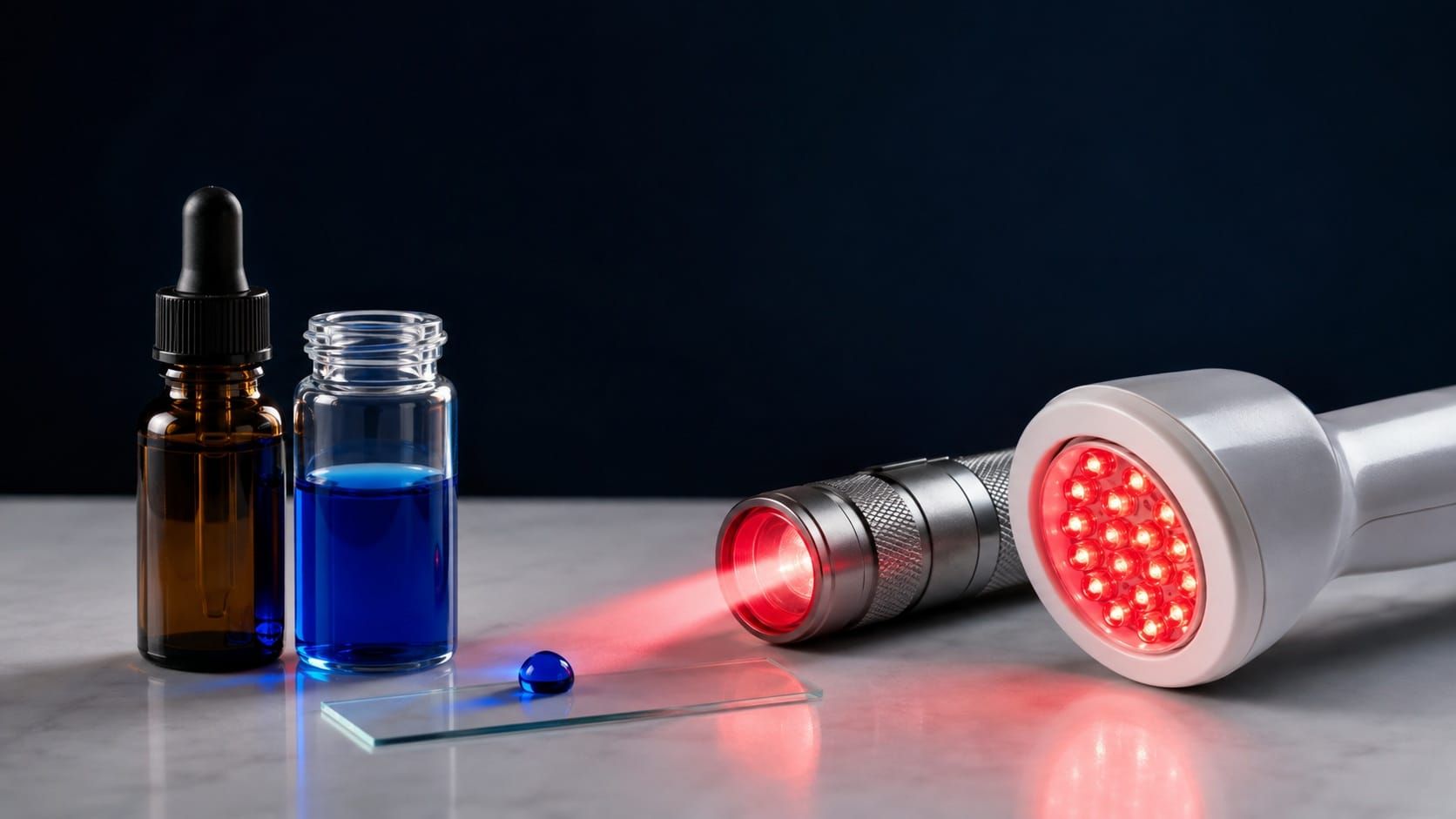
This week, a very exciting primer on "PDT" or "Photo-Dynamic Therapy", whereby a compound interacts with light, inside the body.
This therapy can be used for many different benefits that I explore below, and these benefits are separate from red light therapy!
We've also added our latest articles, videos, and more, below...
Photodynamic Therapy 2024 Review: The Basics Of Using Substances & Light Interactions For Healing For Ramping Up Your Benefits!
So here's a 2024 review on "Photodynamic Therapy", which is closely intertwined with the "photobiomodulation" or red light therapy field. You can read the full text here.
The difference?
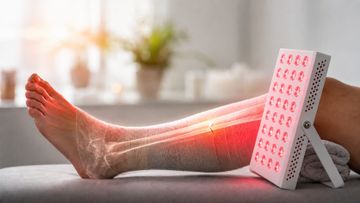
Red light therapy works by shining light on tissues. Photodynamic works by exposing diseases (pathological) tissues with a compound/substance, and then irradiating that substance with the wavelengths that absorb light.
So, for photodynamic therapy you need:
- Diseased (pathological) tissues
- A substance, such as methylene blue or curcumin that you apply to that tissue
- Light at the correct wavelength that interacts with that substance.
The substance here is a "photosensitizer" as it changes the biological dynamics with light. Broadly speaking, two different things can then occur:
- First, there's the Type I pathway, whereby the excited photosensitizer generates free radicals and reactive oxygen species.
- Secondly, in the Type II pathway, there are transfers of energy to molecular oxygen, creating singlet oxygen, which is highly reactive. In plain English, as a result of these reactive species, you get cell damage, which then leads to "apoptosis" (programmed cell death), "autophagy" (recycling of cell components), or even the dying of tissue (this can be helpful for cancer for instance.
And, you may think that this process is somewhat obscure but nothing could be further from the truth. The number of publications on "Photodynamic Therapy" (PDT) is growing exponentially, just as it is for red light therapy ("photobiomodulation"):
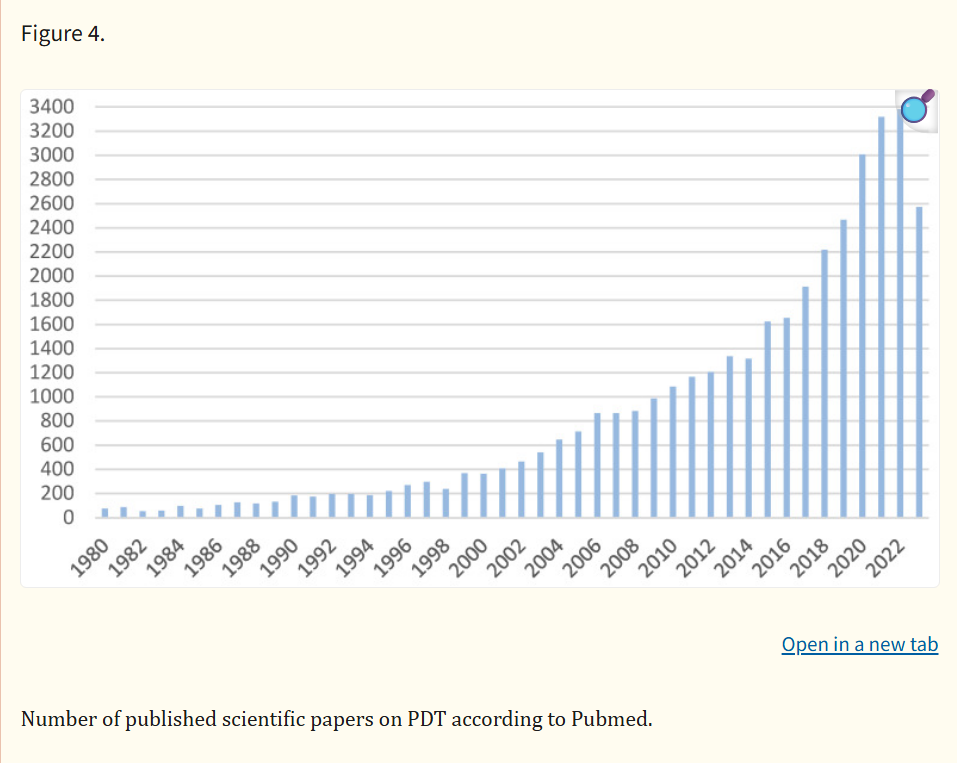
As you can see also, PDT isn't new; this all started back in the 1980s. PDT, as a technique, has developed big time since then. The list of applications is also huge, such as:
- skin cancer,
- precancerous skin lesions
- head and neck cancers
- esophageal cancer
- lung cancer
- bladder cancer
- gastrointestinal cancers
- pancreatic cancer
- prostate cancer
- brain tumors
- age-related macular degeneration (eye health-related, causing blindness eventually)
- vascular anomalies
- warts
- oral dysplasia
- periodontitis (I've seen this at conferences, where you put a substance in your mouth and then irradiate with light)
- peri-implantitis
- rosacea
- infectious diseases
And more. Many of these options are briefly considered in the free full text of the study. Some of these are easy for DIY, and for others (such as cancers) you'll need medical supervision.
FYI, in a laser dentistry conference in Brazil in 2024, for instance, there were quite a few applications of PDT that I came across. Here's a quote, for instance, from my writeup of that laser dentistry conference, that showcases how different substances interact with light, and the Prof Letícia Helena Theodoro who was showcasing that:
Professor Theodoro showed a great list of photosensitizers in her presentation of different compounds and what light they react to, that I'll quote here:
"Methylene Blue (610 - 660 nm)
Toluidine Blue O (590 - 630 nm)
Rose Bengal (480 - 600 nm)
Chlorine (440 or 660 nm)
Erythrosine (400 - 550 --blue or green)
Rhodamine (450 - 590 nm)
Phthalocyanines (660 - 700 nm)
Curcumin (420 - 460 nm)
INdocyanine green (infra-red)"
It's very interesting to see that so many compounds can be used for aPDT! You can just randomly use them, however, as the dose, the time or pre-irradiation, and other factors play a role.
Another problem in periodontal treatment in general, with lasers, is that there's no universal dosing protocol. Nevertheless, aPDT likely has a strong future because it's cheap to apply and comes without side effects. Other means of impairing microbes, such as antibiotics, can create problems over the long term. If more aPDT was used instead of antibiotics, as the gold standard treatment, fewer antibiotic-resistant bacteria would emergy
Prof Theodoro prefers a lower methylene blue dose when applying aPDT for periodontitis. That PDT is applied for five minutes and then 660 nm light is applied in the periodontal pockets. Right now, Prof Theodoro has achieved great results in rat studies--so human studies are needed for confirmation.
I hope you can see, that, the methylene blue and 660 nm light interaction is quite simple for oral health and the oral microbiome there. So that's something you can do from the comfort of your home.
Other applications are a lot harder, though. Tumors are an example here (which are only recommended under medical supervision!).
And, PDT has many of the issues that are also "plagueing" red light therapy. Let's return to the full text of the 2024 review study.
Light penetration issues are an example here. In red light thearpy it's hard to target the heart or liver or brain, for instance, as light penetration drops off exponentially for deeper tissues.
The same is true for PDT. Visible light and even near-infrared light have limited ability to reach deep tumors, making PDT most suitable for superficial lesions, hollow organs (oral health!), endoscopically reachable tumors, or cases where fiber optics can deliver light internally. But yeah, that necessitates an invasive treatment in the first place, if fiber optics need to be used...
And just with red light therapy, right now, PDT also lacks standardized protocols across diseases: photosensitizer choice, dose, wavelength, light exposure time, and treatment intervals all vary widely. You know the drill about this - as I've tried to simplify this stuff big time with my Science Tool for instance:
 Bart Wolbers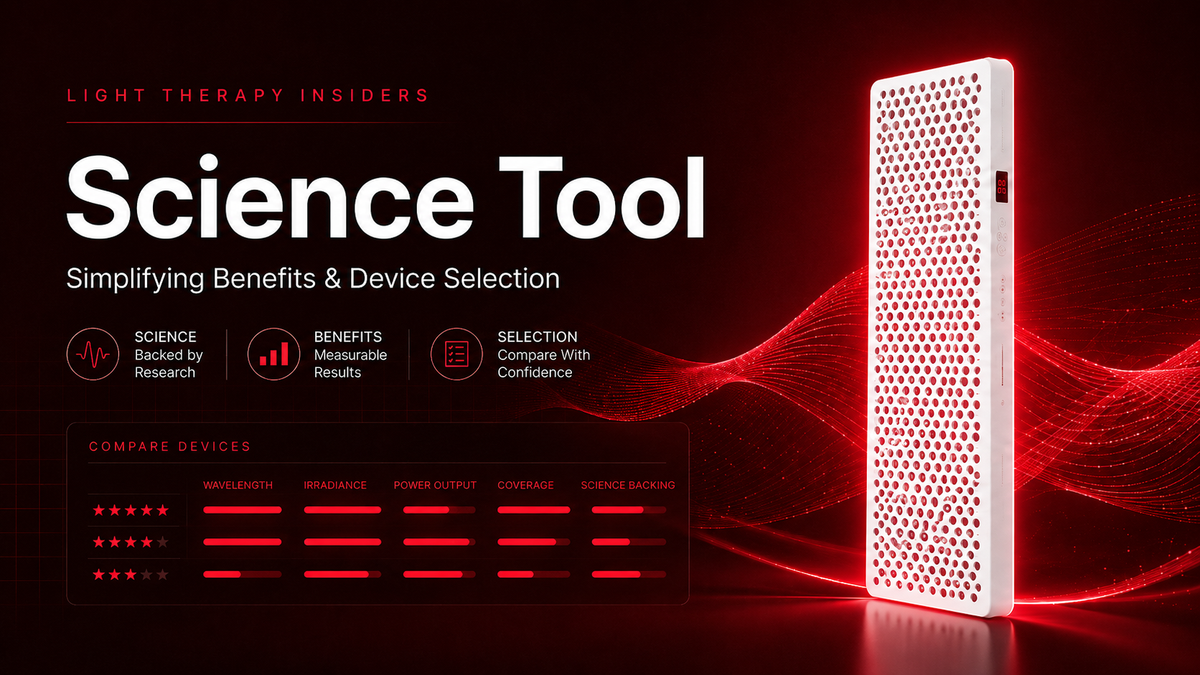
But on PDT? I am, and we can be, cautiously optimistic!
PDT is serious stuff and seems to have many breakthroughs through the years/decades as red light therapy. And it's closely intertwined of course. It's only a matter of time before PDT becomes used a lot more; if the invasiveness can be lowered, we get better protocols, and, especially, integration with other therapies such as red light therapy, stem cells, PRP, imaging technologies, nanotechnology, and more!
Here too, the future is bright! Let's end with a quote of the researchers, in the abstract of the study, on the optimism regarding this dynamic:
"The power of light contributed to the creation of phototherapy, whose history dates back to ancient times. It was then noticed that some substances exposed to the sun have a negative effect on the body, while others have a therapeutic effect. This work provides a detailed review of photodynamic therapy, from its origins to the present day. It is surprising how a seemingly simple beam of light can have such a powerful healing effect, which is used not only in dermatology, but also in oncology, surgery, microbiology, virology, and even dentistry. However, despite promising results, photodynamic therapy still faces many challenges. Moreover, photodynamic therapy requires further research and improvement."
We'll keep you updated here!
The difficulty here is the application of PDT for the average person. Yes, the benefits can be incredbile, depending on the goal. But, for many cases, you'll still want medical supervision for applying PDT. I'm not too comfortable to recommend the average person using PDT, for, stay, wound healing, or cancer, or skin conditions.
It is what it is...
Wish things were simpler/easier.
Also, on the topic, I've recently covered one compound that's frequently used for photodynamic therapy, methylene blue, which you can read about below:
 Bart Wolbers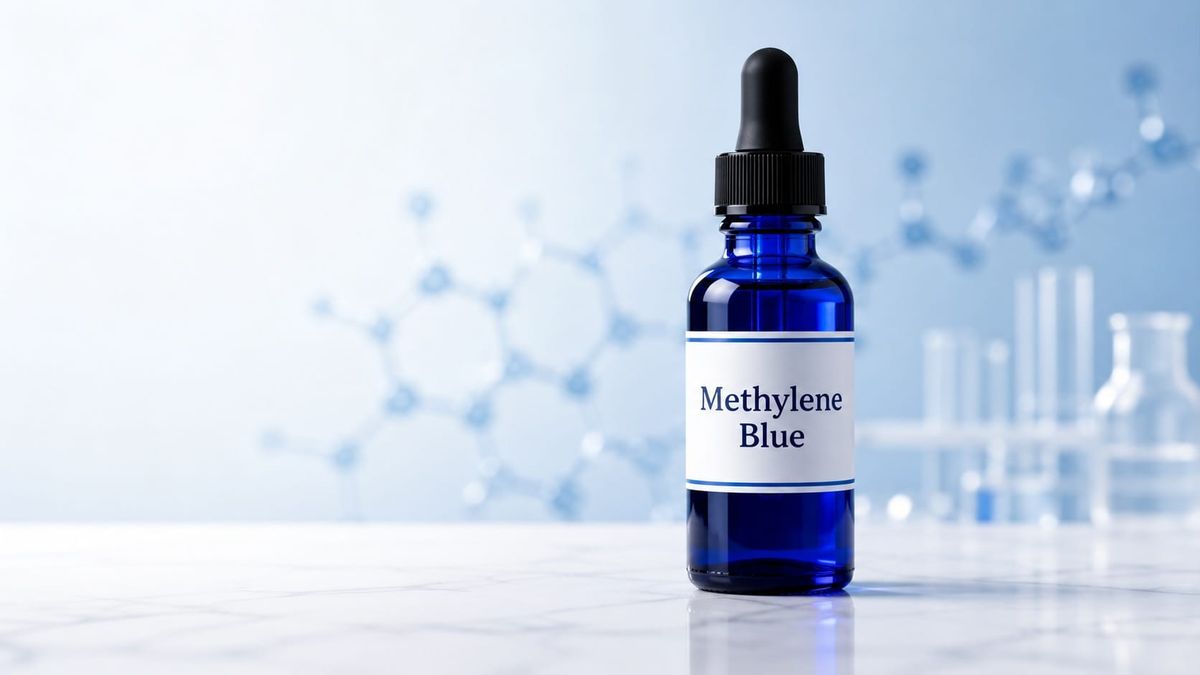
Here Are Our Latest Light Therapy Insiders' Articles:
Every single article that we've published recently - you can find the videos in the article itself:
- Do LED Face Masks Work? Real Before & After Evidence - Alex did a great job here showcasing the scientifically-validated before & after results of LED masks, and goes through all studies that have visual evidence of those outcomes!
- Red Light Therapy For Beginners: AVOID These Mistakes - simple new video that you can send to your friends and family, if they're unaware of the benefits of red light therapy and the space overall!
- Best LED Face Mask For Acne: The Wavelength Most Companies Get Wrong - Here's Alex with the science on LED face masks, and why 90%+ of consumers make a mistake selecting the wrong blue light for treating acne.
- July 2026 Red Light Therapy News: NEW Devices & Controversial Science - the red light therapy news for July 2026. We've got some great science showing that what we're doing at LTI is really worthwhile. And we've got a few unique new products such as a hair dryer, a PlatinumLED handheld unit (finally!), hair serum, and much more!
Also, Check Out Some Of Our Other Content:
Below you'll find some of our best content that you shouldn't miss:
Light Therapy Insiders Science Tool
Search for different health conditions and benefits, and get Bart's breakdown of the science on that topic, as well as recommended devices and light therapy routines.
We've been trying to simplify this space as much as possible:
 Bart Wolbers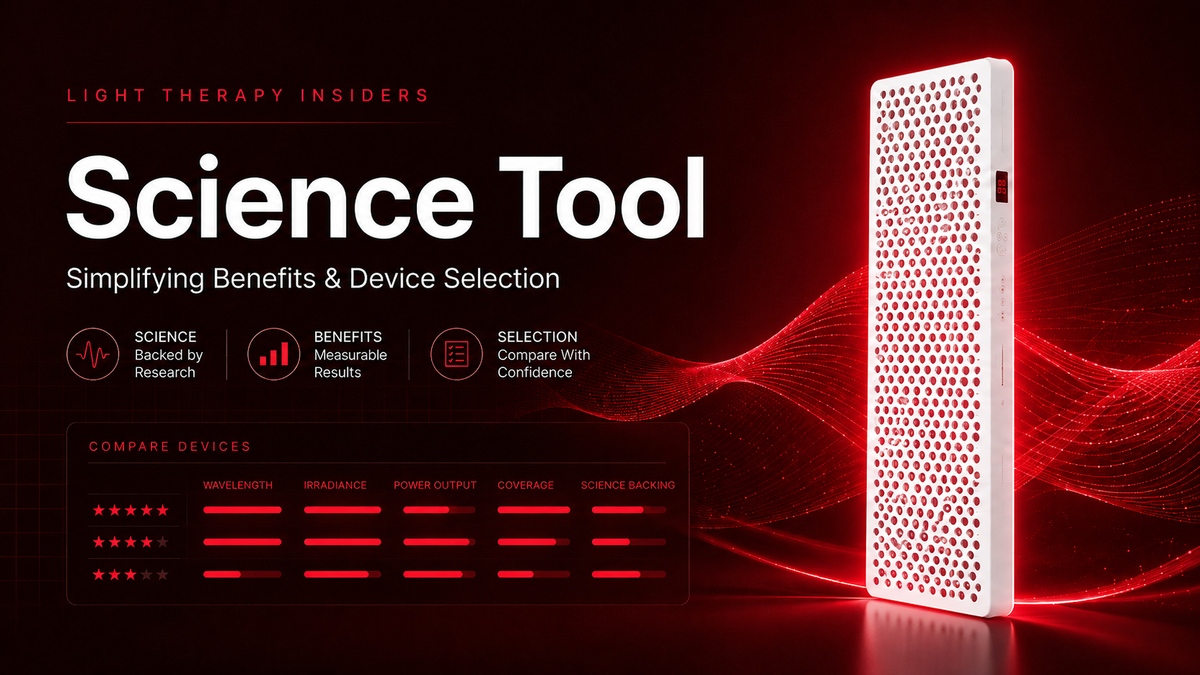
Red Light Therapy Buyers Guide
 Alex Fergus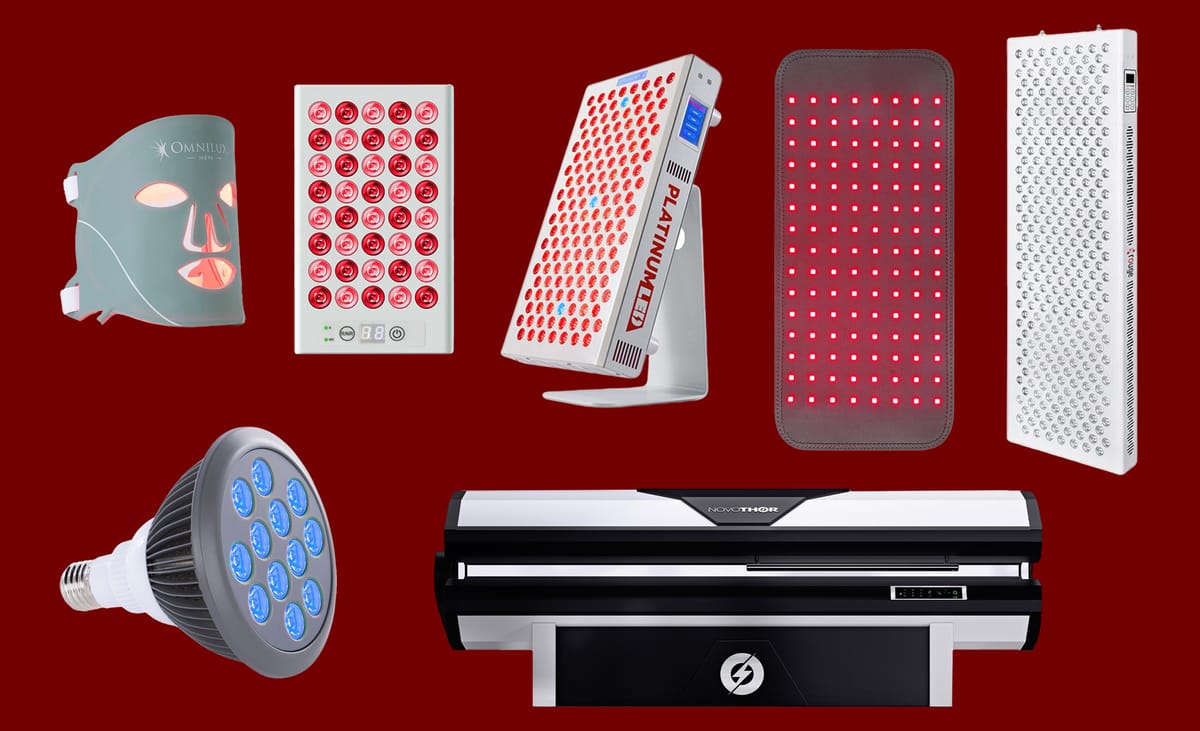
Red light therapy uses red and infrared light to achieve a biological effect. Dive into this topic and select a device that's right for you.
LED Mask Shopping Tool


My extension shopping tool compares all of the world's best (and not so good!) Red Light Masks.
How To Use Red Light Therapy 101: The Best Guide For Starters
 Alex Fergus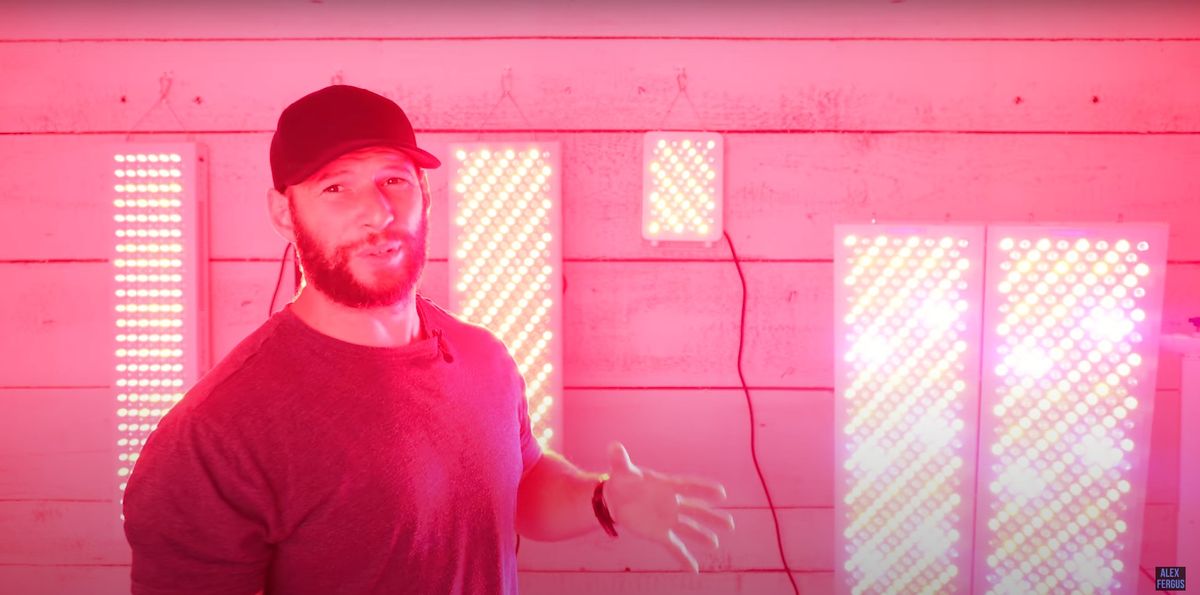
You have your device? Let me help you use it.
Red Light Panel Shopping Tool

My extension shopping tool compares all the world's best (and not-so-good!) Red Light Panels!
Exclusive - Discount Codes, Deals & Recommendations
 Alex Fergus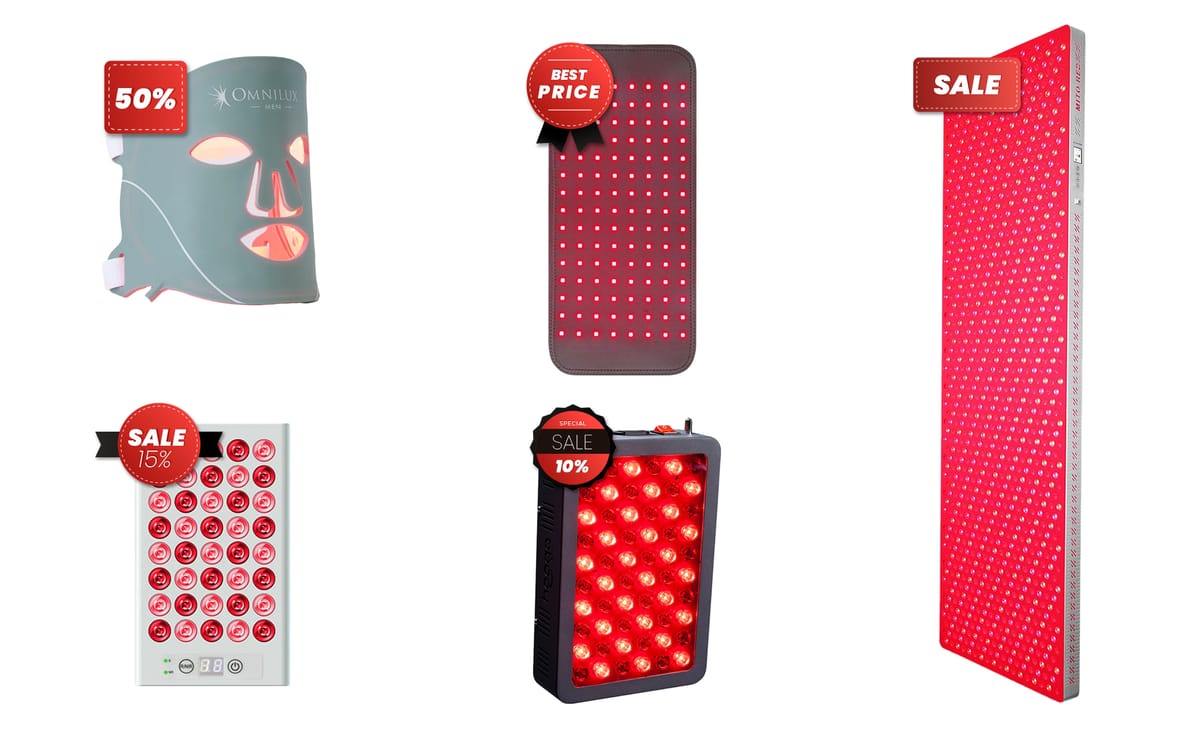
Shopping for a red light device? Use this resource to save! We've got deals for most of the big and best brands out there...