
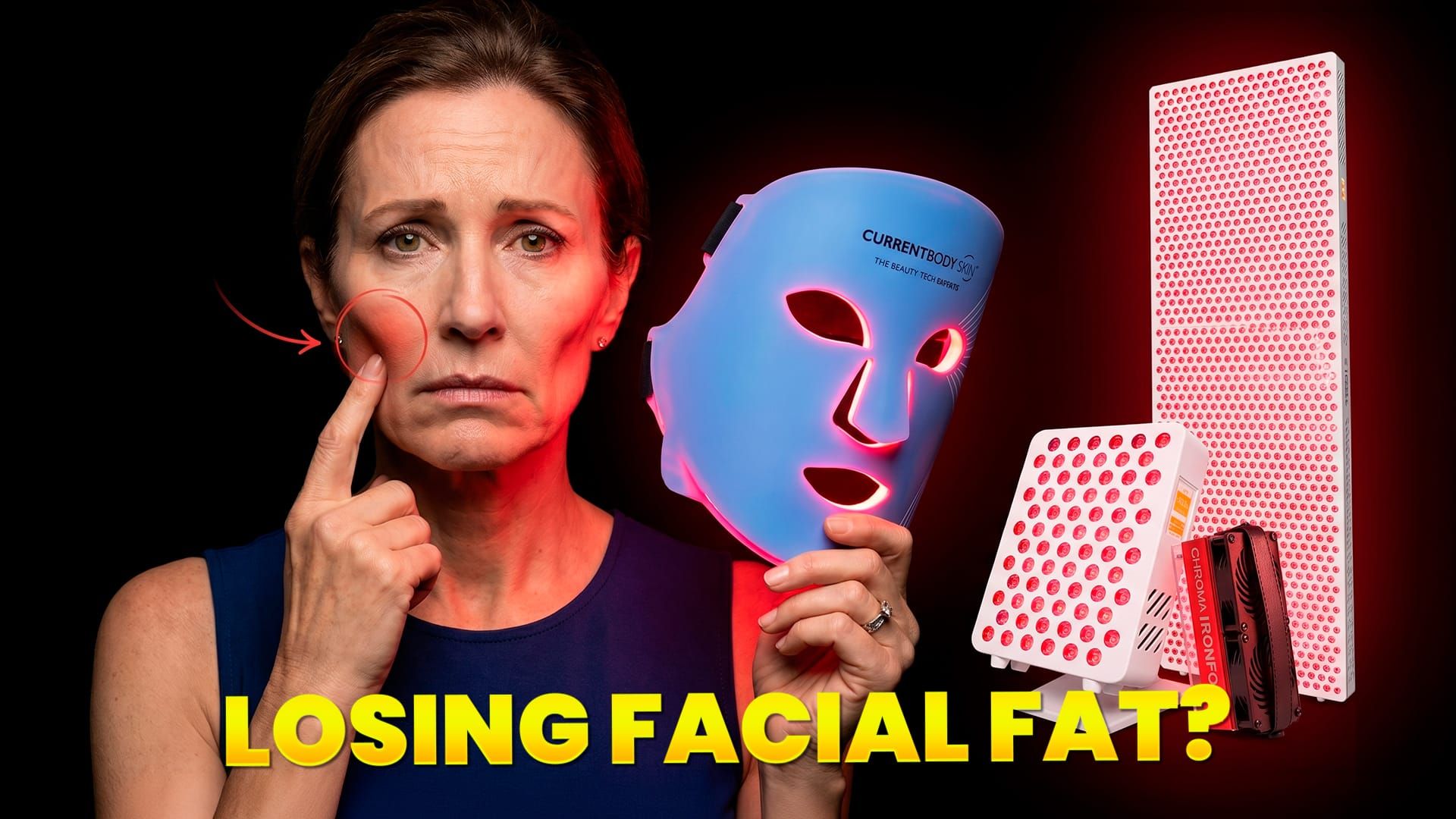
Can red light therapy cause facial fat loss? That’s one of the most common concerns people have about red light therapy masks, near-infrared light, and newer panels using wavelengths such as 1050nm, 1060nm, 1064nm, 1070nm, and 1072nm. The fear is simple: could you use a red light therapy mask or panel and suddenly end up with a more sunken, hollow, or aged-looking face?
It’s a fair question. Facial fat is one of the things that helps the face look full, youthful, and healthy. As we age, most people naturally lose some facial volume, and that can make the face look thinner or more hollow. So if red light therapy, especially near-infrared light, were accelerating that process, it would be a serious concern.
But after reviewing the available science, the conclusion is reassuring: there is currently no good evidence that red light therapy masks, red light therapy panels, or near-infrared wavelengths at 1050–1070nm cause unexpected facial fat loss when used as intended.
Some studies do report minor side effects from red light therapy or LED masks, such as temporary redness, dryness, or irritation. But across research on red light, near-infrared light, and LED masks on the face, facial fat loss is not reported as a side effect.
Why People Are Worried About Facial Fat Loss
The concern became more common in 2023 and 2024 as more red light therapy panels and masks started including wavelengths in the 1050nm to 1070nm range. Some people began wondering whether these wavelengths could target facial fat in a way that would make the face look leaner, flatter, or more aged.
That concern is especially focused on 1064nm near-infrared light, because some people associate that wavelength range with fat loss or deeper tissue effects. The question is whether those same wavelengths, when used in a consumer red light therapy device, could shrink facial fat.
The broader review on Light Therapy Insiders looked at nearly 100 studies related to red light therapy, fat loss, LED masks, sunlight exposure, and spot reduction. The conclusion was that it is extremely unlikely that normal red light therapy use causes isolated facial fat loss without general body fat loss also occurring.

The Key Distinction: Local Facial Fat Loss vs. Systemic Fat Loss
A major point to understand is the difference between local facial fat loss and systemic fat loss.
Local facial fat loss would mean that red light therapy is somehow causing fat to disappear specifically from the face, without the rest of the body losing fat. That is the concern people are worried about.
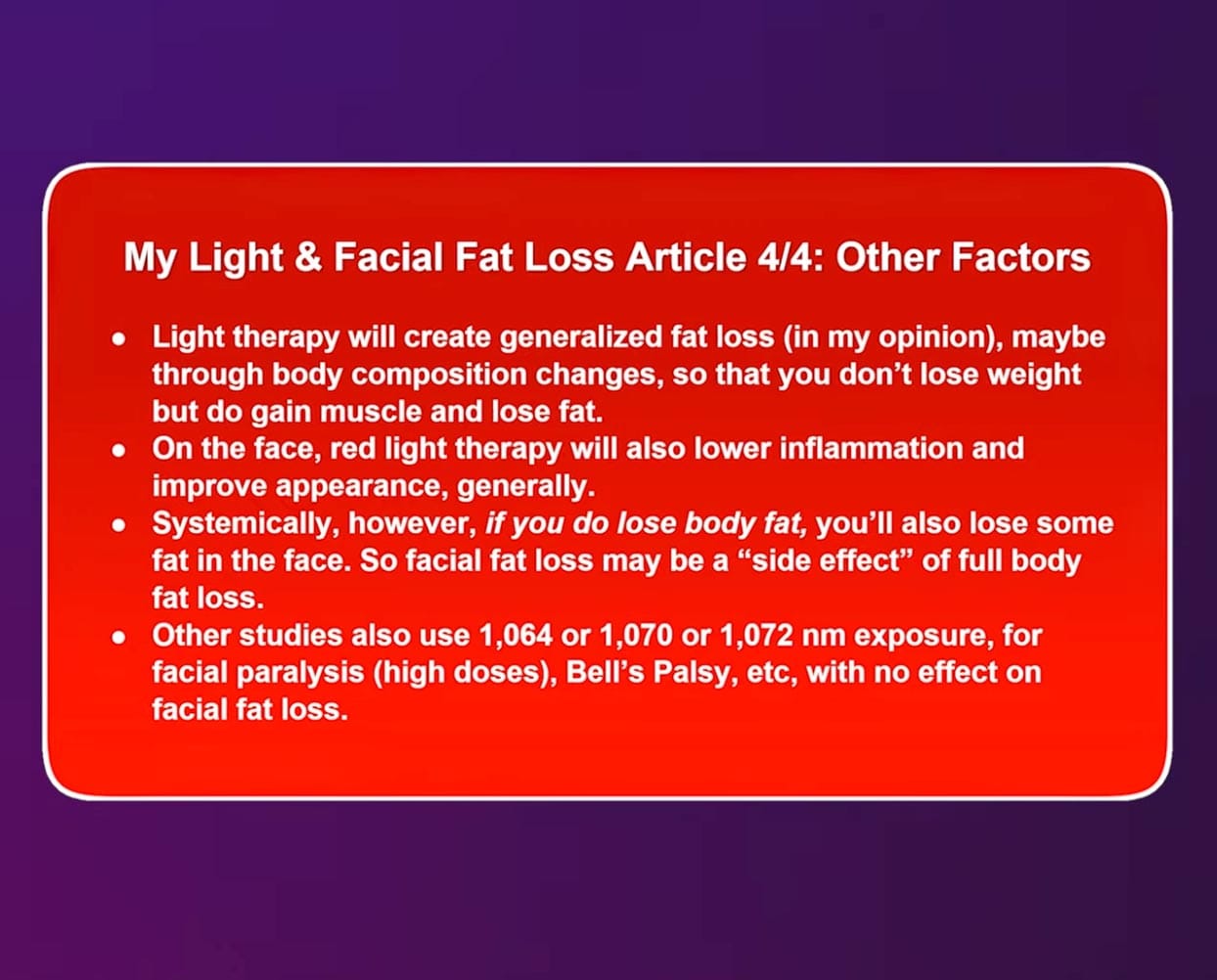
Systemic fat loss means fat loss across the body. If someone loses body fat overall, whether from diet, exercise, medication, surgery, or potentially red light therapy as part of a larger fat loss strategy, the face may also become leaner. That is normal. When body fat percentage goes down, the face often changes too.
So yes, red light therapy may help with body composition or fat loss in some contexts. Light Therapy Insiders has covered research suggesting red light therapy may reduce waist or hip circumference, improve body composition, and support fat mobilization, although results vary and protocols differ across studies.
But that is not the same as proving that a red light therapy mask or panel causes isolated facial fat loss. The current evidence does not show that.
What The LED Mask Studies Show
LED mask studies are especially important because these devices are used directly on the face. If red light therapy were causing unexpected facial fat loss, you would expect that problem to show up in facial mask studies.
That has not happened.
The Light Therapy Insiders facial fat loss article reviewed multiple mask studies and found no clear evidence of unexplained local facial fat loss. These studies used different wavelengths, including blue light, red light in the 600nm range, and near-infrared wavelengths. Some masks are pressed directly against the skin, which can increase the net dose because there is less reflection. Even then, facial fat loss was not reported as a problem.
That matters because many of these studies are about facial appearance, wrinkles, texture, skin tone, and rejuvenation. Participants are paying close attention to how their face looks. If they suddenly developed a hollow, sunken, or aged appearance, it would likely be noticed.
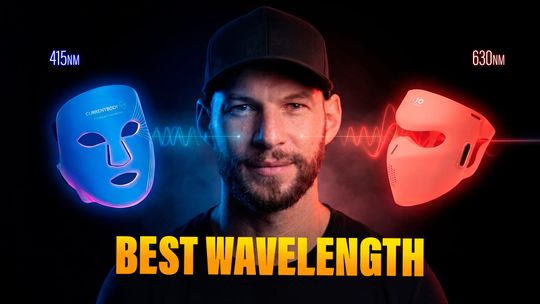
One study using a combination of 633nm, 830nm, and 1072nm LED light in a face mask looked at safety, adverse events, participant satisfaction, facial rejuvenation, digital skin photography, and computer analysis after six weeks of treatment. Participants reported favorable results, including improvements in fine lines, wrinkles, skin texture, and youthful appearance. The study did not identify facial fat loss as a reported issue.
This is particularly relevant because 1072nm is very close to the wavelength range people are most worried about.
What About 1064nm, 1070nm, and 1072nm?
Some people specifically worry about wavelengths around 1064nm, 1070nm, and 1072nm. But so far, studies using or discussing this range do not show that these wavelengths cause sudden facial fat loss when used in normal LED mask or panel contexts.
The transcript discusses studies using wavelengths around 1064nm, 1070nm, and 1074nm, including one facial rejuvenation study where participants wore a mask for six weeks and reported satisfaction with improvements in fine lines, wrinkles, texture, and youthful appearance. Facial fat loss was not reported.
The original Light Therapy Insiders article reaches a similar conclusion: there is no direct evidence showing that red light or near-infrared light at normal mask or panel power densities causes isolated facial fat loss without broader systemic fat loss.
That does not mean the topic is closed forever. Science can change. High-powered lasers, unusual doses, or medical procedures are not the same as consumer masks or panels. But for normal red light therapy use, the evidence so far is reassuring.
The Sunlight Argument
Another reason the facial fat loss theory is difficult to support is sunlight.
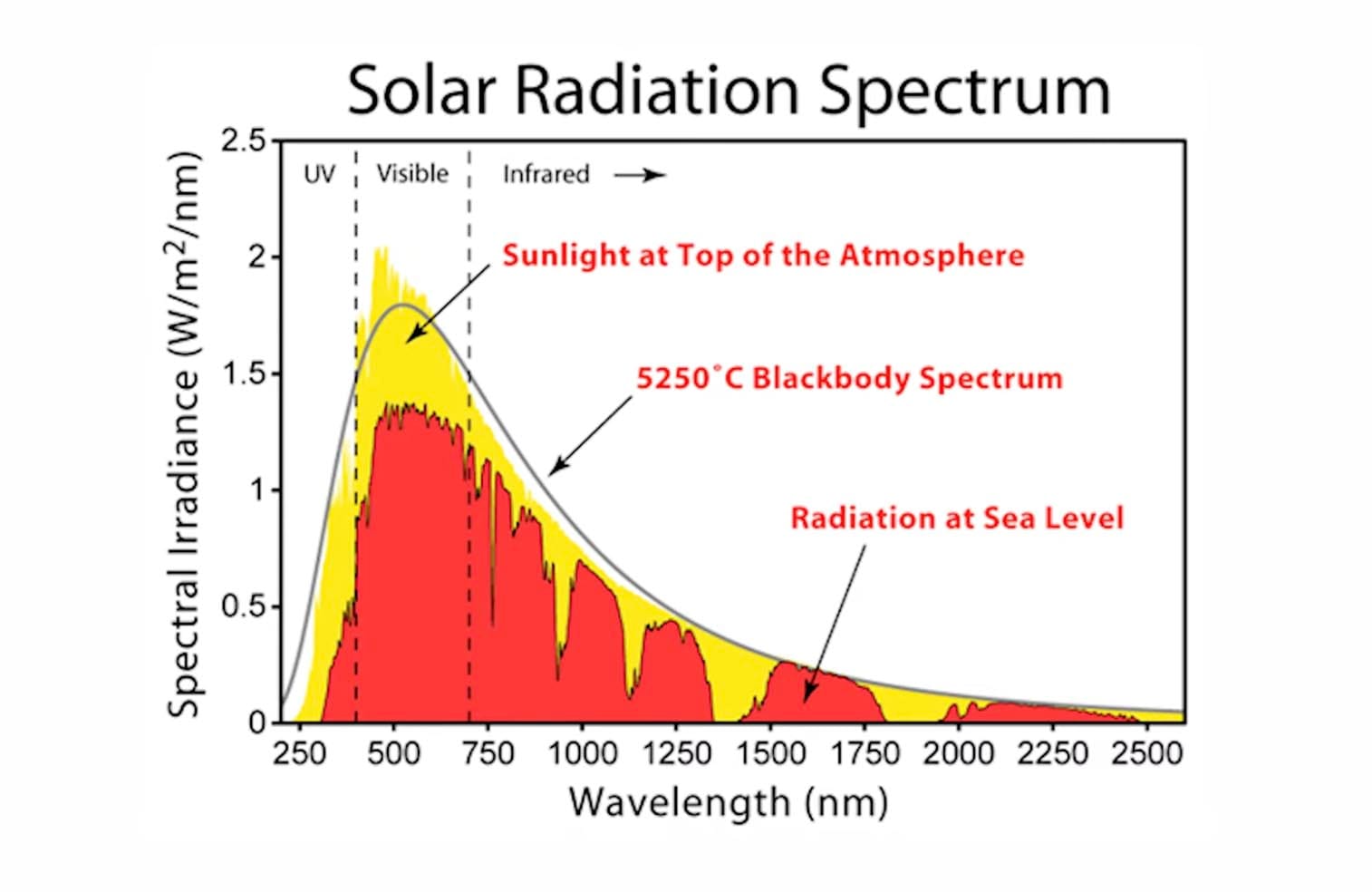
Sunlight contains a broad spectrum of light, including red and near-infrared wavelengths. People who spend many hours outside every day, such as construction workers, lifeguards, farmers, outdoor workers, and hunter-gatherer populations, receive far more natural red and near-infrared exposure than most people get from a consumer red light therapy device.
If normal exposure to wavelengths around 810nm, 850nm, 1064nm, or 1070nm uniquely caused facial fat loss, then we would expect to see that pattern in people with very high daily sunlight exposure. But that is not what we generally observe.
The Light Therapy Insiders article makes the same point: if a particular wavelength in sunlight caused unique local facial fat loss, we would expect to commonly see “sunken face” patterns in outdoor workers compared with indoor workers. That pattern is not evident.
That does not prove red light therapy can never affect fat. But it makes it much harder to argue that ordinary near-infrared exposure from a mask or panel is uniquely destroying facial fat.
Why Facial Fat Loss Matters
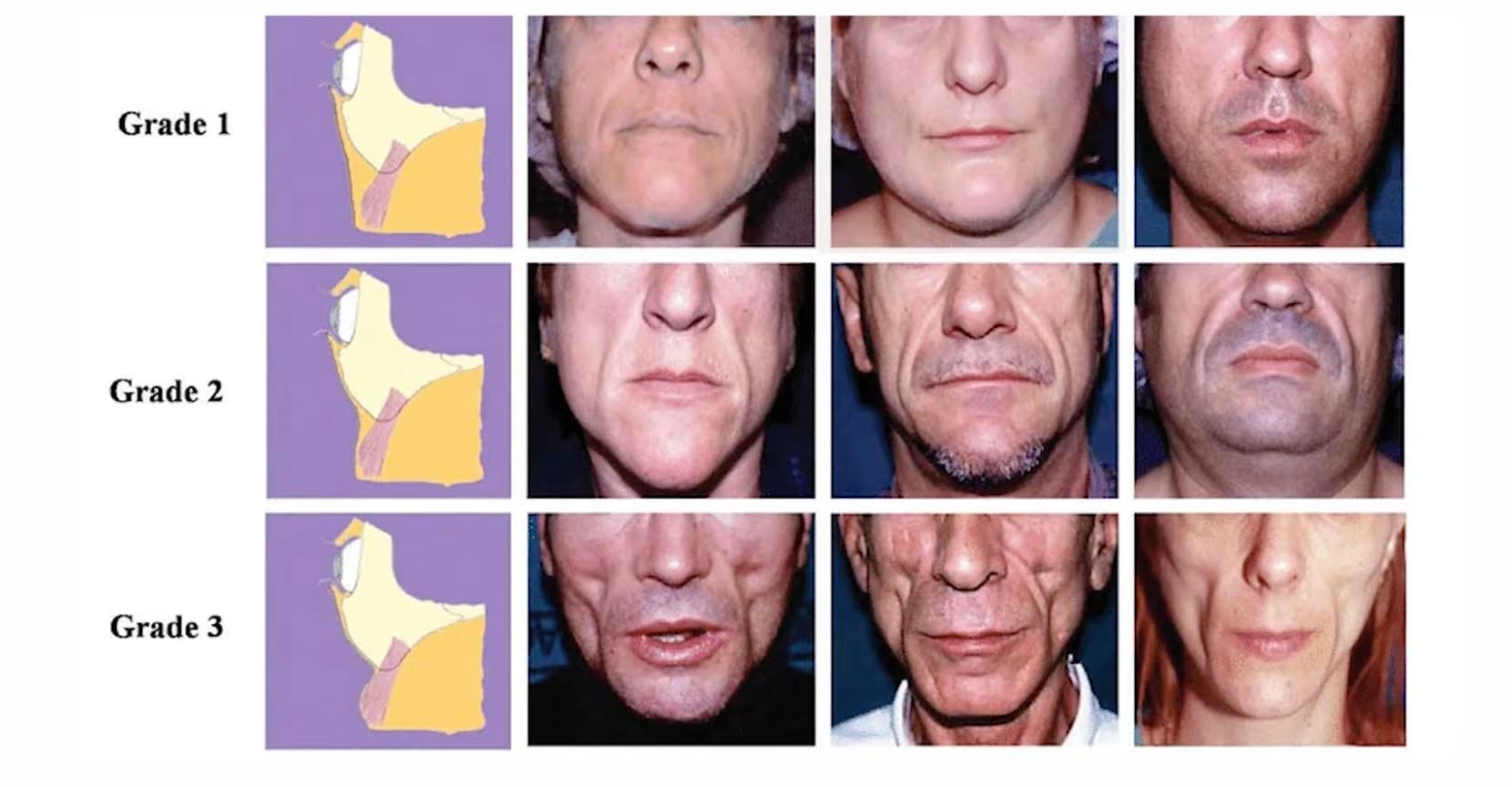
Facial fat loss is not just a vanity issue. In more severe cases, it can be part of lipoatrophy, which means the shrinking or loss of fat tissue. Moderate to severe facial lipoatrophy can affect appearance, confidence, social perception, and quality of life.
The transcript points out that facial fat loss can be associated with depression, appearance-related distress, stigma, and reduced quality of life. It also notes that when facial fat is restored through surgical or cosmetic interventions, quality of life and depression-related outcomes can improve.
So the question deserves to be taken seriously. If a popular beauty or wellness device were causing facial fat loss, it would be a major safety and usage concern. But that is exactly why it is important to separate real evidence from online fear.
Why Someone’s Face Might Look Leaner After Red Light Therapy
There are a few reasons someone might think their face looks thinner after using red light therapy, even if they have not actually lost facial fat.
One possibility is overall body fat loss. If someone is using red light therapy while also exercising, dieting, improving sleep, losing weight, or changing their body composition, some of the fat loss may show up in the face. That does not mean the device selectively targeted facial fat.
Another possibility is a change in inflammation or edema. The face can look puffier after poor sleep, travel, alcohol, high sodium intake, stress, inflammation, or eating poorly. If red light therapy reduces inflammation or puffiness, the face may look less full. That can be mistaken for fat loss, even if the facial fat itself has not changed.
The Light Therapy Insiders article also notes that inflammation, edema, stress, wrinkles, hormones, disease, and genetics can all affect how the face looks. A change in appearance does not automatically mean a person has lost facial fat locally.
What The Newer 2025 Studies Add
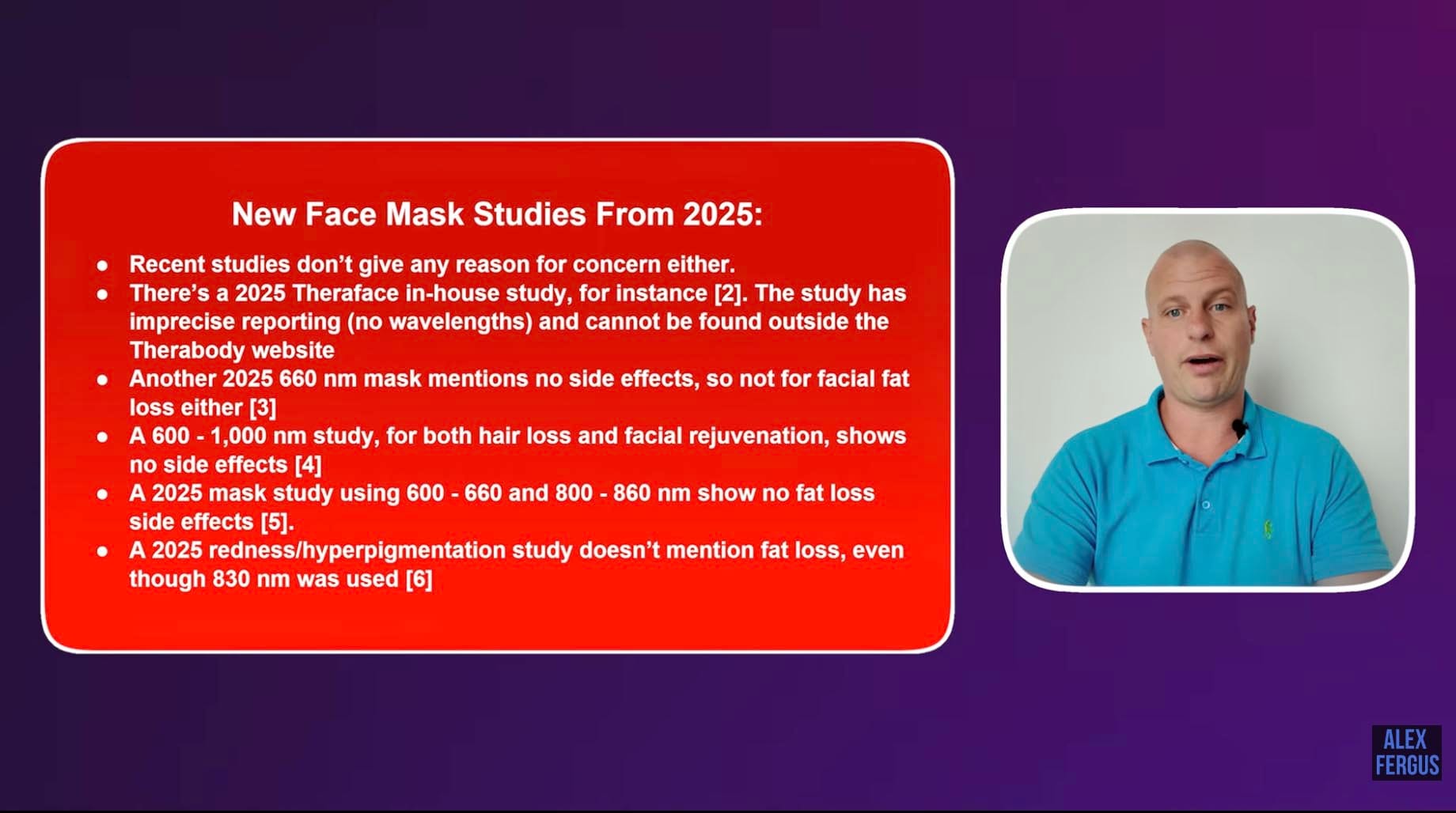
Since the original facial fat loss article was published in late 2024, newer studies have continued to look at LED masks and photobiomodulation for skin rejuvenation, wrinkles, hyperpigmentation, and related outcomes.
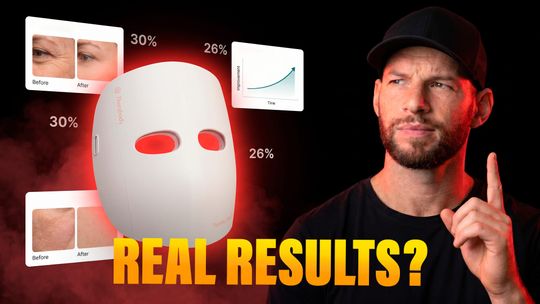
One company-published Therabody clinical report describes a 12-week study of the TheraFace Mask Glo with 104 participants completing the study. The mask used red, red plus infrared, and blue light in a 12-minute preset treatment, six days per week. The company reported improvements in radiance, skin tone evenness, dark spots, wrinkle width, undereye wrinkles, fine lines, sagging, firmness, and texture. It also reported no adverse events in the sensitive-skin portion of the study.
Another 2025 study investigated a 660 ± 10nm red LED mask for facial rejuvenation in women aged 45 to 60, comparing different application frequencies over four weeks.
A newer near-infrared LED study evaluated a broader-spectrum near-infrared device for skin rejuvenation and hair growth enhancement.
Another study evaluated a home-use LED and infrared-emitting diode mask for crow’s feet, using light in the 600–660nm and 800–860nm ranges.
Another 2025 pilot study looked at 830nm and 590nm LED for post-inflammatory erythema and post-inflammatory hyperpigmentation.
Across these newer studies discussed in the video, facial fat loss still does not appear as a reported problem. Some studies may mention minor issues such as dry skin or isolated reactions, but not a pattern of facial fat loss.
That is important because these studies are focused on facial appearance. If people were ending up with a noticeably sunken or aged face, that would likely be difficult to miss.

What About Bell’s Palsy And Facial Paralysis Studies?
Another useful data point is that some studies use similar near-infrared wavelengths in facial conditions such as Bell’s palsy or facial paralysis. These cases can involve higher doses and direct application around the face. Yet the transcript notes that these studies also do not show facial fat loss as an outcome.
Again, that does not prove the effect is impossible under every condition. But it adds another layer of reassurance that the feared effect is not appearing where we would expect to see it.
Can We Rule It Out 100%?
No. Science is rarely 100% certain.
It is possible that unusual circumstances, such as a very high-powered laser, extreme dosing, unusual treatment parameters, or individual variation, could produce effects that normal consumer use does not. The Light Therapy Insiders article specifically notes that unique circumstances with very high-powered light on a targeted area are different from normal mask or panel use.
But under normal circumstances, using red light therapy masks and panels according to directions, the current evidence does not support the idea that red light therapy causes isolated facial fat loss.
The more realistic explanation is this:
Red light therapy may support general fat loss or body recomposition in some people. If you lose body fat overall, your face may become leaner. Red light therapy may also change inflammation or puffiness, making the face look different. But that is not the same as proving that red light therapy is directly shrinking facial fat.

Final Takeaway
The current science is reassuring: red light therapy does not appear to cause unexpected facial fat loss when masks or panels are used normally.
That includes red light therapy masks, full-body panels, near-infrared light, and the much-discussed 1050nm to 1070nm wavelength range. The studies so far do not show a pattern of people developing hollow, sunken faces from red light therapy.
If anything, many facial red light therapy studies report improvements in skin appearance, texture, wrinkles, tone, firmness, and overall youthful appearance. The more plausible reasons someone might notice a leaner-looking face are systemic fat loss, reduced puffiness, lower inflammation, aging, stress, changes in hydration, or other lifestyle factors.
So, should you be worried that your LED mask or red light therapy panel is going to suddenly melt away your facial fat?
Based on the current research, probably not.
Use your device responsibly, follow the manufacturer’s instructions, pay attention to your own response, and remember that red light therapy is only one tool. Sleep, diet, exercise, sunlight, stress management, and overall health still matter just as much.
Citations
[1] https://pubmed.ncbi.nlm.nih.gov/37418018/
[2] https://www.therabody.com/blogs/news/the-clinical-findings-behind-theraface-mask-glo-the-largest-study-of-led-masks-on-the-market
[3] https://pubmed.ncbi.nlm.nih.gov/40167796/
[4] https://pubmed.ncbi.nlm.nih.gov/41366107/
[5] https://pubmed.ncbi.nlm.nih.gov/39960921/
[6] https://pubmed.ncbi.nlm.nih.gov/39899363/
Other resources:
🔬The Red Light Therapy Facial Fat Loss Link: Myth Or Reality?:
🔬Red Light Therapy For Fat Loss: Lose 4-6 Midsection Inches?:
🔬Red Light Therapy For Weight Loss: The Science Of Supercharging Fat Loss:
🔬Red Light Mask Buyer's Guide
Bart's Bio
This is a post by Bart Wolbers. Bart finished degrees in Physical Therapy (B), Philosophy (BA and MA), Philosophy of Science and Technology (MS - with distinction), and Clinical Health Science (MS), has had training in functional medicine, and is currently the head researcher at Lighttherapyinsiders.com