
I’ve been covering red light therapy for over seven years now. In that time, I’ve read the research, interviewed experts, and tested more devices than I can count. But every now and then, a topic comes up that isn’t just about performance, skin, or recovery—it’s something much more serious.
Epilepsy is one of those topics.
Part of the reason I get asked about this so often is because of my own experience. My son had his first seizure just before his second birthday, and some of those seizures were long, intense, and frankly terrifying. As a parent, you don’t care about mechanisms or protocols in that moment—you just want answers, and more importantly, you want the seizures to stop.
During that time, we explored multiple treatment options under professional supervision, and yes, that eventually included red light therapy as part of a broader clinical approach. But before I get into that, we need to separate something very important: what the science actually shows versus what people hope it shows.
What Is Photobiomodulation (PBM)?
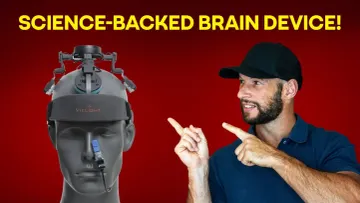
Photobiomodulation, often shortened to PBM, is the use of red or near-infrared light to influence biological processes in the body. When applied to the head, it’s typically referred to as transcranial PBM.
Most of the research in this space focuses on near-infrared wavelengths, particularly around 810nm and 1060nm. These wavelengths are used because they can penetrate deeper into tissue and potentially interact with brain cells, particularly at the mitochondrial level, where energy production takes place.
You’ll often see terms like radiance and fluence mentioned in studies. Radiance refers to how intense the light is at the skin, while fluence incorporates time and represents the total energy delivered. These details matter because small changes in these parameters can lead to very different biological effects, and right now, there is no universally agreed-upon protocol.
Can Red Light Therapy Actually Reduce Seizures?
Let’s be very clear here, because this is where a lot of misinformation starts.
As of today, there are no published human clinical trials with proper control groups showing that red light therapy reduces seizures in people with epilepsy.
That doesn’t mean people aren’t experimenting with it. It doesn’t mean there aren’t clinics using it. And it doesn’t mean there aren’t anecdotes suggesting it might help. But if you’re looking for high-quality, controlled human evidence, it simply doesn’t exist yet.
This is the point where most videos or articles either overhype the potential or dismiss it entirely. The reality sits somewhere in the middle. There is no proof it works, but there are reasons researchers are interested in studying it.
What Human Research Does Show (Indirect Evidence)
Even though we don’t have direct epilepsy outcomes, we do have human studies showing that transcranial PBM can influence brain function in measurable ways.
A large review of human studies found that these treatments can impact cerebral blood flow, metabolism, and neural activity patterns. In practical terms, that means the brain is responding to the light in a measurable way.
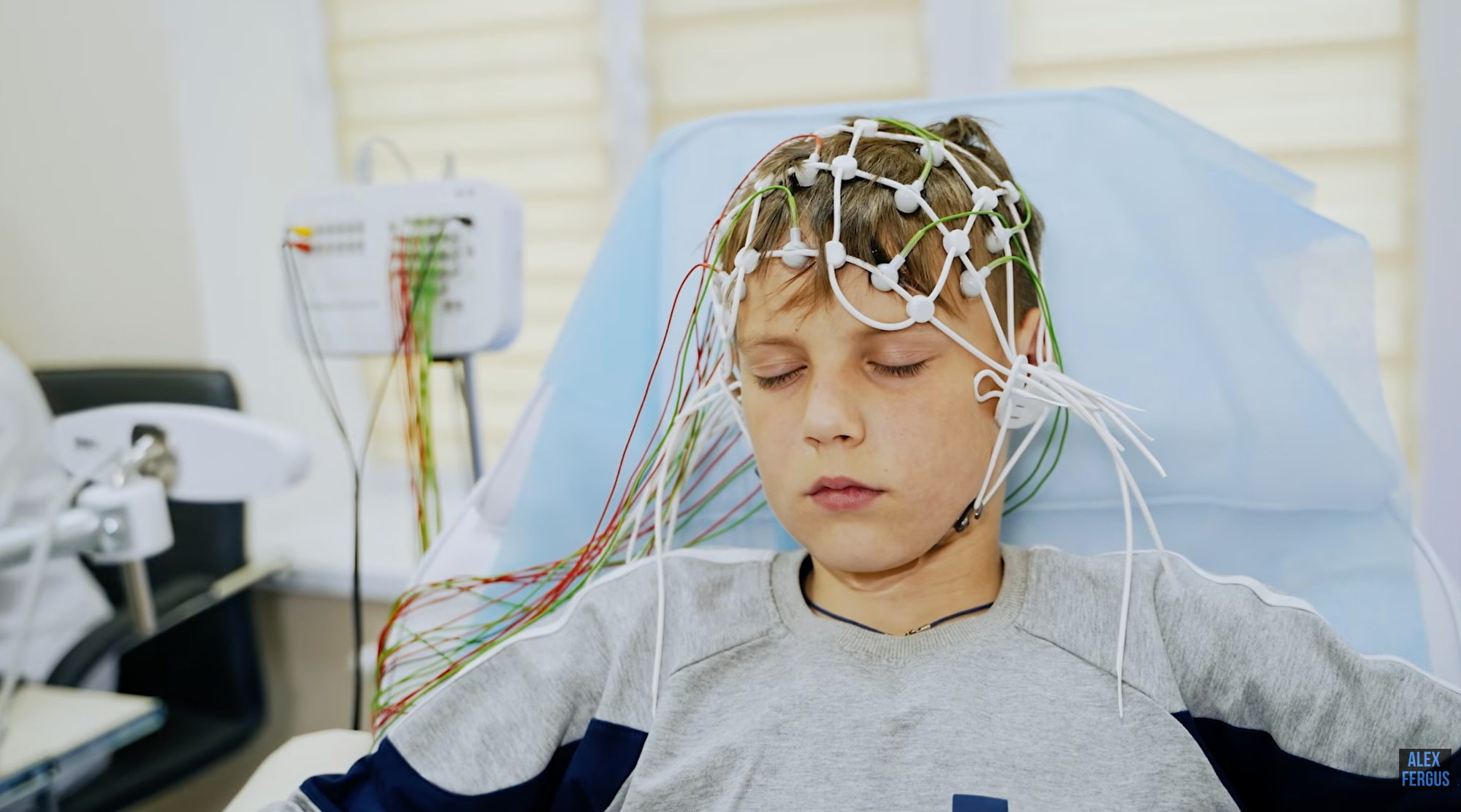
There are also controlled studies showing changes in EEG readings after applying near-infrared light to the head. EEGs measure brain activity, so seeing shifts in these readings tells us that PBM is doing something to brain function.
Now, this is where it becomes relevant to epilepsy. Seizures are essentially abnormal patterns of brain activity, so any intervention that can influence those patterns is worth investigating. However, just because something changes brain activity does not mean it reduces seizures. It could help, it could do nothing, or in some cases, it could even make things worse.
The Four Big Unknowns
Before anyone even considers using red light therapy in this context, there are some major uncertainties that need to be understood.
The first is the lack of proper clinical trials. Without large, well-controlled studies in epileptic patients, there is no way to establish cause and effect. This is the biggest limitation right now.
The second is the lack of standardized protocols. Wavelength, intensity, treatment duration, frequency, and pulsing all vary across studies. Even if a positive trial comes out tomorrow, translating that into real-world use will be challenging.
The third is the complexity of epilepsy itself. This is not a single condition. There are different types of seizures, different triggers, and different underlying causes. What works for one person may not work for another, and in some cases, could have the opposite effect.
The fourth is risk, particularly around photosensitivity. Some forms of epilepsy are triggered by light, especially flashing or pulsed light. That means there is a real possibility that using red light therapy incorrectly could trigger a seizure rather than prevent one.
What Animal Studies Suggest
If you look at animal research, the picture becomes more interesting, but still far from conclusive.
In rodent studies, transcranial PBM has been associated with reduced neuroinflammation, improved brain metabolism, and in some cases, a reduction in seizure frequency. These findings suggest that red light therapy may have neuroprotective effects under certain conditions.
However, animal models do not always translate to humans. Many treatments that look promising in animals fail when tested in clinical trials. So while this research is encouraging, it should be viewed as early-stage, not evidence of effectiveness.
What We Did With My Son
When my son was going through this, we weren’t thinking about clean experiments or isolating variables—we were trying to stop the seizures. Some of them lasted a long time, and the unpredictability of it all made it incredibly stressful for our family. You’re constantly on edge, waiting for the next episode, and it takes a toll.
We ended up working with a Dr Beck, who used a combination of approaches rather than relying on a single treatment. This included detailed EEG monitoring, medication adjustments, and targeted therapies aimed at supporting brain function. Red light therapy was introduced later in the process, and it was done using high-powered lasers under strict supervision.
At the same time, my son was on medication, and we actually introduced a second medication during this period. From a research perspective, that makes the situation messy, because multiple variables were changing at once. But at the time, that didn’t matter—we just wanted results.
Over time, the seizures stopped. He hasn’t had one in over three years now, and he’s been off medication for two. He’s doing well, he’s active, and he’s living a normal life, which is something I don’t take for granted.
The honest truth, though, is that I don’t know what worked. It could have been the clinical treatments, the medication, or the possibility that he simply grew out of it, which we were told was a real outcome for his type of seizures. That uncertainty is exactly why I’m careful not to make claims about red light therapy in this area.
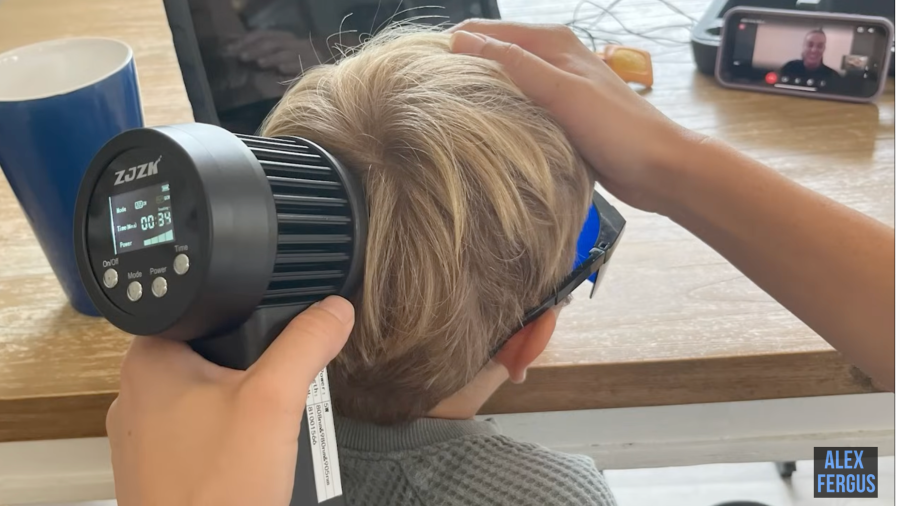
When dealing with brain tissue, the margin for error is slim. Misusing something like this could cause harm. That's why I can’t stress enough: Don’t mess around with laser therapy on your brain without expert guidance.
Practical Takeaways
Red light therapy for epilepsy is still experimental. There is no solid human evidence showing it reduces seizures, and there are real risks involved if it’s used incorrectly.
At the same time, there are early signals that suggest it can influence brain function, which is why researchers are continuing to explore it. That makes it an area worth watching, but not something that should be approached casually.
If someone is considering this, the only responsible way to do it is under professional supervision or within a clinical trial setting. This is not something to experiment with at home, especially given the potential risks.
Final Thoughts
I wish I could give a clear answer here, but that’s not how this works.
Right now, the science does not support the claim that red light therapy reduces seizures in humans. What we have is early-stage research, some interesting mechanisms, and a lot of unanswered questions.
As someone who has lived through this, I understand the urgency and the hope that comes with searching for solutions. But this is one of those situations where caution matters just as much as optimism.
Hopefully, in the coming years, we’ll see better-designed studies that give us real answers. Until then, this remains an area of investigation, not a proven treatment.
Below are the resources I mention
⭐ Grab a Vielight product here and use discount code ALEX10 for 10% off: https://aferg.co/vielight
⭐ For the Vielight website check: https://aferg.co/vielight
⭐ My interviews with Dr. Beck
Below are the studies:
⭐ Effects of transcranial photobiomodulation in cerebral circulation brain neural oscillations: https://link.springer.com/article/10.1007/s10103-025-04601-w
⭐ Clinical trial registry: Infrared Photobiomodulation in Humans With Epilepsy. https://clinicaltrials.gov/study/NCT07145489
⭐ Clinical trial registry: Safety and Efficacy of Transcranial Photobiomodulation (tPBM) for Individuals With Autism Spectrum Disorder and Epileptiform: https://clinicaltrials.gov/study/NCT06352372
⭐ Transcranial photobiomodulation and thermal stimulation. https://doi.org/10.1038/s41598-021-97987-w
⭐ Pulsed Near Infrared Transcranial and Intranasal Photobiomodulation Significantly Modulates Neural Oscillations:https://doi.org/10.1038/s41598-019-42693-x
⭐ Transcranial Photobiomodulation to Improve Cognition in Gulf War Illness. https://doi.org/10.3389/fneur.2020.574386
You May Like These:
🔴 $2000 Alibaba Laser for Red Light Therapy — Worth It?
🔴 Best Red Light Panel 2025? BioMax Pro Ultra vs The Rivals
🔴 New BioMax Pro Panel vs BioMax 9th Gen: Save Your Money
🔴 Does it Work? Red Light Therapy Science Benefits Reviewed
Alex's Bio
Alex Fergus wrote this blog post. Alex is an ISSN Sports Nutrition Specialist, Fitness Professional, and certified Superhuman Coach who continues to expand his knowledge base and help people worldwide with their health and wellness. Alex is recognized as the National Record Holder in Powerlifting and Indoor Rowing and has earned the title of the Australian National Natural Bodybuilding Champion. Having worked as a health coach and personal trainer for over a decade, Alex now researches all things health and wellness and shares his findings on this blog.