
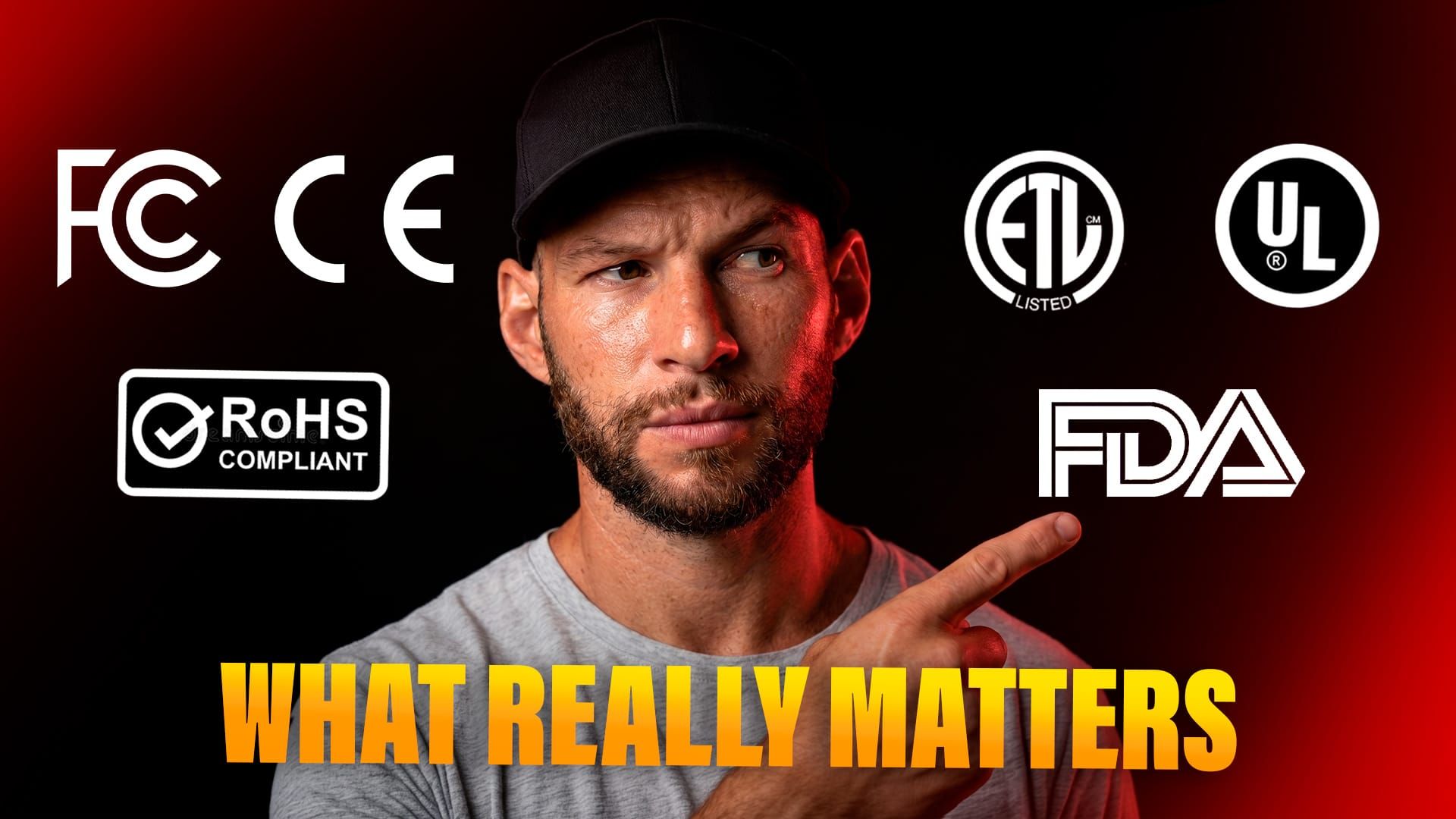
If you’ve spent any time researching red light therapy devices, you’ve almost certainly encountered a wall of certification logos and technical terminology. FDA Registered. CE Certified. FCC Compliant. ETL Listed. RoHS Approved.
For most consumers, the immediate assumption is simple: more certifications must mean a safer or better product. Unfortunately, that isn’t always true.
The red light therapy industry has grown rapidly over the last few years, but alongside that growth has come significant confusion about certifications, safety standards, medical claims, and performance testing. Some certifications are genuinely important. Others are widely misunderstood. And some are used primarily as marketing tools designed to create an impression of authority without actually proving much at all.
That doesn’t mean certifications are meaningless. Quite the opposite. The challenge is understanding what each certification actually represents, what it does not represent, and how consumers can use that information to make smarter purchasing decisions.
In this article, I’m going to break down the major certification categories that appear in the red light therapy space, explain what they really mean, clarify some of the biggest misconceptions in the industry, and show you what actually matters when evaluating a red light therapy product.
The Three Categories That Explain Almost All Certification Confusion
One of the easiest ways to simplify this entire topic is to separate certifications and compliance standards into three main categories:
- Medical device regulation
- Consumer safety compliance
- Performance and output testing
Once you understand these three categories, most of the confusion surrounding red light therapy certifications becomes much easier to navigate.
1. Medical Device Regulation
This category only becomes relevant when a company markets its product using medical claims.
That means claims suggesting a device can:
- Treat disease
- Cure disease
- Diagnose conditions
- Prevent illness
The moment a company enters that territory, they move into a completely different regulatory environment.
Here’s where things become confusing.
Many red light therapy products on the market today are technically sold as general wellness devices rather than medical devices. However, some companies still use aggressive marketing language that strongly implies medical benefits or treatment outcomes.
That distinction matters because true medical device regulation is extremely strict. A medically regulated company typically faces:
- Significant documentation requirements
- Expensive compliance procedures
- Regulatory oversight
- Testing obligations
- Ongoing reporting responsibilities
And importantly, two devices may be almost identical from a hardware perspective while existing in completely different regulatory categories.
You could have:
- The same LEDs
- The same wavelengths
- Similar power output
- Similar construction
But if one company markets the product using medical claims, they enter a much more heavily regulated world. This is why consumers should always ask an important question when they see bold medical claims:
Is this actually a certified medical device company?
If the answer is yes, there should be documentation and evidence supporting those claims.
In many cases, however, companies stay within “general wellness” language specifically to avoid the complexity and cost associated with full medical regulation.
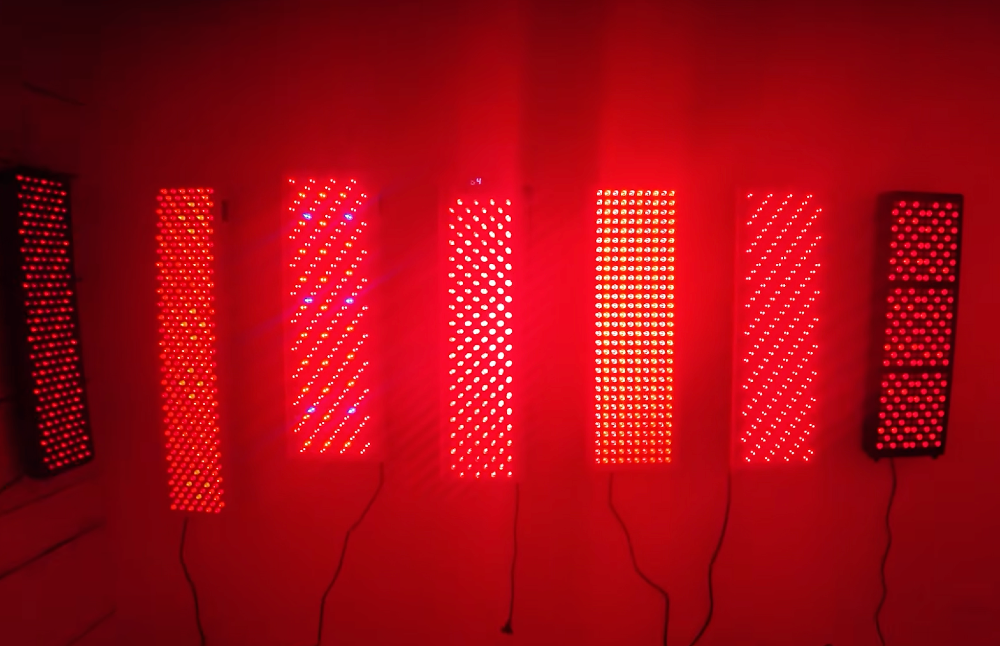
2. Consumer Safety Compliance
For most red light therapy products, this is the category that matters most.
Consumer safety compliance focuses on whether a product is safe to operate in a home environment. These standards are concerned with things like:
- Electrical safety
- Shock risk
- Fire hazards
- Overheating
- Manufacturing safety
- Interference with other electronics
This is incredibly important because most red light therapy devices:
- Plug directly into mains power
- Generate heat
- Contain electrical components
- Are used regularly and often for extended periods
At the end of the day, consumers are purchasing these devices to improve their health and wellness. The last thing anyone wants is a poorly manufactured product that introduces unnecessary safety risks.
It’s also important to understand that regulators generally care far more about whether a product is safe than whether it performs as effectively as advertised.
There are consumer protection groups and advertising standards organizations that may challenge misleading performance claims, but safety compliance is usually the area regulators prioritize most heavily.
3. Performance and Output Testing
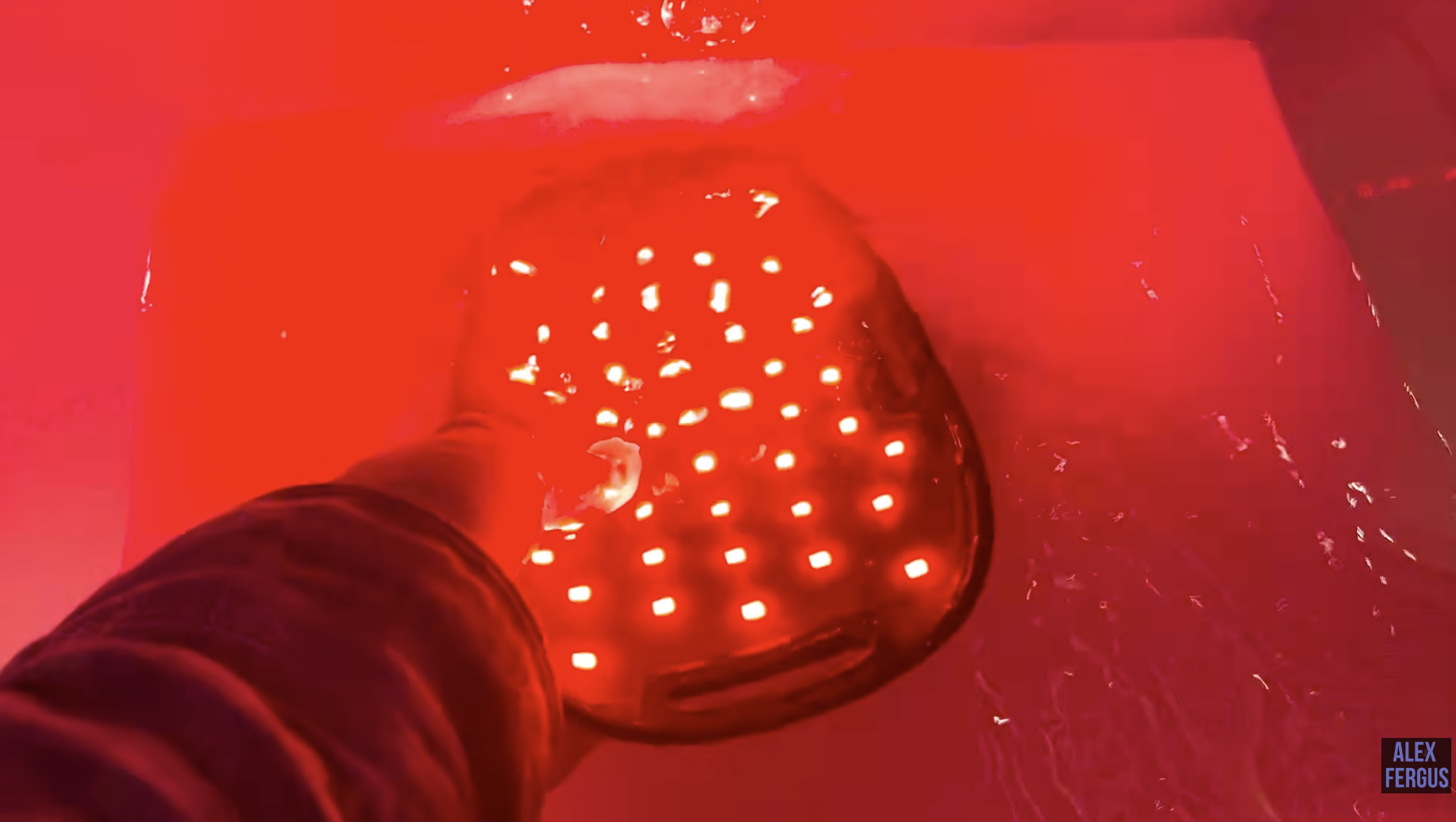
The third category involves whether a device actually delivers the performance a company claims.
This includes questions such as:
- Does the device emit the wavelengths being advertised?
- Is the power output accurate?
- Are irradiance claims legitimate?
- Is the light distribution balanced and uniform?
- Were measurements taken using proper testing equipment?
This area has become especially important because many companies advertise extremely high power numbers without providing detailed testing methodology or independent verification.
That’s where transparency becomes critical.
Consumers should ideally be able to see:
- Testing distances
- Measurement methods
- Equipment used
- Third-party laboratory reports
- Spectrometer data
Without that information, performance claims can become difficult to trust.
Medical Claims vs Wellness Marketing
One of the biggest sources of confusion in the red light therapy industry is the difference between medical claims and wellness language.
A company can often avoid stricter medical regulation simply by being careful with the language they use.
For example, phrases like: “Supports recovery”, “Promotes wellness”, “Helps skin appearance” and “Supports performance” are very different from direct medical claims such as: “Treats arthritis”, “Cures pain” or “Prevents disease”
This distinction is one of the reasons you’ll often see companies making very broad wellness claims while avoiding direct disease-related language.
Medical certification is difficult, expensive, and heavily regulated. So if you encounter a company making aggressive treatment claims, it’s reasonable to ask:
- Are they operating as a legitimate medical company?
- Do they have the documentation to support those claims?
- Can they demonstrate actual medical compliance?
In many situations, the answer is no.
Electrical Safety Certifications: What Consumers Should Look For
When evaluating non-medical red light therapy devices, electrical safety certifications are among the most meaningful forms of compliance.
These certifications are designed to ensure that products meet recognized safety standards relating to electrical operation and manufacturing quality.
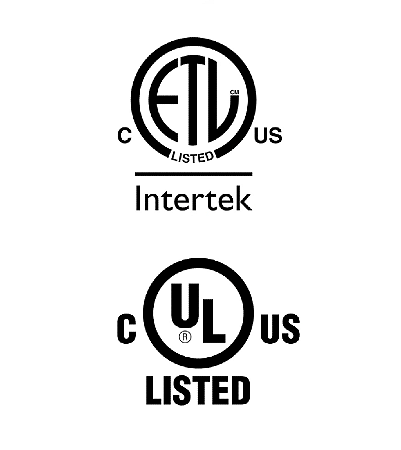
United States: UL and ETL
In the United States, the two most recognized consumer-facing safety marks are:
- UL
- ETL
ETL certification is particularly common in the red light therapy industry. These marks indicate that an independent testing organization has evaluated the product against established electrical safety standards.
That does not automatically mean the device is the best or most effective product on the market. However, it does provide meaningful evidence that the product has undergone independent safety assessment.
For consumers purchasing a mains-powered red light therapy device in the United States, UL or ETL certification is something worth looking for.
Canada: CSA, cUL and cETL
Canada has its own electrical safety framework, and several certification marks may be recognized, including:
- CSA
- cUL
- cETL
These certifications indicate compliance with Canadian electrical safety standards.
Europe: CE Marking
The CE mark is probably one of the most misunderstood certifications in the entire consumer electronics industry.
Many consumers interpret CE marking as proof that a product has been independently tested and proven to be effective. That is not necessarily what CE marking means.
In practical terms, CE marking indicates that:
- The manufacturer claims compliance with relevant EU requirements
- Required documentation exists
- The company accepts legal responsibility for compliance
That doesn’t make the CE mark meaningless. Companies operating under CE requirements still face legal obligations and documentation standards.
However, consumers should not automatically assume that CE marking represents independent proof of effectiveness or product superiority.
United Kingdom
In the UK, products must comply with the Electrical Equipment Safety Regulations 2016.
Australia
In Australia, consumers should look for EESS certification.
Radio Compliance and Electromagnetic Interference
Another category of compliance involves electromagnetic interference regulations. This area is frequently misunderstood.
These standards are not primarily focused on whether EMFs are dangerous to humans. Instead, they are designed to ensure that devices do not interfere with:
- Wi-Fi systems
- Radios
- Communication equipment
- Other electronic devices
Examples include:
- FCC Part 15 in the United States
- ICES-003 in Canada
- EMC Directive 2014/30/EU in Europe
- EMC Regulations 2016 in the UK
While this category is still relevant from a regulatory standpoint, it is generally less important to consumers than electrical safety compliance.
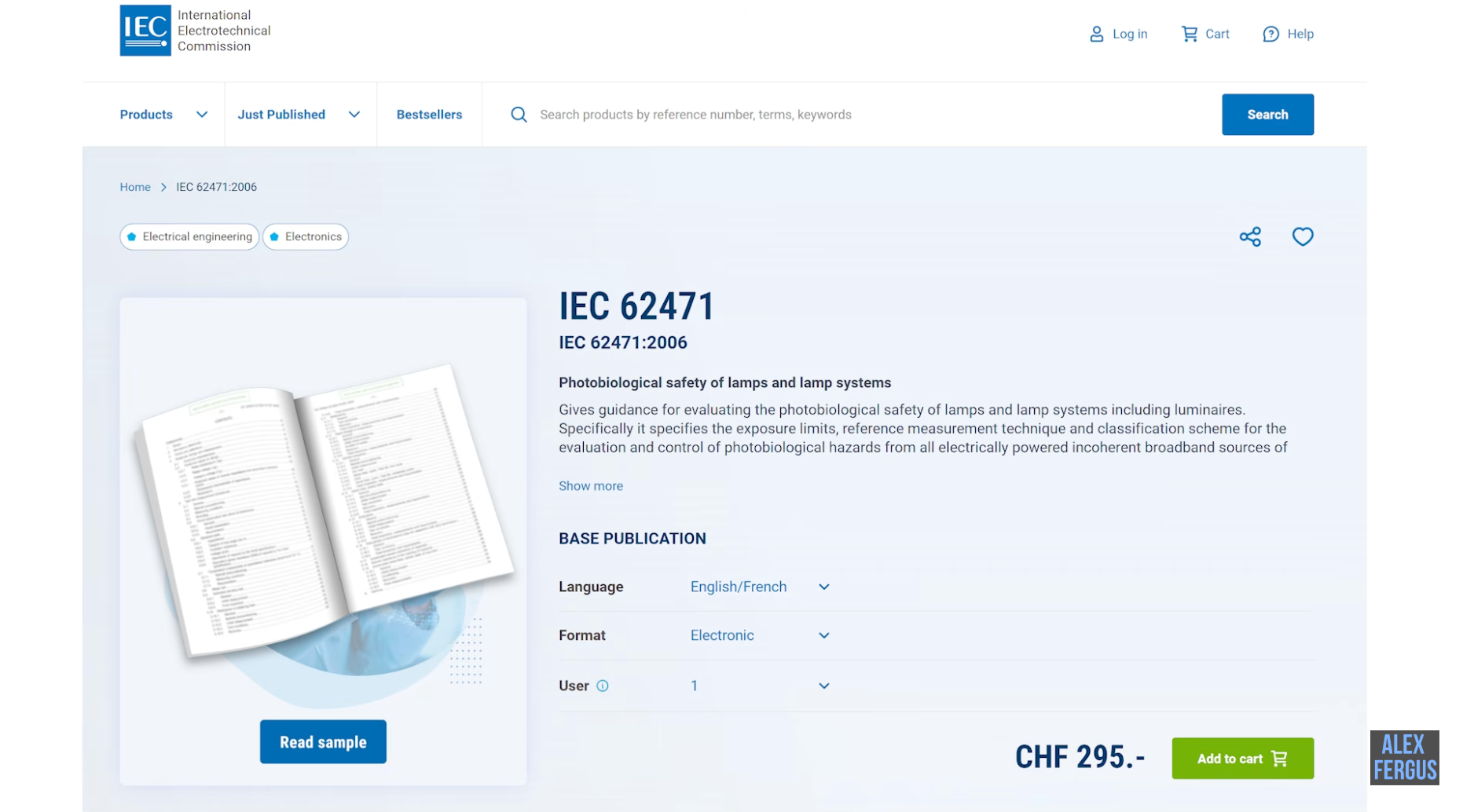
Photobiological Safety: IEC 62471
One of the most overlooked safety standards in red light therapy is IEC 62471. This standard evaluates potential photobiological hazards associated with lamps and LED light sources.
It includes: 1. Exposure limits 2. Measurement methods and 3. Hazard classification systems
If a company claims IEC 62471 testing, consumers should ideally ask for the actual documentation and hazard classification report. A simple statement saying “our device is safe” is not the same thing as formal testing documentation.
FDA Registered vs FDA Approved: The Biggest Misconception in the Industry
This is one of the most important points consumers need to understand. FDA Registered does not mean FDA Approved.
The FDA explicitly states that registration and listing entries do not indicate:
- Approval
- Clearance
- Authorization
The FDA also does not issue “FDA Registration Certificates.” This means companies using “FDA Registered” as though it proves clinical effectiveness or superior quality may be creating a highly misleading impression.
Now, that does not necessarily mean FDA registration is worthless. Registration can provide:
- Administrative traceability
- Documentation visibility
- Regulatory identification
But consumers should not interpret “FDA Registered” as equivalent to:
- FDA Approved
- Clinically validated
- Medically proven
This same misunderstanding often appears with other certifications as well.
For example:
- CE marking does not automatically prove efficacy
- FCC compliance does not prove a device is safe for biological use
- RoHS compliance does not prove performance quality
Each certification serves a very specific purpose. The problem is that companies sometimes present them as broader quality endorsements than they actually are.
RoHS and WEEE: What Do They Actually Mean?
RoHS and WEEE standards are primarily focused on environmental and manufacturing considerations.
These frameworks relate to:
- Restricted hazardous substances
- Electronic waste handling
- Environmental compliance
These can certainly reflect responsible manufacturing practices.
However, they are not strong indicators of:
- Device effectiveness
- Clinical performance
- Product quality
- Therapeutic outcomes
What Consumers Should Actually Look For
If you are buying a mains-powered red light therapy panel or similar device, there are several things that genuinely matter.
1. Electrical Safety Documentation
Look for evidence relevant to your region.
For example:
- UL or ETL in the United States
- CSA, cUL or cETL in Canada
- CE marking in Europe
- EESS certification in Australia
Ideally, companies should provide more than just a logo. Actual documentation and testing evidence are far more meaningful.
2. Photobiological Safety Testing
Look for:
- IEC 62471 testing
- Hazard classifications
- Actual reports
3. Independent Performance Testing
Consumers should look for transparency around:
- Wavelength accuracy
- Radiance measurements
- Testing distances
- Equipment used
- Laboratory methodology
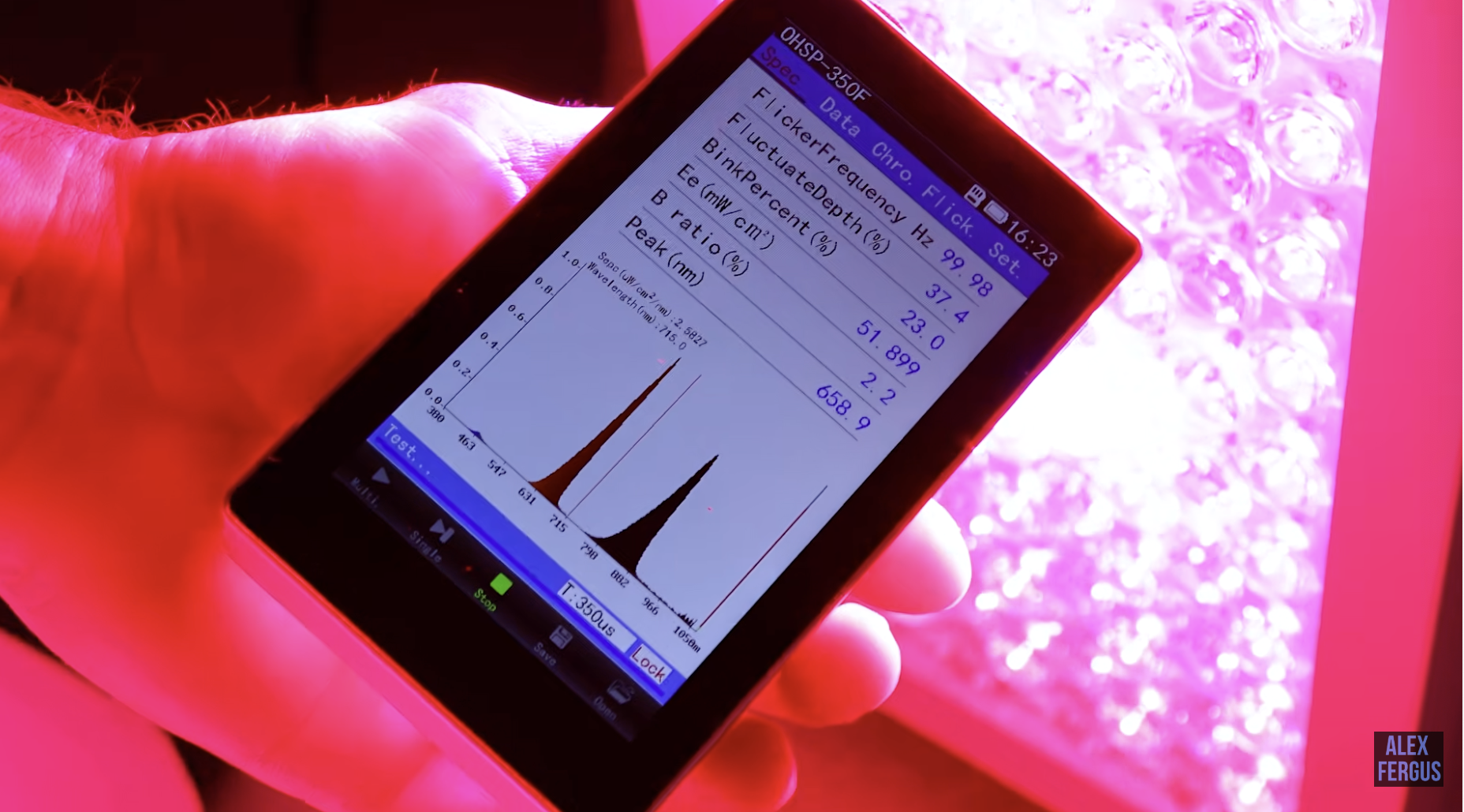
Ideally, testing should involve professional equipment such as:
- Spectrometers
- Integrating spheres
One of the laboratories commonly referenced in the red light therapy industry is Light Lab International, although there are other reputable labs as well.
Why Testing Methodology Matters So Much
This is an area where many consumers unknowingly get misled.
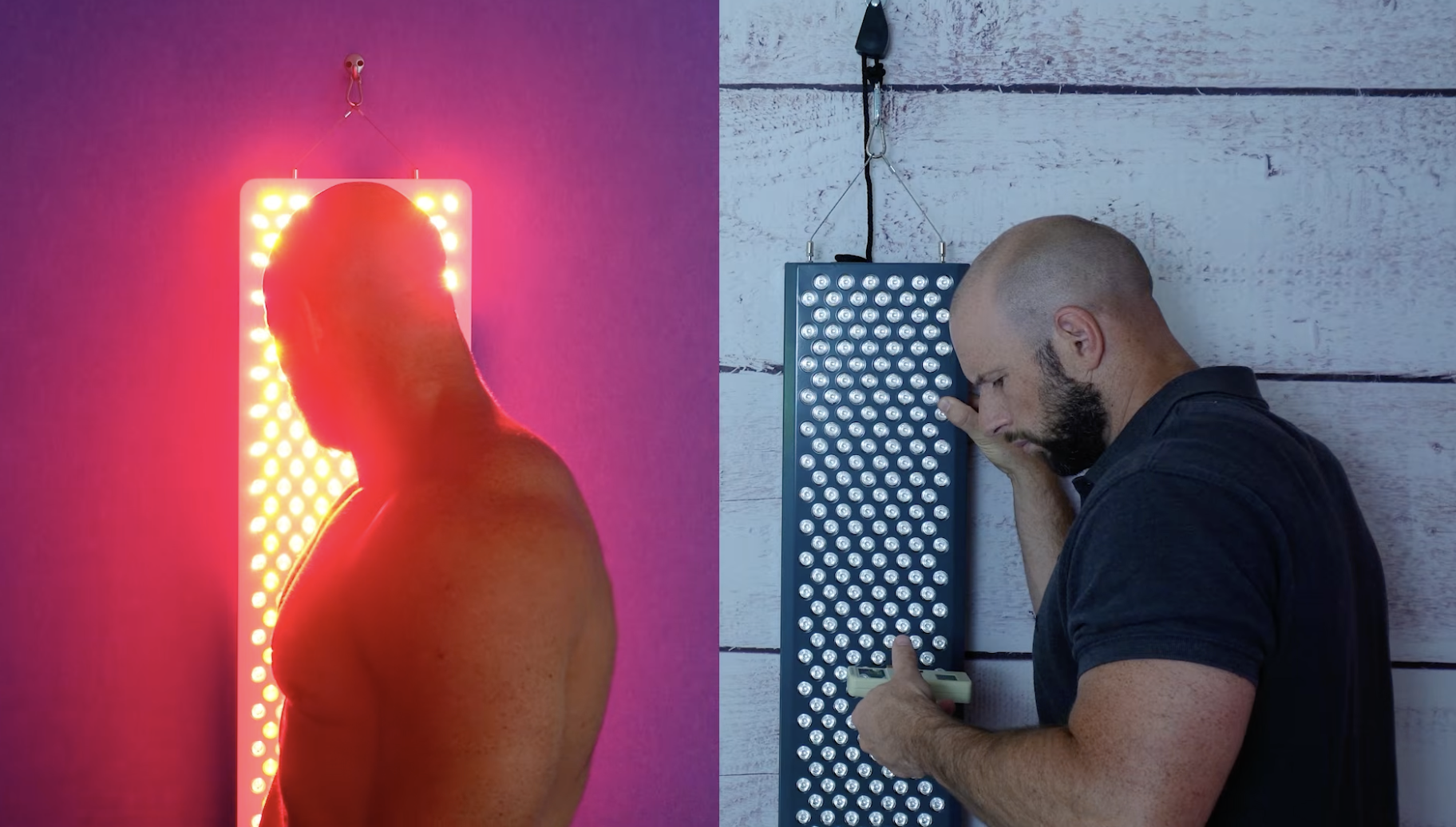
Some companies use inexpensive solar meters to measure output, which can produce artificially inflated readings. As a result, consumers may see extremely high irradiance numbers in marketing material without realizing the measurements were taken under conditions that do not accurately reflect real-world performance.
This is why independent testing and transparent methodology matter so much.
If a company advertises massive performance claims but cannot provide:
- Independent laboratory reports
- Testing distances
- Measurement methodology
- Spectrometer data
then those claims should be treated cautiously.
A Real-World Example:
PlatinumLED
One company that demonstrates relatively strong transparency in this area is PlatinumLED.
Their product documentation includes:
- ETL safety documentation
- Third-party testing reports
- Light Lab International performance testing
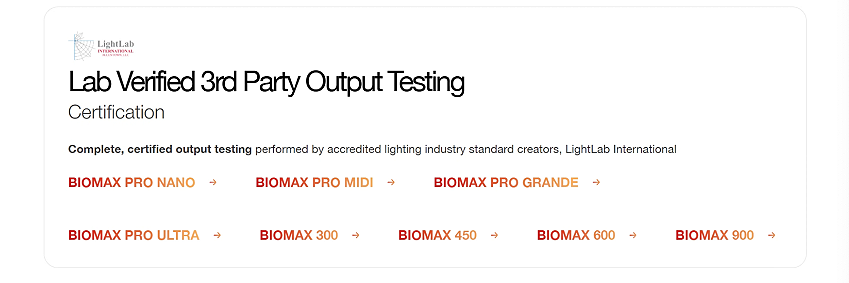
Importantly, these reports include:
- Specific device models
- Radiance measurements
- Testing distances
- Methodology information
That level of transparency is still relatively uncommon in the red light therapy industry. At the same time, it’s important not to over interpret FDA registration language. As discussed earlier, FDA registration does not automatically mean FDA approval or medical clearance. The important distinction is understanding what each certification actually represents.
The Biggest Red Flags to Watch For
When evaluating red light therapy products, there are several warning signs consumers should pay attention to.
Aggressive Medical Claims Without Medical Compliance
If a company claims to: cure disease, treat conditions or diagnose illness but cannot demonstrate legitimate medical certification, that should raise concerns.
Misleading FDA Marketing
If a company repeatedly promotes “FDA Registered” as though it means: FDA Approved, Clinically proven and Superior quality. That can be highly misleading.
Huge Output Claims Without Independent Testing
If a company claims they have: the most powerful panel, extremely high irradiance or industry-leading output but cannot provide credible third-party testing documentation, consumers should approach those claims carefully.
Independent verification matters.
Final Thoughts
The red light therapy industry is growing quickly, but so is the amount of confusion surrounding certifications, compliance, and testing claims.
Understanding the difference between: medical regulation, consumer safety compliance and performance testing can help consumers make significantly better purchasing decisions.
At the end of the day, certifications should not be viewed as flashy marketing badges. They should be understood as tools that help verify:
- Safety
- Transparency
- Accountability
- Manufacturing standards
- Testing quality
And when companies cannot clearly explain or document those standards, that alone can tell consumers a great deal about the product they are considering.
Found This Interesting? Look At These Articles:
🔴 How Red Light Therapy Burns Body Fat: Resting Metabolic Rate Boost In New Study!
🔴 Is Red Light Therapy Safe for Your Eyes?
🔴 Red Light Therapy For Stroke Recovery: Hopeful, But More Research Is Needed...
🔴 Red Light Therapy for Cognitive Performance: Exciting New Science and Practical Guidance
You May Like These Videos:
🔴 Pulse Light vs Continuous: What Actually Matters in Red Light Therapy
🔴 Red Light Therapy For Hair Regrowth: HUGE 6-Month Test!
🔴 Infrared Sauna vs Red Light Therapy: Why They’re NOT the Same
🔴 HG vs Pro vs Ultra: Which Hooga Red Light Therapy Panel Is Best?
Alex's Bio
Alex Fergus wrote this blog post. Alex is an ISSN Sports Nutrition Specialist, Fitness Professional, and certified Superhuman Coach who continues to expand his knowledge base and help people worldwide with their health and wellness. Alex is recognized as the National Record Holder in Powerlifting and Indoor Rowing and has earned the title of the Australian National Natural Bodybuilding Champion. Having worked as a health coach and personal trainer for over a decade, Alex now researches all things health and wellness and shares his findings on this blog.