
I need to correct something important about the way I have recommended using red light therapy. I have not changed my mind about the products I recommend or the wavelengths I consider most useful, but I have changed my thinking about treatment protocols—particularly when using a powerful red light therapy panel on the face.
Red wavelengths in roughly the 630–660nm range and near-infrared light around 830nm remain excellent options for red light therapy. The problem is that the right wavelengths delivered at the wrong intensity or for too long may not produce the results you expect. After taking a deeper look at facial skin research and red light therapy dosing, I have changed the way I treat my face and body.
The Optimal Red Light Therapy Dose for Facial Skin
My thinking began to change as I tried to determine which LED face mask delivered the best results. Before properly comparing masks, I needed to understand how much light facial skin actually requires to achieve benefits such as improved skin tone, texture, fine lines, wrinkles, and collagen production.
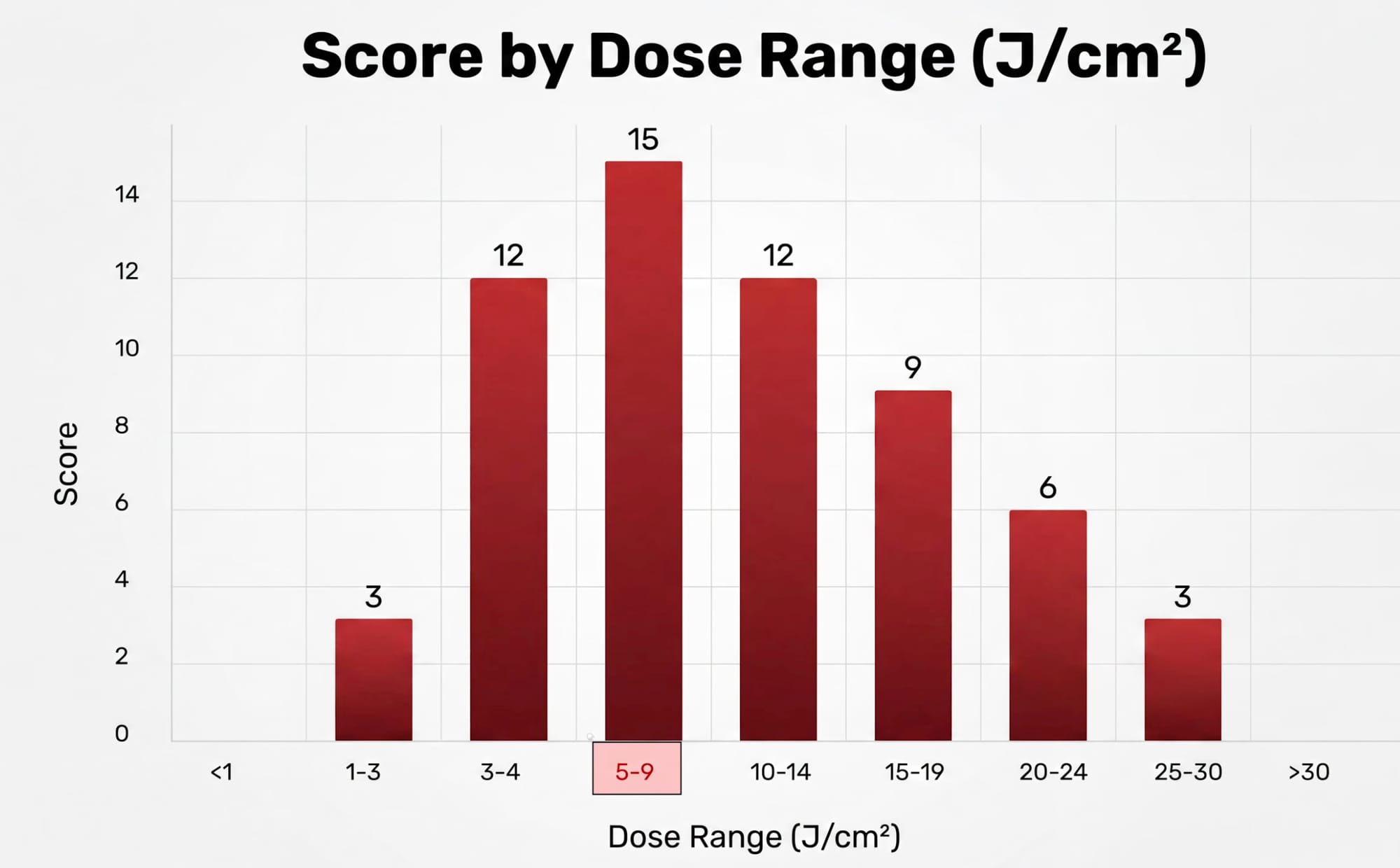
Based on my review of the research, an effective dose for facial skin rejuvenation appears to be approximately 5–9 joules per square centimeter. This is the total amount of light energy delivered to a specific area of skin during a treatment.
For example, a mask producing an irradiance of approximately 15 milliwatts per square centimeter would deliver about 9 joules per square centimeter during a 10-minute session. That falls within the range supported by many facial rejuvenation studies and helps explain why a well-designed LED mask can deliver good results without feeling overly powerful.
Treatment time matters because doubling the session length doubles the total dose. Using that same mask for 20 minutes would deliver twice as much energy, while using it for five minutes would cut the dose in half.
Why Powerful Panels Can Be a Problem for the Face
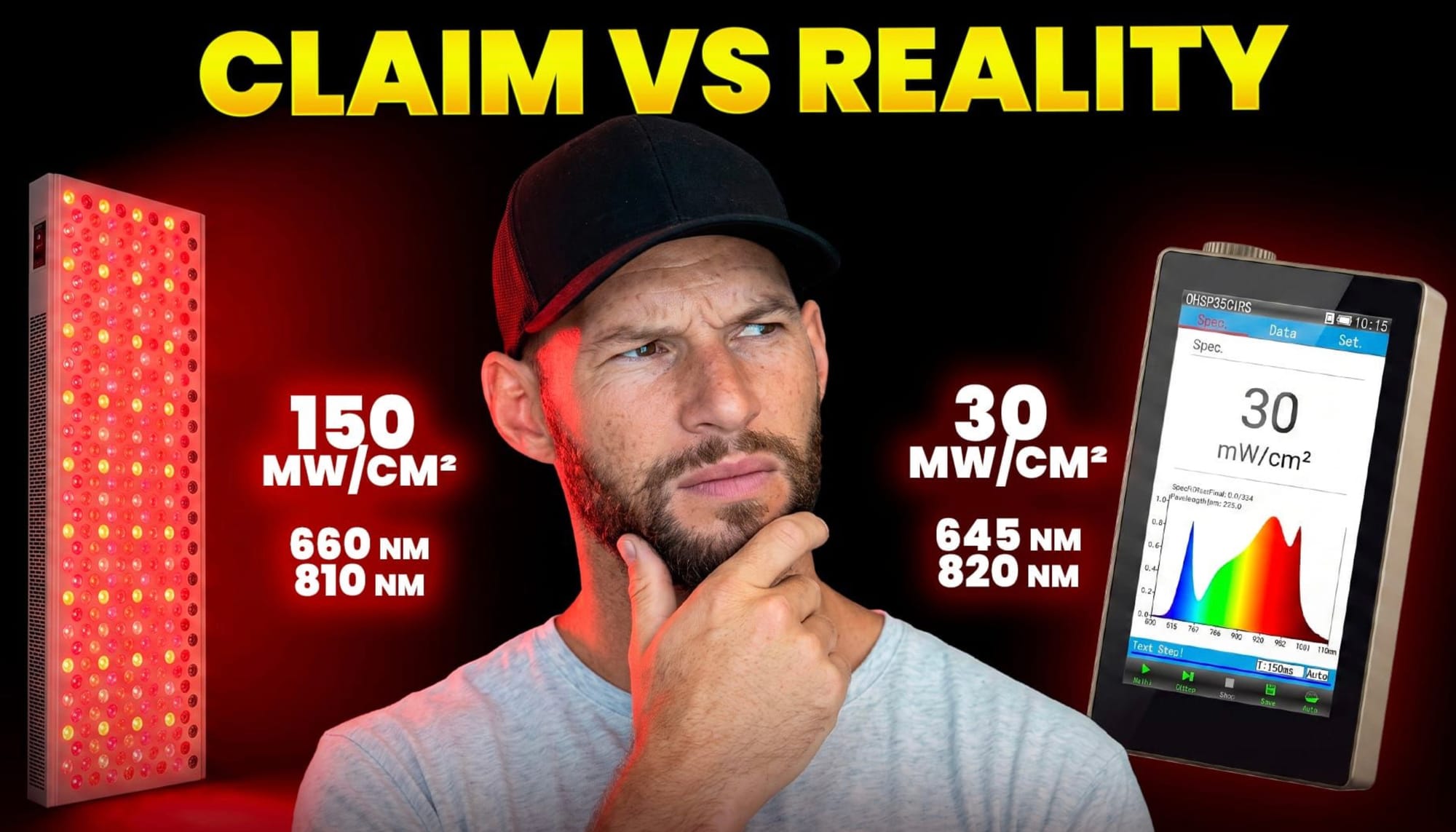
The situation changes when you use a powerful red light therapy panel. If a device produces 80 milliwatts per square centimeter and you use it for 10 minutes, the resulting dose is approximately 48 joules per square centimeter—well beyond the 5–9 joules commonly used for facial skin benefits.
Many popular red light therapy panels can produce approximately 80–90 milliwatts per square centimeter at a distance of six inches. These panels are often used for 10 minutes or longer, potentially exposing the face to substantially more light than is needed for skin rejuvenation.
That does not mean red or near-infrared light is bad for your face. It means that using a high-powered panel at close range for an extended treatment may be the wrong protocol for that particular goal.
When you move beyond the productive dose range, you may no longer see additional benefits. In some cases, excessive exposure could contribute to dryness, irritation, rashes, flushing, or flare-ups of hyperpigmentation. A more powerful treatment is not automatically more effective.
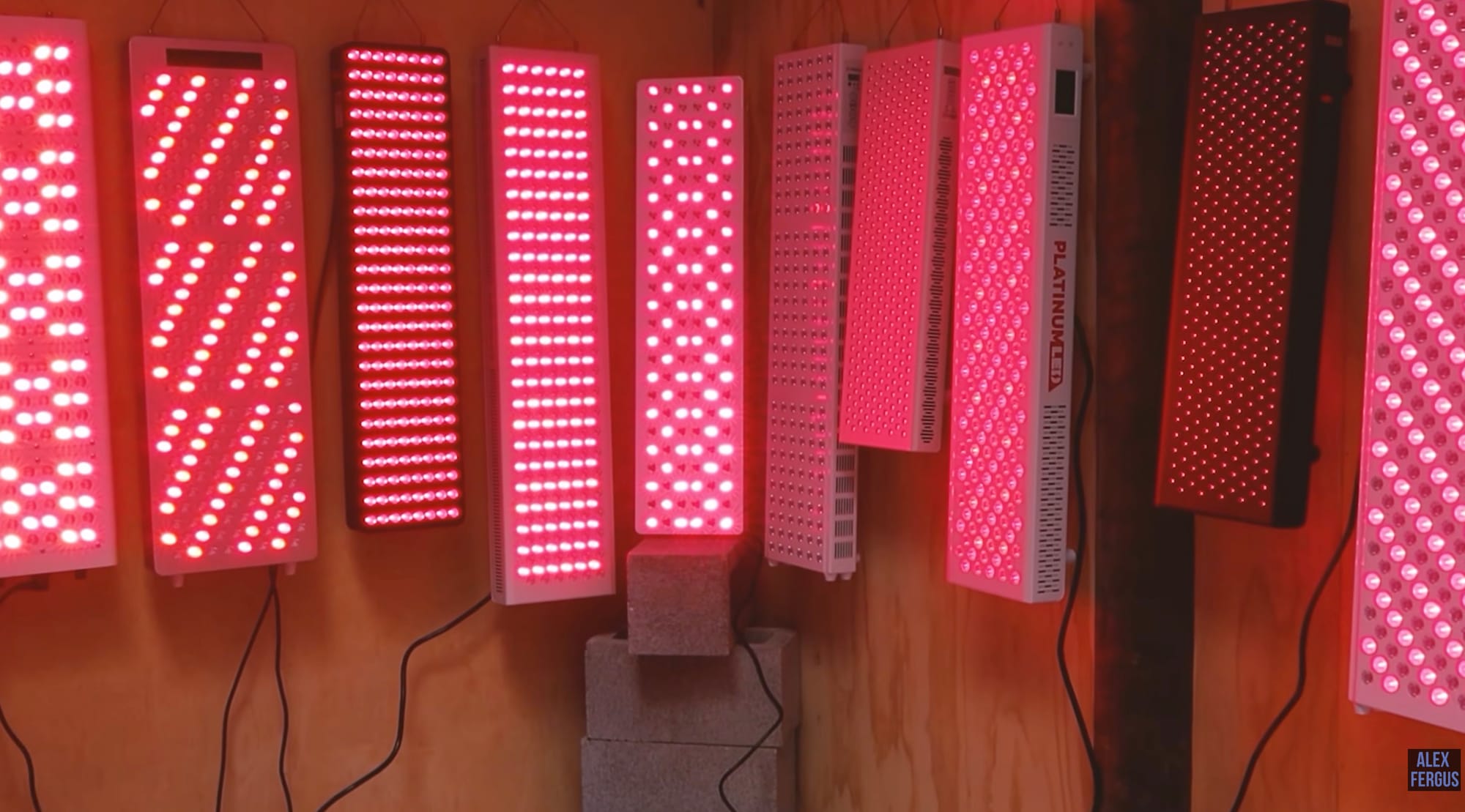
Red light therapy panels are designed to treat large areas and reach deeper tissues, including muscles, joints, ligaments, cartilage, organs, and bone. Facial skin is a very different target, and it should not necessarily be treated using the same intensity and duration as a knee joint, back, or large muscle group.
Why More Power Is Not Always Better
It is easy to become focused on power when comparing red light therapy devices. Companies frequently advertise irradiance, wattage, and other impressive-looking figures, encouraging the assumption that the most powerful device will deliver the best results.
Red light therapy does not work that way. Photobiomodulation acts more like a biological signal than a contest to deliver as much energy as possible.
A low or moderate dose may stimulate cellular repair and other beneficial processes. As the dose increases, however, the benefits can level off or become inhibitory. This is known as a biphasic dose response, and it appears repeatedly throughout the photobiomodulation literature.
A small signal may encourage a useful cellular response, while too much light can cause stress, increase heat production, exacerbate oxidative stress, or yield no additional benefit. The important question is not simply how powerful a device is, but whether it delivers the appropriate amount of light for the tissue and outcome you are targeting.
Why Irradiance and Treatment Time Are Not Interchangeable
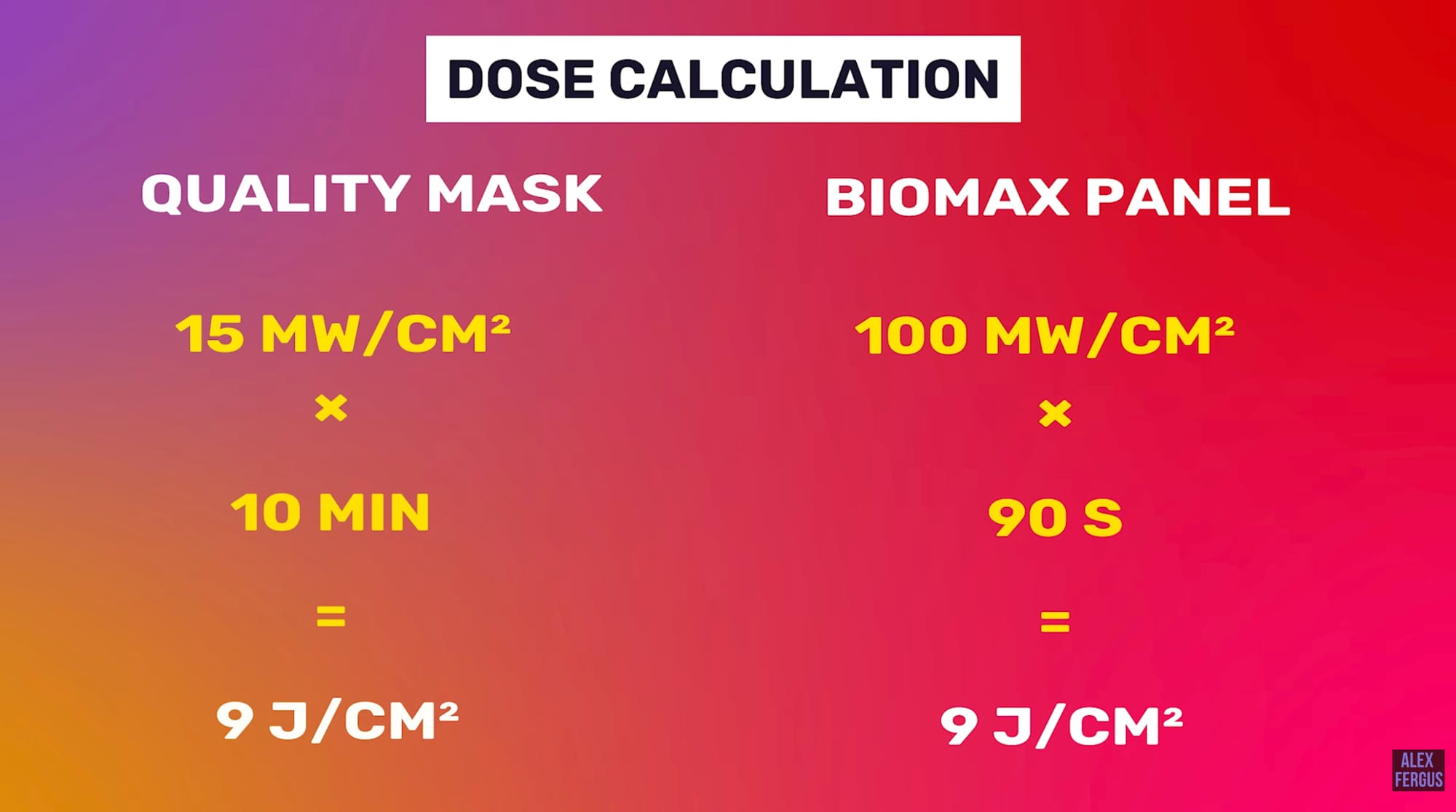
It may seem that you can solve the problem by using a powerful panel for a much shorter session. If a mask produces 15 milliwatts per square centimeter for 10 minutes and a panel produces 100 milliwatts per square centimeter for 90 seconds, both treatments may deliver a total dose of approximately 9 joules per square centimeter.
On paper, those doses look identical. Biologically, however, they may not produce exactly the same effect because the energy is being delivered at very different rates.
A high-powered panel delivers the energy much faster, creating a different cellular and thermal environment. It is similar to cooking food at a moderate temperature for longer compared with dramatically increasing the heat and shortening the cooking time. The total amount of energy may look comparable, but the final result can be very different.
This distinction is especially important for the face. Higher irradiance may increase the risk of heat buildup, flushing, eye discomfort, aggravation of pigmentation, or moving beyond the beneficial range of the biphasic dose-response curve.
For facial rejuvenation, the goal is not necessarily to drive as many photons as possible deep into the tissue. The goal is to provide a controlled signal that supports fibroblast activity, collagen and elastin remodeling, circulation, modulation of inflammation, and other processes involved in healthier-looking skin.
Facial Coverage and Eye Safety
The shape and structure of the face also complicate treatment. A flat panel positioned several inches away may not deliver a uniform dose across the nose, cheekbones, chin, lips, and delicate tissue surrounding the eyes.
A well-designed LED mask addresses a different problem than a body panel. It is intended to provide more controlled facial coverage at a lower irradiance, with a dose that more closely matches the protocols used in facial rejuvenation research.
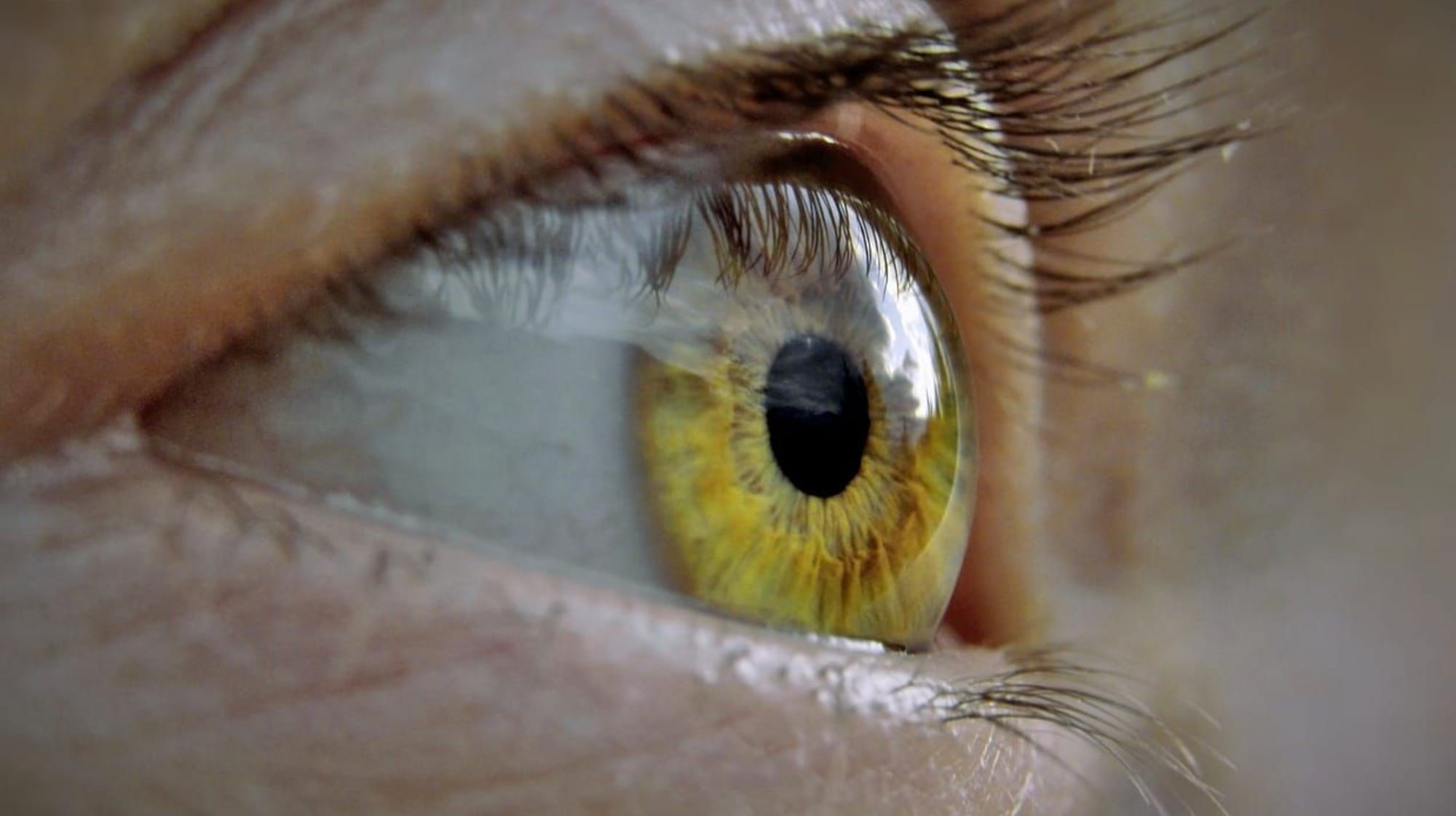
Eye exposure is another consideration, especially when a panel includes near-infrared light. Near-infrared wavelengths are less visible but can still reach eye tissue, which means you do not necessarily have the same natural blink response that occurs when you encounter extremely bright visible light.
This does not mean facial red light therapy is inherently dangerous. Some evidence suggests that appropriate red light exposure may support eye health, but device design, treatment intensity, distance, and eye protection still matter.
Choosing the Right Red Light Therapy Device
The conclusion is not that panels are bad or that everyone should stop using them. Panels can be extremely useful because they treat large areas and deliver light to deeper tissues throughout the body.
The important point is to use the right tool for the job. A powerful panel may be appropriate for treating muscles, joints, the back, or other deeper targets, while a properly designed LED mask may be better suited to fine lines, wrinkles, skin texture, and other facial concerns.
Using a high-powered panel directly on the face may mean you are wasting time without gaining any additional benefits. Depending on your skin and protocol, it could also increase the likelihood of irritation, dryness, flushing, or pigmentation problems.
My New Red Light Therapy Protocol
I want the benefits of red light therapy for both my face and body, but I also need a protocol that fits into my daily life. I am a father, I run a company, and I have no interest in completing several separate treatment sessions throughout the day.
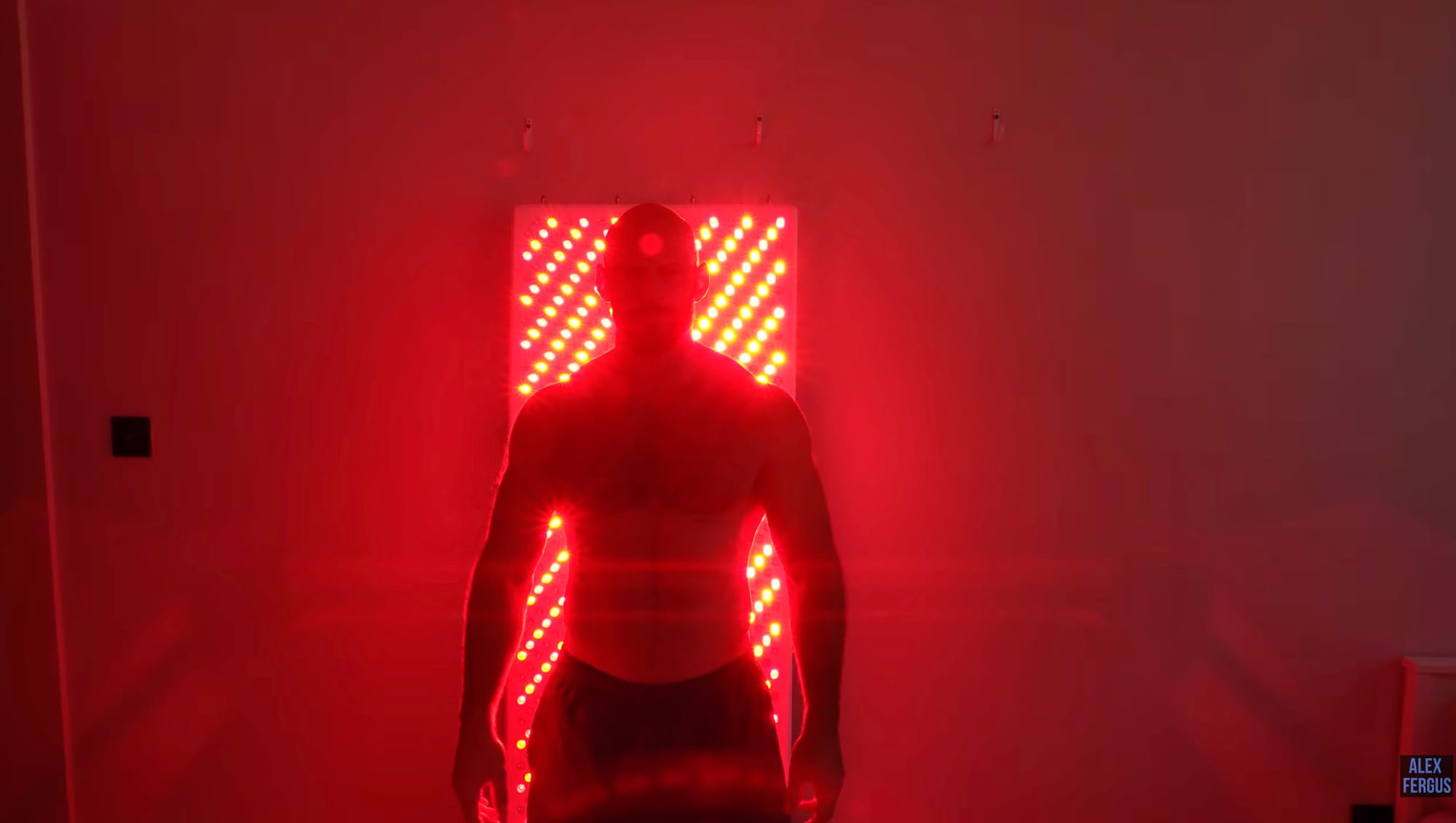
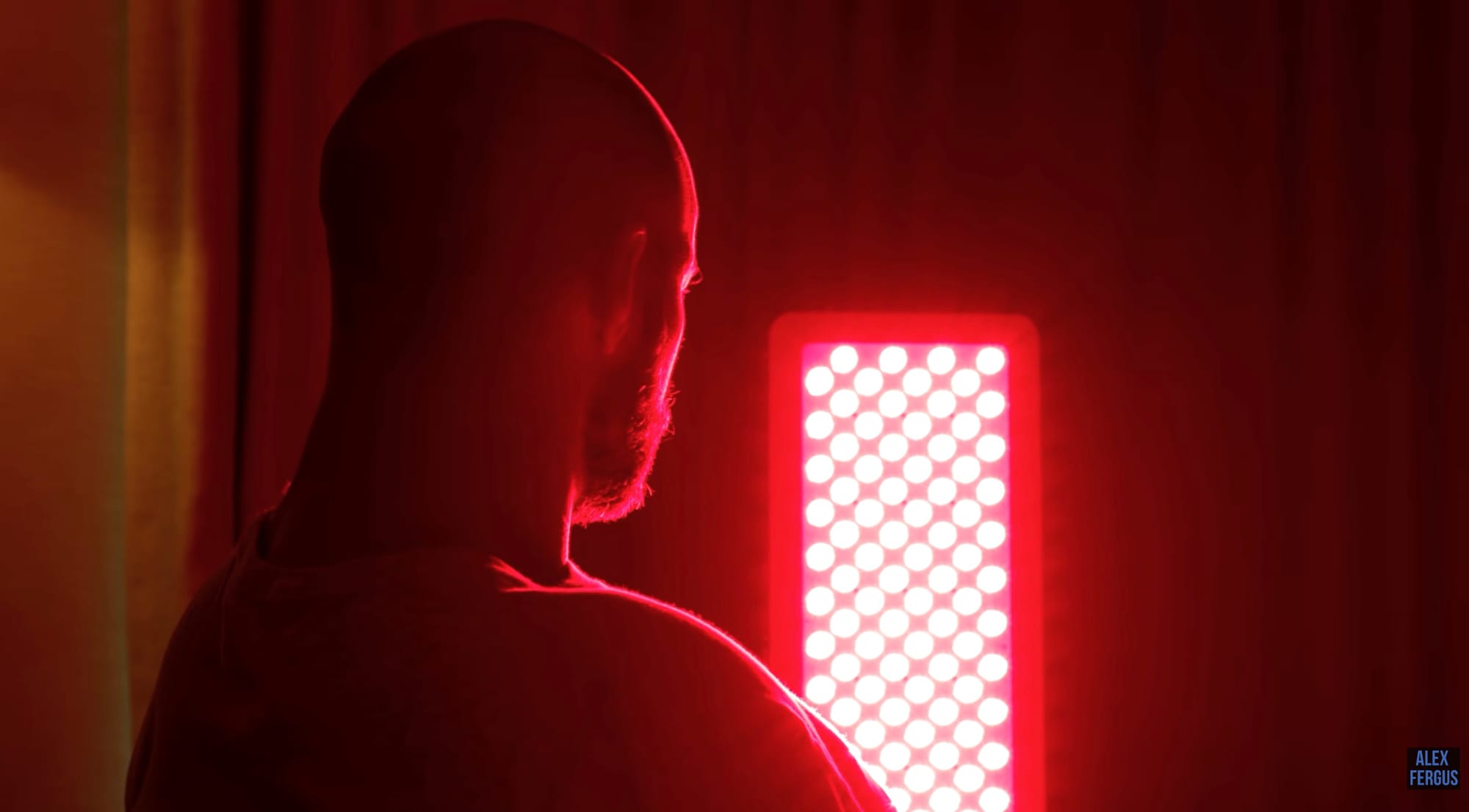
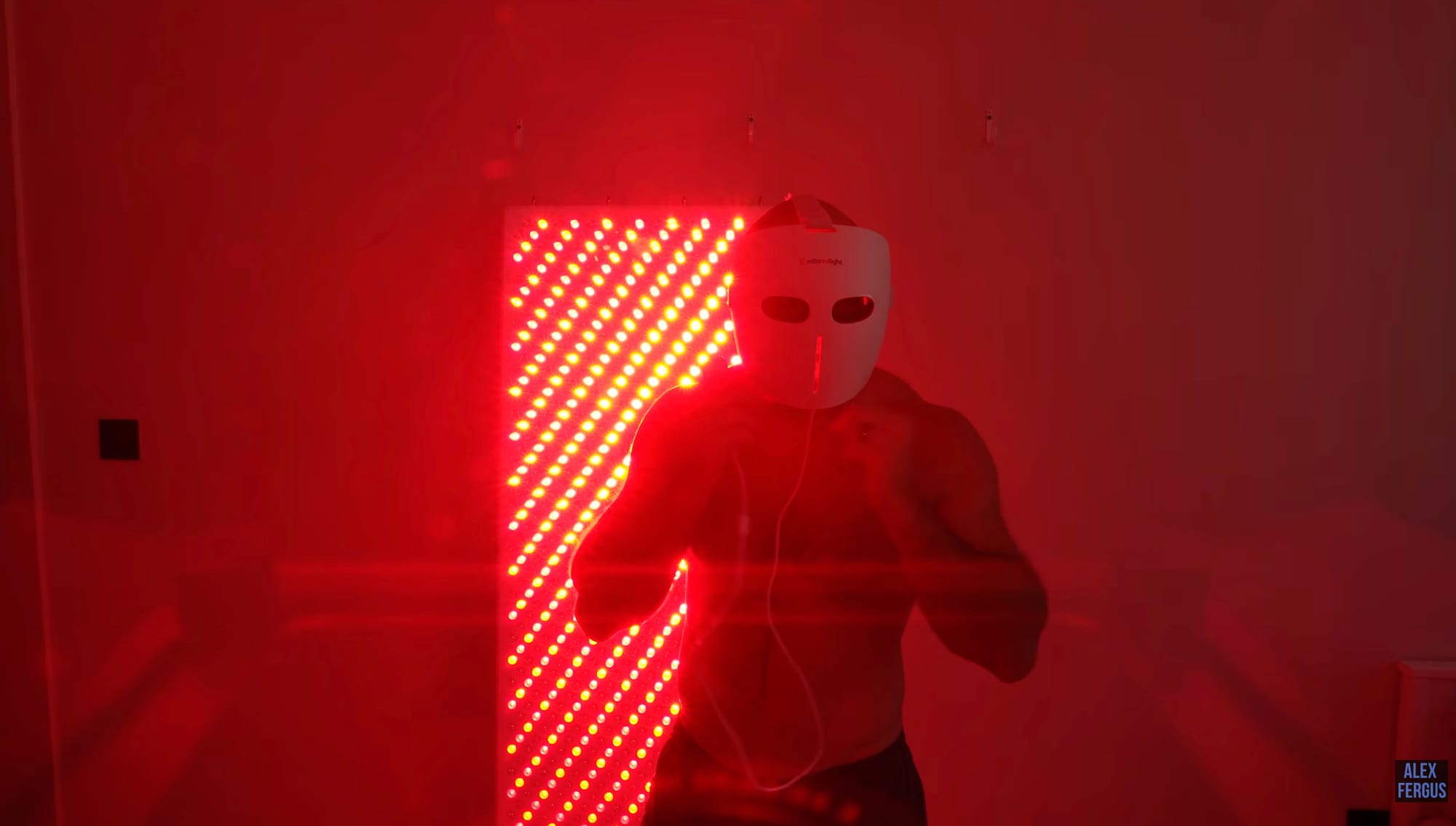
I still use a full-body red light therapy panel for approximately 5–10 minutes on the front and back of my body, three or four times per week. The major change is that I now wear an LED face mask while standing in front of the panel.
The mask delivers the appropriate wavelengths and a more controlled dose directly to my facial skin. At the same time, it helps shield my face from the much higher-powered light coming from the body panel.
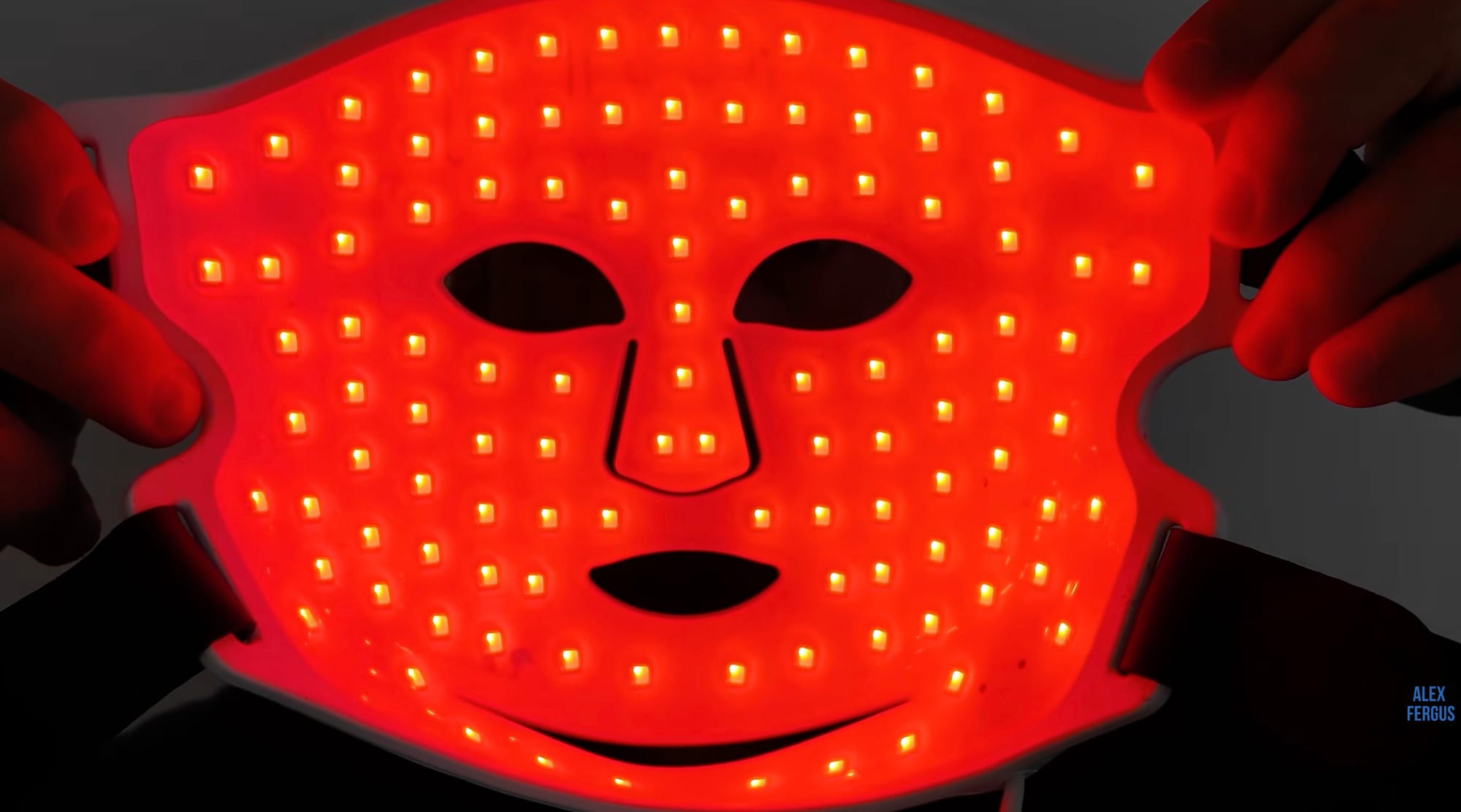
After treating the front of my body, I remove the mask, turn around, and use the panel on my back. This allows me to complete my facial and body treatments during the same morning session without exposing my face to the panel's full output.
If you do not care about facial rejuvenation but still want to avoid unnecessary exposure, you can position the panel below your neck and focus only on the body. You could then add a dedicated face mask or cognitive device later if your goals change.
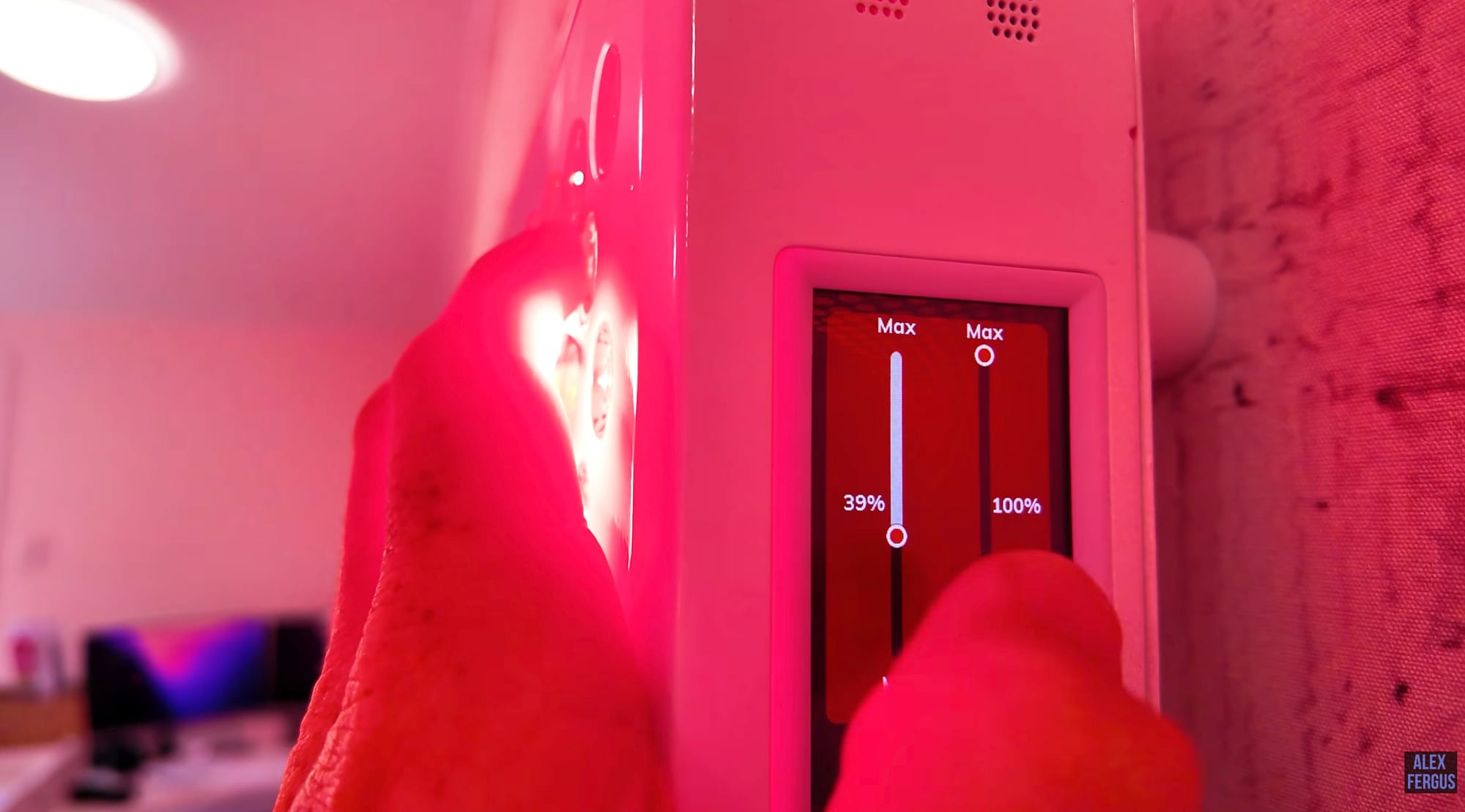
Another option is to use a panel with adjustable intensity or built-in treatment modes. Reducing the panel to around 20% intensity may make it more appropriate for skin-focused treatments, although the exact setting will depend on the device and its measured output.
Increasing your distance from the panel can also reduce the intensity reaching your skin. For example, standing approximately 18 inches away instead of 6 inches may provide a much gentler treatment, but the correct distance will vary by device.
Answering Common Questions About Panel Use
One obvious question is what this means for my older videos in which I recommended panels for facial benefits. The first thing to understand is that many panels available several years ago were significantly less powerful than the models sold today.
Some modern panels produce two or three times the output of older devices. Although those earlier protocols may not have been perfect from a dosing perspective, the risk of dramatically overshooting the desired facial dose was not as significant as it can be with today’s more powerful panels.
Panels also continue to offer excellent value because they can treat a large area of the body at once. Many newer models include intensity controls, so you can lower the output and still use the panel for your face if you adjust the protocol appropriately.
Another common question comes from people who have used powerful panels on their faces for years and are happy with their skin. I am not suggesting that their experience is wrong or that they have necessarily caused damage.
Their panel may produce less power than the company claims, they may stand farther away, or their treatment time may be shorter. It is also possible that their skin tolerates the protocol without obvious side effects, even if the dose is not technically optimized for facial rejuvenation.
The body may still benefit from the higher dose even when the face does not need that much light. Individual results can vary, so treatment goals, device output, distance, intensity, and session length should be considered together.
Final Thoughts
The biggest lesson is that more red light therapy is not automatically better. The most effective protocol is the one that delivers the appropriate dose, at the appropriate intensity, to the tissue you are actually trying to treat.
Powerful panels remain excellent tools for broad, deeper body treatments, while LED masks are generally better suited to controlled facial treatments. By separating these goals—or carefully combining the devices, as I now do—you can pursue the benefits of red light therapy without unnecessarily overexposing your face.
Here are the resources I mention.
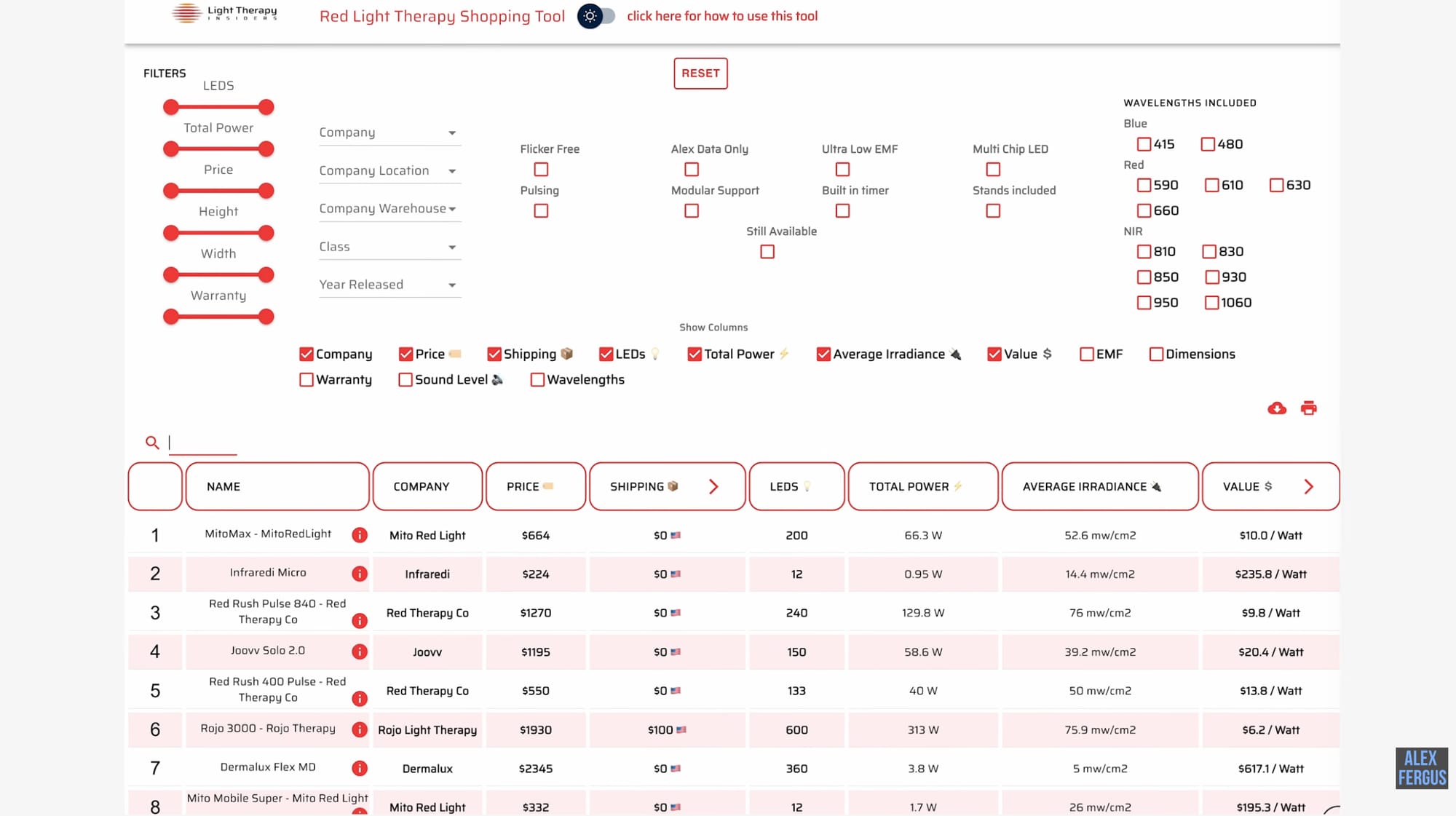
⭐ Light Therapy Insiders – “Help Me” Shopping Tool
⭐ Verified Deals & Active Discounts:
⭐ Red Light Therapy Breakthroughs: Eye Safety, Devices & New Research:
⭐ My interview with Mike from Light Labs: Is Your Red Light Device Giving You The Promised Dose/Wavelength?
⭐ My interview with Professor Mike Hamblin
⭐ My interview with James Carroll, CEO of Thor:
⭐ Light Therapy Insiders Weekly Newsletter
Have You Seen These Reviews
⭐ Best LED Face Mask For Acne: The Wavelength Most Companies Get Wrong
⭐ Maysama Aura Review: My Testing Revealed a Big Problem
⭐ Do LED Face Masks Work? Real Before & After Evidence
⭐ What LED Mask Should I Buy in 2026? My Top Recommendations
Alex's Bio
Alex Fergus wrote this blog post. Alex is an ISSN Sports Nutrition Specialist, Fitness Professional, and certified Superhuman Coach who continues to expand his knowledge base and help people worldwide with their health and wellness. Alex is recognized as the National Record Holder in Powerlifting and Indoor Rowing and has earned the title of the Australian National Natural Bodybuilding Champion. Having worked as a health coach and personal trainer for over a decade, Alex now researches all things health and wellness and shares his findings on this blog.