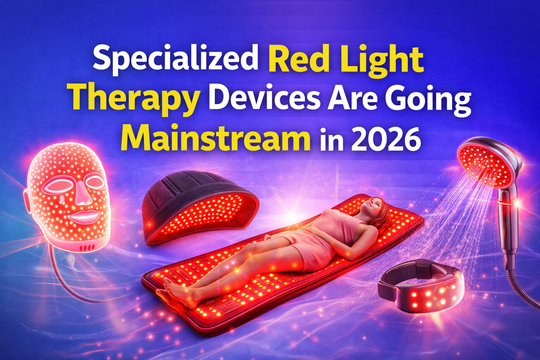

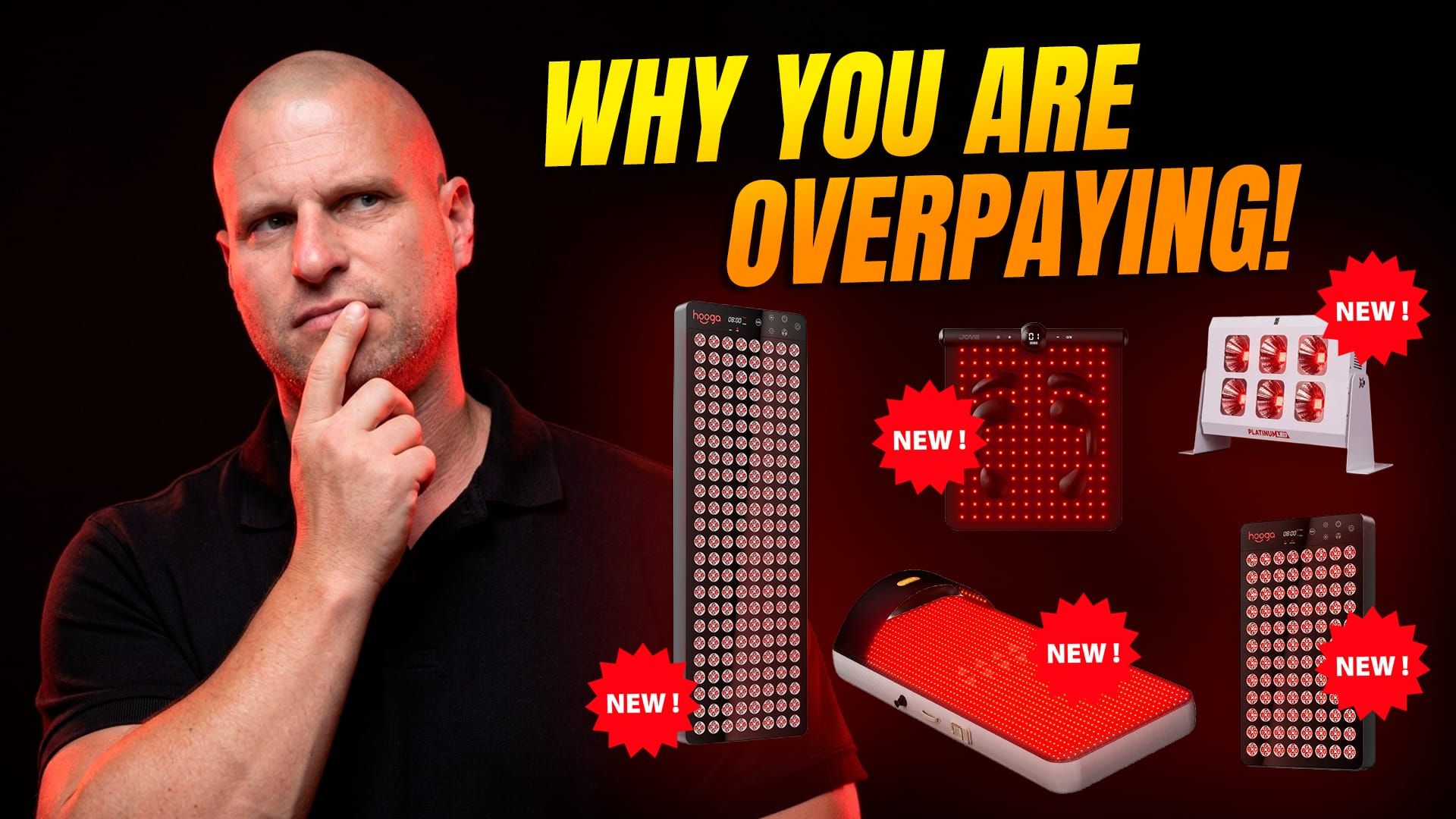
The red light therapy industry continues to move quickly, and some of the newest products are moving well beyond the traditional panel. We’re seeing devices designed for gyms and studios, red light therapy inside saunas, more sophisticated masks, and even full-body mats with some unusual wavelength combinations.
There’s also some interesting new research to talk about, including a study looking at daytime light exposure and Alzheimer’s risk, along with new work exploring whether intranasal near-infrared light can reach deeper areas of the brain.
And then there’s the other end of the market: handheld red light therapy devices selling for $5,000, $10,000, or even $15,000. Are these devices really offering something that justifies those prices? Let’s get into it.
New Red Light Therapy Products
PlatinumLED StudioMax
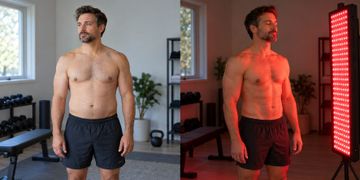
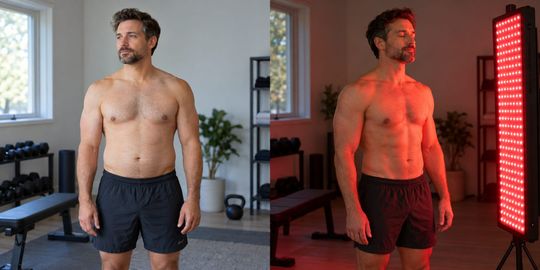
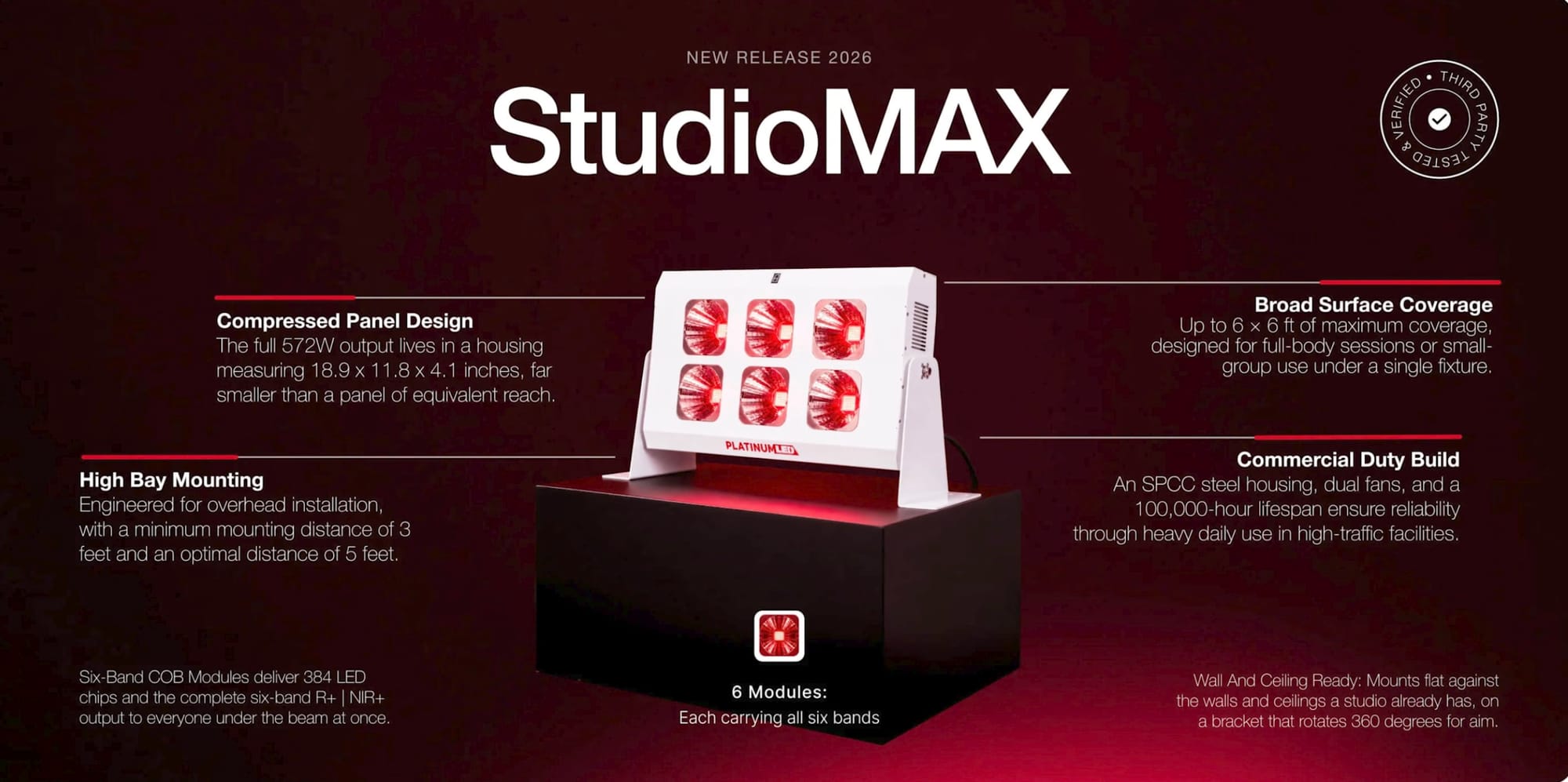
PlatinumLED has introduced the StudioMax, and this is very different from the typical red light therapy panel. It uses six large LEDs and is designed to be mounted on or near a wall to project therapeutic light into a room, with PlatinumLED recommending an optimal treatment distance of around five feet.
The wavelengths are similar to those used in the BioMax range, including 630, 660, 810, 830, 850 and the 1060/1070 nm range. The concept could be particularly interesting for gyms, yoga studios or other spaces where multiple people could potentially receive red and near-infrared light at the same time, although I’d really like to see testing at different distances to determine how much therapeutic light people actually receive throughout the room.
Hooga Ember & Blaze Sauna Devices
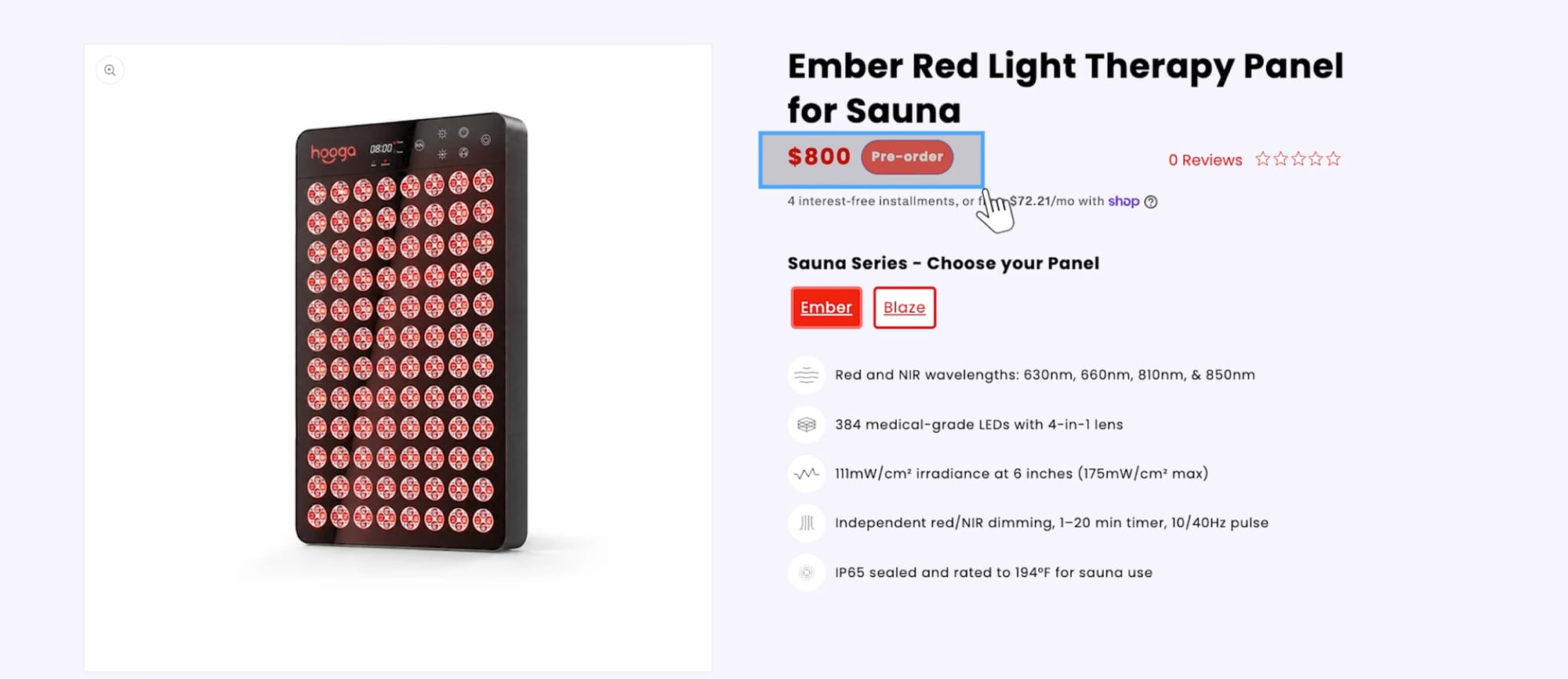
Hooga has two new red light therapy devices designed for use inside a sauna: the Ember and the Blaze. They use quad-chip LEDs delivering 630, 660, 810 and 850 nm wavelengths, along with pulsing from 10–40 Hz.
The devices have an IP65 rating and are designed for temperatures up to 90°C/194°F. That should make them suitable for most infrared saunas, although extremely hot traditional Finnish saunas can exceed that temperature limit.
Hooga Luma Wireless Mask
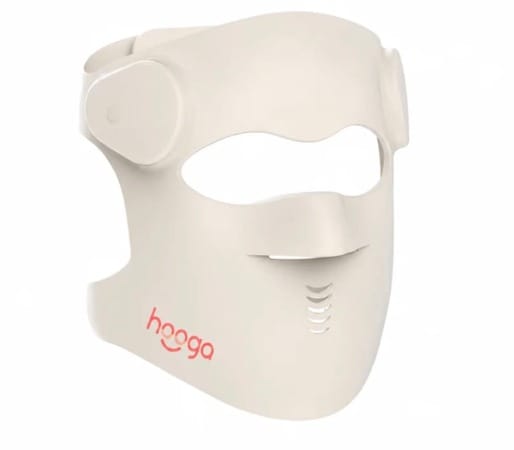
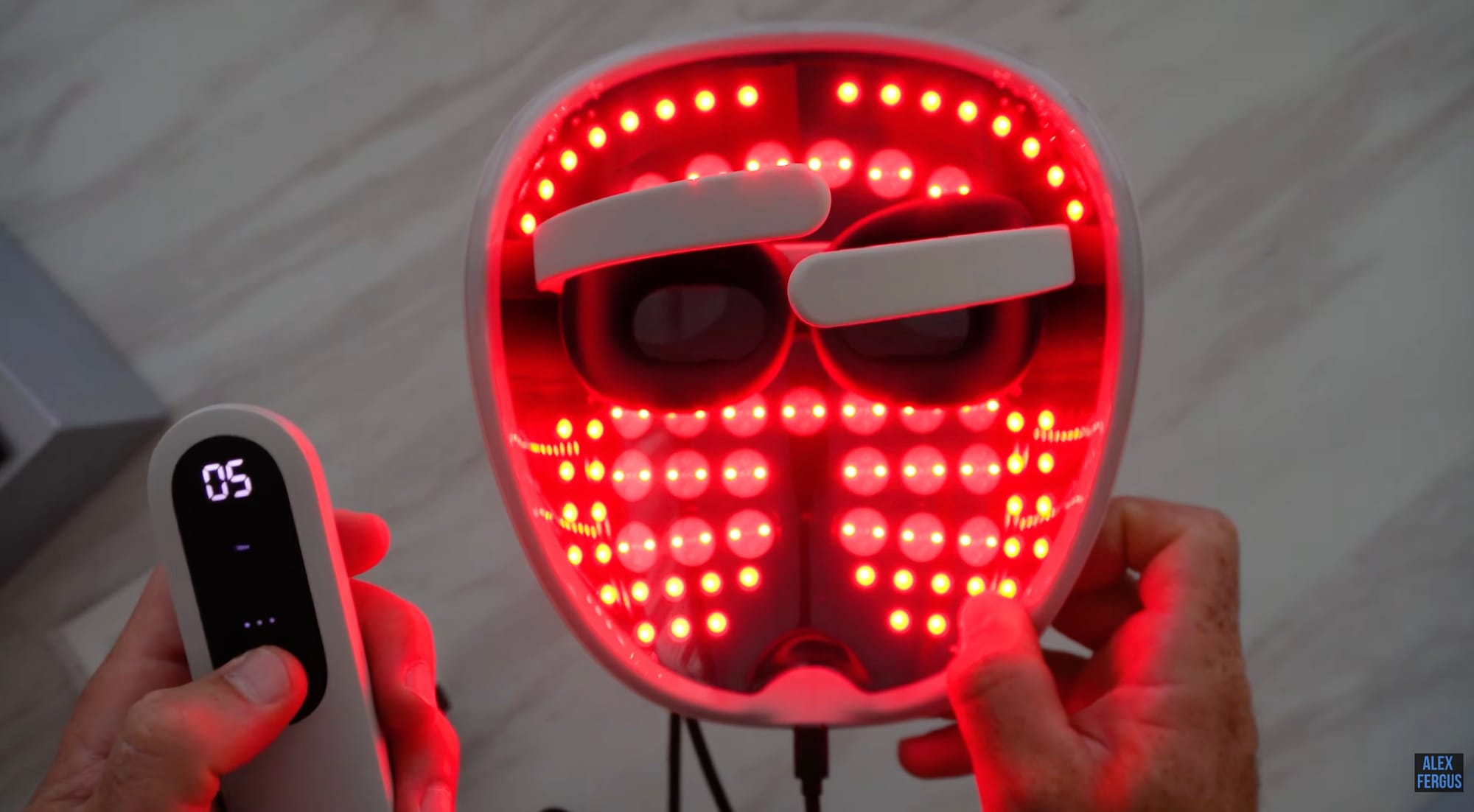
Hooga has also introduced the Luma Mask, a $299 wireless light therapy mask with five different modes and multiple wavelengths. What makes this one particularly interesting is the inclusion of colors beyond the standard red and near-infrared wavelengths, including blue and green light.
I’m excited to see more companies exploring these wavelengths because both blue and green light can have interesting applications when they're used in the right context.
JOVS Foot Mat & Red Light Therapy Mat
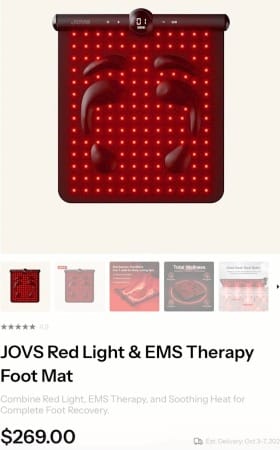
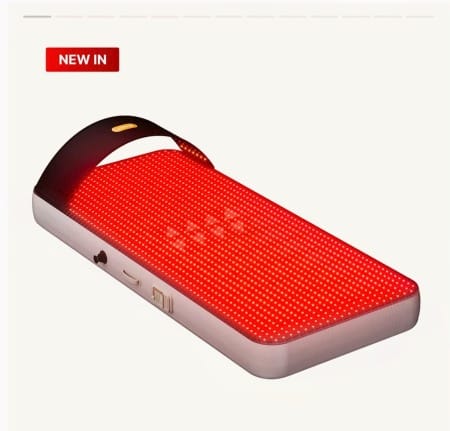
JOVS has two interesting additions as well. There’s a foot mat using 660 and 850 nm light, along with a much larger red light therapy mat designed for full-body treatments.
The full-body mat is particularly unusual because of both its wavelength range and its inflatable, air-bed-style design. That could make lying down for a full-body session considerably more comfortable than some of the other mat designs currently available.
Infraredi Pro 2.0 Series
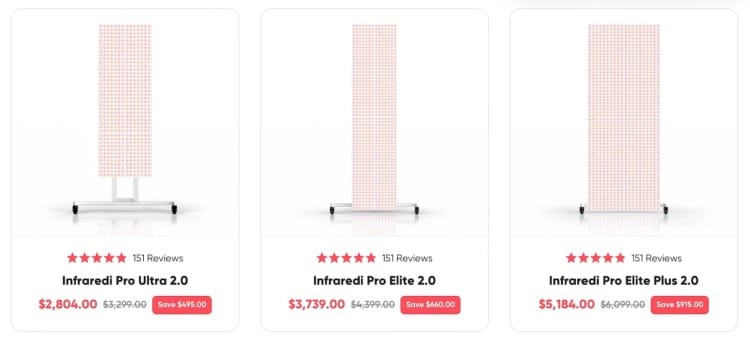
Infraredi has also launched its new Pro 2.0 panel series, featuring five different wavelengths across several panel sizes. It’s good to see Infraredi continuing to develop its range, particularly because the company has performed very well in some of our previous red light therapy panel comparisons.
We’ll be watching this new generation closely to see how it performs when the specifications and real-world output are put to the test.
New Research Into Red Light Therapy and the Brain
Vielight has highlighted some fascinating research using fMRI to investigate whether near-infrared light delivered through the nose can influence deeper areas of the brain.
In the study discussed in the video, 45 participants received intranasal near-infrared light while inside an MRI scanner. The researchers observed responses in deeper brain structures including the thalamus, amygdala and hypothalamus—areas associated with functions ranging from sensory processing to stress, emotion, feeding and reproduction.
This is particularly interesting because reaching deeper brain structures is one of the challenges with transcranial photobiomodulation. It raises the possibility that intranasal delivery may complement light delivered through the forehead or scalp rather than simply duplicating it.
Vielight has also been discussing the use of photobiomodulation for traumatic brain injury, another area we’ll be exploring in an upcoming interview.
What I Saw at the Health Optimization Summit
The Health Optimization Summit was another reminder of just how quickly this industry is developing. I conducted several interviews while I was there, covering everything from full-body red light therapy beds to PEMF, new wavelengths and products that haven’t even reached the market yet.
I spoke with James Carroll about red light therapy for recovery and the differences between beds and panels. Interestingly, he still believes beds have advantages over traditional panels for full-body treatment.
Daniel Ebbett from Block Blue Light also discussed where he sees the industry heading, including greater use of blue and green wavelengths and the company’s upcoming seventh-generation panels. Tom Sanderson from Kineon shared updates on upcoming products including the Heel Plus and Comp Plus, while Andy Smith from Celler8 discussed combining red light therapy with PEMF, particularly in relation to circulation.
Sarah Turner from CeraThrive also revealed that the company is working on a new oral health product. Taken together, these conversations show that innovation in light therapy is moving well beyond simply making panels larger or more powerful
Could Brighter Days Reduce Alzheimer’s Risk?
One of the most interesting studies this month wasn't specifically about red light therapy. Instead, researchers looked at whether the amount of light people receive during the day was associated with their future risk of dementia.
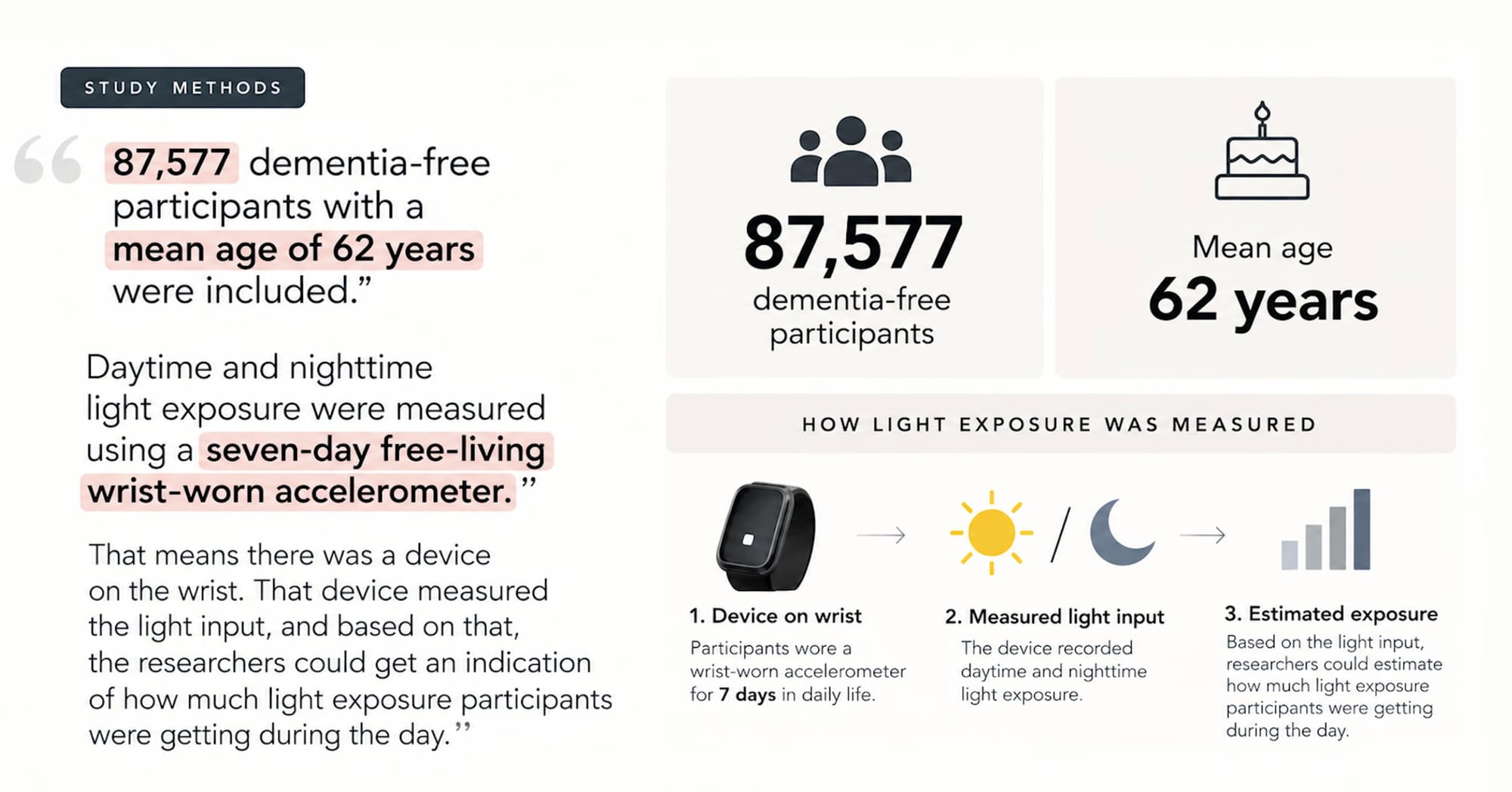
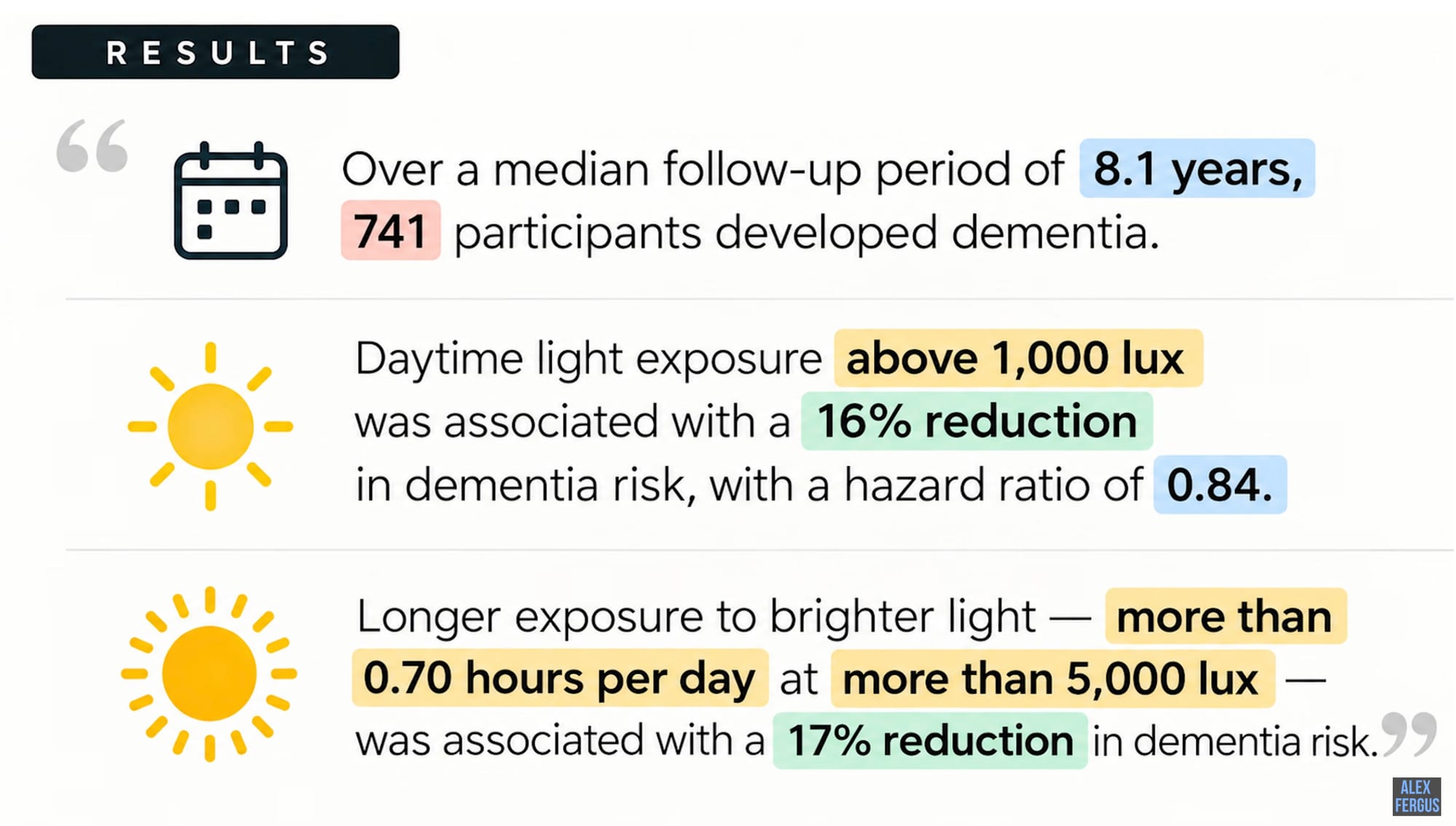
The study included 87,577 dementia-free participants with an average age of 62. Participants wore wrist devices that measured their light exposure over seven days, and researchers then followed the group for a median of 8.1 years. During that period, 741 participants developed dementia.
Higher daytime light exposure was associated with a lower dementia risk. This is observational research, so it does not prove that brighter light prevents Alzheimer's disease, but it adds another interesting piece to the growing discussion around daytime light exposure, circadian biology and long-term health.
The practical problem is that many indoor environments simply aren't very bright. A typical office might provide only a few hundred lux, whereas outdoor daylight can be dramatically brighter. Even when it doesn't look that different to us, our eyes are exceptionally good at adjusting to changing light levels.
The study also found particularly strong associations in certain groups, including evening chronotypes, people exposed to higher levels of light at night and APOE4 carriers.
That doesn't mean everyone should simply spend all day baking in the sun. Sensible light exposure still matters, and this study can't tell us that red light therapy is interchangeable with daylight. But it does add to the case that spending our days in dim indoor environments and our nights surrounded by artificial light may not be ideal.
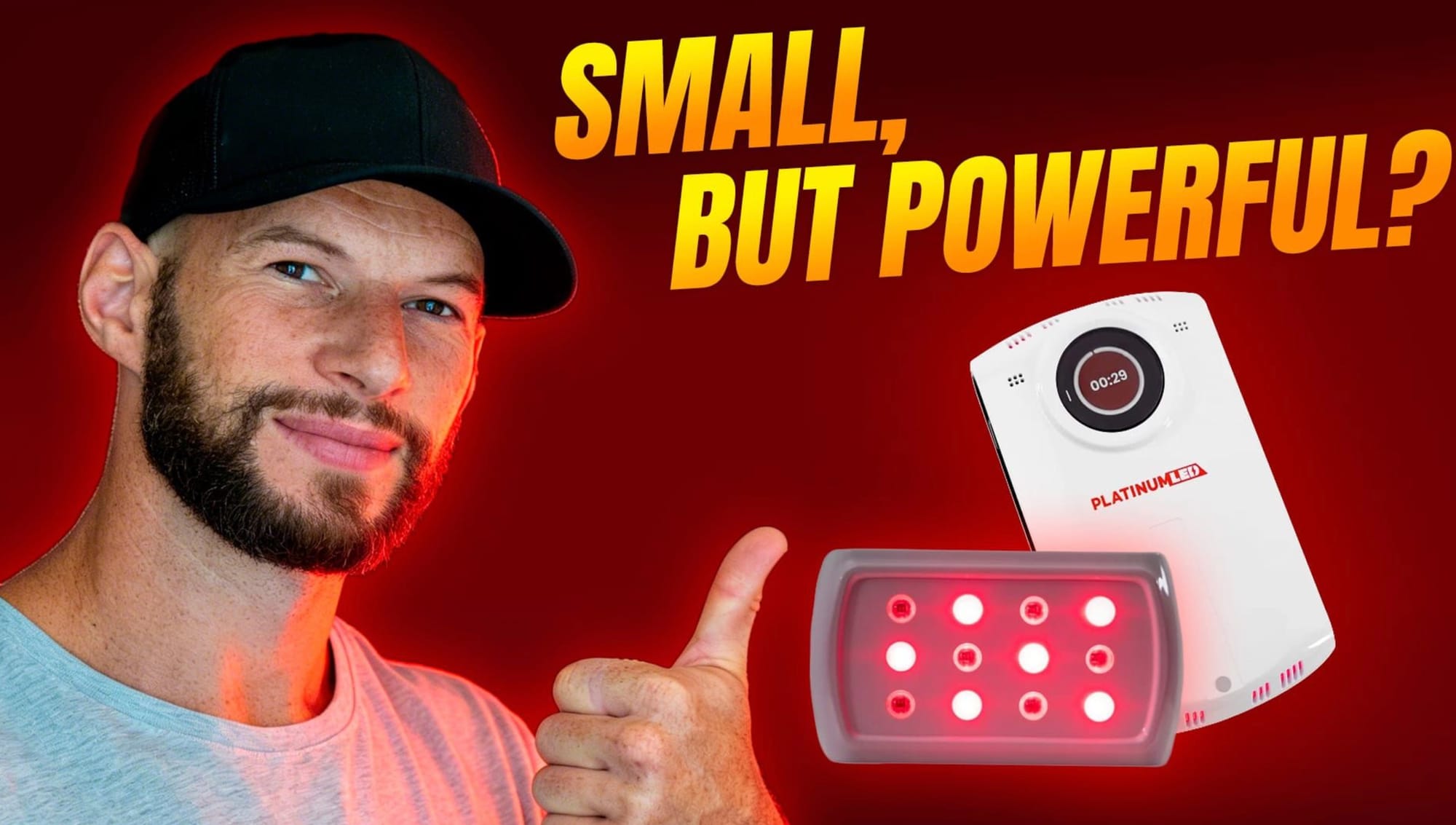
Would You Pay $15,000 for a Handheld Red Light Device?
This is a question that has been appearing more often in our Facebook group. Someone has a friend or family member who has spent $5,000, $10,000 or even $15,000 on a handheld light therapy device and wants to know whether it was a good purchase.
This is difficult to hear because some excellent handheld devices cost around $400–$700. If a company is asking thousands or tens of thousands of dollars for a handheld device, there needs to be a very compelling reason why.
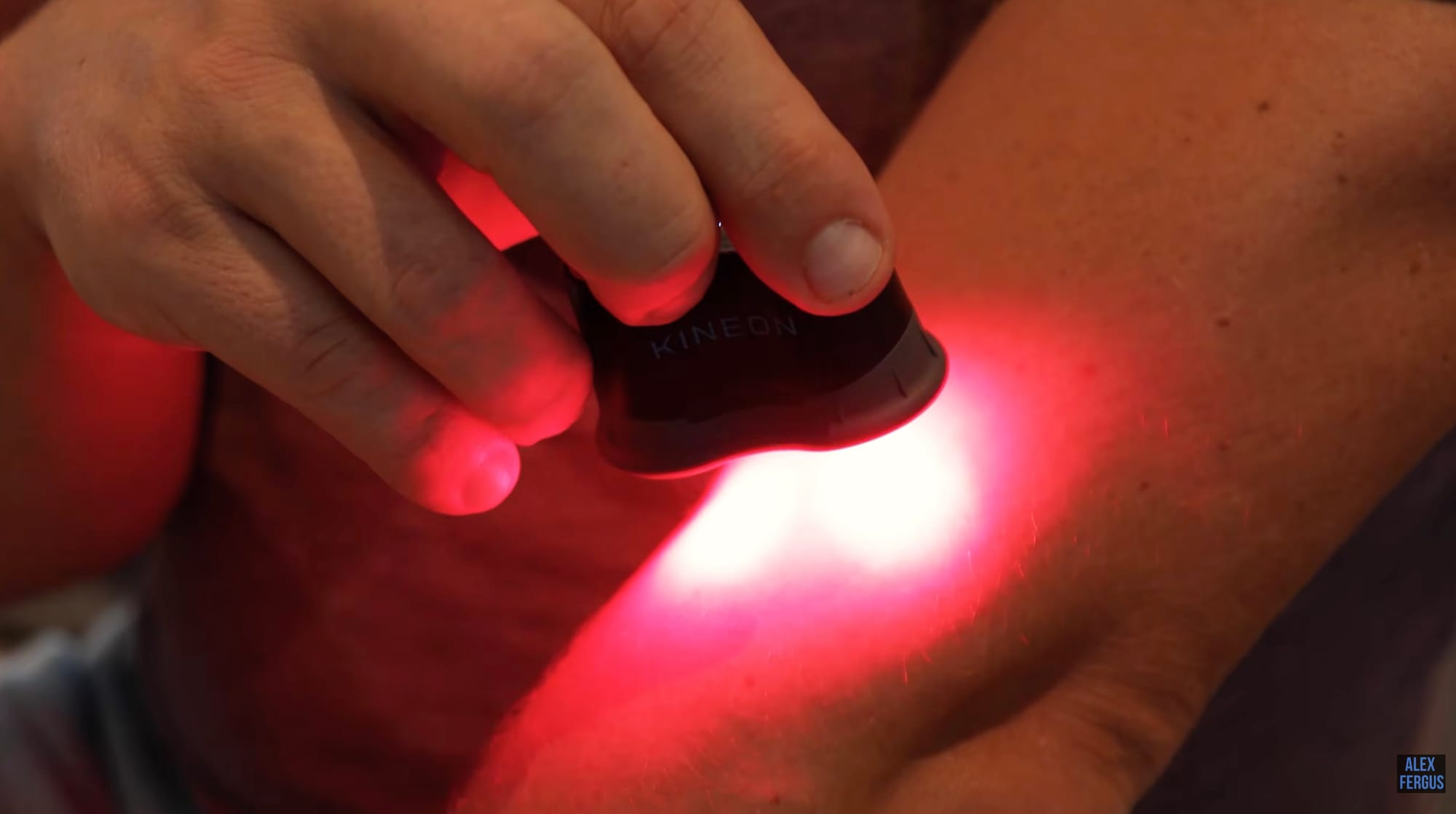
Sometimes these devices are marketed with impressive-sounding technology or substantial discounts. A "$10,000 device" might suddenly be offered for $7,000, for example, making it feel like an incredible deal. But a large discount doesn't automatically make the underlying product good value.
There are exceptions. A clinician purchasing a genuinely high-powered medical laser for professional use is in a very different situation from someone buying their first light therapy device for home use. But for the average consumer, it's very difficult to justify spending $5,000–$15,000 on a handheld LED device without exceptional evidence and independent testing.
If you're new to red light therapy, start smaller. Try a reputable handheld device, mask or panel and see how you respond before committing an enormous amount of money. Also look for independent reviews and third-party testing rather than relying entirely on the manufacturer's claims.
More Reviews, Interviews and Comparisons Are Coming
There’s plenty more happening at Light Therapy Insiders as well. Recent content includes our interview on Combining red light therapy and PEMF, Alex's review of the PlatinumLED BioMax Go, and additional device reviews.
We're also working on some of our biggest comparison content, including updated best red light therapy panels and masks. There’s another interview coming that takes a deeper dive into photobiomodulation mechanisms for those who enjoy getting into the science behind how light therapy actually works.
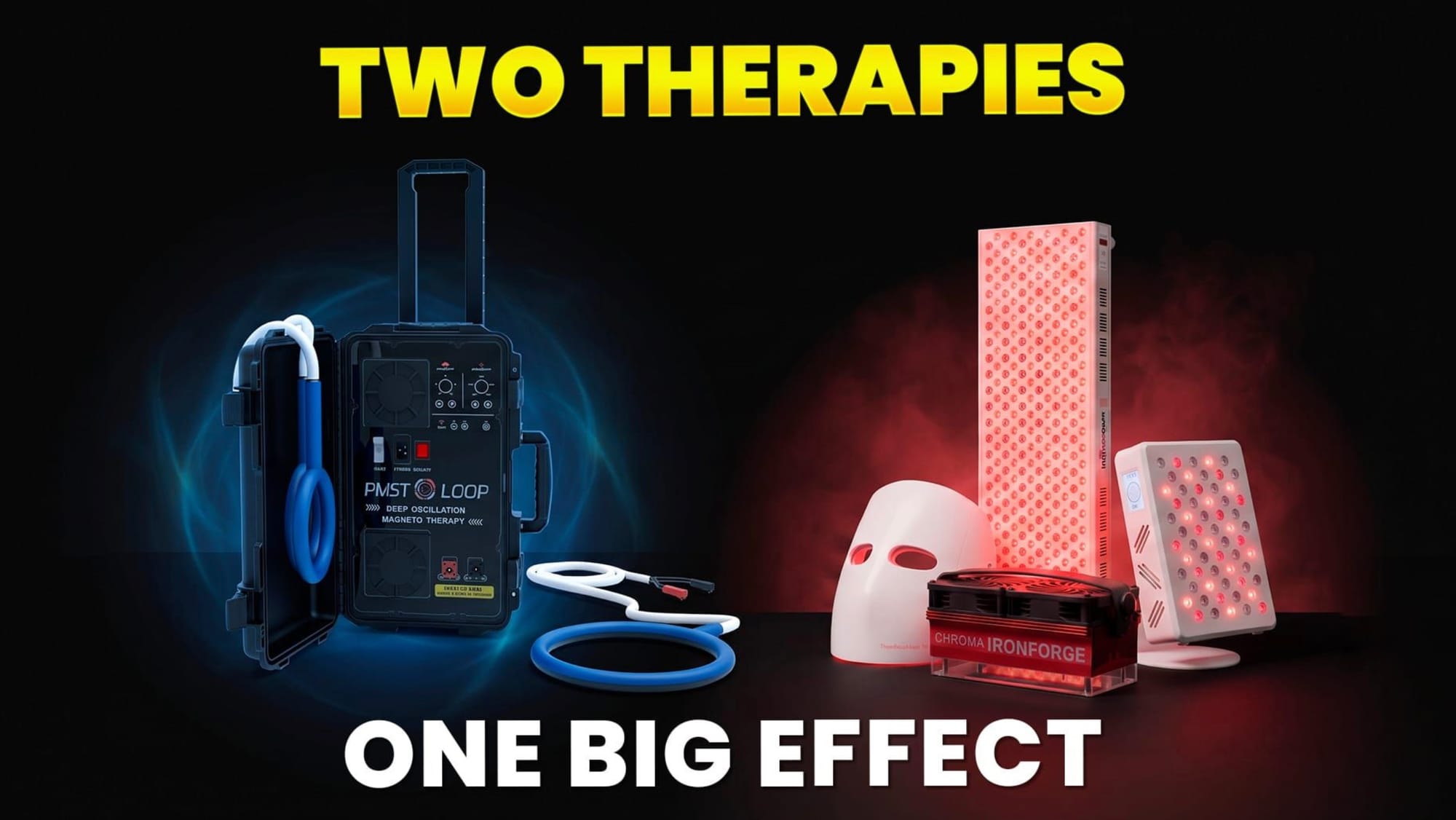
Between the new products, emerging wavelengths, brain research, indoor lighting studies and increasingly unusual devices entering the market, light therapy certainly isn't standing still.
The important thing is not to assume that newer, more powerful or more expensive automatically means better. Look at the wavelengths, dosing, independent testing and actual evidence—and make sure the device you're buying makes sense for what you're trying to achieve.
Products Mentioned
⭐ PlatinumLED StudioMax- use https://aferg.co/redled for 5% off
⭐ Hooga's Sauna Device. The Ember or The Blaze: use the following link: https://aferg.co/hooga-rlt. 12% discount auto-appears when you click the link.
⭐ Hooga's wireless Mask: Luma Mask, https://aferg.co/hooga-rlt. 12% discount auto-appears when you click the link.
⭐ JOVS Foot Mat or RLT Mat: https://aferg.co/jovs-4d and use code ALEX
⭐ Infraredi Pro 2.0 series: Use discount code ALEX at https://aferg.co/infraredi to save 10%.
⭐ Vielight: https://aferg.co/vielight, and use code ALEX10
Bart's Bio:
This is a post by Bart Wolbers. Bart finished degrees in Physical Therapy (B), Philosophy (BA and MA), Philosophy of Science and Technology (MS - with distinction), and Clinical Health Science (MS), has had training in functional medicine, and is currently the head researcher at Lighttherapyinsiders.com