

Another week, another big newsletter!
We've got a huge update on vitamin D supplements, carpal tunnel syndrome and light therapy, the latest news, single vs. dual chip LED considerations, and much more...
Fasten your seatbelt as here we go:
Huge 2026 Vitamin D Supplementation Review
So this review came out a few months ago and I just came across it. Reviews analyze and integrate earlier research on a topic, in this case, vitamin D.
Whether to supplement with vitamin D, and how much, and how useful this is, has been a debate ever since I entered the health space 20+ years ago. Back when I started going to the gym in 2003, there were already discussions in online forums about whether vitamin D should be supplemented, and what effects can be expected.
The summary of the review states it really well, and in 2026, there is evidence that even vitamin D supplementation is helpful:
"Overall, the presented triangulated model may reconcile longstanding inconsistencies by reframing vitamin D as a context-dependent determinant of health. These findings argue against indiscriminate population-wide supplementation and support targeted strategies focused on the identification and correction of deficiency. Vitamin D should be regarded neither as a universal panacea nor as a trivial supplement, but as a context-dependent hormone whose clinical value lies in outcome-specific correction of deficiency."
So, the answer to the question of "Should I supplement with vitamin D" is, "it depends". Fortunately, the researchers added a very good infographic in the review, on where there's currently evidence for vitamin D supplementation and where not:
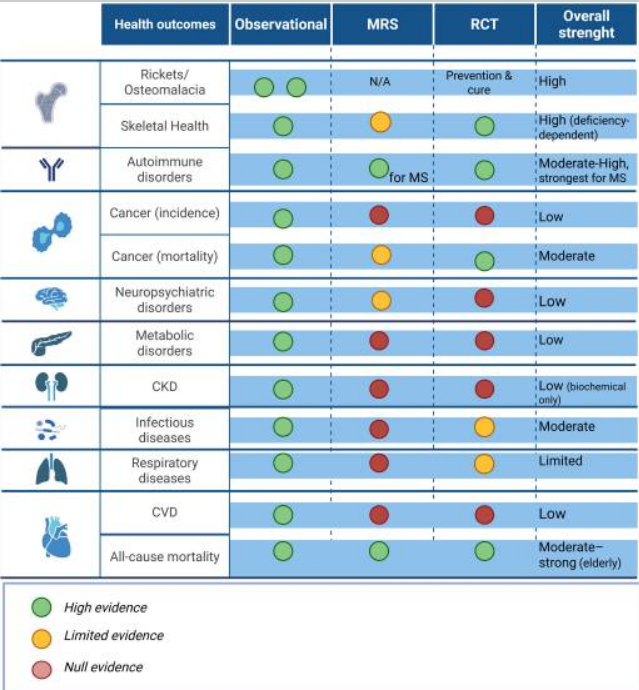
Let me explain the basics of that great infographic:
- Here, the "observational" studies are those without manipulation; for instance, there's no placebo and no intervention group difference.
- "MRS" or "Mendelian Randomization Studies" rely on genetic differences in humans to learn whether there's a real effect. This is a type of natural randomnized trial, using genetics, as the genetic variations between humans drive different outcomes
- The "RCT" or "Randomized Controlled Trial" above is the classical study with an intervention group and control group.
So, for now, given the MRS and RCT studies above, we can conclude that adding vitamin D to your body (more on that in a sec!) changes the following outcomes:
- Lower "all-cause mortality" - your overall risk of dying.
- Lower risk of rickets and osteomalacia, bone diseases
- Lower autoimmune condition risk (such as Multiple Sclerosis)
- Effects on skeletal muscles
- Lower cancer mortality
- Infectious disease
- Respiratory diseases (low strength of evidence)
As of this moment, however, there's no evidence, in higher quality studies, for:
- Cancer risk
- Neuropsychiatric disorders
- Metabolic disorders (such as type II diabetes)
- Chronic Kidney Disease
- Heart and blood vessel diseases
Which is interesting, because here's what researchers conclude:
"The synthesis of current evidence indicates that vitamin D exerts clear, causal effects in specific pathophysiologic contexts, rather than uniform benefits across all health outcomes."
And, the researchers conclude that most of the benefits occur when you're deficient in vitamin D. Once you correct the deficiency, you should receive all benefits, and supplementing more than what you need to resolve the deficiency doesn't yield additional benefits.
The elephant in the room? While the researchers do mention "ultraviolet B" (UVB) exposure for creating vitamin D in the skin, and state that people often receive too little sunlight in their lives to make adequate vitamin D, there's very little discussion of sunlight exposure here, and mostly vitamin D supplements.
I've considered this topic in great detail in my course, specifically the safety of ultraviolet light exposure and the risk of getting different types of skin cancer.
I probably consider vitamin D maybe responsible for 10-20% of the benefits you get from sunlight. UV exposure and sunlight are much more than "vitamin D", and that's the biggest flaw in the reasoning of these vitamin D papers.
Yes, resolving a vitamin D deficiency with supplements can give a great boost to your health. But you won't get any of the other benefits of ultraviolet light, such as boosting dopamine/serotonin/melatonin (motivation, relaxation, and sleep), no blood flow (NO) benefits, no immunological benefits, no natural opioids that are released or melanin.
All of these mechanisms are missing with vitamin D supplementation. Curious to learn more? Check out my free course deep-dive episode on ultraviolet light exposure, and how to minimize risk while maximizing benefit.
But back to the review study. The big takeaway? Well it's somewhat common sense but supplementing won't work if your levels are already adequate. And, vitamin D supplementation is less promising than we though.
In my opinion, we're getting a slow shift back to full-spectrum sunlight, that maybe started 2 decades ago or so. Back then, vitamin D supplementation was all the hype, and now, fortunately, we know that sunlight is much more than vitamin D.
Curious to learn more?
Check out some of our other content on the topic here:
 Alex Fergus
And:
 Alex Fergus
Plus finally:
 Alex Fergus
Here Are Our Latest Light Therapy Insiders' Articles:
Every single article that we've published recently - you can find the videos in the article itself:
- Red Light Therapy For Carpal Tunnel Syndrome: Treatment Protocol & Top Devices - Yeah, there's even decent evidence that red light therapy helps carpal tunnel syndrome. Bart tells you how, which device, and about the limitations!
- Dual-Chip LEDs Sound Better—Until You See the Test Results - Alex found an important new perspective on the single chip vs dual chip debate. He's changed his mind apparantly and no longer thinks multi-chip (dual, triple) is always the best way to go. Here's why.
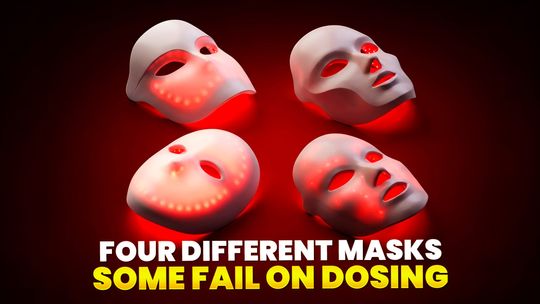
- SHOCKING Mask Science & Product Innovation With Light Therapy - Here's a shocking mask study from Spain that makes you question a lot. And tons of more new products, Q&A, and news from the light therapy space presented by Bart!
- Can Pulsed Red Light Therapy Really Produce 3X More Collagen? - A recent interview by Alex on using pulsed light for better skin collagen production. Must-watch if you're into beauty. Alex also talks a lot about mask design and testing masks in this interview.
- 7 Red Light Therapy Myths That Are Wasting Your Time - If you're a beginner in red light therapy, don't miss this video! Without these 7 myths, you'll do a lot better early on with health benefits
Also, Check Out Some Of Our Other Content:
Below you'll find some of our best content that you shouldn't miss:
Light Therapy Insiders Science Tool
Search for different health conditions and benefits, and get Bart's breakdown of the science on that topic, as well as recommended devices and light therapy routines.
We've been trying to simplify this space as much as possible:
 Bart Wolbers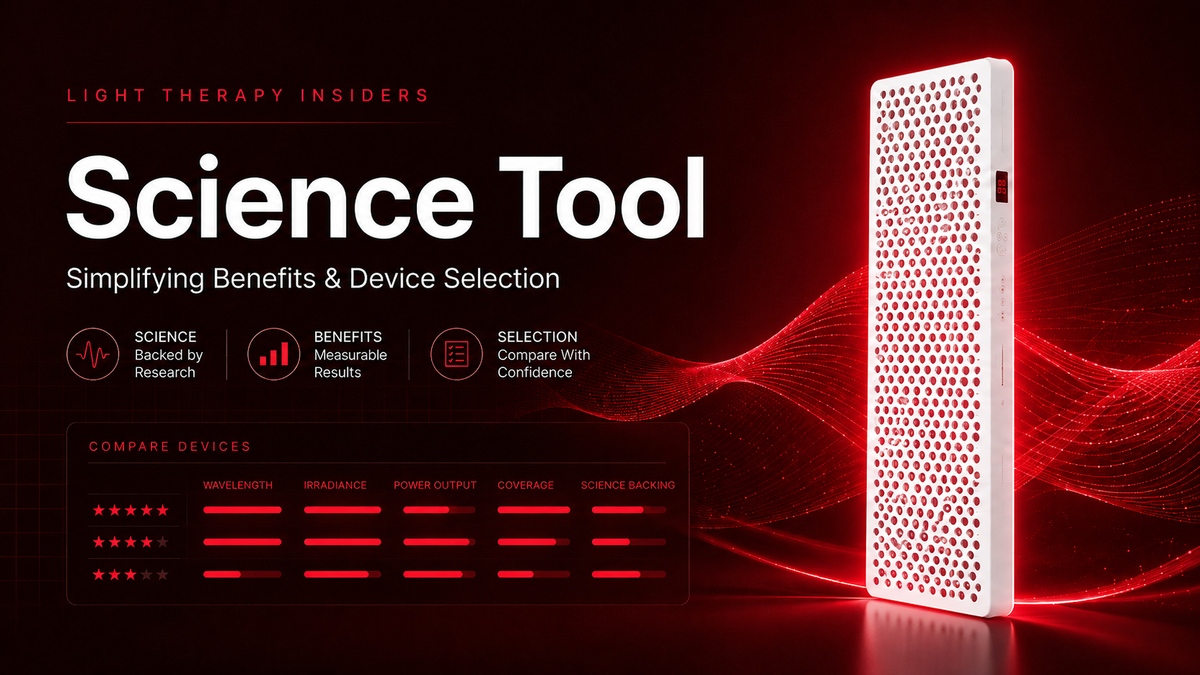
Red Light Therapy Buyers Guide
 Alex Fergus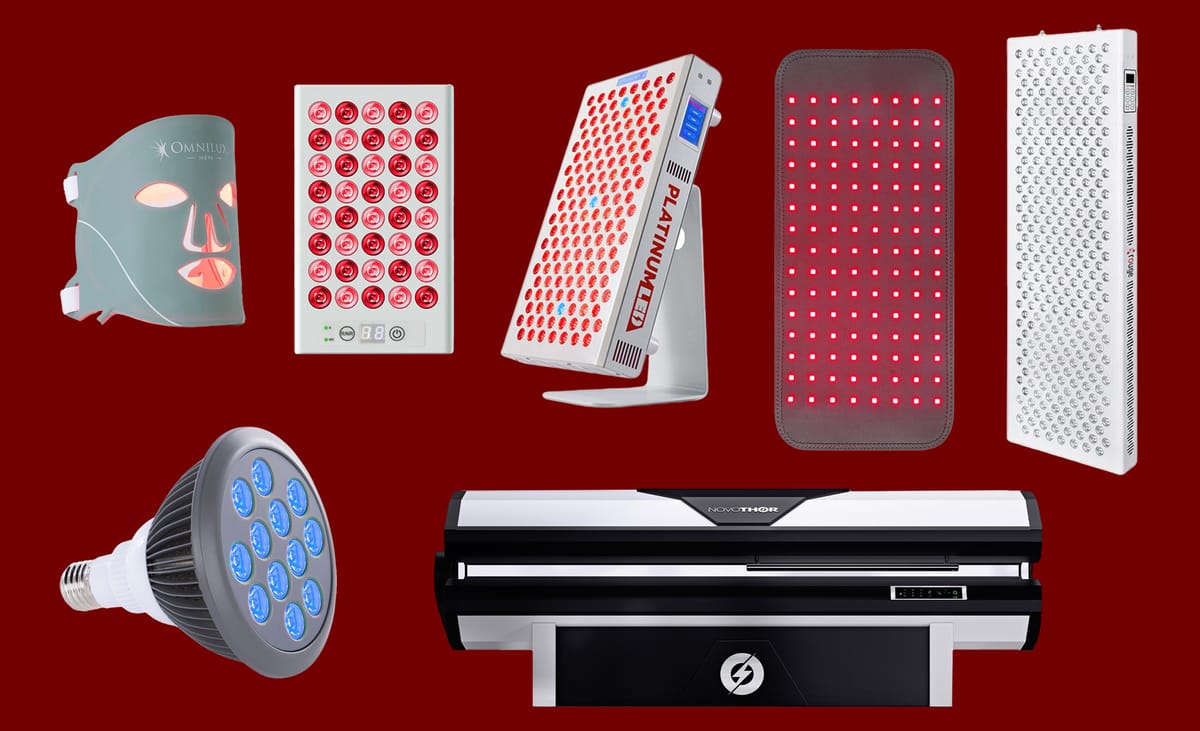
Red light therapy uses red and infrared light to achieve a biological effect. Dive into this topic and select a device that's right for you.
LED Mask Shopping Tool


My extension shopping tool compares all of the world's best (and not so good!) Red Light Masks.
How To Use Red Light Therapy 101: The Best Guide For Starters
 Alex Fergus
You have your device? Let me help you use it.
Red Light Panel Shopping Tool


My extension shopping tool compares all the world's best (and not-so-good!) Red Light Panels!
Exclusive - Discount Codes, Deals & Recommendations
 Alex Fergus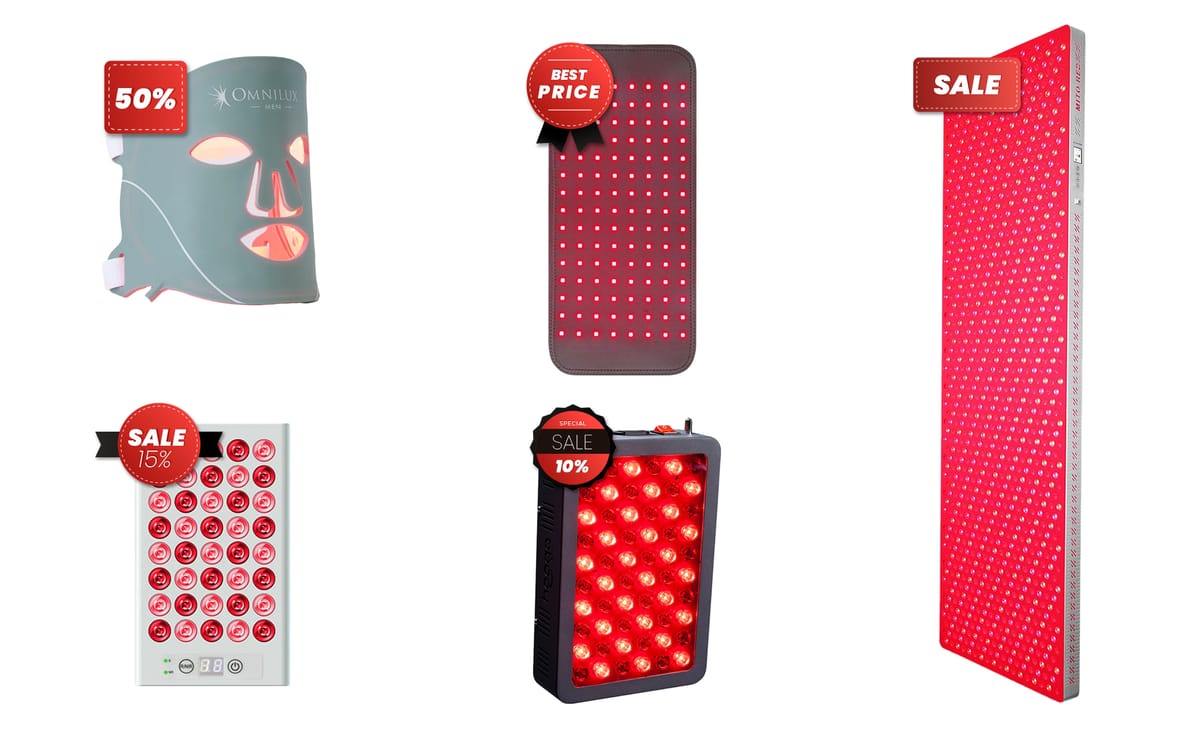
Shopping for a red light device? Use this resource to save! We've got deals for most of the big and best brands out there...