

For years, dual-chip and multi-chip LEDs have been promoted as an upgrade in red light therapy panels. The idea seems logical: if you put two or more LED chips beneath a single lens, surely you should get more light and potentially a better treatment.
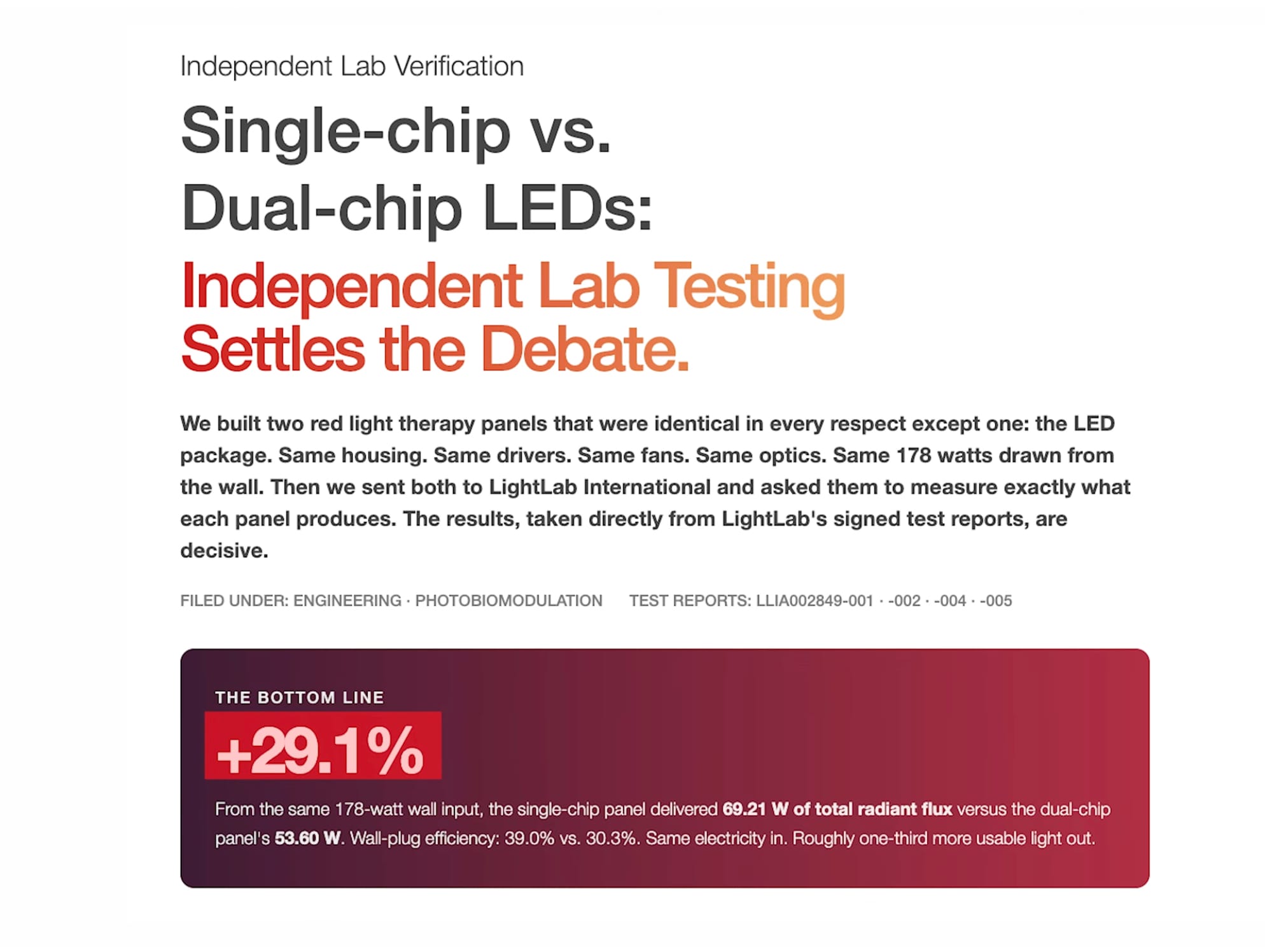
But new independent laboratory testing challenges that assumption. Two nearly identical red light therapy panels—one using single-chip LEDs and the other using dual-chip LEDs—were tested under controlled conditions. Despite drawing virtually the same amount of electricity, the single-chip panel produced 29% more total optical output.
That doesn't mean dual-chip LEDs are automatically bad. But it does show why the number of LED chips in a panel may be far less important than we've been led to believe.
What Are Single-Chip and Dual-Chip LEDs?
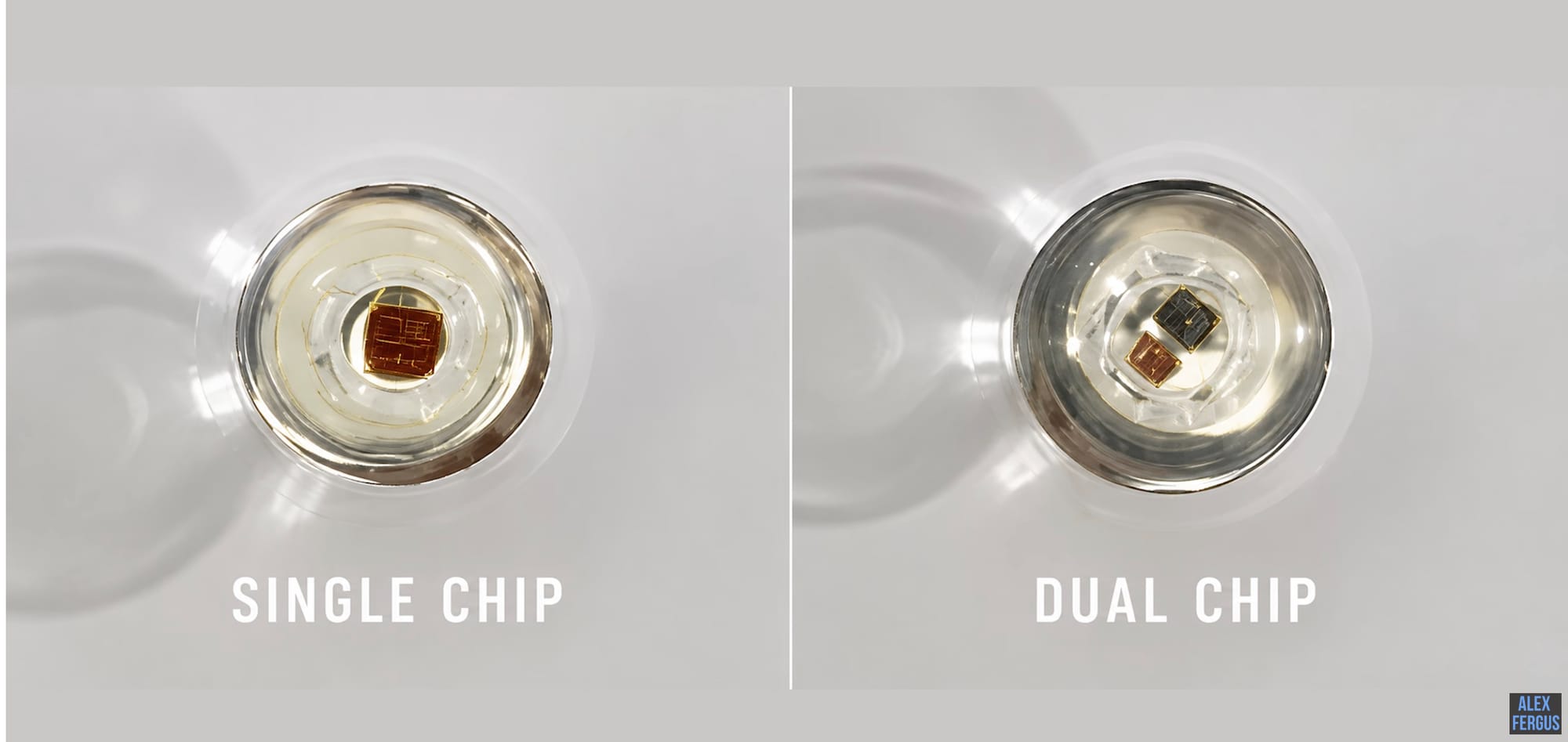
When manufacturers talk about single, dual, triple, or quad-chip LEDs, they're referring to the number of light-emitting semiconductor chips inside each LED lens.
A single-chip LED contains one emitting chip. A dual-chip LED contains two, while triple and quad-chip LEDs contain three or four. Those chips can also produce different wavelengths—for example, one chip might emit 660 nm red light while another produces 850 nm near-infrared light.
This is where specifications can become confusing. A company might advertise a device as having 100 LEDs when it actually contains only 25 physical LED lenses with four chips inside each one. Another panel with 100 single-chip LEDs could also be marketed as having "100 LEDs."
More chips sounds impressive, but it doesn't necessarily mean more light reaches your body. If the electrical power going into an LED package stays the same, that power may simply be divided between multiple chips.
Independent Testing Puts the Two Designs Head-to-Head
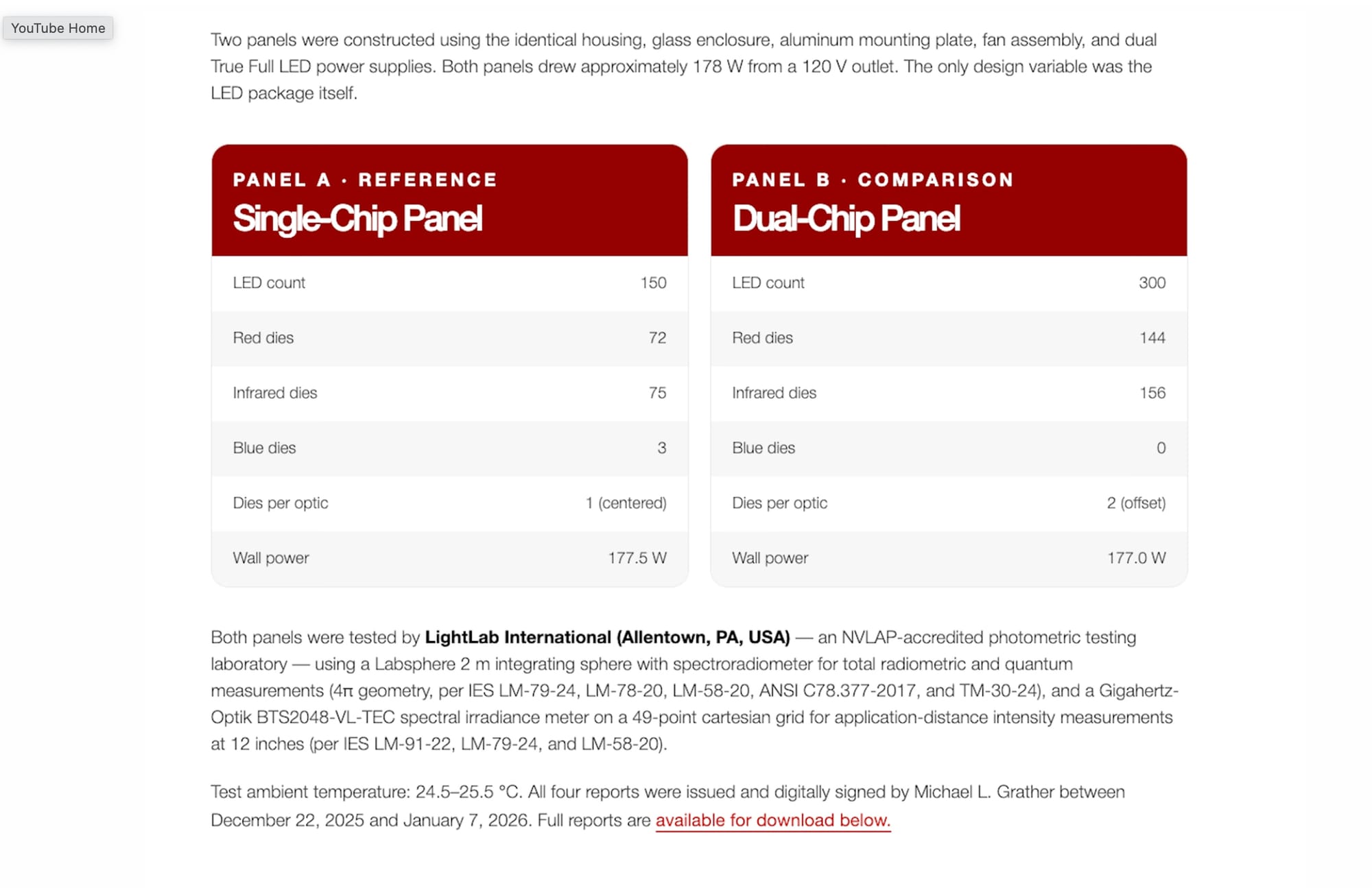
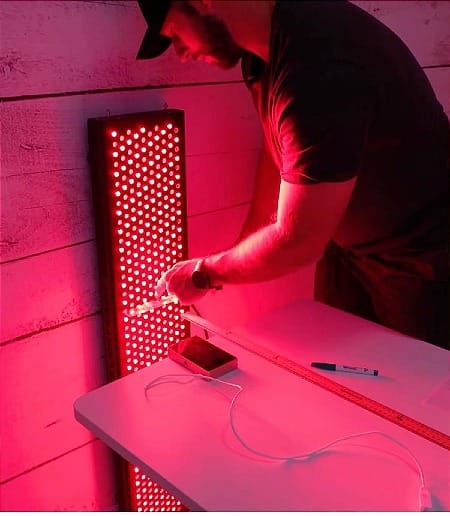
PlatinumLED commissioned Light Lab International to compare two panels designed to be as similar as possible. The housing, drivers, fans, optics and electrical consumption were essentially the same. The primary difference was the LED configuration.
The single-chip panel contained 150 LEDs, while the dual-chip version contained 300 individual LED chips housed within 150 optics. Wall power was nearly identical: approximately 177.5 watts for the single-chip panel and 177 watts for the dual-chip panel.
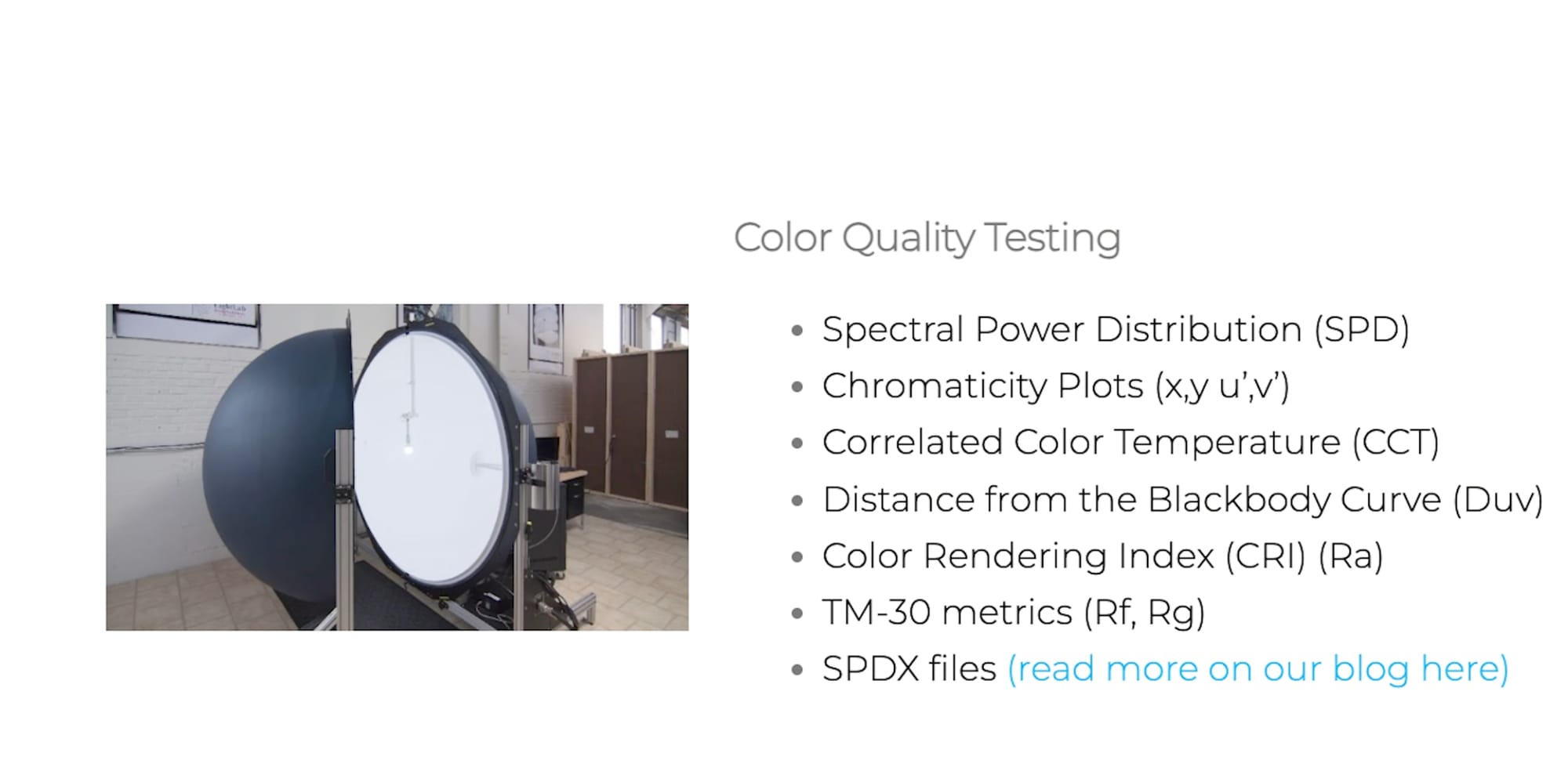
Light Lab then used two testing methods. An integrating sphere measured the total amount of light produced in all directions, while a 49-point grid measured the light reaching a treatment area from 12 inches away.
This is important because it allowed researchers to look at both total optical output and the amount of usable light reaching the treatment area.
The Single-Chip Panel Produced 29% More Light
The results were surprisingly clear.
Total radiant flux was approximately 69 watts from the single-chip panel compared with 53 watts from the dual-chip panel. At a 12-inch treatment distance, average irradiance was approximately 63 mW/cm² versus 48.6 mW/cm².
That worked out to roughly 29% more output from the single-chip panel, despite the two devices drawing essentially the same amount of electricity.
The difference was particularly noticeable in the red-light range, where the single-chip design produced about one-third more red-light energy. Near-infrared output was also higher.
In this particular comparison, having twice as many LED chips did not result in more therapeutic light. It resulted in less.
Why Does This Matter for Red Light Therapy?
Red light therapy isn't ultimately about how many LEDs or chips are inside a device. What matters is the light that actually reaches the tissue.
Wavelength, irradiance, treatment distance, exposure time and total dose all influence a treatment. This becomes especially important because photobiomodulation can follow a biphasic dose response: too little energy may produce little effect, while simply increasing the dose doesn't necessarily continue improving the outcome.
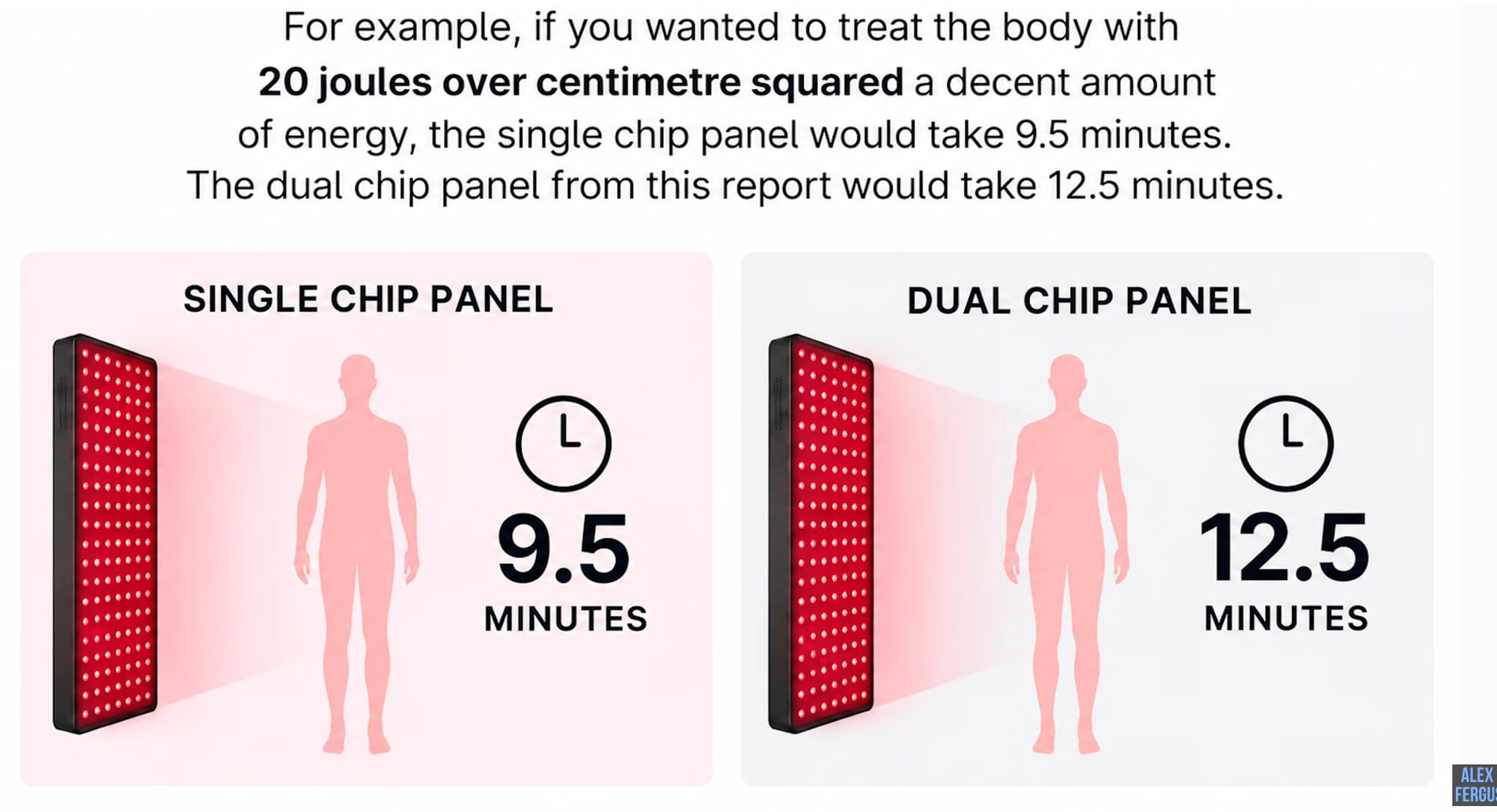
The difference between these panels would also affect treatment time. Using the red-light output measured in this test, delivering a 20 J/cm² dose would take roughly 9.5 minutes with the single-chip panel versus 12.5 minutes with the dual-chip panel.
That doesn't mean the higher-powered panel will always produce a better biological outcome. It does mean it can deliver a particular dose faster.
Why Might Dual-Chip LEDs Produce Less Power?
One possible explanation involves optics. A single chip can sit directly in the center of an LED lens, while two chips positioned side-by-side cannot both occupy that ideal focal point. That could affect how efficiently the light is directed toward the treatment area.
However, optics alone can't explain everything. The integrating sphere also found lower total output from the dual-chip panel, regardless of which direction the light traveled.
Other factors could include electrical efficiency, how power is distributed between the chips, heat buildup, thermal behavior and the design of the LED package itself. Packing multiple emitters into one small area can create additional thermal and engineering challenges.
The important takeaway isn't that multi-chip technology is inherently poor. It's that chip count alone tells us very little about actual performance.
Where Multi-Chip LEDs May Still Have an Advantage
There is another side to this comparison.
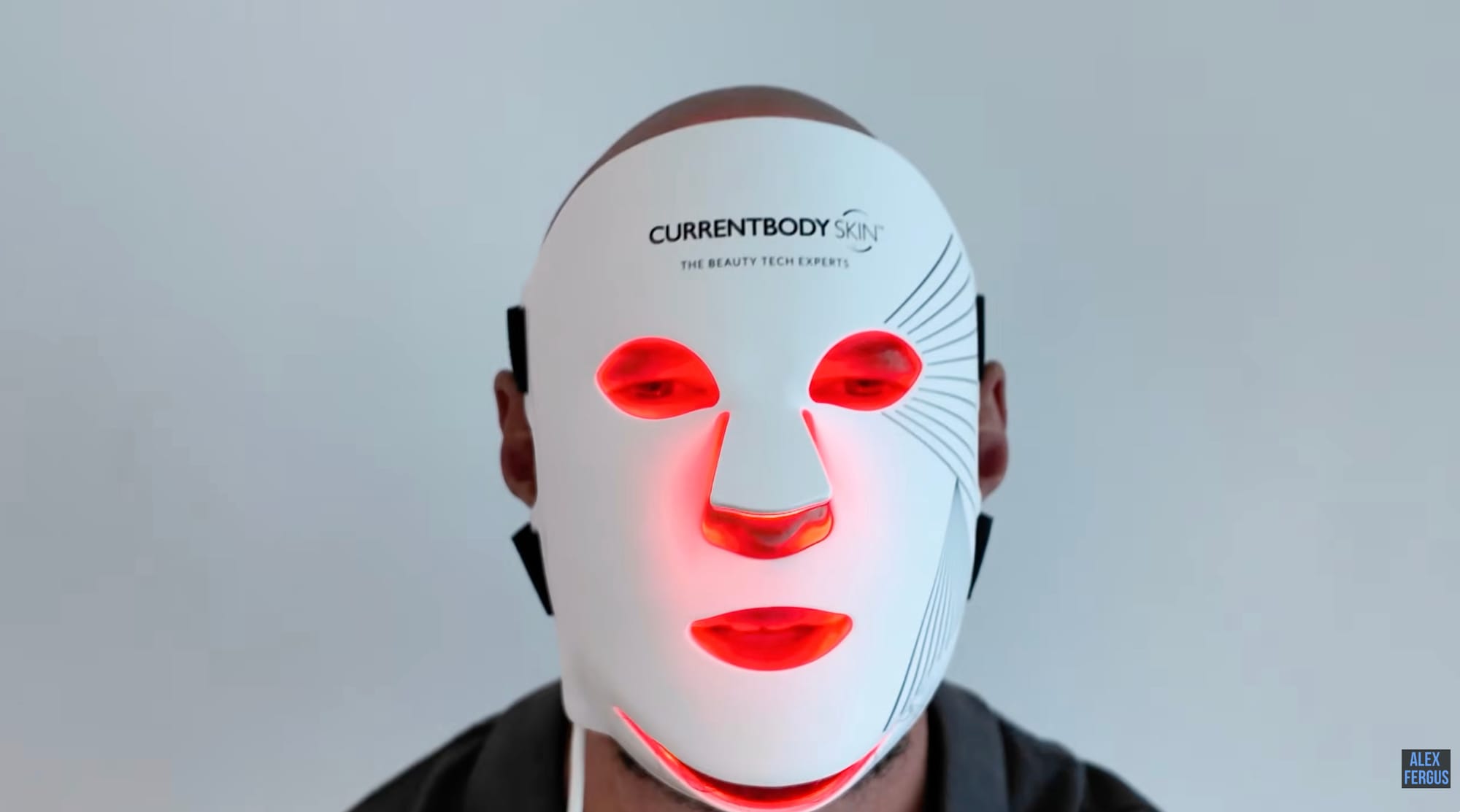
A dual-chip LED can place two wavelengths beneath the same lens. For example, red and near-infrared light can originate from virtually the same location. That can potentially produce a more even mixture of wavelengths across the treatment area.
This could be particularly useful in masks, wraps, helmets and other devices used directly against or very close to the skin. With single-chip designs, different wavelengths may originate from separate LEDs spaced some distance apart. At greater treatment distances, those beams have time to spread and blend. Close to the skin, that separation may matter more.
So while single-chip LEDs may offer an efficiency advantage in larger panels used several inches from the body, multi-chip LEDs could still have advantages in close-contact applications.
What This Testing Does—and Doesn't—Prove
It's important not to take one comparison too far. The testing does not prove that every single-chip panel will outperform every dual-chip panel.
It compared two specific designs under controlled conditions. Different LED packages, drivers, optics, thermal management and overall engineering could produce different results.
It also wasn't a biological study. No people, animals, cells or tissues were treated. The testing measured electrical and optical performance—not whether one design produces superior health outcomes.
What it does demonstrate is that manufacturers shouldn't be able to claim dual-chip technology is automatically superior simply because a device contains more chips.
Could Multi-Chip LEDs Be Better for Close-Contact Devices?
One important question this testing doesn't answer is what happens with devices that sit directly against, or very close to, the skin. Masks, wraps and helmets operate very differently from a large panel positioned six or twelve inches away.
With single-chip LEDs, red and near-infrared wavelengths usually come from separate physical locations. One LED might emit 660 nm red light, followed by another emitting 850 nm near-infrared. When you're farther away from a panel, those beams have room to spread and overlap before reaching the body.
Multi-chip LEDs can place two or more wavelengths beneath the same lens. At very close distances, that could provide a more even mixture of wavelengths across the treatment area. This is potentially an important advantage for masks, wraps and other close-contact devices, where extremely high power isn't necessarily the goal.
Light distribution matters enough that some professional systems take additional steps to improve uniformity. The NovoTHOR whole-body light therapy bed, for example, uses a diffuser to help distribute light more evenly across the body.
This is an area I'm still investigating, and it's something I'll be looking at more closely in future testing.
Single-Chip vs Dual-Chip LEDs: The Pros and Cons
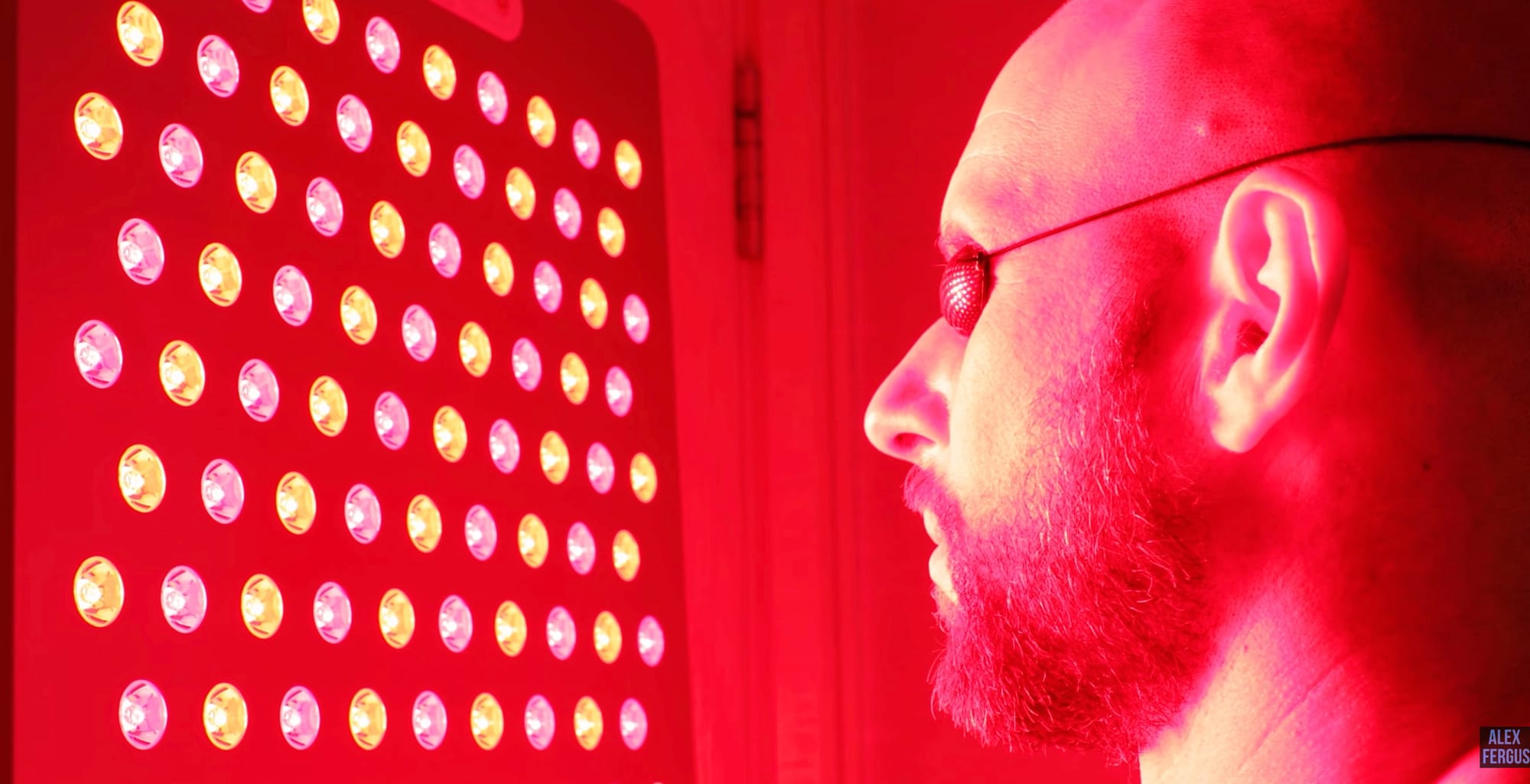
Single-chip LEDs have some clear practical advantages. They're simpler, with one emitting chip, one optic and one concentrated thermal source. In this particular laboratory comparison, they were also considerably more efficient at converting electricity into usable light.
Their potential weakness is wavelength distribution. If a panel alternates individual red and near-infrared LEDs, those wavelengths originate from different locations. At normal panel treatment distances, the light can spread and blend together, but at very close distances the separation may become more important.
Dual- and multi-chip LEDs solve part of that problem by allowing several wavelengths to originate beneath the same lens. That can improve wavelength overlap and potentially create more uniform coverage.
The trade-off is greater complexity. Multiple chips share a small LED package and thermal pathway, power must be distributed between them, and optics become more complicated. As this independent testing demonstrated, adding more chips can also result in lower overall efficiency and light output.
So neither design automatically wins in every situation. The application matters.
So Which LED Design Is Better?
For large full-body panels typically used around six to twelve inches from the body, I'm now leaning toward a well-designed single-chip system—particularly when independent testing confirms strong output, correct wavelengths and good coverage.
At those distances, light from separate LEDs has room to spread and blend, while the greater efficiency of a single-chip design may allow more therapeutic light to reach the body.
For close-contact devices, the answer becomes less clear. Multi-chip LEDs may make more sense in a mask, wrap or helmet because wavelength overlap can become more important and these devices don't necessarily require the same high output as a large body panel.
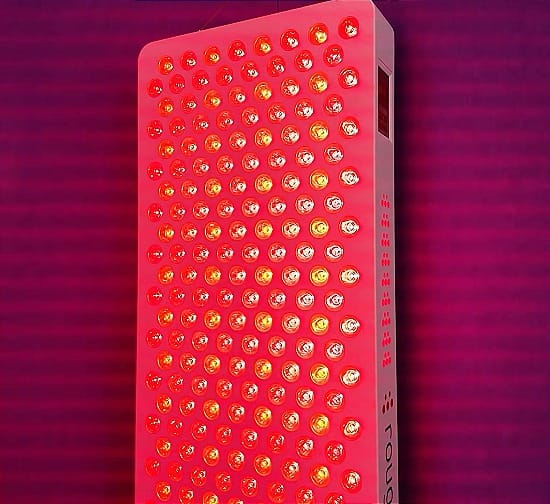
This is also why I wouldn't choose a device simply because the manufacturer advertises "dual-chip," "triple-chip" or "quad-chip" LEDs. Those terms tell you how the LEDs are constructed. They don't tell you how well the finished device actually performs.
What Should You Ask Before Buying a Red Light Therapy Panel?
Instead of asking how many chips a panel has, there are much more useful questions to ask.
Does the company have independent irradiance testing at the actual treatment distance? Can it provide separate output measurements for red and near-infrared light? Is the reported irradiance an average across the treatment area, or simply a peak measurement taken from the brightest point in the center?
It's also useful to know the panel's actual wall power draw and whether its output remains stable as the LEDs heat up during a treatment session. Most importantly, independent spectral testing can confirm whether the device is actually producing the wavelengths the manufacturer claims.
These measurements tell us far more about a red light therapy panel than the number of chips printed on a specifications page.
Does This Change How I’ll Review Red Light Therapy Panels?
Yes. Going forward, I'm going to put less emphasis on chip count by itself when reviewing and comparing panels.
I've praised multi-chip LEDs in previous reviews because there are legitimate advantages to putting multiple wavelengths beneath the same optic. I still believe those advantages exist. What this testing changes is the assumption that having more chips automatically makes a panel more advanced or better performing.
Independent output data, wavelength accuracy, treatment-area coverage, irradiance, efficiency and real-world treatment distance deserve much more weight.
That's particularly important as I work on my 2026 red light therapy panel comparison, where these findings will factor into how I evaluate and recommend devices.
The Real Lesson From the Single-Chip vs Dual-Chip Debate
The PlatinumLED testing is fascinating because it demonstrates how something that looks superior on a specification sheet can perform very differently when it's actually measured. In this comparison, the dual-chip panel had twice as many emitting chips, yet the single-chip panel produced about 29% more optical output while drawing essentially the same electrical power.
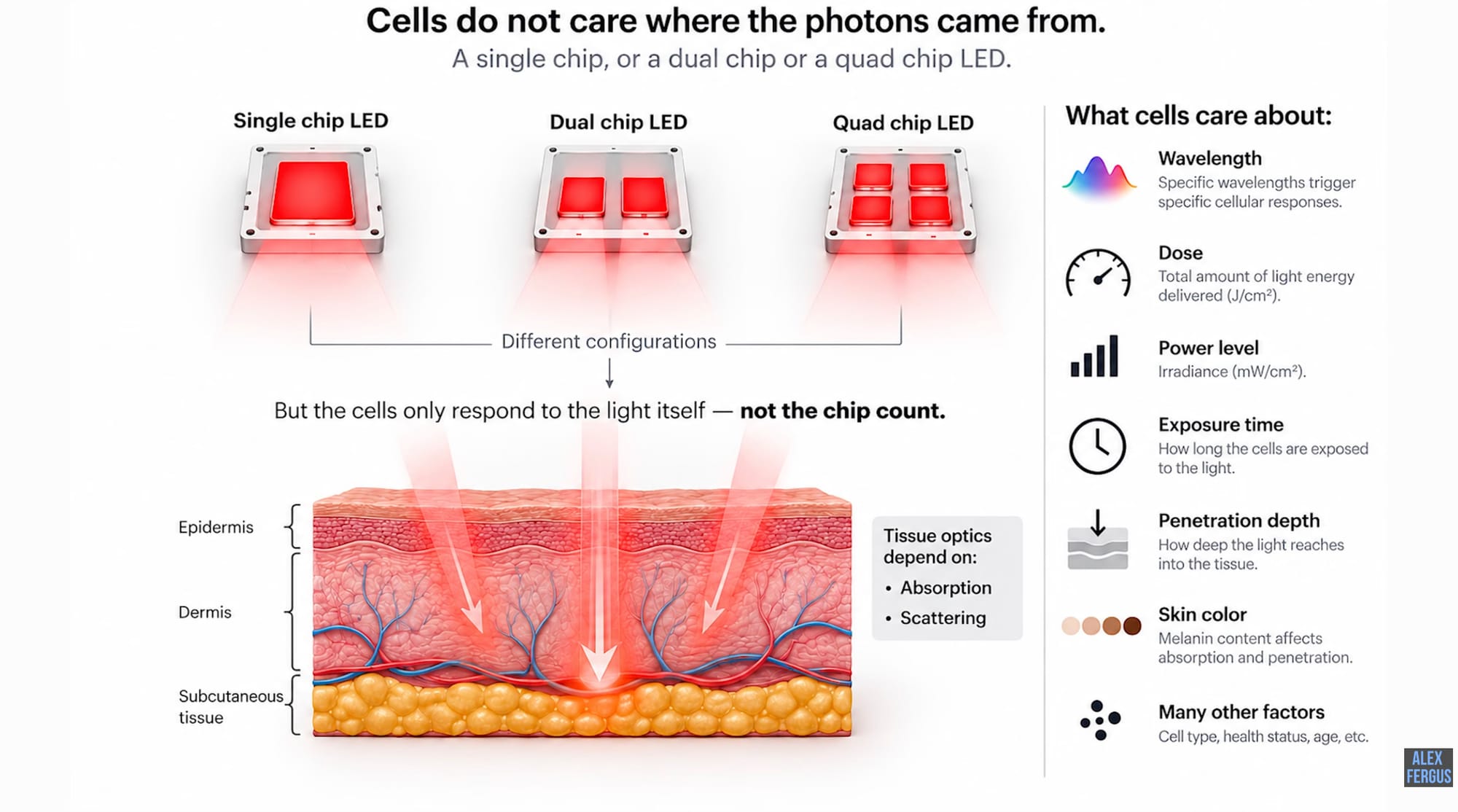
But cells don't know—or care—whether photons came from a single-, dual- or quad-chip LED. What ultimately matters is the wavelength reaching the tissue, the amount of light delivered, treatment time, penetration, coverage and whether the resulting dose is appropriate for the intended goal.
For a full-body panel, if everything else were equal, I would now lean toward a properly tested single-chip design with independent data behind it. For masks, wraps, helmets and other close-contact devices, multi-chip LEDs may still offer meaningful advantages.
The bigger takeaway is simple: don't buy a red light therapy device because it has the most chips. Buy it because it delivers the right light, at the right wavelength and dose, to the right area safely and consistently.
Resources Mentioned
⭐ PlatinumLED use this link https://aferg.co/redled for 5% off. Code will appear in a minute
⭐ PlatinumLED testing: https://platinumtherapylights.com/pages/certifications-testing
⭐ My interview with Mike from Light Labs International:
Additional resources:
⭐ Light Therapy Insiders Weekly Newsletter
⭐ Get instant access to a full Red Light FREE course here:
⭐ Facebook Group
⭐ My Chatbot Free Tool
⭐ Red Light Therapy Blog & Deep Dives
Have You Seen These Reviews?
🔻 I Bought a $10,000 Red Light Therapy Testing Tool — Here’s Why It Matters
🔻 CurrentBody’s Acne Mask Gets the Wavelength Right. But There’s a Catch
🔻 I Have Been Using Red Light Therapy Incorrectly!
🔻 Maysama Aura Review: My Testing Revealed a Big Problem
Alex's Bio
Alex Fergus wrote this blog post. Alex is an ISSN Sports Nutrition Specialist, Fitness Professional, and certified Superhuman Coach who continues to expand his knowledge base and help people worldwide with their health and wellness. Alex is recognized as the National Record Holder in Powerlifting and Indoor Rowing and has earned the title of the Australian National Natural Bodybuilding Champion. Having worked as a health coach and personal trainer for over a decade, Alex now researches all things health and wellness and shares his findings on this blog.