
I've gotten this question a lot in the last few years. Methylene blue and red light therapy.
So let's consider all of the benefits, risks, pros and cons, of combining both therapies in this short article. I've written about this topic before, and integrated some content from an earlier newsletter I wrote on the topic in Nov 2024, but updated with 2026 science.
Let's go:
If you need an introduction to what these terms mean, check the following resources:
- What Is Red Light Therapy?
- Red Light Therapy Explained: Basic Terms Guide
- Start Here - Light Therapy 101 & Buyers Guide
- Red Light Therapy Dosing Chart: The Raw Data From Hundreds Of Studies
- Red Light Therapy Dosing: Why It's Complicated!
- Red Light Therapy Wavelengths Benefits: The Ultimate Guide
- How Often Should You Use Red Light Therapy Explained
These resources should give you a basic understanding of how red light therapy works, and the discussions around it!
Red Light Therapy & Methylene Blue Summary
In plain English, that means both increase energy production but in different ways.
Methylene blue, when used correctly, shows lots of benefit for antioxidant support, neuroprotection, as an antimicrobial, pain relief benefits, and anti-aging effects, although we rely a lot on animal studies there.
Right now, there's no direct science on combining red light therapy and methylene blue in humans. Experts also disgree on the topic. My view here, after going through many expert opinions, is that methylene blue can increase oxidative stress (a byproduct of energy production and stress) and mitochondrial efficiency in healthy people.
Methyelen blue may also interact dangerously with SSRIs ("antidepressants") and other medications.
If you're in poor health or have mitochondrial dysfunction, methylene blue can offer reflief by changing the energy production dynamic in the mitochondria. I recommend pharmaceutical-grade products, cautious experimentation by slowly increasing the dose, staying at low doses, accurate concentration calculations, and careful monitoring rather than assuming the combination is universally beneficial. The full article below contains a product recommendation.
There's no medical advice in this article. Consult your physician if you want to combine methylene blue and red light therapy, especially at higher doses.
Background: What Is Methylene Blue?
First up, what is methylene blue!? Methylene blue is a salt that's used as a dye, and that's blue as well as the name implied. However, you can also use methylene blue as medication - and it has physiological solid effects even at lower doses. A decent daily dose can be 1 or 2 milligrams so you don't need much. Also, the stuff is dirt cheap so it won't cost you the farm!
Many people have been using methylene blue because it directly aids mitochondrial function. In that sense it's similar to red light therapy - and in that sense it's a reason so many people talk about combining methylene blue and red light therapy!
So what does methylene blue do? It primarily lowers oxidative stress (and thereby systemic inflammation), and boosts energy-production directly inside the mitochondrion. Below you can see that energy-creation process in the Electron Transport Chain (ETC):
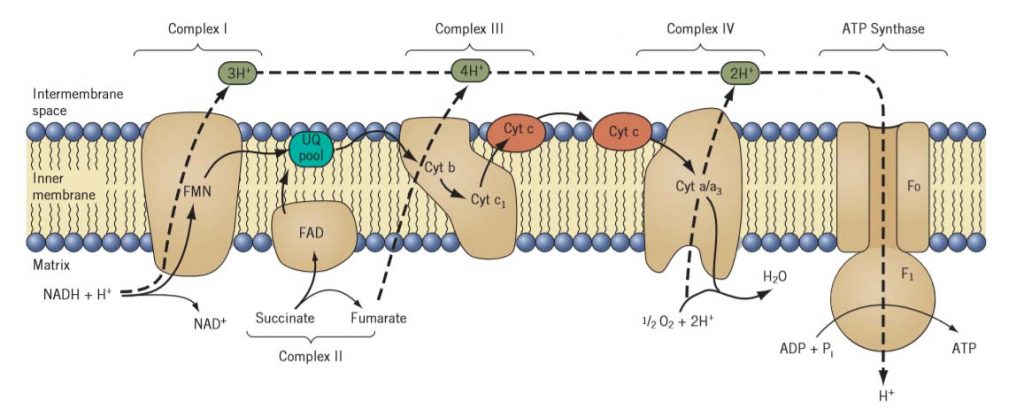
There are 4 complexes in that chain, and the final ATP synthase step. In the end, ATP is created, which is generally considered the main energy currency of the cell (but many people in the alternative health space don't believe the standard ATP story!)
Methylene Blue & Your Mitochondria
So here's where things get interesting:
When you see these steps I - IV above, methylene blue is hypothesized to be able to bypass the first three steps and then directly donate electrons to complex IV (there is disagreement about this!). As a result, the energy-creation process in your body improves.
(Keep in mind that in your mitochondria, the body uses "electrons" and "protons", not carbohydrates or fats - carbohydrates and fats provide these electrons and protons)
In many instances, such as when you get older, with stress, or if you have one or more chronic diseases, that energy-generation process is impaired. Methylene blue can then supplement that process. As energy is the foundation of your entire health as a biological organism, boosting energy production moves you towards health and distances you from disease. Often, steps in the energy-generation process in the picture we've added above are impaired, and thus, donating electrons directly to step IV is very helpful!
Next up, methylene blue also improves antioxidant capacity, which helps lower inflammation and scavenge free radicals. Excess inflammation is also tied to almost all chronic diseases, whether it's heart disease or neurodegenerative disease or else!
But just as with red light therapy that we talk about so often, higher doses aren't necessarily better! So here too, you'll have to start slow and monitor your progress. Not everyone responds the same! Generally, however, you should feel better, cognition should improve, and so forth - especially if you're metabolically impaired! Cell repair and regeneration should also increase, making methylene blue the perfect tool to keep you healthy in times of disease and stress.
Methylene Blue Science From 2019-2026
So, with these foundations explained, let's explore the science on methylene blue from the last 7 years:
- First up, there's an exciting 2021 review where methylene blue (MB) is considered an anti-aging drug. Here the focus is the increase of oxidative stress with age, and the ability of methylene blue to counter that. Decrease of mitochondrial function is also part of that process, specifically to neurodegerative disease (such as Parkinson's or Alzheimer's, or stroke risk). The benefit here is MB's ability to cross the blood-brain barrier, so that it can directly affect not only your body like many supplements do but also the brain! Animal studies have been really promising with MB so far. Furthermore, MB directly affects skin aging - researchers write about this topic: "MB has the ability to delay skin aging as well. MB can increase cell longevity, protect skin from UV exposure, and accelerate and help with the wound healing process. Additionally, MB’s antimicrobial properties are beneficial for skin. Furthermore, a recent study proved that MB treatment resulted in significant improvements in HGPS skin fibroblast phenotypes (an accelerated form of the aging disease)." So, aging in general, brain aging, and skin aging all are likely affected by MB supplementation, and you may want to consider trying the compound once you get into your 50s and 60s, and also have metabolic impairments!
- A 2023 review analyzes and integrates previous research on Alzheimer's disease and MB. Here researchers write: "The findings of the studies indicate that the administration of MB has demonstrated enhancements in cognitive function, reductions in the accumulation of plaques containing beta-amyloid, improvements in memory and cognitive function in animal subjects, and possesses antioxidant properties that can mitigate oxidative stress and inflammation within the brain." Human studies have been positive as well, however, but there's less knowledge about the exact mechanisms there. You may need higher doses such as 8 or 16 mg per day with Alzheimer's, but we recommend only doing so after talking to your doctor! Some studies also show adverse effects, especially at super-high doses. And, much more research is needed here as well!
- A 2026 paper showcases that MB helps counteract septic shock, potentially. Another 2025 paper has a similar conclusion. And HERE too in a 2026 review.
- Same for cardiac shock and arrest, in a 2025 paper.
- A 2022 review shows that MB improves autophagy, where damaged mitochondria are recycled. HIgh-quality sleep and exercise are other tools to promote autophagy.
- Surprisingly, there are two 2024 reviews, THIS and THIS one, on MB for septic shock. Septic shock is the late-stage reaction to sepsis, a poisoning of the blood. Here, MB likely lowers mortality and shortens medication use and the length of hospital stay—likely again by providing energy to the body when it's desperately needed!
- A 2021 study shows that MB has UV-protection effects as strong as some toxic compounds used in current sunscreens.
- A 2021 study shows that MB decreases pain in patients with oral mucositis - a disease of the inner lining of the cheeks and mouth that affects eating, and is a side effect of cancer treatment. A 2022 study has a similar outcome.
- A 2024 case report - which includes only 1 patients and describes the course of their disease with an intervention - found that MB application reduces pain locally! Of course, one case report says nothing and the topic should be investigated further, but it is promising to do so! A topically-applied healthy painkiller would have many applications, such as open wounds or to apply before giving dental anesthesia, for instance!
- A 2024 animal study finds no effect of MB on the outcomes after a heart attack.
We've known about this compound since 2013-14 or maybe even earlier. What is a bit surprising is that there's not a ton of research on MB! With its popularity in the alternative health and wellness space, we would have thought it to become more popular in mainstream medical research.
The suggestion?
Start slow, don't work up to very high doses, and monitor how you're doing. There's very little risk in trying methylene blue, both from a health as well as a financial perspective! Start with 0.5 mg - we've added a great product at the bottom of this blog post - and work your way up to a max of 1-2 milligrams!
Different Experts On Methylene Blue Pros & Cons: Helpful In Disease, Potentially Harmful If You're In Good Health
So yeah, I've carefully tracked different experts on methylene blue over the last few years, as well as my own reading of the science.
As this topic is somewhat more speculative, I still want to cover the opinion of different experts here. That statement of mine can be explained in that we don't know how methylene blue reacts in every single circumstance/health context due to biological individuality and more.
- Let's start with Dr Chris Masterjohn. Dr. Chris Masterjohn has an amazing analytical mind and has written a great Substack deep-dive article already in 2023 on the topic of Methylene Blue. Here's the conclusion of his 50+ page text on methylene blue, which is behind the pay wall:
"[Methylene blue] produces hydrogen peroxide and can rewire the mitochondrial respiratory chain around specific toxic or genetic impairments. It is a strong monoamine oxidase inhibitor, which makes feeling better on it an unreliable guide to whether energy metabolism is being improved. Outside of the standard medical applications and contraindications, it likely has value for vasodilatory headaches and for the treatment of respiratory chain disorders. It is not a general health tonic and it does not provide general support to mitochondria. There is evidence that it helps if you need it, and harms if you do not."
- Dr Chris Masterjohn isn't universally positive about methylene blue (MB) and even skeptical, especially about universal use. Yes, it's great for certain medical uses under medical supervision, such as antimicrobial, disinfectant, malaria treatment, post-surgical goals, tumors, and treatment for certain forms of methemoglobinemia, etc.
- MB influences redox reactions at the fundamental level. Redox reactions (oxidation-reduction reactions) are fundamental to cellular metabolism, driving energy production through the transfer of electrons between molecules - simply put, energy creation in your mitochondria. The problem Dr Chris Masterjohn signals is that MB usage leads to the generation of "hydrogen peroxide", and in other circumstances singlet oxygen, superoxide. This means you increase oxidative stress. Some hydrogen peroxide is great but more can often be detrimental.
- Finally, mitochondrial respiration (the energy-creation process in mitochondria) can be altered, Masterjohn writes in his deep-dive article. However, Dr Masterjohn strongly rejects the idea that this universally makes methylene blue a general mitochondrial enhancer. Chris' argument is that bypassing parts of the respiratory chain is inherently less efficient than a healthy respiratory chain, so mitochondrial issues aren't fixed and even masked in a way. So, yes, a shortcut can be helpful here, but only if mitochondrial function is already impaired, and somewhere in complexes I - IV, there's an issue.
- (Many other issues are mentioned in Dr Chris Masterjohn's paper, such as MB acting as a monoamine oxidase-A inhibitor, countering anxiety and depression but also giving you a false sense of security as mitochondrial health hasn't improved. Then, there's drug interactions of MB with SSRI drugs and others. Essentially, if you don't need MB, it may reduce ATP (energy production in the mitochondira9, increase oxidative stress, or impair neuromuscular function. No bueno!!
- Dr Chris Masterjohn also mentions focusing on low-hanging fruits such as CoQ10, copper, iron, vitamin B2 (riboflavin), etc, to fix mitochondrial function. So at best, we've got a recommendation for temporary use here, and if MB is beneficial for use, there are implications that mitochondrial function is already impaired. This accords to my experience personally as I've never noticed anything using MB myself, although that was in the 2015-16 era I think!
- Secondly, there's Dr Jack Kruse - which goes back all the way until 2016, as I remember I was in college when reading that, haha. Dr Kruse has a more positive viewpoint of MB, but doesn't really showcase a protocol in that article either.
- Dr Kruse claims that MB is more positive as a mitochondrial function/light aid that lowers excessive nitric oxide, improves oxygen handling (necessary for energy-production!), and may help different conditions. These conditions include neurodegeneration, TBI, diabetes, autoimmune disease, viral disease, and more. And yeah, Dr. Kruse also emphasizes the MAOI and alternative electron acceptor dynamics that Dr. Chris Masterjohn talked about.
- But, Dr. Kruse also says that misuse can be dangerous! And claims MB is "better tolerated with an IV infusion" - oral use recommended if gut function is generally OK (paraphrasing him and slightly oversimplifying).
- Andrew Huberman has an episode on the MB topic too. Honestly, not too informative.
- Giorgi Dinkov (Ray Peat-inspired influencer) has an article on MB and neurodegenerative disease. I like the guy on some topics, just like Dr. Kruse, but don't always agree with both. Dinkov implies higher doses, esp. for neurodegenerative diseases and mood disorders, although maybe recent research is slightly less positive about that. I see doses of 8-16 mg a day, and even far higher in some medical contexts, which is much more than what I'm willing to comfortably recommend.
- Dr Ray Peat himself mentions MB but also more in a temporary context.
- My personal acquaintance Jay Feldman, also a great Ray Peat inspired influencer, is also cautious but does accept if for, say, brain injuries. No dosing found in that episode.
The balanced outcome here? My take on considerations:
- From the perspective of taking excess precaution, talk to your doctor first before taking Methyl Blue. You can have a genetic polymorphism, for instance, altering how MB works in your body.
- Be careful if taking medications, such as SSRIs and anything other affected by MAOI actions.
- Accept that if MB works, you may have a bottleneck somewhere in the mitochondrial energy-production process.
- Use low doses of MB, such as 1-2 mg per day
- Know that we don't have all the science on red light therapy & methylene blue, I would like to see some direct data here in different populations (healthy, unhealthy, different conditions, young, old, etc)
Red Light Therapy & Methylene Blue Basics
So, now you know the basics of methyele blue and mitochondrial function. Red light therapy affects that same mitochondrial function, such as upregulating energy production at complex IV.
Red light therapy has a few other (primary and secondary) mechanisms as well. I talk about these mechanisms in the article/video below, if you're curious about the details here:
 Bart Wolbers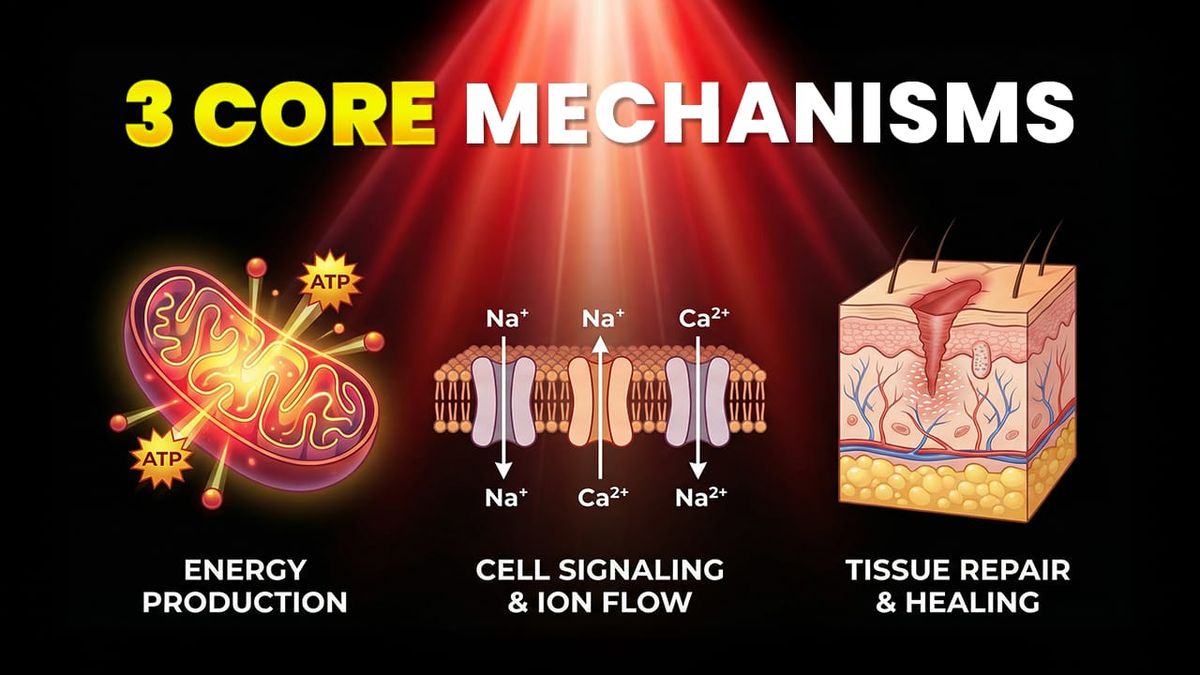
The big issue? There's no direct science on methylene blue in combination with red light therapy (medically called "photobiomodulation"). Just one 2020 paper considers their interaction.
Yes, there is loads of research using methyele blue in "PhotoDynamic Therapy" (PDT) but that is fundamentally different than red light therapy. You can find papers HERE, HERE, and HERE, for instance.
Principally, methyelene blue (MB) and red light therapy have different targets in the mitochondria. MB allows you to bypass parts between complex I and III, and red light therapy affects complex IV (and complex V arguably!)
Grab Methylene Blue Below
Fortunately, in 2026, it's extremely easy to grab high-quality methylene blue from the internet.
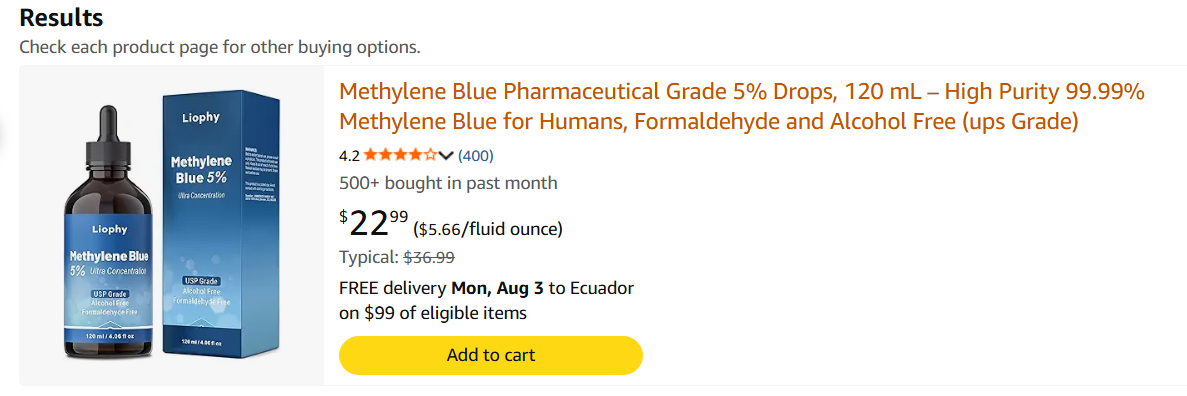
By clicking HERE you should be able to see many pharmaceutical-grade methylene blue options that have hundreds/thousands of reviews. Examples are:
And:
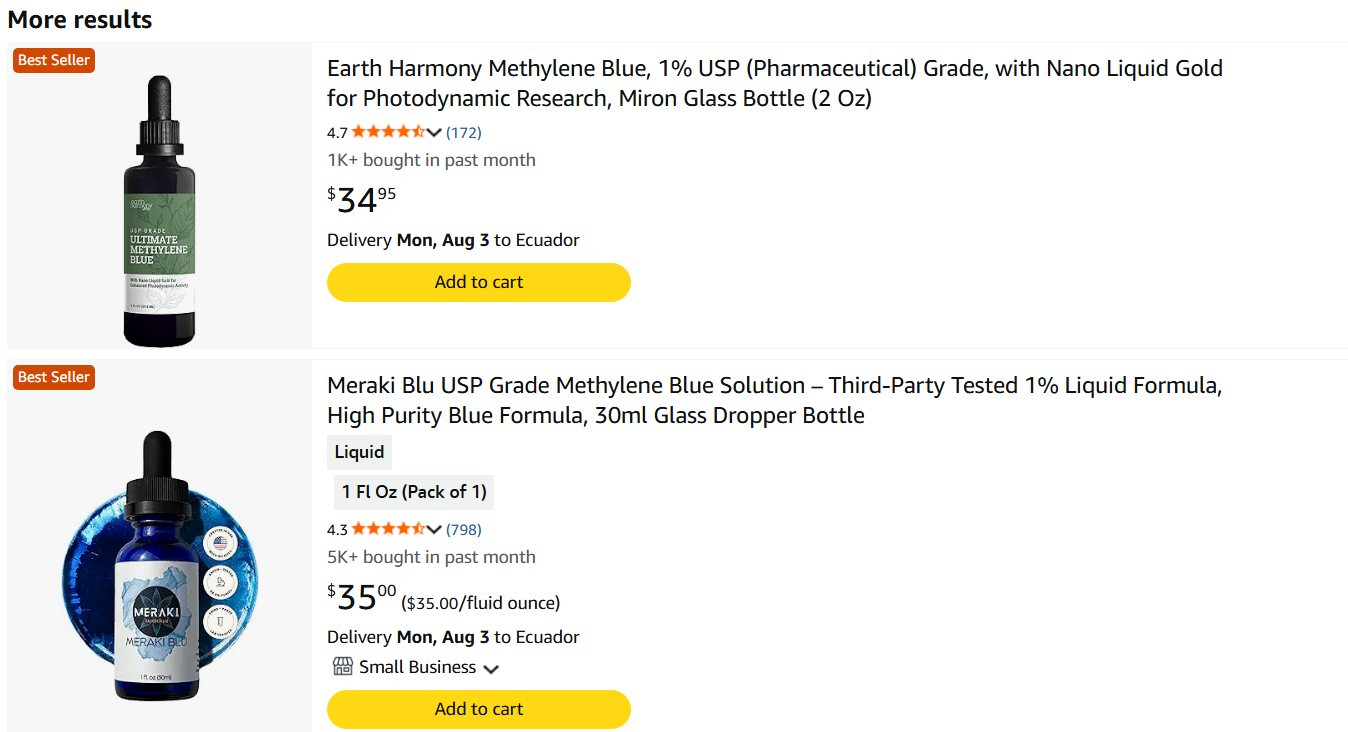
So, click HERE and grab a bottle.
You'll have to calculate the dose, however. A 1% solution has 10 mg of methylene blue per milliliter. So let's say you add 1 ml to a glass of water that you can keep in the fridge, you'd have to split that bottle of water over the cours of 5 days to get to a 2mg per day dose.
It's easy to get a high dose here, especially with higher concentrations such as 5%. Just as is the case with red light therapy dosing, there's some calculation involved.
Conclusion: More Research Is Needed, But Careful Experimentation Is Okay
My recommendation? Go slow. Experiment. Know the background, that if methyelen blue works really well for you you may have compromised mitochondria.
Also know that there's no direct science on combining red light therapy and methylene blue right now, so you'll have to heavily rely on speculation - which I've done in this article.
So, go slow! And monitor your response during and after your light therapy/methylene blue sessions. Your health should improve with this protocol, although I've not given exact/strict guidelines here.
This is a post by Bart Wolbers. Bart finished degrees in Physical Therapy (B), Philosophy (BA and MA), Philosophy of Science and Technology (MS - with distinction), and Clinical Health Science (MS), has had training in functional medicine, and is currently the head researcher at Lighttherapyinsiders.com
Other Resources I Recommend Checking:
🔴 Science Tool: Simplifying Routines, Benefits & Device Selection
🔴 Light Therapy Insiders Shopping Tool
🔴 Light Therapy Insiders Mask Shopping Tool
🔴 Light Therapy Advance Science Course Introduction
🔴 Signup To The Light Therapy Insiders 100%-Free Advanced Science Course
🔴 Light Therapy Insiders AI-Assistant Explained
🔴 All The Deals & Discounts Listed Alphabetically
🔴 Basics: What Is Red Light Therapy?
🔴 Basics: How To Use Red Light Therapy?
🔴 Basics: Red Light Therapy Buyer's Guide
🔴 Best Red Light Panel 2025? BioMax Pro Ultra vs The Rivals
🔴 The 3 Red Light Therapy Mechanisms You Should Know About
🔴 Red Light Therapy Wavelengths & Penetration Ultimate Guide