
🔥🔥 Check this blog daily for the latest 2026 Red Light Therapy Black Friday and Cyber Monday deals: Black Friday deals page 🔥🔥
Earlier this year, I tested 30 popular red light therapy masks, measuring everything from therapeutic power and wavelengths to comfort, facial coverage, and overall value. The original Project E Beauty Lumalux was one of my highest-scoring masks, earning 77.5 out of 100 points.
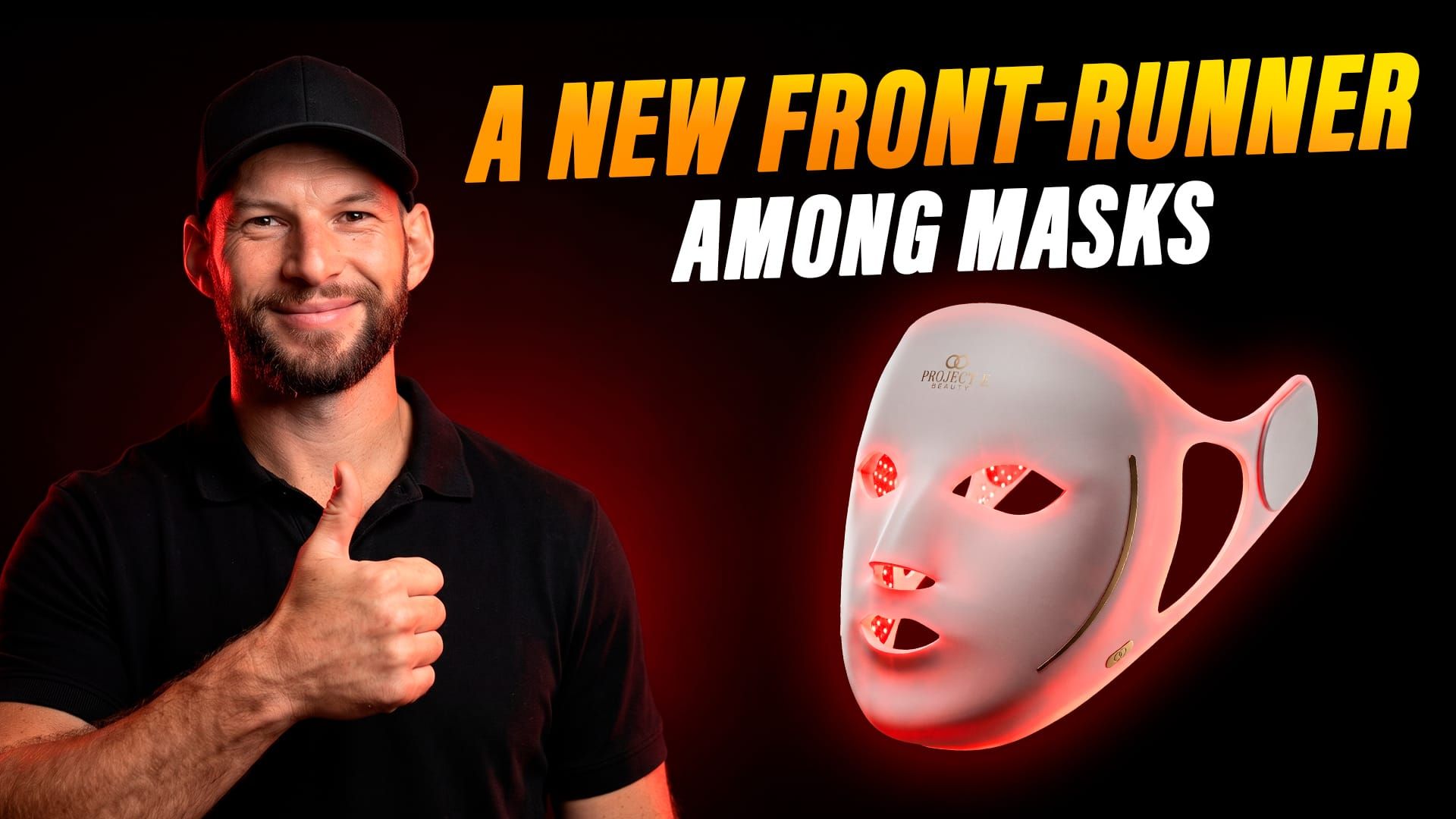
Since then, I've continued testing new masks, bringing my total to 32. Now, Project E Beauty has released the Lumalux V2, featuring a redesigned silicone mask, more LEDs, improved facial coverage, and simplified controls. But are these improvements enough to make it the best red light therapy mask I've tested?
After four rounds of testing, the Lumalux V2 earned an impressive 80 out of 100 points, making it my highest-scoring mask to date. However, my testing also uncovered a significant issue with its advertised blue light wavelength that potential buyers should know about.
20% OFF 1 item – BF20
25% OFF 2 items – BF25
30% OFF 3 items – BF30
🏆 Quick Answer: Is the Project E Beauty Lumalux V2 Worth It?
Absolutely. The Project E Beauty Lumalux V2 scored 80 out of 100 in my testing, making it my highest-scoring red light therapy mask to date. With 960 LED chips, excellent facial coverage, strong red light output, and a comfortable redesigned fit, it's an impressive upgrade over the original. However, my testing revealed one concern: the blue light measured 465nm rather than the advertised 415nm.
- Best for: Buyers who want excellent facial coverage, strong red light output, and a comfortable mask for skin rejuvenation.
- Skip it if: You want a cordless design or are primarily interested in blue light treatment for acne.
- Watch out for: The 415nm versus 465nm blue light discrepancy and potential pressure around the nose.
Comparing masks? The Lumalux V2 is now my highest-scoring mask. You can also explore the LED masks I recommend in 2026 and my tested mask rankings.
Project E Beauty Lumalux V2: Key Features and Specifications
Before getting into my testing results, here's a breakdown of what the Lumalux V2 offers.
| Feature | Project E Beauty Lumalux V2 |
|---|---|
| LED chips | 960 |
| LED bulbs | 240 |
| Light technology | LEDs |
| Advertised wavelengths | 415, 630, 830, 1072nm |
| Measured blue light peak | 465nm |
| Treatment modes | Red + NIR, Red + Blue |
| Session duration | 10 minutes |
| Measured irradiance | 21.3mW/cm² |
| Measured calculated dose | 12.8J/cm² |
| Controls | Two-button corded controller |
| Charging | USB-C |
| Retail price | Approximately $430 |
| Discounted price | Approximately $365 |
| Warranty | 2 years |
| Return period | 60 days (90 days during holiday promotion) |
| Overall score | 80/100 |
On paper, the Lumalux V2 offers an impressive combination of LED density, therapeutic power, and facial coverage at a competitive price. But as I've learned from testing dozens of red light therapy masks, specifications don't always tell the whole story. That's why I put it through four rounds of testing to see how it actually performs.
What's New With the Project E Lumalux V2?
Project E has made several meaningful improvements to the original Lumalux, particularly in comfort, facial coverage, and therapeutic light output. The new mask features 240 LED bulbs containing 960 individual LED chips, compared with 800 chips in the original model.
The biggest change is the focus on red light. The original Lumalux had 200 dedicated red LED chips, while the V2 has 480, representing a 140% increase. Project E has also introduced a redesigned 3D silicone structure, integrated chin coverage, improved straps, and longer treatment sessions.
Another important change is the simplified operation. The original mask offered eight different treatment modes, while the V2 has just two: one combining red and near-infrared light for skin rejuvenation, and another combining red and blue light for acne-related concerns.
Personally, I prefer this approach. Rather than offering numerous colors and complicated settings, Project E has focused on improving the features that matter most for skin rejuvenation.
Round 1: Fit & Ease of Use
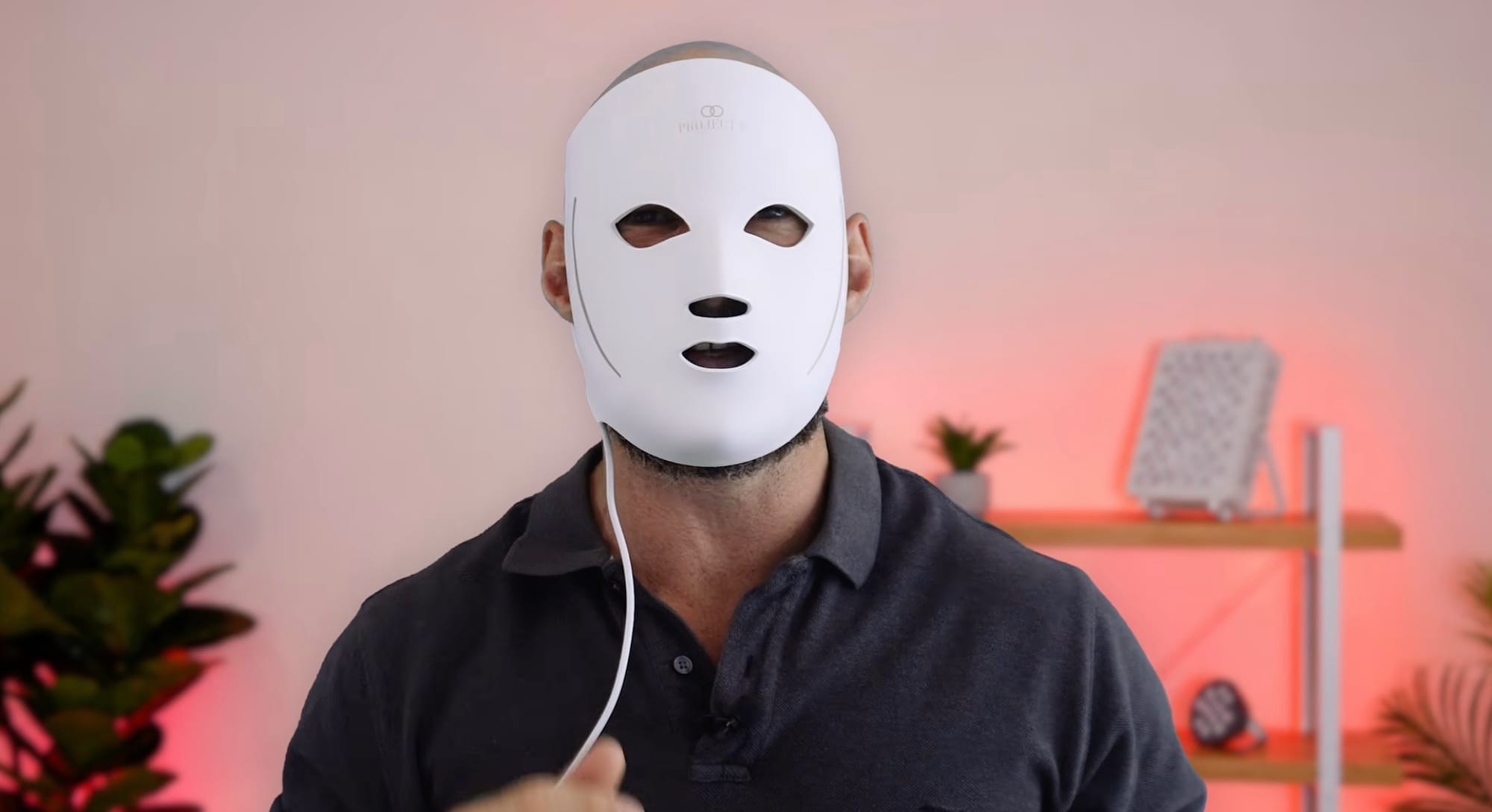
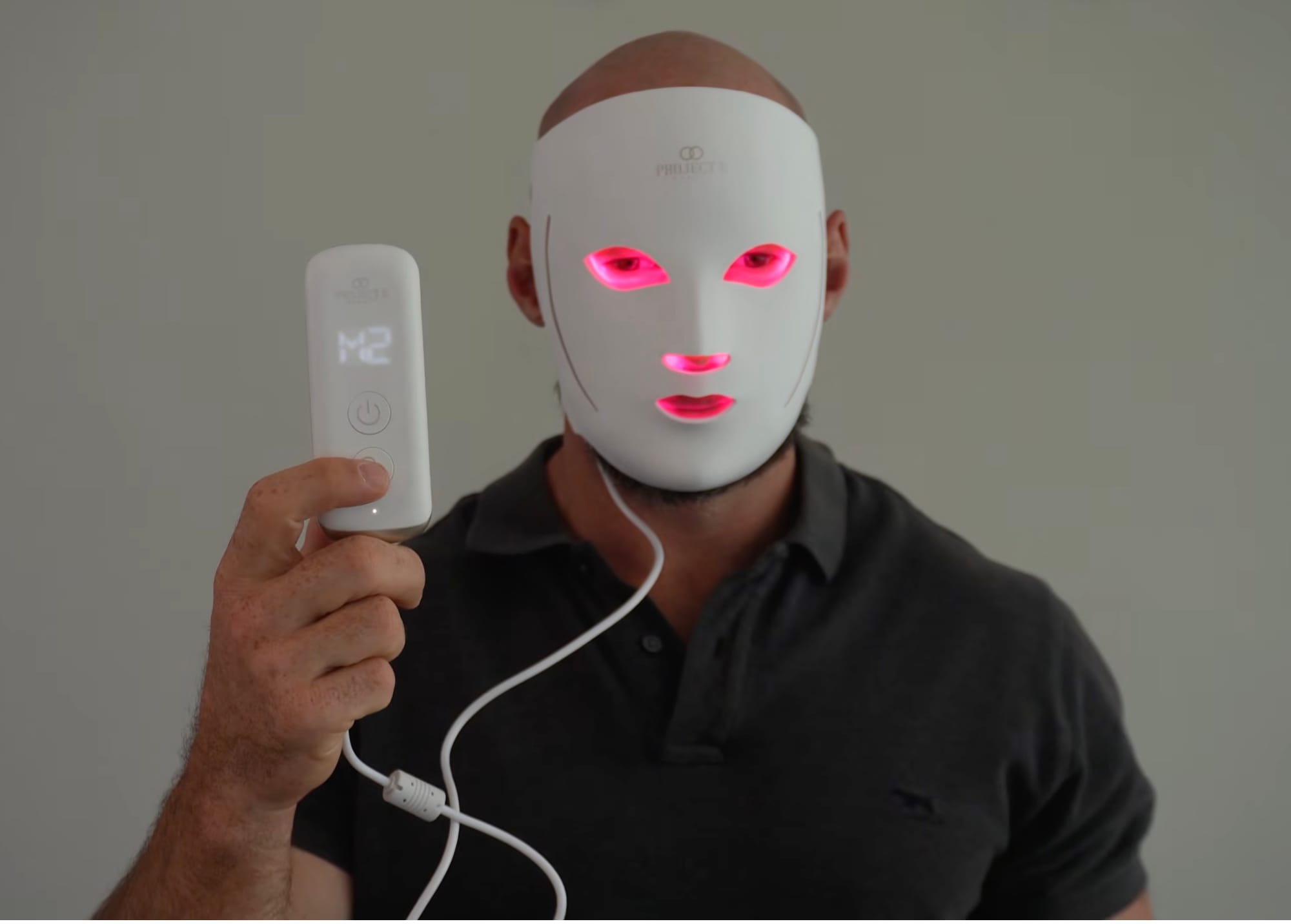
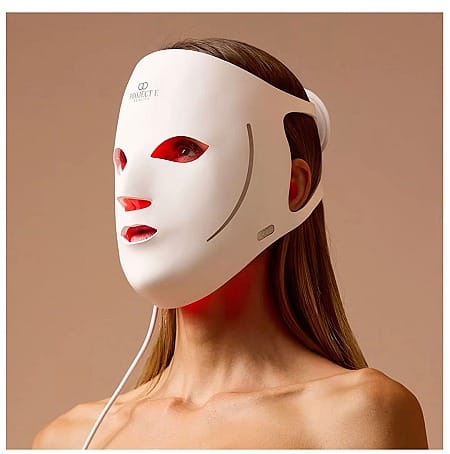
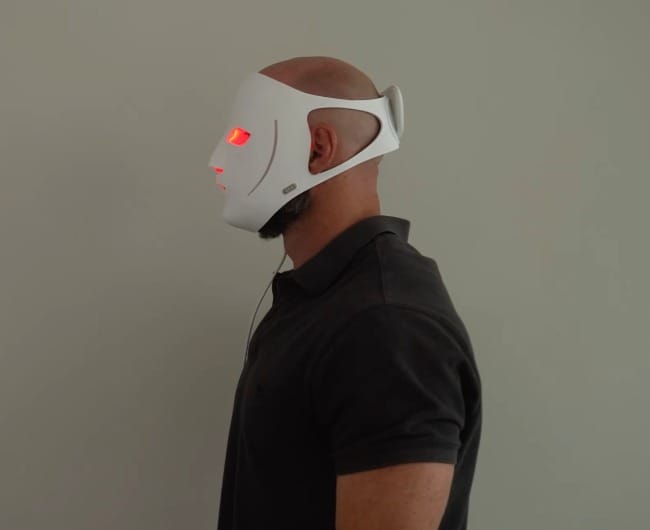
One of the biggest improvements is the redesigned 3D silicone mask, which fits more securely. The integrated chin strap helps keep everything in position, while the shorter straps make it easier to put on and remove.
During testing, I found the mask comfortable overall, although I experienced some pressure across my nose. This became more noticeable toward the end of the 10-minute session, and I also noticed some stickiness around my forehead and mouth.
However, facial shape makes a considerable difference. My wife, who has tested all 32 masks I've reviewed, actually described the Lumalux V2 as the most comfortable mask she's tried. That's impressive considering the number of different designs she's experienced.
The mask also stays securely in place, allows you to speak normally, and maintains consistent contact with the skin. My only other complaint is the limited strap adjustment, although the large Velcro fastening area helps achieve a reasonably secure fit.
Fit Score: 13/15
Operation
The Lumalux V2 is exceptionally easy to operate, thanks to its simple two-button controller and clear display showing the remaining treatment time. You can select between red and near-infrared light for skin rejuvenation or red and blue light for acne-related concerns without navigating complicated menus.
The controller also supports USB-C charging and includes a connection for an optional neck attachment. Because the silicone mask is lightweight and flexible, it's easy to fold and pack when traveling.
My biggest complaint is that the mask isn't cordless. The controller is relatively bulky, and the cable can be inconvenient when moving around, although the controller has a clip and fits in a pocket.
The instructions could also provide more information about red light therapy for first-time users. Nevertheless, the straightforward controls make this one of the easiest masks I've tested.
Operation Score: 7/10
Total Round 1: 20/25
Round 2: Therapeutic Power
Project E advertises four wavelengths in the Lumalux V2, combining red, near-infrared, deep near-infrared, and blue light.
- 630nm red light: A well-researched wavelength for skin rejuvenation and collagen-related benefits.
- 830nm near-infrared: Commonly used in photobiomodulation research.
- 1072nm deep near-infrared: An interesting addition, although research supporting its benefits for facial rejuvenation is more limited.
- 415nm blue light: A wavelength commonly studied for acne-related bacteria.
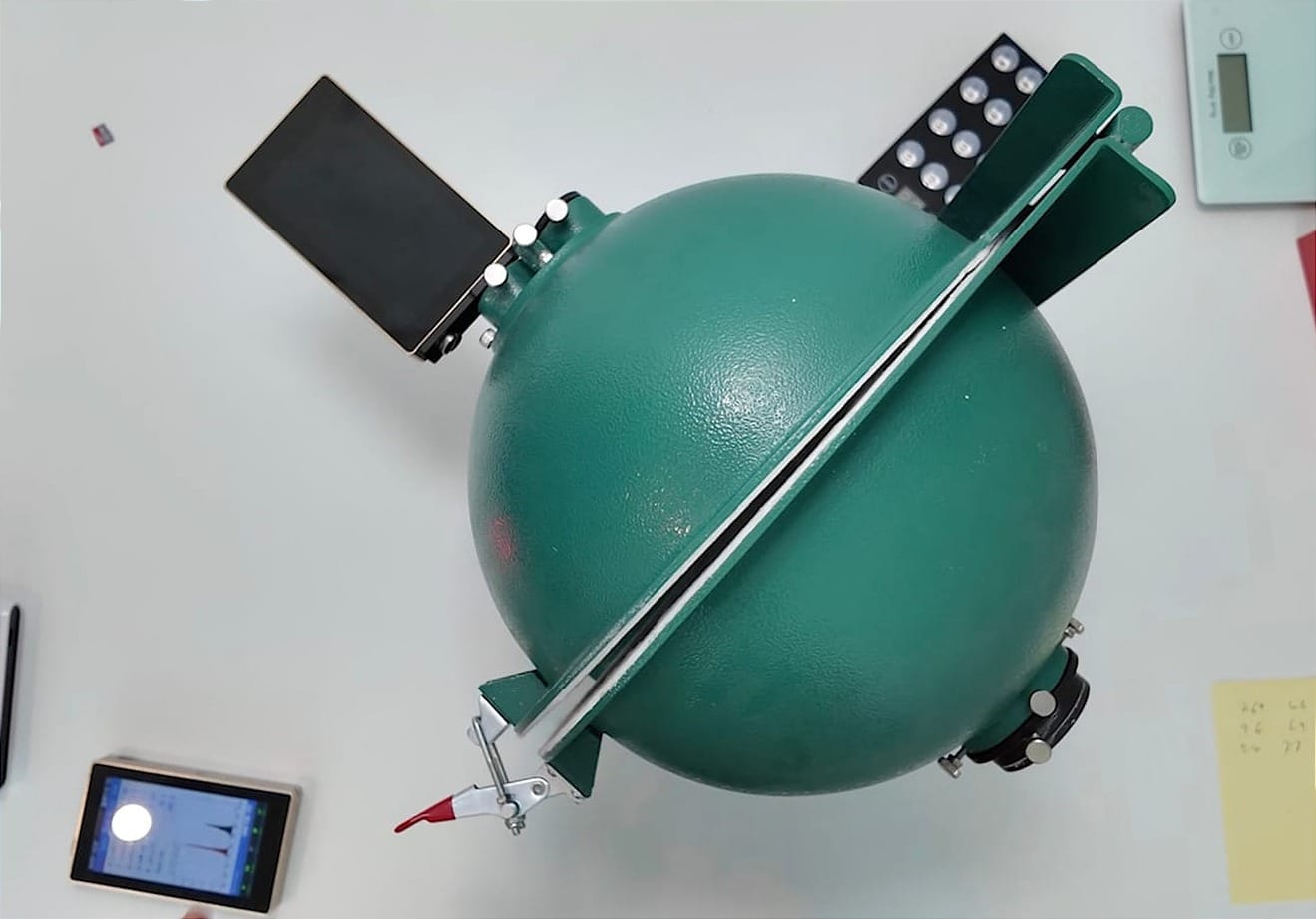
On paper, this is a promising combination. However, I don't simply rely on manufacturer specifications, which is why I measure the actual wavelengths using my testing equipment.
The Blue Light Problem: 415nm vs. 465nm
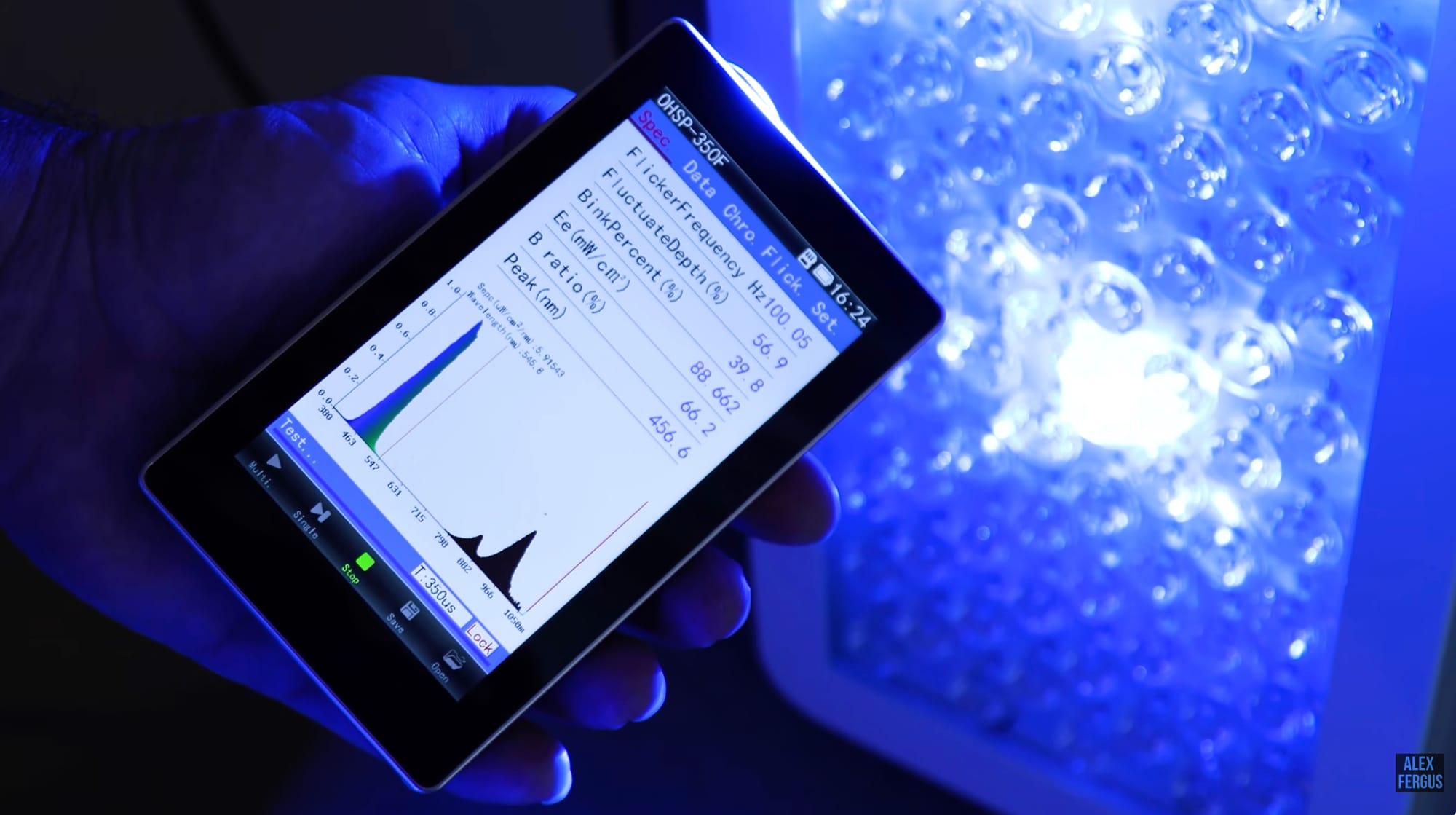
One of the biggest surprises came when I measured the blue light output. Project E advertises 415nm blue light, but my spectrometer identified a peak at approximately 465nm.
This is a significant difference, particularly for anyone purchasing the mask primarily for acne treatment. Much of the research into blue light and acne focuses on wavelengths around 415nm, rather than 465nm.
I'm not suggesting that 465nm blue light is completely ineffective, but it isn't the wavelength Project E advertises. Whether this is a manufacturing issue or a specification error remains unclear, and I hope the company investigates it.
What About the Near-Infrared Light?
My testing also revealed that most of the measured output was concentrated in the red wavelengths, with relatively weak output at 830nm. Unfortunately, my equipment couldn't accurately measure the longer 1072nm wavelength, so I can't confirm how much it contributes.
However, I don't necessarily consider the red-heavy output a disadvantage. For facial skin rejuvenation, 630nm red light is one of the wavelengths I value most, and the Lumalux V2 delivers plenty of it.
Wavelengths Score: 8/10
Power & Dose
Project E advertises an irradiance of approximately 30mW/cm². My measurements across the mask averaged 21.3 mW/cm², which is reasonably close given the differences in testing methods.
Using this measured output and the 10-minute treatment duration, I calculated a dose of approximately 12.8J/cm². That's a promising figure for skin rejuvenation based on the research I've reviewed.
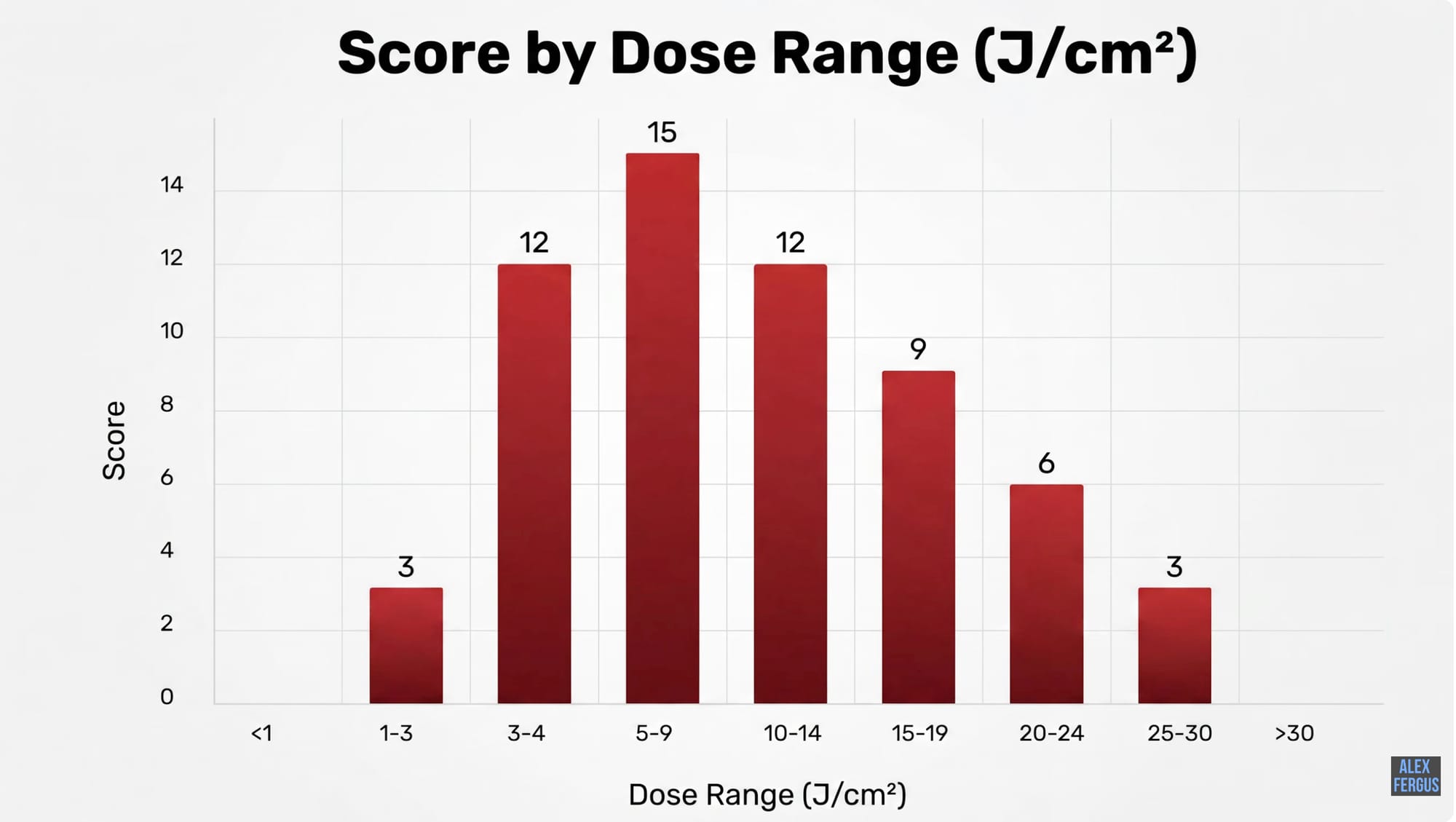
This doesn't mean the mask is too powerful or that a full 10-minute session will be ineffective. However, if you prefer a slightly lower dose, you could shorten your session to around eight minutes.
Overall, I'm pleased with the measured power, particularly the strong red light output. Combined with the mask's excellent facial coverage, this makes the Lumalux V2 a promising option for skin rejuvenation.
Power & Dose Score: 12/15
Total Round 2: 20/25
Round 3: Coverage Quality
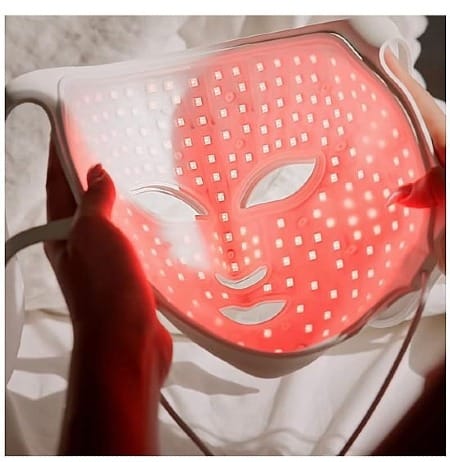
Facial coverage is arguably the Lumalux V2's biggest strength. The mask contains 240 LED bulbs, each housing four individual LED chips, giving it an impressive total of 960 LED chips.
That's a substantial number for a facial mask, especially considering the original Lumalux contained 800 chips. The redesigned silicone structure also helps position the LEDs closer to the skin, improving overall coverage.
Of those 960 chips, 480 are dedicated to red light, 220 to near-infrared, 20 to deep near-infrared, and 240 to blue light. I particularly like the increased emphasis on red light, which is one of the most important wavelengths for facial skin rejuvenation.
With more than 500 LED chips required to earn full points in this category, the Lumalux V2 comfortably achieves the maximum score.
LED Chip Count Score: 10/10
Zone Coverage
Having hundreds of LEDs is impressive, but what matters most is where that light actually reaches your face. That's why I evaluate coverage across 10 different facial zones rather than relying on LED numbers alone.
During testing, I found excellent coverage across the forehead, temples, cheeks, and nose. The mask also delivers good coverage around the outer corners of the eyes, which is encouraging for anyone concerned about crow's feet.
The nose is a particular strength, with LEDs positioned across both the bridge and surrounding areas. Chin coverage is also excellent compared with many competing masks.
However, there are still some weaker areas. Coverage beneath the eyes could be better, while the lips and jawline receive less light than I'd ideally like.
These limitations aren't unique to the Lumalux V2, as under-eye and lip coverage remain common weaknesses across many masks. Nevertheless, its overall performance in this category is exceptional, earning one of my highest coverage scores.
Zone Coverage Score: 12/15
Total Round 3: 22/25
Should You Upgrade From the Original Lumalux?
If you already own the original Lumalux, you might be wondering whether the V2 is worth the additional investment. The improvements are meaningful, especially in LED count, facial coverage, comfort, and treatment duration.
Here's how the two versions compare:
| Feature | Lumalux V1 | Lumalux V2 |
|---|---|---|
| LED bulbs | 200 | 240 |
| Total LED chips | 800 | 960 |
| Red LED chips | 200 | 480 |
| Near-infrared chips | 180 | 220 |
| Deep near-infrared chips | 20 | 20 |
| Blue LED chips | 200 | 240 |
| Treatment modes | 8 | 2 |
| Session duration | 3 or 6 minutes | 10 minutes |
| Warranty | 1 year | 2 years |
The biggest improvement is the 140% increase in dedicated red LED chips, combined with a more comfortable and better-fitting design. Project E has clearly shifted its focus from offering numerous treatment modes to delivering stronger, more consistent light coverage.
However, I wouldn't necessarily recommend replacing a perfectly functional original Lumalux immediately. If you're happy with your existing mask, you could continue using it for another year or two before considering an upgrade.
For someone purchasing their first red light therapy mask, though, I'd definitely favor the newer design.
Round 4: Price & Peace of Mind
Shipped Price
The Project E Lumalux V2 retails for about $430, but with my 15% discount, it comes down to around $365.
Considering its measured performance, comfortable design, high LED count, and excellent facial coverage, I think this represents competitive value. There are certainly cheaper masks available, but many don't offer the same combination of features and measured output.
At this price, the Lumalux V2 falls within my $300–$399 scoring bracket, earning 14 out of 20 points for affordability.
Shipped Price Score: 14/20
Peace of Mind
Project E has improved its warranty from one year on the original Lumalux to two years on the V2. The company also offers a standard 60-day return period, which is particularly valuable because comfort and fit can vary considerably from person to person.
At the time of this review, Project E is offering an extended 90-day return period for the Black Friday holiday season. That gives buyers additional time to evaluate whether the mask suits their needs.
The company has also been around since 2012, making it a more established brand than some newer competitors. Taken together, the warranty, return policy, and company history provide solid buyer protection.
Peace of Mind Score: 4/5
Total Round 4: 18/25
Final Results: Lumalux V2 Scores 80/100
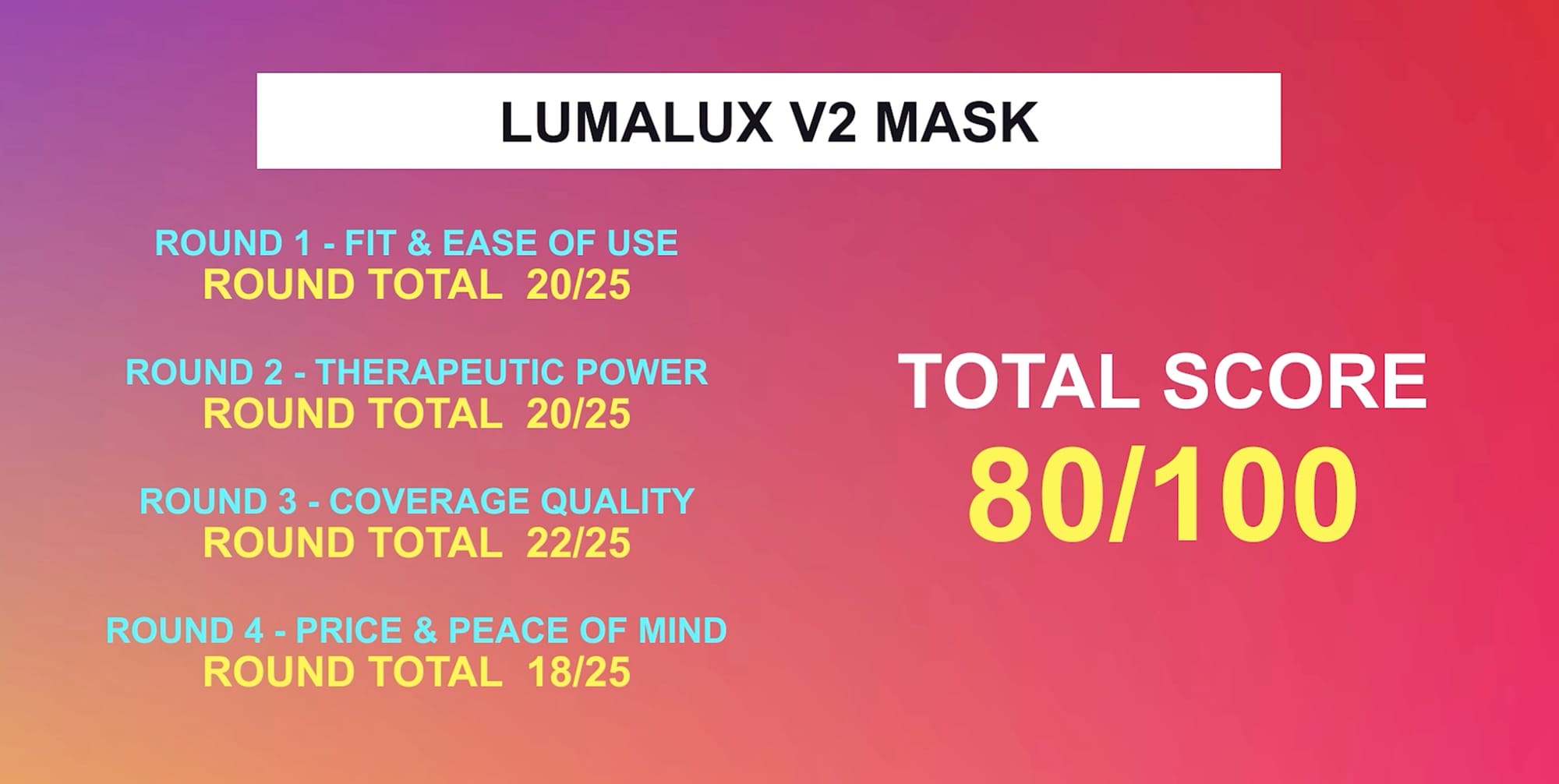
After completing all four testing rounds, the Project E Beauty Lumalux V2 achieved my highest red light therapy mask score to date.
| Testing Category | Score |
|---|---|
| Fit | 13/15 |
| Operation | 7/10 |
| Round 1: Fit & Ease of Use | 20/25 |
| Wavelengths | 8/10 |
| Power & Dose | 12/15 |
| Round 2: Therapeutic Power | 20/25 |
| LED Chip Count | 10/10 |
| Zone Coverage | 12/15 |
| Round 3: Coverage Quality | 22/25 |
| Shipped Price | 14/20 |
| Peace of Mind | 4/5 |
| Round 4: Price & Peace of Mind | 18/25 |
| FINAL SCORE | 80/100 |
What makes this result particularly impressive is how consistently the Lumalux V2 performs across every category. It doesn't rely on one outstanding feature to compensate for major weaknesses elsewhere.
Excellent facial coverage, strong red light output, a comfortable design, simple controls, and competitive pricing combine to make this one of the most well-rounded masks I've tested.
How Does the Lumalux V2 Compare With Other Masks?
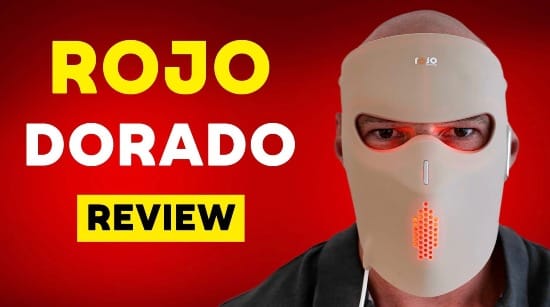
The Lumalux V2 now sits above several other popular red light therapy masks I've reviewed, including the Rojo Dorado and CurrentBody Series 3.
The Rojo Dorado scored 77.5/100 and costs approximately $320. It offers more wavelength options, including amber light, but its measured output was weaker, and it has fewer LEDs than the Lumalux V2.
The CurrentBody Series 3 scored 76/100 and costs approximately $513. It offers six wavelengths, a touchscreen controller, and app-based dosing features, making it an interesting option for anyone who wants more advanced customization.
However, the Lumalux V2 delivered stronger measured light output and considerably better facial coverage in my testing. If you're primarily interested in skin rejuvenation and don't need advanced controls, I think the Lumalux V2 offers better overall value.
What I Like and Dislike About the Lumalux V2
What I Like
- Excellent facial coverage from 960 LED chips.
- Strong measured 630nm red light output.
- Comfortable, redesigned 3D silicone mask.
- Simple controller with two treatment modes.
- Competitive pricing at approximately $365 with my discount.
- Two-year warranty and generous return policy.
- Optional neck treatment attachment.
Need Help Finding Something?
Light Therapy Insiders has hundreds of guides, reviews, interviews, and science articles. Our AI assistant can help you quickly find the most relevant information from across the site.
Ask the LTI AI Assistant →What Could Be Better
- Blue light measured at 465nm rather than the advertised 415nm.
- Relatively weak measured 830nm near-infrared output.
- Some coverage gaps beneath the eyes, around the lips, and along the jawline.
- Bulky corded controller.
- Limited strap adjustment.
- Potential nose pressure depending on facial shape.
Final Verdict: Is the Project E Lumalux V2 Worth Buying?
With a final score of 80/100, the Project E Beauty Lumalux V2 is currently my highest-scoring red light therapy mask.
Its biggest strengths are excellent facial coverage, strong red light output, comfortable fit, and straightforward operation. At approximately $365 after my discount, I think it offers excellent overall value for someone primarily interested in facial skin rejuvenation.
My biggest concern is the discrepancy between the advertised 415nm blue light and the 465nm peak I measured. If acne treatment is your main priority, I'd investigate that issue before purchasing.
No mask is perfect, and the Lumalux V2 still has some limitations around under-eye coverage and its corded controller. However, when I consider its performance across all four testing rounds, it's an impressive improvement over the original.
For now, the Project E Beauty Lumalux V2 takes the top spot in my red light therapy mask rankings, and it's one I'd recommend considering if you're looking for a high-performing mask at a reasonable price.
Black Friday Deals
Black Friday Deals!
⭐ Project E Beauty: Save an EXCLUSIVE 25% OFF five new products (LumaLux Face V2, LumaLux Face+ V2, LumaLase, Restora, and Restora+) with code ALEXBF25.
Plus, enjoy their public Black Friday sale: 20% OFF 1 item (BF20), 25% OFF 2 items (BF25), or 30% OFF 3 items (BF30). Shop here: https://aferg.co/projectebeauty.
⭐ Rojo: Get up to 50% OFF masks and portable devices, including 50% off the LED Mask and 40% off the Dorada and Oro masks. Shop here: https://aferg.co/rojo-rlt.
⭐ CurrentBody: Save 20% OFF sitewide during their Black Friday sale with exclusive discount code CBALEX! Shop here: https://aferg.co/currentbody.
Have You Seen These
🔴 Find YOUR Perfect Red Light Therapy Panel (FREE Tool!)
🔴 How to Find YOUR Best Red Light Therapy Mask
🔴 Red Light Mask Buyer's Guide
Alex's Bio
Alex Fergus wrote this blog post. Alex is an ISSN Sports Nutrition Specialist, Fitness Professional, and certified Superhuman Coach who continues to expand his knowledge base and help people across the world with their health and wellness. Alex is recognized as the National Record Holder in Powerlifting and Indoor Rowing and has earned the title of the Australian National Natural Bodybuilding Champion. Having worked as a health coach and personal trainer for over a decade, Alex now researches all things health and wellness and shares his findings on this blog.