

The LED face mask market has exploded over the last few years, with companies introducing more wavelengths, new features, and increasingly bold marketing claims. The Maysama Aura LED Mask is the company's second-generation device, replacing the original flat silicone design with a contoured mask that promises a better fit, easier operation, and high-frequency pulsing technology.
On paper, it certainly looks impressive. It features 630nm red light and 830nm near-infrared light, an adjustable chin strap, a removable battery, and several treatment modes. However, as with every mask I review, I wanted to find out whether the real-world performance matches the marketing.
I've now reviewed more than 30 LED masks, and every one goes through the same 100-point scoring system. That means I'm looking at comfort, operation, wavelengths, power output, coverage, price, warranty, and overall value. I also validate key specifications using my own spectrometer, allowing me to compare the company's claims with what the mask actually delivers.
Let's see how the Maysama Aura performed.
Comfort & Ease of Use
One of the biggest changes with the Aura is the overall design. Instead of the completely flat silicone design of the previous version, Maysama has moved to what I'd describe as a semi-molded silicone mask. It still has the flexibility of silicone, but it follows the contours of your face much better, helping it sit securely during treatment.
Another welcome addition is the adjustable chin strap. We've seen chin straps on other masks before, including the CurrentBody Series 2 and the MitoGlow, but the Aura uses Velcro so you can actually adjust the fit. I like that because everyone's face is different, and having some flexibility makes it easier to get the mask sitting comfortably.
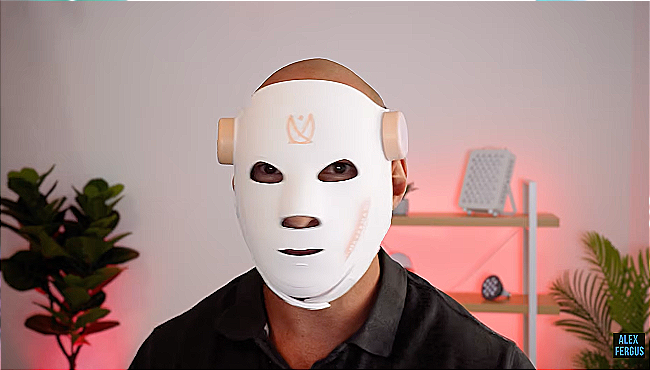
Overall, I found the fit to be very good. It stayed securely in place and felt snug without constantly shifting around. The only issue I experienced was some pressure around my nose. Since I have a larger-than-average nose, that may not affect everyone, but it did make talking and even breathing feel slightly restricted because the mask sits so closely against the face.
As I always do, I also asked my wife to test the mask. Interestingly, she had a different experience. She liked the overall comfort, but after a few minutes she mentioned feeling slightly claustrophobic. That surprised me because she hasn't made that comment about any of the other masks I've reviewed.
Fortunately, operation is where the Aura really shines.
The removable battery is one of my favorite features because it eliminates cables during treatment while making charging much more convenient. You can simply remove the battery instead of taking the whole mask with you, and replacement batteries are inexpensive enough that I'd recommend buying a spare if you plan to use the mask regularly or travel with it.
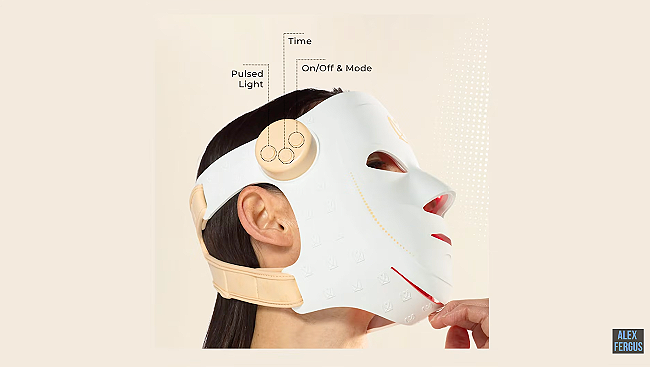
The controller is simple and intuitive. You can switch between red light, near-infrared, or both together, adjust the treatment time, and turn pulsing on or off with dedicated buttons. It also includes an audible beep when the session finishes, charges via USB-C, and comes with both a quick-start guide and a travel pouch.
Overall, while the fit won't be perfect for every face shape, the excellent operation and thoughtful design make this one of the easiest LED masks I've used.
Round 1 Score Summary
Fit: 12.5/15
Operation: 10/10
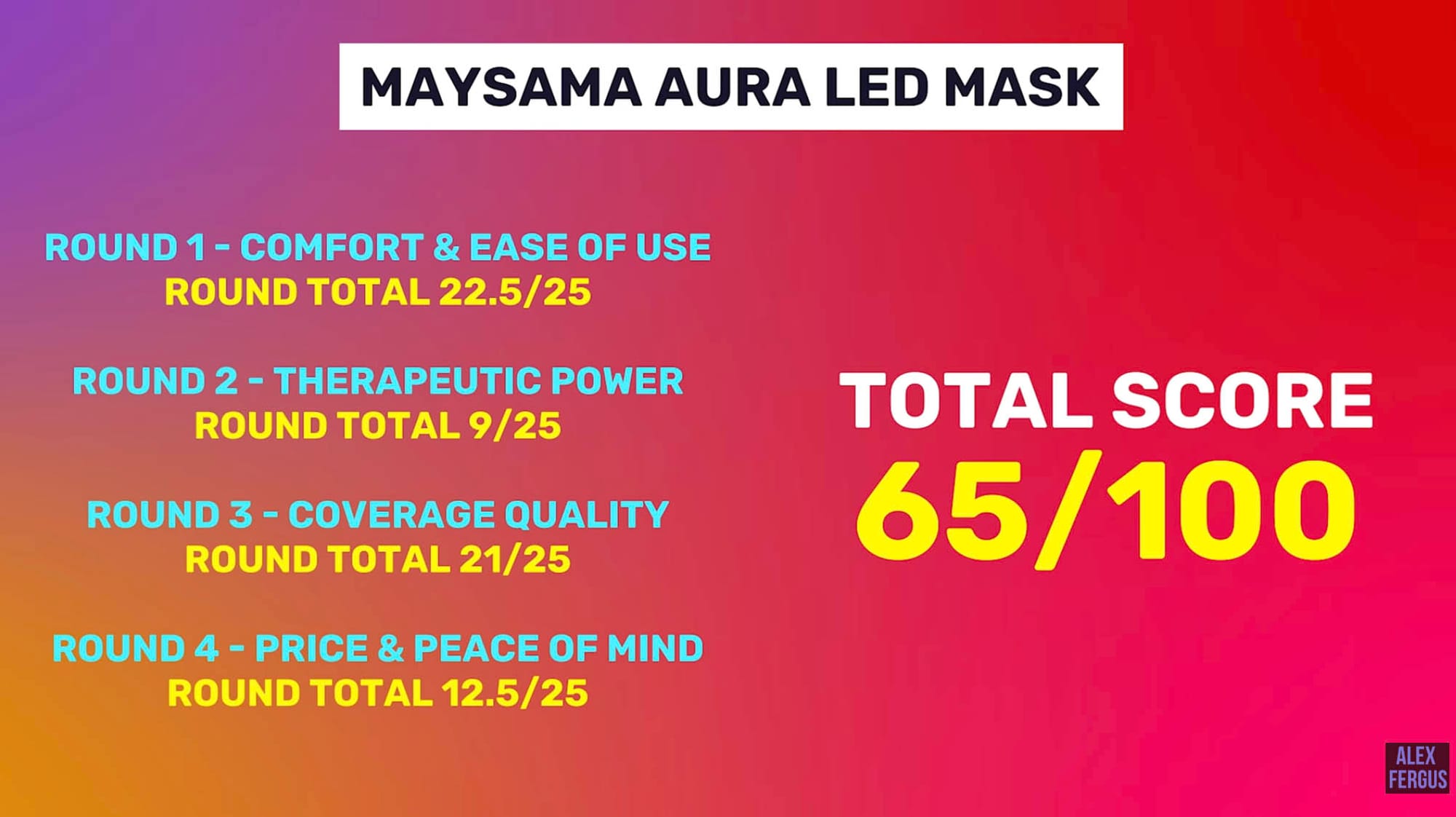
Round Total: 22.5/25
Therapeutic Power
The Aura uses 630nm red light and 830nm near-infrared light, both of which are excellent choices for skin rejuvenation and anti-aging. If I were designing an LED mask using only two wavelengths, these would be strong contenders because both have ample research supporting their use to improve skin quality. I also confirmed both wavelengths with my spectrometer, and they matched Maysama's published specifications.
That said, some competing masks now include additional wavelengths such as 660nm, 810nm, or 590nm amber light. While those aren't essential, they do provide extra versatility that some buyers may appreciate.
For wavelengths alone, the Aura performs well.
Unfortunately, the same can't be said for power output. According to the manual, the Aura should produce around 26 mW/cm² in continuous mode. However, when I tested it with my spectrometer, the results were nowhere near that figure.
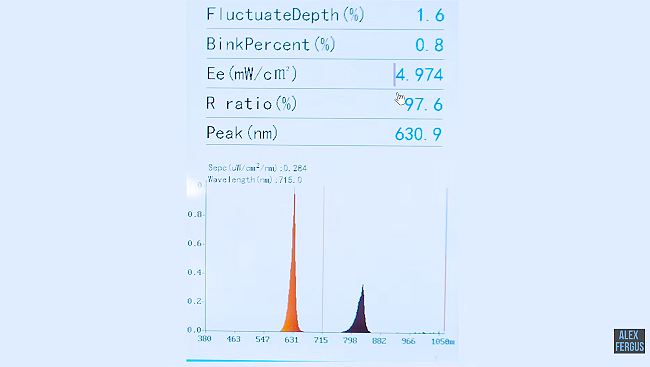
Instead of seeing readings close to the published specification, I measured values ranging from roughly 3 to 7 mW/cm² across different parts of the mask. After testing around 15 different locations, the average was approximately 5.5 mW/cm². That's a significant difference from the advertised output.
Using those measurements, the standard six-minute treatment delivers approximately 2 J/cm².
For skin rejuvenation, I generally like to see doses in the range of 5 to 9 J/cm², so the Aura falls well below what I would consider optimal. That doesn't necessarily mean it won't work, but it does mean I'd recommend significantly extending the treatment time.
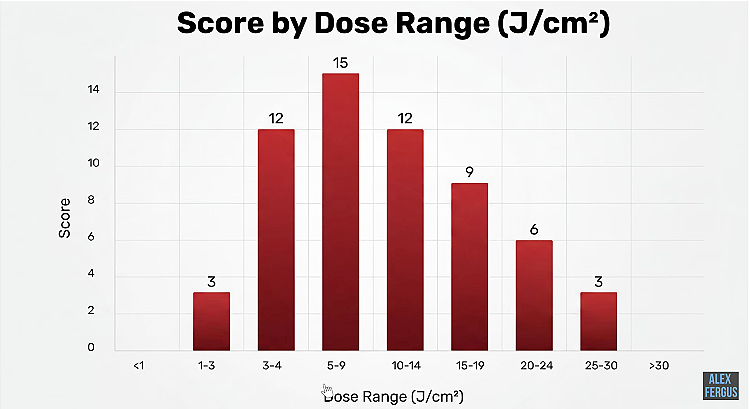
The problem is that doing two or even three treatment cycles quickly turns a short session into one lasting 12 to 20 minutes. Considering both my wife's comment about feeling claustrophobic and the pressure I experienced around my nose, that's probably longer than many people will want to wear this mask.
This is easily the biggest weakness of the Aura and the main reason it loses so many points in my scoring system.
Round 2 Score Summary
Wavelengths: 6/10
Dosing: 3/15
Round Total: 9/25
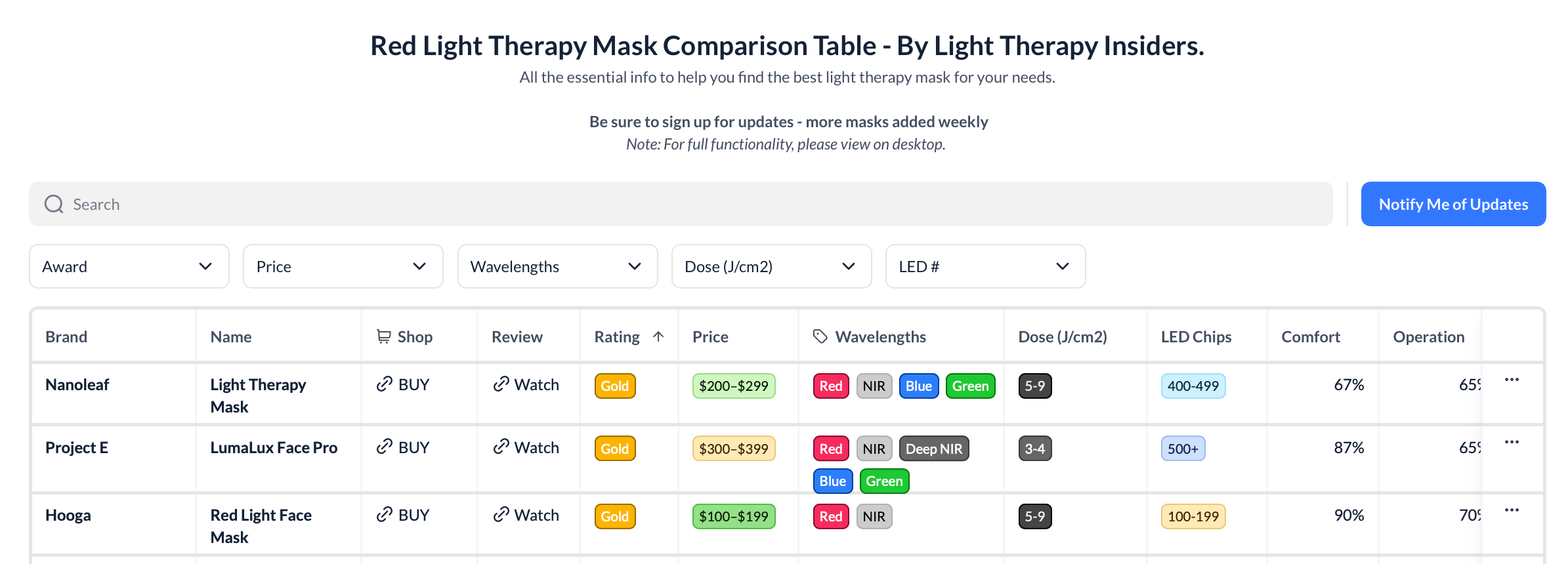
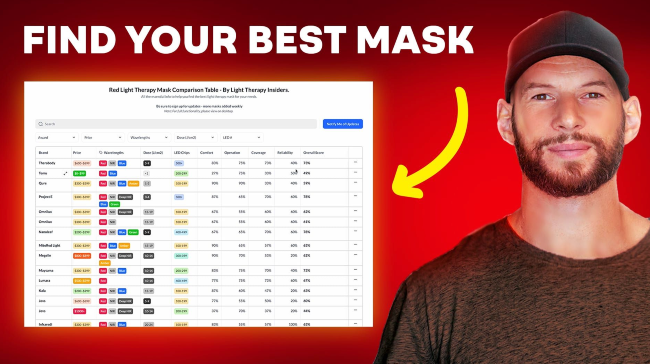
☝️ Use my Mask Comparison Table ☝
Access all my data on each mask
Compare different masks side by side
Search by price, wavelengths, and more
Links to my reviews and discount codes
Coverage Quality
The next category looks at how well the Aura delivers light across the face. I score this in two parts: the number of LED chips and the overall treatment coverage.
The Maysama Aura contains 155 dual-chip LEDs, meaning each LED houses both a red and a near-infrared chip. That gives a total of 310 LED chips, which is a respectable number for an LED face mask.
There are certainly masks on the market with significantly more LEDs, while others have considerably fewer, so I would describe the Aura as sitting comfortably in the middle. More LEDs generally provide more uniform light distribution, but 310 chips is still adequate for most users.
During my testing, I also noticed what you'd expect with this LED density. Directly over an LED, the readings were much higher, but they dropped away quite quickly between LEDs. That's normal, though it reinforces why I tend to reward masks with higher LED counts.
When it comes to actual facial coverage, the Aura performs well overall.

The forehead receives very good coverage, and both cheeks are well illuminated. The bridge of the nose and the nose itself are also nicely covered, which isn't always the case with LED masks.
Lip coverage is decent thanks to the relatively small mouth opening, although the LEDs don't extend right to the edge of the lips, so that area isn't fully treated.
The chin is a slightly mixed result. I like that Maysama includes a chinstrap because it addresses an area many masks ignore. However, because the strap is adjustable with Velcro, only one side actually contains LEDs. The opposite side is simply Velcro, so you don't get full light coverage on the underside of the chin.
Another area that could be improved is the area around the eyes. Although the silicone extends nicely around the eye sockets, the LEDs themselves sit slightly lower than I would ideally like. I would have preferred to see another row positioned slightly higher to better treat the upper eye area.
Overall, though, the Aura provides good facial coverage, and while it doesn't lead the category, it certainly performs well.
Round 3 Score Summary
LED Chip Count: 8/10
Zone Coverage: 13/15
Round Total: 21/25
Price & Peace of Mind
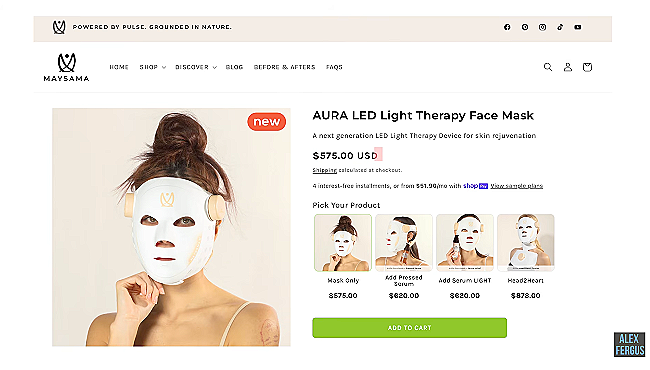
At the time of filming, the Maysama Aura retailed for $575. Using my discount code or affiliate link reduced that price to approximately $519 in the United States, with shipping costing only a couple of dollars.
There's no getting around it—this is a premium-priced LED mask.
While I like many aspects of its design, particularly the removable battery and ease of use, the lower-than-expected power output makes it harder for me to justify that price when compared with other masks I've reviewed.
The Aura comes with a two-year warranty, which is good to see for a rechargeable device. I also like the removable battery because if the battery eventually fails, it can be replaced without replacing the entire mask.
The return policy is 30 days, although there is a 10% restocking fee, which isn't ideal. During my review, I also noticed a small manufacturing issue around the battery connection where part of the surrounding material appeared to be lifting slightly. It wasn't enough to affect my testing, but it is something I would monitor over time.
As for the company itself, Maysama was founded in 2020 and entered the LED device market in 2023. I've reviewed one of their previous products, spoken with the founders, and plan to interview Beverley about the Aura and its pulsing technology, so I feel comfortable that this is an established company rather than an unknown brand.
Overall, there are plenty of positives, but a few areas where I'd like to see improvement.
Round 4 Score Summary
Price: 10/20
Peace of Mind: 2.5/5
Round Total: 12.5/25
Pulsing Technology
One of the Aura's headline features is its 1,200 Hz pulsing technology. Unlike lower-frequency pulsing, this happens so quickly that you don't actually see the light flashing during treatment.
Maysama considers pulsing to be one of the mask's biggest advantages, and I'll be interviewing founder Beverley to discuss the science behind it in more detail.
At this point, though, I'm still not convinced that pulsing is a major selling point for skin rejuvenation.
There is evidence that pulsed light can be beneficial in certain situations, particularly for treating deeper tissues or in neurological applications, where specific pulse frequencies may influence brain activity. However, when it comes to reducing wrinkles, fine lines, and improving overall skin health, I'm not aware of any studies showing that pulsed LED masks outperform continuous-wave masks.
The Aura also includes what Maysama calls Smart Dosing. The preset treatment time automatically adjusts depending on whether you're using red light, near-infrared light, or both. The concept makes sense because if you're using a single wavelength, you'll generally need a longer treatment to deliver the same amount of energy.
My only concern is that these treatment times appear to be based on the manufacturer's published power figures. Since my own testing measured substantially lower irradiance levels, I'm not convinced that those preset treatment times are delivering the intended therapeutic dose.
For me, pulsing is an interesting feature, but it isn't a reason on its own to choose this mask over competing products.
Final Score & Best Alternatives
After adding together all four scoring rounds, the Maysama Aura finishes with an overall score of 65 out of 100, placing it in my Silver Class. That positions it around the middle of the pack among the 30-plus LED masks I've reviewed so far.
In some ways, I feel the final score is a little harsh because the Aura does many things well. The fit is good, operation is excellent, the removable battery is one of my favorite design features, and the overall facial coverage is solid. It also uses two excellent therapeutic wavelengths that matched the company's published specifications during my testing.
Unfortunately, the measured power output is difficult to overlook. If the Aura had produced irradiance closer to its claimed 26 mW/cm², it would have scored much higher. Instead, my testing measured an average of around 5.5 mW/cm², resulting in a lower therapeutic dose than I'd like to see from a premium-priced mask.
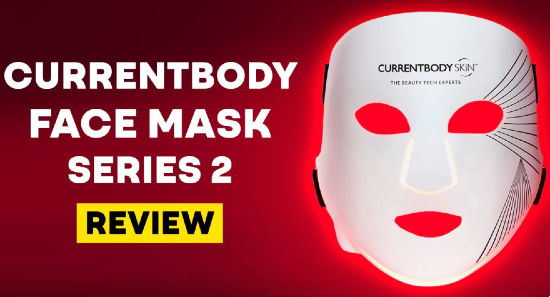
If you're specifically looking for another soft silicone mask, I'd recommend checking out the CurrentBody Series 2. It scored higher overall, includes additional wavelengths, and remains one of my favorite soft-shell options.
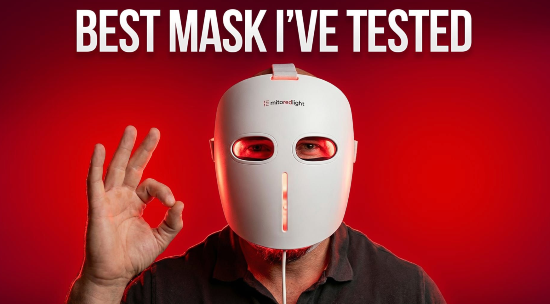
If you don't mind a hard-shell design, the MitoGlow is another excellent alternative. It offers more LEDs, excellent coverage, additional wavelengths, and scored higher in my testing.
The Maysama Aura is still a good LED face mask. It has thoughtful design features, is easy to use, and should appeal to people who value portability and pulsing technology. However, considering its premium price, I expected stronger measured performance. For that reason, it finishes as a Silver Class mask rather than joining the very best performers I've tested.
Final Score
Overall Score: 65/100 (Silver Class)
Independent Light Lab Testing Explained: What It Means
After I published my initial review, one of the biggest questions centered around the Aura's power output. My spectrometer measured an average irradiance of about 5.5 mW/cm², which was far below Maysama's published specification of 26 mW/cm². Naturally, I wanted to understand why there was such a large discrepancy.
To Maysama's credit, they didn't dismiss the findings. Instead, they sent the Aura mask to Light Lab International, one of the best-known independent testing laboratories in the photobiomodulation industry, for a detailed analysis. Their goal was to determine what was actually happening and to provide transparent data rather than relying solely on factory measurements.
The results highlighted just how difficult it is to measure LED face masks accurately.
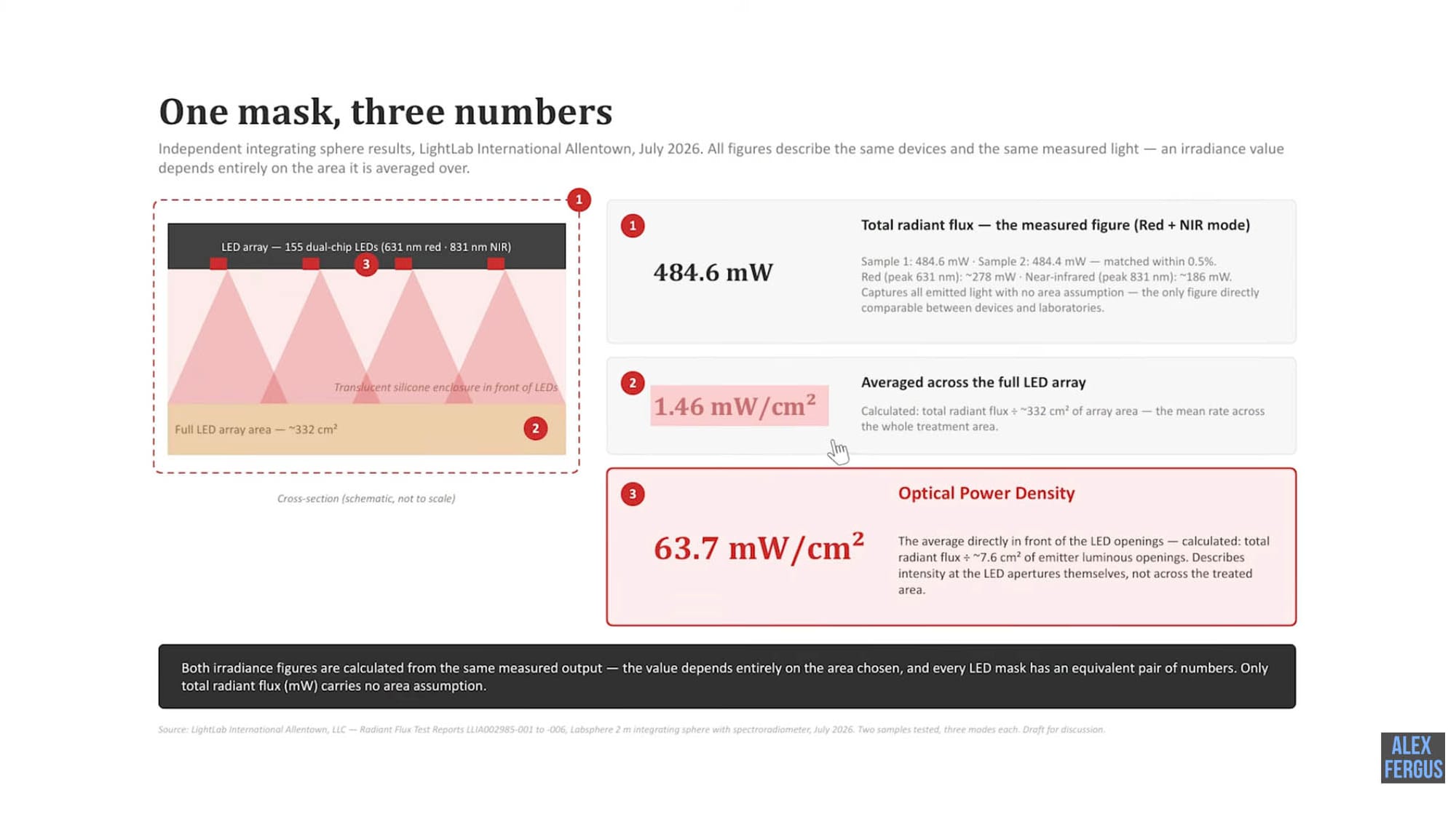
Light Lab found that the LEDs themselves produced very high output directly above each diode, measuring 63.7 mW/cm². However, those peak readings represented only about 2.2% of the mask's total surface area. The remaining 97% of the mask consists of the spaces between the LEDs, where light levels are much lower because you're primarily measuring scattered or "bleeding" light rather than direct output.
When Light Lab averaged the entire illuminated surface, the calculated radiance dropped to approximately 1.46 mW/cm². That doesn't mean the LEDs are weak—it simply demonstrates how dramatically light intensity falls as soon as you move away from an individual LED. This is one of the unique challenges of testing flexible LED masks compared with larger LED panels.
The testing reinforced an important point I've discussed throughout many mask reviews: coverage matters just as much as peak power. A mask with more LEDs and better distribution can provide a more even treatment across the face, whereas a mask with fewer LEDs may produce very high intensity directly over each LED but much lower intensity between them. That's one reason I place significant emphasis on both LED count and coverage quality in my scoring system.
As for my overall recommendation, the additional testing doesn't fundamentally change my conclusions. The Aura remains a comfortable, well-designed mask with excellent usability, solid facial coverage, and two proven wavelengths for skin rejuvenation. However, based on both my own testing and the independent laboratory data, I still believe there are stronger-performing options available at this price point. That's why the Maysama Aura continues to earn a 65/100 (Silver Class) rating in my review.
Here are the products I mentioned in my Maysama Aura Mask review:
🔥 Maysama Mask, code ALEX for 10% off:https://aferg.co/maysama
🔥 Current Body, use discount code ALEXFERGUS at https://aferg.co/currentbody-mask for 10% off site-wide.
🔥 MitoGlow by Mito Red, use this link: https://aferg.co/7d221 to save 5%. Discount automatically applied at checkout.
Found This Interesting? Look At These Articles
🔴 The Red Light Therapy Facial Fat Loss Link: Myth Or Reality?
🔴 Does Red Light Therapy Help Scars? The Science
🔴 $800 Red Light Mask Has Lasers… But Why?
🔴 Omnilux Contour Mask Review: Still Worth It in 2025?
Alex's Bio
Alex Fergus wrote this blog post. Alex is an ISSN Sports Nutrition Specialist, Fitness Professional, and certified Superhuman Coach who continues to expand his knowledge base and help people worldwide with their health and wellness. Alex is recognized as the National Record Holder in Powerlifting and Indoor Rowing and has earned the title of the Australian National Natural Bodybuilding Champion. Having worked as a health coach and personal trainer for over a decade, Alex now researches all things health and wellness and shares his findings on this blog.