
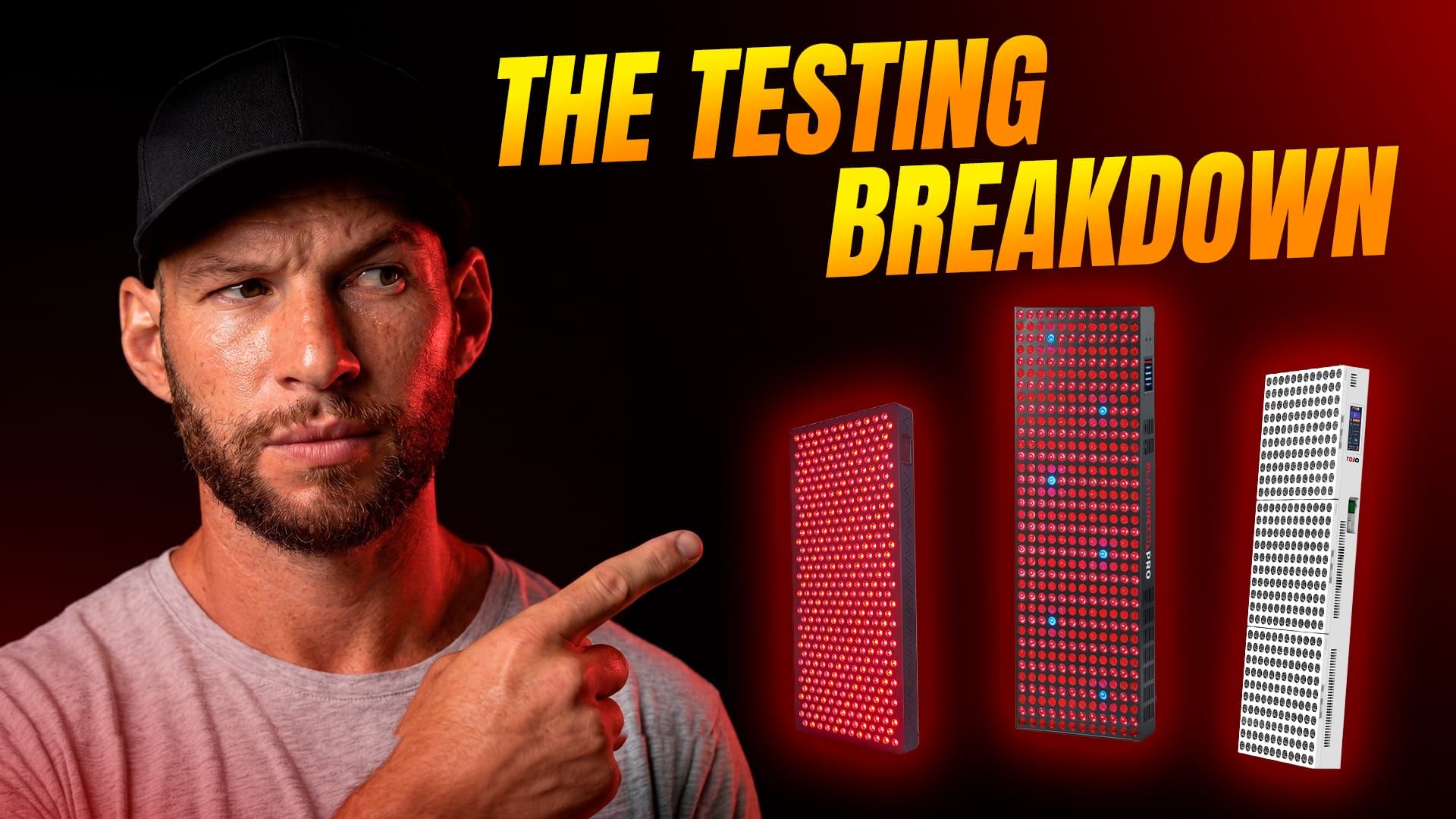
🔥🔥 Check this blog daily for the latest 2026 Red Light Therapy Black Friday and Cyber Monday deals: https://aferg.co/black-friday-cyber-monday 🔥🔥
How do you determine which red light therapy panel is actually the best? Is it the one with the highest irradiance, the most wavelengths, or the biggest price tag? After independently testing 11 leading red light therapy panels for 2026, I discovered that none of those factors alone tell the full story.
For this year's comparison, I sent the panels to an independent laboratory for extensive testing and developed a new 100-point scoring system across nine categories. The results were fascinating, particularly because the panel with the strongest laboratory performance didn't actually win overall.
I've been comparing red light therapy panels for seven years, and my testing methods have evolved considerably. This year represents one of my biggest changes yet, so I want to explain exactly how I scored these devices, why I chose certain measurements, and what the results mean when you're deciding which panel to buy.
Why Independent Laboratory Testing Matters
One of the biggest problems with shopping for red light therapy panels is that manufacturers often use different testing methods. One company might advertise 200 mW/cm² of irradiance, another might promote 10 wavelengths, and another might emphasize its electrical wattage. Unfortunately, those numbers don't necessarily tell you how much useful light your body will receive.
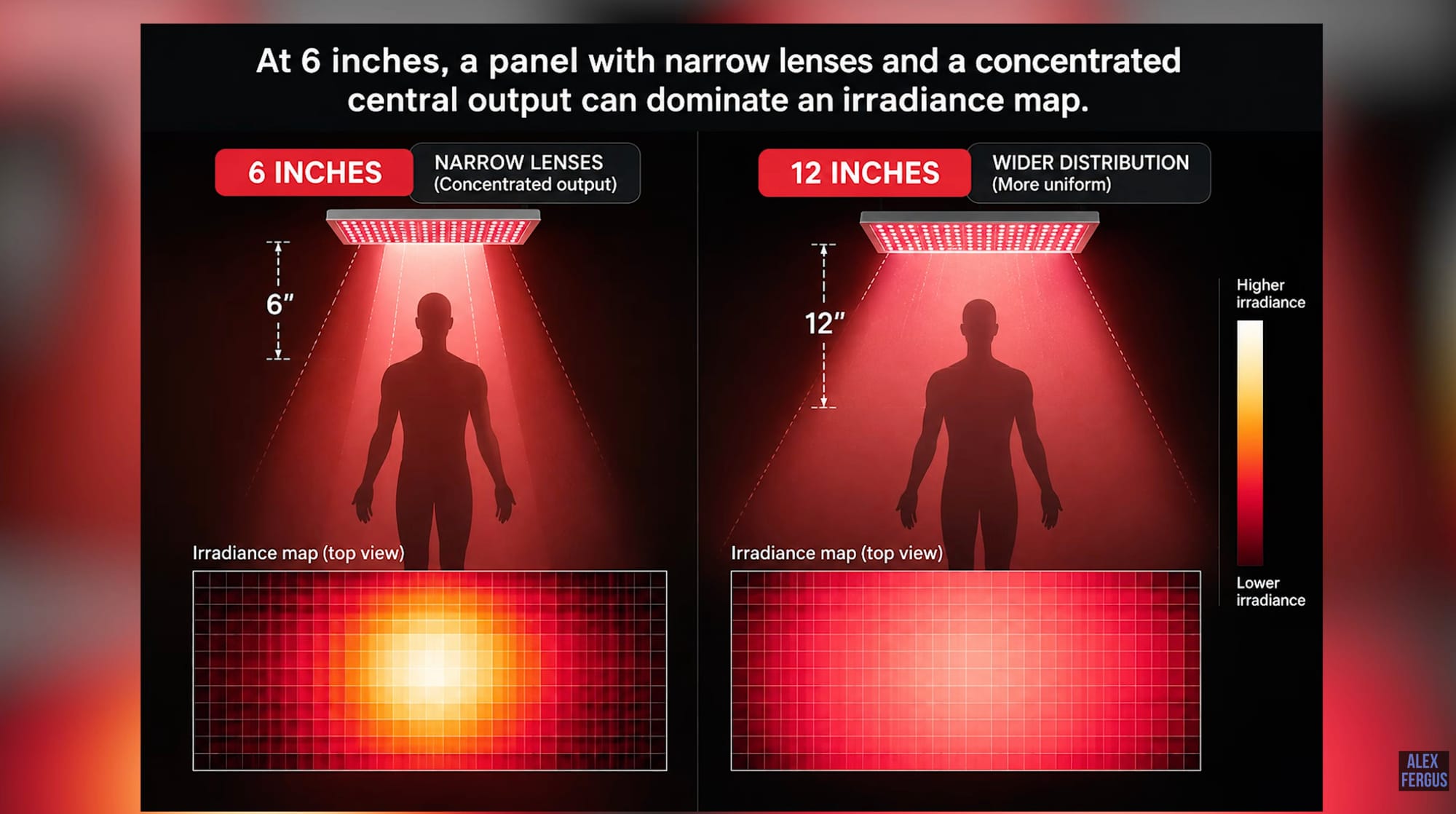
Testing distance also makes a tremendous difference. A measurement taken directly against the LEDs can produce dramatically different results from one taken 6 or 12 inches away. Measuring only the brightest point of a panel can also be misleading because it doesn't reveal how evenly that light is distributed across your body.
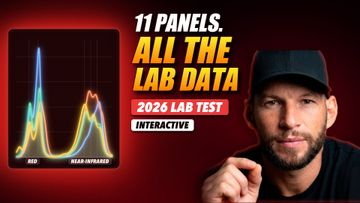
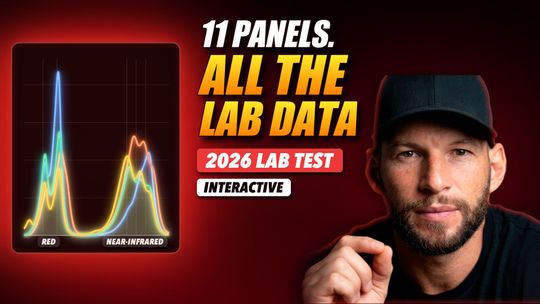
To eliminate as much of this inconsistency as possible, I had the panels independently tested by Light Lab Laboratory. The testing included spectral measurements, total radiant output, irradiance mapping, wavelength peaks, light uniformity, and optical stability over time.
This produced an enormous amount of data, but it also created another challenge: how could I turn all those measurements into a fair comparison that actually helps consumers?
My 100-Point Red Light Therapy Panel Scoring System
I divided the scoring into two main areas. Performance and effectiveness accounted for 65 points, while usability, ownership, and price accounted for the remaining 35 points.
The idea was straightforward. A panel needs to deliver useful light effectively, but it also needs to be practical, reliable, reasonably priced, and easy to operate.
Here's how I evaluated the panels across nine rounds.
🔬 Want to See How All 11 Red Light Therapy Panels Compare?
Don't miss our interactive 2026 panel comparison! Explore the lab testing results, compare performance measurements, and see how all 11 red light therapy panels stack up against each other.
Explore the Interactive Lab Data →Round 1: Treatment Coverage (35 Points)
Treatment coverage received the largest weighting in my scoring system, accounting for 35% of the total score. When you're buying a large red light therapy panel, I believe one of its most important jobs is delivering useful light across a substantial area of your body.
Instead of measuring a single point in the center of the panel, I used a standardized half-body reference grid positioned 12 inches away. The laboratory measured light intensity throughout that grid, and I calculated how much of the area received at least 30 mW/cm² of red and near-infrared light.
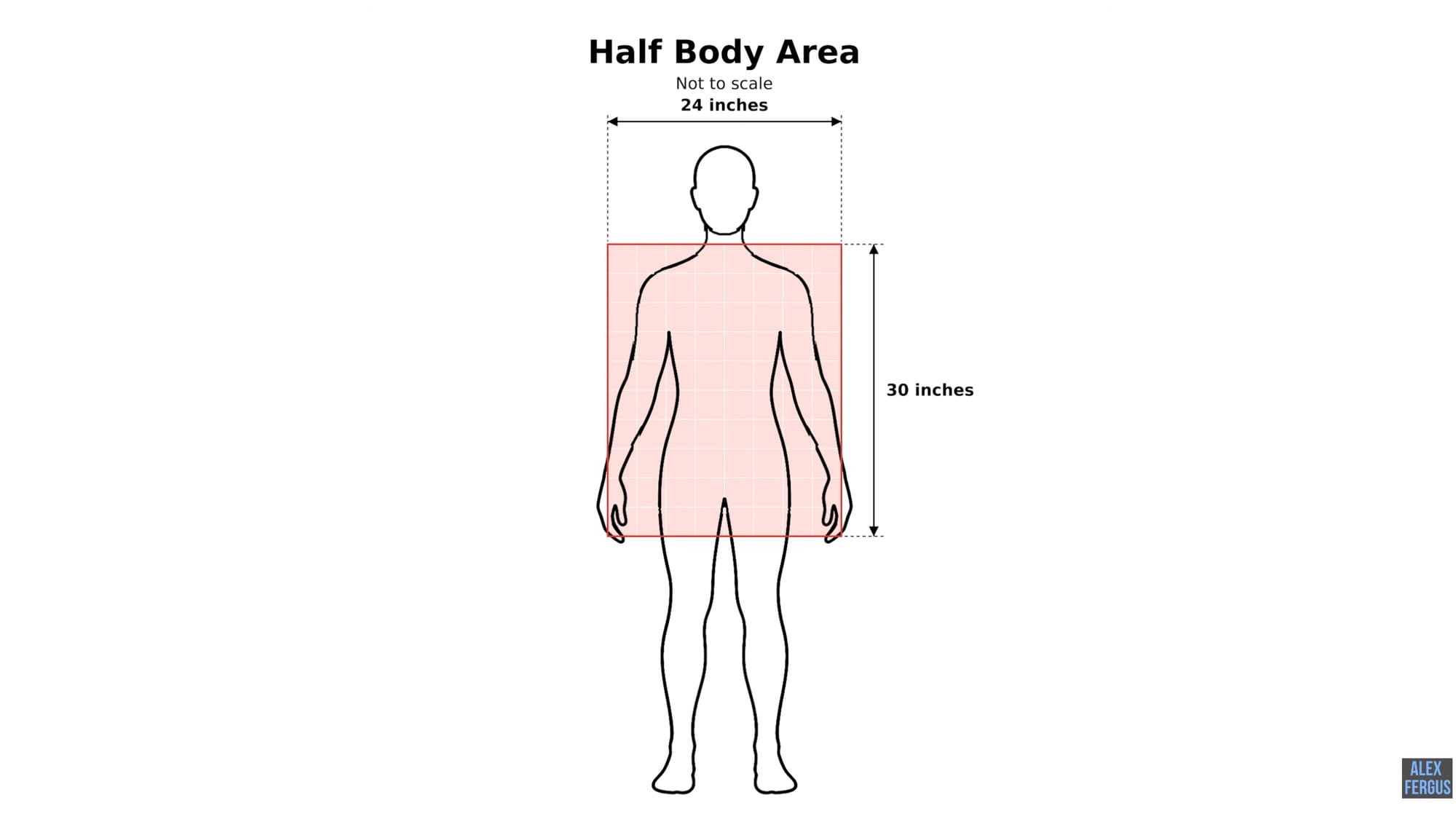
That 30 mW/cm² threshold isn't a scientifically established minimum therapeutic dose. It's a practical benchmark I selected after reviewing the research and considering the different applications people use red light therapy for.
The results revealed some enormous differences. The MitoLight MitoHacker achieved 75.5% coverage, while the Mito Red Light M Pro 1500X managed just 39.1%. That's a substantial difference in how much of the body receives useful light from panels tested under the same conditions.
For me, this was one of the most important findings of the entire comparison. A panel can advertise impressive power figures, but if that light is concentrated in a small area, it may not provide the coverage you're expecting.
Round 2: Average Irradiance (5 Points)
Irradiance measures the intensity of light reaching a particular area, typically expressed in milliwatts per square centimeter (mW/cm²). It's one of the most commonly advertised specifications in red light therapy, but it's also one of the easiest to misunderstand.
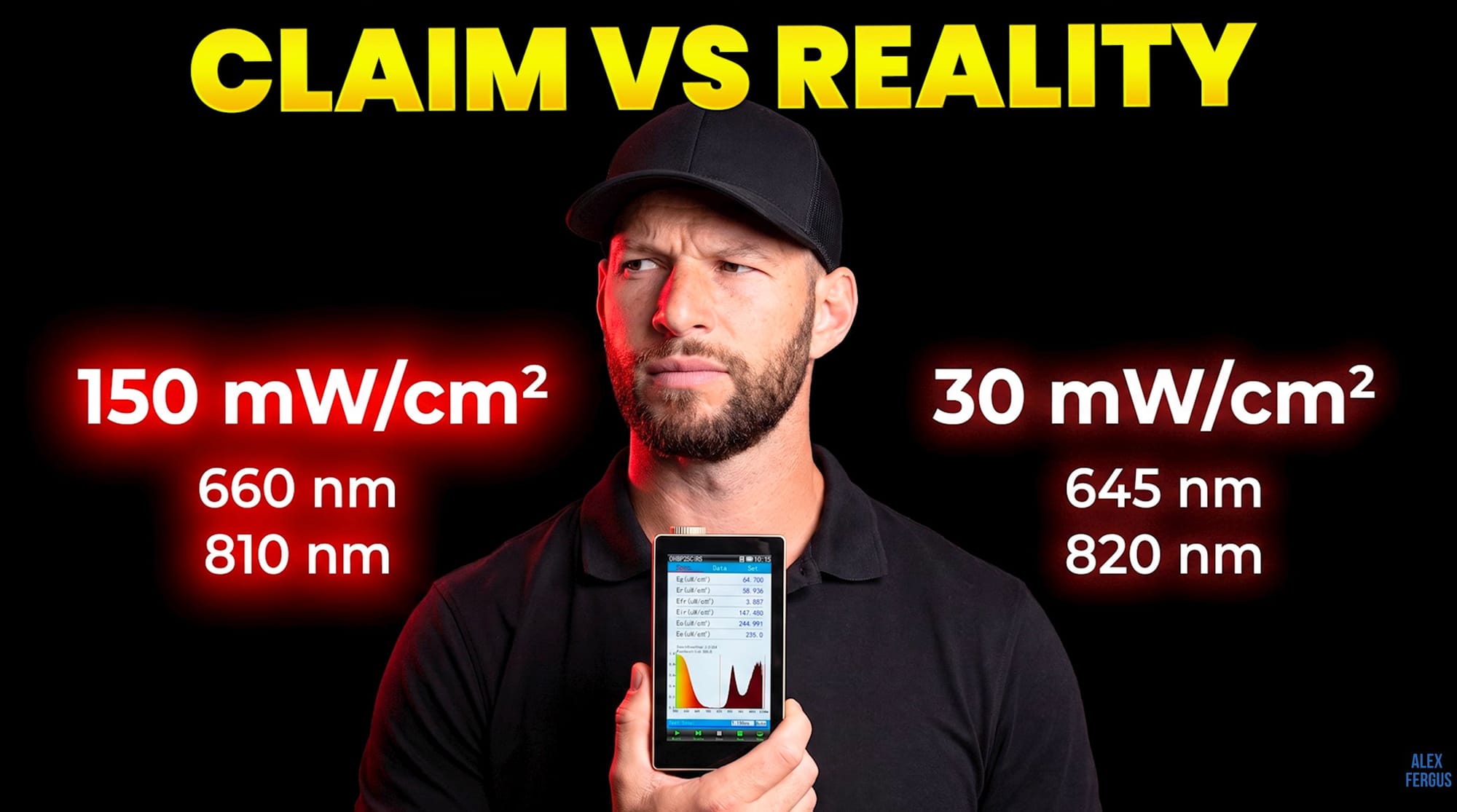
A panel might produce 150 mW/cm² at its brightest point while delivering substantially less light elsewhere. That's why I focused on average irradiance across the reference treatment area, rather than the highest measurement.
Panels averaging 20 mW/cm² or less received zero points, while those reaching 60 mW/cm² or more earned the full five points. I deliberately capped the scoring because I don't believe extremely high irradiance should automatically make one panel superior to another.
This was a major departure from my previous comparisons, where higher power figures could have a much greater influence on the final rankings.
Round 3: Light Uniformity (10 Points)
Uniformity measures how evenly a panel distributes its light. I calculated this by dividing the average irradiance by the maximum measured irradiance, producing a percentage that indicates how consistent the light intensity is across the treatment area.
A panel with excellent uniformity delivers a relatively even treatment field, while one with poor uniformity may have an intense hotspot surrounded by much weaker output. I believe this matters because consistent light distribution can make treatments more predictable.
The MitoHacker performed particularly well here, achieving 68% uniformity, while the Sunlighten panel recorded just 36%. Although this is a simplified measurement, it provides valuable insight into differences that maximum irradiance figures simply cannot reveal.
Round 4: Optical Stability (5 Points)
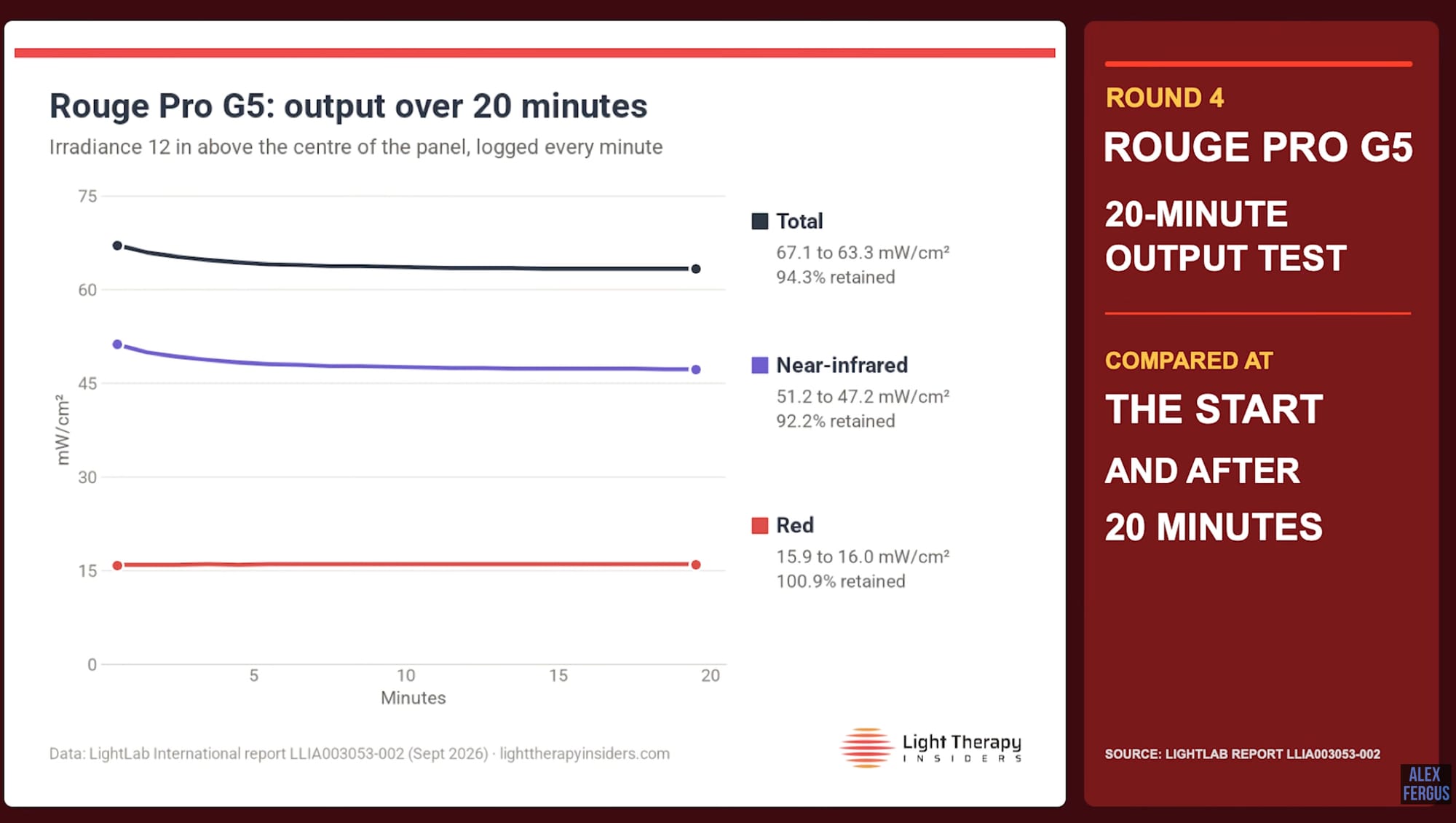
Optical stability was a new addition to my testing system. It examines whether a panel maintains consistent light output throughout a treatment session, rather than measuring its performance only when first switched on.
As LEDs warm up, their output can change. Some panels lose power over time, while others actually increase their output slightly. To evaluate this, I compared the initial light output with the measurements recorded after 20 minutes.
The results were interesting. One MitoLight panel showed approximately a 1% change, while the MitoHacker experienced a reduction of roughly 14–15%.
That doesn't automatically make one panel better than another, but it does demonstrate why stability deserves consideration. If you're spending thousands of dollars on a red light therapy device, knowing how consistently it performs throughout a session is useful information.
Round 5: Wavelength Quality
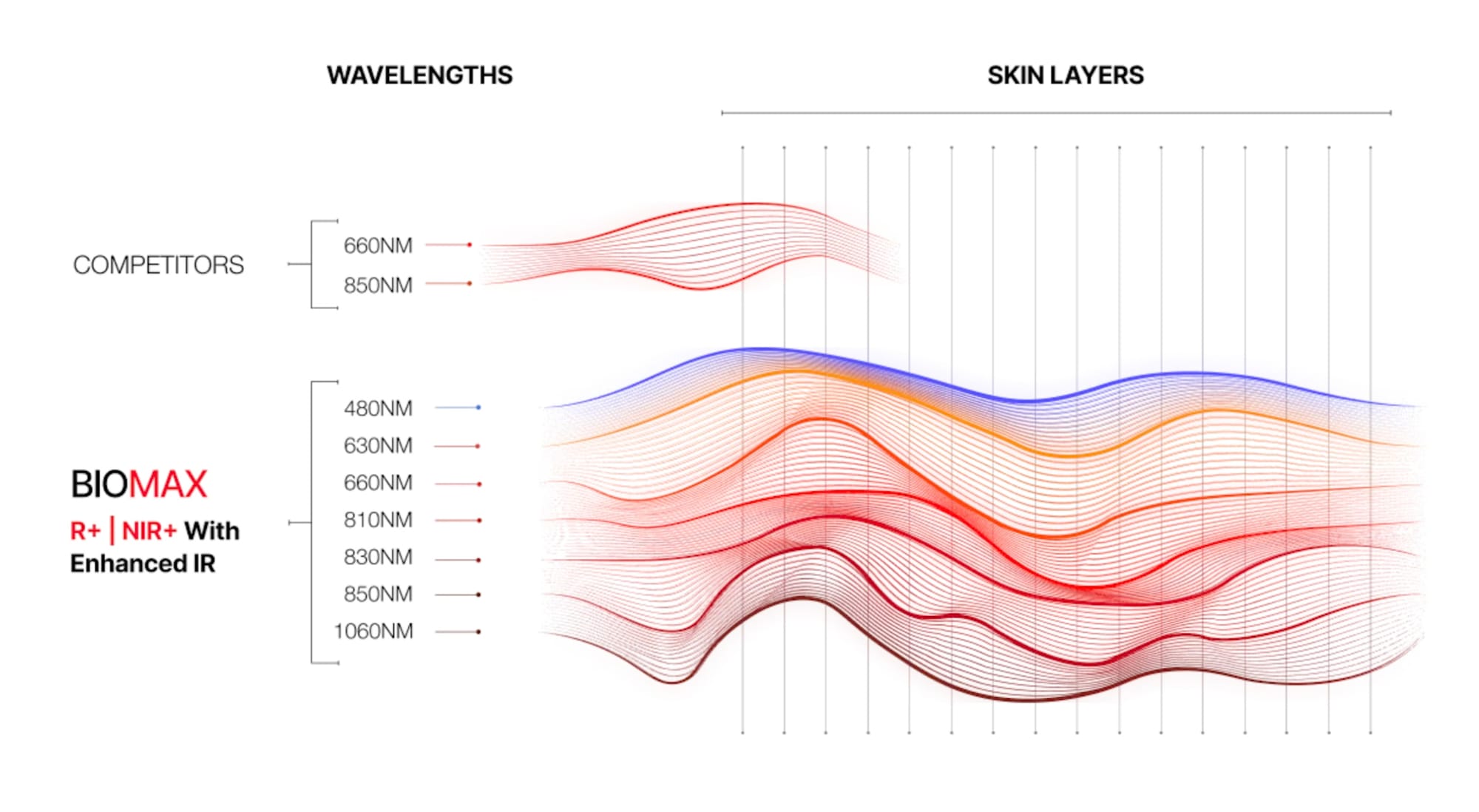
This was another area where I made significant changes to my scoring system. In previous comparisons, I rewarded panels for offering additional wavelengths, but after reviewing the laboratory reports, I realized that simply including more wavelengths doesn't necessarily mean better performance.
Some manufacturers advertise eight or ten wavelengths, yet the actual energy delivered at certain wavelengths can be extremely small. Having a particular wavelength listed on a product page doesn't mean the device produces enough light at that wavelength to make a meaningful contribution.
For 2026, I focused on five core wavelengths:
- 630 nm and 660 nm: Red light
- 810 nm, 830 nm, and 850 nm: Near-infrared light
To qualify for points, a wavelength needed to meet a minimum measured spectral output of 0.5 watts per nanometer. I also allowed smaller bonus scores for sufficiently strong output at 590 nm and 1064 nm, although none of the panels met the required thresholds for those bonuses.
My thinking here is simple: I'd rather have a panel delivering substantial energy at a few well-supported wavelengths than one advertising numerous wavelengths that contribute very little actual light.
Round 6: Red and Near-Infrared Balance (5 Points)
Most red light therapy panels combine visible red light with invisible near-infrared light, but the balance between them can vary significantly.
For this comparison, I favored panels delivering approximately a 50:50 balance between red and near-infrared output. That's my preferred starting point for a versatile panel, although I want to emphasize that there is no established scientific rule proving a 50:50 ratio is optimal.
Some panels produced ratios closer to 70:30 or 30:70, meaning considerably more energy was going toward one type of light. That's important information for consumers who assume they're receiving equal amounts of red and near-infrared light.
Fortunately, some modern panels allow users to adjust the intensity of each independently, making it possible to customize that balance for different applications.
🔬 Have You Seen the Individual Lab Results?
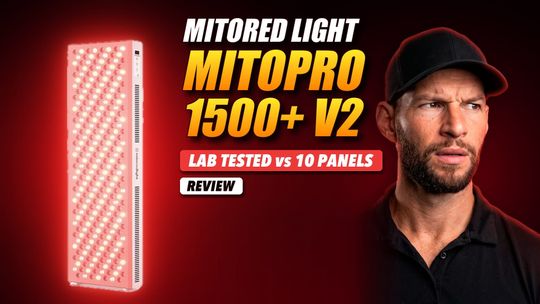
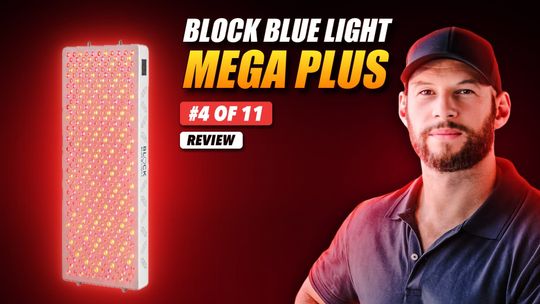
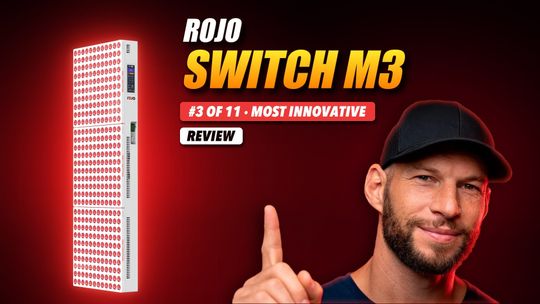
We've put 11 red light therapy panels to the test in 2026! Want to see how each one performed? Explore our individual reviews for detailed lab results, performance measurements, and comparisons against the competition. Here are five to check out:
Round 7: Ease of Use (15 Points)
A technically impressive red light therapy panel isn't necessarily the best device to own. If it's difficult to operate, lacks useful controls, or doesn't fit your treatment routine, those limitations can affect how often you actually use it.
That's why ease of use received 15 points. I considered factors including smart modes, manual controls, intensity adjustments, customer support, remote controls, stand options, and innovative features.
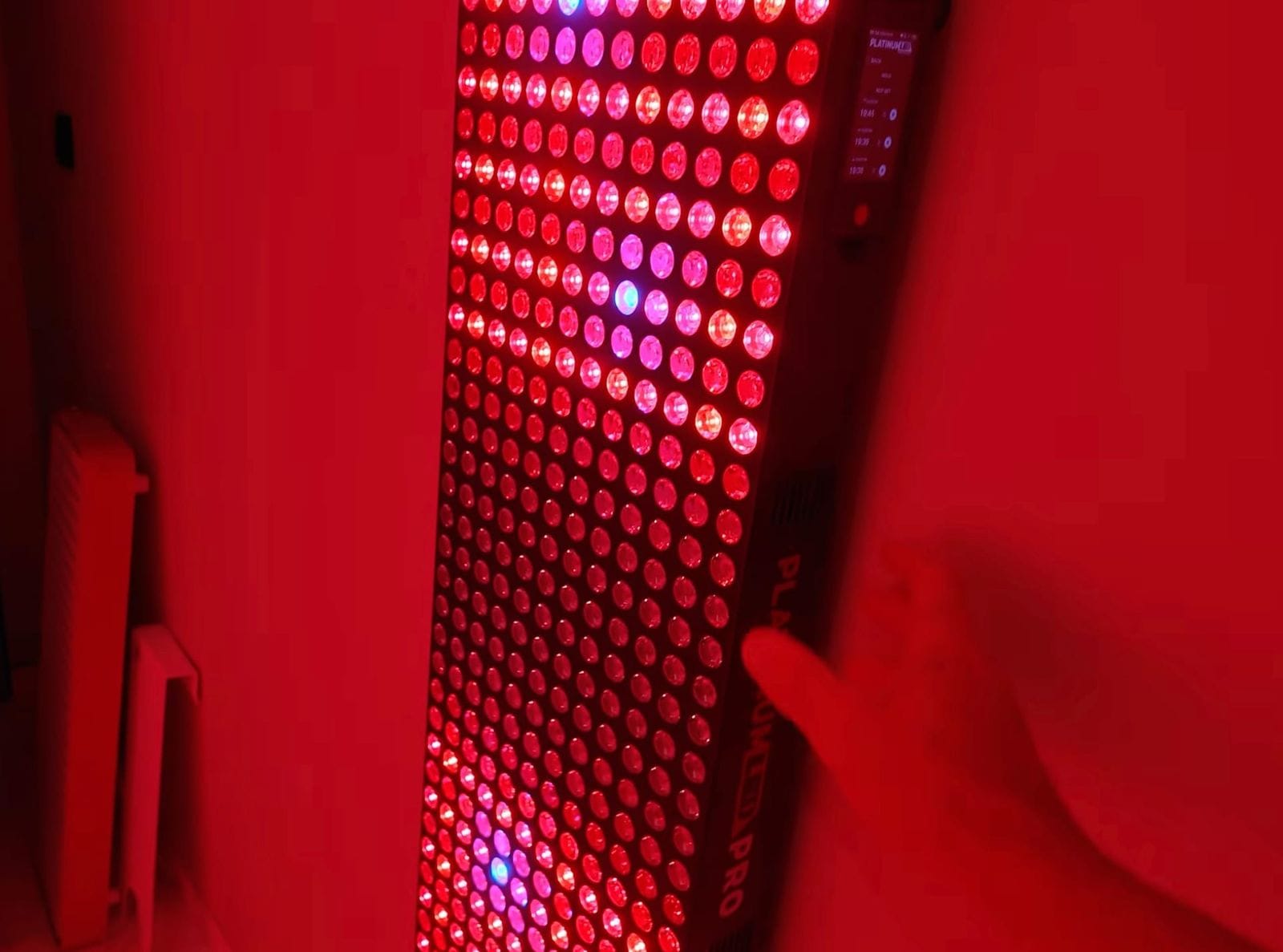
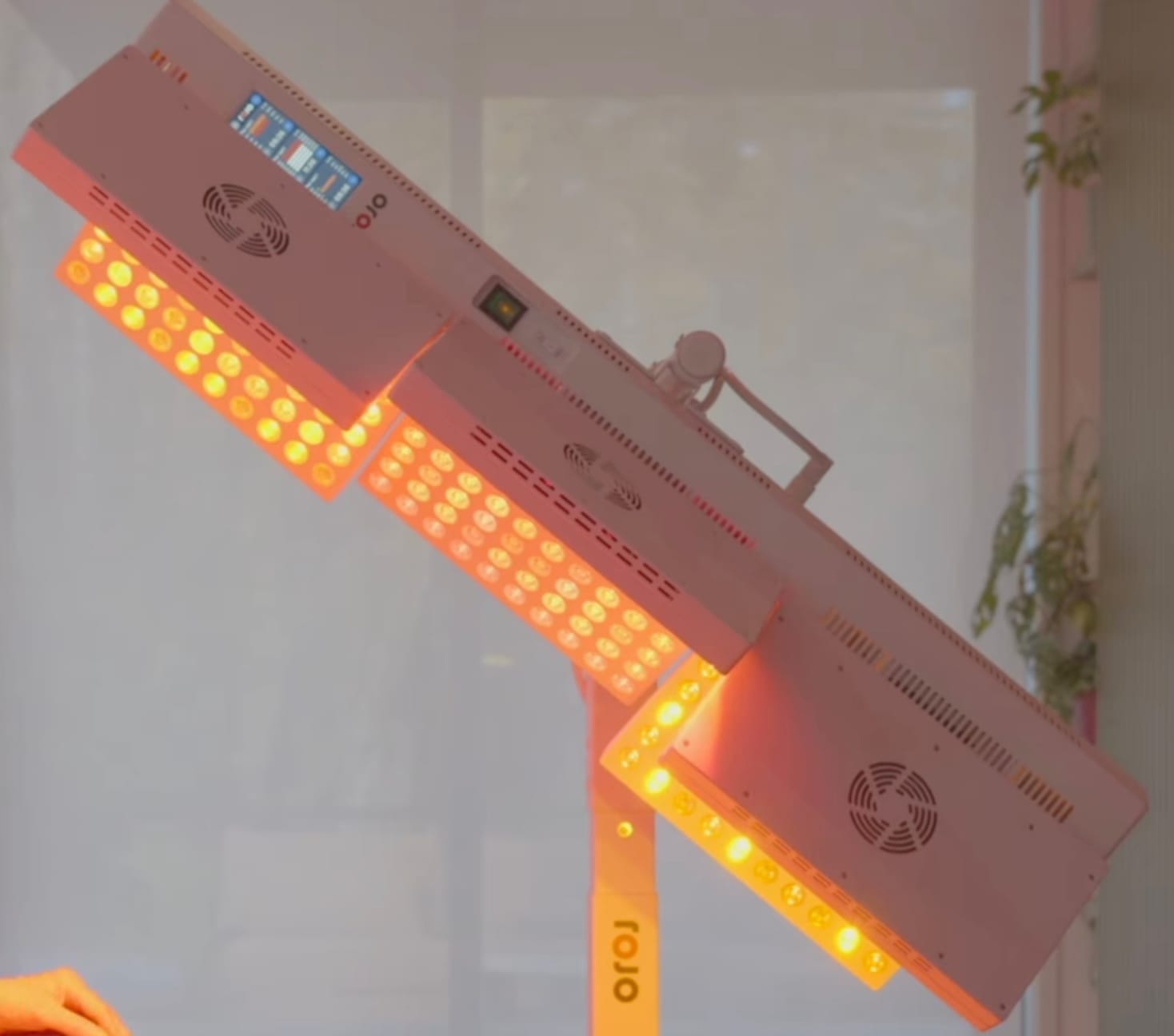
The Rojo Switch M3 stood out with its modular wraparound design, large display, and built-in dosing features. The PlatinumLED BioMax also impressed me with its zone controls, allowing different areas of the panel to operate with different light settings.
These features aren't essential for everyone, but they can make a meaningful difference in everyday use. I also wanted to reward manufacturers introducing genuinely useful innovations rather than simply increasing their advertised specifications.
Round 8: Ownership, Safety, and Warranty (10 Points)
Buying a red light therapy panel is a significant investment, particularly when you're spending $1,000 or more. Beyond laboratory performance, I wanted to evaluate what happens after you've purchased the device.
This category considered safety regulations, operating noise, return policies, and warranty coverage. These factors might not be as exciting as wavelength measurements or irradiance charts, but they're important when comparing expensive equipment.
A panel that performs exceptionally well in the laboratory may be less attractive if it has poor warranty coverage, limited support, or other ownership disadvantages.
Round 9: Price and Value (10 Points)
Price accounted for the final 10 points, and I made another important change to how I calculated it.
Rather than relying on advertised prices, I calculated the actual checkout cost using an address in Austin, Texas. This included applicable discounts, shipping, and taxes, providing a consistent reference point for comparing the panels.
Devices costing less than $900 received the full 10 points, while those costing $2,500 or more received zero. Panels between those figures were scored proportionately.
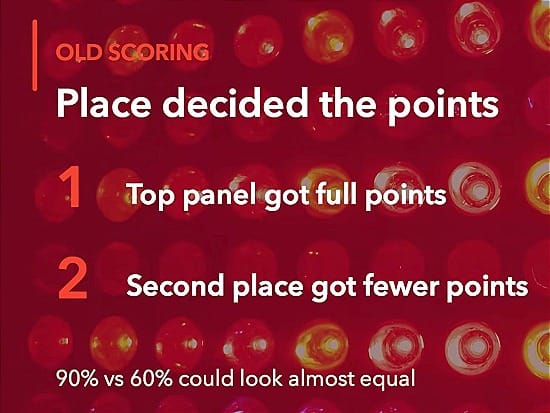
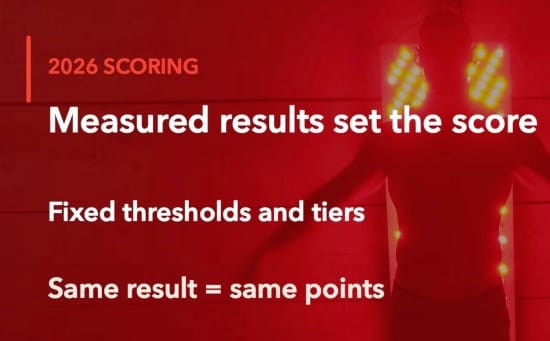
I also moved away from simply awarding points according to ranking positions. Instead, I established scoring thresholds so that panels with similar performance could receive the same points, rather than artificially separating them.
One challenge was the MitoHacker, which was only available in Europe and the UK at the time of testing. That created an obvious complication when evaluating pricing and availability for American consumers, and it's one of the limitations of the system that I openly acknowledge.
Why the Best Laboratory Performer Didn't Win Overall
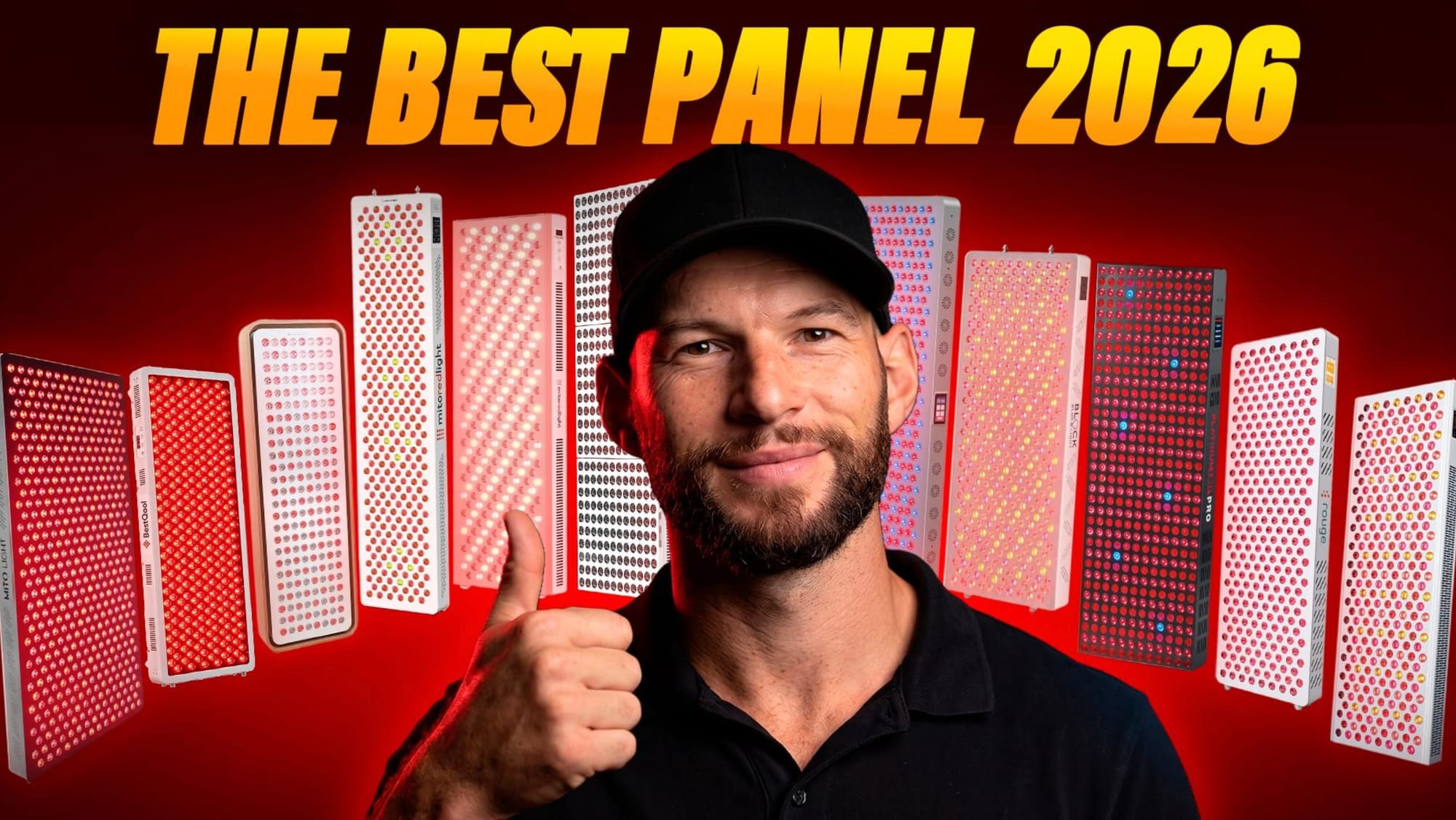
Perhaps the most interesting result of the entire comparison was that the MitoLight MitoHacker achieved the strongest laboratory performance but didn't finish first overall.
Looking exclusively at the 65 performance points, the MitoHacker scored 44, compared with 36 for the PlatinumLED BioMax Pro Ultra. That's a significant advantage in terms of measured light delivery and performance.
However, once I included usability, ownership, pricing, and availability, the final rankings changed.
| Panel | Overall Score |
|---|---|
| PlatinumLED BioMax Pro Ultra | 63.25 |
| MitoLight MitoHacker 5.0 | 61.25 |
| Rojo Switch M3 | 61.00 |
The BioMax ultimately won because it delivered a strong combination of performance, useful features, customization, and overall ownership value. The MitoHacker remained exceptional from a laboratory performance perspective, while the Rojo Switch M3 impressed me with its innovative design.
What's particularly interesting is how close the top three panels finished. Just 0.25 points separated second and third place, demonstrating how small changes in scoring priorities could influence the final order.
I would be very happy owning any of these three panels, and I don't think consumers should interpret a slightly lower ranking as evidence that a device isn't excellent.
For the complete results, you can read ⬇️ ⬇️ ⬇️
Why I Tested Only 11 Panels in 2026
Some readers may wonder why this year's comparison included fewer panels than previous years. The main reason was the additional time and expense involved in independent laboratory testing.
Each panel needed to spend approximately a month at the laboratory, and testing cost around $2,000 per device. Participating manufacturers were responsible for paying the laboratory directly, rather than paying me for inclusion in the comparison.
Some companies couldn't participate because of inventory constraints or upcoming product launches, while others were unwilling to cover the testing costs or disagreed with my methodology.
Although I would have liked to include more devices, I believe the independent testing provided a level of transparency that made this comparison particularly valuable.
🔬 More Lab Reports: Meet the Top 3 Panels of 2026!
Want to dig deeper into our 2026 red light therapy panel testing? Check out the individual lab reports for our top three ranked panels, including detailed performance measurements, testing results, and how each panel earned its place in the rankings.
The Future of Red Light Therapy Panel Testing
After seven years of comparing red light therapy panels, one thing has become increasingly clear to me: independent testing is essential if consumers are going to make genuinely informed purchasing decisions.
Manufacturer specifications can be useful, but standardized laboratory measurements allow us to compare devices on a much more consistent basis. They also reveal important differences in treatment coverage, wavelength output, and stability that might otherwise go unnoticed.
Moving into 2027, I intend to make independent laboratory data a requirement for the panels I review. I believe this approach will improve transparency, encourage manufacturers to focus on meaningful performance, and ultimately help consumers choose better devices.
My scoring system certainly isn't perfect, and I'm sure it will continue to evolve. But by sharing the testing data and explaining exactly how the points are awarded, I'm giving you the opportunity to evaluate these panels based on what matters most to you.
Ultimately, that's the goal: helping you find the best red light therapy panel for your needs, rather than simply buying the one with the biggest numbers on the box.
🔬 More 2026 Red Light Therapy Lab Reports!
Want to see how more panels performed in our 2026 testing? Explore four additional lab-tested reviews, including our fourth-place finisher, Best Value award winner, and detailed results from panels further down the rankings.
🔥🔥 Check this blog daily for the latest Red Light Therapy Black Friday and Cyber Monday deals: https://aferg.co/black-friday-cyber-monday 🔥🔥
⭐ Sunlighten- Use code Fergus at https://aferg.co/sunlighten
⭐ Mito Light Europe - Use code ALEX at https://aferg.co/mitolight for 5% off!
⭐ MitoRed Light - use https://aferg.co/7d221 for 5% off sitewide.
⭐ Rojo Light Therapy - Use discount code ALEX at https://aferg.co/rojo-rlt for 10% off.
⭐ LightpathLED - Use discount code ALEX at https://aferg.co/lightpathled to get 5% off.
⭐ BestQool - use code ALEX at https://aferg.co/Bestqool to save 10%.
⭐ Block Blue Light - Use this link: https://aferg.co/BlockBlueLight to save 15% on Block Blue Light's products. The discount will automatically be applied at checkout.
⭐ PlatintmLED Therapy Lights- Use the discount link https://aferg.co/redled to save 5%
⭐ Rouge - Use discount code ALEX at https://aferg.co/rougecare for $50 off.
Alex's Bio
Alex Fergus wrote this article. Alex is the founder and head reviewer of Light Therapy Insiders and has tested and reviewed red light therapy devices since 2017. He measures the devices he reviews with a calibrated spectroradiometer, and in 2026 he had 11 popular panels independently measured at LightLab International (see how we test). He shares his testing with more than 90,000 subscribers on YouTube. Alex is also an ISSN Sports Nutrition Specialist, fitness professional and certified Superhuman Coach, and worked as a health coach and personal trainer for over a decade.