

Another week, another newsletter. The topic of today is morning sunlight - we've coved that topic before HERE.
We've also included the latest articles/videos, on Hooga, brain red light therapy dosing, more info on red light therapy vs sunlight, and the June red light therapy news!
Let's go:
October 2025 Morning Sunlight Study: How Much Is Enough? Is More Better?
So this study came out recently, in October 2025. You can read the study for free. Here's the, maybe surprising, but hopefully not so surprising conclusion for many readers:
"Morning sunlight exposure influences the regulation of the sleep midpoint and overall sleep quality. These findings highlight the potential role of morning sun exposure in aligning circadian rhythms and improving sleep health."
Well, morning sunlight has been promoted by Alex Fergus and I for about a decade now. Here's the most recently updated article on the topic - which also covers light therapy and sleep:
 Bart Wolbers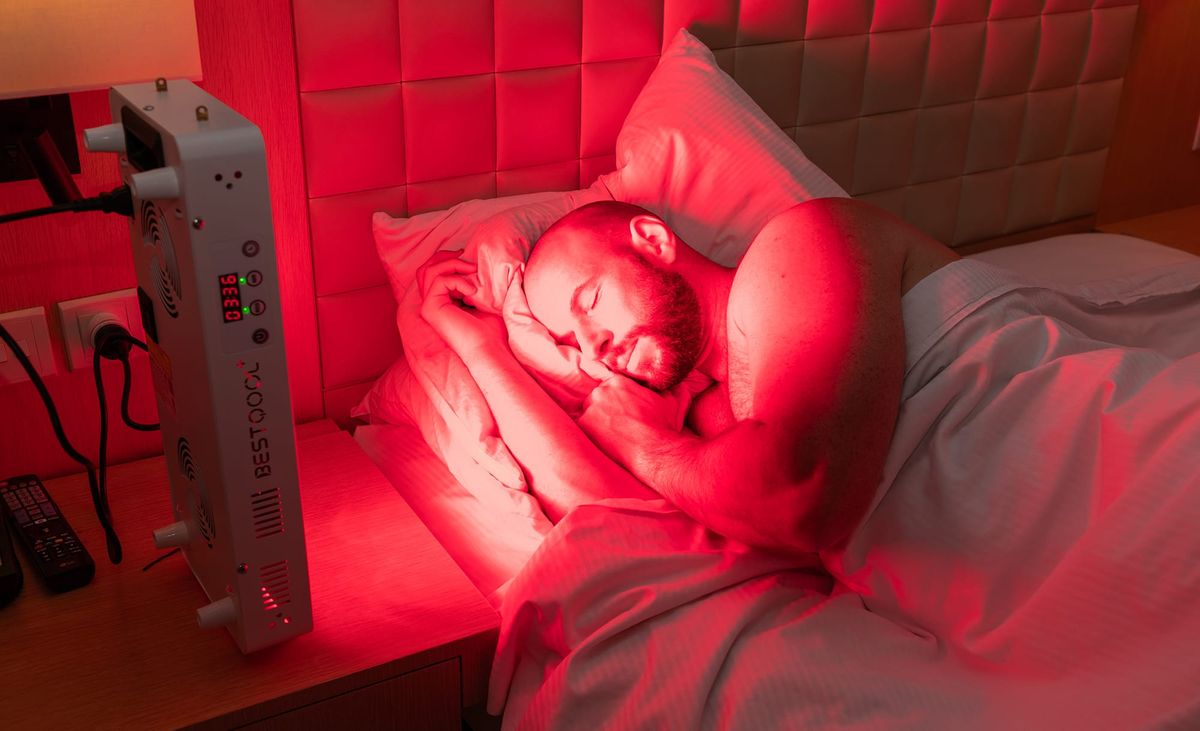
And my personal breakdown of all of the available studies in 2026 (by Bart):
Bart Wolbers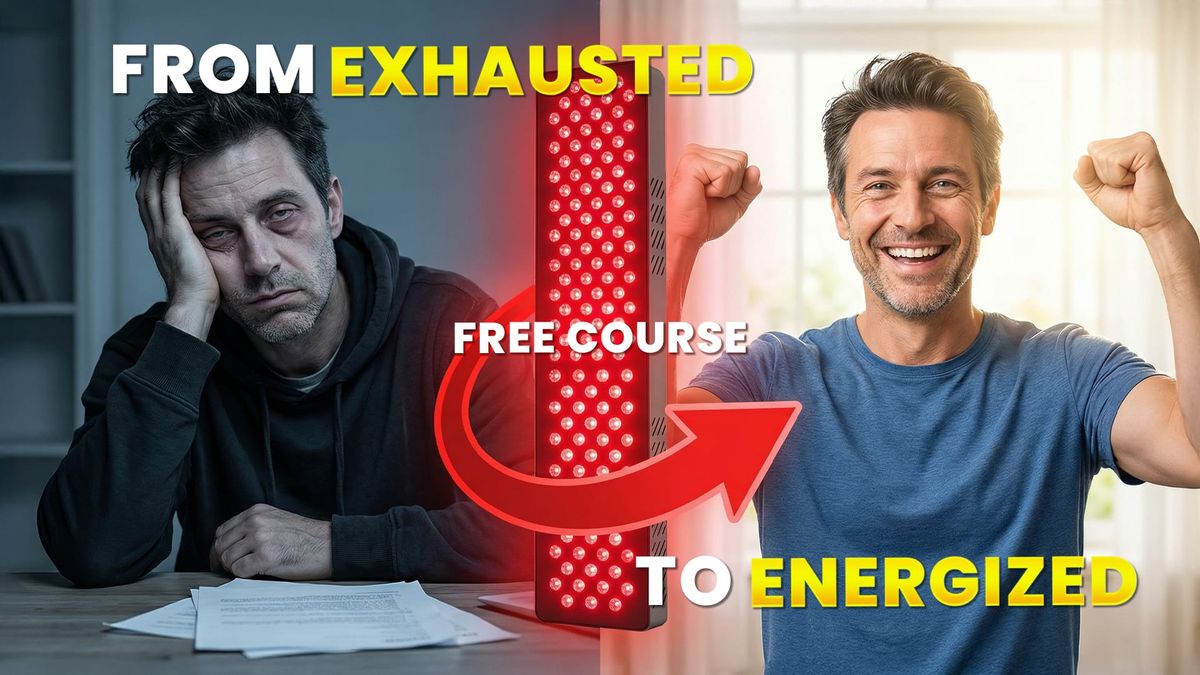
The basics are this. You probably know that blue light sets your circadian rhythm. Simply put, when blue light hits your eye, it tells your brain it's daytime. All your body's cells synchronize with that "central clock" in your brain - cells all have "peripheral clocks".
But back to the study.
Unfortunately, the study was a "cross sectional" study, so it measured participants in a select moment of time. There's no manipulation, with a placebo and intervention, like in a "Randomized Controlled Trial" (RCT).
To measure sleep, researchers used the "The Pittsburgh Sleep Quality Index (PSQI)". The PSQI is often used in many of the sleep studies and also in many of the red light therapy studies for sleep that I covered.
Here's why the PSQI is so great, as described by the researchers:
"The 19 items that make up the PSQI are divided into seven categories: (1) subjective quality of sleep; (2) sleep latency; (3) duration of sleep; (4) habitual sleep efficiency; (5) disturbances of sleep; (6) use of sleeping medication; and (7) dysfunction during the day. Every element is assigned a number between 0 and 3, with higher numbers denoting lower-quality sleep. The seven components add up to the total PSQI score, which is a number between 0 and 21. Higher scores denote lower overall quality of sleep. Sleep quality was classified as “good” (PSQI score ≤< 5) or “poor” (PSQI score > 5) in this study,"
So you'll want a low PSQI score, which denotes high-quality sleep! The study is quite complex in its statistics, but to not make things overcomplicated and complex, it's best to consider the great results section of the paper, that's written in quite plain language:
"The midpoint of sleep was the most affected sleep parameter, showing significant associations with sunlight exposure across all timeframes, particularly in the morning. Every 30-minute increment of morning sun exposure (before 10 a.m.) was associated with a 23-minute reduction in the midpoint of sleep (-0:23 hh: mm; 95%CI: -0:36, -0:10; beta: -0.387; 95%CI: -0.607, -0.166). Sunlight exposure after 3 p.m. also reduced the midpoint of sleep but to a lesser extent (-0:19 hh: mm; 95%CI: -0:36, -0:03; beta: -0.325; 95%CI: -0.600, -0.051). Furthermore, an increase in morning sun exposure was significantly associated with a lower PSQI total score, improving sleep quality (beta: -0.184; 95%CI: -0.362, -0.006). No significant associations were observed between sunlight exposure and total sleep time, latency, or efficiency."
So:
- There is better circadian alignment with morning sunlight.
- In this specific study, there's no link between morning sunlight exposure and sleep quality, or how long you sleep, or how quickly you fall asleep.
(Again the topic is quite complex, as studies sometimes contradict each other. Which is why I analyzed all extant 10 studies on red light therapy for sleep earlier).
Why does the midpoint of sleep, or the circadian rhythm alignment matter so much? Here's what researchers write:
"The midpoint, which marks the halfway point between sleep onset and waking, reflects an individual’s internal biological clock. Research suggests that deviations in the sleep midpoint, particularly delayed sleep, can lead to adverse health outcomes, such as metabolic disorders, cardiovascular disease, and psychological disorders. Furthermore, alterations in the timing of sleep midpoint have been strongly associated with metabolic dysfunction"
Especially in the last few years, it's been appreciated a lot more that sleep timing is extremely important. Shift work, or travelling a lot between time zones, is disastrous for your health long-term, and stable circadian rhythms, is extremely health-promoting.
That circadian alignment may be more important than the total time you spend in bed, for instance. So, if you go to bed at 3 AM one day, and 10 PM the next, and then 4 AM the day after, you're slowly wrecking your health and increasing the risk for many chronic health conditions.
The solution here?
What if you can't get morning sunlight due to your job? Well, in that case, there are still many other options such as blue light therapy at home. But more broadly, I've also given an update in the Science Tool on the best devices for setting the circadian rhythm:
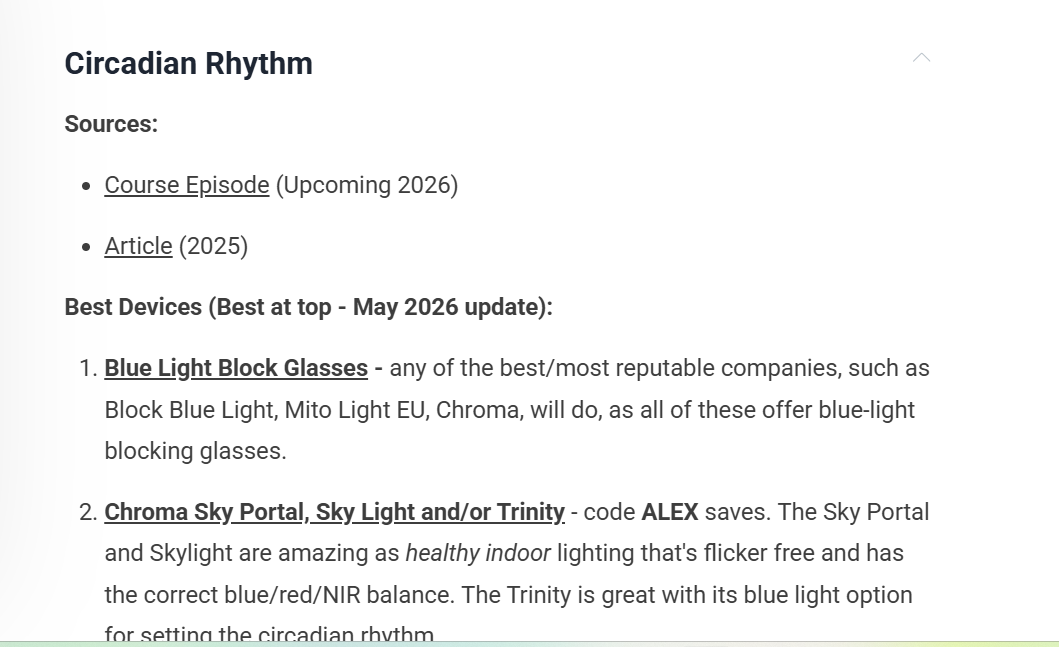
You can check that Science Tool here:
Bart Wolbers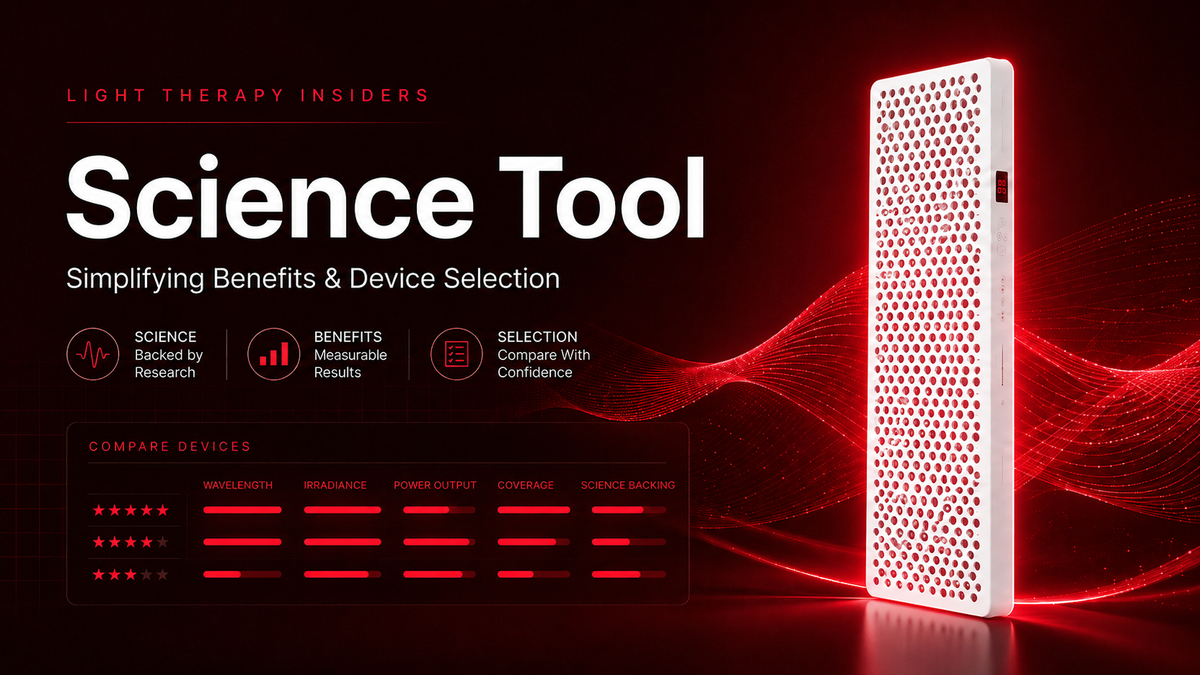
And also, on our website, my new content on the circadian rhythm 2026 should be published soon or has been published already, as of the moment of writing this newsletter!
Here Are Our Latest Light Therapy Insiders' Articles:
Every single article that we've published recently - you can find the videos in the article itself:
- Hooga Red Light Review: Cheap Panels… But Are They Worth It? - Here's Alex's deep dive breakdown of Hooga, and the value of this company for budget customers and even premium product seeking ones!
- SunPowerLED & Brain Light Therapy: 90% Get Dosing WRONG - New article/video out by Bart, the second part of the very-well watched Tom Kerber interview I on penetration/dosing/wavelengths. This second interview mainly concerns brain red light therapy wavelengths, dosing, penetration, etc - check it out HERE.
- Can Red Light Therapy Replace Sunlight? The Science Explained - Alex's lastest video on why you cannot rely on red light therapy alone and need sunlight for maximum health benefits!
- June Red Light Therapy News: New Studies, Brain Health & Fat Burning - The latest red light therapy news by the one and only Alex Fergus! New products, science, Q&A, gossip, updates, and everything in between. And as always, some surprises!
Also, Check Out Some Of Our Other Content:
Below you'll find some of our best content that you shouldn't miss:
Light Therapy Advanced Science Course:

Join Bart's 100% free advanced science light therapy course above, where he takes deep dives into many different topics, such as mechanisms, neurology (Alzheimer's, Parkinson's, etc), exercise recovery, skin beauty & rejuvenation, and much more.
Some of the topics are only published in that course, such as UV light risks and benefits, addiction, anxiety, depression, and more. So join HERE!
Red Light Therapy Buyers Guide
 Alex Fergus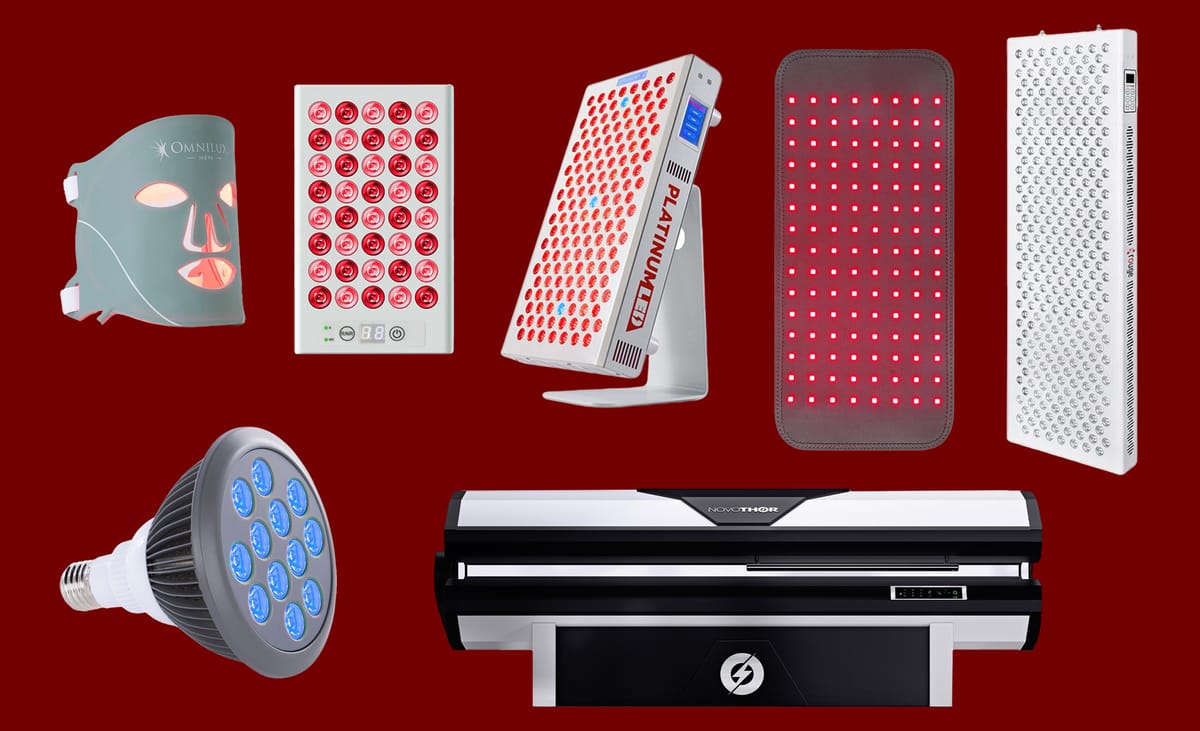
Red light therapy uses red and infrared light to achieve a biological effect. Dive into this topic and select a device that's right for you.
LED Mask Shopping Tool


My extension shopping tool compares all of the world's best (and not so good!) Red Light Masks.
How To Use Red Light Therapy 101: The Best Guide For Starters
 Alex Fergus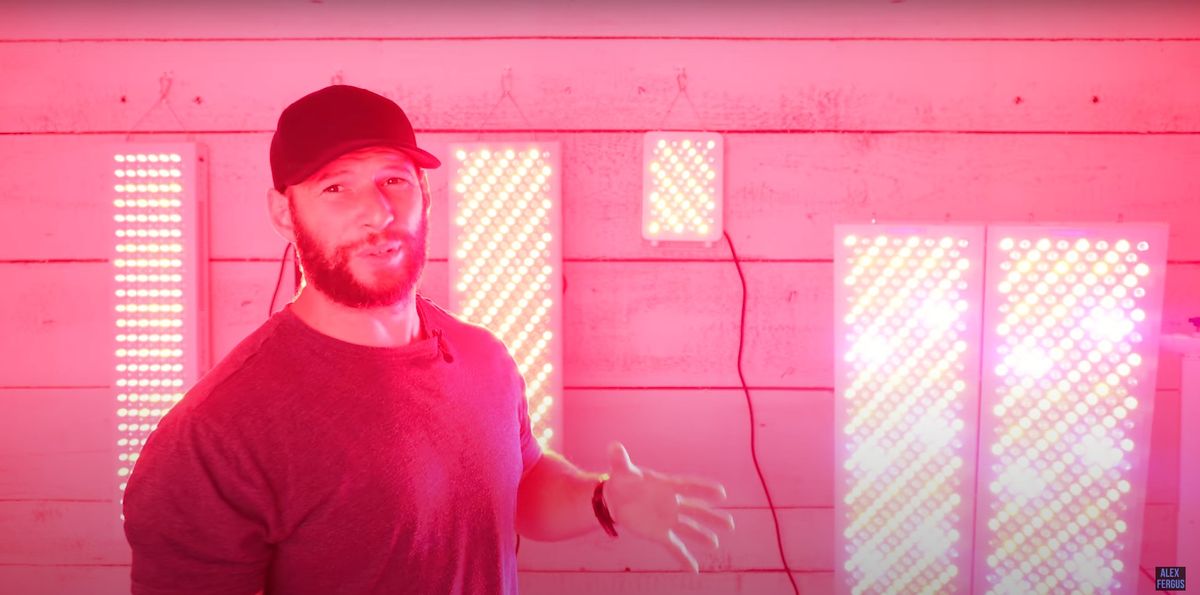
You have your device? Let me help you use it.
Red Light Panel Shopping Tool

My extension shopping tool compares all the world's best (and not-so-good!) Red Light Panels!
Exclusive - Discount Codes, Deals & Recommendations
 Alex Fergus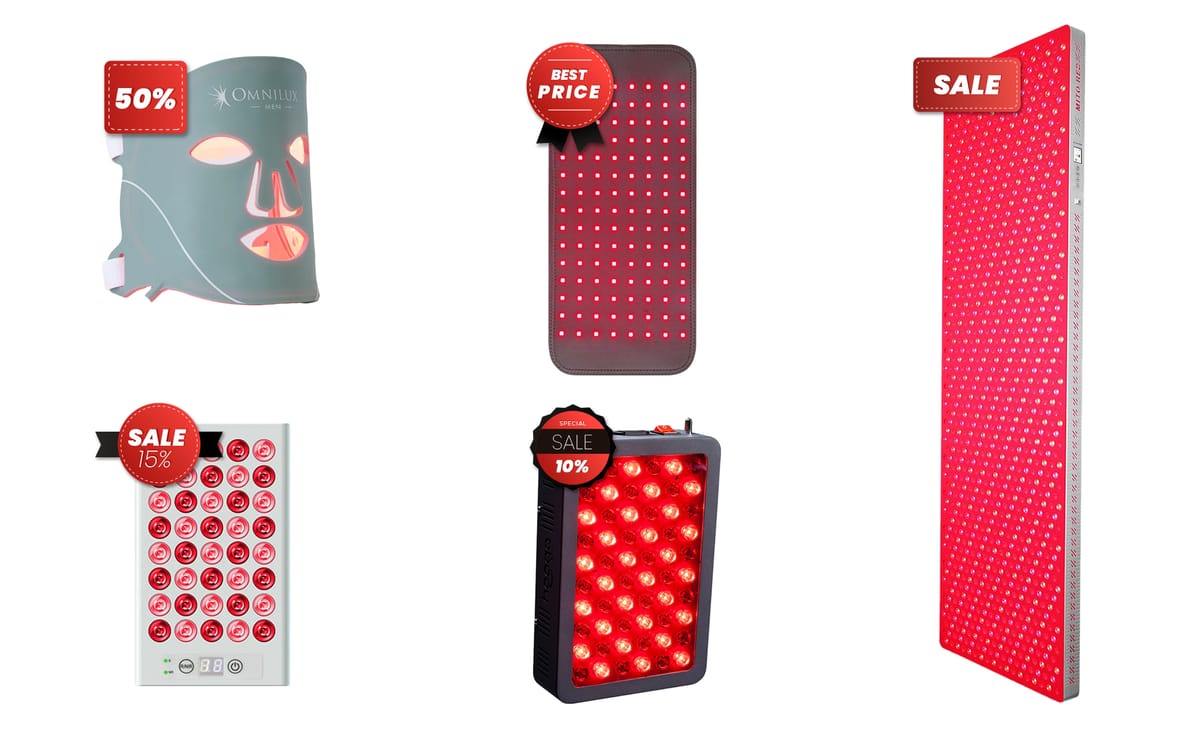
Shopping for a red light device? Use this resource to save! We've got deals for most of the big and best brands out there...