
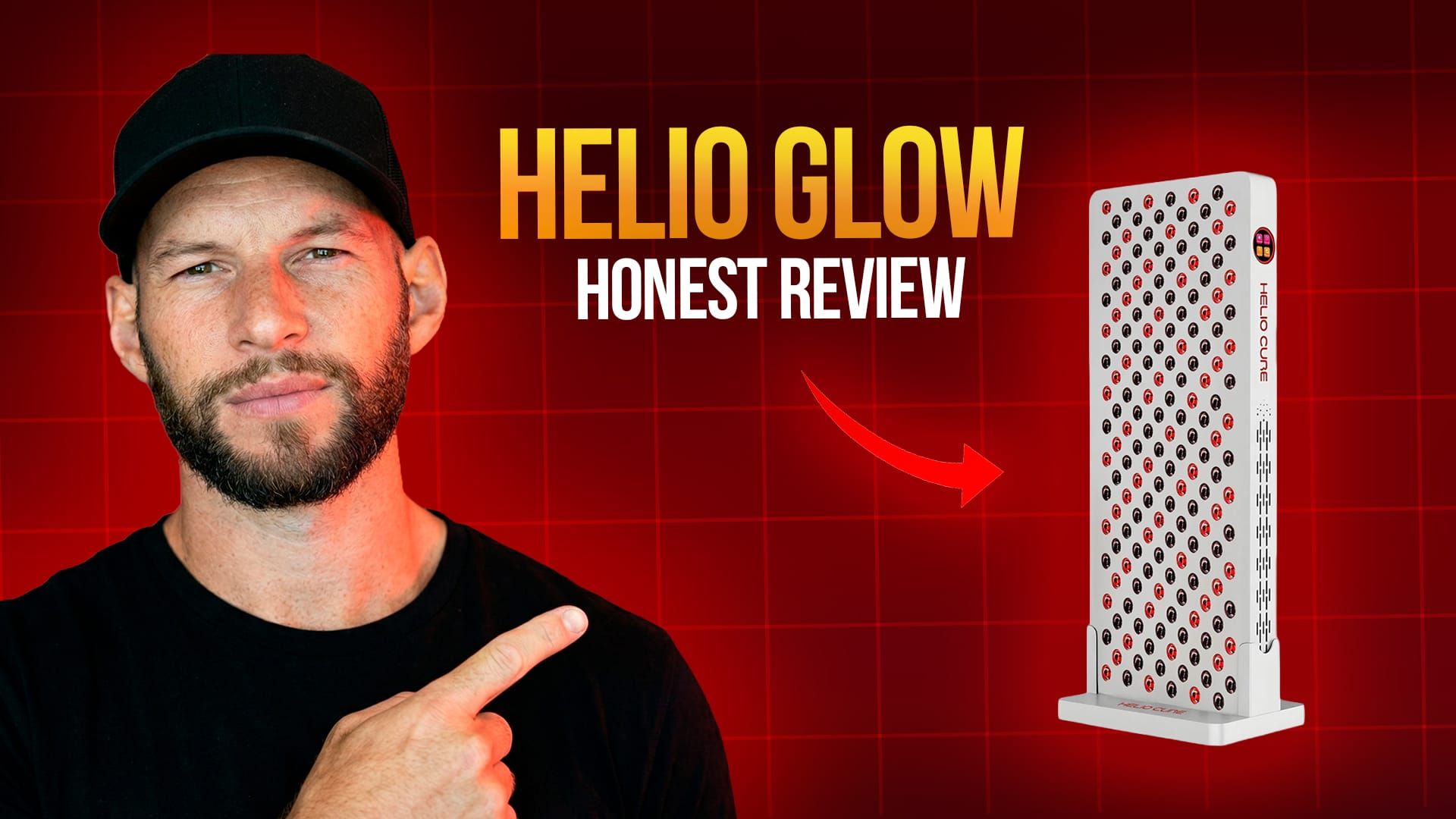
The Helio Cure Helio Glow is one of the more interesting red light therapy panels I’ve tested recently. Not because it’s the most powerful panel on the market, and not because it has the best feature set, but because it heavily leans into something we’re starting to see more often in newer devices: 1064nm near infrared light.
That wavelength has become increasingly popular in photobiomodulation circles because of its deeper penetration and growing research around brain health, joint pain, tendon repair, osteoarthritis, and even oral health applications. While most companies only sprinkle a few 1064nm LEDs into their panels, Helio Cure decided to go much heavier with them.
On paper, that makes this panel sound extremely compelling. But once I started digging into the independent testing data, a few problems began to appear.
The Helio Glow Specs
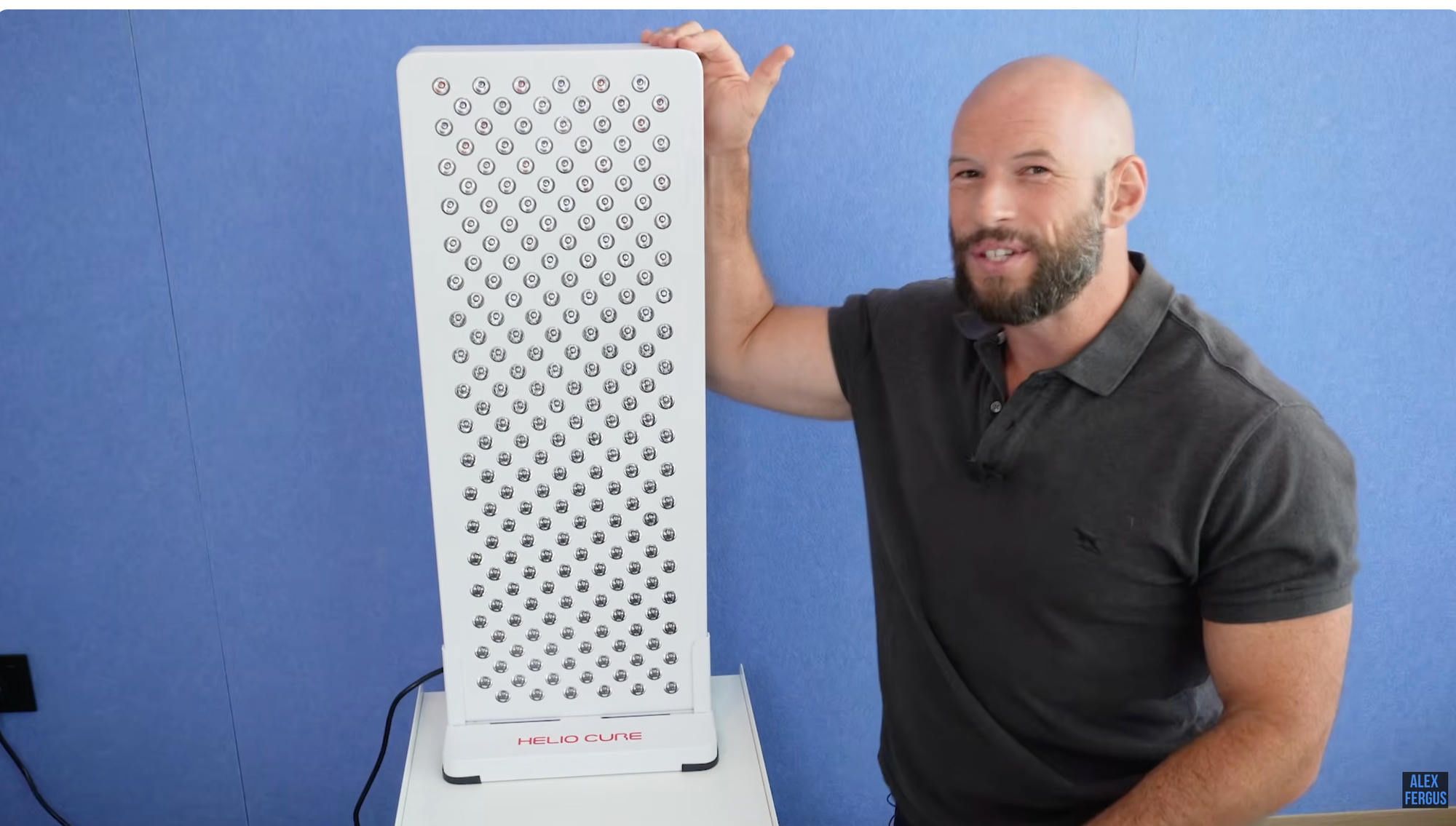
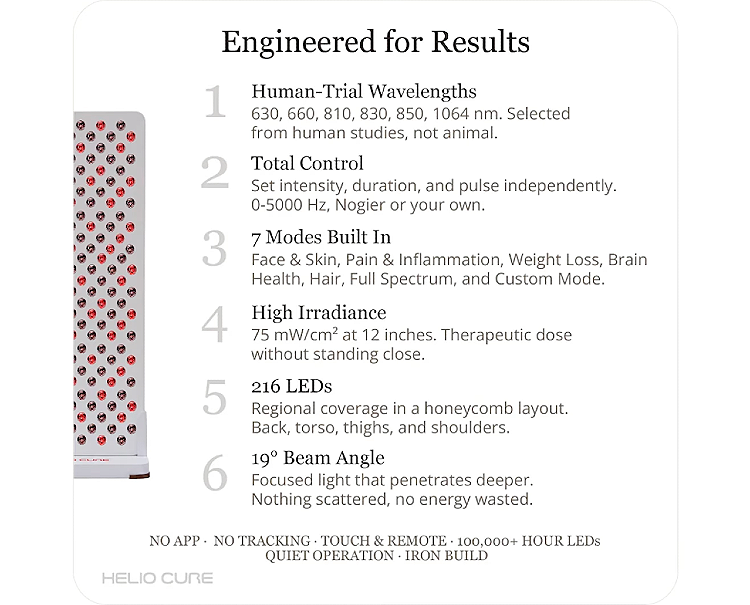
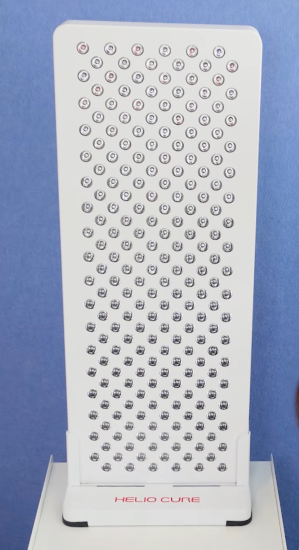
The Helio Glow is a medium-sized wall-style panel with 216 single-chip LEDs. It measures roughly 12 inches wide by 30 inches tall and includes six claimed wavelengths:
- 630nm
- 660nm
- 810nm
- 830nm
- 850nm
- 1064nm
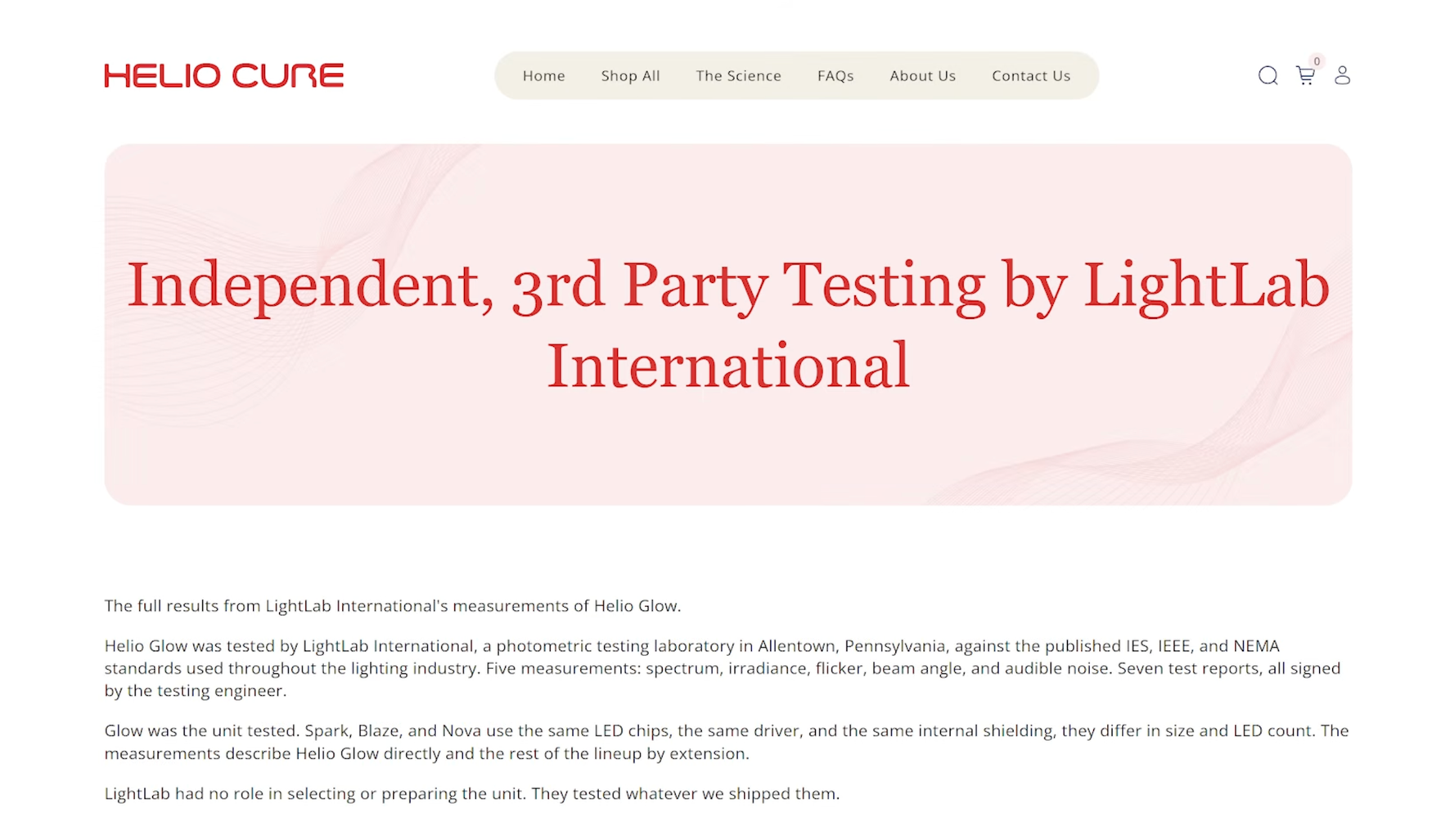
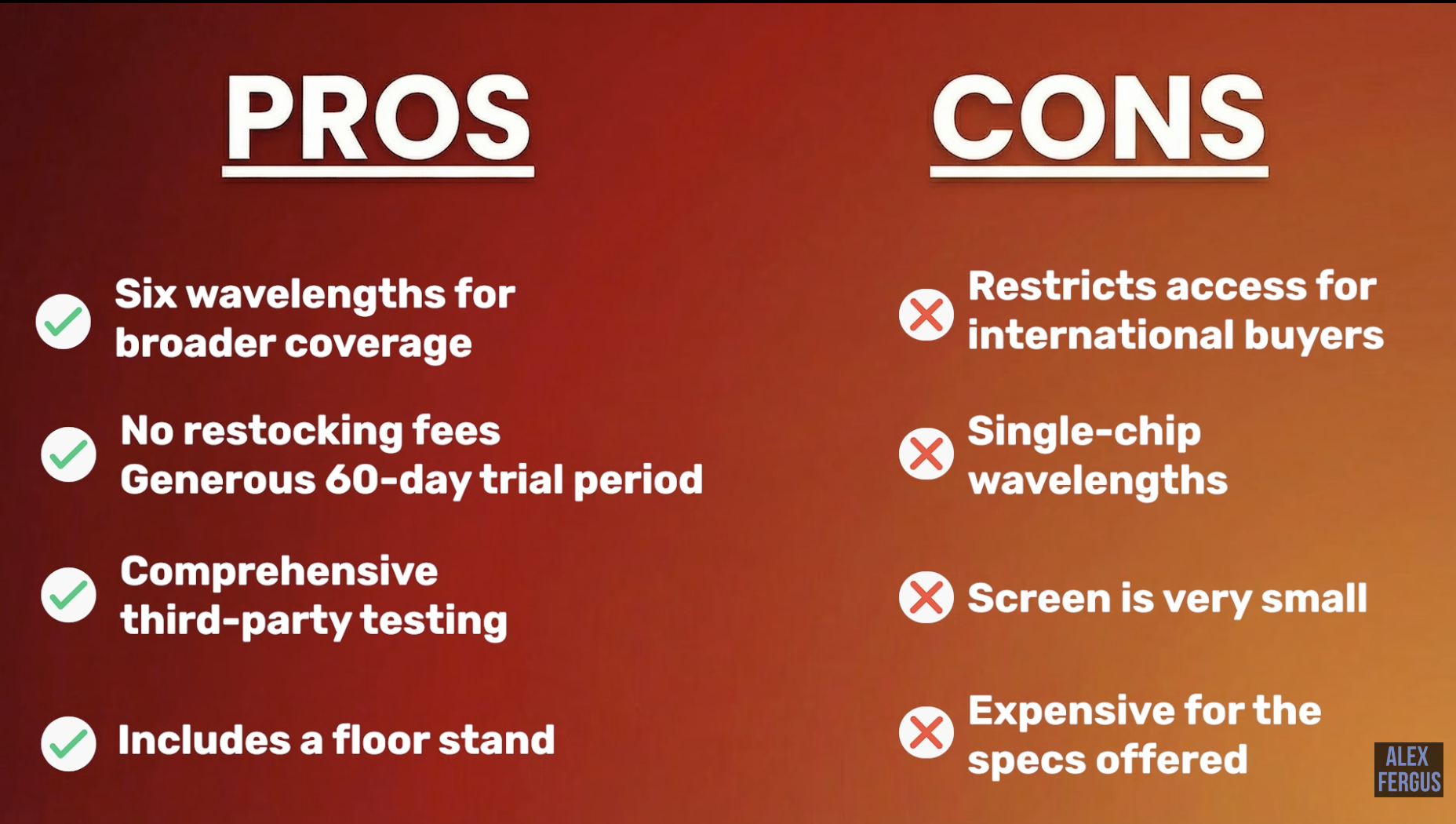
One thing I genuinely respect is that Helio Cure sent this panel off for comprehensive third-party testing and publicly shared the results. I’ve been pushing companies to do this for years because too many brands exaggerate irradiance numbers, wavelengths, and power output.
Helio Cure deserves credit here because they didn’t just test one metric. Their reports include wavelength validation, beam angles, irradiance readings, and power measurements at multiple distances. That level of transparency is rare in this industry.
Ironically though, those same reports revealed one of the biggest issues with the panel.
The Wavelength Problem
The independently tested wavelengths did not properly align with the marketed wavelengths.
According to the testing lab, the actual peak wavelengths were:
- 652nm
- 669nm
- 819nm
- 841nm
- 858nm
- 1078nm
Now, some variation is normal. LEDs are never perfectly exact, and I usually allow a margin of error of around 5nm. But several of these differences are much larger than that.
The biggest issue is the supposed 1064nm wavelength. The lab testing showed the peak output was actually around 1078nm instead.
That doesn’t mean there’s zero 1064nm light coming out of the panel. LEDs emit a broader spectrum of light rather than one razor-thin wavelength like a laser. So you’re still getting light around the 1060nm range.
However, the peak concentration of energy is clearly sitting higher than advertised.
For most people, this probably won’t dramatically change treatment outcomes. But accuracy matters. If a company markets a wavelength, I expect the independent testing to closely support those claims.
The upside is that Helio Cure willingly shared these reports publicly instead of hiding them. That transparency actually earns them points in my book even though the data itself raises questions.
Power Output & Performance
The Helio Glow tested reasonably well from a power perspective, though it’s not class-leading.
Independent testing showed:
- Peak irradiance: 86 mW/cm² at 6 inches
- Average irradiance: 71 mW/cm²
- Therapeutic output: 116 watts
- Noise levels: 52.5 decibels
That’s enough power for effective red light therapy treatments. There’s no question this panel works.
At around $1,100 after discounts, this is a highly competitive price bracket where many companies now offer larger panels, more LEDs, quieter fans, multi-chip LEDs, or broader wavelength combinations. So while the Helio Glow performs adequately, it doesn’t dominate the category.
Preset Modes
Another feature worth mentioning is the Helio Glow’s built-in treatment presets. The panel includes five dedicated modes for face and skin health, pain and inflammation, weight loss, brain health, and hair growth. When a preset is selected, the panel automatically adjusts both the treatment duration and the amount of energy directed toward specific wavelengths. It’s an interesting idea and something that can make the device more user-friendly, especially for beginners who may not want to manually adjust settings.
That said, I still have some reservations about how precise these presets can be. Red light therapy dosing is complex, and the ideal treatment can vary significantly depending on factors such as distance from the panel, treatment area, skin tone, and individual health goals. While the presets are a nice convenience feature, I’d view them more as helpful starting points rather than scientifically perfect protocols.
What I Like About the Helio Glow
Despite my criticisms, there are definitely some positives here.
The wavelength distribution is genuinely interesting. Helio Cure allocated a much larger percentage of LEDs toward the 1064/1070 range than most competitors currently do. If you specifically want deeper penetrating near-infrared wavelengths, that’s a legitimate advantage.
I also like the inclusion of 810nm light, which remains one of my favorite wavelengths for photobiomodulation due to the amount of research supporting it.
The panel also includes customizable pulsing modes and adjustable intensity settings for grouped wavelengths. While you can’t independently control every wavelength, it still gives users more flexibility than many basic panels.
Another big positive is the company’s 60-day trial period with no restocking fees. That’s excellent to see because some brands still charge painful restocking fees that make testing products risky for consumers.
And again, I have to give credit for the third-party testing transparency. Even though the results exposed inconsistencies, the fact that they published everything publicly is a good sign.
My Dislikes
The biggest design flaw is surprisingly simple. There are no mounting hooks. For a panel this size, that’s genuinely bizarre. Most users expect to hang a panel on a door, stand, or wall setup. Instead, the Helio Glow only comes with a floor stand.
That means if you want upper-body treatments, you may find yourself awkwardly crouching beside the panel unless you buy additional accessories. The included floor stand works fine, but it feels unnecessarily limiting.
The touchscreen is another weak point. Technically, it’s a crisp and responsive display, but it’s tiny. Once you start navigating pulsing modes and custom settings, the small interface becomes frustrating to use.
There’s also no app integration, which feels increasingly outdated given where the market is heading.
Noise levels were another disappointment. At 52.5 decibels, it’s noticeably louder than many newer panels, especially compared to some competitors now operating in the low-40-decibel range.
Finally, the use of single-chip LEDs may bother some buyers. I still think multi-chip LEDs generally produce a more blended, even light distribution compared to isolated single-wavelength diodes.
That’s still an evolving discussion within the industry, but right now I lean toward preferring multi-chip designs.
Is The Helio Glow Worth Buying?
The answer depends on what you value most.
If you specifically want a panel heavily focused on 1060–1070nm near-infrared light, then the Helio Glow becomes genuinely interesting, as very few panels currently dedicate this much output to those deeper wavelengths.
But beyond that niche advantage, the panel starts to become harder to justify.
The lack of hanging hooks, loud fans, small screen, wavelength discrepancies, and average value proposition all hold it back in what has become an extremely competitive market.
This isn’t a bad panel. It will absolutely perform as a legitimate red light therapy device.
It’s just that in 2026, there are now a lot of really good panels available around this same price point. Some offer broader wavelength options, more features, quieter operation, better mounting systems, or higher power output.
So the Helio Glow ends up feeling less like a category leader and more like a specialized option for people specifically chasing higher amounts of 1064/1070nm light.
For some buyers, that may be enough. For others, there are probably stronger overall options available today.
Comparisons
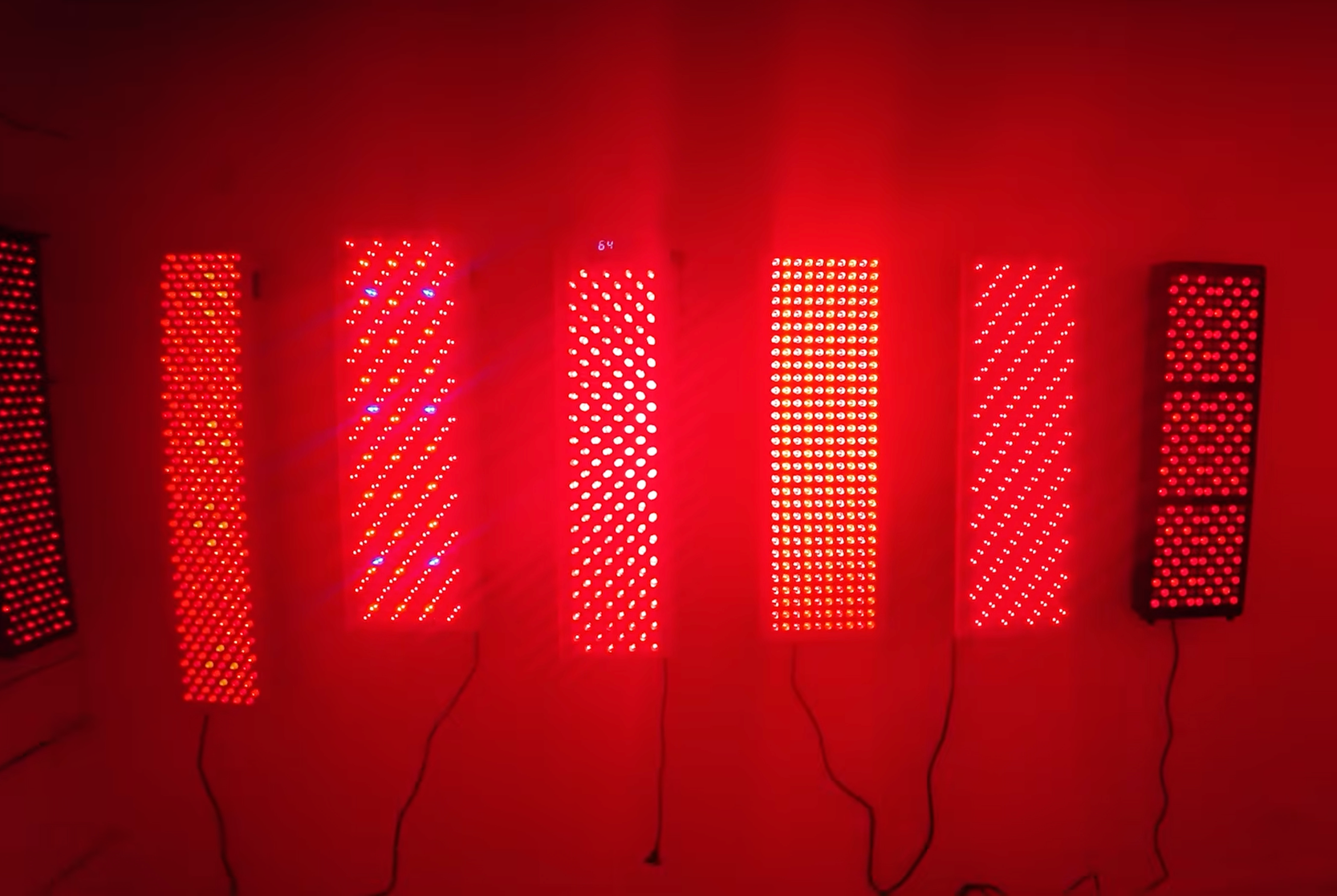
When I compare the Helio Glow to panels like the Rouge G4 or the Block Blue Light Mega, it becomes a bit harder to justify the price unless you specifically want a heavy focus on 1064/1070nm light.
Both Rouge and Block Blue Light offer more refined overall packages, in my opinion. You’re getting better mounting systems, quieter operation, stronger accessory ecosystems, and, in some cases, more advanced wavelength combinations.
The Rouge panels, in particular, feel more polished from a usability standpoint, while the Block Blue Light Mega remains one of the strongest all-around performers in terms of power, features, and value. The Helio Glow’s biggest differentiator is the unusually high percentage of deeper near-infrared wavelengths, but beyond that niche advantage, the Rouge and BBL panels feel more complete and mature overall.
Items Mentioned
⭐ Heli0 Cure - use code ALEX to save 10%.
👉 https://aferg.com/Helio
⭐ Rouge Red Light Panels — code ALEX for $50 off!
👉 https://aferg.co/rougecare
⭐ Block Blue Light — 15% off automatically applied at checkout
👉 https://aferg.co/BlockBlueLight
You May Like These Reviews:
🔴 Mito Red Light Review: Are They Still Worth It?
🔴 Inside Vielight's Red Light Therapy Brain & Body Impact
🔴 Pulse Light vs Continuous: What Actually Matters in Red Light Therapy
🔴 Red Light Therapy For Hair Regrowth: HUGE 6-Month Test!
Found This Interesting? Look At These Articles:
🔴 Red Light Therapy And Cancer: What You Need To Know From The Most Important Studies
🔴 Sun Exposure & Melanoma Risk: The Huge Light Therapy Implications
🔴 Gut Health & Red Light: A Surprising Connection
🔴 Red Light Therapy For Migraines 101: Why The Research Is Super Promising!
Alex's Bio
This blog post was written by Alex Fergus. Alex is a ISSN Sports Nutrition Specialist, Fitness Professional and certified Superhuman Coach who continues to expand his knowledge base and help people across the world with their health and wellness. Alex is recognized as the National Record Holder in Powerlifting and Indoor Rowing and has earned the title of the Australian National Natural Bodybuilding Champion. Having worked as a health coach and personal trainer for over a decade, Alex now researches all things health and wellness and shares his findings on this blog.