For years, I've tested red light therapy panels at 6 inches, just like many manufacturers and reviewers. But new independent lab data has convinced me it's time for a change.
Going forward, I'll be testing red light therapy panels at 12 inches (30 cm). Why? Because those impressive irradiance numbers measured at 6 inches don't always tell us how well a panel performs across the body.
Independent testing of the PlatinumLED BioMax 600 and Helio Glow revealed something interesting: moving farther away can improve light distribution and reduce hotspots without dramatically reducing average irradiance across the treatment area.
Here's what the data revealed, why I'm changing my testing standards, and what it means when comparing red light therapy panels.
Why Red Light Therapy Panel Testing Needs to Change
When someone stands in front of a red light therapy panel, they're usually treating a relatively large area, such as their face, torso, back, or legs. They're not simply trying to deliver the maximum amount of light to one small spot directly in front of an LED.
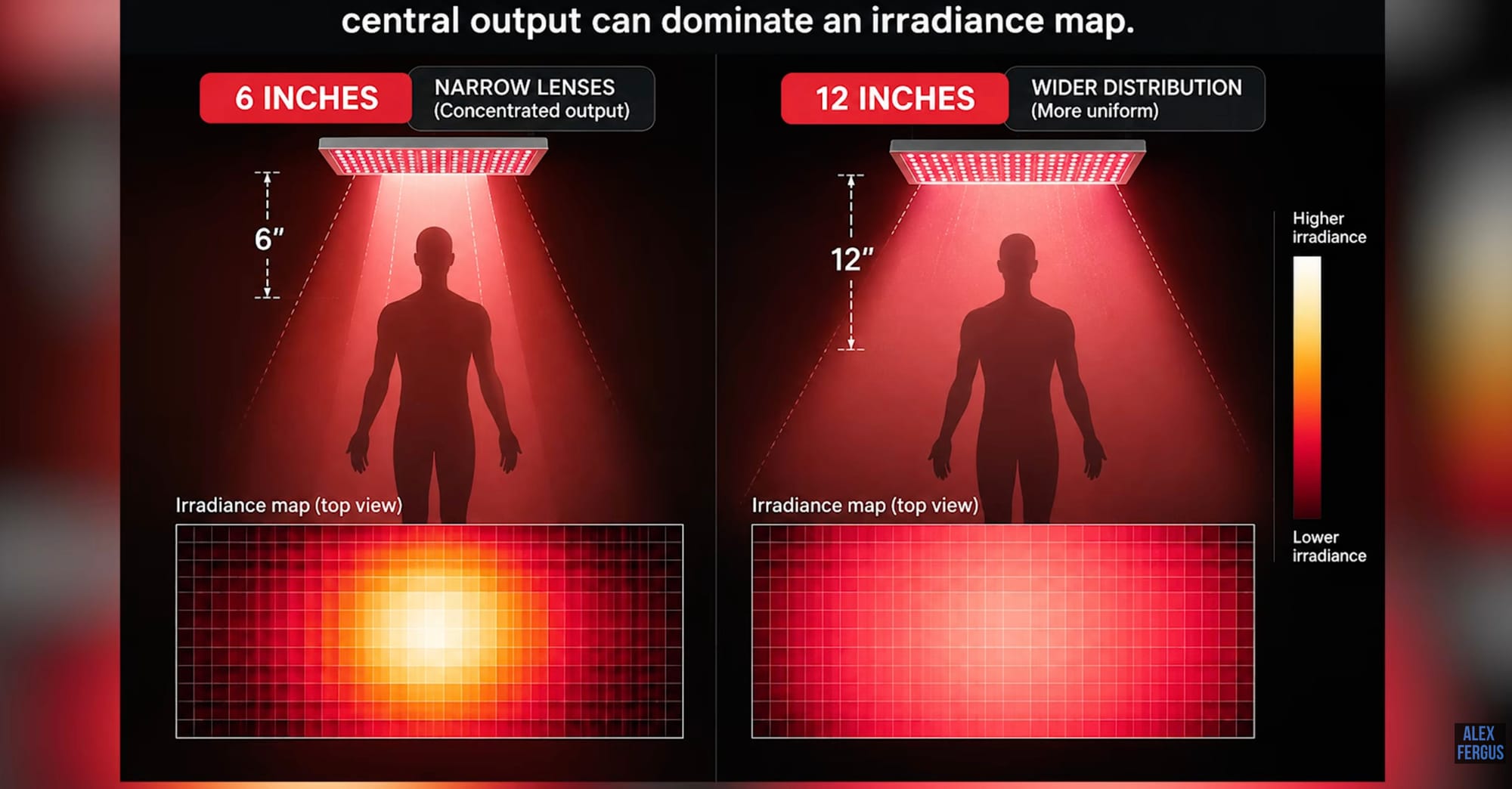
Yet that's effectively what some irradiance measurements emphasize. A panel might produce an extremely high reading in the center while delivering considerably less light toward the edges. That makes it difficult to judge how well the device will perform across an actual treatment area.
There are four important measurements I believe we should consider when evaluating red light therapy panels:
- Wavelength: What wavelengths of red and near-infrared light does the panel actually produce?
- Irradiance: How much light power reaches a given area, measured in mW/cm²?
- Coverage: How much of the intended treatment area receives an adequate level of light?
- Uniformity: How evenly is that light distributed?
A panel with slightly lower peak irradiance but better coverage and uniformity may be more useful for treating a large area than one producing an extremely concentrated beam. That's why focusing exclusively on the highest power reading can be misleading.
The Problem With Testing at 6 Inches
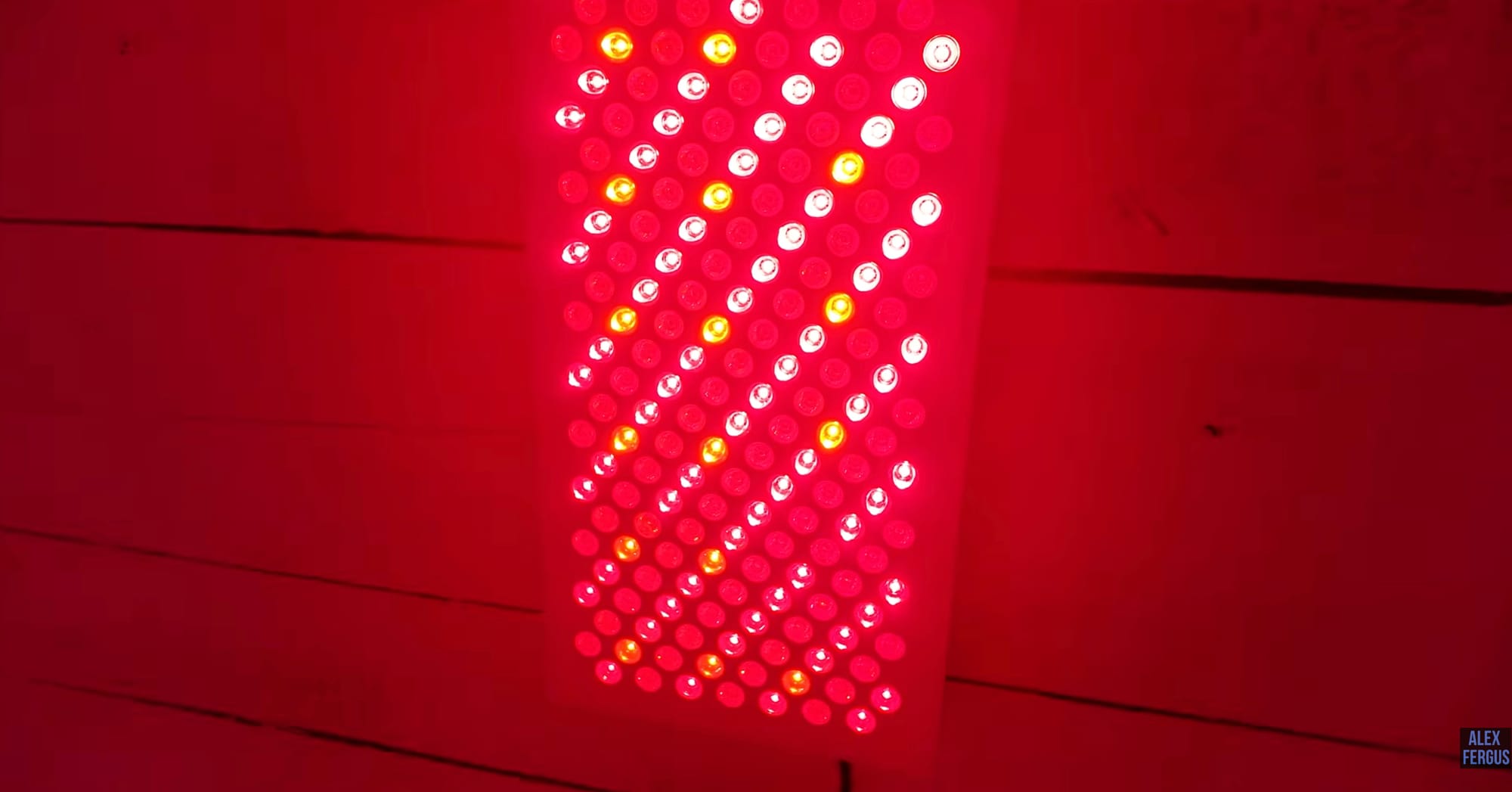
Red light therapy panels contain dozens or hundreds of individual LEDs, each producing its own beam of light. At close distances, those beams may not have enough room to overlap properly, creating intense hotspots directly in front of certain LEDs and weaker areas between them.
This becomes particularly important with multi-wavelength panels. Some LEDs produce red light while others produce near-infrared light, meaning different areas of your body could receive different proportions of each wavelength when standing close to the panel.
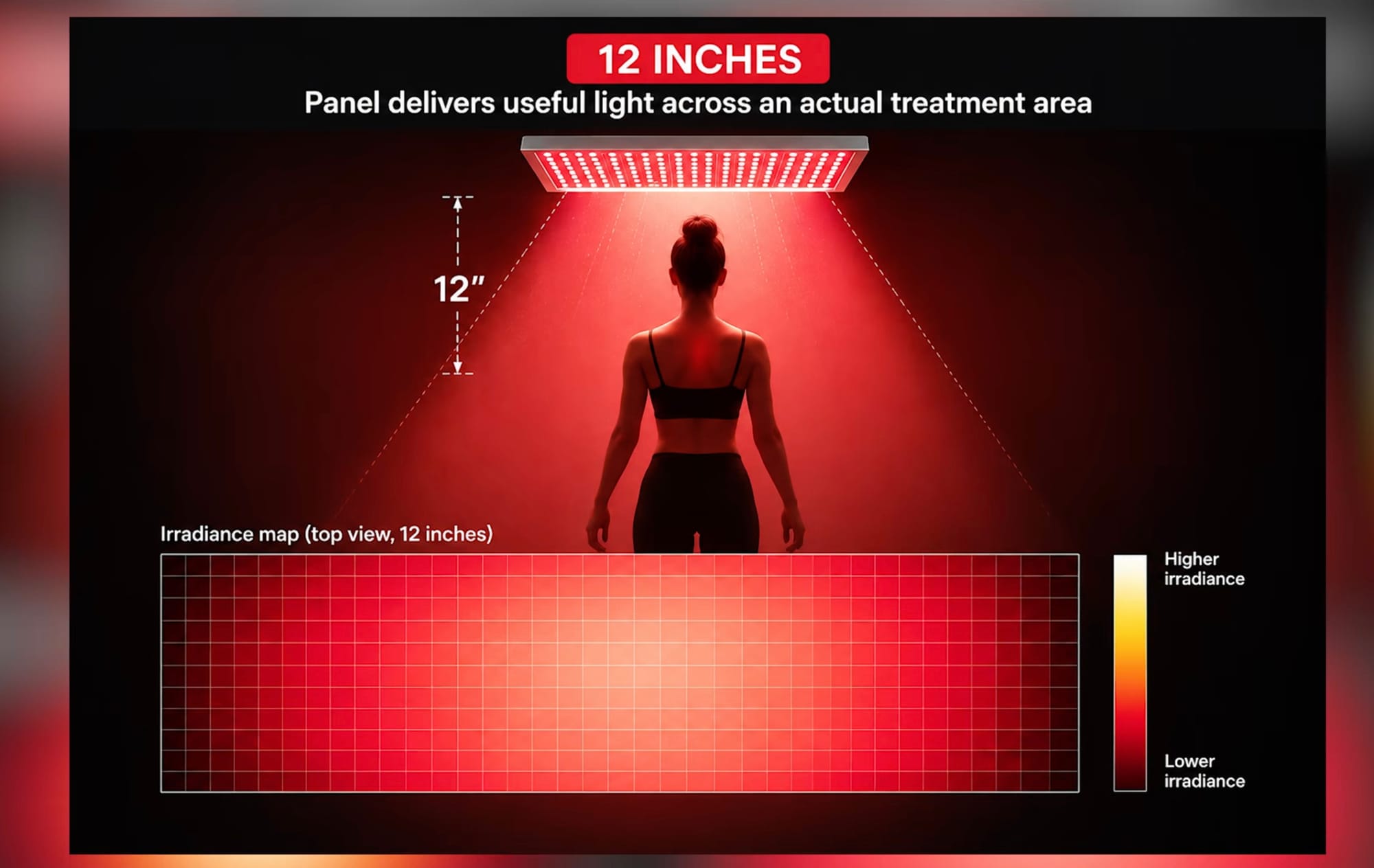
Moving farther away gives those beams more room to blend, potentially creating a more consistent distribution of light across the treatment area.
A technical study examining commercial red light therapy arrays demonstrated just how uneven this distribution can be. In one panel, an area only 2 centimeters from the center received just 38% of the central dose. In another, the highest irradiance wasn't even located at the center.
These findings help explain why a single center-point measurement doesn't necessarily represent how a panel performs across the body.
PlatinumLED BioMax 600: Independent Lab Results
To understand the difference between testing at 6 and 12 inches, let's look at independent laboratory results for the PlatinumLED BioMax 600.
Light Lab International measured irradiance across a central 6 × 6-inch grid at both distances.
| Measurement | 6 Inches | 12 Inches |
|---|---|---|
| Average irradiance | 84 mW/cm² | 66 mW/cm² |
| Peak irradiance | Nearly 130 mW/cm² | 77.6 mW/cm² |
| Uniformity score | 65% | 85% |
For this comparison, I calculated uniformity by dividing average irradiance by peak irradiance.
At 6 inches, the BioMax 600 produced an impressive peak reading approaching 130 mW/cm². However, when the distance increased to 12 inches, the peak dropped by approximately 40%, while average irradiance decreased by only 21%.
More importantly, the uniformity score improved from 65% to 85%.
This means the light became considerably more evenly distributed across the measured area, without an equally dramatic reduction in average irradiance.
If we judged the panel entirely by its highest reading, 6 inches would appear significantly better. But the 12-inch measurements demonstrate improved light blending and a less concentrated hotspot.
There is one limitation worth mentioning. These measurements were taken across a relatively small 6 × 6-inch area, so they don't tell us exactly what's happening across an entire body. For that, we need a larger testing grid.
Helio Glow: What Happens Across a Larger Treatment Area?
The next example comes from independent testing of the Helio Glow red light therapy panel.
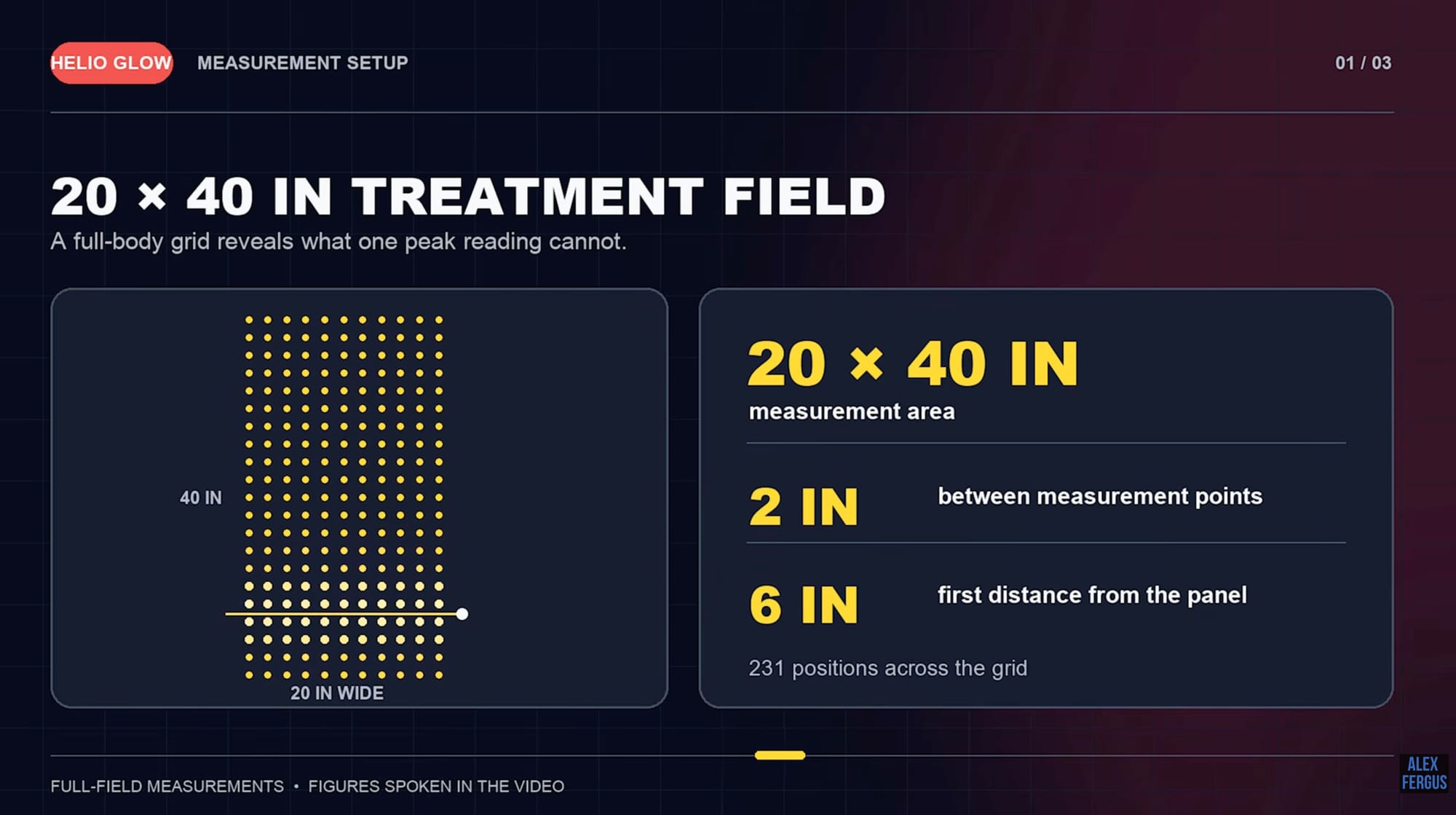
This time, Light Lab measured a much larger 20 × 40-inch treatment field, taking measurements every 2 inches. This provides a more realistic picture of how light is distributed across a substantial portion of the body.
| Measurement | 6 Inches | 12 Inches |
|---|---|---|
| Average irradiance | 26 mW/cm² | 25 mW/cm² |
| Peak irradiance | 86 mW/cm² | 76 mW/cm² |
| Uniformity score | 30.5% | 33% |
These results were particularly interesting because average irradiance barely changed when the distance doubled.
At 6 inches, average irradiance was 26 mW/cm². At 12 inches, it was 25 mW/cm², a reduction of less than 4%. Meanwhile, peak irradiance dropped from 86 to 76 mW/cm², and uniformity improved slightly.
I also examined how much of the testing grid received more than 30 mW/cm². Surprisingly, the panel retained virtually all of its useful coverage at the greater distance, using that threshold.
In other words, moving farther away reduced the strongest hotspots while maintaining almost the same average irradiance and useful coverage across the larger treatment area.
Had I looked exclusively at the peak readings, I might have concluded that 6 inches was clearly superior. But examining the entire treatment field tells a different story.
Why I'm Choosing 12 Inches as My New Testing Standard
Testing at 6 inches can favor panels with narrow lenses that concentrate light into a smaller area. These devices may produce impressive center-point irradiance numbers without necessarily delivering better coverage across the body.
At 12 inches, individual LED beams have more opportunity to overlap, allowing us to evaluate light distribution across a larger treatment area. This creates what I believe is a fairer comparison between panels with different optical designs.
There's also a practical advantage. Twelve inches is easy for most people to estimate, and it's already within the recommended treatment distances of several manufacturers. PlatinumLED, for example, recommends approximately 6–12 inches for standard treatment, while BlockBlueLight recommends different distances depending on the application.
However, I'm not claiming that 12 inches is biologically superior to 6 inches. There aren't clinical trials directly comparing treatment outcomes from the same consumer panel at 6, 9, and 12 inches under otherwise comparable conditions.
My decision is about creating a better standardized testing method, not prescribing an ideal treatment distance for everyone.
My New Red Light Therapy Testing Protocol
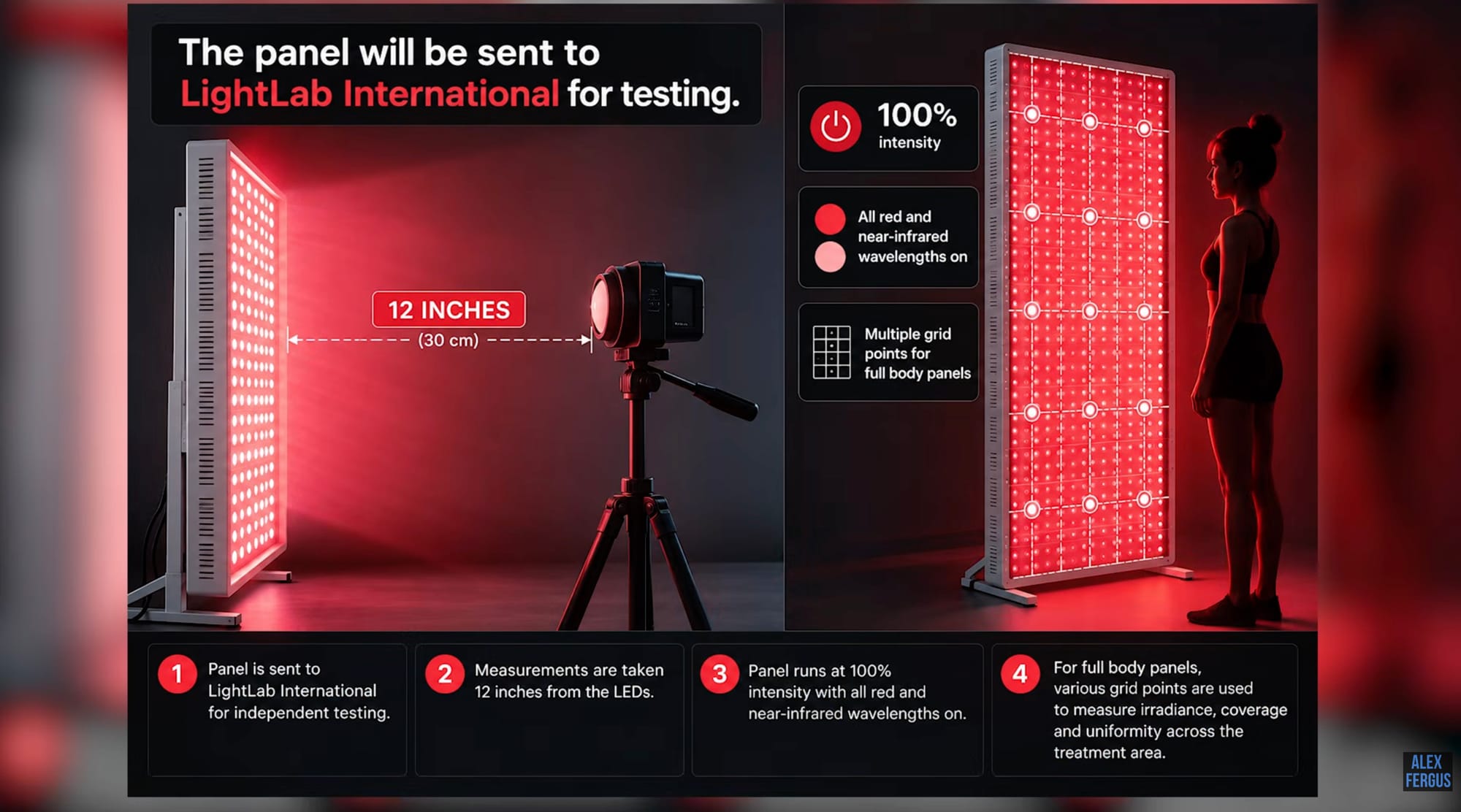
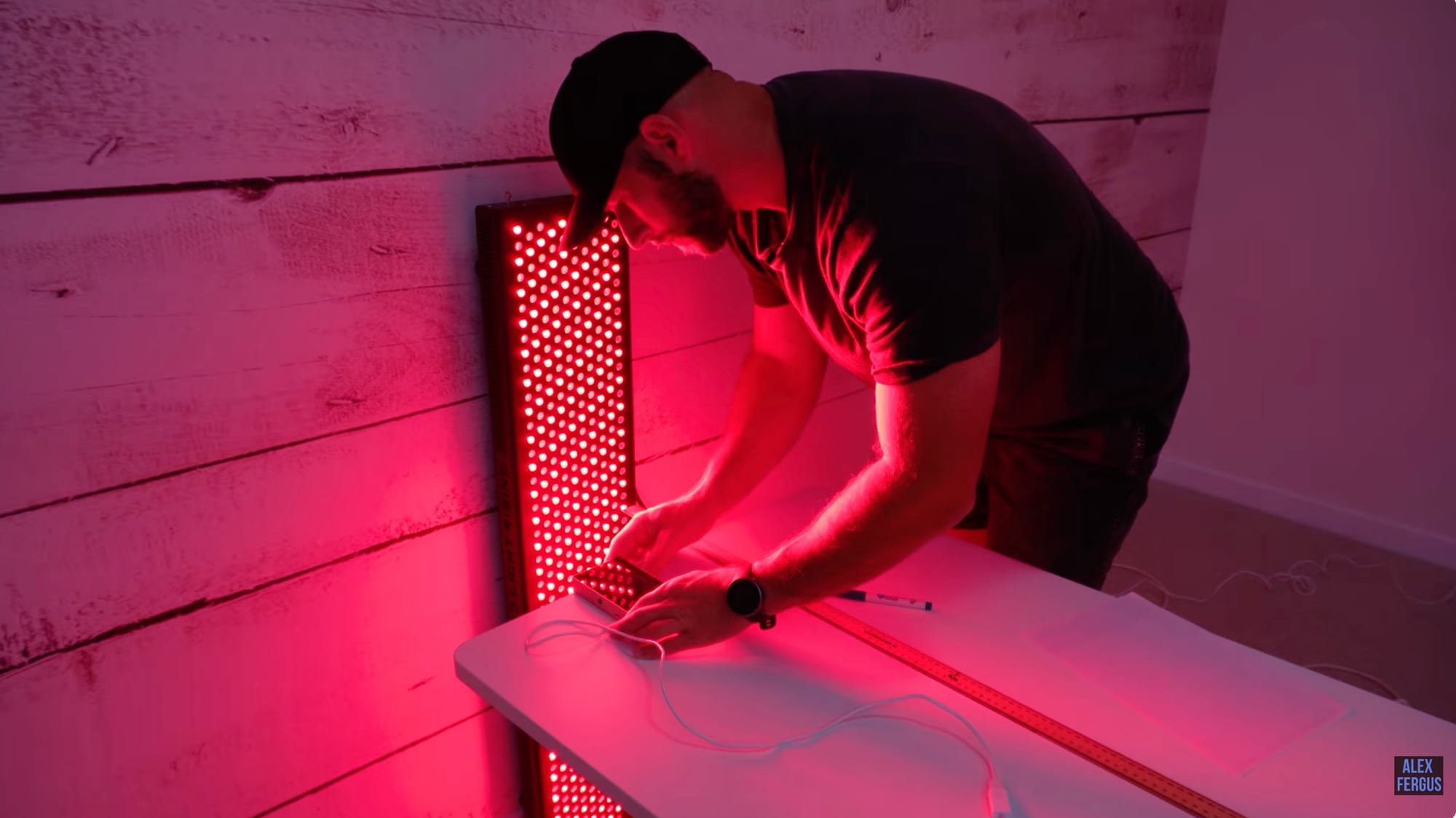
Going forward, panels will be sent to Light Lab International for independent testing at 12 inches from the LEDs. Each panel will operate at 100% intensity, with all red and near-infrared wavelengths switched on.
The laboratory will use different testing grids depending on the size and intended application of the panel.
| Panel Type | Testing Area |
|---|---|
| Full-body panels | 24 × 60 inches |
| Half-body panels | 24 × 30 inches |
| Face and targeted panels | 6 × 10 inches |
These measurements will allow me to evaluate average irradiance, peak irradiance, coverage above a predefined threshold, and uniformity across the intended treatment area.
Measuring Total Light Output and Wavelength Accuracy
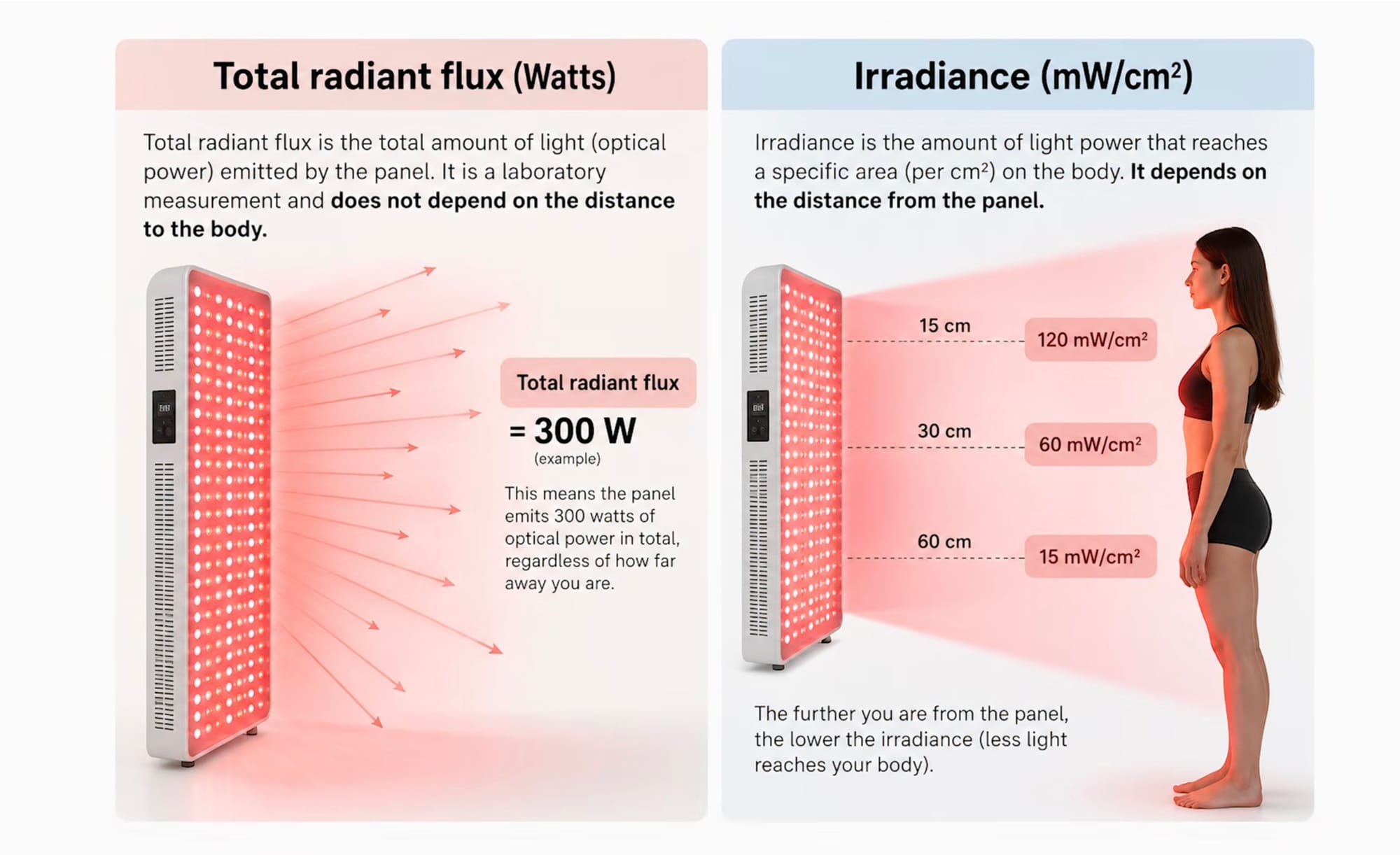
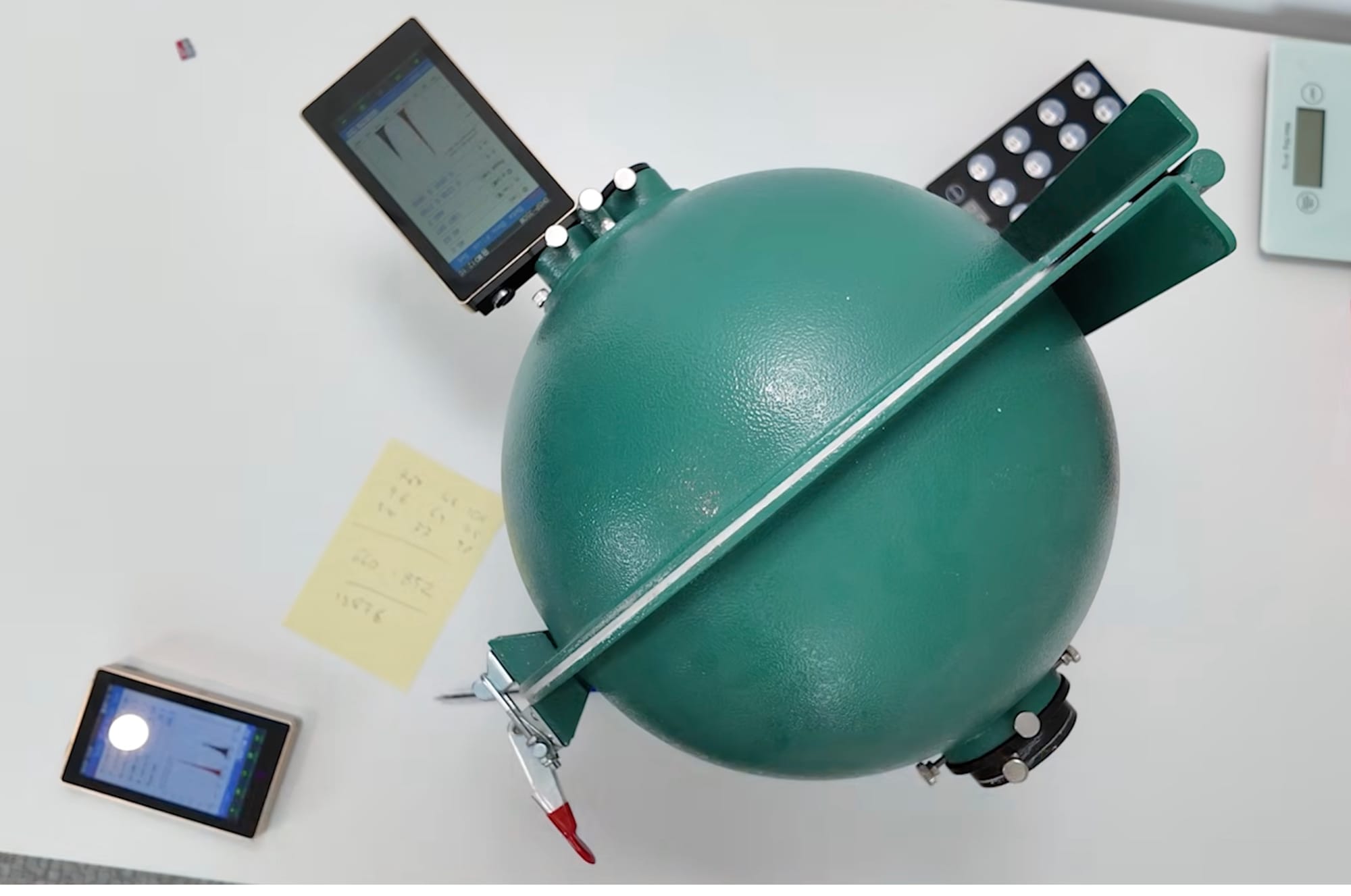
Alongside the treatment-grid measurements, panels will undergo separate integrating sphere testing to measure total radiant flux, wavelength distribution, actual wavelength peaks, and the proportion of light falling within specific spectral bands.
This matters because irradiance measured at a particular distance isn't the same as a panel's total optical output. Both measurements provide useful information, but they tell us different things.
The laboratory will also perform cold-start stability testing to determine whether a panel maintains consistent output as it warms up. Some LEDs can change their output with temperature, so an impressive initial reading doesn't necessarily represent performance throughout an entire session.
Together, these tests should provide a much more complete picture of how different red light therapy panels perform.
Does Moving Farther Away Affect Treatment Time and Dosage?
Generally, moving farther away from a red light therapy panel reduces irradiance at a given point, which means treatment time may need to change if you're trying to deliver the same radiant exposure.
The basic calculation is:
Dose (J/cm²) = Irradiance (mW/cm²) × Time (seconds) ÷ 1,000
For example, receiving 30 mW/cm² for five minutes delivers an incident radiant exposure of 9 J/cm².
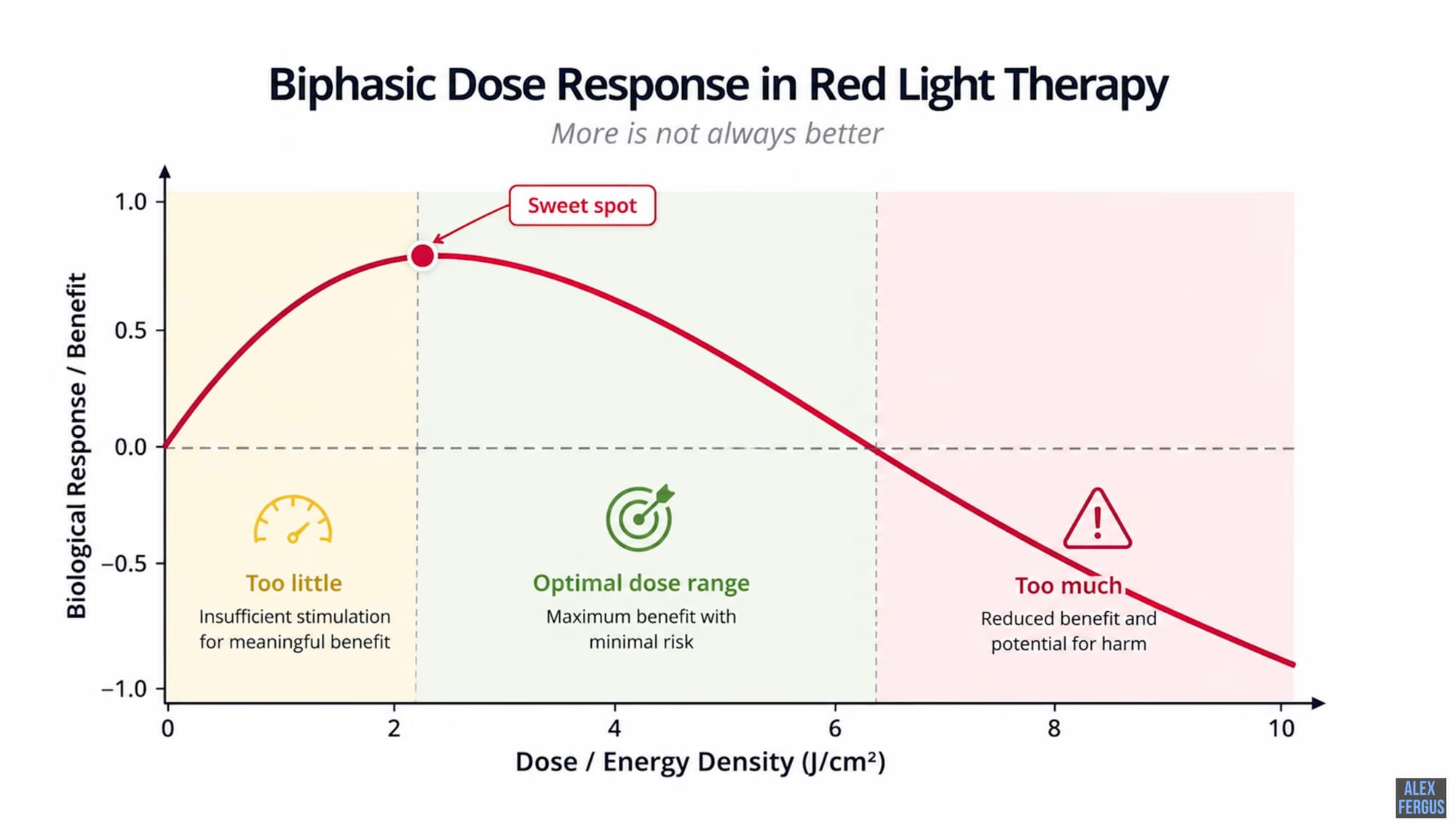
However, that doesn't mean 9 J/cm² is the ideal dose for every application. Red light therapy studies use a wide range of wavelengths, intensities, treatment times, and doses, and more light isn't necessarily better.
There's also the possibility of a biphasic dose response, where both insufficient and excessive exposure may produce less benefit. Unfortunately, optimal dosing hasn't been established for every consumer panel or treatment goal.
The purpose of my new testing standard isn't to prescribe the perfect dose. It's to provide more accurate information about what a panel actually delivers.
Does This Apply to LED Masks, Wraps, and Mats?
No. This new 12-inch testing standard applies specifically to non-contact red light therapy panels, not LED face masks, wraps, mats, or other devices designed to be used directly against the skin.
These products require different testing methods because they're used differently. Measuring a face mask at 12 inches, for example, wouldn't accurately represent its normal use.
Final Thoughts: Better Testing, Not Just Bigger Numbers
After years of reviewing red light therapy panels, I've become increasingly convinced that the highest irradiance reading doesn't tell the whole story.
The independent laboratory results from the PlatinumLED BioMax 600 and Helio Glow demonstrate why. In both cases, moving from 6 to 12 inches reduced peak irradiance while improving measured uniformity, although the results differed depending on the panel and testing area.
This doesn't prove that treating at 12 inches produces better biological outcomes. It simply demonstrates why a more comprehensive testing approach is needed when comparing red light therapy panels.
By combining larger testing grids with independent measurements of wavelength accuracy, total optical output, coverage, uniformity, and stability, I hope to provide more meaningful comparisons going forward.
Because when it comes to red light therapy, the most impressive power number isn't necessarily the best measure of a panel's real-world performance.
Here are some of the products I mentioned
🔴 PlatinumLED BioMax- Use the discount link https://aferg.co/redled to save 5% on the feature-packed BioMax red light panel range
🔴 Helio Cure - View their product range at https://aferg.co/Helio and use code ALEX to save 10%.
🔴 Block Blue Light - Use this link: https://aferg.co/BlockBlueLight to save 15% on Block Blue Light's products. The discount will automatically be applied at checkout.
Have You Seen These Reviews
♦️ Bestqool Pro 300 Review: Is This $810 Red Light Therapy Panel Worth It?♦️ Helio Cure Glow Review: They Actually Fixed the Problems!
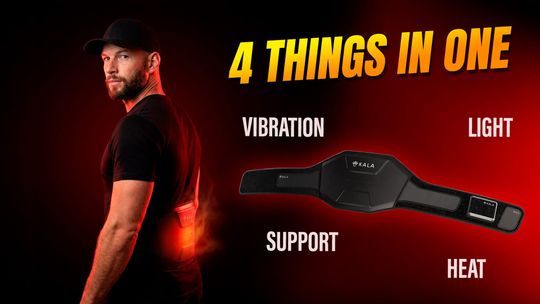
♦️ This Back Pain Wrap Has Red Light, Heat & Vibration—But Does It Work?
♦️ PlatinumLED BioMax Go: They Finally Made a Handheld. Is It Any Good?
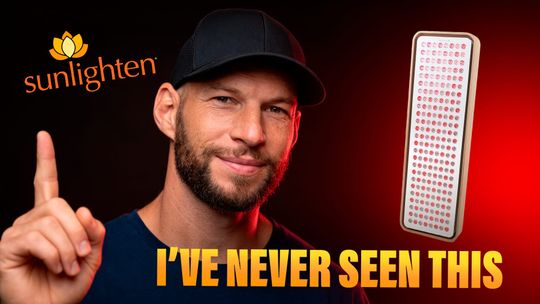
♦️ Sunlighten Red Light Therapy Panel Review: Powerful, But Something’s Missing
Alex's Bio
Alex Fergus wrote this blog post. Alex is an ISSN Sports Nutrition Specialist, Fitness Professional, and certified Superhuman Coach who continues to expand his knowledge base and help people across the world with their health and wellness. Alex is recognized as the National Record Holder in Powerlifting and Indoor Rowing and has earned the title of the Australian National Natural Bodybuilding Champion. Having worked as a health coach and personal trainer for over a decade, Alex now researches all things health and wellness and shares his findings on this blog.