
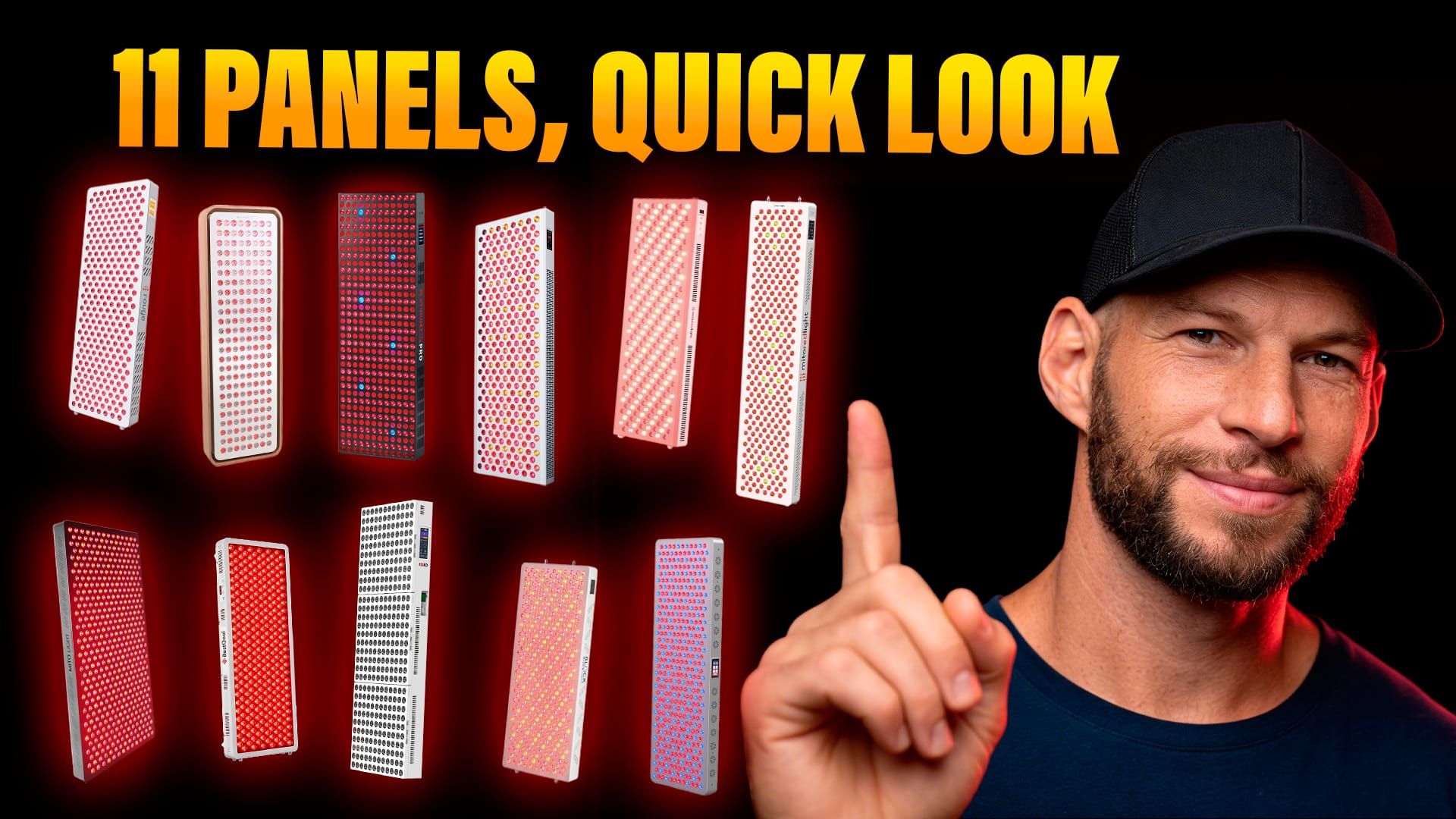
I've got 11 of the best red light therapy panels of 2026 in one room, and before I put them through my big showdown, I want to give you a closer look at what each one offers. We're talking about panels ranging from $810 to more than $2,300, with some impressive technology, interesting design choices, and a few surprising weaknesses that you might not expect from devices at these prices.
I've had every panel independently lab-tested, looking at important performance factors such as power output, body coverage, wavelength distribution, and how consistently the light performs during treatment. In this preview, I'll share what I like, what I don't, and what each panel costs. This isn't my final ranking or a declaration of the best panel. That's coming in my full 2026 red light therapy panel showdown, where I'll score the contenders across nine different rounds and reveal the overall winner.
1. Sunlighten Red Light Therapy Panel
Price: $1,412, including shipping
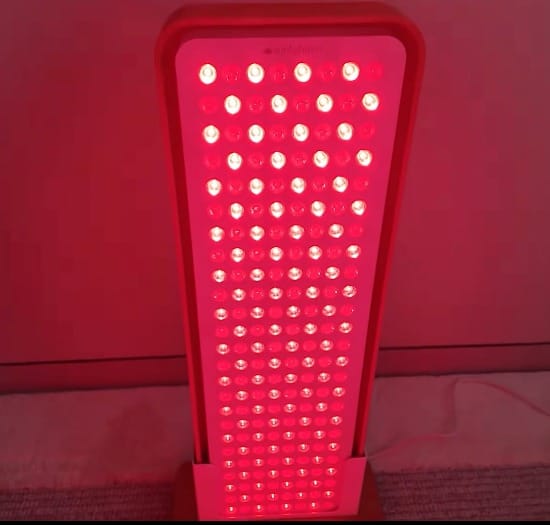
The first thing you'll notice about the Sunlighten red light therapy panel is its unusual design. It's the first panel I've seen with timber edging, and I actually quite like the look. If you already own one of Sunlighten's infrared saunas, the styling will fit right in. However, once you look beyond the appearance, this is a fairly basic device compared with many of the other panels in this lineup.
There are no physical control buttons, built-in timer, or touchscreen on the front of the panel. In fact, there's nothing except a power switch on the back. Sunlighten relies on an app for accessing its additional functions, which might be convenient if you enjoy controlling everything through your phone. Personally, I think there's something to be said for having controls directly on the device, especially when you're paying more than $1,400.
The other issue is its relatively small size, which limits the amount of your body you can treat effectively. During independent testing, the Sunlighten achieved a 40% half-body coverage score, and its light distribution wasn't particularly impressive either. That means a substantial portion of the treatment area isn't receiving the level of irradiance I'm looking for. The timber design is certainly distinctive, but the limited coverage and lack of physical controls are important considerations at this price.
2. Mito Light Mitohacker 5.0
Price: Over $2,000
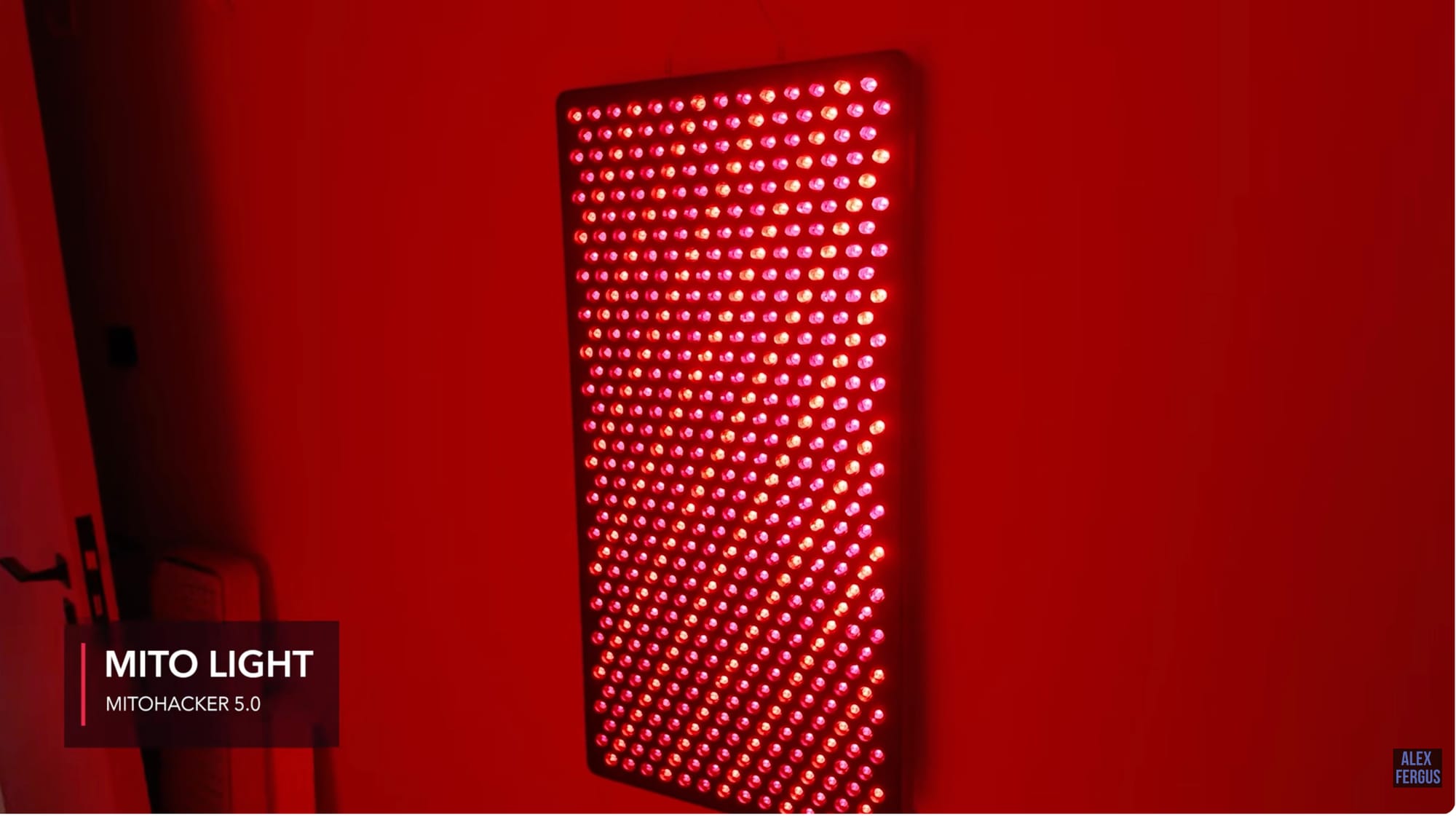
The Mito Light Mitohacker 5.0 is an absolute monster of a panel. It's the largest device in this comparison and one of the most powerful panels I've independently tested. But as I've explained in previous videos, raw power isn't everything. What really matters is how effectively that light is distributed across your body, because an extremely powerful panel isn't necessarily useful if most of that energy is concentrated in a small area.
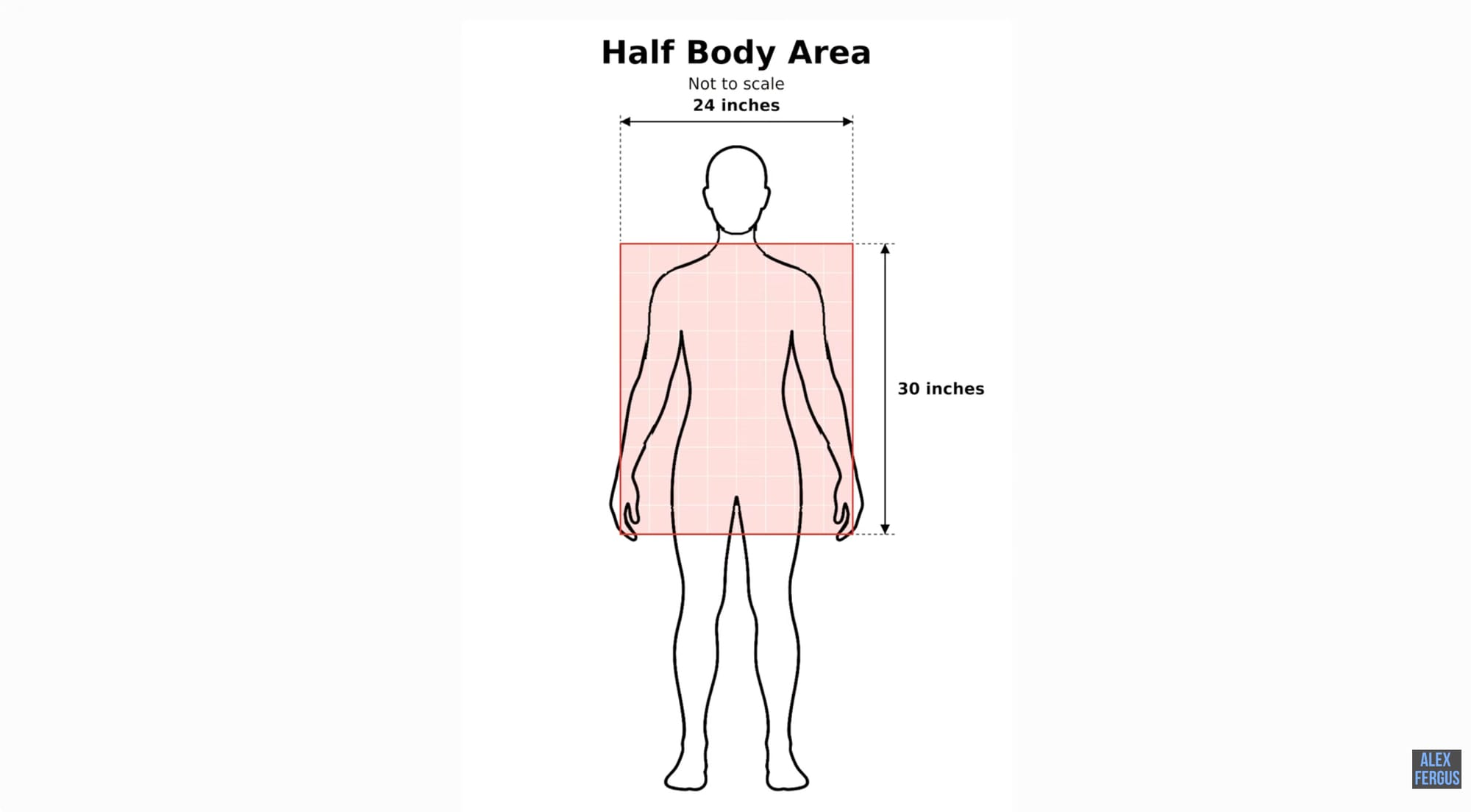
For my coverage testing, I use a half-body grid extending from shoulder to shoulder and from the neck down to the waist. I then calculate how much of that area receives at least 30 mW/cm² of light. The Mitohacker achieved an impressive 75% coverage score, which is one of the strongest results highlighted in this preview. It also delivers multiple wavelengths with a nice, even blend, so there's plenty to like about its overall light performance.
However, there are some drawbacks. At more than $2,000, it's one of the more expensive options, yet it doesn't offer some of the advanced smart features available on competing premium panels. More importantly, my testing revealed that its power output dropped by approximately 13% during a single treatment session. That's a noticeable decline, particularly when other panels maintain much more stable output. Even so, its combination of size, power, wavelength blending, and excellent coverage makes it a serious contender heading into the showdown.
3. Mito Red Light MitoPRO 1500+ V2
Price: $1,265, delivered in the United States
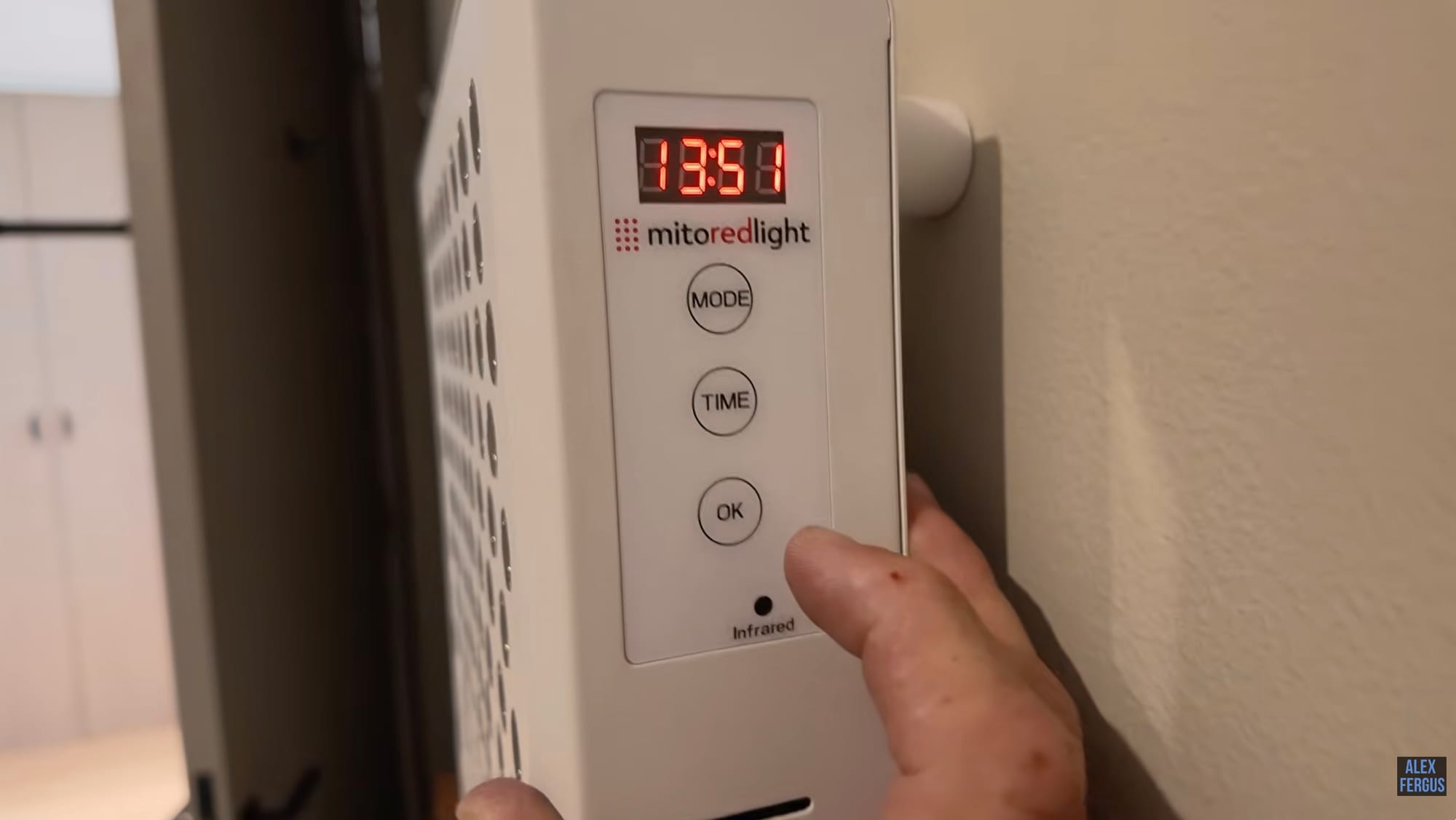
The MitoPRO 1500+ V2 takes a much simpler approach to red light therapy. There aren't any fancy touchscreens, advanced smart modes, or complicated controls. Instead, you get a few physical buttons and a basic timer, which may actually appeal to people who prefer straightforward operation. It's certainly more functional directly on the device than the Sunlighten panel, although it doesn't offer the customization available from some of the newer models.
One thing I particularly like about this panel is its wavelength performance. This year, I've been paying much closer attention to whether manufacturers are delivering meaningful amounts of energy at every wavelength they advertise. It's easy for a company to claim that a panel contains five, seven, or even eight wavelengths, but if some of those wavelengths are producing barely any power, their presence becomes much less impressive. The MitoPRO 1500+ V2 performed well across all five core wavelengths in my testing, which is a definite positive.
Unfortunately, its overall power output was on the lower side, and the panel achieved only a 42% half-body coverage score. Its size likely contributes to that result, along with the lower intensity. At $1,265, you're getting a relatively simple device with meaningful output across its core wavelengths, but you are sacrificing some coverage and advanced functionality compared with other panels in this comparison.
4. Mito Red Light MitoPRO 1500X
Price: Approximately $1,350
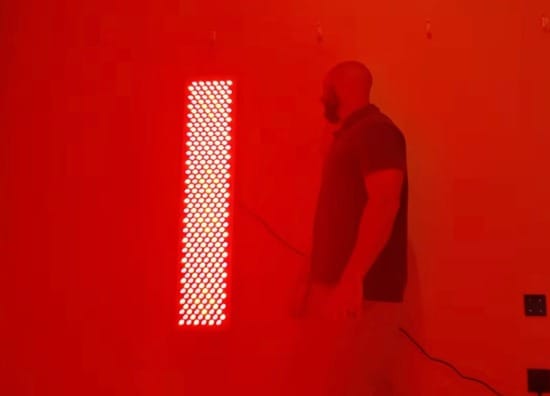
The MitoPRO 1500X is the second of three Mito Red Light panels in this comparison, and its design is noticeably different from the 1500+ V2. It's taller and narrower, which might seem appealing depending on how you plan to position the device. However, that shape didn't translate into better performance in my coverage testing. In fact, the 1500X achieved a 39.1% coverage score, making it slightly worse than the 1500+ V2 in this particular measurement.
Like its sibling, the 1500X is a relatively basic panel without advanced smart modes or an elaborate touchscreen interface. That simplicity isn't necessarily a problem, especially if you don't need lots of customization options. However, when you're spending around $1,350, it's worth comparing what other manufacturers are offering in terms of treatment coverage and functionality.
One thing working in Mito Red Light's favor is the company's established reputation. They've been around for a long time, offer solid support options, and have addressed important compliance requirements. Those factors matter when you're investing in a device you expect to use for years. While the 1500X doesn't particularly impress me with its coverage, the company behind it is an important part of the buying decision.
5. Rojo M3 Switch
Price: Not specified in this preview
Now, this is where things get particularly interesting. The Rojo M3 Switch is unlike most red light therapy panels I've tested because of its modular design. Rather than being permanently locked into one LED configuration, you can remove individual modules and replace them with different LED arrays. Rojo offers options with blue light, additional near-infrared light, and other configurations, giving you considerably more flexibility than a conventional fixed-wavelength panel.
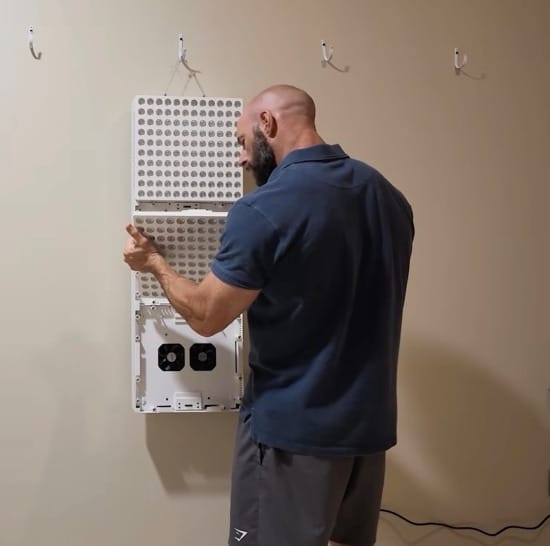
There are also wider LED arrays with wings that wrap around the body, potentially improving coverage even further. In the configuration I tested, the M3 Switch achieved a 60% half-body coverage score, which is already a strong result. Power output was impressive, and the panel delivered decent energy across all five wavelengths I evaluated. That combination of customization and performance is one of the main reasons this device stands out.
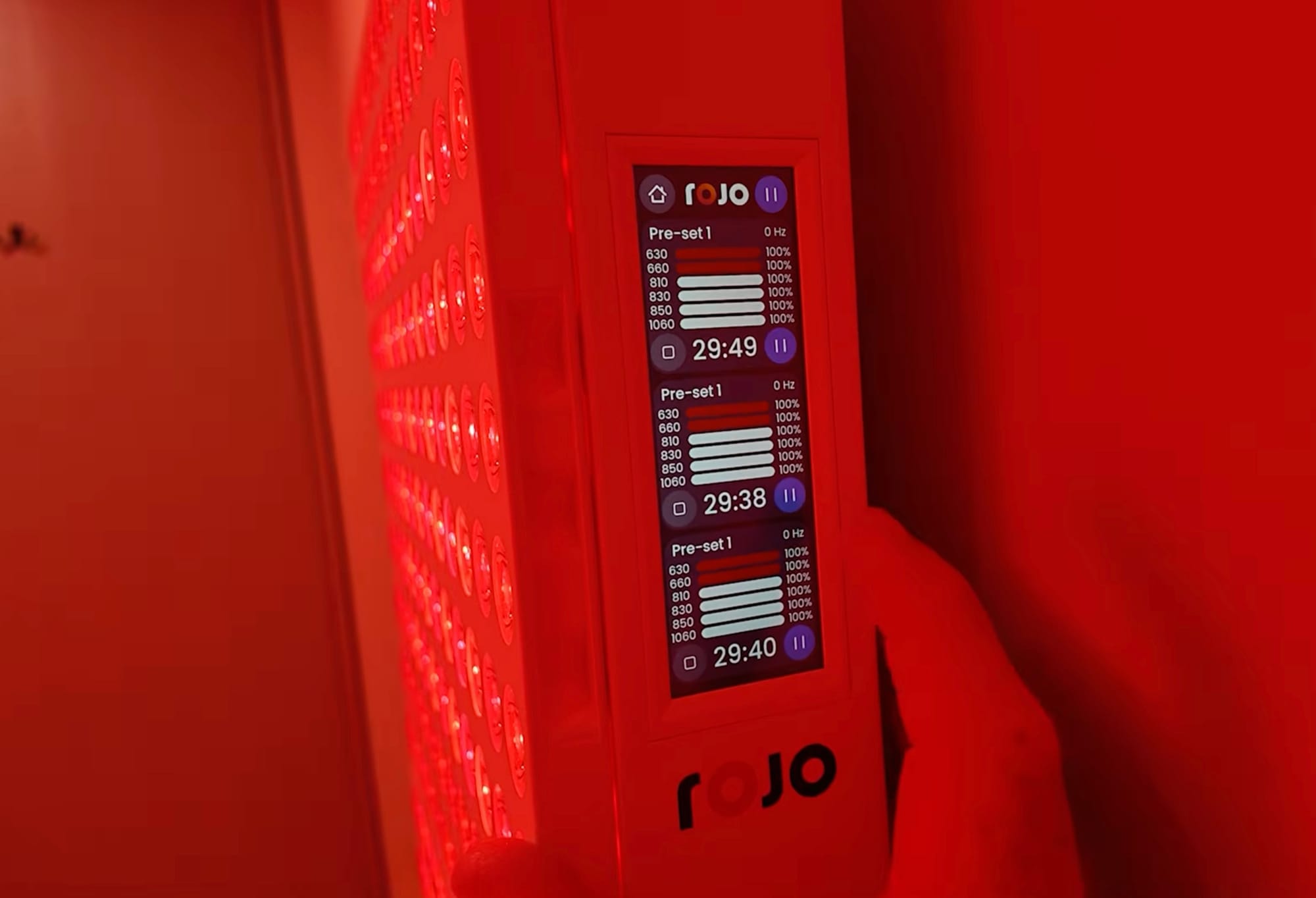
The M3 Switch also features a massive touchscreen with numerous smart modes and even a built-in joules calculator for anyone interested in monitoring treatment doses. However, all that flexibility comes with additional complexity, and there are a couple of drawbacks worth mentioning. The light distribution wasn't as uniform as I'd hoped, and the cooling fan was somewhat noisier than I'd like. This is a panel that really deserves its own detailed review because there's so much to explore, but it's certainly one of the more innovative devices in this lineup.
6. LightpathLED Combo XL
Price: $1,730, delivered in the United States
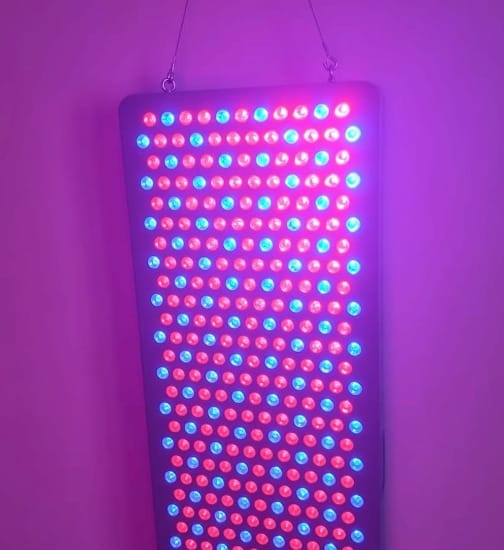
The LightpathLED Combo XL immediately catches your attention because the light coming from it looks purple rather than the familiar red glow you might expect. That's because this panel combines red and near-infrared wavelengths with a substantial amount of blue light. If you're specifically looking for a device that offers significant blue-light output alongside conventional red light therapy, the Combo XL is an interesting option.
One feature I particularly like is the ability to switch off the blue light. When I tested the panel without blue enabled, the balance between red and near-infrared output was almost perfect, which is relatively unusual. The panel also operates very quietly, something that can make a real difference if you're using it regularly in a home environment.
There are some compromises, though. The measured intensity was on the lower side, and its body coverage score wasn't particularly impressive. It's important to explain that my testing excluded the blue wavelengths when measuring conventional red and near-infrared performance, which contributes to the lower intensity figure. At $1,730, the Combo XL isn't cheap, but its substantial blue-light capability, excellent red-to-near-infrared balance with blue disabled, and quiet operation make it different from many of the other contenders.
7. Bestqool Pro 300
Price: $810
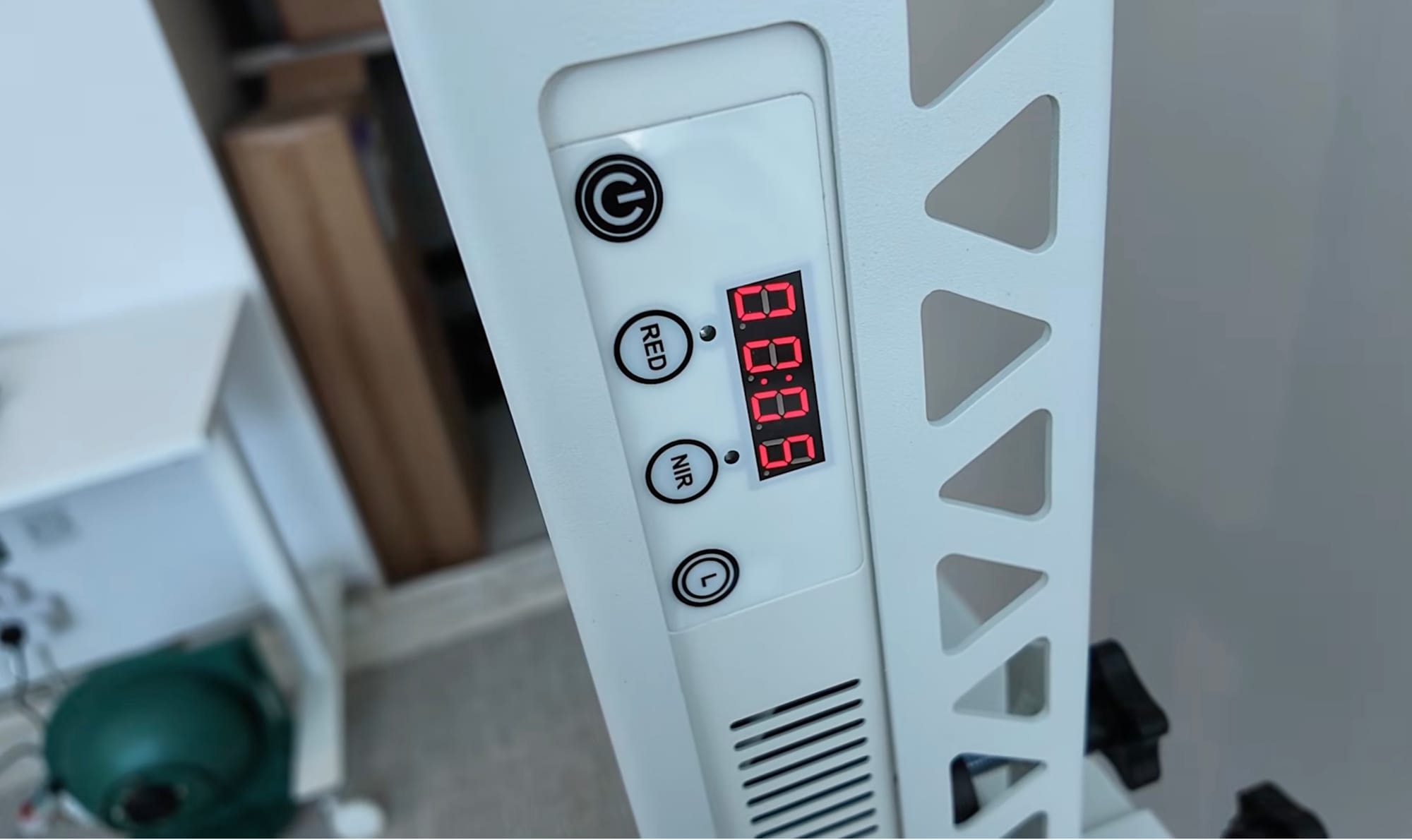
The Bestqool Pro 300 is the most affordable panel in this comparison, coming in at just $810. That's a substantial saving compared with the premium models, some of which cost nearly three times as much. Of course, that lower price means you're giving up certain features and some performance, so the important question is whether those compromises matter for the way you intend to use the device.
The Pro 300 includes a timer and basic physical controls, which is useful, but you won't find independent wavelength controls, advanced smart modes, or the sophisticated touchscreen interfaces available on more expensive panels. It's a straightforward device designed to deliver red light therapy without lots of additional functionality. For some people, that simplicity will be perfectly acceptable, particularly if keeping costs down is the main priority.
However, my independent testing revealed lower power output and less uniform light coverage. If your goal is to expose a large area of your body to a strong, evenly distributed amount of light, this might not be the ideal panel. Uneven coverage can mean some areas receive considerably more light than others, which is one of the reasons I place so much emphasis on distribution rather than just peak intensity. Still, at $810, the Bestqool Pro 300 offers an attractive entry point for anyone who doesn't want to spend well over $1,000.
8. Mito Red Light MitoADAPT MAX 4.0
Price: $1,541
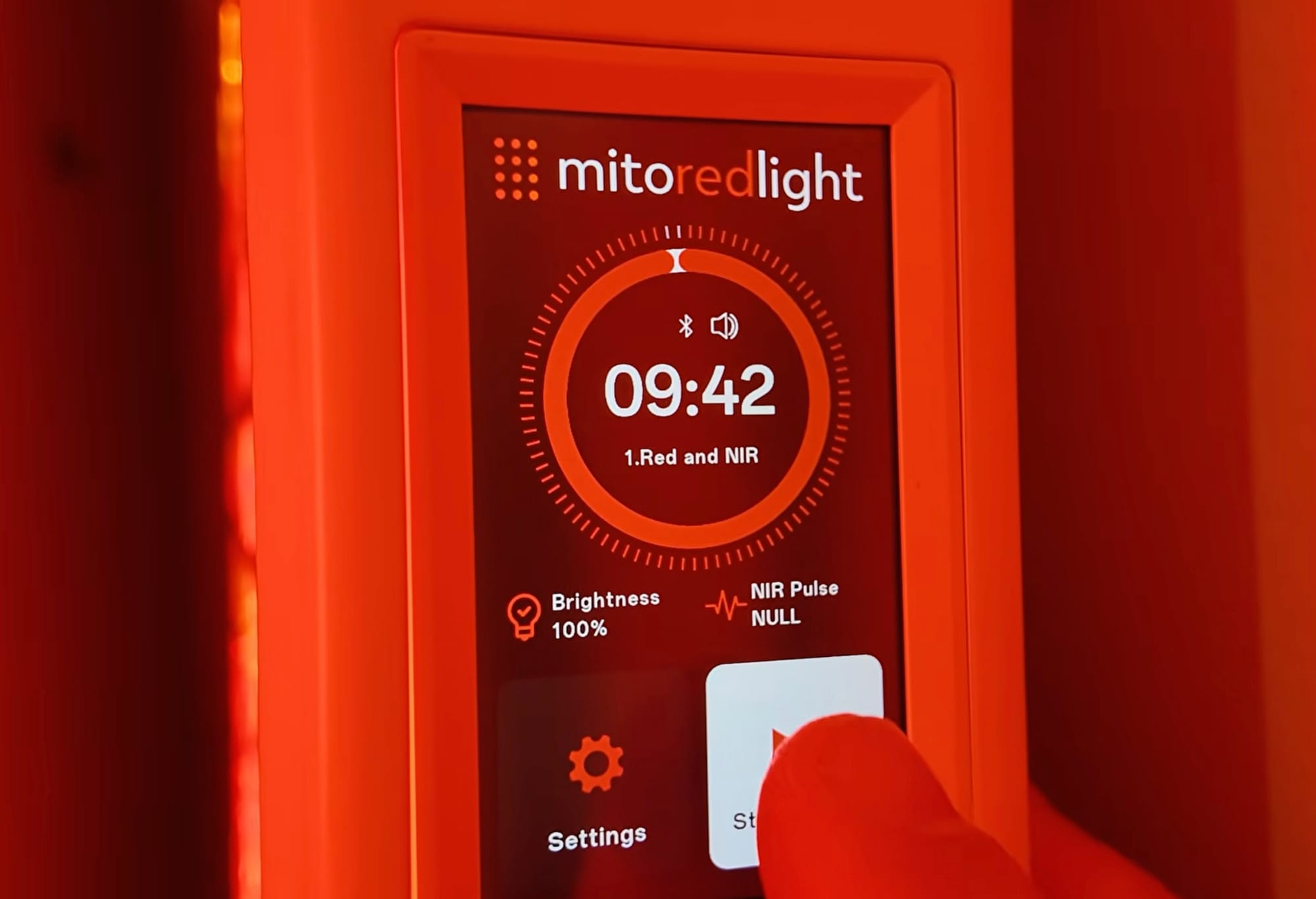
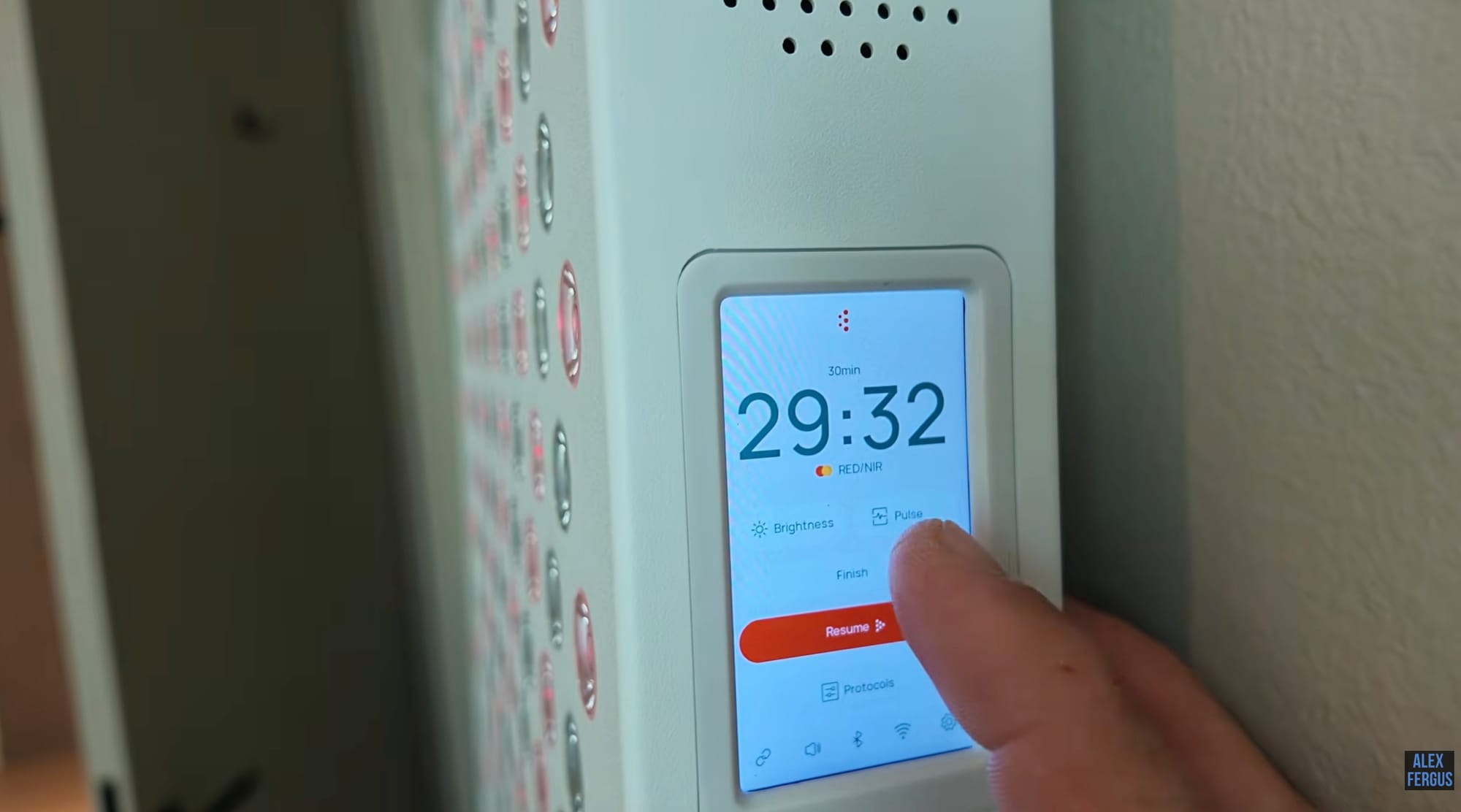
The MitoADAPT MAX 4.0 is the most expensive of the three Mito Red Light panels featured here, and it offers considerably more functionality than the simpler MitoPRO models. This time, you get a touchscreen interface, brightness adjustment, the ability to select which wavelengths are active, and pulsing functionality. These features provide more control over your treatment sessions without making the device unnecessarily complicated.
One of the most encouraging findings from my independent testing was how stable its power output remained during use. After a 20-minute treatment session, the panel maintained very consistent performance, which is important because some devices lose a noticeable amount of intensity as they warm up. The balance between red and near-infrared output was also almost even, another positive for people who want both types of light represented fairly equally.
There are still some limitations, particularly when compared with other panels at similar prices. Although you get a touchscreen and wavelength selection, the MitoADAPT MAX 4.0 doesn't include advanced smart modes or independent intensity adjustment for each wavelength. At $1,541, it's a more sophisticated offering from Mito Red Light, with stable output and useful controls, but it's worth considering whether those features are enough compared with the competition.
9. Block Blue Light Mega Plus
Price: $2,367
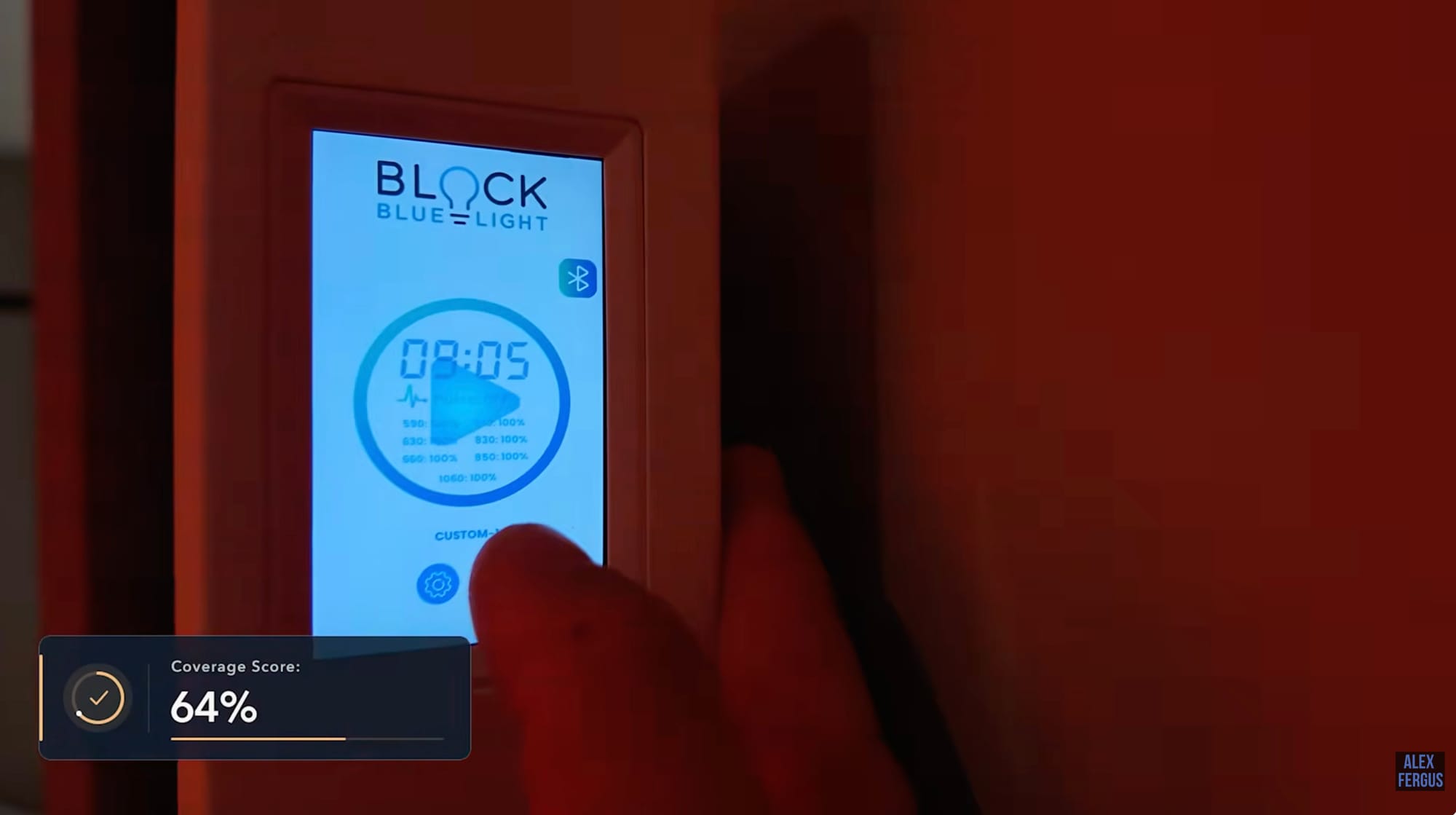
The Block Blue Light Mega Plus is one of the wider panels in this comparison, although it isn't quite as wide as the Mito Light Mitohacker 5.0. That extra width certainly helps with coverage, and the Mega Plus achieved a strong 64% half-body coverage score during independent testing. That's an encouraging result for anyone looking to treat larger areas of the body rather than concentrating on a smaller region.
The panel also advertises numerous wavelengths, but this is another example of why I think independent testing is so important. Several of those wavelengths produced relatively little energy, meaning their practical contribution is questionable despite being included in the specifications. I also found that a substantial proportion of the panel's output was concentrated in near-infrared light, rather than being more evenly distributed between red and near-infrared wavelengths.
One of the biggest positives is the warranty. Block Blue Light offers a five-year warranty, the longest of any panel in this comparison, and the company has been established in the industry for some time. However, the biggest drawback is undoubtedly the price. At $2,367, this is the most expensive device in the lineup, and that's a serious investment. While its strong coverage and generous warranty are attractive, the wavelength performance and high cost will need to be weighed carefully against the other contenders.
10. PlatinumLED BioMax Pro Ultra
Price: Approximately $1,600
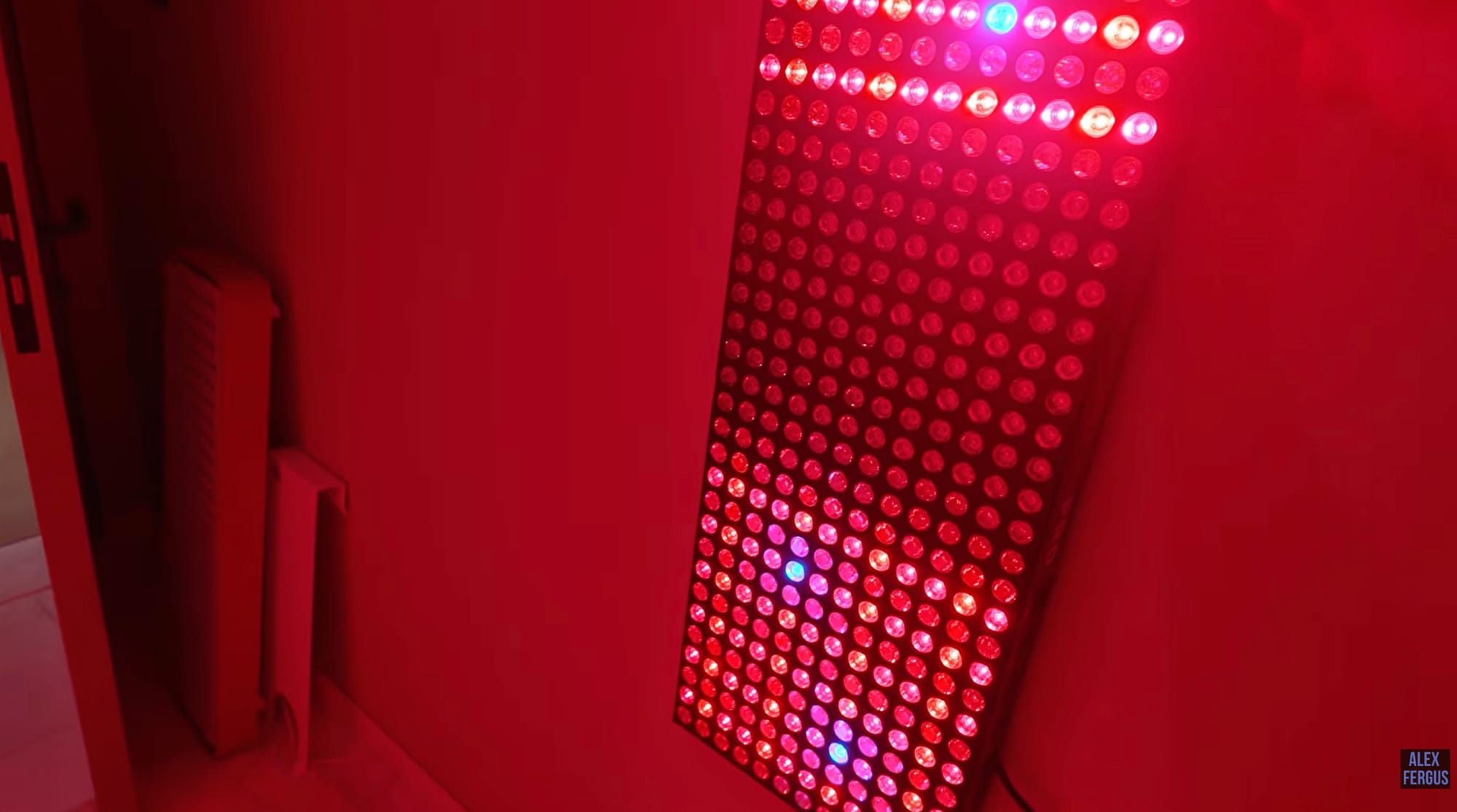
The PlatinumLED BioMax Pro Ultra has several features that immediately caught my attention, particularly its ability to control different sections of the panel independently. Rather than running the entire device at the same settings, you can adjust individual zones to suit different treatment areas. For example, you could use lower-intensity red light on the upper section when treating your face while running the lower sections at a higher intensity for your body. That's a genuinely useful feature because different areas don't necessarily require the same settings.
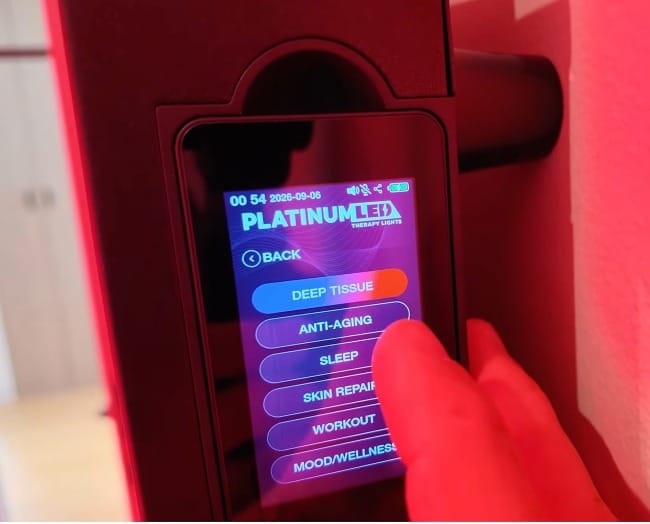
The touchscreen also functions as a remote control, making it easier to adjust settings without having to reach over to the panel itself. There are several smart modes available, and the overall balance between red and near-infrared output was quite good during testing. These are the kinds of practical features that can make a panel more convenient to use regularly, rather than simply looking impressive on a specification sheet.
There are a couple of drawbacks worth considering. The BioMax Pro Ultra comes with a three-year warranty, which is shorter than the five years offered by Block Blue Light, and its body coverage score was slightly lower than the Mega Plus. However, at approximately $1,600, it's considerably less expensive than the Block Blue Light panel while offering sophisticated controls and balanced wavelength output. That combination of features and price makes it a particularly interesting contender for the full showdown.
11. Rouge G5 Pro
Price: $1,564
The final panel in this preview is the Rouge G5 Pro, the latest offering from Rouge. On paper, its eight advertised wavelengths sound impressive, but my independent testing revealed a familiar issue. Several of those wavelengths delivered very little energy, which is why I don't think wavelength count alone should influence your buying decision. A panel with fewer wavelengths delivering meaningful power may be more useful than one advertising numerous wavelengths with minimal output.
The G5 Pro includes smart modes and remote controls, but one of its biggest practical advantages is the stand system. Rouge offers some of the best stand options I've seen, making it easier to position the panel for different treatments. That's something people sometimes overlook when shopping for red light therapy devices, even though positioning and convenience can have a major impact on how often you actually use them.
The most surprising finding was its wavelength distribution. My testing revealed that nearly 80% of the panel's light energy came from near-infrared wavelengths, leaving a much smaller proportion for red light. That isn't automatically a disadvantage if you're specifically looking for a near-infrared-heavy device, but it's certainly something to understand before buying. If you're hoping for a more balanced combination of red and near-infrared light, the Rouge G5 Pro might not deliver what you're expecting. At $1,564, it offers useful features and excellent positioning options, but its unusual wavelength balance is one of the biggest considerations.
What These 11 Red Light Therapy Panels Have Taught Me
After independently testing these 11 panels, one thing stands out: choosing a red light therapy device involves much more than looking at the manufacturer's advertised power output or counting the number of wavelengths. Some panels deliver impressive peak intensity but struggle with even coverage, while others offer multiple wavelengths that contribute very little meaningful energy. There are also substantial differences in power stability, treatment controls, warranties, and overall usability, all of which deserve attention before spending hundreds or thousands of dollars.
The coverage results alone show just how different these devices can be. The Mito Light Mitohacker 5.0 achieved an impressive 75% half-body coverage score, while the Block Blue Light Mega Plus reached 64% and the Rojo M3 Switch achieved 60% in the tested configuration. At the other end, several panels recorded coverage scores around 40%, which could be an important limitation for anyone primarily interested in larger body treatments. These figures don't tell us everything about overall performance, but they demonstrate why I believe coverage deserves just as much attention as raw intensity.
Pricing also varies dramatically, from the $810 Bestqool Pro 300 to the $2,367 Block Blue Light Mega Plus. Spending more can get you advanced smart modes, touchscreen controls, modular LED configurations, or better warranties, but it doesn't automatically guarantee superior performance in every category. Likewise, a lower-priced panel might be perfectly suitable for someone who doesn't need sophisticated features or extensive body coverage. The key is understanding which compromises you're willing to make and which performance factors matter most for your intended use.
Which Panel Will Win My 2026 Red Light Therapy Showdown?
That's what I'm going to find out in my full 2026 red light therapy panel comparison. I'll take these contenders through nine different scoring rounds, examining the performance figures, features, and other factors that separate the strongest devices from the rest. Each panel will earn points, the rankings will take shape, and ultimately I'll reveal which one comes out on top. Some of the results are closer than you might expect, and a panel that looks impressive in one category doesn't necessarily perform as well across the board.
Of course, even the overall winner won't automatically be the right choice for everyone. Your budget, preferred wavelengths, treatment area, and interest in advanced features can all influence which device makes the most sense for you. If you're unsure where to start, head over to Light Therapy Insiders and try our free chat tool, where you can explain what you're looking for and how much you want to spend. You can also join our email list for behind-the-scenes testing information, scoreboards, and additional updates from the 2026 showdown.
For now, you've met the 11 contenders, seen some of their strengths and weaknesses, and learned why their prices and advertised specifications don't always tell the complete story. Next comes the full comparison, where I'll put the numbers together and see which panel deserves the top spot.
Items Discussed
⭐ Sunlighten- Use code Fergus at https://aferg.co/sunlighten
⭐ Mito Light Europe - Use code ALEX at https://aferg.co/mitolight for 5% off!
⭐ MitoRed Light - use https://aferg.co/7d221 for 5% off sitewide.
⭐ Rojo Light Therapy - Use discount code ALEX at https://aferg.co/rojo-rlt for 10% off.
⭐ LightpathLED - Use discount code ALEX at https://aferg.co/lightpathled to get 5% off.
⭐ BestQool - use code ALEX at https://aferg.co/Bestqool to save 10%.
⭐ Block Blue Light - Use this link: https://aferg.co/BlockBlueLight to save 15% on Block Blue Light's products. The discount will automatically be applied at checkout.
⭐ PlatintmLED Therapy Lights- Use the discount link https://aferg.co/redled to save 5%
⭐ Rouge - Use discount code ALEX at https://aferg.co/rougecare for $50 off.
Have You Seen These Reviews?
🔻Bestqool Pro 300 Review: Is This $810 Red Light Therapy Panel Worth It?
🔻 Sunlighten Red Light Therapy Panel Review: Powerful, But Something’s Missing
🔻 Mito Red Adapt 4.0 Max Review: 8 Wavelengths & New Software Explained
🔻 MitoHacker 5.0 Review: Wide & Powerful?
🔻 Biomax Pro Ultra Review: The Most Powerful Panel Yet?
Alex's Bio
Alex Fergus wrote this blog post. Alex is an ISSN Sports Nutrition Specialist, Fitness Professional, and certified Superhuman Coach who continues to expand his knowledge base and help people across the world with their health and wellness. Alex is recognized as the National Record Holder in Powerlifting and Indoor Rowing and has earned the title of the Australian National Natural Bodybuilding Champion. Having worked as a health coach and personal trainer for over a decade, Alex now researches all things health and wellness and shares his findings on this blog.