
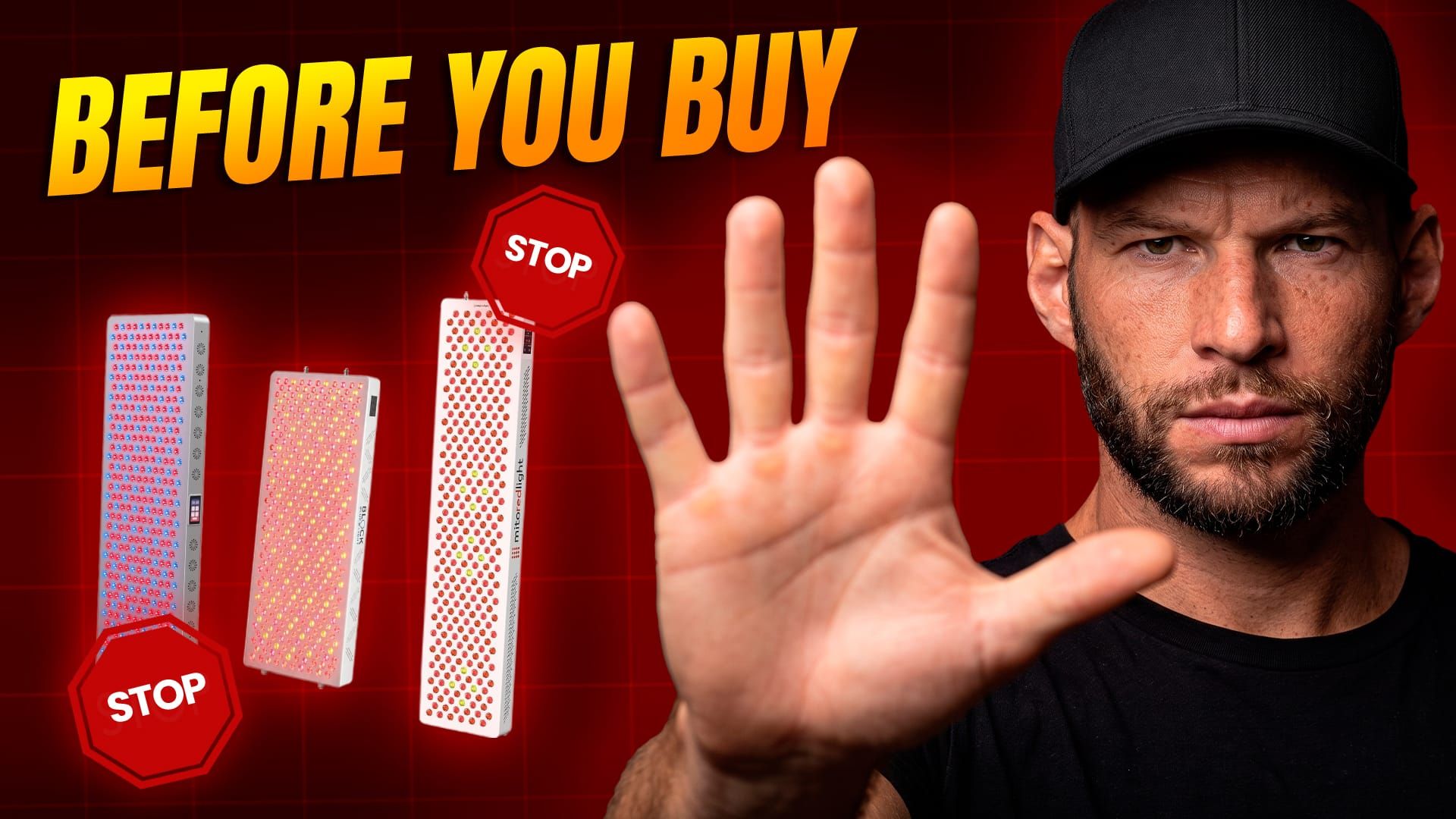
Buying a red light therapy panel might seem straightforward, but with so many devices on the market, how do you know which one is right for you? Some panels promise more power, others advertise additional wavelengths, and many offer impressive discounts. But bigger numbers and more features don't necessarily mean better performance.
After years of testing red light therapy devices, I've learned that what matters most isn't always what manufacturers emphasize in their marketing. Treatment coverage, light uniformity, actual power output, and even a company's return policy can make a significant difference in your buying decision.
In this guide, I'll walk you through seven important things to consider before buying a red light therapy panel. I'll also explain how independent laboratory testing is changing how I evaluate these devices, and why I'm developing a more comprehensive panel comparison and shopping tool.
1. Treatment Area: How Much of Your Body Do You Want to Treat?
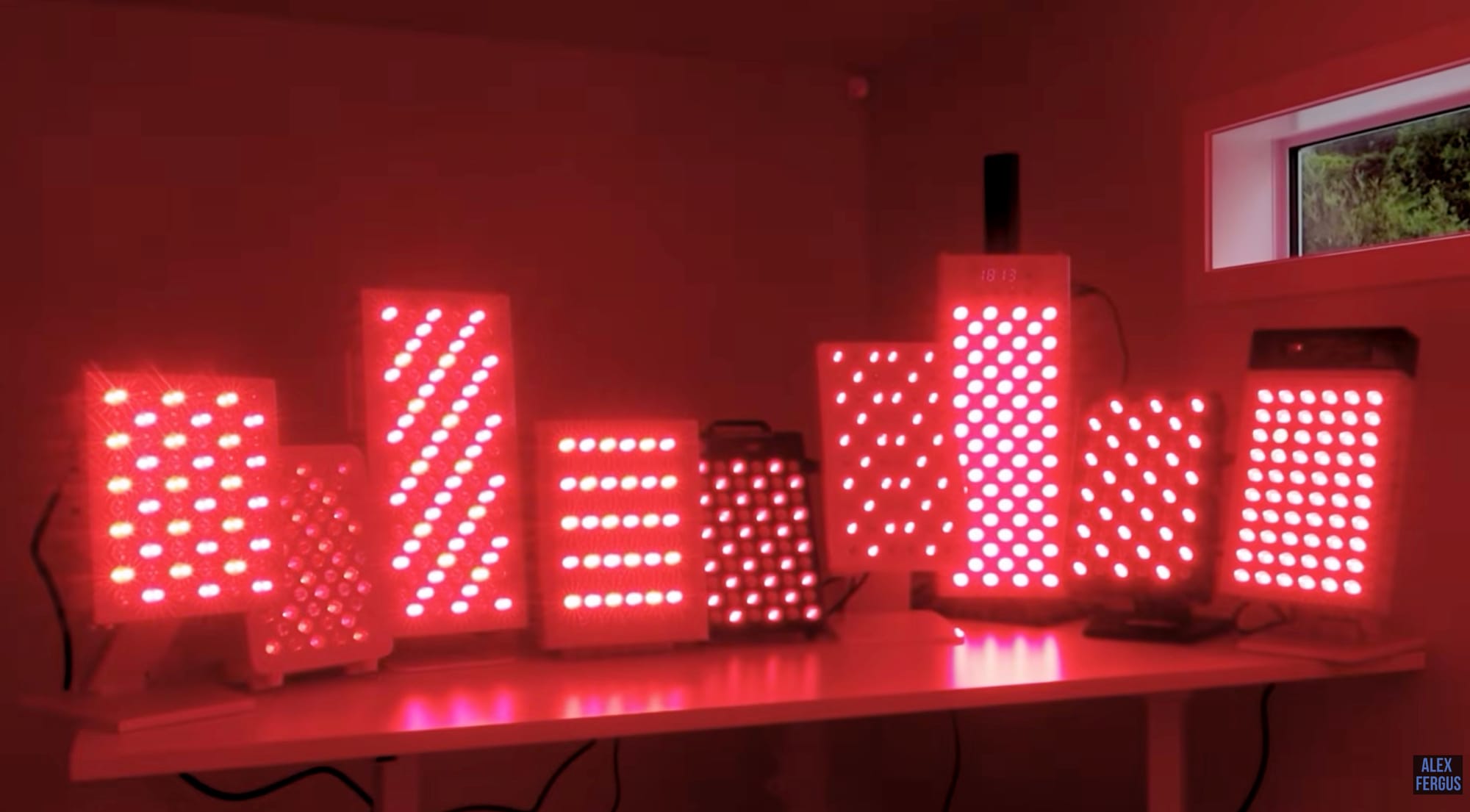
The first thing to consider is how much of your body you want to expose to red light therapy. If you're primarily treating your face, knee, or shoulder, a smaller tabletop panel may be perfectly adequate. However, if you're interested in full-body red light therapy, you'll likely want something larger because using a small panel means repeatedly repositioning yourself or the device.
One of the biggest misconceptions about red light therapy panels is that the light you can see represents the area receiving a meaningful treatment dose. A small panel might illuminate an entire room, and manufacturers sometimes use graphics suggesting that its light spreads across the whole body. However, that doesn't mean every illuminated area receives enough light for an effective session.
This is why I'm increasingly focused on independent laboratory measurements. The panels I review are now sent to a specialized laboratory where light output is measured across a grid. Rather than relying on a single peak reading, this testing reveals how much light is actually delivered throughout the treatment area. Two panels of identical dimensions can have dramatically different coverage patterns, which is something you'd never know by simply looking at their advertised specifications.
Why Coverage and Uniformity Matter
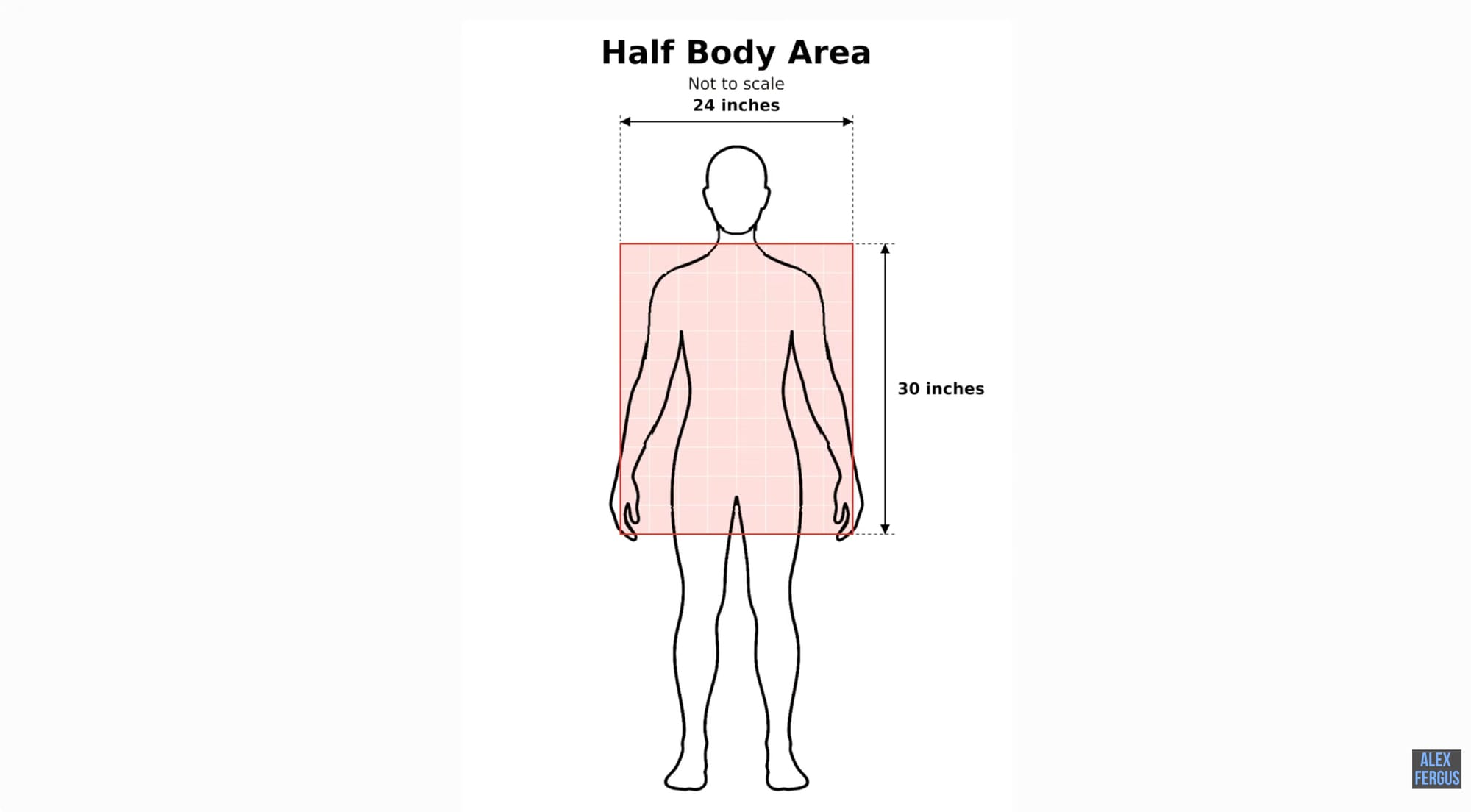
For my upcoming panel comparison, I'm using a 24 × 30-inch reference treatment area, roughly representing half the body for many adults. The laboratory measures light output across this area at one-inch intervals, allowing me to evaluate how much of the treatment area receives useful light and how evenly that light is distributed.
A panel might produce an impressive average irradiance reading but still have a concentrated hotspot surrounded by weaker areas. That's why I consider both coverage and uniformity when evaluating overall performance. Ideally, you want a panel that delivers sufficient light across the area you're treating without enormous variations in intensity.
My advice: Decide which areas of your body you want to treat, then look for a panel that delivers adequate, evenly distributed light across that area. Don't choose a device based solely on its dimensions or peak power claims.
2. Power and Irradiance: Bigger Numbers Aren't Always Better
Power is one of the most heavily advertised specifications in red light therapy, but it's also one of the easiest to misunderstand. Manufacturers frequently highlight wattage figures, sometimes making it seem as though a higher number automatically means a more powerful treatment. However, wattage often refers to how much electricity the panel draws from the wall, not how much therapeutic light it produces.
Think about traditional incandescent light bulbs compared with modern LEDs. An older 100-watt bulb consumes considerably more electricity than an efficient LED bulb, but that doesn't automatically mean it delivers more useful light. The same principle applies to red light therapy panels, which is why advertised wattage alone tells you very little about actual treatment performance.
Understanding Irradiance
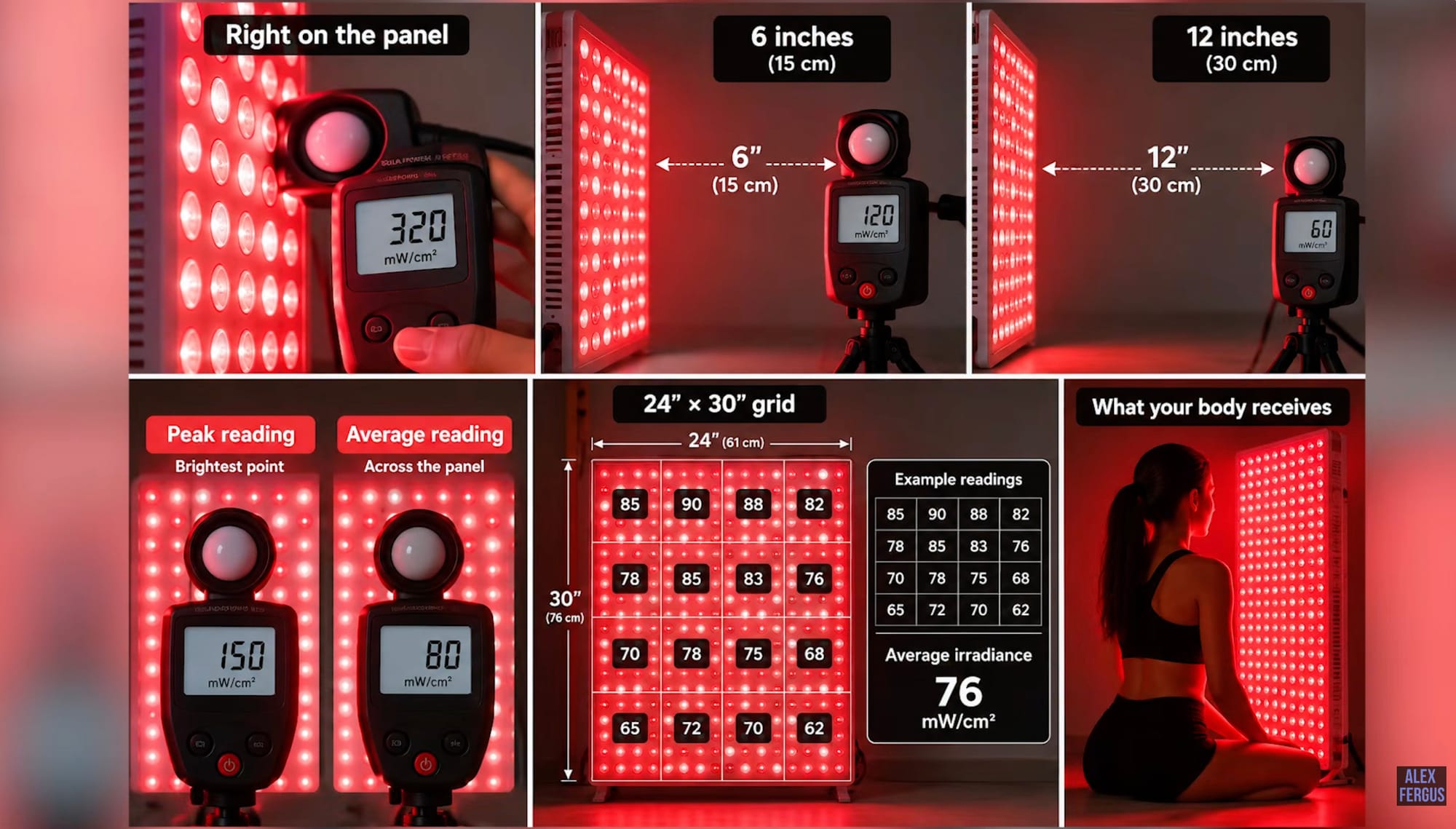
Irradiance is generally measured in milliwatts per square centimeter (mW/cm²), describing the amount of light power reaching a particular area. I've used irradiance measurements in my reviews for years, but there's an important limitation: a single reading tells you what's happening at one small location, not across your entire body.
Some manufacturers advertise the highest irradiance reading they can measure directly in front of their panel. That number might look impressive, but it doesn't reveal what happens elsewhere in the treatment area. Measurement distance also matters because a peak reading taken at six inches shouldn't be compared directly with an average reading taken at twelve inches.
That's why my newer testing focuses on average irradiance across the entire 24 × 30-inch reference area, alongside coverage and uniformity. This gives us a much better understanding of how much light the panel actually delivers across a realistic treatment area rather than at one isolated point.
How Much Power Do You Actually Need?
For general panel comparisons, I typically look for around 20–30 mW/cm² as a minimum starting point, although higher output can certainly be useful. However, more power isn't always better because different treatment goals may require different doses. Extremely powerful panels aren't necessarily ideal for every application, particularly when the intensity cannot be adjusted.
I particularly like panels that allow users to adjust intensity and independently control red and near-infrared output. These features provide more flexibility, especially if you're using the same device for different treatment areas or purposes.
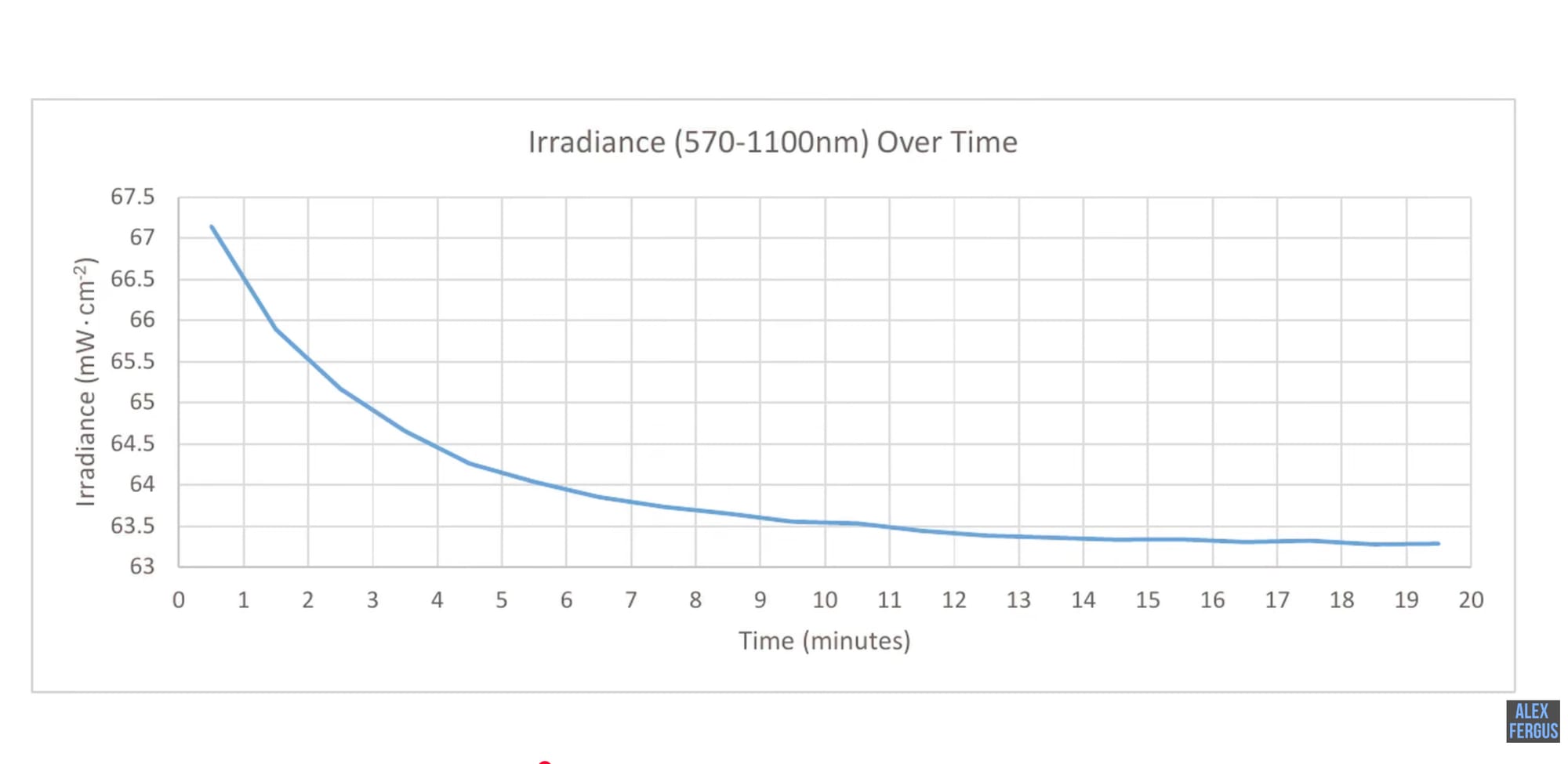
Another factor I'm now investigating is what happens to a panel's output during a typical treatment session. Most people use their panels for 10–20 minutes, yet irradiance is often measured immediately after switching the device on. Independent testing has revealed that some panels experience a 10–20% reduction in output over approximately 20 minutes, which is significant enough to consider when comparing devices.
My advice: Look beyond advertised wattage and peak irradiance. Check the testing distance, average output, coverage, uniformity, intensity controls, and whether performance remains consistent throughout a session.
3. Wavelengths: Do You Really Need Eight or Nine?
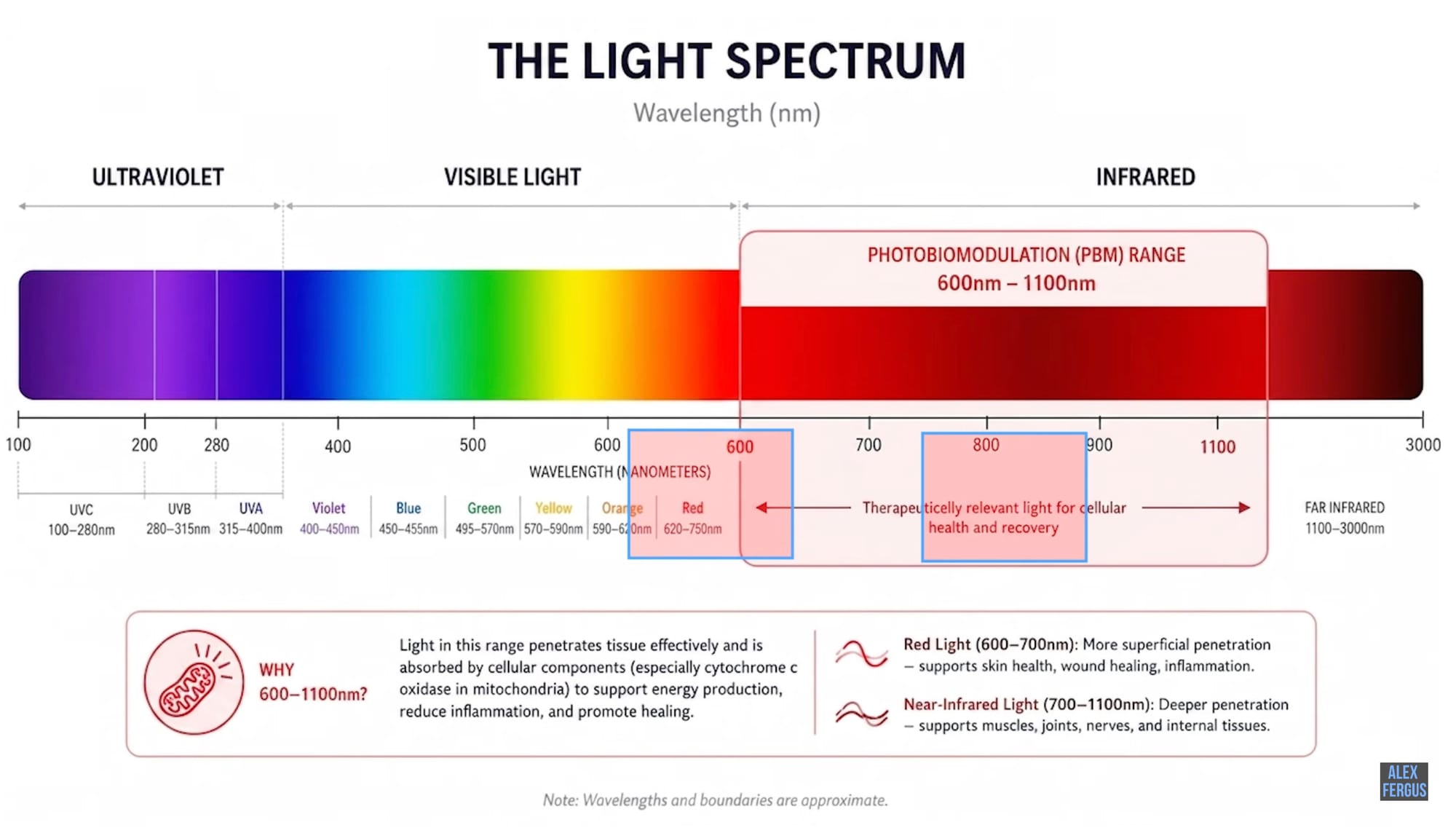
Wavelengths are another area where manufacturers compete to offer increasingly impressive specifications. One panel might feature the traditional combination of 660nm red light and 850nm near-infrared light, while another advertises five wavelengths. Newer models sometimes offer eight, nine, or even more, but does having more wavelengths automatically make a panel better?
Not necessarily. For general-purpose red light therapy panels, I'm particularly interested in 630 and 660nm red light, along with 810nm, 830, and 850nm near-infrared light. Amber light may also be worth considering if skin health is a priority, while longer near-infrared wavelengths around 1064nm are of interest for deeper-tissue and cognitive-health applications.
However, that doesn't mean you need every wavelength on this list. When I first started using red light therapy around eight years ago, I was getting excellent personal results with devices featuring just 660nm and 850nm. A well-designed panel with fewer wavelengths can still be an excellent choice.
Advertised Wavelengths vs. Actual Output
There's another issue that deserves attention: how much light is actually being emitted at each wavelength? I've tested devices advertising numerous wavelengths, only to discover that most of the meaningful output was concentrated in three or four of them. The remaining wavelengths contributed relatively little, despite being prominently featured in the marketing.
That's why my updated testing methodology includes a minimum output threshold. If a wavelength doesn't deliver sufficient measurable energy, I don't give the panel full credit simply because the manufacturer lists it. I want to know which wavelengths are delivering meaningful output, not just how many appear on the product packaging.
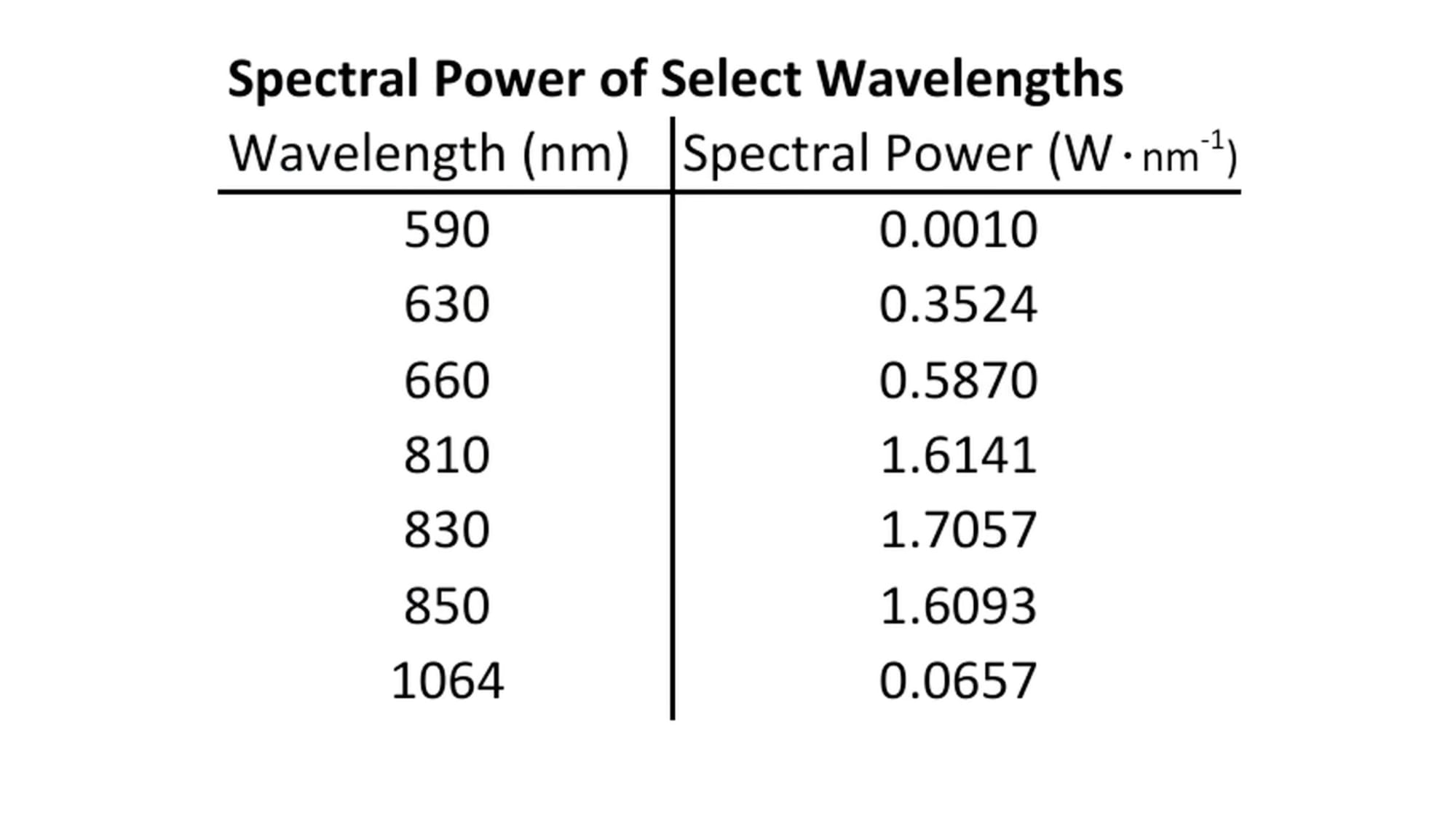
My advice: Don't pay extra just because a panel advertises more wavelengths. Look for independently verified output at the wavelengths that matter for your treatment goals, and remember that a panel with two well-implemented wavelengths may be a better purchase than one advertising nine.
4. Ease of Use: Will You Actually Enjoy Using It?
A panel can have excellent specifications and impressive laboratory results, but none of that matters much if it's frustrating to use. Consistency is important with red light therapy, and complicated controls can quickly become a barrier. Imagine having ten minutes available for a session, only to spend several of those minutes navigating menus, connecting to an app, or trying to remember your password.
These details might seem minor when shopping, but they can make a big difference in everyday use. I particularly appreciate panels with straightforward controls, visible timers, easily adjustable intensity, and the ability to remember previous settings. You should be able to start a session quickly without having to configure everything from scratch each time.
Are Smart Modes Worth Having?
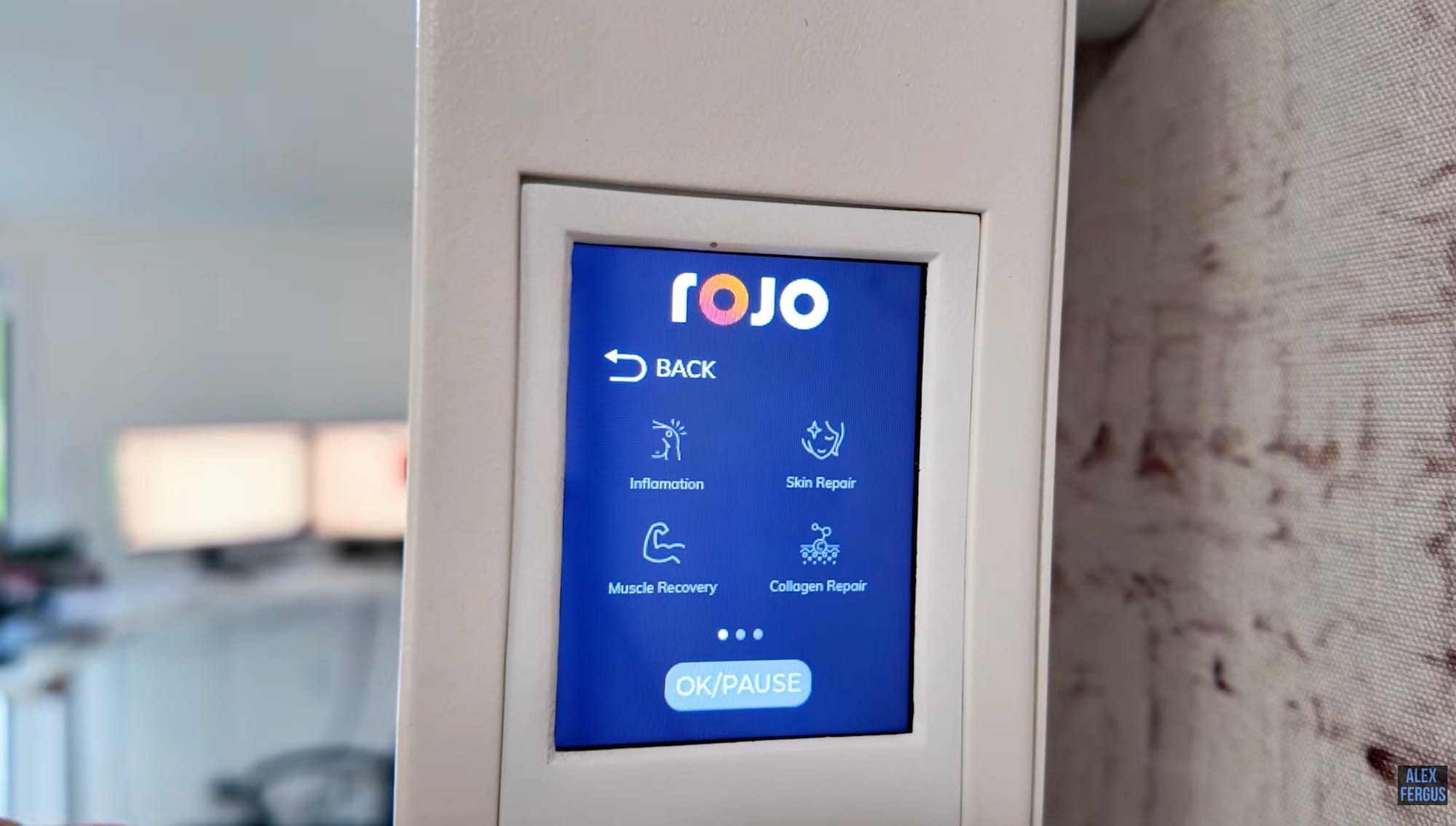
Smart modes can be convenient because they allow you to select preset settings for different treatment goals. For example, a preset designed for skin rejuvenation might use different settings from one intended for deeper-tissue recovery. However, it's important to remember that manufacturer-provided smart modes aren't necessarily scientifically validated treatment protocols.
Personally, I prefer panels that are easy to operate with a few buttons while still offering customization when needed. Build quality and the overall experience matter, too, because a panel shouldn't produce unpleasant noises or give you an electrical shock when touched. Features should make the experience easier and more enjoyable rather than adding unnecessary complications.
My advice: Choose a device you'll genuinely enjoy using. Convenient controls, practical presets, and a pleasant user experience are often more valuable than an unnecessarily complicated feature list.
5. Placement and Stands: Think About Your Treatment Setup
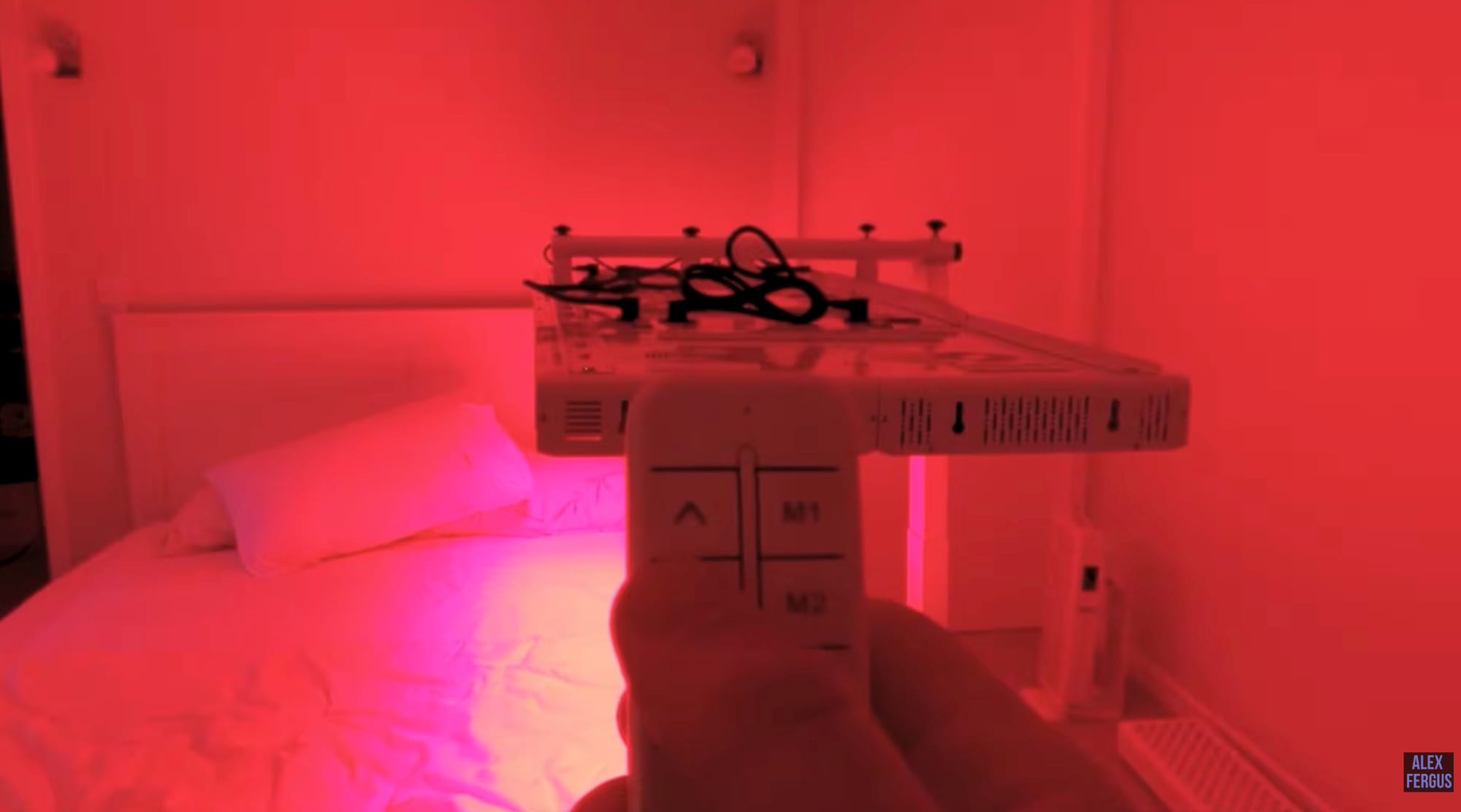
Before purchasing a panel, consider exactly how and where you intend to use it. Would you prefer to stand in front of it, sit at your desk, or lie underneath it? Do you want to mount it on a wall, hang it from a door, or move it around your home? Your answers will determine which accessories and mounting options you need.
Stand quality varies considerably between manufacturers. Some companies offer sturdy, adjustable floor stands with wheels that make positioning easy, while others provide less practical options that can be difficult to move or adjust. This becomes especially important with larger panels, which can be surprisingly heavy and inconvenient to reposition.
You should also consider whether you might expand your setup later. Some manufacturers allow multiple panels to connect and operate together through a single control system, while others don't offer that functionality. If you're considering building a larger front-and-back treatment setup in the future, compatibility is worth checking before making your first purchase.
My advice: Investigate available stands, mounting accessories, mobility, and expansion options before committing to a particular brand. The best-performing panel won't be very convenient if you can't position it comfortably for your sessions.
6. Warranties, Returns, and Safety: Don't Overlook the Company
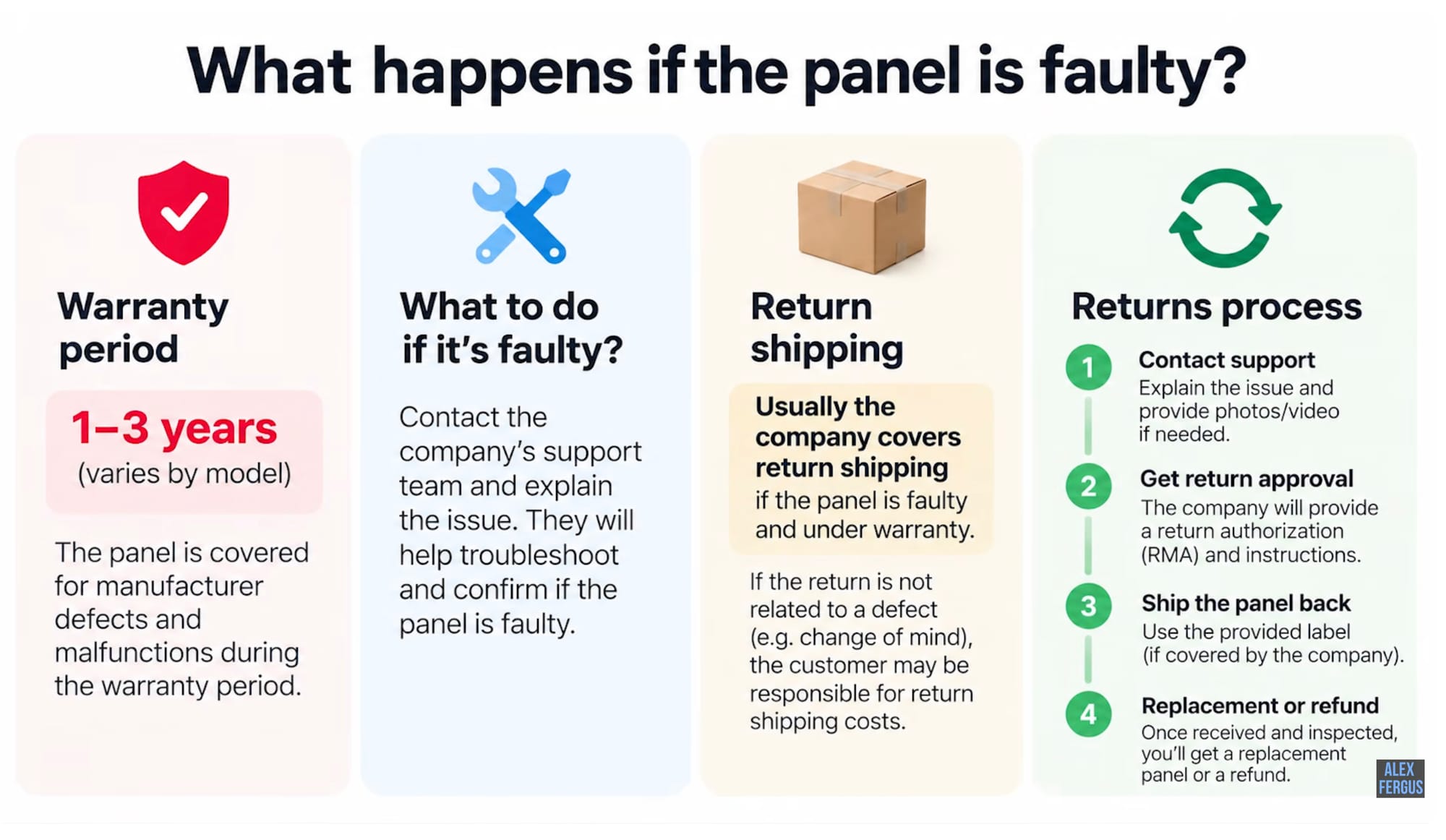
When you buy a red light therapy panel, you're not just purchasing a device. You're also choosing the company you'll have to deal with if something goes wrong. Before buying, I recommend checking how long the warranty lasts, what happens if the panel develops a fault, who pays for return shipping, and how complicated the return process might be.
A company's history can be useful when assessing reliability, although being established for many years doesn't automatically guarantee good customer service. I also encourage buyers to read customer feedback and independent reviews. My Facebook community, which has around 35,000 members, is another place where people share their experiences with red light therapy companies.
Why Return Policies Matter So Much
I'm particularly interested in return policies because red light therapy is something many people want to try before deciding whether it's right for them. Unfortunately, return policies vary dramatically, and some companies won't accept a return once the packaging has been opened. Others allow returns but charge restocking fees of around 20%, which can become expensive when you're purchasing a premium panel.
A smaller number of companies offer generous trial periods, sometimes allowing customers to use a device for up to 90 days and return it for a full refund. Those are the policies I prefer because they give customers a genuine opportunity to try the product. However, always read the conditions carefully before purchasing, including any shipping charges, restocking fees, or restrictions on opened products.
Electrical Safety and Compliance
Safety is another important consideration, and there have been recalls involving red light therapy devices because of electrical safety concerns. I want to see legitimate, verifiable compliance documentation covering the actual product rather than simply accepting a certification claim displayed on a website.
If you're unsure what to look for, I've covered device certifications and regulations in another video. You can also explore the resources at Light Therapy Insiders to learn more about evaluating manufacturer claims and checking whether a device meets appropriate electrical safety requirements.

My advice: Prioritize companies with transparent warranty terms, reasonable return policies, responsive customer support, and verifiable electrical safety documentation. A generous discount isn't worth much if the company won't support you when something goes wrong.
7. Price: Watch Out for Hidden Costs
The advertised price of a red light therapy panel isn't necessarily what you'll pay at checkout. Shipping charges and taxes can increase the total, but international import duties are another potential expense. Some companies ship panels directly from Asia, which may leave customers responsible for additional import charges when the device arrives in their country.
This isn't as common as it once was, particularly among established manufacturers with warehouses in the United States, Canada, or Europe. However, it's still worth checking, especially when purchasing from a newer or smaller company. Some manufacturers shipping internationally cover import duties themselves, while others don't, so it's always worth confirming the final delivered price before placing an order.

I also have discount codes and affiliate links for many major red light therapy brands, which can help reduce the purchase price.
My advice: Compare the final delivered price, including shipping, taxes, duties, and any necessary stands or accessories. Don't let a large advertised discount distract you from the actual cost or performance of the panel.
How to Choose the Best Red Light Therapy Panel for Your Needs
Start by eliminating panels that don't fit your budget, available space, or treatment goals. If you're looking for full-body coverage, a small tabletop panel probably isn't your best option. Once you've narrowed down your choices, I'd prioritize treatment coverage, light uniformity, and verified wavelength output. These measurements tell you far more about a panel's actual performance than impressive marketing claims or advertised power ratings.
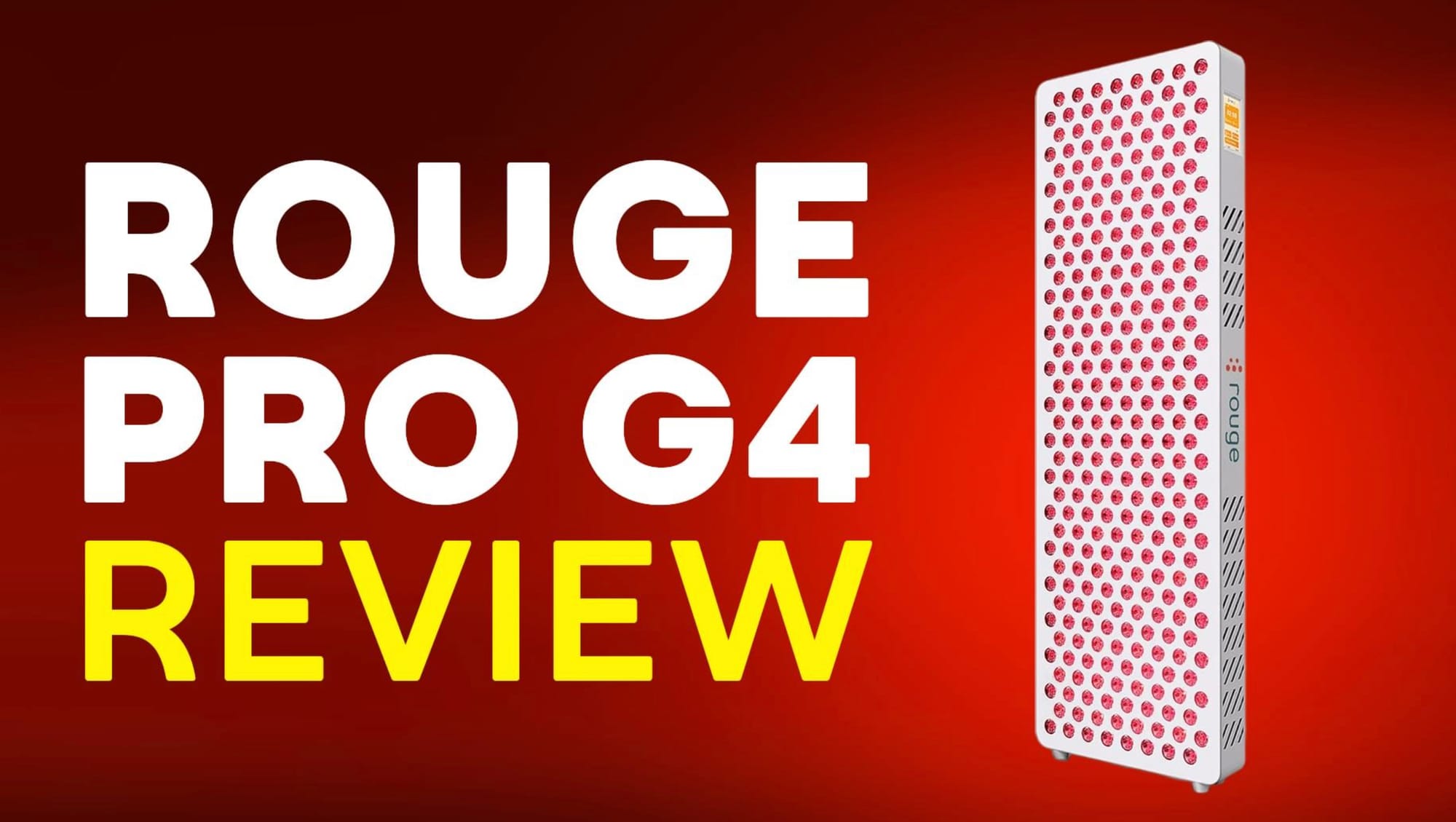
I'm bringing all this independent laboratory data together in my upcoming red light therapy panel comparison and an improved, more interactive shopping tool. In the meantime, you can use the chat tool at Light Therapy Insiders for personalized recommendations. And if you're wondering what I'm personally using, it's the Rouge G4 panel. It's been working great for me and my family, and it's a panel I'm happy to recommend.
Ultimately, the best red light therapy panel isn't necessarily the one with the most power, wavelengths, or features. It's the one that provides the right coverage and performance for your needs, fits your budget, and is convenient enough that you'll actually use it consistently.
Items Mentioned
⭐ All Our Verified Deals & Active Discounts on "Our Deals Page":
👉 https://aferg.co/deals
⭐ Sunlighten- Use code Fergus at https://aferg.co/sunlighten
⭐ Mito Light Europe - Use code ALEX at https://aferg.co/mitolight for 5% off!
⭐ MitoRed Light - use https://aferg.co/7d221 for 5% off sitewide.
⭐ Rojo Light Therapy - Use discount code ALEX at https://aferg.co/rojo-rlt for 10% off.
⭐ LightpathLED - Use discount code ALEX at https://aferg.co/lightpathled to get 5% off.
⭐ BestQool - use code ALEX at https://aferg.co/Bestqool to save 10%.
⭐ Block Blue Light - Use this link: https://aferg.co/BlockBlueLight to save 15% on Block Blue Light's products. The discount will automatically be applied at checkout.
⭐ PlatintmLED Therapy Lights- Use the discount link https://aferg.co/redled to save 5%
⭐ Rouge - Use discount code ALEX at https://aferg.co/rougecare for $50 off.
Have You Seen These Reviews?
⭐ The 2026 Red Light Therapy Showdown Is Coming—Meet the Contenders!
⭐ Red Light Therapy: Why MORE Power Doesn't Mean Better Results
⭐ Bestqool Pro 300 Review: Is This $810 Red Light Therapy Panel Worth It?
⭐ Combining Red Light Therapy And PEMF: 2-3X Your Results?!
⭐ Why Red Light Therapy Panels WIN: Not Belts, Masks, Beds, Wraps & More
Alex's Bio
Alex Fergus wrote this blog post. Alex is an ISSN Sports Nutrition Specialist, Fitness Professional, and certified Superhuman Coach who continues to expand his knowledge base and help people across the world with their health and wellness. Alex is recognized as the National Record Holder in Powerlifting and Indoor Rowing and has earned the title of the Australian National Natural Bodybuilding Champion. Having worked as a health coach and personal trainer for over a decade, Alex now researches all things health and wellness and shares his findings on this blog.