
When Chroma released the original Iron Forge back in 2023, it immediately stood out from almost every other red light therapy panel on the market. Instead of adding flashy features or marketing gimmicks, Chroma focused on the fundamentals of photobiomodulation. The company built a high-powered device centered around well-established therapeutic wavelengths, and it quickly developed a reputation for delivering serious performance.
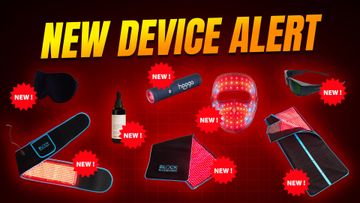
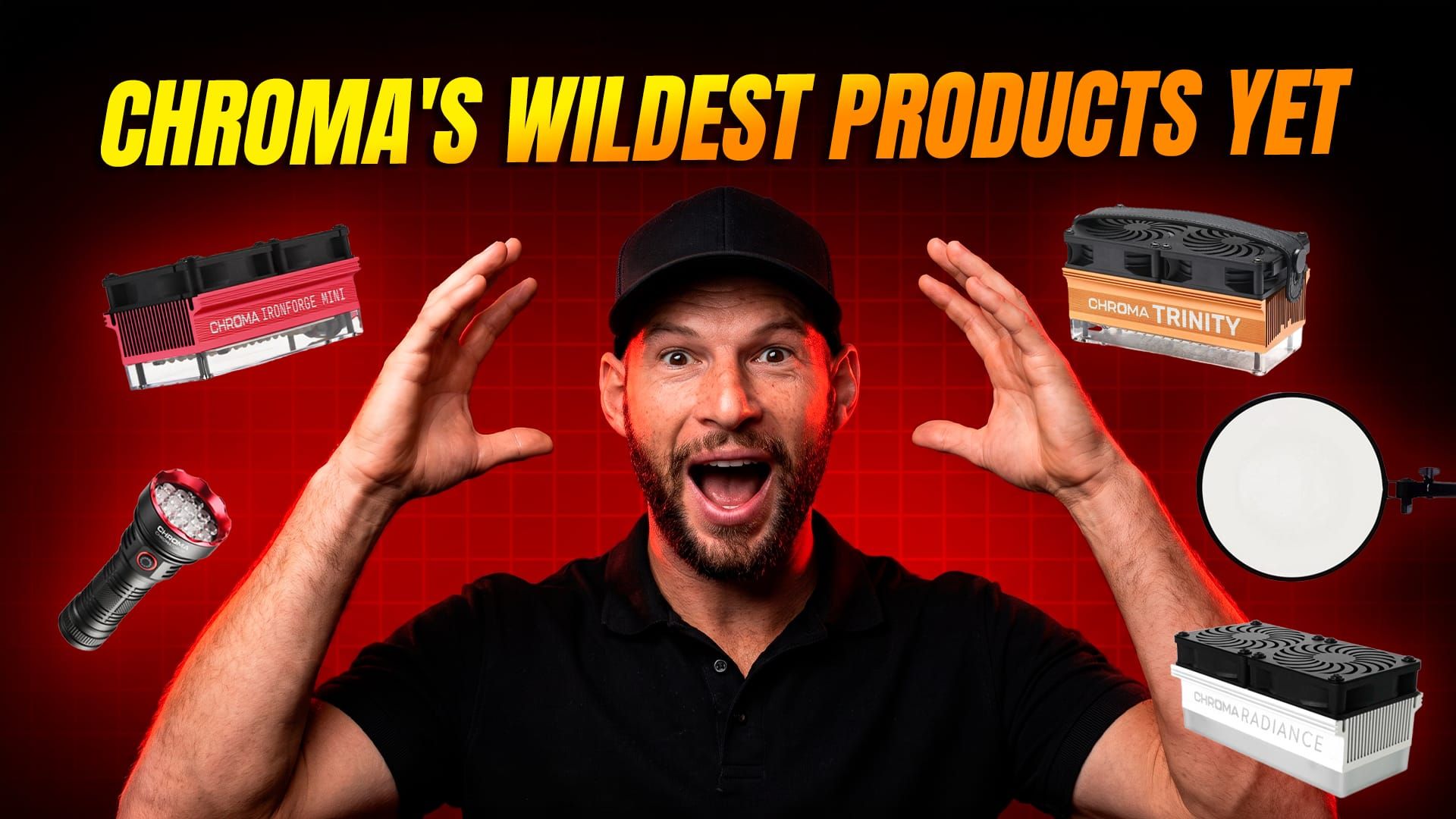
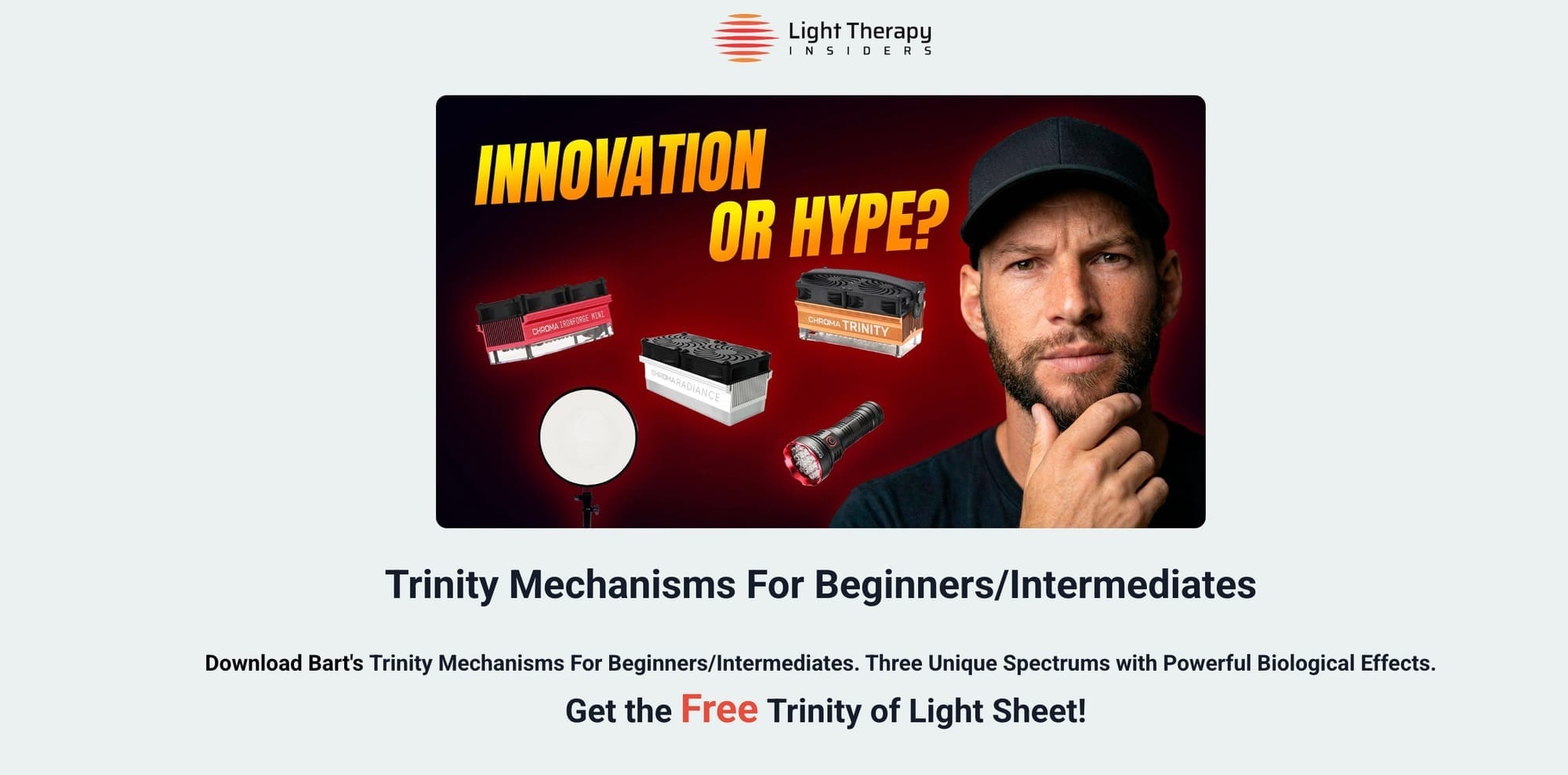
Fast forward to today, and Chroma looks like a very different company. Instead of simply refining the Iron Forge, they've introduced an entire ecosystem of new products that goes far beyond traditional red light therapy. Their latest lineup includes an acne-focused facial device, a compact handheld torch, a smaller version of the Iron Forge, an indoor lighting system designed around circadian health, and perhaps their most ambitious product yet—the Trinity.
What makes these devices interesting is that Chroma isn't simply copying what other manufacturers are doing. In fact, they've almost gone in the opposite direction. Rather than focusing solely on red and near-infrared light, they're exploring blue light, ultraviolet light, vitamin D production, circadian rhythm support, and even indoor lighting quality. Some of those ideas look genuinely promising, while others raise questions that can only be answered through proper testing.
Chroma Radiance: A Different Approach to Skin Treatments
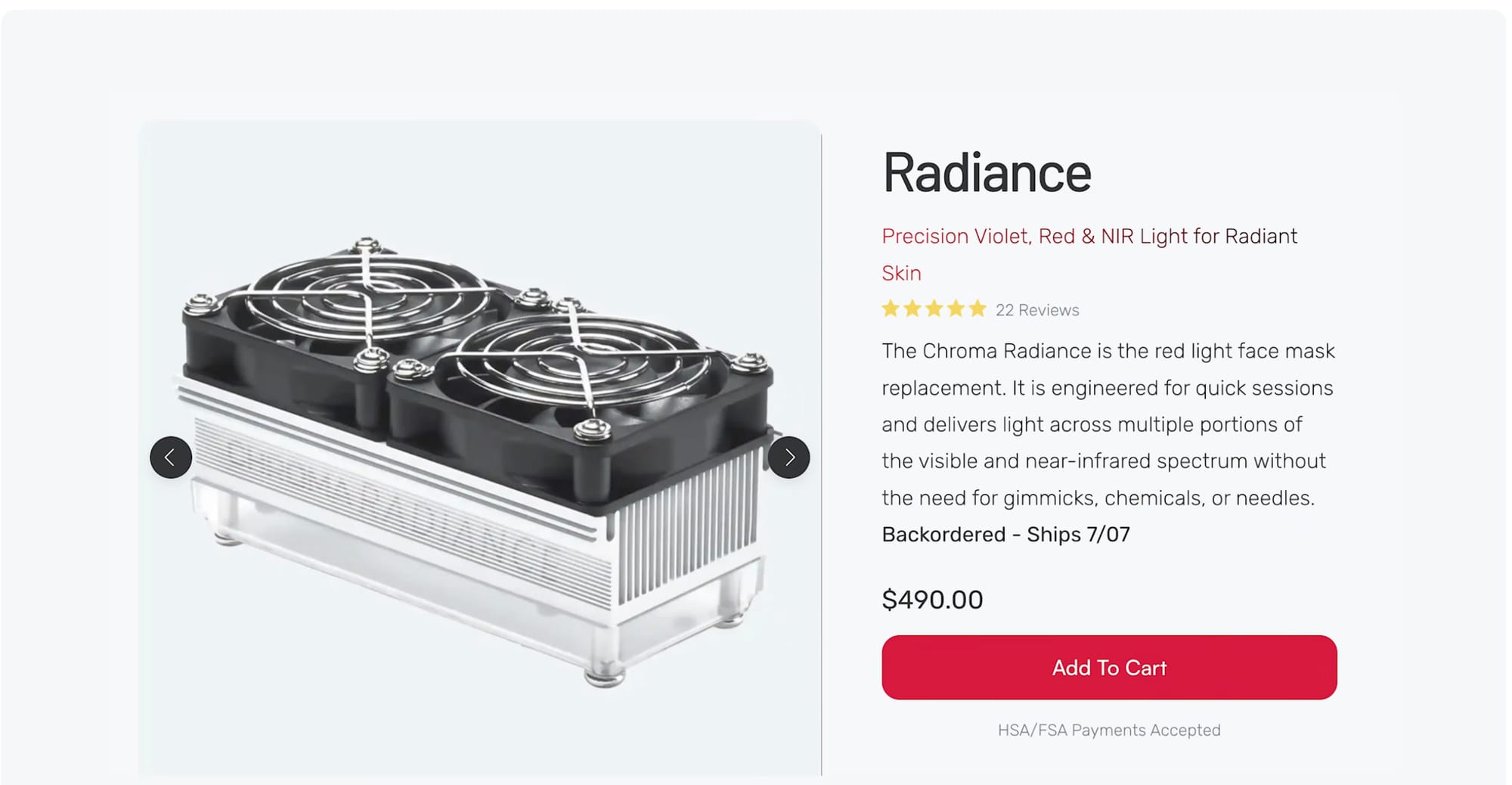
One of the first products that caught my attention was the Chroma Radiance. Chroma actually describes it as a replacement for an LED face mask, which is a fairly bold statement considering how many facial devices are now available. Having reviewed dozens of LED masks over the past couple of years—including dedicated comparison videos covering more than twenty-five different models—I was naturally curious to see what made this device different.
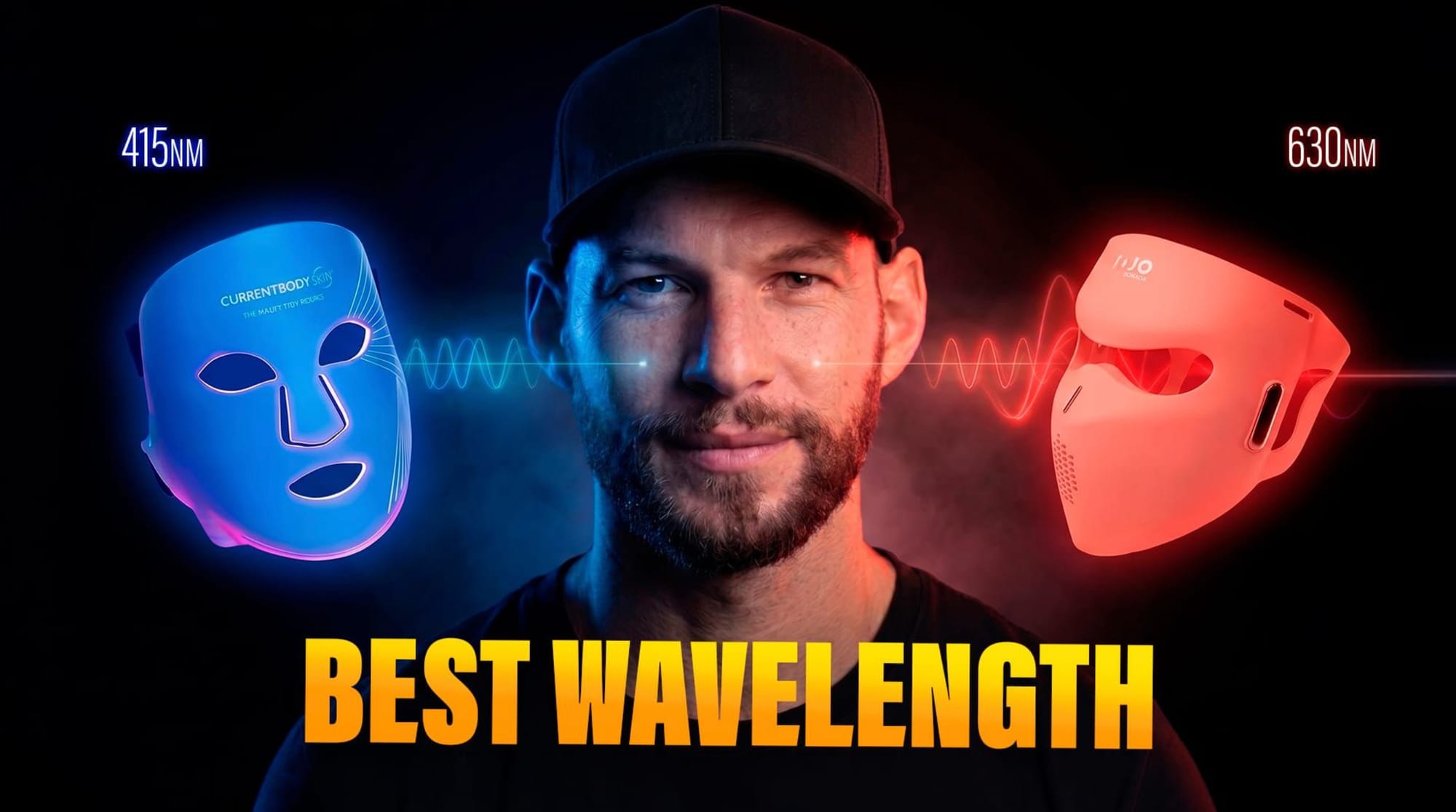
The biggest difference becomes obvious as soon as you look at the wavelength distribution. Instead of heavily emphasizing red and near-infrared light like most anti-aging masks, the Radiance devotes around forty percent of its LEDs to 405 nm blue light. That sits right within the wavelength range commonly associated with acne treatment. The remaining output consists primarily of 630 nm and 660 nm red light, with only a very small percentage allocated to 810 nm near-infrared.
To me, that immediately changes how I view this product.
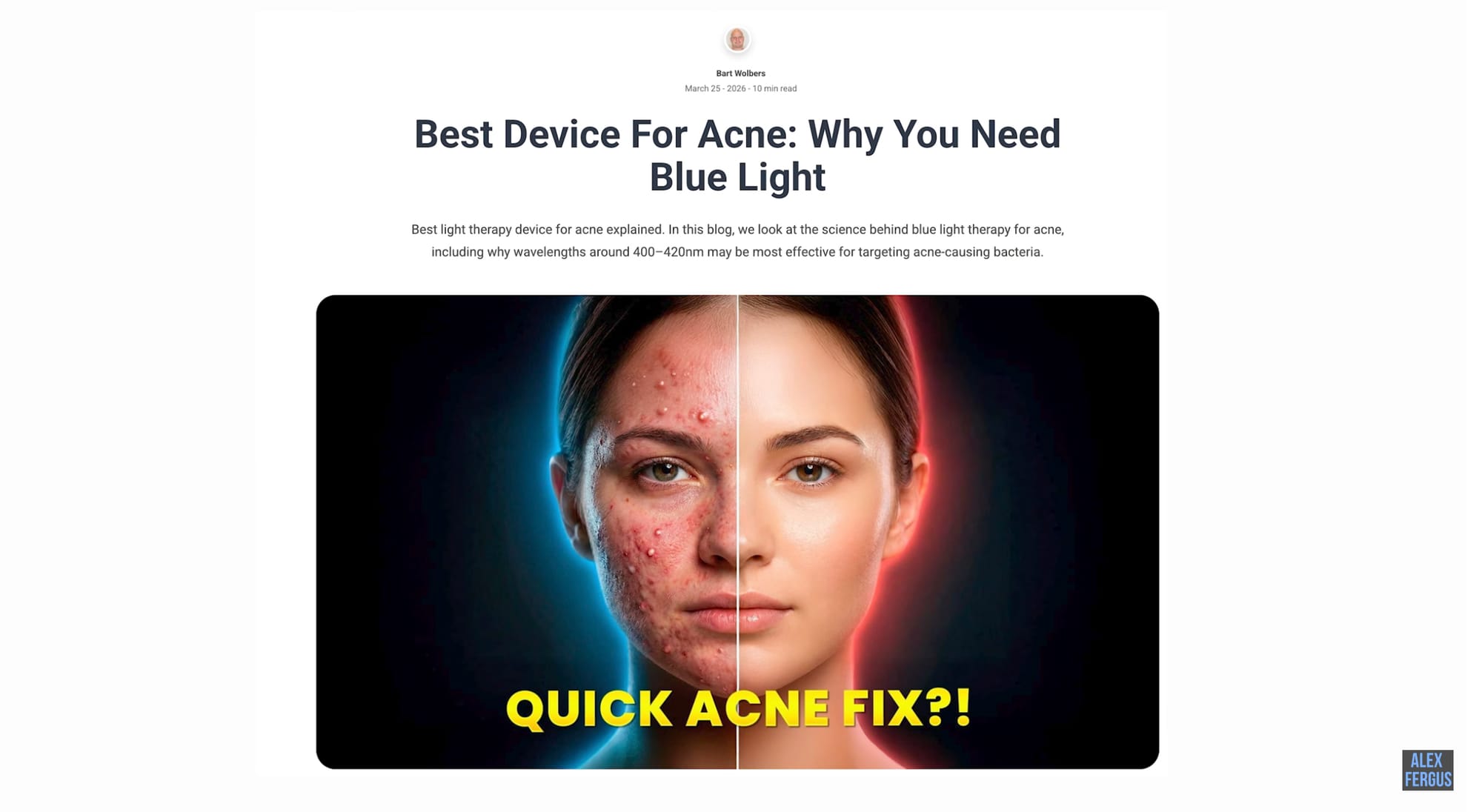
Rather than seeing it as a direct competitor to every LED face mask on the market, I see it more as an acne device. The blue light targets acne-causing bacteria, while the red wavelengths help reduce inflammation and support the skin's healing process. If someone struggles with regular breakouts, I think choosing the right wavelength makes a lot of sense.
If, however, your primary goal is skin rejuvenation, collagen production, or reducing the appearance of fine lines and wrinkles, I would lean toward a device with a greater emphasis on red and near-infrared light.
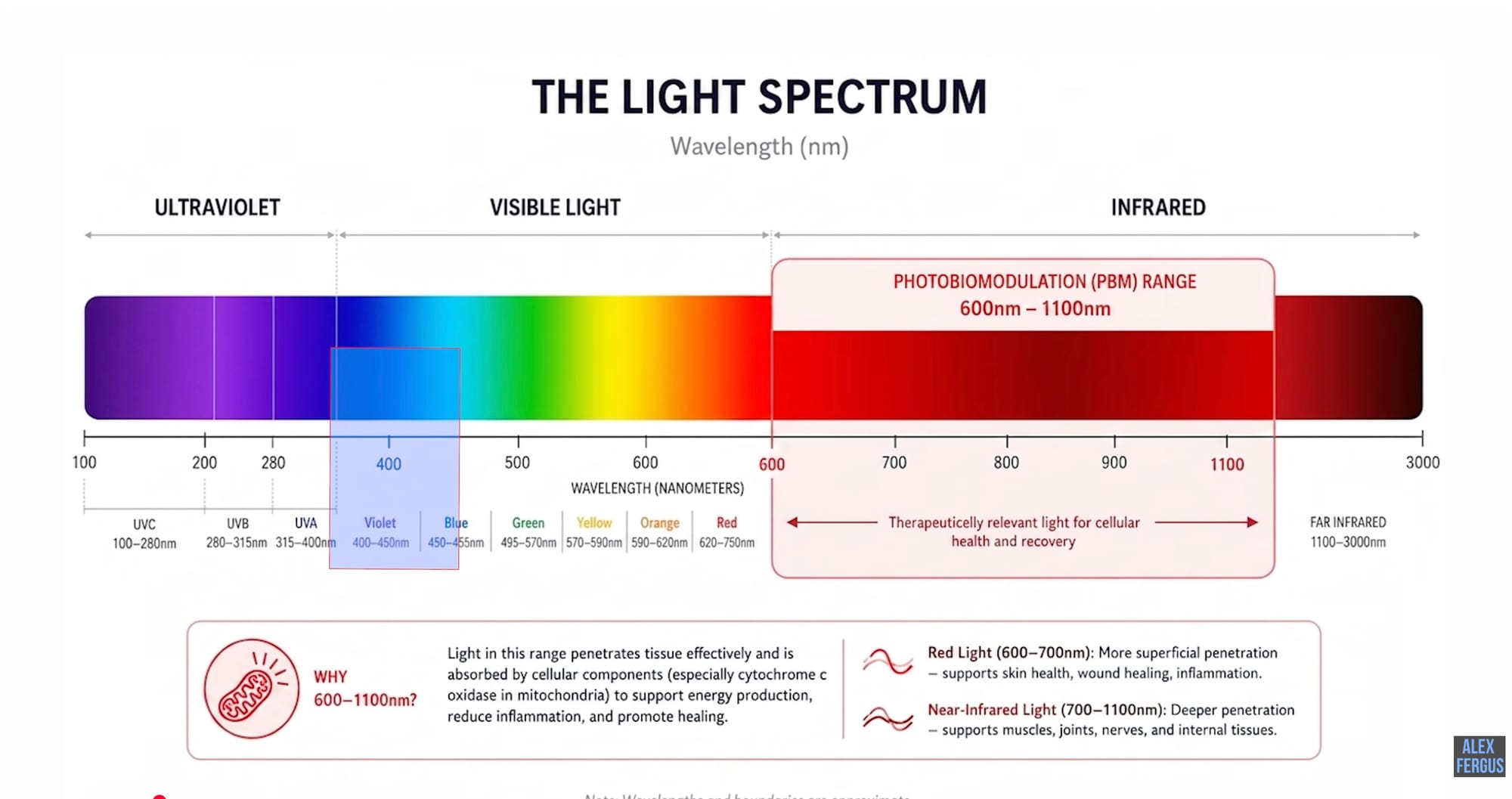
One aspect that many people may appreciate is the relatively small amount of near-infrared directed toward the face. This comes up surprisingly often in our Facebook group. Some users remain cautious about prolonged near-infrared exposure to facial tissue, so having only about 5% of the output at 810 nm may actually make this device more appealing to that audience.
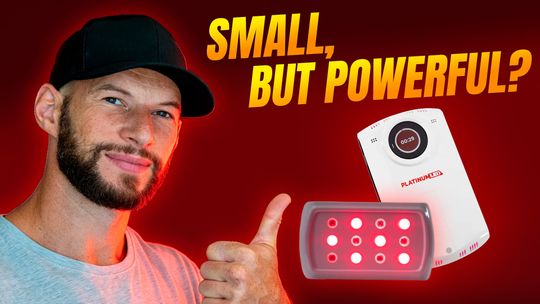
The other major difference is the form factor. Unlike a silicone mask that sits directly on your face, the Radiance is a handheld, plug-in device. Instead of limiting treatments to your face, you can use it virtually anywhere on your body. Whether you're dealing with acne on your shoulders, inflammation on your chest, or other skin conditions such as eczema, the Radiance can be used in places where a traditional mask simply can't.
The biggest unknown, however, is power output. Chroma claims the device is powerful enough that treatment times may be reduced from 10 or 15 minutes to roughly 30 seconds. That's a significant claim, and it's exactly the sort of thing I like to verify independently before drawing conclusions.
There's another question I'm currently exploring as well. High irradiance isn't automatically better, particularly when you're treating very superficial tissue like facial skin. The relationship between power, treatment time, and total dose is more complicated than many people realize, and it's an area I'm researching quite extensively at the moment. Until that work is complete, I'm reluctant to assume that extremely short, extremely intense treatments are necessarily the optimal approach.
Overall, I think the Radiance is one of the more interesting products Chroma has introduced. It's certainly different from the dozens of LED masks already available, and I like that the company didn't simply produce another copy of an existing design. Whether it ultimately lives up to its claims, though, is something I'll have to determine once I can put it through independent testing myself.
Chroma Torch: A Simple Device That Could Be a Big Winner
Compared to some of Chroma's other releases, the Torch is actually one of the simplest products in the lineup. There aren't multiple operating modes, unusual wavelength combinations, or revolutionary features. Instead, Chroma has focused on producing a compact, high-powered handheld device at a price considerably lower than that of much of the competition.
In fact, the price was probably the first thing that stood out to me. At around $190 before discounts, it's roughly half the price of several competing torches currently on the market. That immediately makes it interesting, as handheld devices have become increasingly popular among people who want to treat localized areas without investing in a much larger panel.
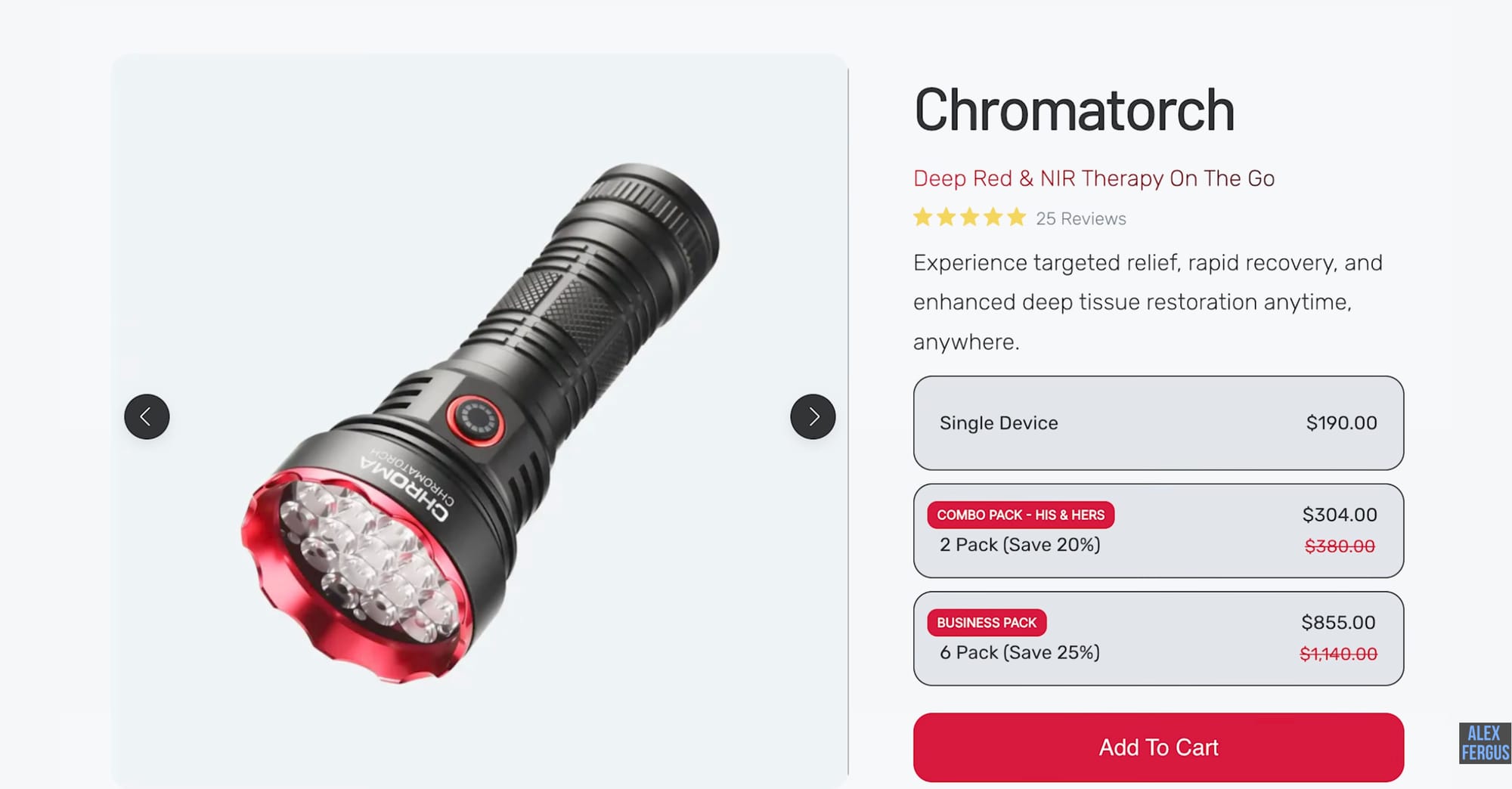
Looking at the wavelength distribution, approximately two-thirds of the output is near-infrared, specifically at 810 nm and 850 nm. Those are excellent wavelengths for treating deeper tissues, which is exactly what most people use a handheld device for. Whether it's sore joints, tendons, muscles, or other localized injuries, these wavelengths have become some of the most commonly used in photobiomodulation.
Because it's small and portable, I could also see people using it for applications beyond joint pain. For example, some users may choose to use it over the prefrontal cortex as an affordable introduction to transcranial photobiomodulation. The form factor certainly isn't as convenient as a dedicated brain device, but given the price, it's an option that some people will undoubtedly consider.
Ultimately, though, everything comes back to independent testing. If Chroma's power claims are accurate, the Torch could become one of the best value handheld devices currently available.
Iron Forge Mini: Fixing the Biggest Complaints
When I reviewed the original Iron Forge a few years ago, I came away impressed with what Chroma had achieved. It delivered extremely high levels of red and near-infrared light using wavelengths that align well with the core principles of photobiomodulation. There weren't many unnecessary features or gimmicks. It was simply built to deliver serious energy.
That said, the original panel wasn't perfect.
It was large, fairly heavy, and because of its size, it wasn't particularly comfortable to hold for extended periods. On top of that, it carried a premium price tag that inevitably limited its appeal for many people.
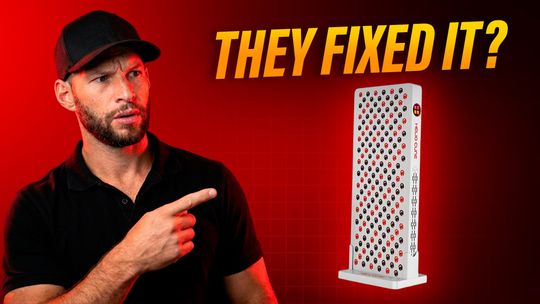
The Iron Forge Mini appears to be Chroma's answer to those criticisms.
Instead of completely redesigning the product, they've essentially kept the same philosophy while making it smaller, lighter, and significantly more affordable. That's a smart move because it addresses the biggest practical complaints people had about the original without changing what made the Iron Forge successful in the first place.
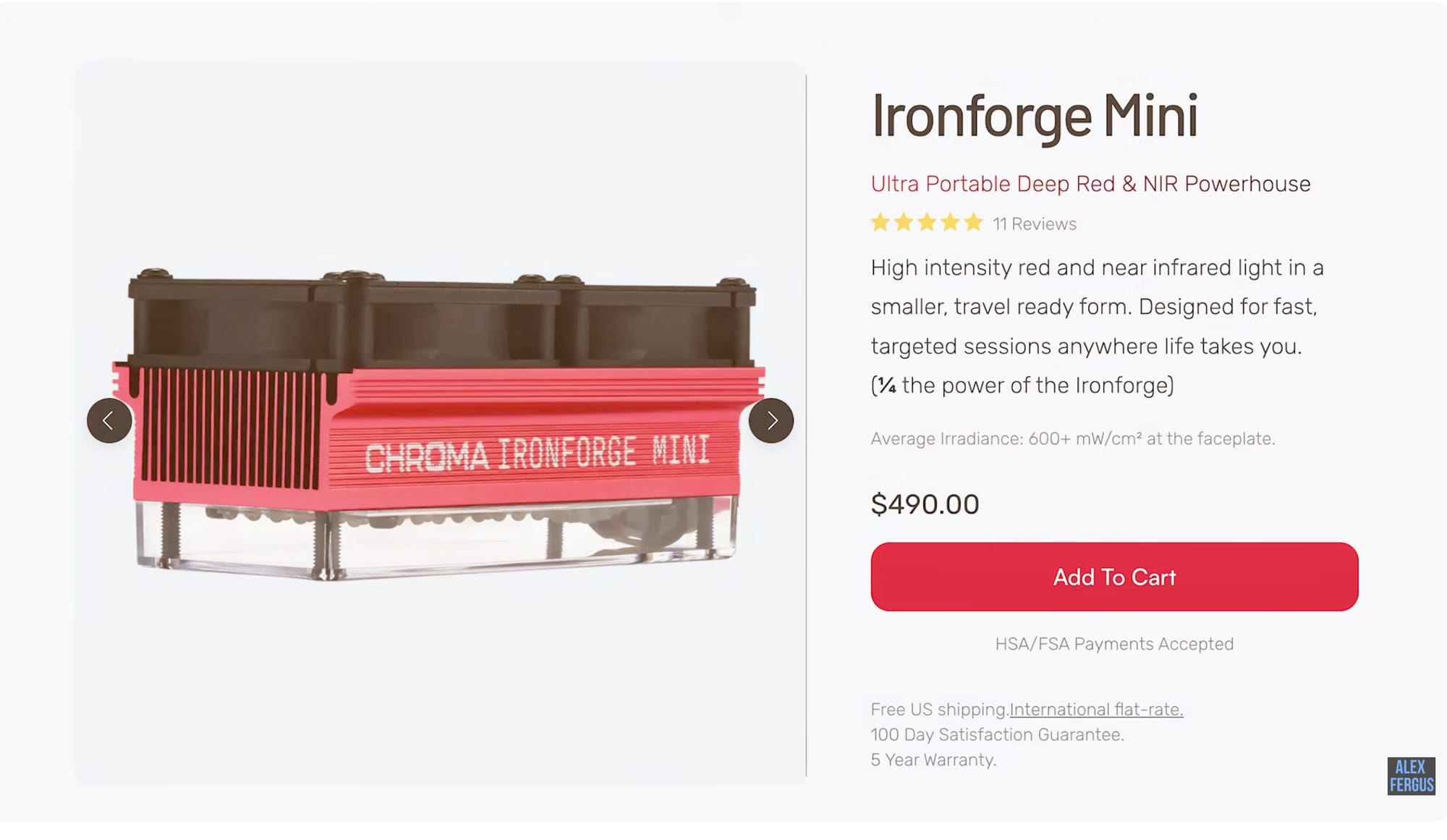
Like its larger sibling, the Mini remains heavily weighted toward near infrared light. Around seventy-five percent of the output is devoted to near-infrared wavelengths, including 760 nm, 810 nm, and 850 nm, while the remaining energy is split between 630 nm and 670 nm red light. One wavelength that particularly caught my attention is 760 nm because it isn't commonly included in many consumer devices.
Of course, the specification that everyone notices is the claimed irradiance. Chroma lists figures approaching 600 mW/cm², which are extraordinarily high.
Even if the actual output is considerably lower than the published specifications, the Mini could still be an outstanding product. Because of its compact size, you can easily use it to treat shoulders, knees, elbows, and other localized areas without the fatigue that often comes with holding a much larger panel. If the power is anywhere close to what Chroma claims, it could also be positioned on a stand and used from a short distance to treat a much larger area of the body.
I also think the lower price makes a real difference. Not everyone needs or wants a large premium panel, especially if they're new to red light therapy. The Iron Forge Mini could be a compelling entry point for people who want a high-powered device without spending thousands of dollars.
Out of everything Chroma has released recently, this is probably one of the products I'm most interested in testing. It takes an already successful concept, removes many of the practical drawbacks, and potentially makes it accessible to a much wider audience. If the independent testing supports the specifications, I think this could end up being one of the strongest products in Chroma's entire lineup.
Sky Portal 2.1: More Than Just a Desk Lamp
At first glance, the Sky Portal 2.1 doesn't seem to belong in a red light therapy lineup. It's marketed as both a circadian lighting device and an indoor desk lamp, which is quite different from the therapeutic panels Chroma has become known for. While it isn't technically a red light therapy device, I still think it's worth discussing because it addresses a health area that's receiving increasing attention.
Most of us spend the majority of our day indoors under artificial lighting, and unfortunately, much of that lighting isn't particularly good. Standard LED and fluorescent lights often produce an imbalanced spectrum with excessive blue light, very little red light, and in many cases, noticeable flicker. Over time, there is growing interest in how poor indoor lighting may affect circadian rhythms, alertness, sleep quality, and overall well-being.
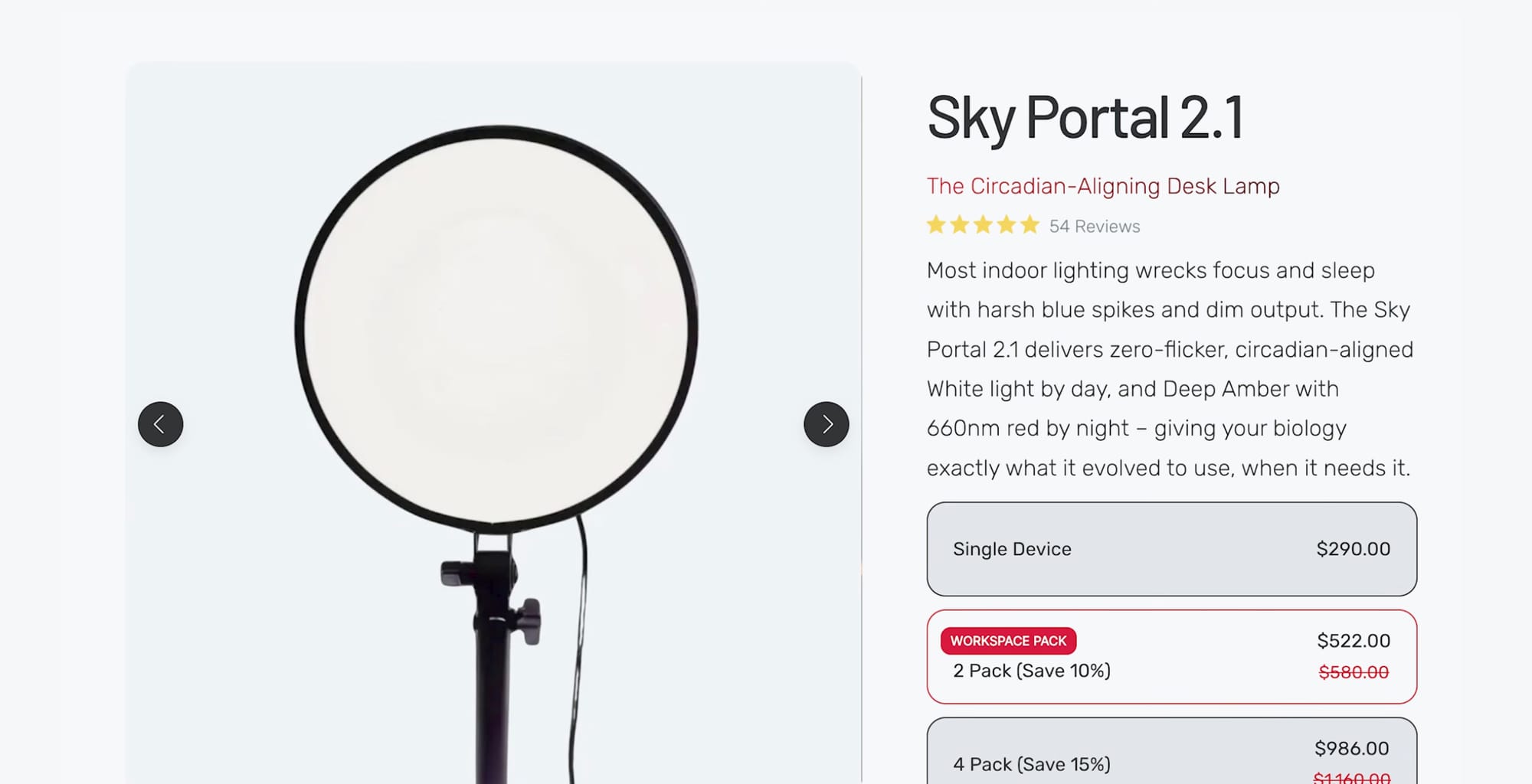
Chroma's approach is to create lighting that more closely mimics the changing spectrum of natural sunlight throughout the day. During the morning and daytime, the Sky Portal provides more of the blue wavelengths associated with wakefulness and circadian rhythm alignment. As the day progresses, the spectrum shifts toward warmer wavelengths, with greater emphasis on red light, creating a lighting environment intended to support evening relaxation and sleep.
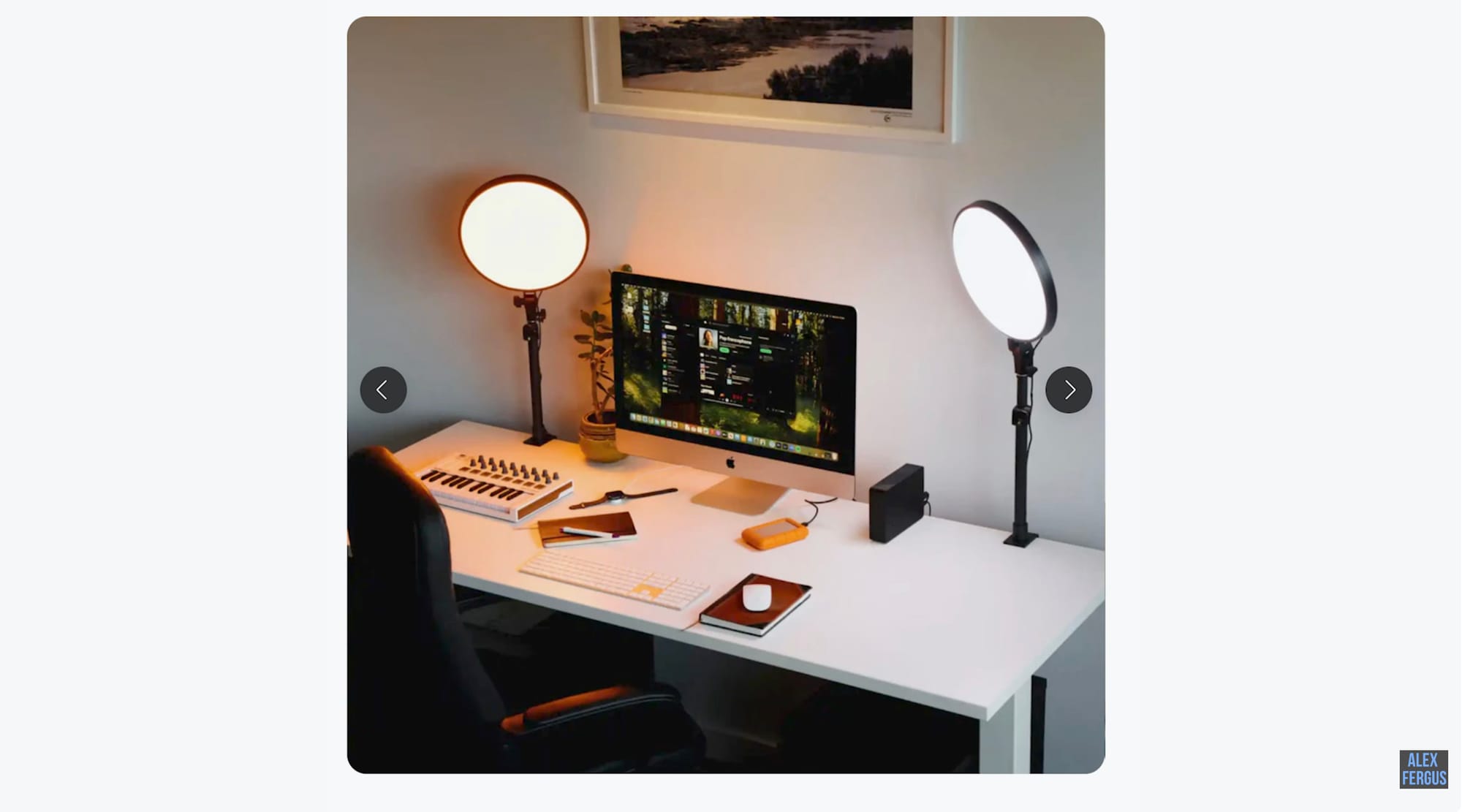
If you spend most of your day inside an office or working from home, the Sky Portal could be an interesting addition to your workspace. It's not something I'd purchase specifically for red light therapy, but if improving your indoor lighting and supporting your circadian rhythm are priorities, then it certainly offers something different from a conventional desk lamp.
Chroma Trinity: The Most Ambitious Device Chroma Has Ever Built
If there is one product that demonstrates just how differently Chroma thinks compared to most manufacturers, it's the Trinity. Rather than producing another high-powered red light therapy panel, Chroma has combined several of its previous technologies into a single device that attempts to do far more than traditional photobiomodulation.
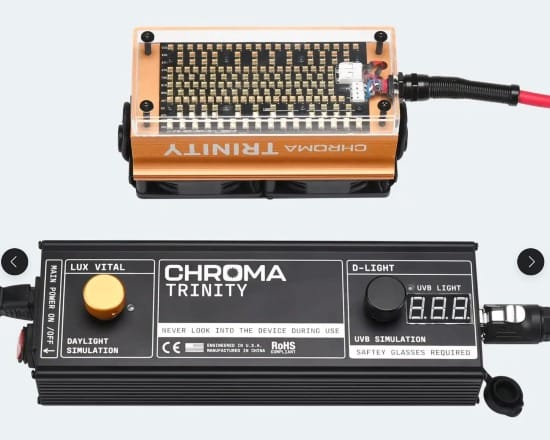
The Trinity essentially replaces several earlier Chroma products by consolidating them into a single platform. It incorporates the powerful red and near-infrared foundation of the Iron Forge while also adding features from the company's discontinued Lux Vital and D-Light devices. The result is a panel that combines red light, near-infrared, blue light, UVA, and even a very specific 297 nm UVB wavelength intended to stimulate vitamin D production.
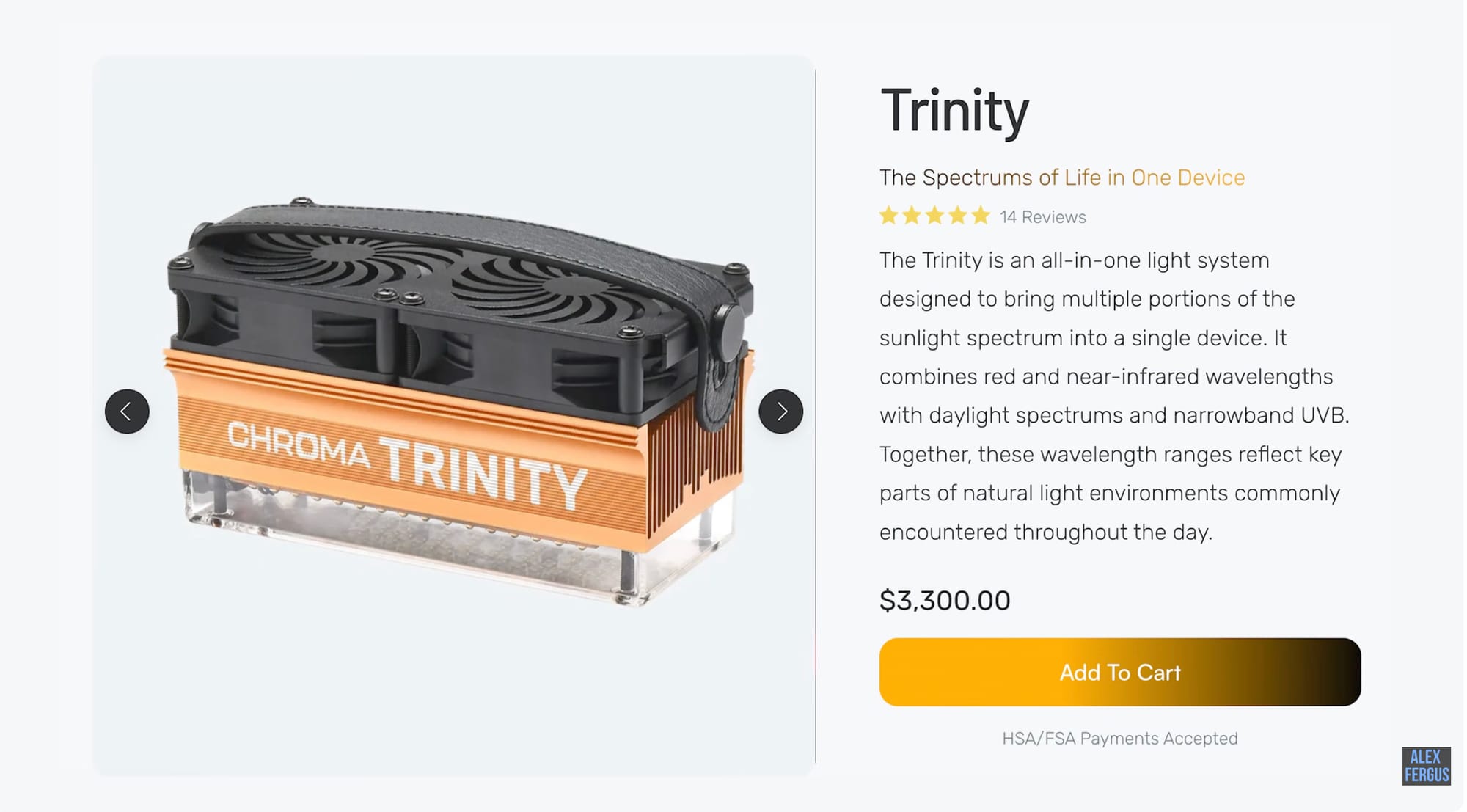
Looking purely at the wavelength list, it's certainly impressive. Alongside the familiar 630 nm and 670 nm red wavelengths, you're also getting 760 nm, 810 nm, 850 nm, 935 nm, and 1050 nm near-infrared. Add in the UVA, blue light, and targeted UVB wavelength, and it's clear that Chroma is trying to build something that goes well beyond conventional red light therapy.
However, this also raises an important question.
If your primary goal is simply photobiomodulation, do you actually need all of these additional wavelengths?
My initial thought is probably not. In fact, because some of the panel's energy is now being distributed across blue light and ultraviolet wavelengths, it's reasonable to assume that the traditional red and near-infrared output won't be quite as concentrated as it is in the original Iron Forge. For someone whose only objective is maximizing red light therapy, I'd probably still lean toward the Iron Forge itself.
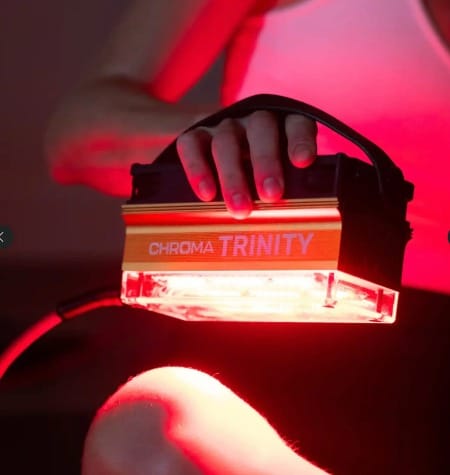
The Trinity is really aimed at a different type of user. It's designed for someone who wants a single device that supports multiple aspects of health, including photobiomodulation, circadian rhythm, vitamin D production, skin health, and emerging research on non-traditional wavelengths. That's an ambitious goal, and whether those additional benefits justify the increased complexity will ultimately depend on how important those applications are to each individual user.
Is the Trinity Worth the Price?
There's no getting around the biggest downside of the Trinity—it's expensive. At around $3,300 before discounts, it's one of the most expensive consumer light therapy devices currently available.
At first glance, that price can be difficult to justify. However, it's also important to remember that you're not simply buying another red light panel. You're effectively purchasing three different technologies combined into one device. If you were planning to buy separate products for photobiomodulation, circadian lighting and targeted UV therapy, the overall value proposition starts to look a little different.
The science behind many of these additional wavelengths is also evolving rapidly. Research into blue light, UVA and carefully controlled UVB exposure continues to grow, with studies investigating everything from wakefulness and circadian rhythm alignment to dopamine production, blood flow, mood, skin health and vitamin D synthesis. Some of these areas already have encouraging evidence, while others are still very much in their early stages.
That's why I think it's important not to overstate what the Trinity can do. The concept is certainly exciting, but it's also a product that deserves careful evaluation rather than blind enthusiasm. Before making any strong recommendations, I'd want to independently verify the power output, confirm how the energy is distributed across the various wavelengths, and better understand how all of these different modes perform in real-world use.
Final Thoughts
I genuinely like the direction Chroma is taking. Rather than releasing another collection of nearly identical panels, the company is exploring areas that most manufacturers have largely ignored. Whether that's combining multiple wavelength categories into a single device, developing a handheld alternative to traditional masks, or creating lighting designed around circadian biology, they're clearly willing to experiment.
That doesn't automatically mean every product will be a success. As always, independent testing matters far more than marketing claims, especially when companies publish exceptionally high irradiance figures or promise dramatically shorter treatment times. Those are exactly the types of claims I like to verify before forming a final opinion.
Items Mentioned
⭐ Get any of Chroma's wide range of light therapy devices: Use code ALEX at https://aferg.co/chroma
Alex's Bio
Alex Fergus wrote this blog post. Alex is an ISSN Sports Nutrition Specialist, Fitness Professional, and certified Superhuman Coach who continues to expand his knowledge base and help people worldwide with their health and wellness. Alex is recognized as the National Record Holder in Powerlifting and Indoor Rowing and has earned the title of the Australian National Natural Bodybuilding Champion. Having worked as a health coach and personal trainer for over a decade, Alex now researches all things health and wellness and shares his findings on this blog.