
Red light therapy devices are often marketed with impressive numbers. Companies highlight high irradiance, multiple wavelengths, “clinical-grade” power, full-body coverage, and other claims designed to make their products stand out. However, unless those devices are independently tested with accurate equipment, it can be difficult to know what they are actually producing.
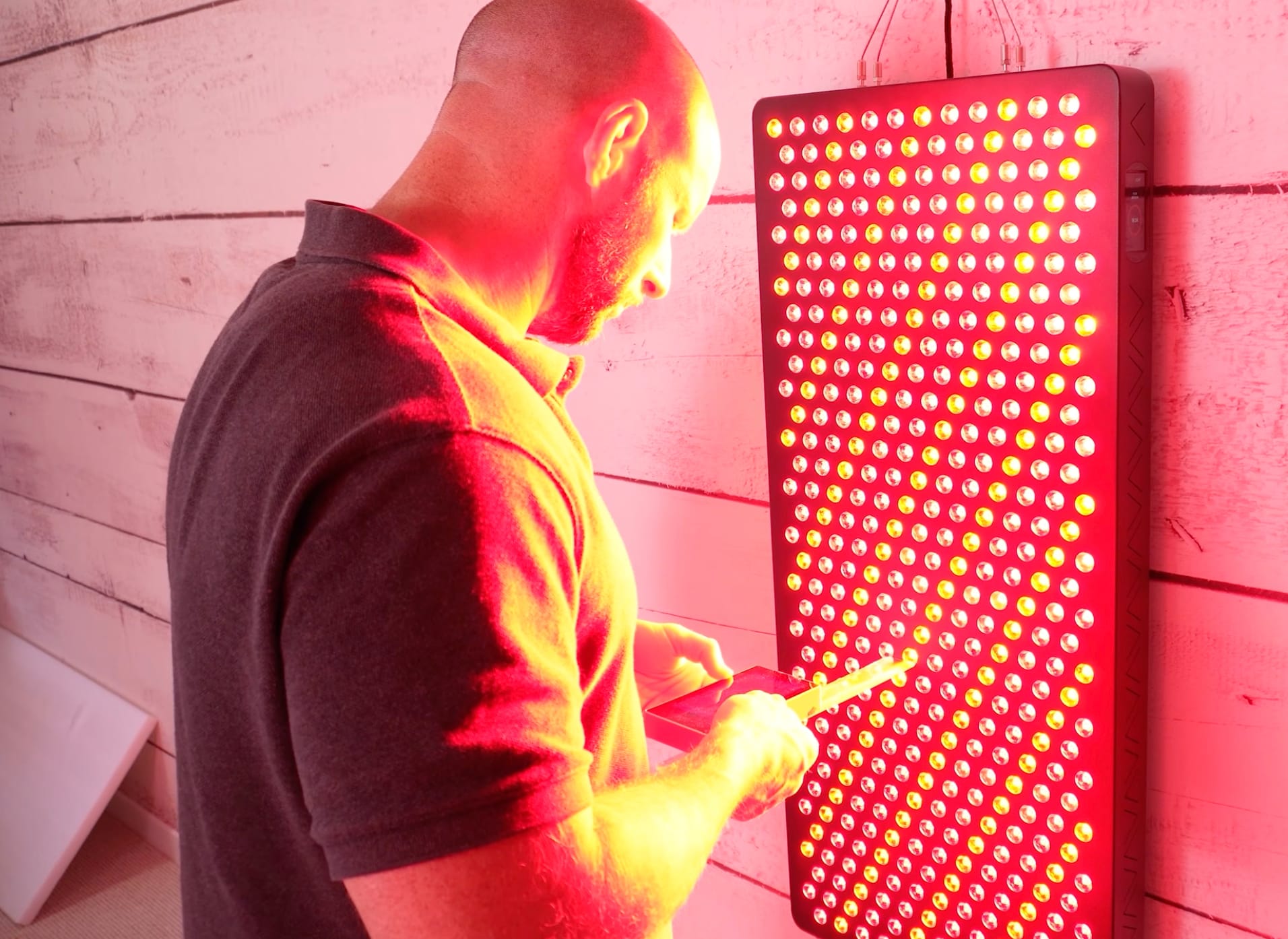
For years, I have used a spectrometer to test the wavelengths and irradiance of red light therapy devices. This testing has revealed devices that emit wavelengths different from those advertised, shown why solar meter readings can be misleading, and demonstrated that the power listed on a product page is not necessarily the power reaching your body.
Now, I am adding an integrating sphere to my testing equipment. This will allow me to measure small red light therapy devices in a much more complete way and provide even more accurate, reliable product reviews.
Why Independent Red Light Therapy Testing Matters
When shopping for a red light therapy device, you will often see claims such as 100 mW/cm² irradiance, five therapeutic wavelengths, clinical-grade output, or exceptionally powerful LEDs. These claims may sound impressive, but they do not tell you much unless you know exactly how the measurements were taken.
The testing equipment, measurement distance, sensor position, and testing method can all significantly affect the reported results. A measurement taken directly against the surface of a panel will be very different from one taken six inches away. Likewise, a measurement taken only in the powerful center of a panel may not represent the output across the entire treatment area.
This issue was highlighted by testing presented at the 2024 Military Health System Research Symposium. Researchers evaluated seven commercial photobiomodulation devices, including beds, panels, and wearable devices. They used spectroradiometry to measure wavelengths and irradiance across different positions and distances.
The researchers reached a conclusion that closely reflects what I have been saying for years: independent validation is essential. Some devices performed close to their advertised specifications, while others produced considerably different results.
What Independent Testing Revealed
The researchers found several types of discrepancies among the devices they tested. Some products emitted wavelengths that did not align with the wavelengths advertised by the manufacturer. Others produced substantially lower irradiance than the values listed in their marketing materials.
The testing also revealed uneven light distribution. Some panels produced a concentrated area of high irradiance in the center, but their output dropped dramatically outside that central hotspot. A single measurement taken in the strongest area could therefore make the entire device appear more powerful than it really is.
These differences are important because consumers rely on advertised specifications when comparing products and planning treatment times. A device could be severely underpowered, unnecessarily intense, or unevenly distribute its light. In some cases, it may not even produce the therapeutic red and near-infrared wavelengths the buyer expected.
The Problem With Solar Meter Measurements
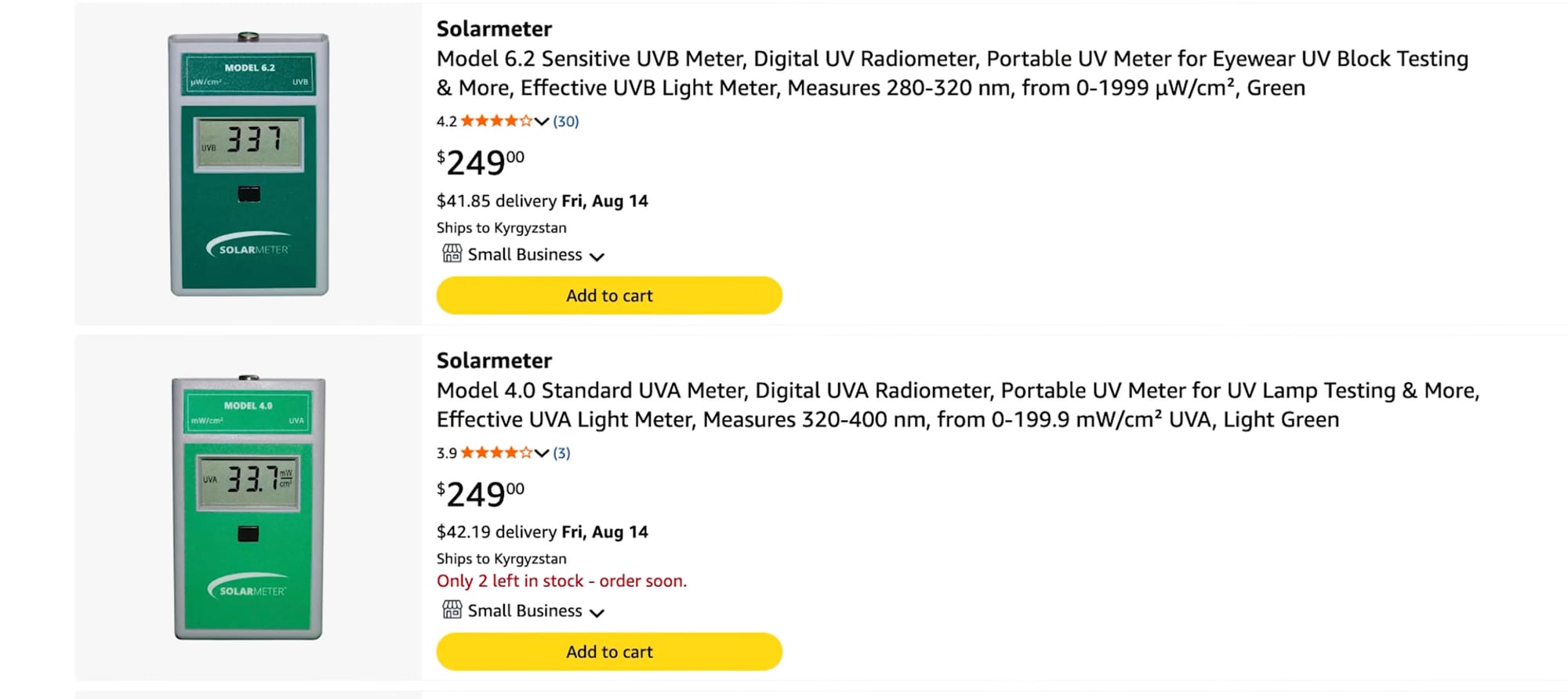
One of the most common sources of confusion in the red light therapy industry is the use of solar power meters. These meters are relatively affordable and can display an irradiance figure in milliwatts per square centimeter. However, they were designed to measure sunlight—not the narrow bands of red and near-infrared light produced by LED therapy devices.
Sunlight contains a broad spectrum of wavelengths. Red light therapy devices, by comparison, concentrate their output around specific wavelengths such as 660nm red light and 850nm near-infrared light.
A solar meter may respond differently to 660nm light than it does to 850nm light. Its reading can also be affected by factors such as LED beam angle and the device’s spectral distribution. As a result, the meter may overestimate or underestimate the true irradiance.
In many cases, solar meters produce higher readings than more appropriate scientific equipment. Larger numbers may look impressive on a product page, especially because many consumers assume that more power automatically means better results. However, higher irradiance is not always better in photobiomodulation, and an inflated measurement is not particularly useful when calculating a treatment dose.
That does not necessarily mean every company using a solar meter is intentionally trying to mislead consumers. If several companies use the same type of meter, their measurements may offer some value for basic comparisons. The problem is that these numbers should not be treated as precise or scientifically reliable measurements of therapeutic light.
Why I Started Using a Spectrometer
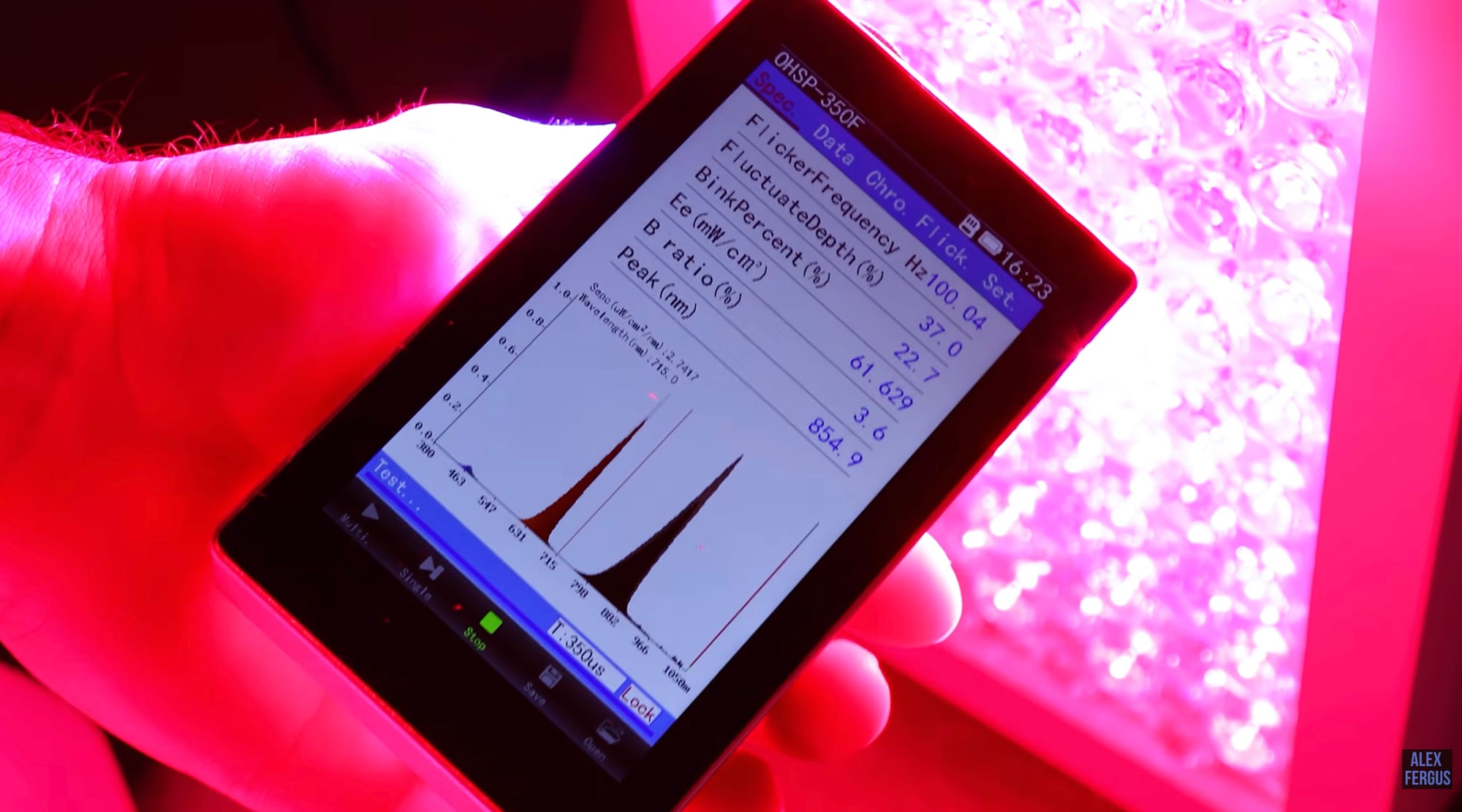
After recognizing the limitations of solar meters, I invested in a spectrometer—or, more technically, a spectroradiometer. This type of equipment is designed and calibrated to analyze light at individual wavelengths.
A spectrometer provides far more useful information than a solar meter. It can identify the wavelengths a device is actually producing and measure the irradiance at a specific location. This allows me to see whether a device marketed as producing 660nm and 850nm light is actually emitting those wavelengths.
However, a spectrometer also has limitations. It measures the light reaching its sensor at one particular point, distance, and moment. If I position the sensor six inches in front of a panel, it tells me what is happening at that exact spot. It does not automatically tell me what is happening across the panel’s entire treatment area.
That is why I perform grid testing during my panel reviews. I take multiple readings across the illuminated area and use those results to calculate average irradiance and estimate total power output. This produces a more realistic picture than taking a single measurement in the panel’s strongest central hotspot, but it is still an estimate based on multiple individual readings.
What Is an Integrating Sphere?
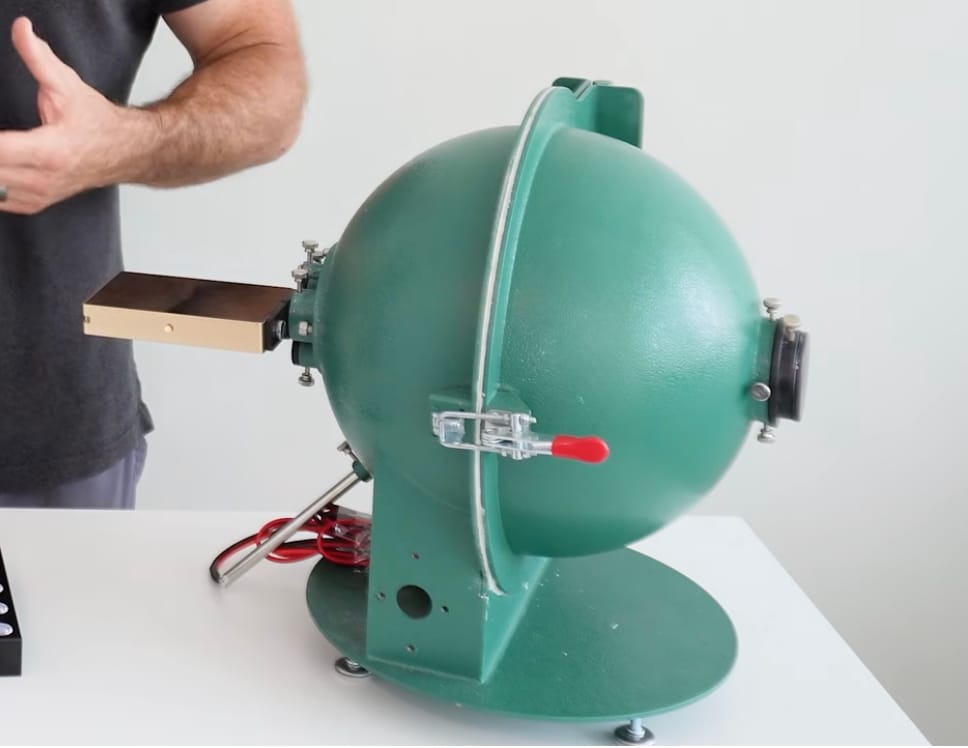
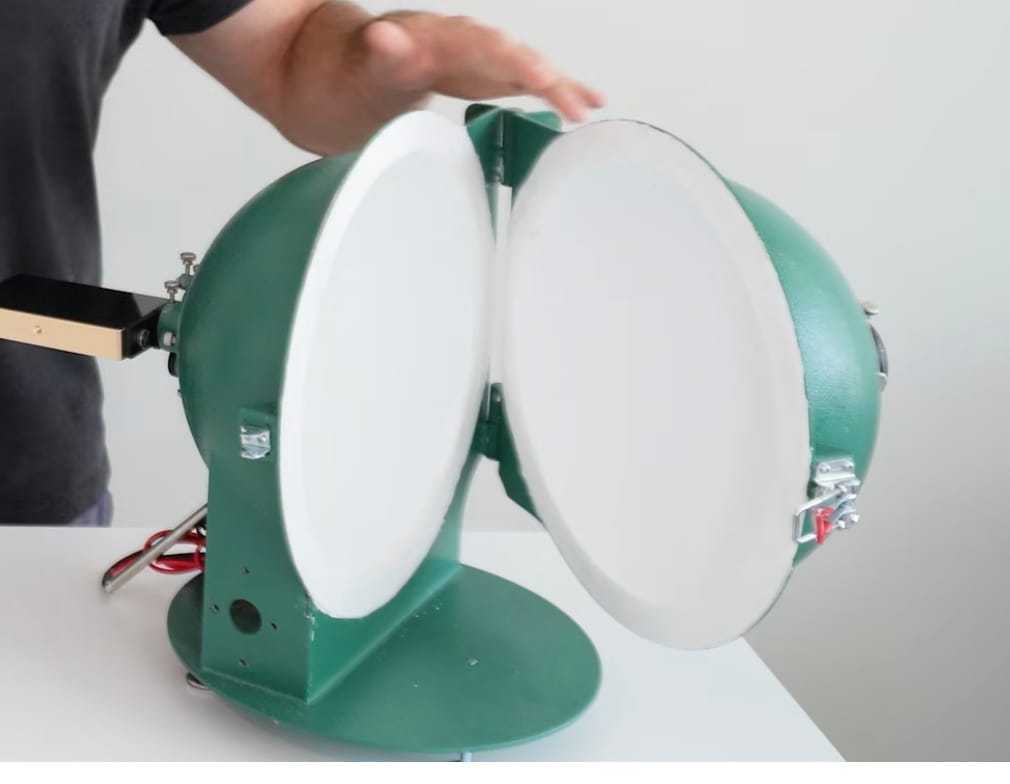
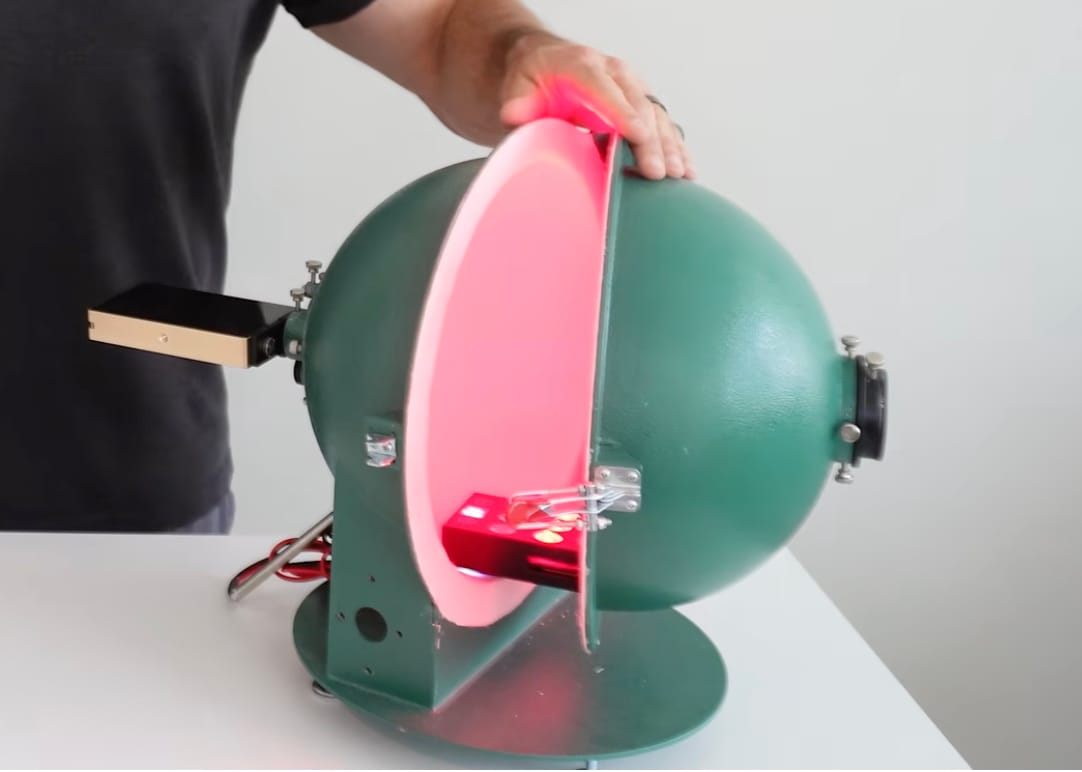
An integrating sphere is a hollow sphere coated internally with a highly reflective, diffusing material. When light enters the sphere, it reflects around the interior repeatedly until it becomes evenly distributed throughout the chamber.
This design allows the testing system to capture and measure the total optical output of a light source. Instead of pointing a sensor toward one area of a device, the sphere collects the light entering the chamber and evaluates its overall output.
In simple terms, a spectrometer tells us how much light reaches a specific location at a certain distance. An integrating sphere can tell us how much light the device is producing in total.
Both measurements are valuable, but they answer different questions. Using them together will give me a more complete understanding of how each device performs.
Why Total Output Can Change the Story
Imagine that we are comparing two small red light therapy devices. The first produces an extremely intense hotspot directly in front of one group of LEDs, while the second distributes its light much more evenly.
If we take only one measurement directly in front of the hotspot, the first device may appear to be considerably more powerful. However, that measurement does not account for the weaker output surrounding the hotspot.
When both devices are tested inside an integrating sphere, we may discover that the second device produces more light overall. Its peak irradiance might be lower, but its total output and distribution could be better.
This information is especially valuable when testing masks, wraps, handheld devices, torches, and other smaller products. It can also help reveal whether a device’s impressive central reading accurately represents its overall performance.
What the Integrating Sphere Will Measure
The integrating sphere will allow me to evaluate several important performance characteristics. One of these is total radiant flux, which represents the total amount of optical power emitted by the device.
I will also be able to examine spectral power distribution. This shows how much of the device’s output comes from each wavelength rather than simply confirming that a wavelength is present.
That distinction is particularly important for devices advertised as having four, five, or even more wavelengths. A device may technically contain LEDs associated with all five wavelengths, but that does not mean each wavelength contributes a meaningful amount of therapeutic light. Most of the output could come from only two wavelengths, while the others contribute very little.
The integrating sphere will also help identify the actual peak wavelengths. I can determine whether a device marketed as producing 660nm, 850nm, or 1060nm light truly peaks around those values.
Another useful measurement will be output consistency over time. I can test a device shortly after it is turned on and then repeat the measurement after 10 or 20 minutes. This will show whether its output remains stable throughout a treatment session or drops as the device warms up.
The Limitations of My New Testing Setup
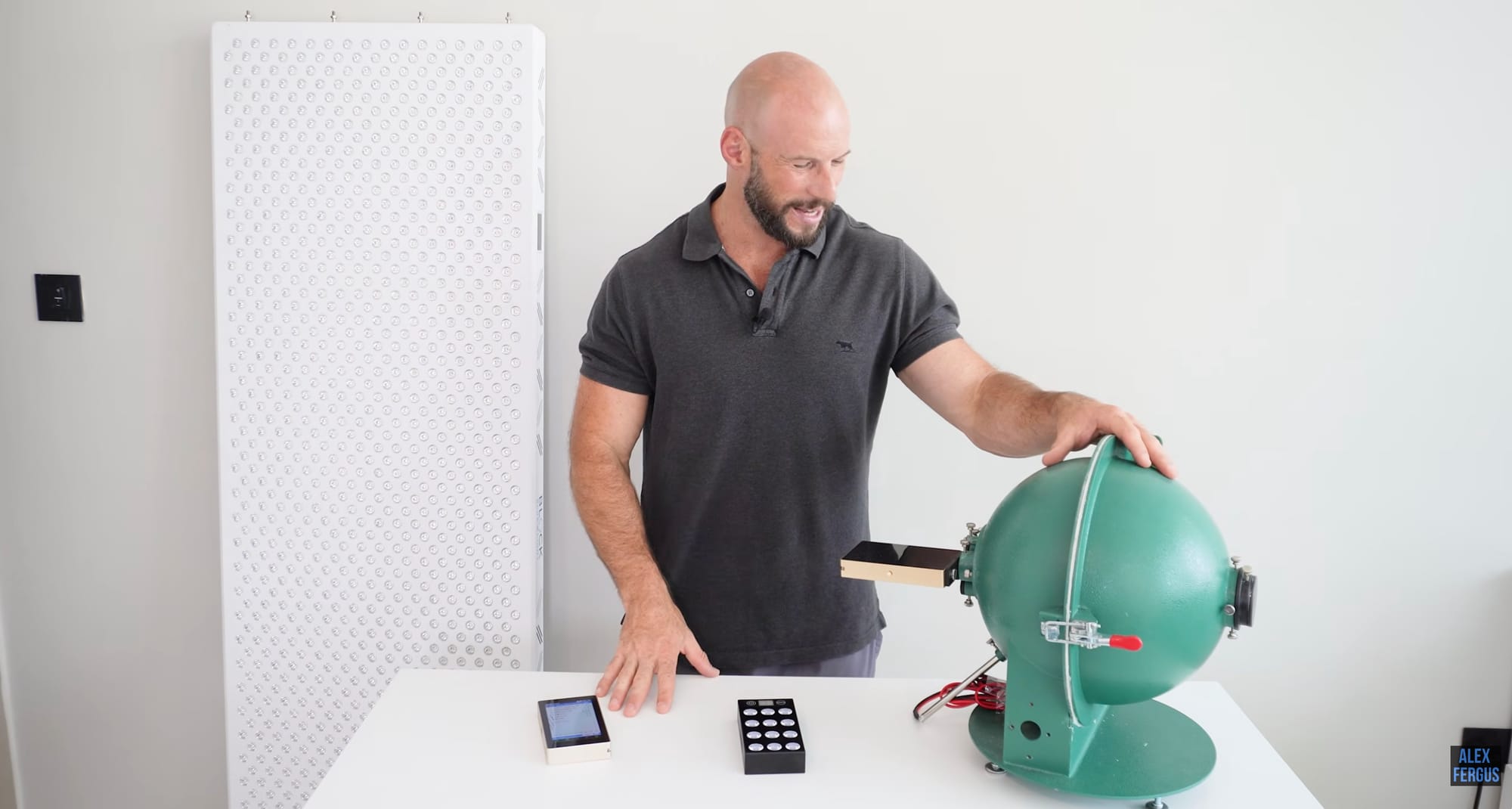
As useful as this equipment will be, my current integrating sphere is relatively small. It is approximately 50 centimeters in diameter, making it suitable for masks, handheld devices, small panels, and similar products.
It cannot accommodate a two-meter-tall, full-body red light therapy panel. Testing a device that large would require an enormous integrating sphere, a dedicated testing space, specialized hardware, and a considerable financial investment.
I am currently working with a specialist laboratory, and larger panels may eventually be sent there for additional testing. This would allow me to incorporate professional laboratory measurements into future reviews while continuing to conduct my regular hands-on testing.
Even with access to a much larger integrating sphere, I would still use a spectrometer when reviewing panels. A sphere could measure all the light emitted by the panel, but your body does not capture all that light during a normal treatment. You usually stand several inches away, and some of the light travels beyond the treatment area.
Grid testing with a spectrometer can therefore provide a more realistic estimate of what reaches the body at a particular distance. The ideal testing method depends on the device and the information we are trying to obtain.
How Popular Devices Performed in Independent Testing
The conference research mentioned earlier included several well-known photobiomodulation products. The NovoTHOR bed appeared to align reasonably well with its stated wavelengths and produced consistent output across its treatment zones, although its measured irradiance was slightly below the reported value.
The LED bed tested had higher measured irradiance than the other beds, but some of its near-infrared wavelengths were approximately 30nm away from what was advertised. That is a substantial difference. In my own reviews, I generally allow a margin of error of around 5nm, but a 30nm discrepancy is much harder to overlook—especially in a costly professional device.
The TheraLight bed produced substantially lower measured irradiance than its reported values. By comparison, the Kineon MOVE+ performed well, with tested figures that closely aligned with its marketed specifications.
The researchers also tested the JOVS Mini and the PlatinumLED BioMax 300 panels. Both produced measured irradiance figures below the values advertised by their manufacturers.
It is important to put these findings into context. This was a conference experiment paper rather than a complete peer-reviewed study. There is also no universally accepted gold standard for testing every type of red light therapy device. Researchers and reviewers may use different equipment, measurement distances, testing positions, and calculations.
Nevertheless, the results illustrate an important point: when products are independently evaluated using appropriate equipment, their measured performance can look very different from their marketing claims.
A New Testing Metric Is Coming
I am also developing a new testing metric that will combine several of these data points. I am working with a specialist laboratory to determine which testing methods provide the most useful and reliable information for consumers.
The goal is to make different red light therapy products easier to compare. Instead of looking at a single irradiance figure that may have been produced under unclear conditions, consumers could see a broader assessment of the device’s wavelengths, total output, light distribution, consistency, and overall performance.
This project is still in development, but I believe it could improve how consumers compare red light therapy devices. It may also encourage companies to provide clearer, more standardized information about how their products are tested.
What to Ask Before Buying a Red Light Therapy Device
When evaluating a red light therapy device, do not ask only how powerful it is. Ask how that power was measured. Find out what testing equipment was used, how far the sensor was positioned from the device, and whether measurements were taken only in the center or across the entire treatment area.
A device measured directly at its surface cannot be fairly compared with one tested from six inches away. Likewise, a central hotspot reading does not necessarily represent the irradiance reaching the rest of your body.
You should also look beyond the number of advertised wavelengths. Confirm whether the company has independent testing showing the actual peak wavelengths and how much power each wavelength contributes. A five-wavelength device is not automatically better if three of those wavelengths produce negligible output.
More Reliable Red Light Therapy Reviews
Red light therapy is no longer a small niche limited to a handful of biohackers. The market now includes panels, masks, beds, caps, belts, torches, wraps, oral devices, cognitive devices, recovery products, and beauty devices.
As the market grows, the claims are becoming bigger and more difficult to compare. Independent testing is especially important when people are spending thousands of dollars or using these devices with the expectation of meaningful health and wellness benefits.
My goal is to provide more transparency. The addition of an integrating sphere means my upcoming reviews—particularly those involving masks, torches, handheld units, and other smaller devices—will include more comprehensive testing alongside my usual spectrometer measurements.
The next time you see a company promoting an enormous irradiance figure, remember to ask the question that matters most: How was it measured? In the red light therapy industry, the testing method can change the entire story.
Items Mentioned
⭐ The Rouge mini: Use discount code ALEX at https://aferg.co/rougecare
⭐ PlatinumLED BioMax: Use the discount link https://aferg.co/redled to save 5% on the feature-packed BioMax red light panel range
⭐ The Kineon Move Plus: Use discount code AFERGUSMOVE at https://aferg.co/kineon for 10% off.
⭐ The Paper: https://arrcled.com/wp-content/uploads/2026/04/spectroradiometric-analyses-of-commercial-photobiomodulation-technologies-MHSRS2024.pdf
Have You Seen These Reviews?
♦️ Best LED Face Mask For Acne: The Wavelength Most Companies Get Wrong
♦️ Chroma’s New Light Therapy Devices: The Most Innovative Red Light Therapy Devices Yet?
♦️ Maysama Aura Review: My Testing Revealed a Big Problem
♦️ Best Handheld Red Light Therapy Device? Why the Rouge Nano Still Wins
Alex's Bio
Alex Fergus wrote this blog post. Alex is an ISSN Sports Nutrition Specialist, Fitness Professional, and certified Superhuman Coach who continues to expand his knowledge base and help people worldwide with their health and wellness. Alex is recognized as the National Record Holder in Powerlifting and Indoor Rowing and has earned the title of the Australian National Natural Bodybuilding Champion. Having worked as a health coach and personal trainer for over a decade, Alex now researches all things health and wellness and shares his findings on this blog.