
I get the question "Does red light therapy work for cataracts" very frequently in our 30,000+ member Facebook group.
Back in 2024, when I wrote my very extensive red light therapy for eye health guide, not a lot of research was available on this topic.
Now, there's more data available, and fortunately some bright spots (pun intended!)
Red Light Therapy For Cataracts Summary
For prevention and reversing cataracts, no good human studies are available, still. Animal studies do show plausible benefit, however.
For now, I recommend getting a handheld red light therapy device, that I also recommend in my general article about light therapy for eye health.
The owner & founder of this company, Alex Fergus, has recently reviewed the Rouge Nano handheld device, that's great for a short 3 minute treatment held around a foot from your face.
In the next few years, I'll be updating you with more red light therapy for cataracts clinical studies, when they almost certainly come out!
Background Info
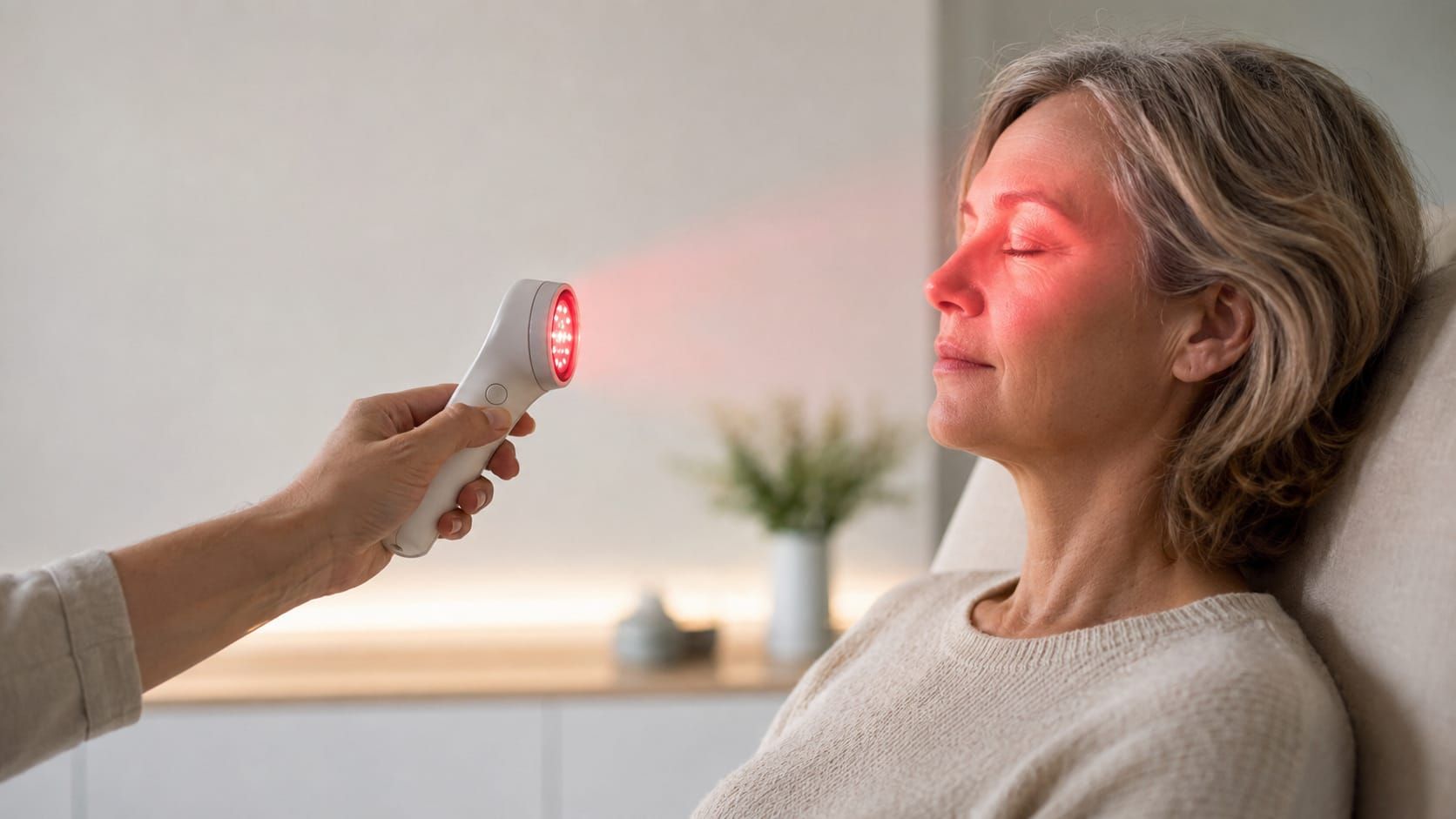
The image on top is AI-generated, though!
If you need an introduction to what these terms mean, check the following resources:
- What Is Red Light Therapy?
- Red Light Therapy Explained: Basic Terms Guide
- Start Here - Light Therapy 101 & Buyers Guide
- Red Light Therapy Dosing Chart: The Raw Data From Hundreds Of Studies
- Red Light Therapy Dosing: Why It's Complicated!
- Red Light Therapy Wavelengths Benefits: The Ultimate Guide
- How Often Should You Use Red Light Therapy Explained
These resources should give you a basic understanding of how red light therapy works, and the discussions around it!
Cataracts Basics
Let's consider the cataracts basics. Cataracts affect the lens of your eye. The lens allows you to focus your eyesight, by allowing you to see objects that are closer or farther away.
In cataracts, your lens becomes cloudy, and you won't be able to see as well as normal. As you can imagine, other problems can also occur with the lens, such as displacement, which makes vision more problematic.
Cataracts can lead to disability and blindness and are more prone to happen at old age (1). By 2050, 50 million people are predicted to be affected in the USA alone (1).
The fix is often surgery, which a recent review on cataracts (that integrates earlier research on a given topic) considers:
"Surgery to remove the cataract and implant a permanent intraocular lens (IOL) is indicated if visual impairment impedes activities of daily living and is associated with lower rates of falls (>30%) and dementia (20%-30%). Most cataract operations are performed with topical anesthesia" (1).
Early on when the disease hasn't progressed yet, other treatments such as refractive glasses can work as well (2).
Cataract Risk Factors
And yet, the disease isn't created fully randomly (3). Smoking and high UV exposure to the eyes are common risk factors (3). Regarding eye health, I've covered the topic of UV exposure in the eyes in detail in my "is red light therapy safe for the eyes" article
Age, trauma and inflammation to the eyes also are cataract risk factors (4). There are lots of unknowns. Researchers state, for instance:
"First, regarding individuals in developing nations, the question must be asked about which nutrients (or lack thereof) are the culprits. The epidemiologic evidence that antioxidants are the missing nutrients is far from overwhelming." (4)
And what you don't hear often is that metabolic syndrome, obesity, type II diabetes, etc, are also linked to the development of cataracts (6). So much for the viewpoint that cataracts are an "eye only disease"!
Is Cataract Surgery A Universal Solution?
Even today, cataract surgery is understood not to be without risk (5). I fondly remember Dr Jack Kruse talking about the risk factors for cataracts, and also the risk of surgery, back in 2014 already (7).
Blue light (in isolation - indoors) overexposure was posited as the main cataract culprit here (7). The same goes for a properly aligned circadian rhythm, not getting enough sunlight, and fatty acids from seafood (DHA).
The lens that is replaced in cataract surgery isn't without risk, as it will filter out all UV exposure to the eyes (8). You need that light exposure to the eyes to build dopamine in the brain, for instance (9). This process then throws off a lot of the hormonal signalling (8). Basically, the eye will henceforth respond to light differently (10). There's no easy solution here IMO, as often when the disease has progressed you cannot reverse it with lifestyle and nutrition changes anymore (11).
Or can you?
Which brings me to the next topic:
Red Light Therapy For Cataract Surgery
The good news is that we've got studies on red light therapy for cataracts now, in 2026. The bad news is that they center around surgery, not the preventive or curative goals that most people associate red light therapy with.
But let's consider the red light therapy for cataracts:
- First, a 2026 study uses 633 nm starting 2 weeks before cataract surgery (12). The goal is to prevent dry eye disease after cataract surgery. Here's the outcome, described by the scientists:
"[Red light therapy] accelerates ocular surface recovery after cataract surgery by modulating reparative, neurotrophic, and inflammatory pathways. Tear biomarkers assessed at baseline and through one-month dynamics (GDF-15, PDGF-CC, β-NGF) and integrated with clinical parameters, may help predict treatment response and guide personalized postoperative management." (12)
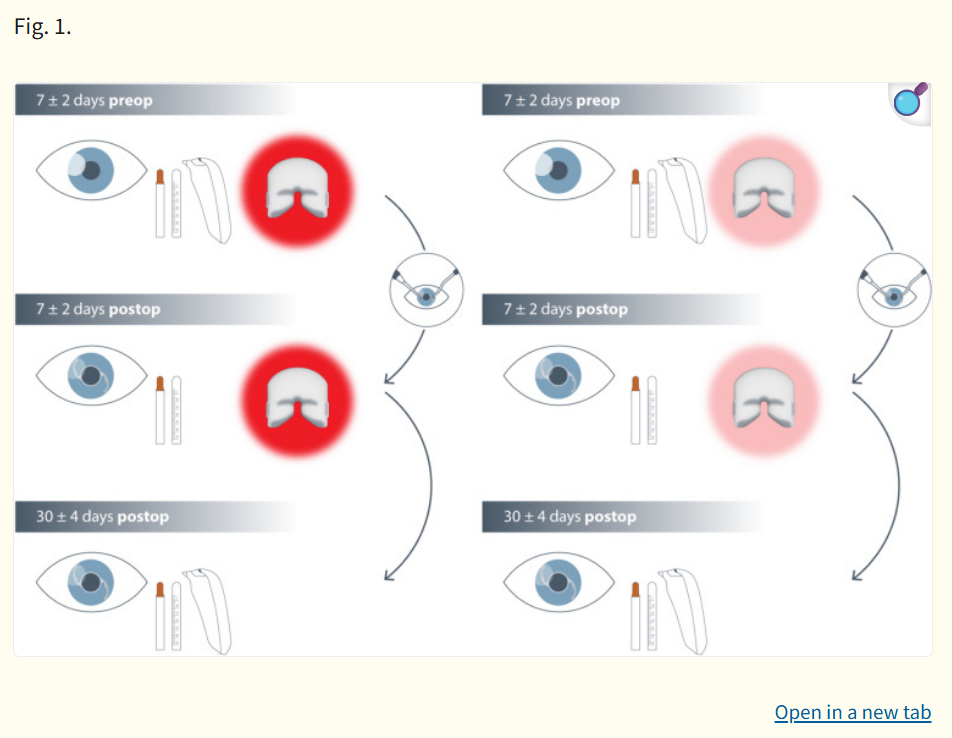
- This was accomplished with only 2 sessions at 633 nm, with the "Eye-light®" device (13). One session was 7 days before surgery and the other was 7 days after.
- Secondly, a 2025 study also uses 633 nm light (14). This study has a similar outcome:
"Perioperative [red light therapy, meaning around the surgery period,] is a safe, well-tolerated, and effective treatment for preventing iatrogenic [postoperative dry eye disease] in cataract surgery. Integrating [red light therapy] into the routine perioperative care may enhance patient satisfaction and overall outcomes in the setting of cataract surgery." (14).
- Here's a display of the study setup, with the intervention with the eye-light® device on the left, and the control group (much weaker light) on the right (15):
- My verdict? These studies are extremely promising and helpful, so, 2/2 studies, which are also the Medical "Gold Standard" of a Randomized Controlled Trial ("RCT") show benefits around surgery.
- I used Vladimir Heiskanen's Excel Sheet that contains almost 10,000 studies now for finding this research (16).
Animal Studies On Cataracts
There are some animal studies on cataracts too:
- A 632 nm laser, in 2000 in rabbits, led to less oxidation in the eye (17).
- A 2003 followup study in rabbits didn't find effects on oxidative stress and lipid peroxidation even though treatment time was 10 weeks (18).
- A 2005 study shows no effect of 632 nm but at very low power levels (0.1 mW/cm2) (19)
- A great 2024 study in rabbits with a more realistic dose of 2.6 J/cm2, didn't find changes in cataract progression (20). There is likely benefit for the antioxidant system in eye tissues, fortunately
So is everything hopeless? No strong evidence and human evidence, so far?
Far from...
Here's my take:
Other Strategies For Managing Cataracts
While direct studies on red light therapy for cataracts is sparse, there's ample evidence that you can control a few risk factors with lifestyle and nutrition.
Obesity is a cataract risk factor? Start with red light therapy there:
 Bart Wolbers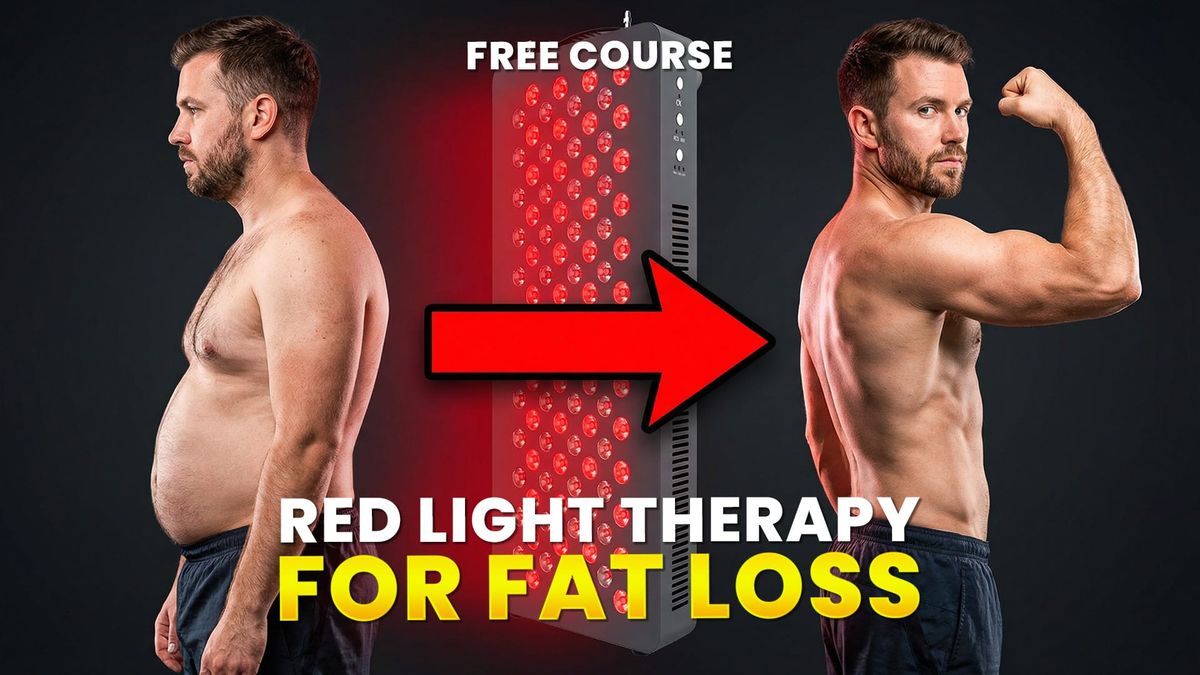
Need blood glucose management? Red light therapy helps there too:
 Bart Wolbers
Avoiding excess alcohol (some is OK), not smoking, eating a healthy diet, go a long way.
And preliminary evidence also shows your "circadian rhythm" - the 24-hour day and night cycle in your brain/body - may affect cataract risk today (21; 22). That evidence wasn't there in 2014 when I first read up about this topic - check my article with a 2026 update below:
 Bart Wolbers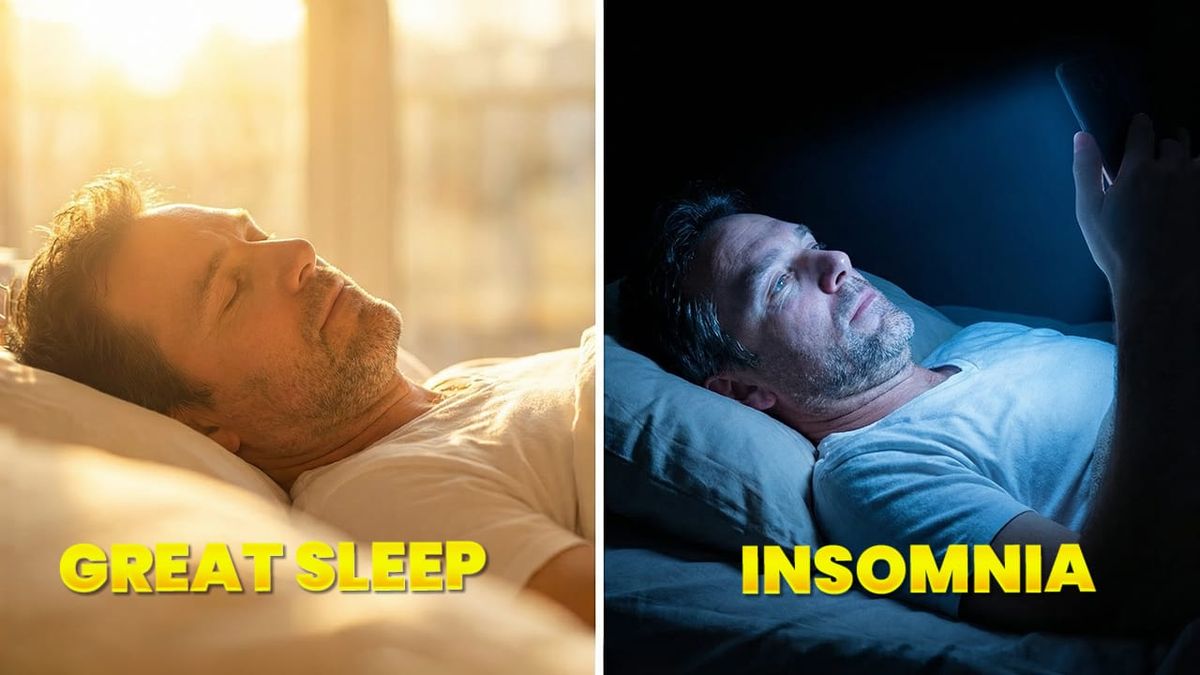
All of these should help you reduce the risk of getting cataracts. So while we're still waiting for the direct human studies on whether is red light therapy good for cataracts, you can already counteract some of the most important risk factors today with light therapy!
Moving on:
Conclusion: The Red Light Therapy For Cataracts Evidence Is Sparse, But...
The red light therapy for cataracts evidence is sparse. We don't have good human studies for prevention, especially over a longer period of time. And, animal studies are somewhat promising but limited too.
The solution?
What would I do if I were affected?
I'd still routinely implement my extremely conservative 3-minute protocol, with a 40-50 mW/cm2 power output, that helps overall eye health in many cases. I describe that protocol here:
 Bart Wolbers
This is a post by Bart Wolbers. Bart finished degrees in Physical Therapy (B), Philosophy (BA and MA), Philosophy of Science and Technology (MS - with distinction), and Clinical Health Science (MS), has had training in functional medicine, and is currently the head researcher at Lighttherapyinsiders.com
Other Resources I Recommend Checking:
🔴 Science Tool: Simplifying Routines, Benefits & Device Selection
🔴 Light Therapy Insiders Shopping Tool
🔴 Light Therapy Insiders Mask Shopping Tool
🔴 Light Therapy Advance Science Course Introduction
🔴 Signup To The Light Therapy Insiders 100%-Free Advanced Science Course
🔴 Light Therapy Insiders AI-Assistant Explained
🔴 All The Deals & Discounts Listed Alphabetically
🔴 Red Light Therapy For Eye Health: The Very Impressive Science
🔴 Is Red Light Therapy Safe for Your Eyes?
🔴 Basics: What Is Red Light Therapy?
🔴 Basics: How To Use Red Light Therapy?
🔴 Basics: Red Light Therapy Buyer's Guide
🔴 Best Red Light Panel 2025? BioMax Pro Ultra vs The Rivals
🔴 The 3 Red Light Therapy Mechanisms You Should Know About
🔴 Red Light Therapy Wavelengths & Penetration Ultimate Guide