
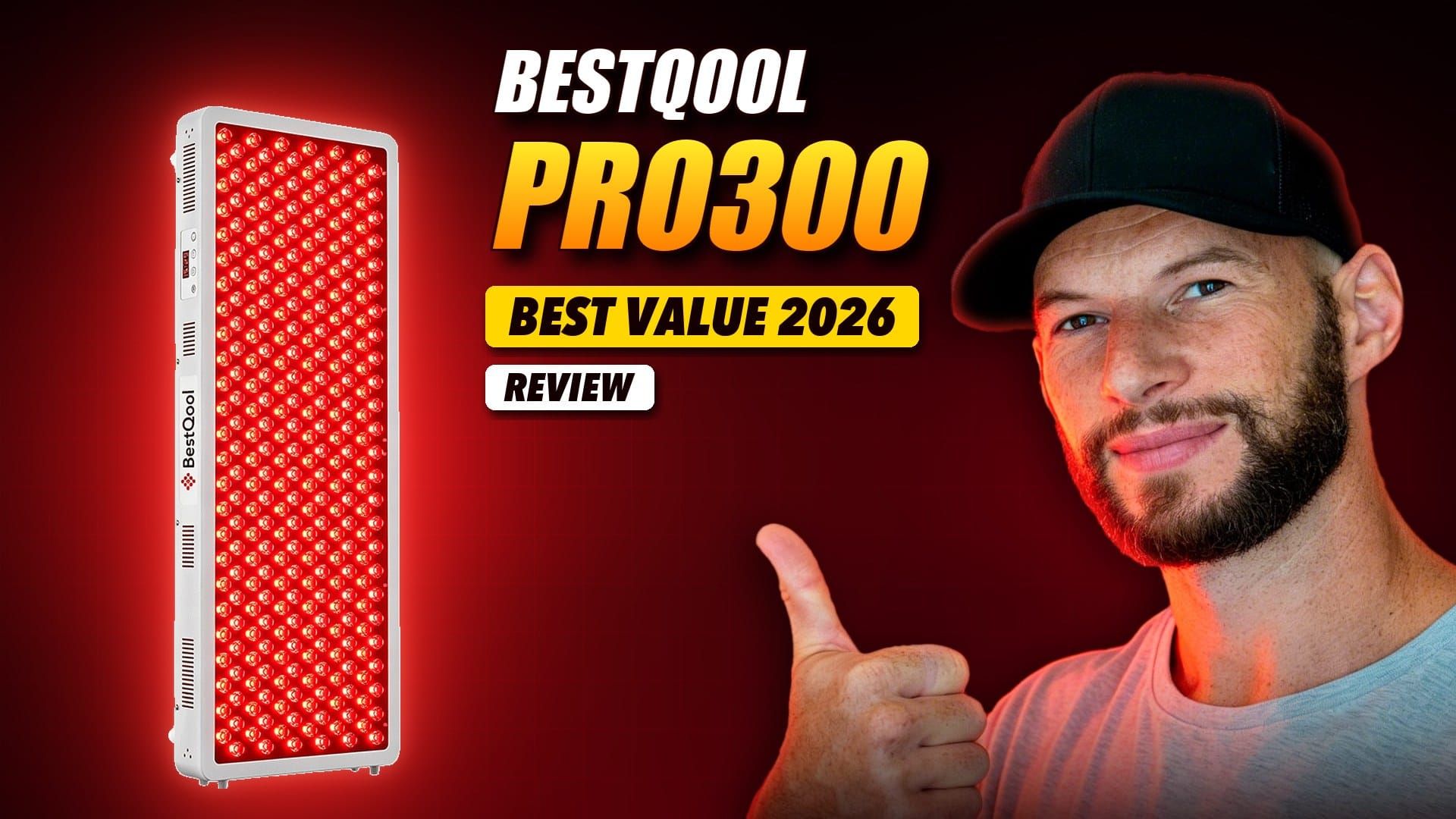
The BestQool Pro300 is the budget panel of my 2026 comparison. At $810 delivered with my code, it's the only panel under $1,000 and $455 cheaper than the next-cheapest. I put it through the same independent lab tests as the 10 other panels in my 2026 panel comparison.
It finished 10th of 11 with 40.75 points, but it won my Best Value award. Below, you'll find the lab's own measurements, including a heat map of its light, its spectrum and its output over a full session. I also look at what $810 really buys you compared with panels that cost twice as much, and who the Pro300 suits.
🏆 Quick Answer: Is the BestQool Pro300 Worth It?
Score: 40.75 out of 100, 10th of 11 in my 2026 panel test.
The Pro300 is the cheapest panel I tested by a wide margin, with well-balanced light and strong red output. But it had the lowest average irradiance in the test, it misses two of my core wavelengths, its output drops more than most over a session, and its controls are as basic as they come.
- Best for: buyers on a firm budget of about $800 who mainly want red light for skin or smaller areas, and like a simple panel with no settings to learn.
- Not ideal for: anyone treating large areas, anyone who wants strong 810–830 nm near-infrared, or anyone who wants intensity control, smart modes or an app.
- Price when tested: $810 delivered to Austin, Texas, after code ALEX (10% off the $899 list price), with free shipping.
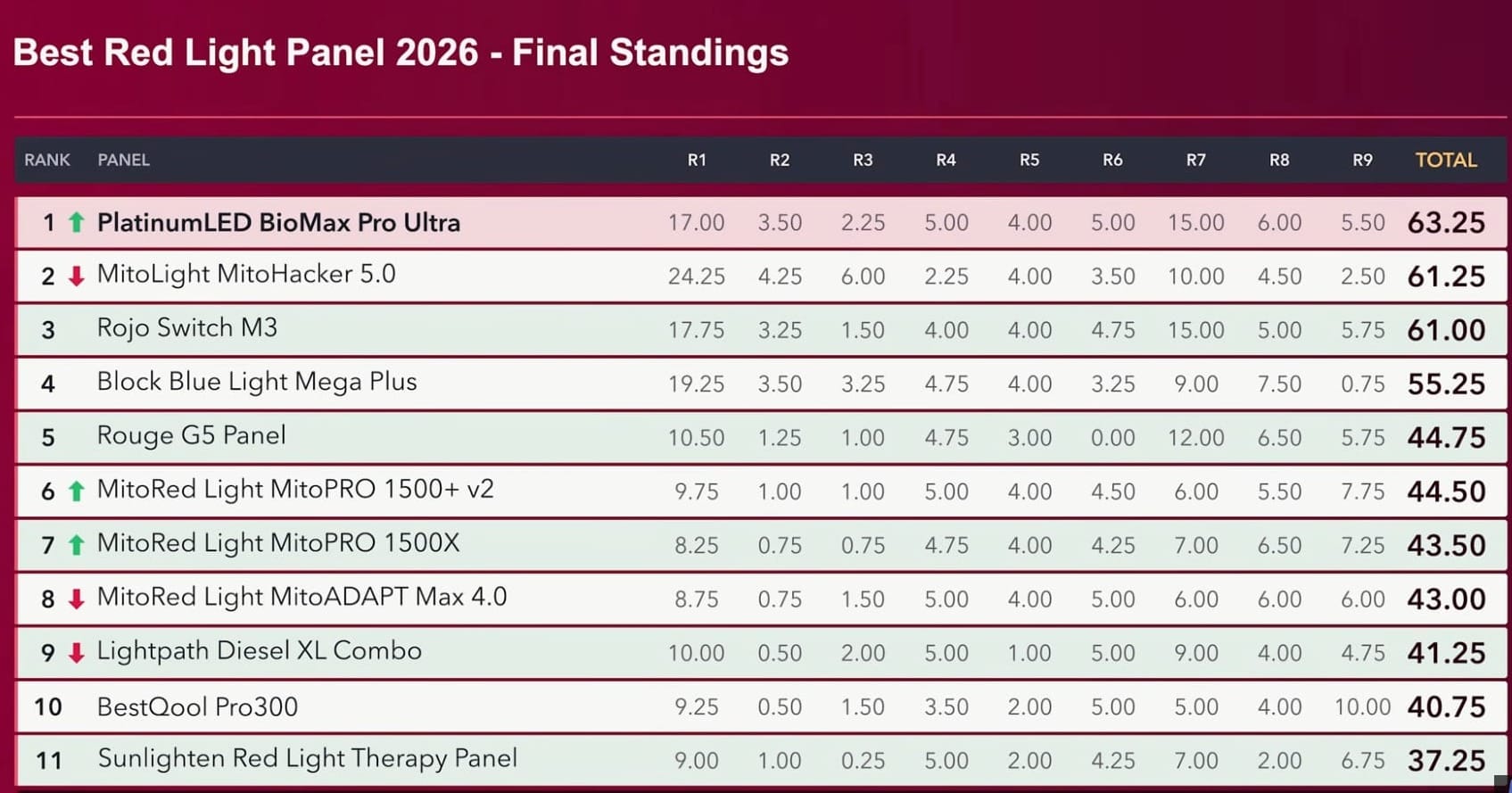
- Stronger choices: the MitoRed Light MitoPRO 1500+ v2 (6th, 44.5 points, $1,265) for $455 more, or the PlatinumLED BioMax Pro Ultra (1st, 63.25 points, $1,610), which delivers about twice the light for about twice the price.
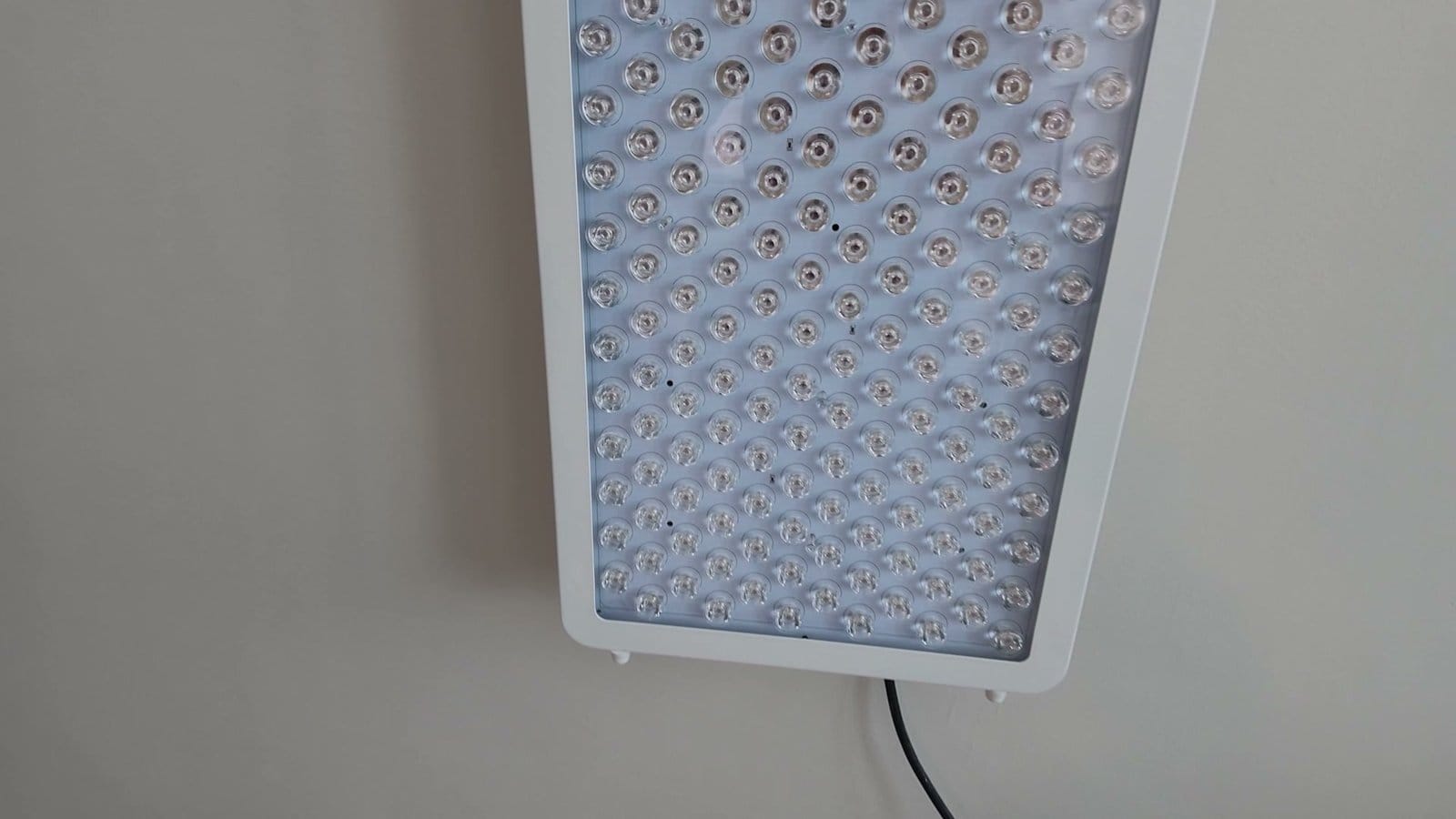
BestQool Pro300
300 dual-chip LEDs (630/940 nm and 660/850 nm), a built-in timer and simple one-touch controls. You can link a second Pro300 later. Free US shipping. Use code ALEX for 10% off.
Key Lab Results at a Glance
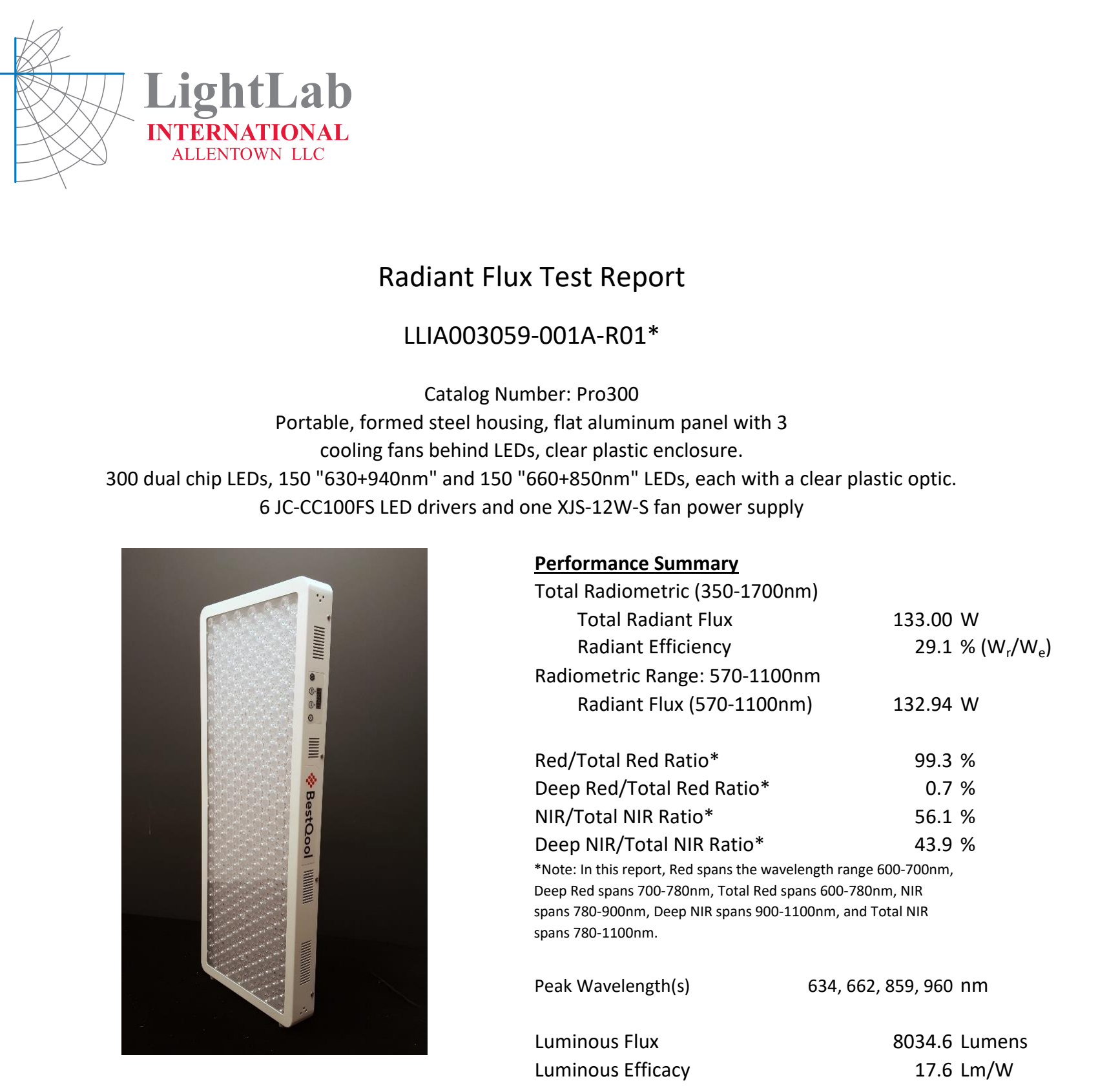
- Light output: 133 W of light from 458 W of power (29.1% efficient).
- Face area at 12 inches: 44.5 mW/cm² on average (5.4% variation).
- 24 × 30 in test area: 23.4 mW/cm² on average, with 41.0% of the area at 30 mW/cm² or more (8th of 11 for coverage).
- Red vs. near-infrared: 54.9% red and 45.1% near-infrared (=1st of 11 for balance).
- Stability: 90.6% of its starting output after 20 minutes.
- Wavelengths: 3 of my five core wavelengths cleared 0.5 W/nm; 810 nm, 830 nm didn't.
Here's how it scored in each round of my 2026 test:
| Round | Pro300 Score | Rank (of 11) |
|---|---|---|
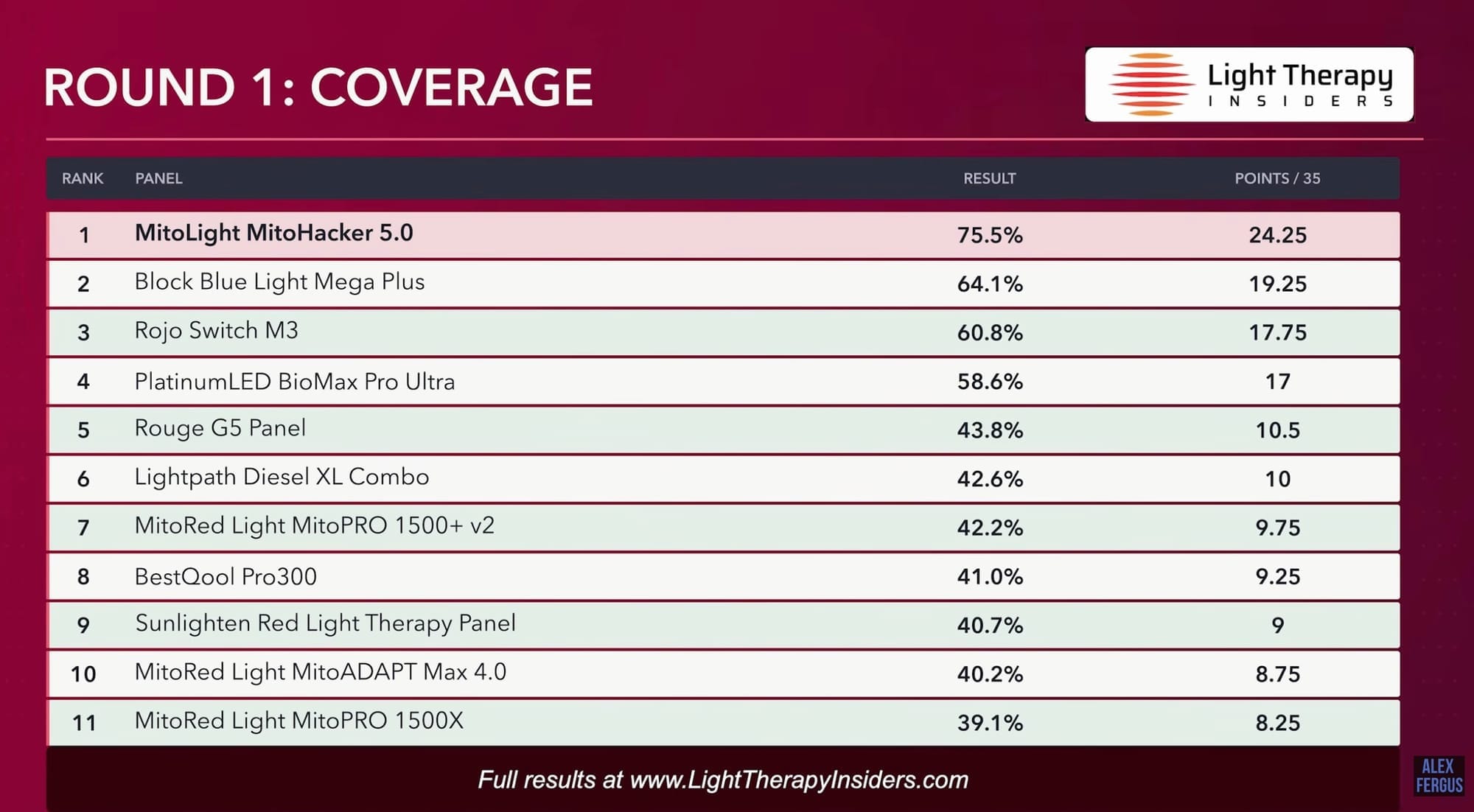
| 1. Coverage | 9.25 / 35 | 8th |
| 2. Average irradiance | 0.5 / 5 | =10th |
| 3. Uniformity | 1.5 / 10 | =5th |
| 4. Optical stability | 3.5 / 5 | 10th |
| 5. Wavelengths | 2 / 5 | =9th |
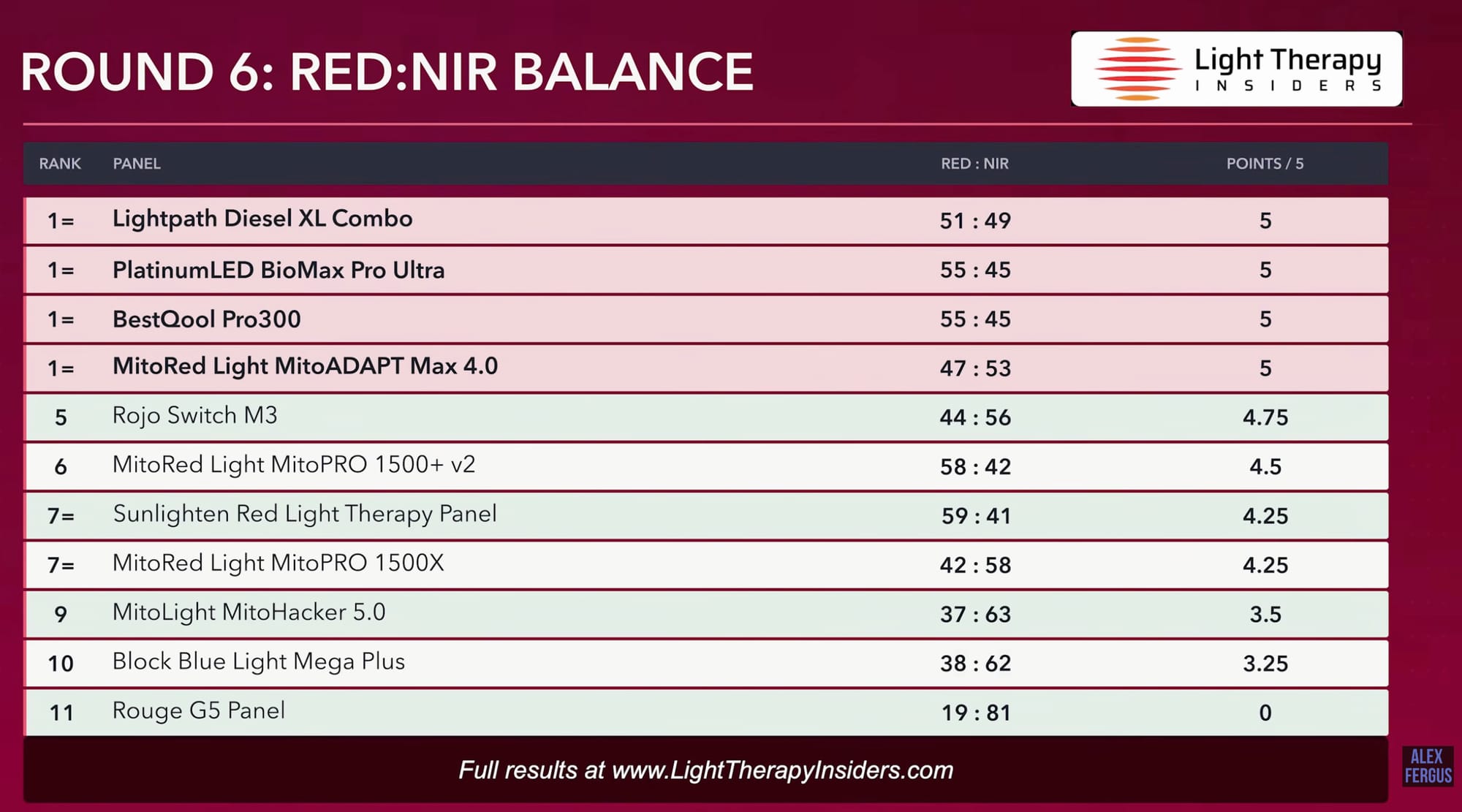
| 6. Red:NIR balance | 5 / 5 | =1st |
| 7. Ease of use | 5 / 15 | 11th |
| 8. Extras | 4 / 10 | =9th |
| 9. Price | 10 / 10 | 1st |
| Total | 40.75 / 100 | 10th |
What I Like
- The cheapest panel in my test by far: $810 delivered, $455 less than the next-cheapest, and my Best Value pick
- Well balanced at 54.9% red and 45.1% near-infrared, which earned full marks for balance
- Strong red output: 630 and 660 nm both cleared 1.3 W/nm, well above my 0.5 W/nm bar
- Fairly even for its size: =5th for uniformity, with 5.4% variation over the face area
- Simple to run, expandable to a second Pro300, and full marks for certification evidence
What Could Be Better?
- Low power: 23.4 mW/cm² on average across the 24 × 30 in test area, the lowest in my test, and about 44.5 mW/cm² over the face
- Only three of my five core wavelengths cleared 0.5 W/nm; 810 and 830 nm fell well short
- Output fell 9.4% over 20 minutes, 10th of 11 for stability
- No intensity control, wavelength selection, pulsing or smart modes: last of 11 for ease of use (5 of 15)
- A two-year standard warranty and 30-day returns (4 of 10 for extras)
BestQool Pro300 Specs vs. Lab Results
Here's what BestQool says about the Pro300, and what the independent lab measured:
| Spec | What BestQool Says | What the Lab Measured |
|---|---|---|
| LEDs | 300 dual-chip LEDs: 630 + 940 nm and 660 + 850 nm | 300 dual-chip LEDs (150 of each type) behind clear optics, with three cooling fans |
| Wavelengths | 630, 660, 850 and 940 nm | Peaks at 634, 662, 859 and 960 nm |
| Red vs. near-infrared | Not stated | 54.9% red, 45.1% near-infrared |
| Power | 500 W | 458 W drawn at 120 V |
| Light output | Not stated | 133 W of light: 29.1% of the power it draws |
| Irradiance | 106 mW/cm² at 3 in | 23.4 mW/cm² average over 24 × 30 in at 12 in; 44.5 mW/cm² over a face-sized area |
| Size and weight | 36.42 × 13.46 × 2.56 in, 19.11 lb | Not tested |
| Certifications | FDA Class II (510(k) exempt), CE and ETL | Not tested |
| Controls | Built-in auto timer | Not tested |
| List price (7 Nov) | $899 | Not applicable |
BestQool's 106 mW/cm² figure was measured at 3 inches, so it can't be compared directly with the lab's 12-inch readings. In the US, BestQool also sells an open-box refurbished Pro300 for $799 (checked 7 November).
What $810 Gets You: The Value Case
The Pro300 won my Best Value award for a simple reason: at $810 delivered, it cost $455 less than the next-cheapest panel in my test, and it's the only one under $1,000. That's also why it earned a perfect 10 for price. But a low price and good value aren't always the same thing, so here's how it compares on two measures:
| Panel | Price Tested | 2026 Score | Price per Point | Light Output | Price per Watt of Light |
|---|---|---|---|---|---|
| BestQool Pro300 | $810 | 40.75 (10th) | $19.88 | 133 W | $6.09 |
| PlatinumLED BioMax Pro Ultra | $1,610 | 63.25 (1st) | $25.45 | 276 W | $5.83 |
| Rojo Switch M3 | $1,562 | 61 (3rd) | $25.61 | 278 W | $5.62 |
| MitoRed Light MitoPRO 1500+ v2 | $1,265 | 44.5 (6th) | $28.43 | 154 W | $8.22 |
| Sunlighten Red Light Therapy Panel | $1,412 | 37.25 (11th) | $37.91 | 146 W | $9.67 |
Per point, nothing in my test comes close: about $20 per point, against roughly $25.50 for the BioMax Pro Ultra and Rojo Switch M3. Measured by the light you get for your money, though, it's a closer race. The Pro300 costs $6.09 per watt of light, while the Rojo ($5.62) and the BioMax ($5.83) deliver slightly more light per dollar and about twice as much light in total. (Rojo now offers a five-year warranty; it was three years when I tested it. With five years, the Switch M3 would have scored 63 points and placed 2nd.)
So the Pro300 is the cheapest way into a panel this size, not the cheapest light. If your budget stops at about $800, it's the panel I'd look at. If you can stretch to about $1,600, the BioMax Pro Ultra gives you roughly twice the light for twice the price, plus far better controls.
How I Tested the BestQool Pro300
The Pro300 went through exactly the same process as all 11 panels in my 2026 panel comparison, so its scores sit directly beside theirs.
- Independent lab measurements. LightLab International, a photometric lab in Allentown, Pennsylvania, ran three tests in September 2026: total light output and spectrum in a 2-metre integrating sphere, output over 20 minutes, and an irradiance map at 12 inches measured every 2 inches (test report LLIA003059-001).
- Why 12 inches. I now test at 12 inches rather than 6, because readings taken close to the LEDs overstate how evenly a panel treats your body. Here's why.
- Nine scored rounds, 100 points. Coverage (35), average irradiance (5), uniformity (10), output stability (5), wavelengths (5), red-to-near-infrared balance (5), ease of use (15), extras such as warranty, returns, certifications, noise and expandability (10), and price (10).
Each brand, including BestQool, paid LightLab for its own panel’s testing and provided its panel free of charge. The Pro300's scores use exactly the same lab data and scoring as every other panel.
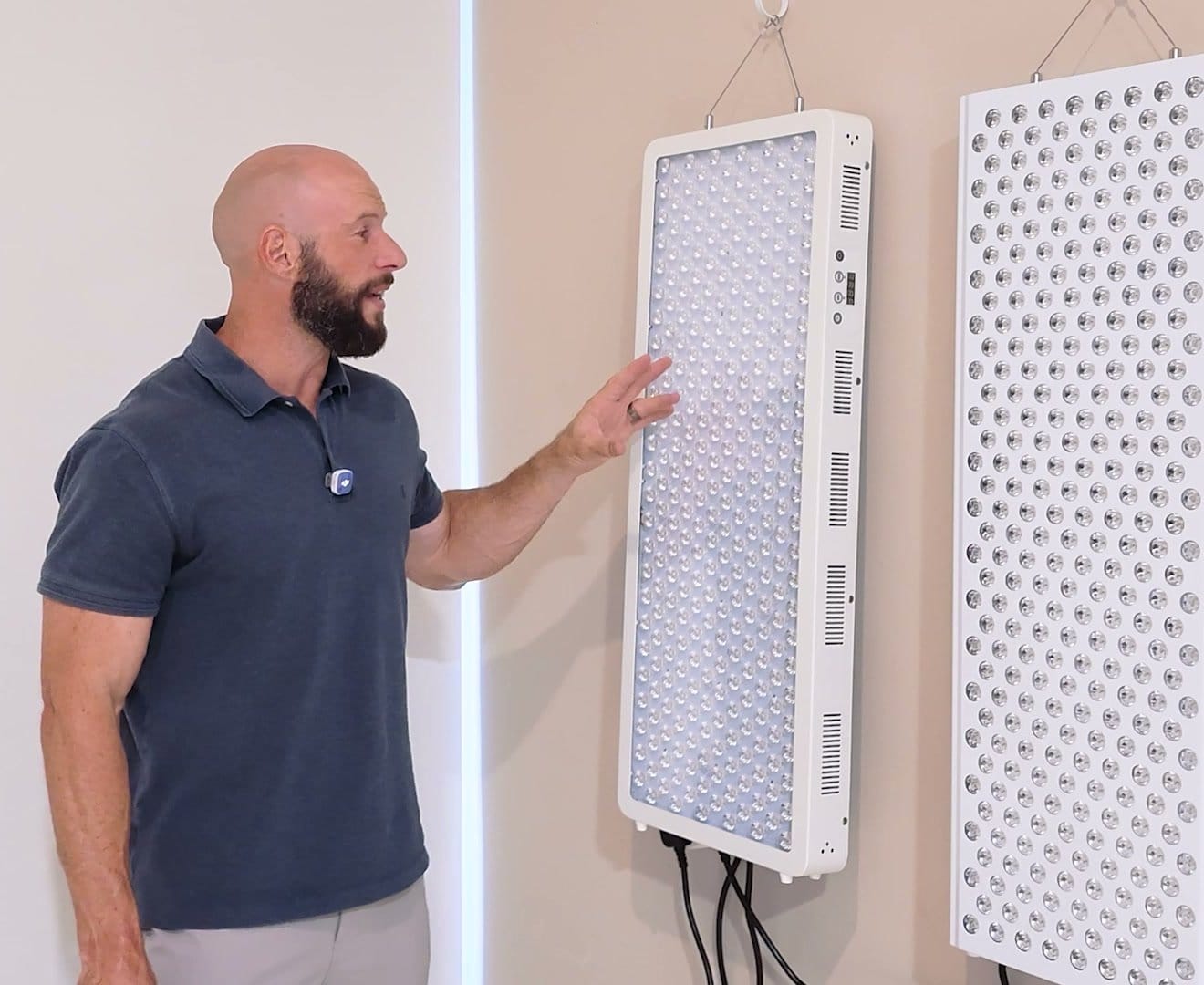
I also reviewed the Pro300 on its own before the 2026 lab test. Here's that original video:
Lab Results: How the BestQool Pro300 Performed
Coverage and Power at 12 Inches
Across the standard 24 × 30 in treatment area, the Pro300 averaged 23.4 mW/cm² (=10th of 11 for average irradiance), and 41.0% of the area got at least 30 mW/cm² (8th for coverage).
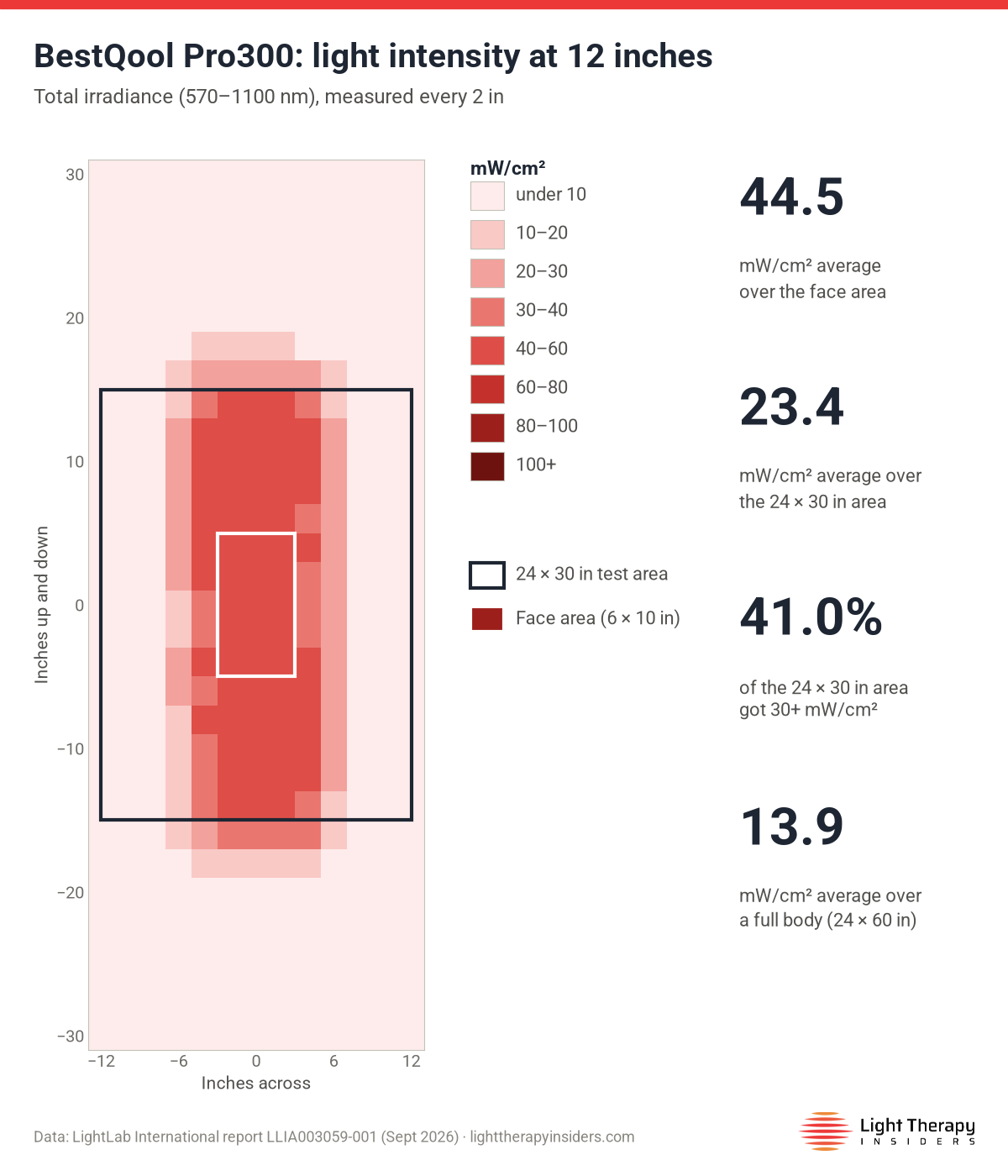
The heat map shows a block of light roughly 8 to 10 inches wide and 24 inches tall, at about 35–53 mW/cm², falling away sharply on either side. Across a full 24 × 60 in body area it averaged 13.9 mW/cm², the lowest of the 11 panels.
Here's how the light holds up as the treatment area grows:
| Area at 12 in | Average (mW/cm²) | Lowest (mW/cm²) | Area at 30+ mW/cm² | Variation |
|---|---|---|---|---|
| Face (6 × 10 in) | 44.5 | 40.4 | 100% | 5.4% |
| Test area (24 × 30 in) | 23.4 | 1.9 | 41% | 86.2% |
| Full body (24 × 60 in) | 13.9 | 0.5 | 21.5% | 131.9% |
Evenness
Overall uniformity (average ÷ peak across the 24 × 30 in area) was 43.9%, =5th of 11. Over a face-sized area at the centre, the light ranged from 40.4 to 48.9 mW/cm², varying by 5.4%. Within that block the light is fairly consistent, but it fades quickly once you move beyond the panel's edges, so it suits the face and smaller areas better than large ones.
Output Over a Session
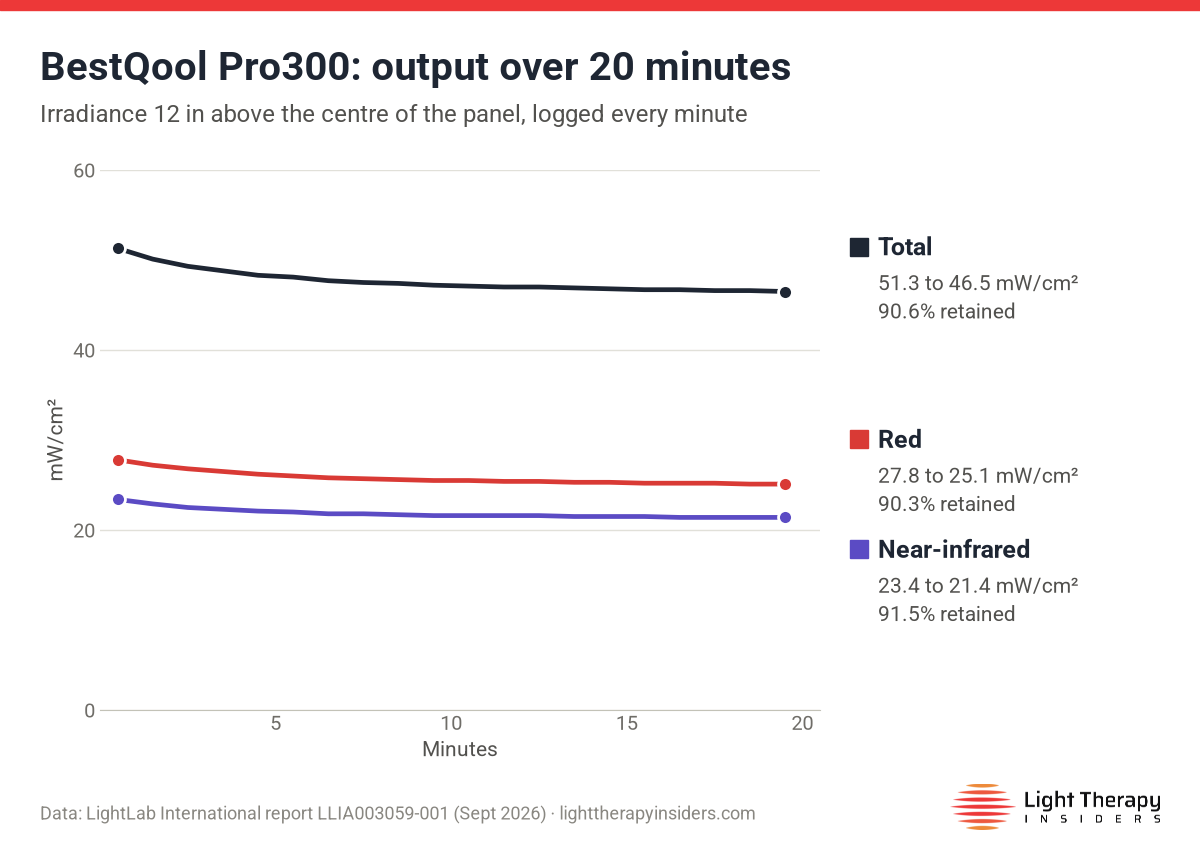
After 20 minutes the Pro300 still delivered 90.6% of its starting output, 10th of 11 for stability (3.5 of 5 points). Red held at 90.3% and near-infrared at 91.5%.
As the LEDs warmed up, the peaks moved slightly longer, by up to 4 nm:
| Peak | After 30 sec | After 14.5 min | After 19.5 min |
|---|---|---|---|
| Red | 631 nm | 634 nm | 634 nm |
| Red | 660 nm | 662 nm | 662 nm |
| Near-infrared | 854 nm | 858 nm | 858 nm |
| Deep near-infrared | 956 nm | 959 nm | 960 nm |
Wavelengths
The lab found peaks at 634, 662, 859 and 960 nm. Only three of my five core wavelengths (630 nm and 660 nm and 850 nm) cleared the 0.5 W/nm bar. That earns 2 points, =9th of 11 for wavelengths.
| Wavelength | Measured (W/nm) | Counts in My Test? |
|---|---|---|
| 590 nm (bonus) | 0.002 | ✗ No |
| 630 nm | 1.346 | ✓ Yes |
| 660 nm | 1.610 | ✓ Yes |
| 810 nm | 0.105 | ✗ No |
| 830 nm | 0.330 | ✗ No |
| 850 nm | 0.679 | ✓ Yes |
| 1064 nm (bonus) | 0.000 | ✗ No |
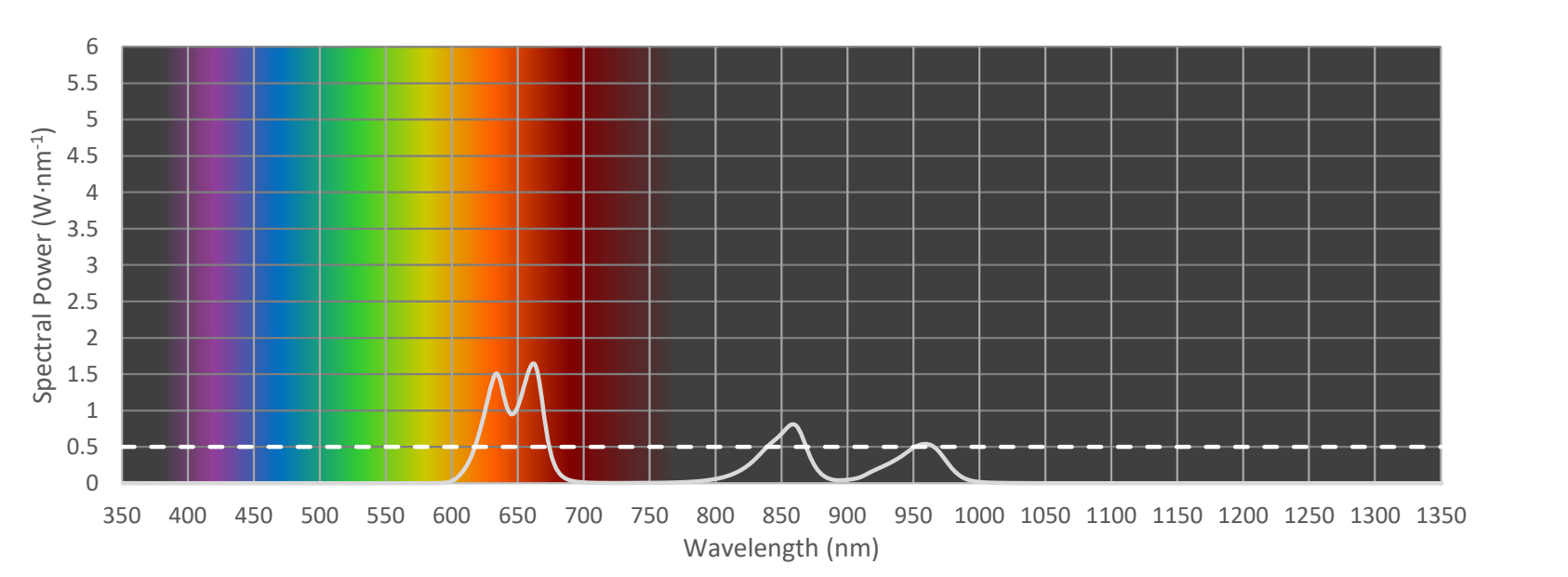
Those peaks match all four wavelengths BestQool advertises. What's missing is the 810–830 nm range: 810 nm measured just 0.11 W/nm and 830 nm 0.33 W/nm. Instead, about a fifth of its light (19.8%) sits at 900–1100 nm, from its 940 nm LEDs. I don't score 940 nm, because I don't find the evidence for it compelling enough. I'd rather see 810 nm or 830 nm alongside 850 nm.
Red vs. Near-Infrared Balance
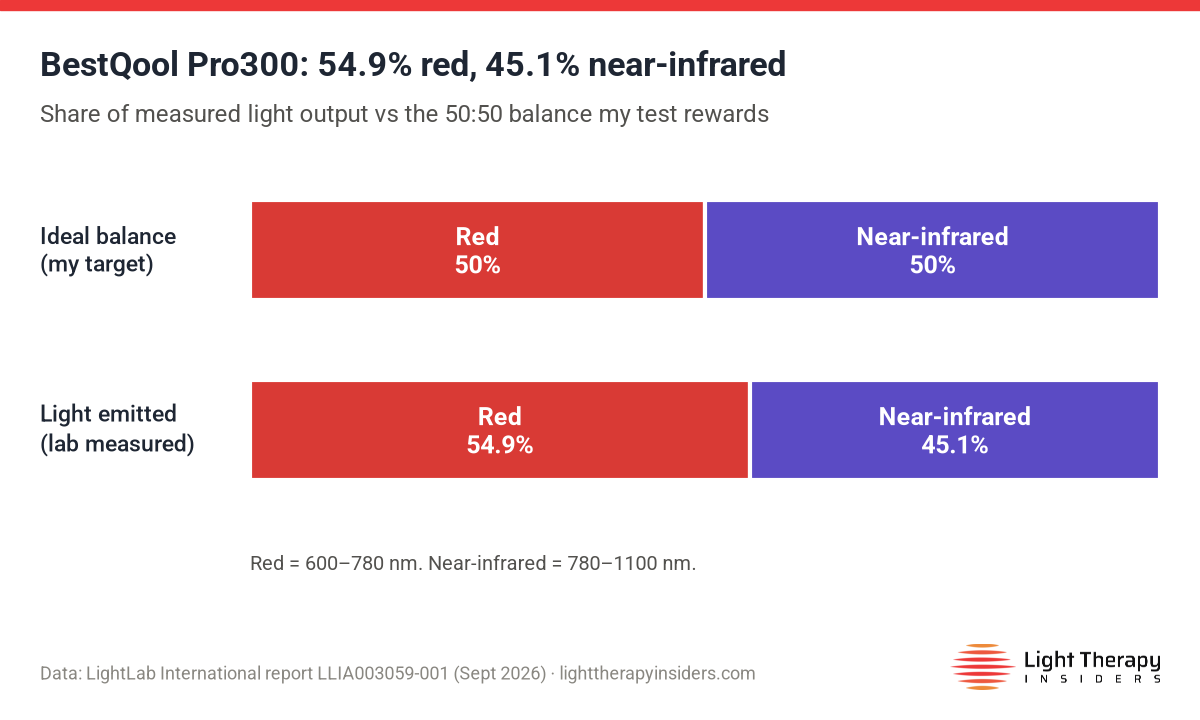
54.9% of the Pro300's light is red (600–780 nm) and 45.1% near-infrared (780–1100 nm). That's close to the 50:50 balance my test rewards, so it earned the full 5 points, tied with three other panels. Red is the range most studied for skin, while near-infrared reaches deeper tissue, so this mix suits both, although nearly half of its near-infrared is at 940–960 nm.
The lab's breakdown of where the light goes:
| Waveband | Light Output | Share |
|---|---|---|
| Red (600–700 nm) | 72.40 W | 54.4% |
| Deep red (700–780 nm) | 0.50 W | 0.4% |
| Near-infrared (780–900 nm) | 33.64 W | 25.3% |
| Deep near-infrared (900–1100 nm) | 26.29 W | 19.8% |
| Total light output | 133.00 W | 100% |
Using the BestQool Pro300
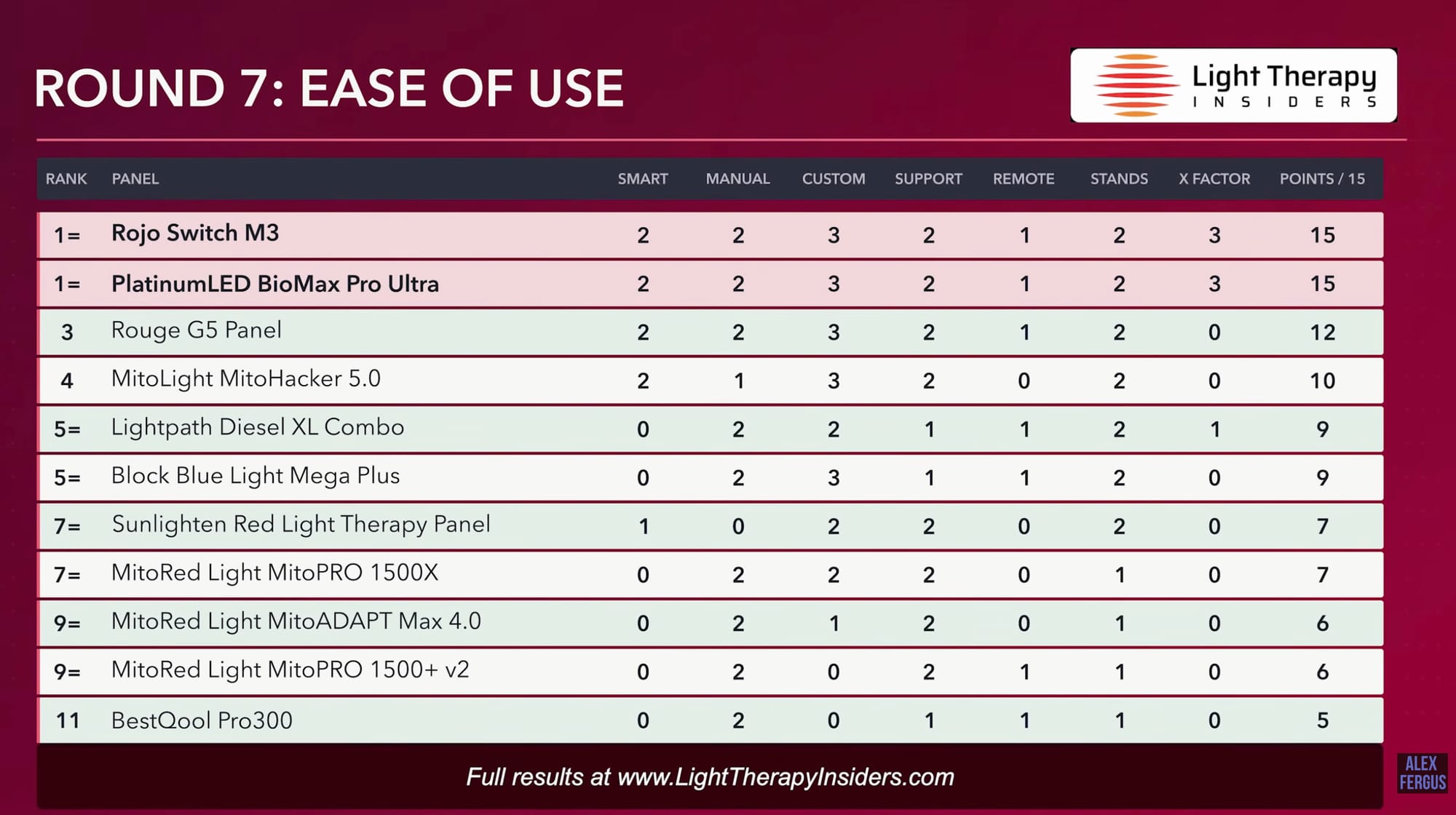
It scored 5 of 15 for ease of use, last of the 11. It's easy to start, and it earned full marks for its printed manual, but it got nothing for smart modes or customisation, because you can't change the intensity or choose wavelengths, and no X-factor points.
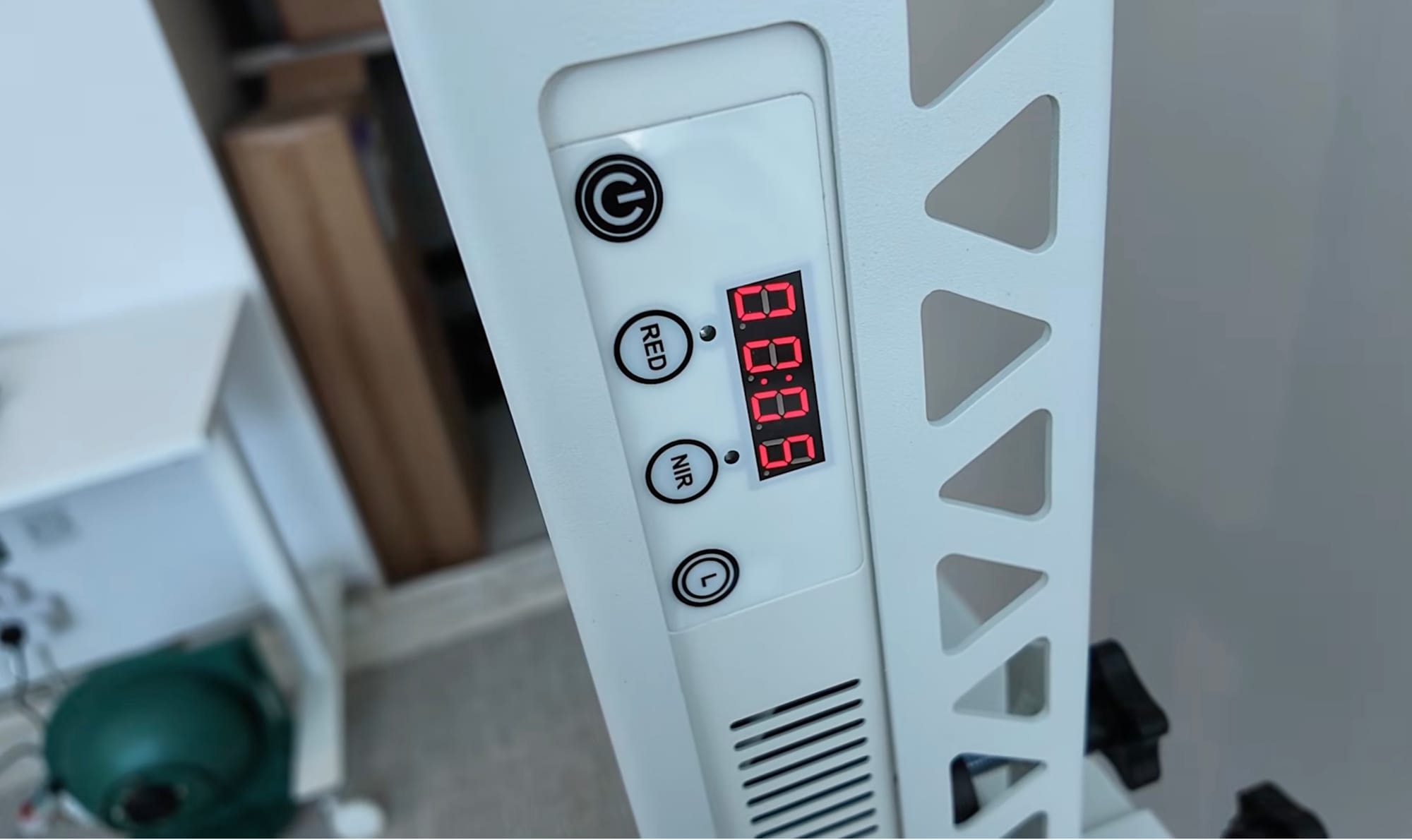
- Simple start: press power, then start, and the session begins after a five-second countdown
- Built-in timer with a small display. The screen and buttons feel basic for the money
- No customisation: you can't adjust intensity, choose wavelengths, pulse the light or pick a smart mode
- Expandable: link a second Pro300 with the included splicing plate
- In the box: door hook, adjustable rope, braided steel cables, goggles and a printed manual
- Stands (extra): the Adjustable Mobile Stand ($269) or the Universal Stand ($399). I tried the Universal Stand and liked it: it holds a panel horizontally or vertically and fits most panels
A Starting Protocol
These starting points are based on what the research suggests for skin and on the lab's measurements at 12 inches.
- Face and skin: aim for about 5–9 J/cm². At 12 inches the Pro300 delivers about 44 mW/cm² over the face with every wavelength on, so that dose takes roughly 1.9 to 3.4 minutes.
- Joints, muscles and recovery: 5–10 minutes per area at 12 inches. My dosing chart shows the ranges studies have used.
- Eyes: wear eye protection. Near-infrared is invisible, and these panels are bright. More in my eye safety guide.
Price, Shipping, Warranty and Returns
I priced every panel the same way: delivered to Austin, Texas, after my discount code or link, with shipping and tax included. On that basis the Pro300 cost $810 at the time of filming and scored 10 of 10 for price (1st of 11).
- Discount: code ALEX takes 10% off at BestQool (already counted in the $810). The list price was $899 when I checked on 7 November.
- Shipping: free in the mainland US. Outside the US, duties and import taxes are extra.
- Warranty: two years, plus a free one-year extension if you register the panel within 14 days of purchase. My test scored the standard two years (0 of 3).
- Returns: 30 days with no restocking fee, though you pay return shipping (1 of 3).
- Stands: sold separately: the Adjustable Mobile Stand ($269) or the Universal Stand ($399).
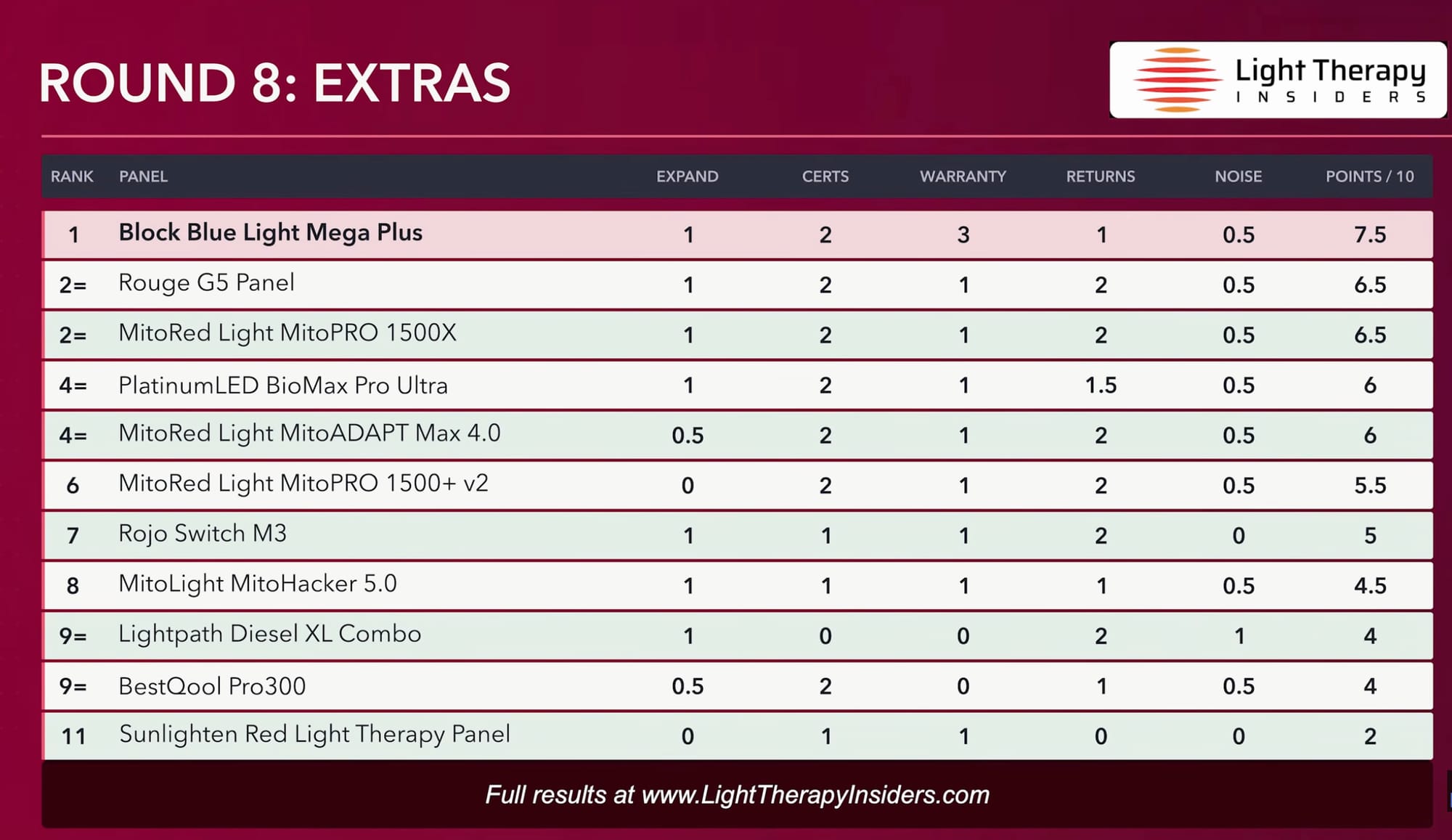
Overall it scored 4 of 10 for extras (=9th): 0.5 of 1 for expandability, 2 of 2 for certification evidence, 0 of 3 for warranty, 1 of 3 for returns and 0.5 of 1 for noise (40–50 dB).
Who Should Buy the BestQool Pro300?
Buy it if you:
- Have a firm budget of about $800
- Mainly want a panel for your face, skin or smaller areas
- Want a simple panel with no settings to learn
- Live in the US, where shipping is free
Look elsewhere if you:
- Want to treat large areas or use the panel from farther away
- Want intensity control, smart modes or an app
- Want strong 810 or 830 nm near-infrared
- Can stretch to $1,610: the BioMax Pro Ultra delivers about twice the light and won my test
BestQool Pro300 vs. the Alternatives
Here's how the Pro300 compares with the panels around it in my 2026 test (all measured at 12 inches over the same 24 × 30 in area, and priced delivered to Texas after discount codes, with shipping and tax):
| Panel | 2026 Score | Area at 30+ mW/cm² | Avg. Irradiance (mW/cm²) | Red Share | Price Tested |
|---|---|---|---|---|---|
| PlatinumLED BioMax Pro Ultra | 63.25 (1st) | 58.6% | 48.6 | 54.7% | $1,610 |
| MitoRed Light MitoPRO 1500+ v2 | 44.50 (6th) | 42.2% | 28.7 | 58.1% | $1,265 |
| MitoRed Light MitoPRO 1500X | 43.50 (7th) | 39.1% | 25.6 | 41.8% | $1,335 |
| Lightpath Diesel XL Combo | 41.25 (9th) | 42.6% | 23.7 | 51.0% | $1,732 |
| BestQool Pro300 | 40.75 (10th) | 41.0% | 23.4 | 54.9% | $810 |
| Sunlighten Red Light Therapy Panel | 37.25 (11th) | 40.7% | 28.8 | 59.4% | $1,412 |
Best Overall Alternative: PlatinumLED BioMax Pro Ultra
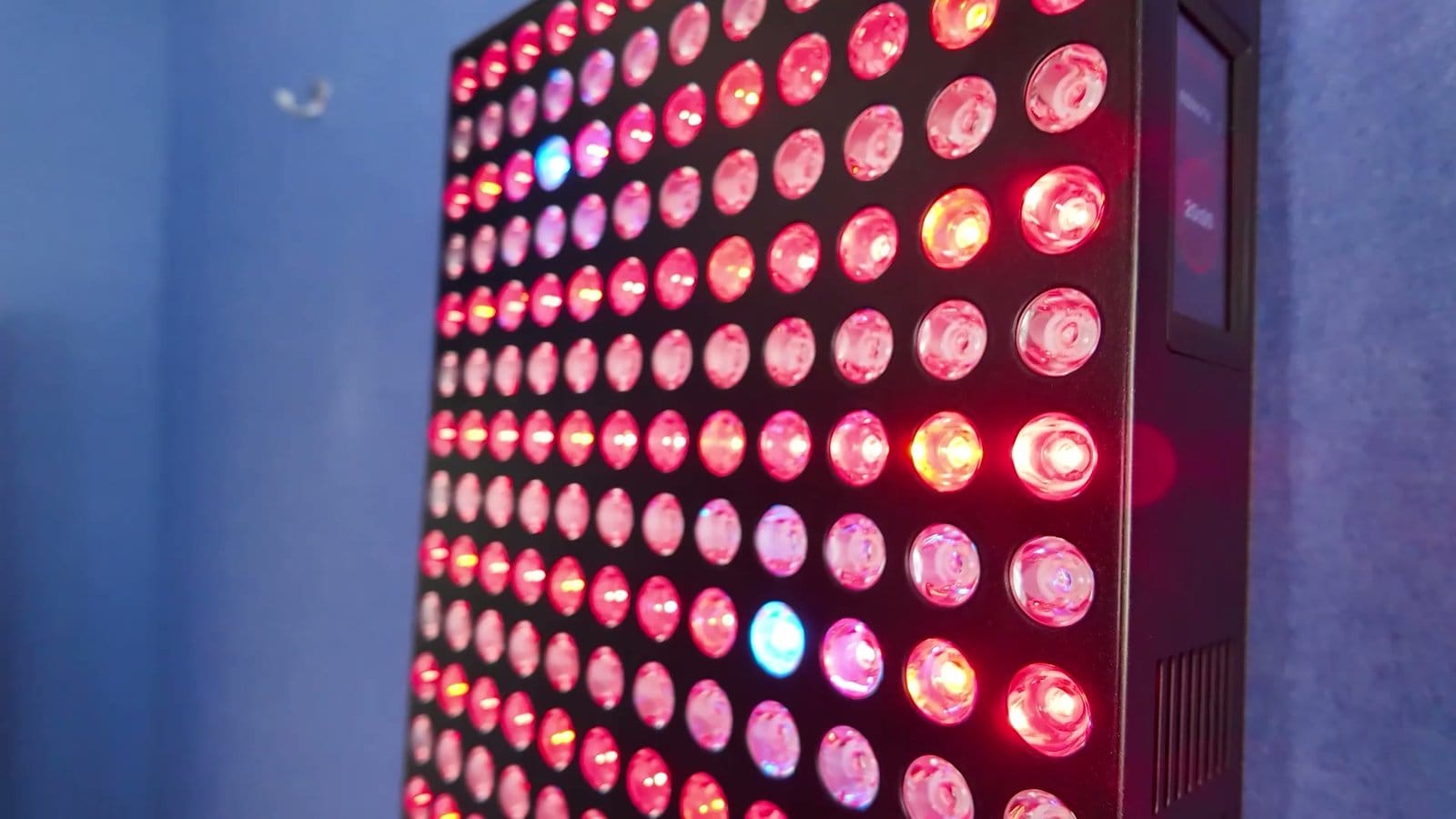
PlatinumLED BioMax Pro Ultra (2026 winner)
$800 more delivered, but it won my test: about double the average irradiance (48.6 vs. 23.4 mW/cm²) and total light (276 vs. 133 W), all five core wavelengths, a similar red share (54.7%), steadier output and full marks for ease of use. 5% off through my link.
Read my full PlatinumLED BioMax Pro Ultra review.
Cheapest Step Up: MitoRed Light MitoPRO 1500+ v2
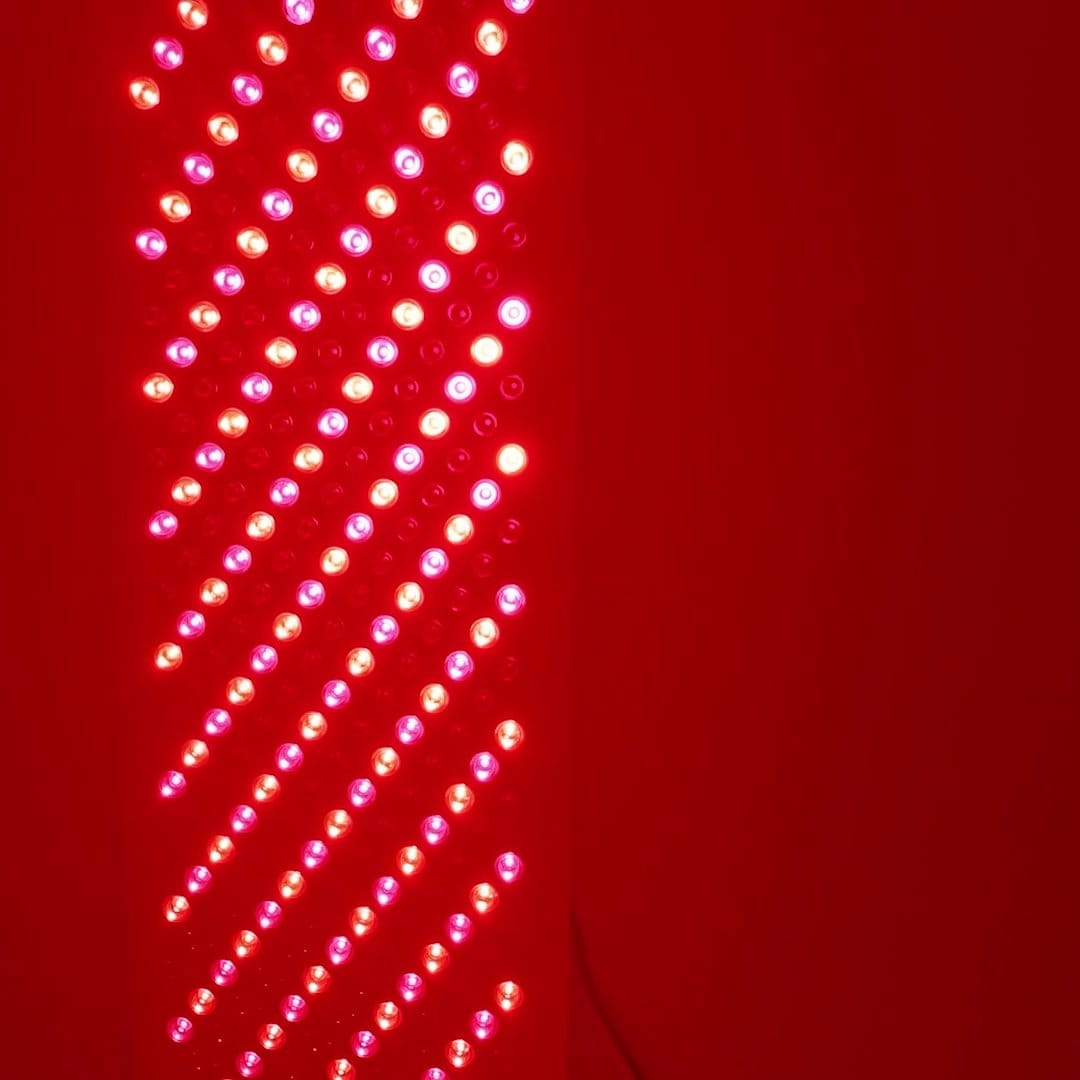
MitoRed Light MitoPRO 1500+ v2 (6th)
$455 more delivered: all five core wavelengths, more average irradiance (28.7 vs. 23.4 mW/cm²), even more red light (58.1%), very steady output, a 3-year warranty and 60-day returns. Its controls are simple too. 5% off through my link.
Read my full MitoRed Light MitoPRO 1500+ v2 review.
Other Panels to Consider
- vs. MitoRed Light MitoPRO 1500X: $525 more ($1,335), 7th, with all five core wavelengths, a touchscreen and an app. MitoPRO 1500X review
- vs. Lightpath Diesel XL Combo: $922 more ($1,732), 9th: very even and quiet, with blue light, but only two core wavelengths. Lightpath Diesel XL Combo review
- vs. Sunlighten Red Light Therapy Panel: $602 more ($1,412), 11th: stronger over the face (69.4 vs. 44.5 mW/cm²) and very steady, but with no controls on the panel. Sunlighten panel review
⭐ My Reviews ⭐
BestQool Pro300 FAQ
Is the BestQool Pro300 worth it?
If your budget is about $800, yes. It's the cheapest panel I tested by $455 and won my Best Value award, with well-balanced light and strong red output. It placed 10th of 11 overall, though, so if you can spend more, the BioMax Pro Ultra ($1,610) delivers about twice the light and won the test.
BestQool Pro300 vs. PlatinumLED BioMax Pro Ultra: which is better?
The BioMax Pro Ultra, by a wide margin: 63.25 vs. 40.75 points, about double the average irradiance (48.6 vs. 23.4 mW/cm²) and far better controls. It also costs about twice as much ($1,610 vs. $810 delivered). Per watt of light, the two are close: $5.83 vs. $6.09.
Is the BestQool Pro300 good for skin?
It's a reasonable choice for skin. 54.9% of its light is red, with strong 630 and 660 nm output. At 12 inches it delivers about 44 mW/cm² over the face, so a 5–9 J/cm² dose takes roughly 2 to 3½ minutes.
What does the 940 nm light do?
BestQool pairs 940 nm chips with its 630 nm chips, and about a fifth of the panel's light (19.8%) is at 900–1100 nm. I don't count 940 nm in my scoring, because I don't find the evidence for it compelling enough. I'd rather see stronger 810 or 830 nm output.
Can you connect two Pro300 panels?
Yes. Two Pro300s can be joined with the included splicing plate, and BestQool sells two-panel bundles with a stand (from $2,097 at list price on 7 November). At that point, though, the BioMax Pro Ultra costs less and won my test.
What's the warranty and return policy?
Two years, plus a free one-year extension if you register the panel within 14 days of purchase. Returns are 30 days with no restocking fee, but you pay return shipping.
Is it loud?
It's moderate. It measured between 40 and 50 dB in my test, scoring 0.5 of 1 for noise. It has three cooling fans.
Is there a BestQool discount code?
Yes. Code ALEX takes 10% off at BestQool. See my discount codes page for other brands.
Final Thoughts
The Pro300 is a straightforward budget panel. The lab confirmed all four of its advertised wavelengths and a well-balanced, red-strong mix, and at $810 delivered it's by far the cheapest panel I tested. That's why it won my Best Value award.
But cheap isn't the same as good value for every buyer. It had the lowest average irradiance in my test, it misses 810 and 830 nm, its output drops as it warms up, and its controls are very basic. If your budget stops at about $800 and you mainly want it for skin, it's a sensible pick. If you can spend more, the BioMax Pro Ultra gives you about twice the light.
Score: 40.75 out of 100, 10th of 11 in my 2026 panel test.
- Buy the Pro300 if your budget is about $800 and you want a simple, half-body panel: check the BestQool Pro300 price and use code ALEX for 10% off.
- If you can stretch further, the PlatinumLED BioMax Pro Ultra won the 2026 test and delivers about twice the light. The link takes 5% off.
Items Mentioned
🔥🔥 Check this blog daily for the latest Red Light Therapy Black Friday and Cyber Monday deals: https://aferg.co/black-friday-cyber-monday 🔥🔥
⭐ Sunlighten- Use code Fergus at https://aferg.co/sunlighten
⭐ Mito Light Europe - Use code ALEX at https://aferg.co/mitolight for 5% off!
⭐ MitoRed Light - use https://aferg.co/7d221 for 5% off sitewide.
⭐ Rojo Light Therapy - Use discount code ALEX at https://aferg.co/rojo-rlt for 10% off.
⭐ LightpathLED - Use discount code ALEX at https://aferg.co/lightpathled to get 5% off.
⭐ BestQool - use code ALEX at https://aferg.co/Bestqool to save 10%.
⭐ Block Blue Light - Use this link: https://aferg.co/BlockBlueLight to save 15% on Block Blue Light's products. The discount will automatically be applied at checkout.
⭐ PlatinumLED Therapy Lights- Use the discount link https://aferg.co/redled to save 5%
⭐ Rouge - Use discount code ALEX at https://aferg.co/rougecare for $50 off.
✨ Have you explored my website ✨
Discover guides, reviews, and insights to help you make the most of light therapy
Alex's Bio
Alex Fergus wrote this blog post. Alex is an ISSN Sports Nutrition Specialist, Fitness Professional, and certified Superhuman Coach who continues to expand his knowledge base and help people across the world with their health and wellness. Alex is recognized as the National Record Holder in Powerlifting and Indoor Rowing and has earned the title of the Australian National Natural Bodybuilding Champion. Having worked as a health coach and personal trainer for over a decade, Alex now researches all things health and wellness and shares his findings on this blog.