
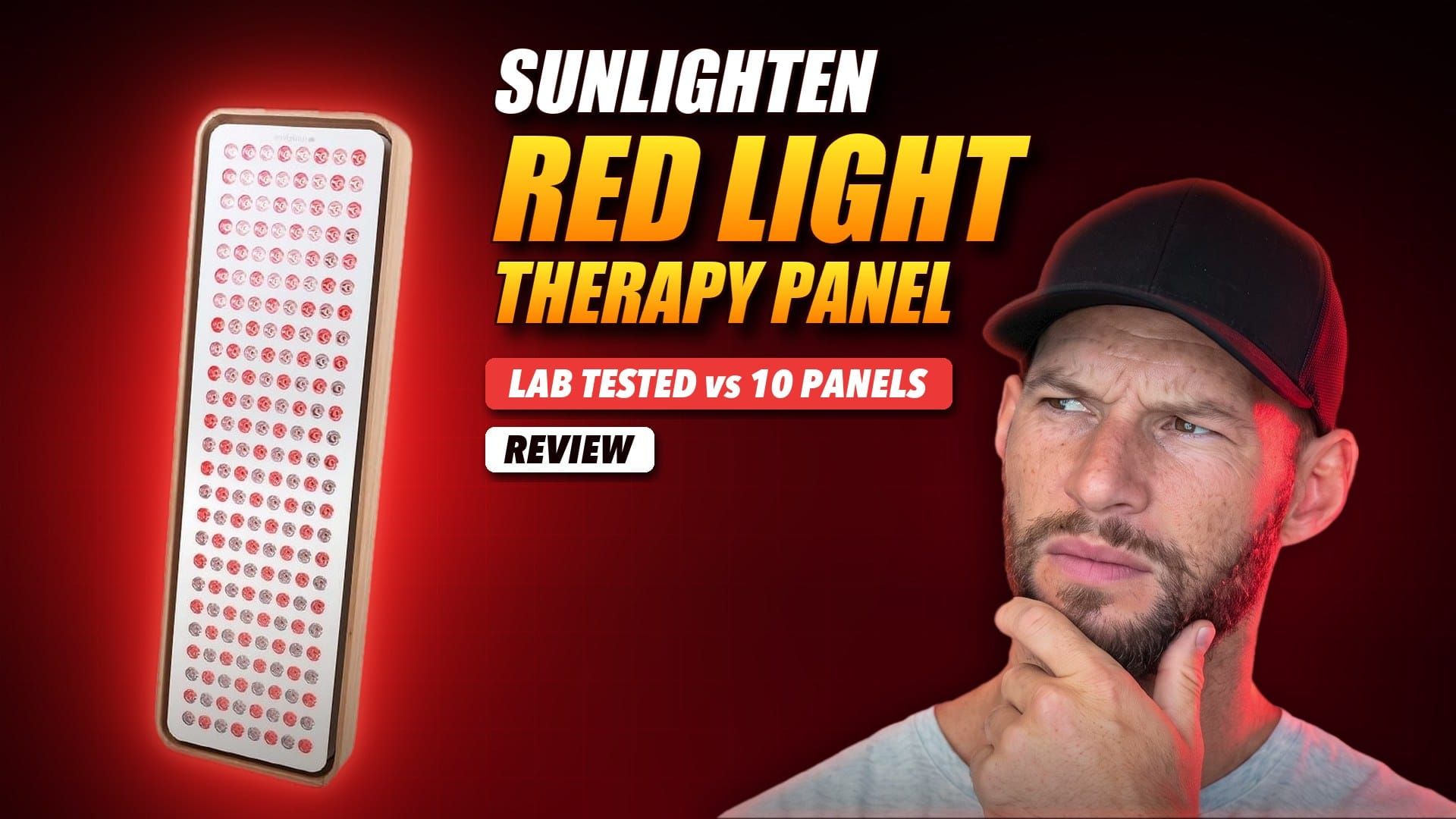
Sunlighten is one of the biggest names in infrared saunas, and its Red Light Therapy Panel is its first dedicated panel. It looks unlike anything else in my test: 200 LEDs in a handcrafted eucalyptus wood frame, designed to sit in a wellness room next to a sauna. I put it through the same independent lab tests as the 10 other panels in my 2026 panel comparison.
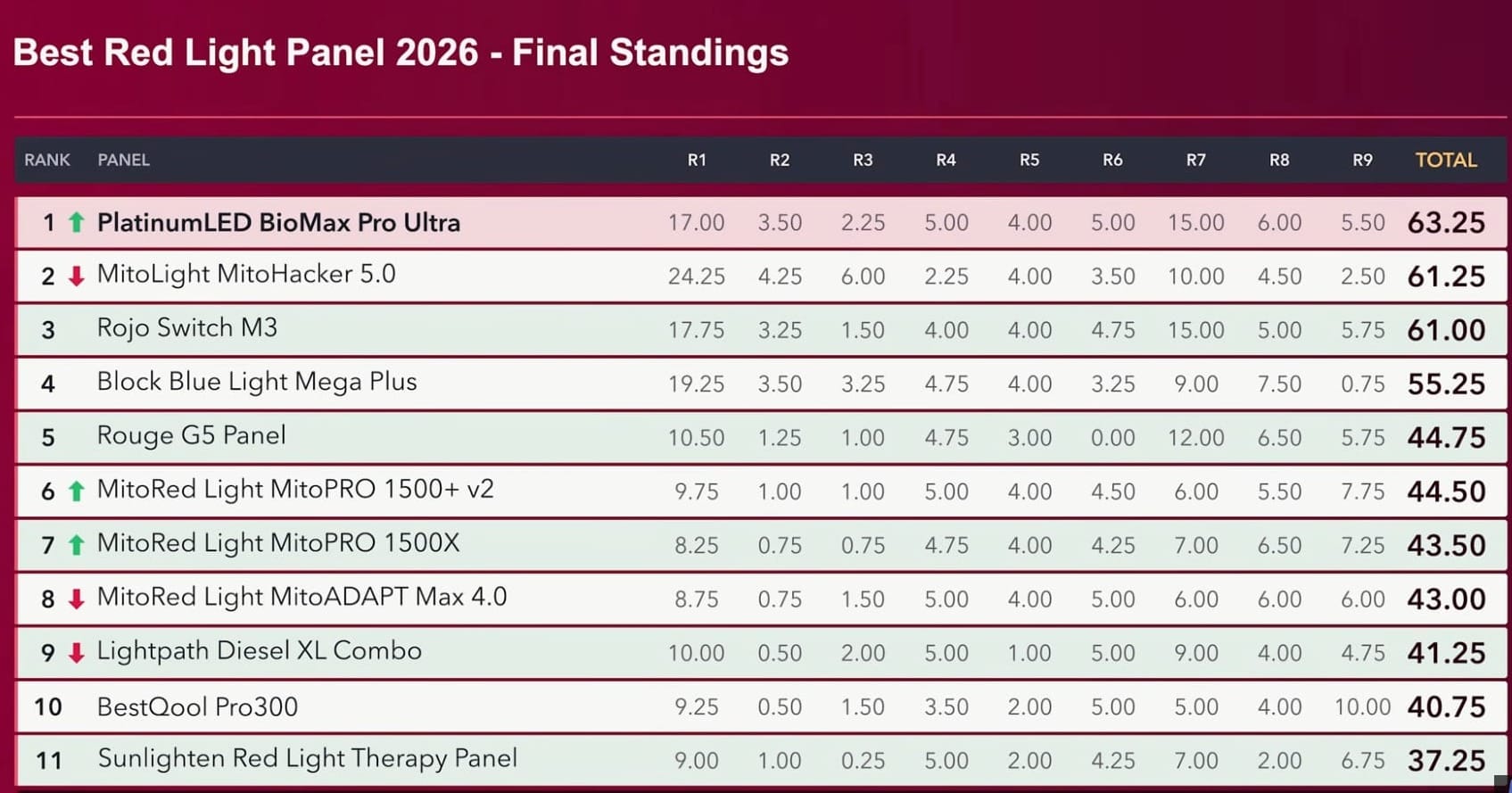
It finished 11th of 11 with 37.25 points. Its light is strong over a small area, the reddest in the test and one of the steadiest, but it lost heavily on evenness, extras and controls. Below, you'll find the lab's own measurements, including a heat map of its light, its spectrum and its output over a full session, plus the big thing this panel is missing and who it still suits.
🏆 Quick Answer: Is the Sunlighten Red Light Therapy Panel Worth It?
Score: 37.25 out of 100, 11th of 11 in my 2026 panel test.
The Sunlighten delivers strong, red-rich light over a face-sized area, with the second-strongest 660 nm output and the second-smallest drop in output in my test. But its light is concentrated in a narrow column (11th for uniformity), there are no controls on the panel itself, and it had the lowest extras score. At $1,412 delivered, rivals do more for the money.
- Best for: Sunlighten sauna owners and anyone who wants a beautiful, furniture-like panel in a wellness room, mainly for the face and skin.
- Not ideal for: anyone who wants controls on the panel, wide coverage, a modular system or the best value for money.
- Price when tested: $1,412 delivered to Austin, Texas, after code Fergus, with shipping and tax included.
- Stronger choices: the PlatinumLED BioMax Pro Ultra (1st, 63.25 points, $1,610) for $198 more, or the MitoRed Light MitoPRO 1500+ v2 (6th, 44.5 points), which costs $147 less.
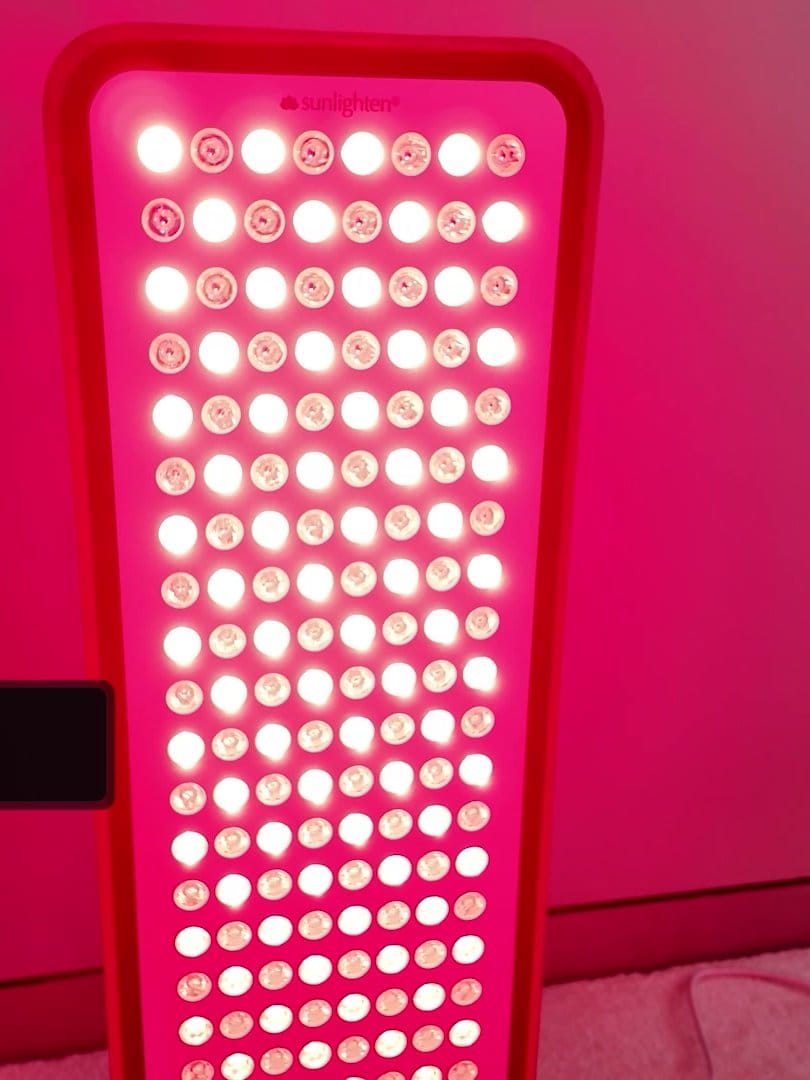
Sunlighten Red Light Therapy Panel
200 LEDs (100 red at 660 nm, 100 near-infrared at 850 nm) in a handcrafted eucalyptus wood frame, with a rechargeable remote and an app with 20+ guided programs. 3-year warranty. Use code Fergus at checkout.
Key Lab Results at a Glance
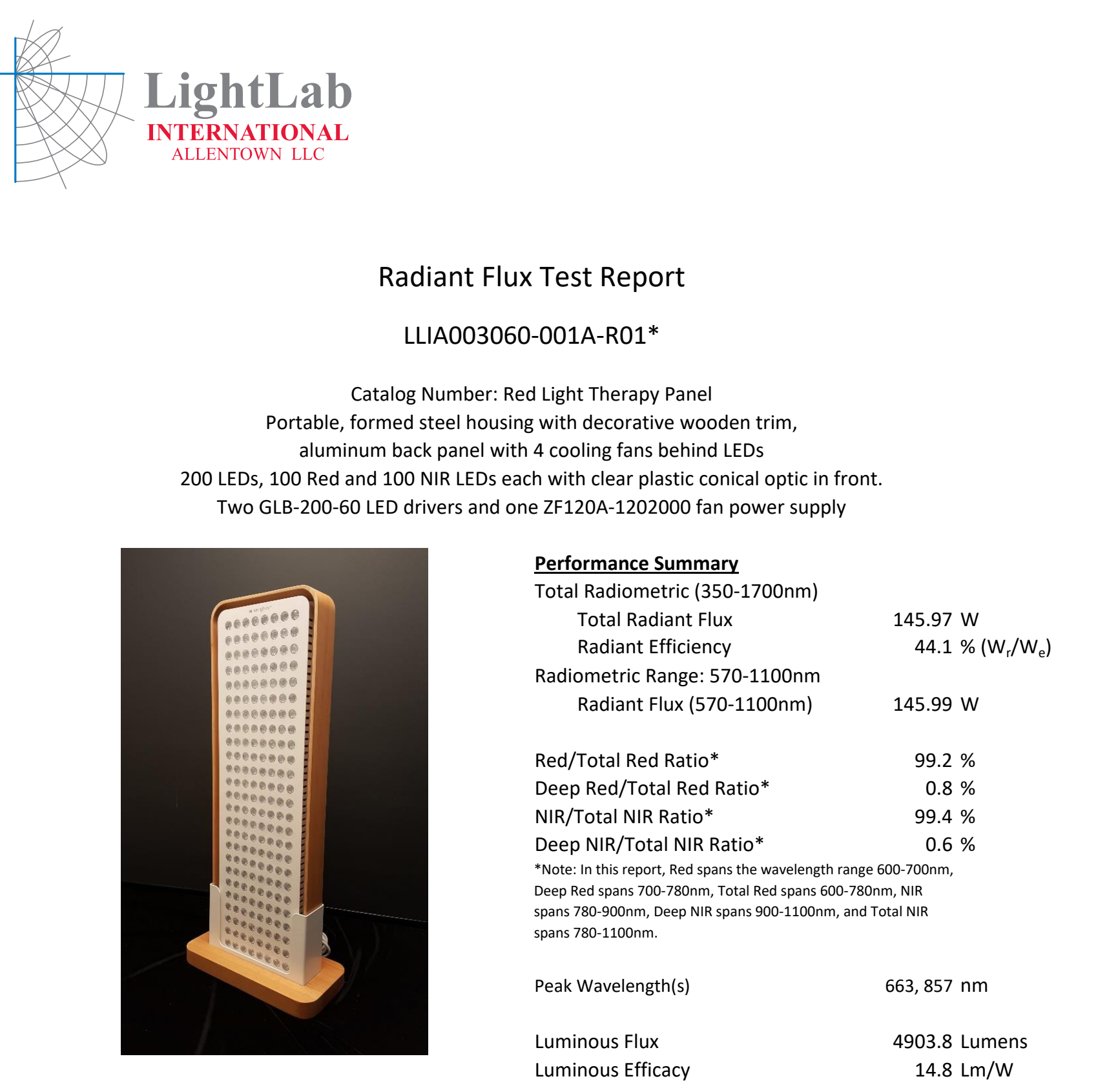
- Light output: 146 W of light from 331 W of power (44.1% efficient).
- Face area at 12 inches: 69.4 mW/cm² on average (4.7% variation).
- 24 × 30 in test area: 28.8 mW/cm² on average, with 40.7% of the area at 30 mW/cm² or more (9th of 11 for coverage).
- Red vs. near-infrared: 59.4% red and 40.6% near-infrared (=7th of 11 for balance).
- Stability: 98.4% of its starting output after 20 minutes.
- Wavelengths: 3 of my five core wavelengths cleared 0.5 W/nm; 630 nm, 810 nm didn't.
Here's how it scored in each round of my 2026 test:
| Round | Sunlighten Panel Score | Rank (of 11) |
|---|---|---|
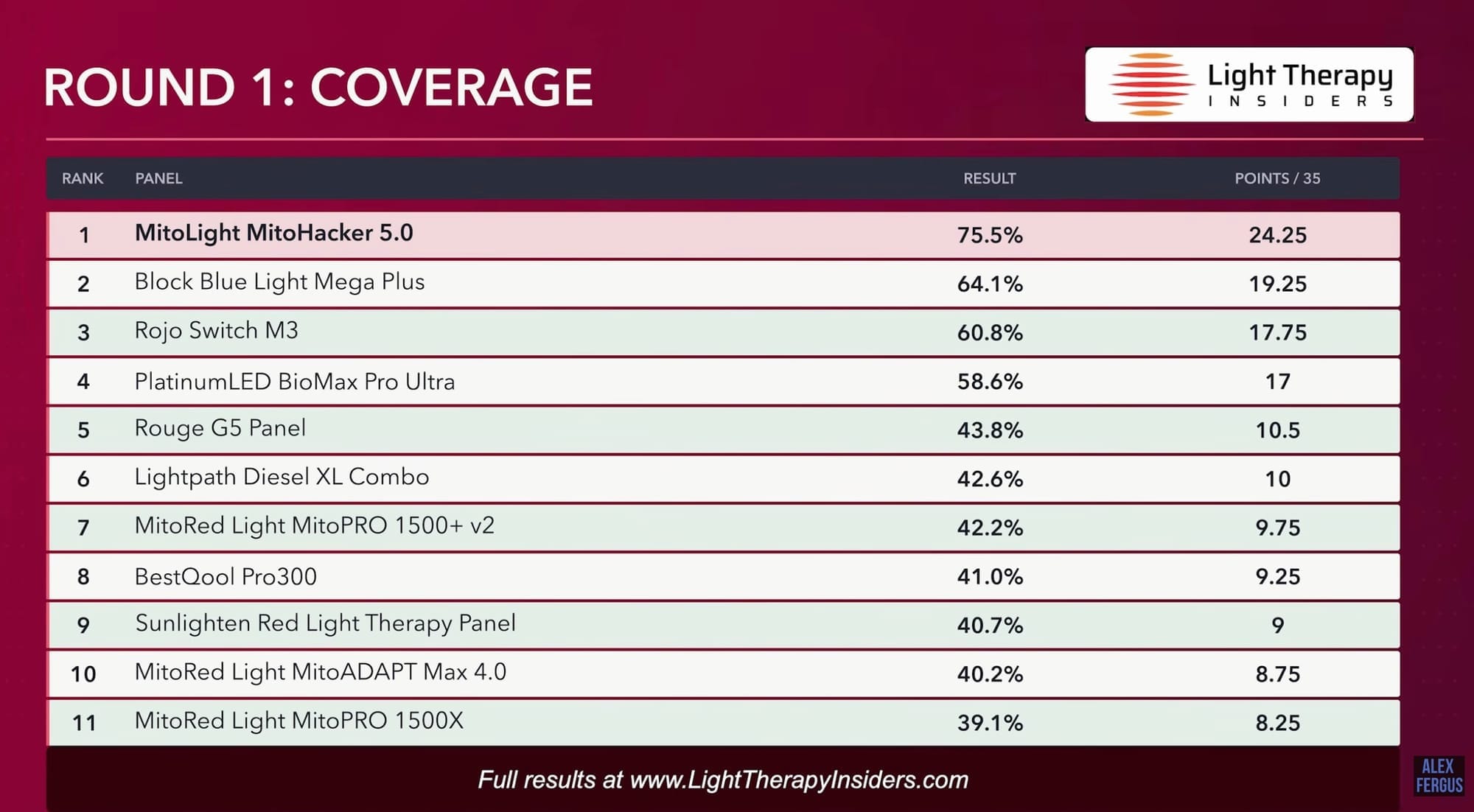
| 1. Coverage | 9 / 35 | 9th |
| 2. Average irradiance | 1 / 5 | =6th |
| 3. Uniformity | 0.25 / 10 | 11th |
| 4. Optical stability | 5 / 5 | =1st |
| 5. Wavelengths | 2 / 5 | =9th |
| 6. Red:NIR balance | 4.25 / 5 | =7th |
| 7. Ease of use | 7 / 15 | =7th |
| 8. Extras | 2 / 10 | 11th |
| 9. Price | 6.75 / 10 | 4th |
| Total | 37.25 / 100 | 11th |
What I Like
- A genuinely beautiful design: a handcrafted eucalyptus wood frame that looks like furniture, not equipment
- The reddest light in my test (59.4% red), with the second-strongest 660 nm output (3.47 W/nm)
- Strong over the face: 69.4 mW/cm² on average at 12 inches, with just 4.7% variation
- Very steady: 98.4% of its starting output after 20 minutes, the second-smallest drop in my test
- Efficient (44.1% of the power it draws becomes light, 2nd of 11), with a polished app of 20+ guided programs
What Could Be Better?
- No screen, timer or buttons on the panel: you need the remote or the app
- Narrow, uneven light: 11th of 11 for uniformity, and only 40.7% of the test area got 30+ mW/cm² (9th)
- Only three of my five core wavelengths cleared 0.5 W/nm; 630 and 810 nm fell short
- The lowest extras score in the test (2 of 10): not expandable, loud (over 50 dB) and fees on returns
- Mounts and stands cost extra, the app needs an account, and the full manual is digital only
Sunlighten Red Light Therapy Panel Specs vs. Lab Results
Here's what Sunlighten says about the Sunlighten Panel, and what the independent lab measured:
| Spec | What Sunlighten Says | What the Lab Measured |
|---|---|---|
| LEDs | 200 LEDs (100 red, 100 near-infrared) with 30° and 60° beam angles | 200 LEDs with conical optics and four cooling fans |
| Wavelengths | 660 and 850 nm | Peaks at 663 and 857 nm |
| Red vs. near-infrared | Not stated | 59.4% red, 40.6% near-infrared |
| Power | Power input 100–240 VAC | 331 W drawn at 120 V, the lowest in my test |
| Light output | Not stated | 146 W of light: 44.1% of the power it draws |
| Irradiance | 200 mW/cm² (distance not stated) | 28.8 mW/cm² average over 24 × 30 in at 12 in; 69.4 mW/cm² over a face-sized area |
| Size and weight | 35 × 11 × 2.76 in, 22 lb | Not tested |
| Controls | Remote and app, with 20+ guided programs and a Custom Mode | Not tested |
| Warranty and returns | 3 years for home use (1 year commercial); 30-day returns | Not applicable |
| Sale price (7 Nov) | $1,379 with free shipping | Not applicable |
Sunlighten doesn't say at what distance its 200 mW/cm² figure applies; the highest reading the lab took at 12 inches was 79.1 mW/cm². In my original review I measured about 97 mW/cm² on average at 6 inches with my own meter. Sunlighten now also sells a Mini panel ($799 on 7 November), which I haven't tested.
What's Missing, and Who It Still Suits
The Sunlighten is the first panel I've tested with essentially no controls on the panel itself. There's no screen, no timer and no buttons for intensity or settings, just a switch on the back that starts a 20-minute session or turns it off. Everything else runs through the small rechargeable remote or Sunlighten's app.
That matters more than it sounds. If I'm doing a 10-minute session and want to turn halfway through, I normally glance at the panel to see when five minutes have passed. With the Sunlighten, nothing on the device tells you where you are in the session.
It also isn't modular, so you can't link several panels into a bigger wall. And despite the Sunlighten name, it isn't designed to go inside a sauna, and it doesn't integrate with Sunlighten's saunas in any special way. The idea is to keep it nearby, for example using it while your sauna warms up.
Who it still suits: if you already own a Sunlighten sauna, or you want a panel that looks like furniture in a wellness room, there's nothing else quite like it. The wood frame is genuinely beautiful, and its light is strong, red-rich and very steady. For everyone else, there are panels that do more for less. If you're choosing between a sauna and a panel, see my guide to infrared saunas vs. red light therapy.
How I Tested the Sunlighten Red Light Therapy Panel
The Sunlighten Panel went through exactly the same process as all 11 panels in my 2026 panel comparison, so its scores sit directly beside theirs.
- Independent lab measurements. LightLab International, a photometric lab in Allentown, Pennsylvania, ran three tests in September 2026: total light output and spectrum in a 2-metre integrating sphere, output over 20 minutes, and an irradiance map at 12 inches measured every 2 inches (test report LLIA003060-001).
- Why 12 inches. I now test at 12 inches rather than 6, because readings taken close to the LEDs overstate how evenly a panel treats your body. Here's why.
- Nine scored rounds, 100 points. Coverage (35), average irradiance (5), uniformity (10), output stability (5), wavelengths (5), red-to-near-infrared balance (5), ease of use (15), extras such as warranty, returns, certifications, noise and expandability (10), and price (10).
Each brand, including Sunlighten, paid LightLab for its own panel’s testing and provided its panel free of charge. The Sunlighten Panel's scores use exactly the same lab data and scoring as every other panel.
I also reviewed the Sunlighten Panel on its own before the 2026 lab test. Here's that original video:
Lab Results: How the Sunlighten Red Light Therapy Panel Performed
Coverage and Power at 12 Inches
Across the standard 24 × 30 in treatment area, the Sunlighten Panel averaged 28.8 mW/cm² (=6th of 11 for average irradiance), and 40.7% of the area got at least 30 mW/cm² (9th for coverage).
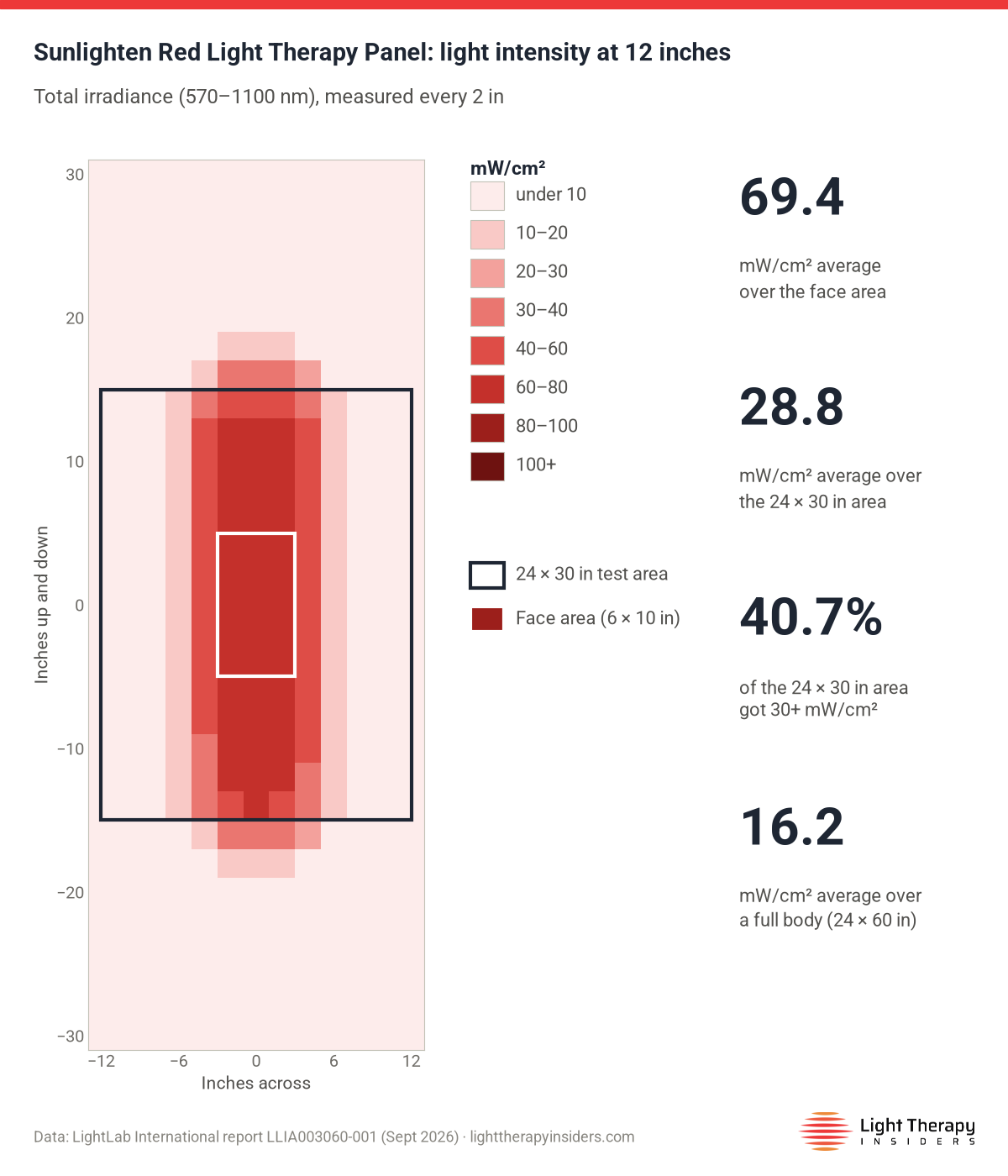
The heat map shows a narrow, very bright column about 6 inches wide at the centre, peaking at 79.1 mW/cm², with the light falling off quickly to each side. Across a full 24 × 60 in body area it averaged 16.2 mW/cm².
Here's how the light holds up as the treatment area grows:
| Area at 12 in | Average (mW/cm²) | Lowest (mW/cm²) | Area at 30+ mW/cm² | Variation |
|---|---|---|---|---|
| Face (6 × 10 in) | 69.4 | 67.1 | 100% | 4.7% |
| Test area (24 × 30 in) | 28.8 | 0.8 | 40.7% | 98.6% |
| Full body (24 × 60 in) | 16.2 | 0.1 | 21.5% | 153.7% |
Evenness
Overall uniformity (average ÷ peak across the 24 × 30 in area) was 36.4%, 11th of 11. Over a face-sized area at the centre, the light ranged from 67.1 to 76.9 mW/cm², varying by 4.7%. Over the face it's very consistent, but outside that narrow column the light drops off fast, which is why it ranked last for overall uniformity. At 11 inches wide, it suits targeted sessions better than large areas.
Output Over a Session
After 20 minutes the Sunlighten Panel still delivered 98.4% of its starting output, =1st of 11 for stability (5 of 5 points). Red held at 98.5% and near-infrared at 98.3%.
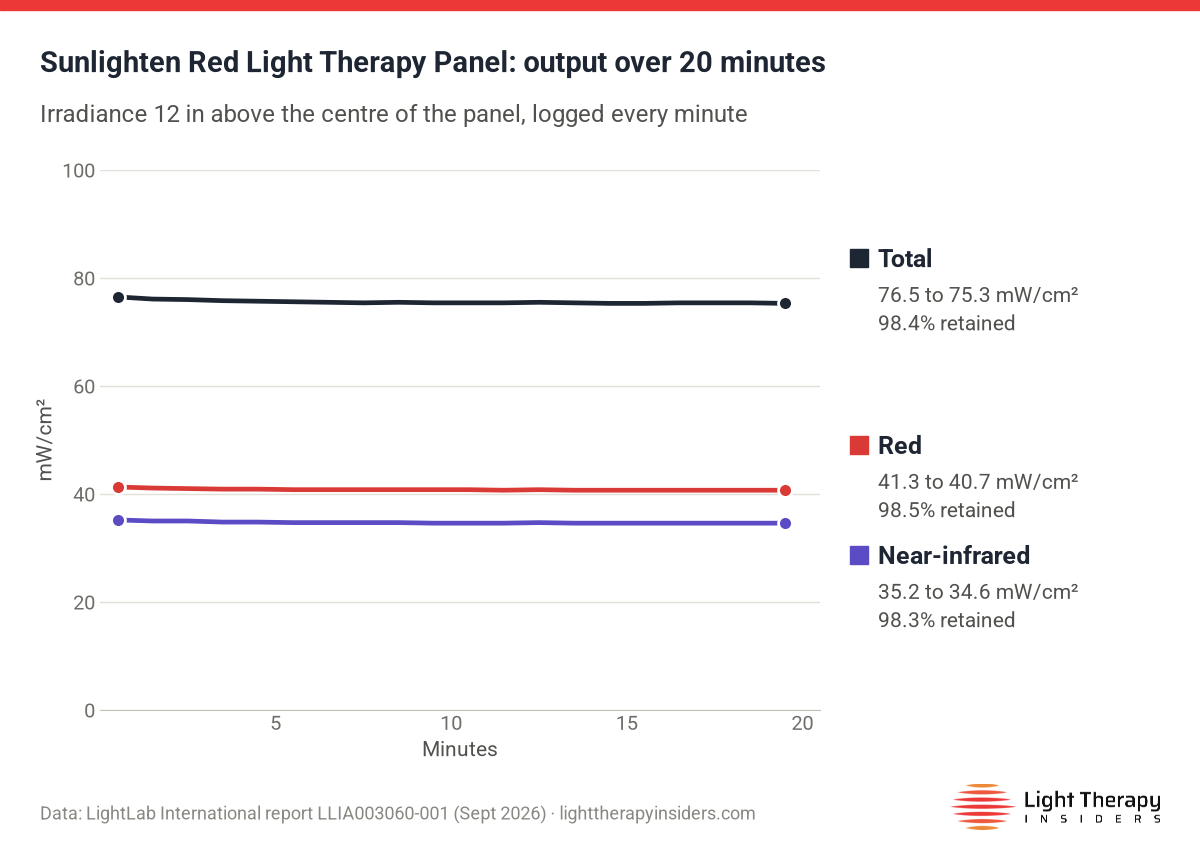
As the LEDs warmed up, the peaks moved slightly longer, by up to 4 nm:
| Peak | After 30 sec | After 14.5 min | After 19.5 min |
|---|---|---|---|
| Red | 660 nm | 662 nm | 662 nm |
| Near-infrared | 852 nm | 856 nm | 856 nm |
Wavelengths
The lab found peaks at 663 and 857 nm. Only three of my five core wavelengths (660 nm and 830 nm and 850 nm) cleared the 0.5 W/nm bar. That earns 2 points, =9th of 11 for wavelengths.
| Wavelength | Measured (W/nm) | Counts in My Test? |
|---|---|---|
| 590 nm (bonus) | 0.001 | ✗ No |
| 630 nm | 0.274 | ✗ No |
| 660 nm | 3.467 | ✓ Yes |
| 810 nm | 0.211 | ✗ No |
| 830 nm | 0.669 | ✓ Yes |
| 850 nm | 1.315 | ✓ Yes |
| 1064 nm (bonus) | 0.000 | ✗ No |
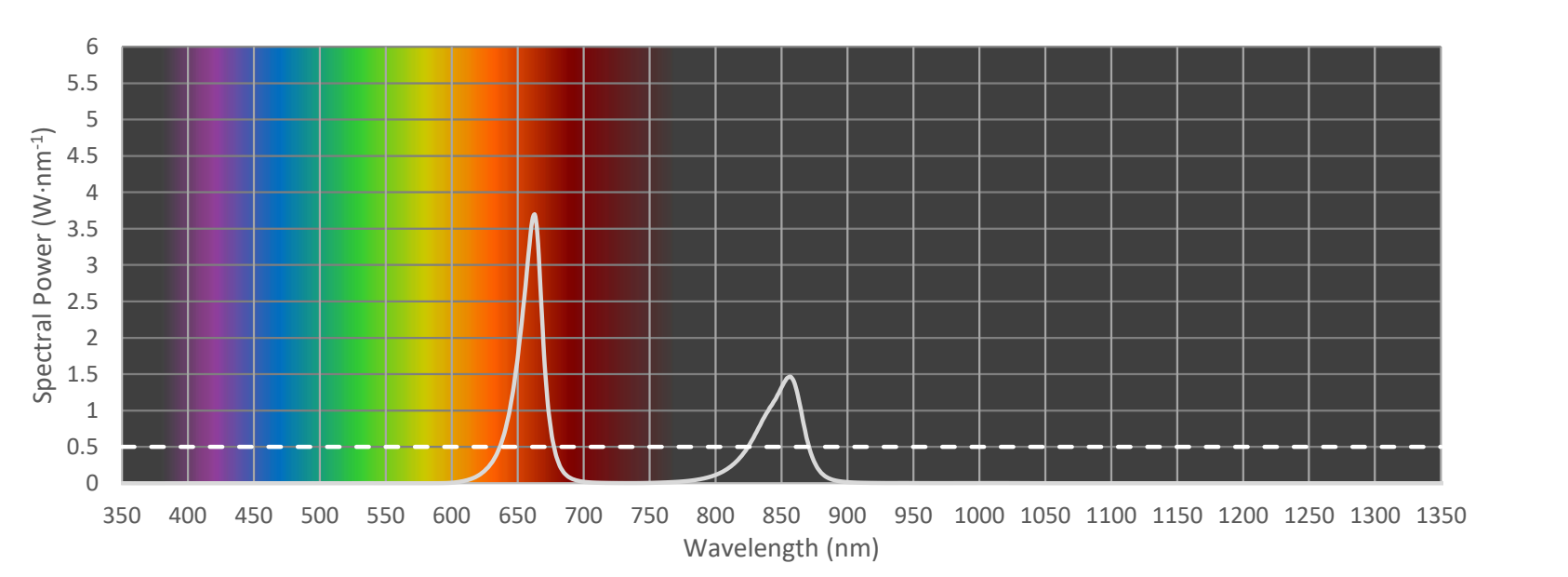
Sunlighten lists just two wavelengths, 660 and 850 nm, and the lab confirmed both, with very strong 660 nm output (3.47 W/nm, second only to the BioMax Pro Ultra). Its 850 nm LEDs also put out enough light at 830 nm (0.67 W/nm) to count. It has no 630 or 810 nm LEDs, so those two fell short.
Red vs. Near-Infrared Balance
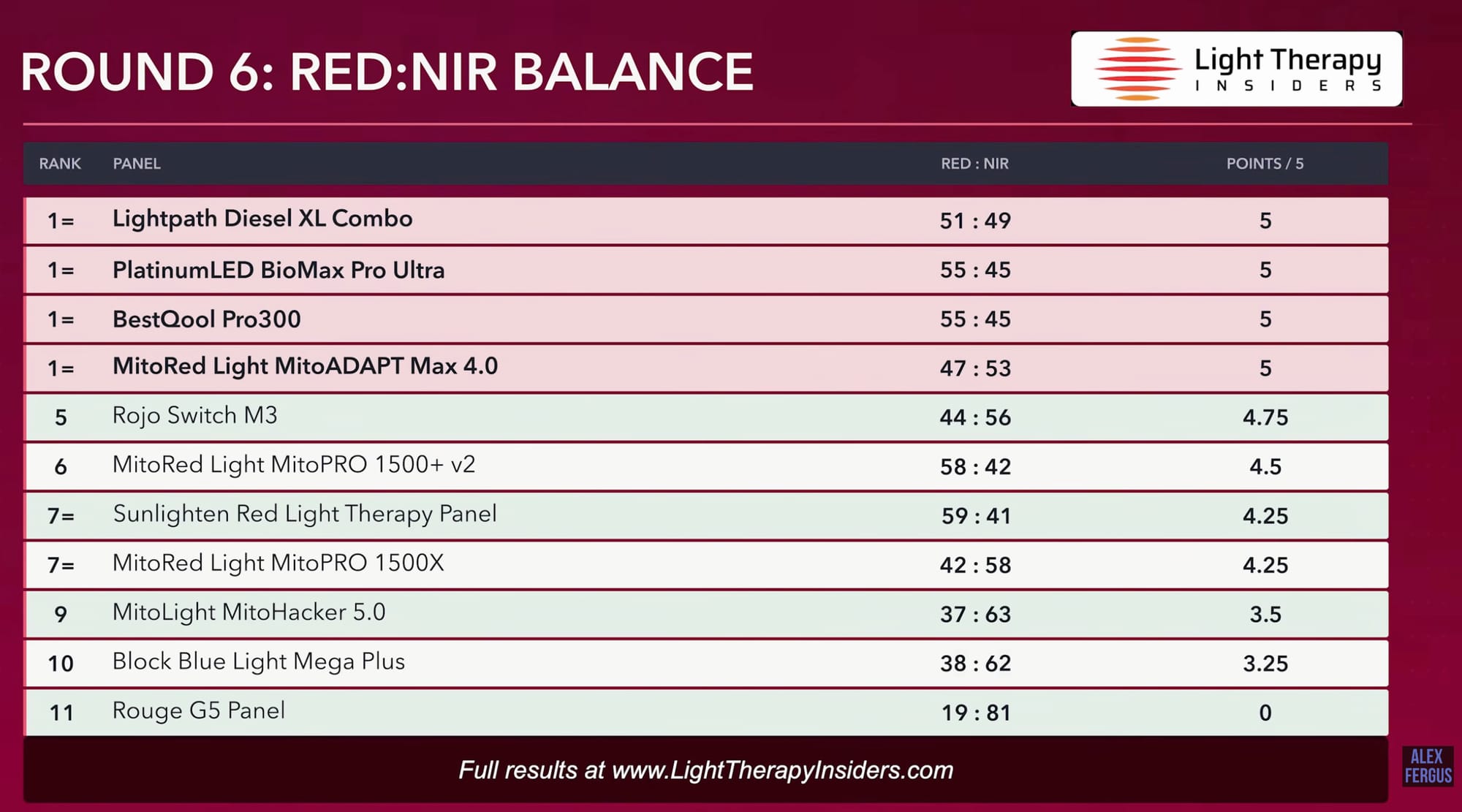
59.4% of the Sunlighten Panel's light is red (600–780 nm) and 40.6% near-infrared (780–1100 nm). That's the most red-heavy mix of the 11 panels, so it scored 4.25 of 5 rather than the full 5 my test gives a 50:50 balance. For skin, a red-leaning mix is no bad thing: red is the range most studied for skin, while near-infrared reaches deeper tissue.
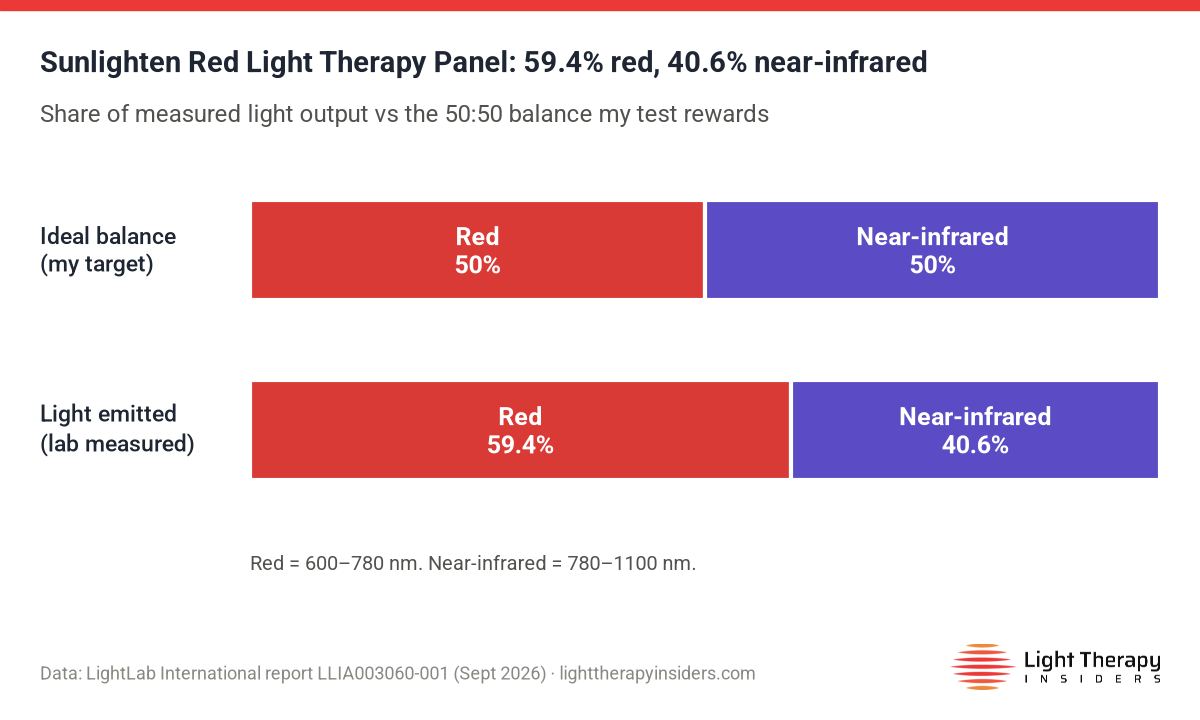
The lab's breakdown of where the light goes:
| Waveband | Light Output | Share |
|---|---|---|
| Red (600–700 nm) | 85.97 W | 58.9% |
| Deep red (700–780 nm) | 0.69 W | 0.5% |
| Near-infrared (780–900 nm) | 58.95 W | 40.4% |
| Deep near-infrared (900–1100 nm) | 0.37 W | 0.3% |
| Total light output | 145.97 W | 100% |
Using the Sunlighten Red Light Therapy Panel
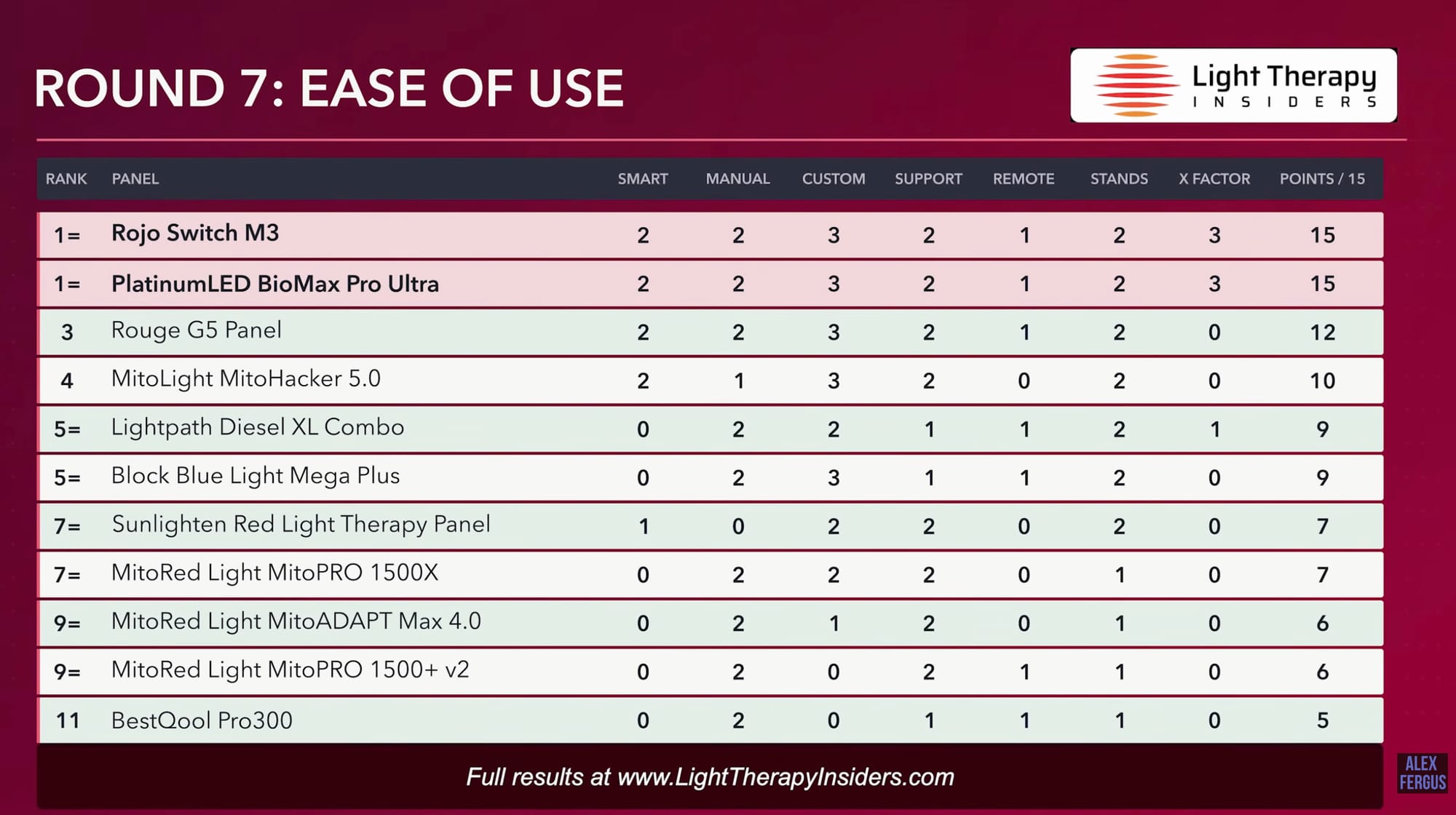
It scored 7 of 15 for ease of use (=7th): 2 of 2 for support, 2 of 2 for mounting options, 2 of 3 for customisation and 1 of 2 for smart modes, but nothing for the manual, which only lives in the app, and no X-factor points. The app itself is clean and easy to use once you're logged in. My bigger question is its programs: some move you closer to the panel and lengthen the session as you go from beginner to advanced, which can raise the dose sharply, and Sunlighten doesn't explain how those protocols were developed.
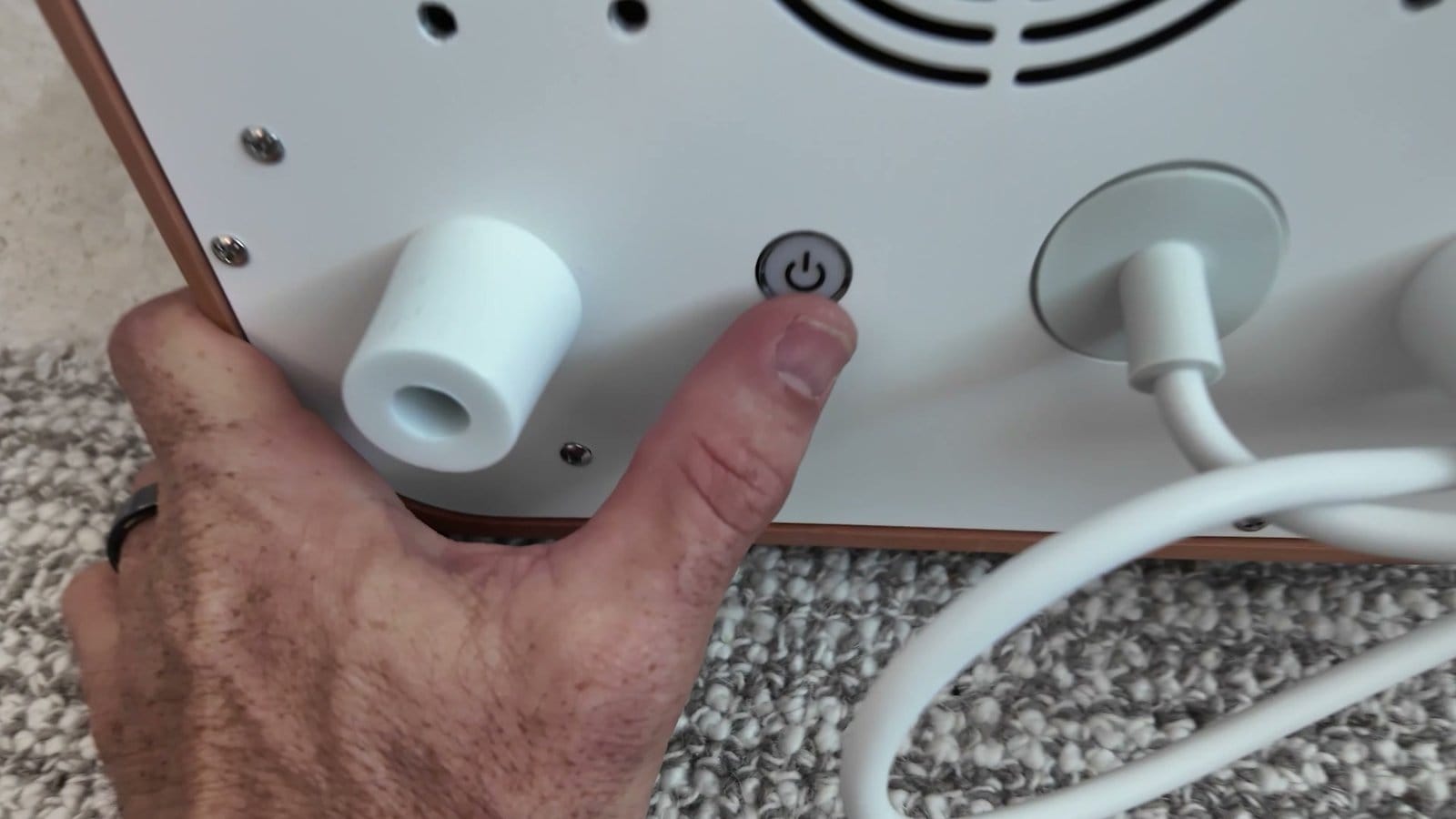
- On the panel: just a switch on the back that starts a 20-minute session or turns the panel off
- Rechargeable remote (USB-C): start and stop, choose a 5- or 10-minute session and adjust the intensity
- Sunlighten app: 20+ guided programs for skin care, muscle recovery, inflammation, energy, sleep, immune health and cellulite, each with beginner, intermediate and advanced levels, plus a Custom Mode. You need an account to log in
- Mounts (extra): floor stand ($149), door hanger ($69), single wall mount ($59) and wide wall mount ($79)
- In the box: the remote, a power cord and goggles. The full manual is digital, in the app
A Starting Protocol
These starting points are based on what the research suggests for skin and on the lab's measurements at 12 inches.
- Face and skin: aim for about 5–9 J/cm². At 12 inches the Sunlighten Panel delivers about 69 mW/cm² over the face with every wavelength on, so that dose takes roughly 1.2 to 2.2 minutes.
- Joints, muscles and recovery: 5–10 minutes per area at 12 inches. My dosing chart shows the ranges studies have used.
- Eyes: wear eye protection. Near-infrared is invisible, and these panels are bright. More in my eye safety guide.
Price, Shipping, Warranty and Returns
I priced every panel the same way: delivered to Austin, Texas, after my discount code or link, with shipping and tax included. On that basis the Sunlighten Panel cost $1,412 at the time of filming and scored 6.75 of 10 for price (4th of 11).
- Discount: use code Fergus at Sunlighten. Sunlighten's sale price was $1,379 with free shipping when I checked on 7 November, before the code and tax, so check today's price.
- Shipping: free to the contiguous US.
- Warranty: three years for home use (one year for commercial use), scoring 1 of 3.
- Returns: 30 days, but Sunlighten's returns policy passes on fees, including a 3% administration fee and shipping both ways, so it scored 0 of 3.
- HSA/FSA: Sunlighten lists the panel as HSA/FSA eligible.
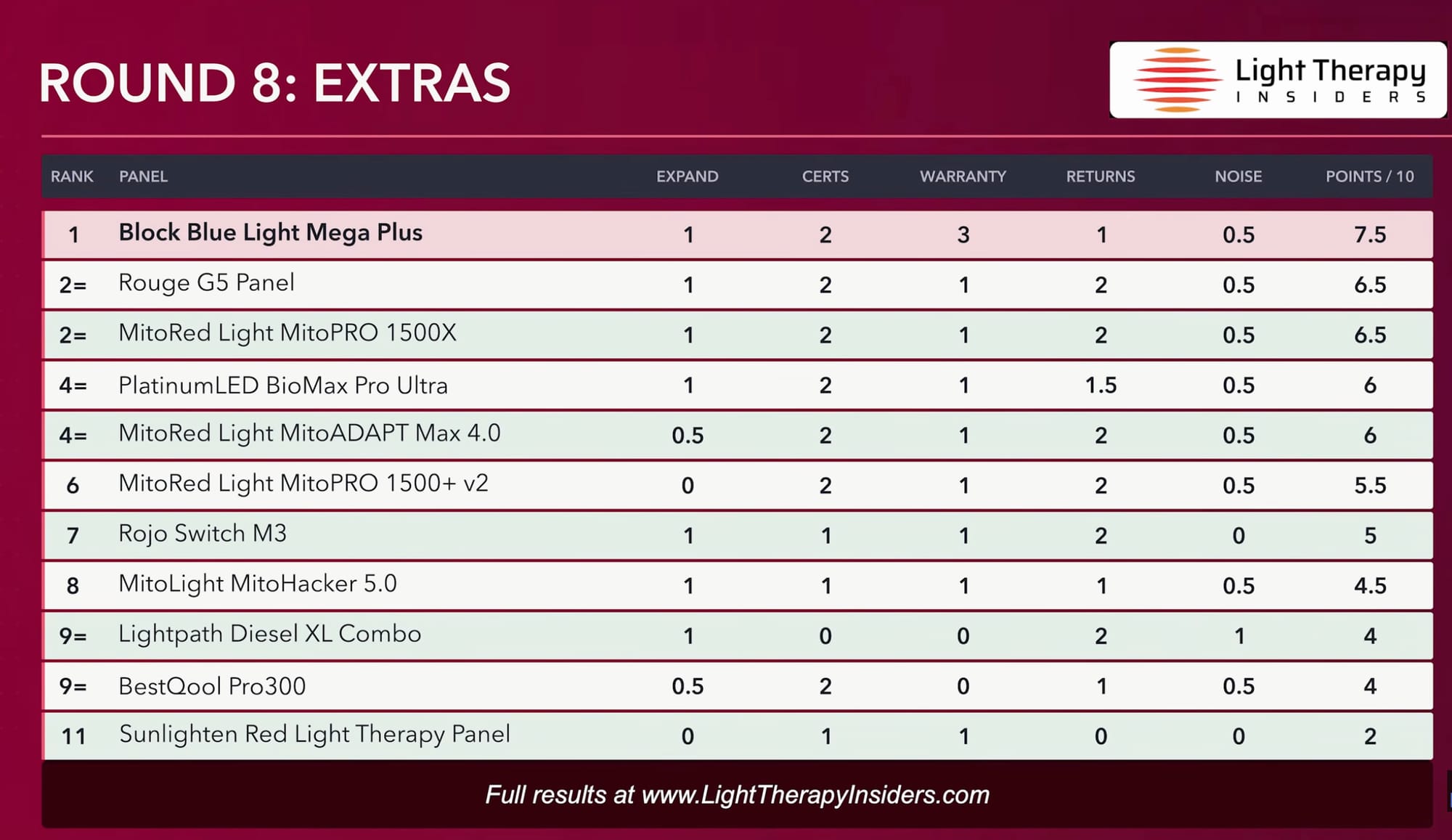
Overall it scored 2 of 10 for extras, the lowest in the test: 0 for expandability, 1 of 2 for certification evidence, 1 of 3 for warranty, 0 of 3 for returns and 0 of 1 for noise (it measured over 50 dB).
Who Should Buy the Sunlighten Red Light Therapy Panel?
Buy it if you:
- Own a Sunlighten sauna or want a panel that suits a premium wellness room
- Mainly want red light for your face and skin
- Are happy to run sessions from a remote or an app
- Want very steady output through a session
Look elsewhere if you:
- Want a screen, timer or buttons on the panel
- Want to treat large areas or build a multi-panel wall
- Want a long warranty or easy returns
- Want the best value: the BioMax Pro Ultra costs $198 more and won my test
Sunlighten Red Light Therapy Panel vs. the Alternatives
Here's how the Sunlighten Panel compares with the panels around it in my 2026 test (all measured at 12 inches over the same 24 × 30 in area, and priced delivered to Texas after discount codes, with shipping and tax):
| Panel | 2026 Score | Area at 30+ mW/cm² | Avg. Irradiance (mW/cm²) | Red Share | Price Tested |
|---|---|---|---|---|---|
| PlatinumLED BioMax Pro Ultra | 63.25 (1st) | 58.6% | 48.6 | 54.7% | $1,610 |
| Rouge G5 Panel | 44.75 (5th) | 43.8% | 30.5 | 19.3% | $1,564 |
| MitoRed Light MitoPRO 1500+ v2 | 44.50 (6th) | 42.2% | 28.7 | 58.1% | $1,265 |
| MitoRed Light MitoADAPT Max 4.0 | 43.00 (8th) | 40.2% | 25.6 | 47.1% | $1,541 |
| BestQool Pro300 | 40.75 (10th) | 41.0% | 23.4 | 54.9% | $810 |
| Sunlighten Red Light Therapy Panel | 37.25 (11th) | 40.7% | 28.8 | 59.4% | $1,412 |
Best Overall Alternative: PlatinumLED BioMax Pro Ultra
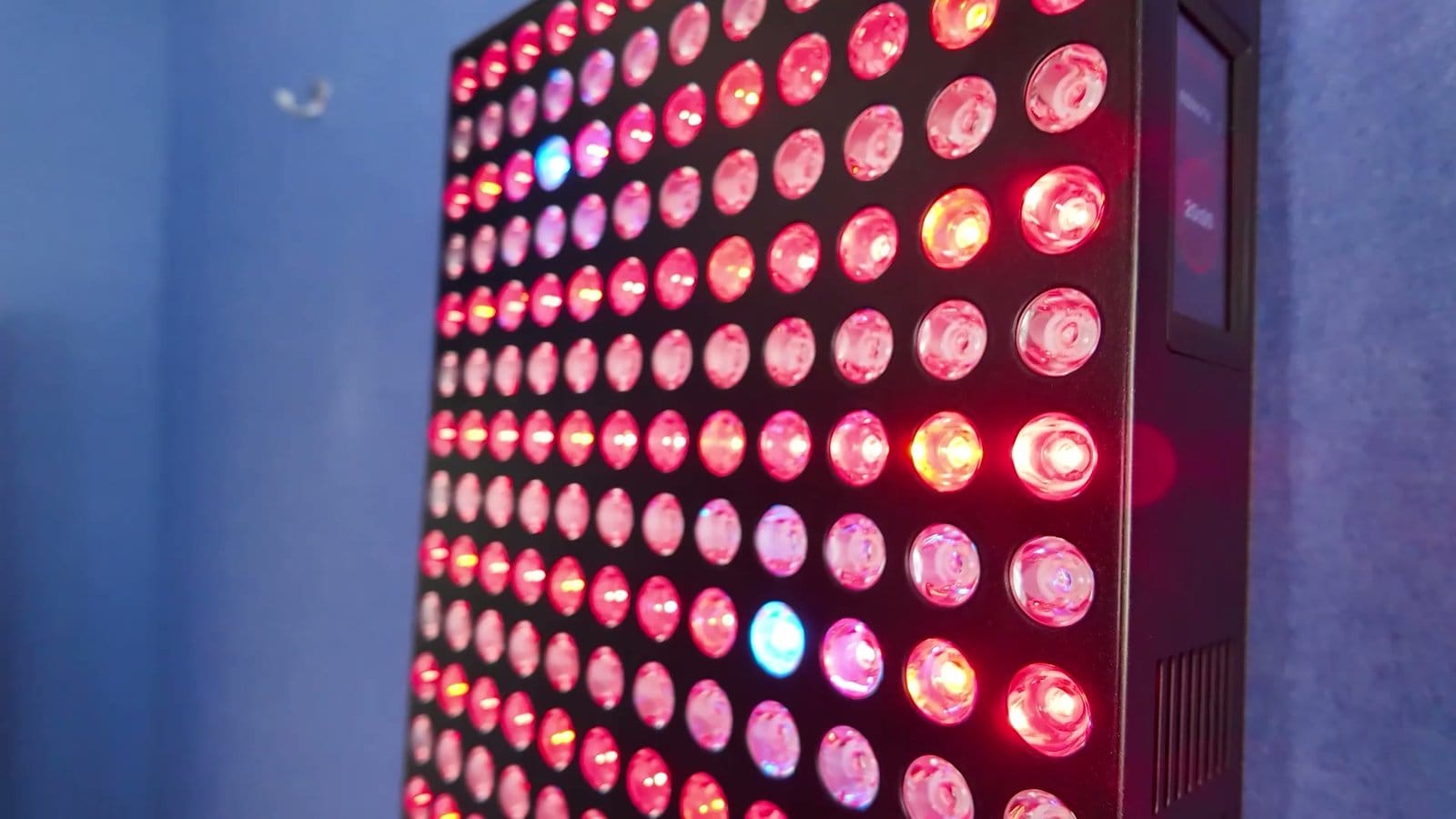
PlatinumLED BioMax Pro Ultra (2026 winner)
$198 more delivered: 1st place, stronger over the face (92.5 vs. 69.4 mW/cm²) and across the test area (48.6 vs. 28.8 mW/cm²), all five core wavelengths, a touchscreen with smart modes and zone control, and full marks for ease of use. 5% off through my link.
Read my full PlatinumLED BioMax Pro Ultra review.
Cheaper, Similar Red-Rich Light: MitoRed Light MitoPRO 1500+ v2
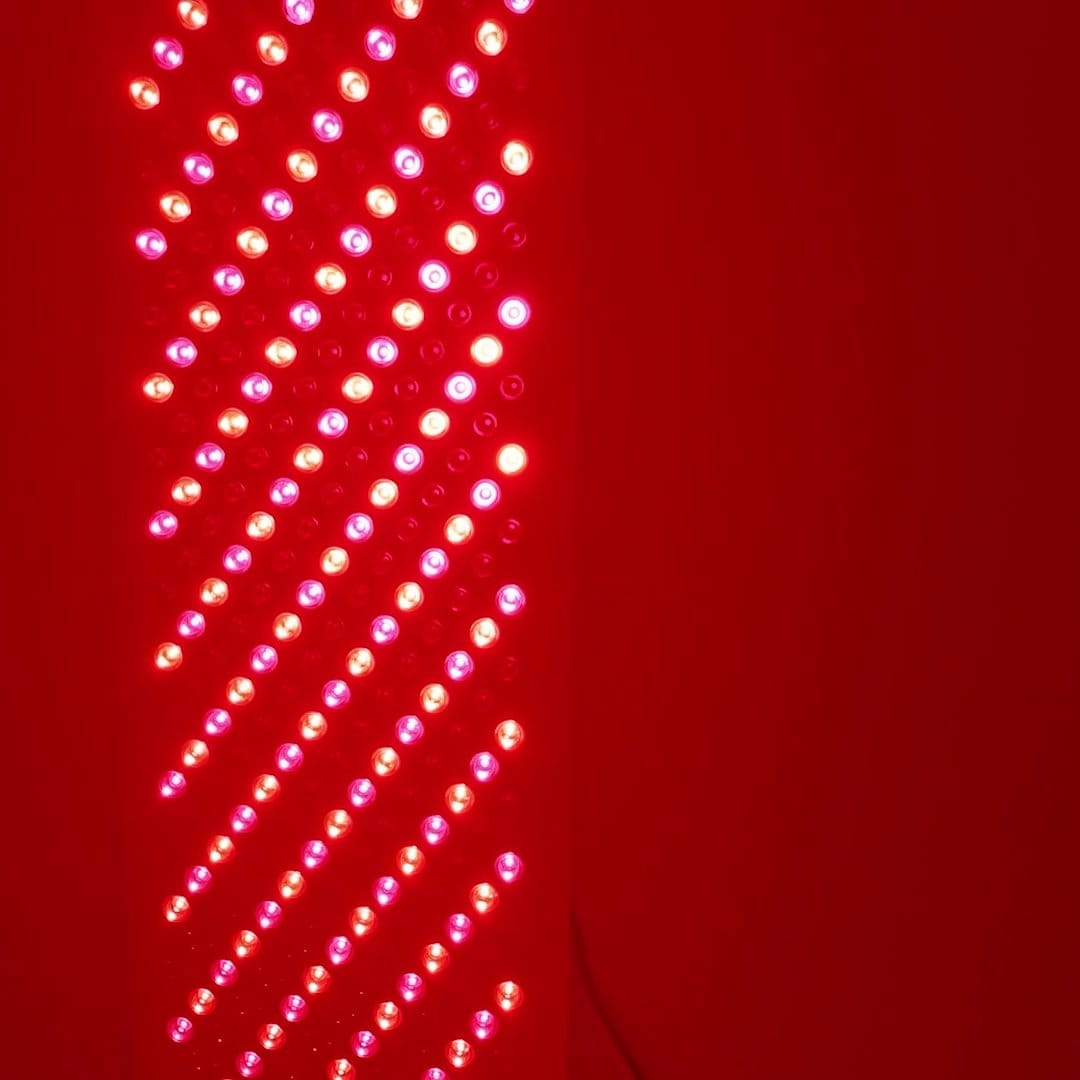
MitoRed Light MitoPRO 1500+ v2 (6th)
$147 less delivered: a similar red-rich mix (58.1% red), all five core wavelengths, slightly wider coverage (42.2% vs. 40.7%), very steady output, controls on the panel plus a remote, a 3-year warranty and 60-day returns. 5% off through my link.
Read my full MitoRed Light MitoPRO 1500+ v2 review.
Other Panels to Consider
- vs. Rouge G5 Panel: $152 more ($1,564), 5th, with wider coverage (43.8%), smart modes and zone control, but only 19.3% red light. Rouge G5 review
- vs. MitoRed Light MitoADAPT Max 4.0: $129 more ($1,541), 8th, with the steadiest output in my test and a better-balanced mix (47.1% red). MitoADAPT Max 4.0 review
- vs. BestQool Pro300: $602 less ($810), my Best Value pick, with well-balanced light and a built-in timer. BestQool Pro300 review
⭐ My Reviews ⭐
Sunlighten Red Light Therapy Panel FAQ
Is the Sunlighten Red Light Therapy Panel worth it?
For most people, no. It placed 11th of 11 in my 2026 lab test. Its light is strong over the face, red-rich and steady, and it's beautifully made, but it has no controls on the panel, narrow coverage and the lowest extras score. It makes most sense if you own a Sunlighten sauna and want a panel that matches it.
Can you use the Sunlighten panel inside a sauna?
No. It isn't designed for use inside a sauna. The idea is to keep it nearby, for example using it while your sauna warms up. It also works perfectly well on its own.
Does the Sunlighten panel have controls on it?
Almost none. There's a switch on the back that starts a 20-minute session or turns the panel off. For anything else, including session length, intensity and programs, you use the rechargeable remote or Sunlighten's app.
Is the Sunlighten panel good for skin?
Yes. 59.4% of its light is red, mostly at 660 nm. At 12 inches it delivers about 69 mW/cm² over the face, so a 5–9 J/cm² dose takes roughly 1¼ to 2¼ minutes.
Sunlighten vs. PlatinumLED BioMax Pro Ultra: which is better?
The BioMax Pro Ultra. It costs $198 more delivered, but it won my test with 63.25 points to the Sunlighten's 37.25, delivered more light over the face and across the test area, and has a touchscreen, smart modes and zone control. The Sunlighten's advantages are its wood design and slightly redder light.
What's the warranty and return policy?
Three years for home use (one year for commercial use). Returns are accepted within 30 days, but Sunlighten's policy passes on fees, including a 3% administration fee and shipping both ways.
Is it loud?
It's one of the louder panels I tested: over 50 dB, which scored 0 for noise. It has four cooling fans.
Is there a Sunlighten discount code?
Yes. Use code Fergus at Sunlighten. See my discount codes page for other brands.
Final Thoughts
The Sunlighten is the best-looking panel I've tested, and the lab shows its light is strong over the face, red-rich and remarkably steady. Sunlighten clearly built it to belong in a premium wellness space.
But it finished last of 11. Its strong light covers a narrow area, there's nothing on the panel to control it, and its warranty, returns and noise all cost it points. If you own a Sunlighten sauna and want a matching panel, it has obvious appeal. For everyone else, the BioMax Pro Ultra costs $198 more and is a far better panel.
Score: 37.25 out of 100, 11th of 11 in my 2026 panel test.
- Buy the Sunlighten if design and a matching Sunlighten wellness room matter most: check the Sunlighten panel price and use code Fergus.
- For most buyers, the PlatinumLED BioMax Pro Ultra is the better panel: it won the 2026 test, and the link takes 5% off.
Items Mentioned
🔥🔥 Check this blog daily for the latest Red Light Therapy Black Friday and Cyber Monday deals: https://aferg.co/black-friday-cyber-monday 🔥🔥
⭐ Sunlighten- Use code Fergus at https://aferg.co/sunlighten
⭐ Mito Light Europe - Use code ALEX at https://aferg.co/mitolight for 5% off!
⭐ MitoRed Light - use https://aferg.co/7d221 for 5% off sitewide.
⭐ Rojo Light Therapy - Use discount code ALEX at https://aferg.co/rojo-rlt for 10% off.
⭐ LightpathLED - Use discount code ALEX at https://aferg.co/lightpathled to get 5% off.
⭐ BestQool - use code ALEX at https://aferg.co/Bestqool to save 10%.
⭐ Block Blue Light - Use this link: https://aferg.co/BlockBlueLight to save 15% on Block Blue Light's products. The discount will automatically be applied at checkout.
⭐ PlatinumLED Therapy Lights- Use the discount link https://aferg.co/redled to save 5%
⭐ Rouge - Use discount code ALEX at https://aferg.co/rougecare for $50 off.
✨ Have you explored my website ✨
Discover guides, reviews, and insights to help you make the most of light therapy
Alex's Bio
Alex Fergus wrote this blog post. Alex is an ISSN Sports Nutrition Specialist, Fitness Professional, and certified Superhuman Coach who continues to expand his knowledge base and help people across the world with their health and wellness. Alex is recognized as the National Record Holder in Powerlifting and Indoor Rowing and has earned the title of the Australian National Natural Bodybuilding Champion. Having worked as a health coach and personal trainer for over a decade, Alex now researches all things health and wellness and shares his findings on this blog.