
The Block Blue Light Mega Plus is one of the wider half-body red light therapy panels I've tested, featuring 420 LEDs, seven advertised wavelengths, and an impressive range of customization options. With a premium price tag of $2,559, it certainly looks promising, but does its performance justify the cost?
I put the Mega Plus through independent laboratory testing to evaluate its wavelengths, power output, coverage, uniformity, and optical stability. I also looked at its usability, features, warranty, and overall value to determine whether it's worth considering alongside the best red light therapy panels of 2026.
Block Blue Light Mega Plus: Design and Features
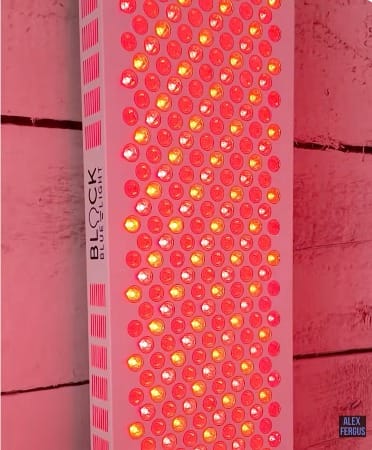
One of the first things you'll notice about the Mega Plus is its size. At approximately 37 inches tall and just under 16 inches wide (40 cm), it's considerably wider than many traditional half-body panels, which are typically around 30 cm across. That extra width is especially appealing if you want to treat a larger portion of your body without investing in a full-body setup.
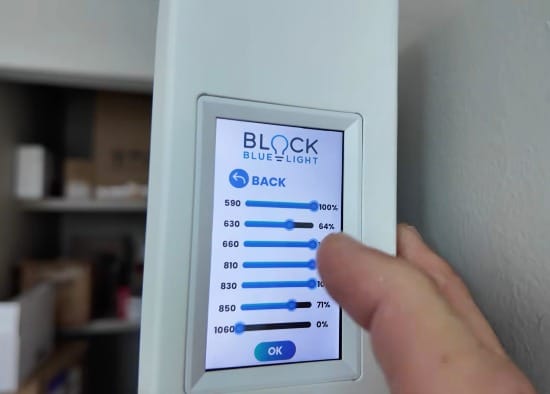
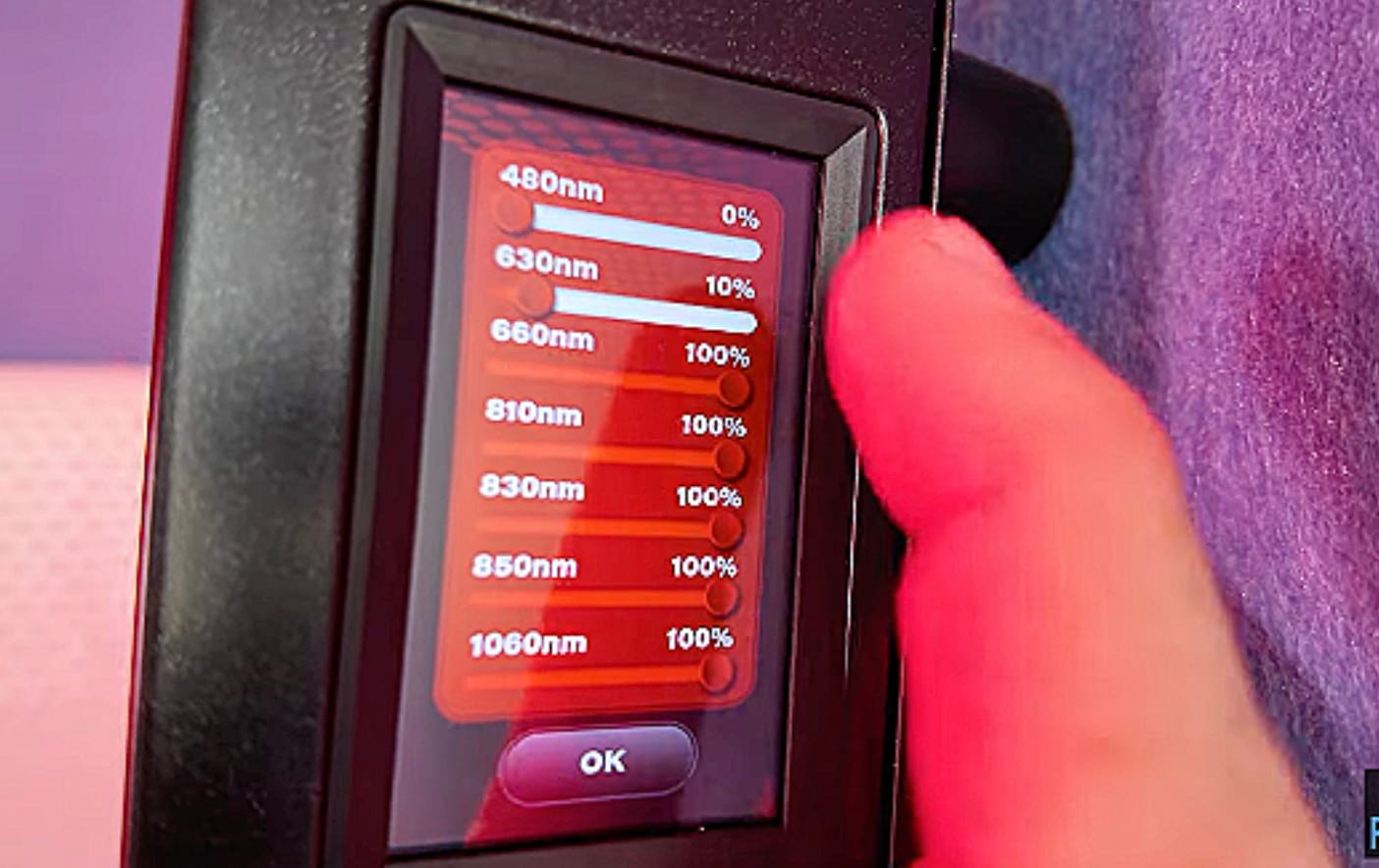
The Mega Plus also offers an impressive selection of features, including individual wavelength customization, a touchscreen interface, app connectivity, remote control, adjustable intensity, near-infrared pulsing, and the ability to save personalized treatment presets. It's also compatible with Block Blue Light's modular system, allowing you to connect multiple panels to create a larger treatment area.
Independent Wavelength Testing: Are There Really Seven?
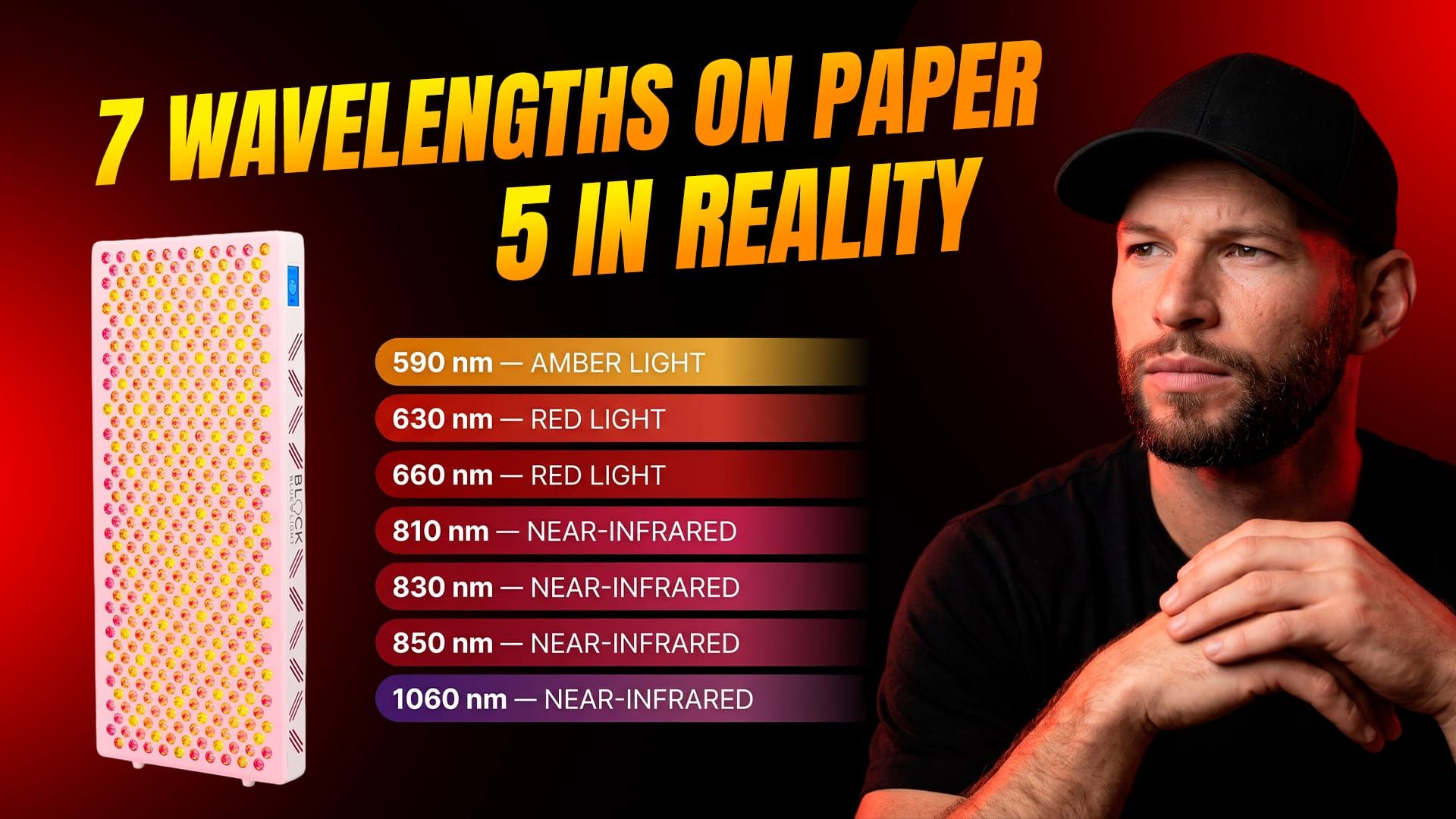
Block Blue Light advertises seven wavelengths in the Mega Plus:
- 590 nm (amber)
- 630 nm (red)
- 660 nm (red)
- 810 nm (near-infrared)
- 830 nm (near-infrared)
- 850 nm (near-infrared)
- 1060 nm (near-infrared)
However, independent testing by Light Lab revealed something interesting. Although the laboratory detected six main spectral peaks, not all the advertised wavelengths delivered meaningful amounts of light.
At Light Therapy Insiders, I use a minimum threshold of 0.5 watts at a particular wavelength to consider it meaningfully present. This prevents manufacturers from advertising additional wavelengths simply because a handful of LEDs emit tiny amounts of light.
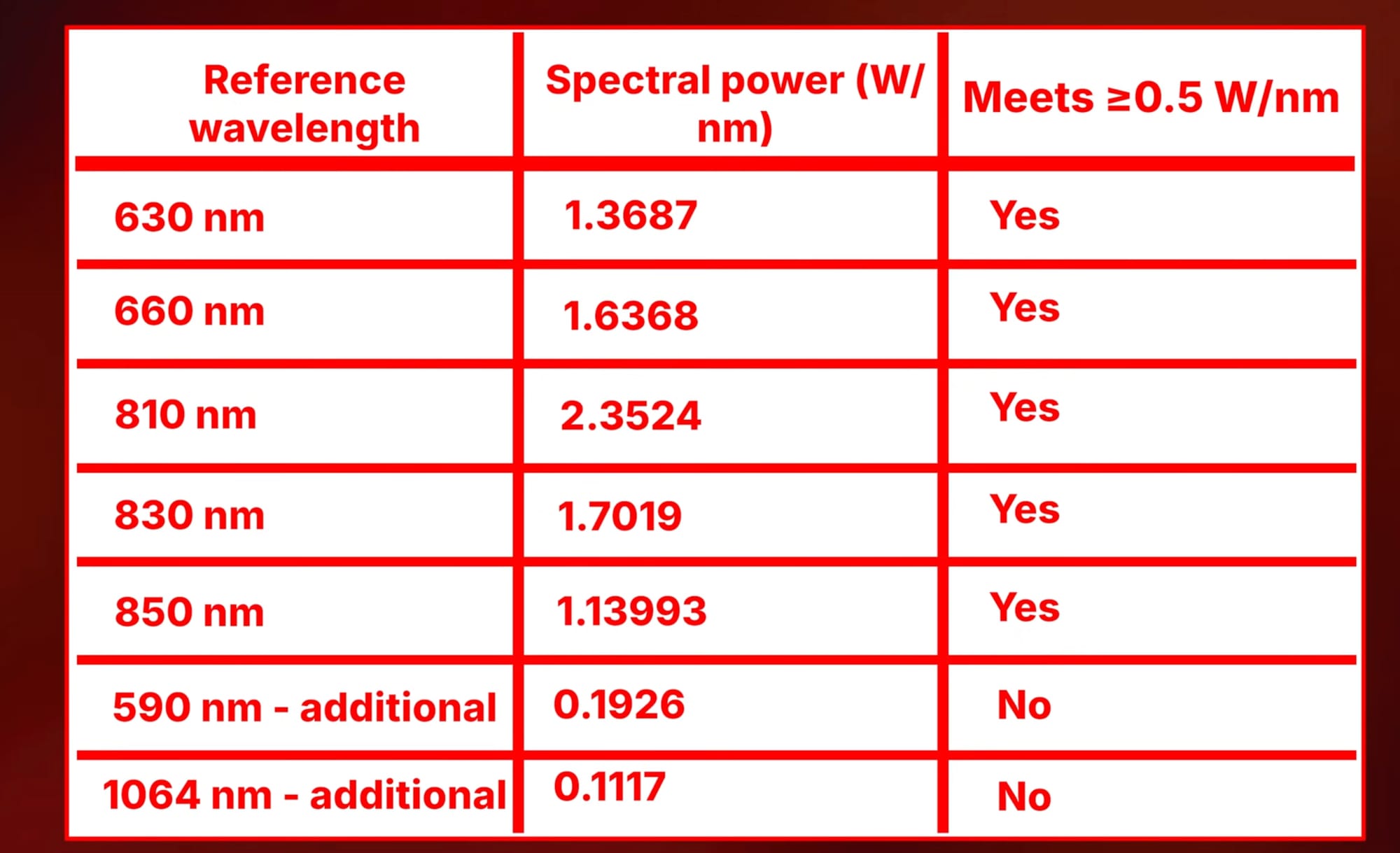
The Mega Plus performed well across the core red and near-infrared wavelengths, including the 630–660 nm and 810–850 nm ranges. However, the advertised 590 nm amber wavelength produced only 0.19 watts, while the deeper near-infrared wavelength around 1060 nm produced approximately 0.1 watts.
Based on my testing standards, this is effectively a five-wavelength panel rather than a seven-wavelength panel. That's an important distinction, particularly if you're purchasing the device specifically for amber light or deeper near-infrared wavelengths.
Half-Body Coverage: One of Its Biggest Strengths
Coverage is one of the most important factors I consider when evaluating a half-body red light therapy panel. After all, if you're investing in a larger device, you want the light to reach a meaningful portion of your body rather than concentrating most of its output in a small area.
Independent testing produced the following results:
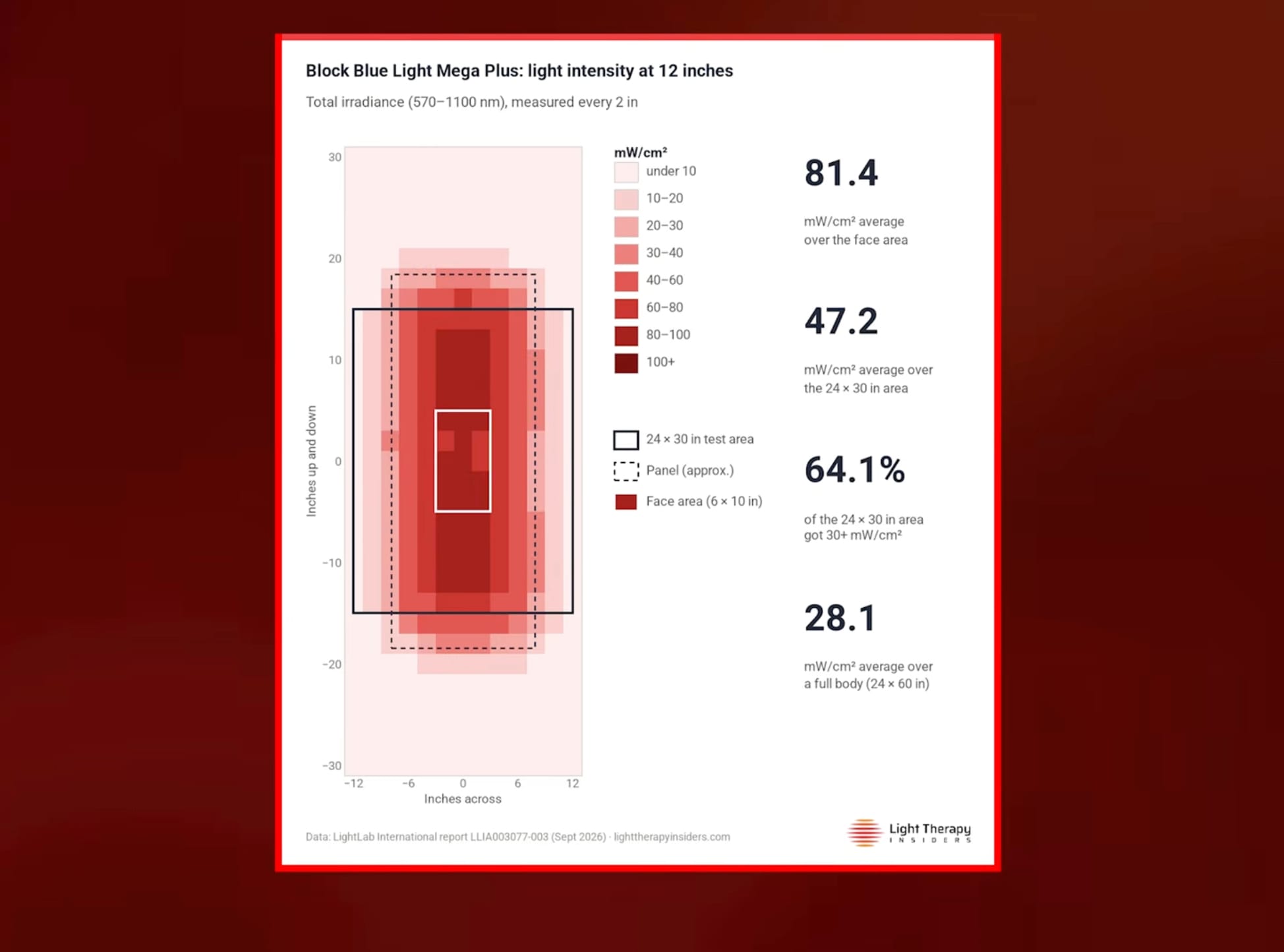
- 75% coverage: Approximately 75% of the half-body testing grid received at least 20 mW/cm².
- 64% coverage: Approximately 64% received at least 30 mW/cm².
- Second-place ranking: The Mega Plus ranked second for coverage among the 11 panels I compared in 2026.
These are good results, especially compared with other half-body panels on the market. The wider design clearly has advantages, and I think this is one of the Mega Plus's strongest selling points.
However, it's important to remember that good half-body coverage doesn't mean you're getting perfectly even light across your entire body. If you want complete head-to-toe coverage, you'll still need a larger setup or multiple panels.

Light Uniformity: Good Compared to the Competition
Uniformity measures how evenly light is distributed across the treatment area. Ideally, you want consistent output across your body rather than extremely powerful hotspots surrounded by areas receiving considerably less light.
The Mega Plus achieved a 53% uniformity score, which might not sound particularly impressive. In an ideal world, I'd like to see scores closer to 70–80%, or even higher.
However, there's some important context here. Despite that relatively modest number, the Mega Plus ranked second for uniformity among the 11 panels I tested. That makes it one of the better-performing devices in this category, even though there's still plenty of room for improvement.
Red vs. Near-Infrared Output
Another measurement I examine is the balance between red and near-infrared light. My preferred starting point for a general-purpose panel is approximately 50% red and 50% near-infrared, although different applications may benefit from different settings.
The Mega Plus produced the following distribution:
- 38% red light
- 62% near-infrared light
This makes it a relatively near-infrared-heavy panel. That isn't necessarily a problem, especially if you're specifically interested in near-infrared treatments, but it's worth knowing before purchasing.
Fortunately, the Mega Plus allows you to adjust the intensity of individual wavelengths. This means you can reduce the near-infrared output to create a more balanced treatment if that's what you prefer.
Optical Stability: Does the Power Drop Over Time?
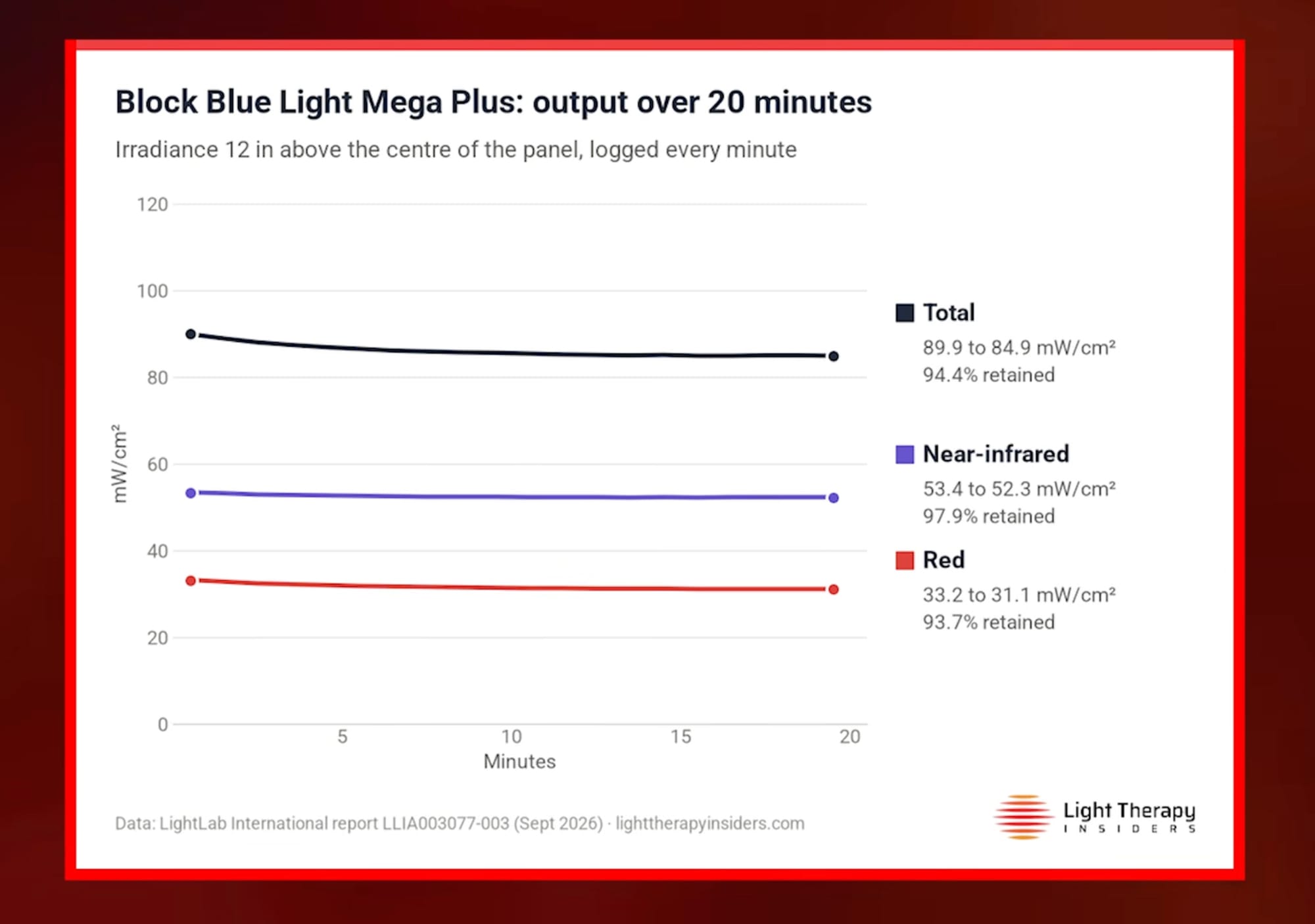
Some red light therapy panels experience noticeable reductions in output as they warm up during a treatment session. That's why I've started including 20-minute optical stability testing in my evaluations.
The Mega Plus initially produced approximately 90 mW/cm², which dropped to around 85 mW/cm² after 20 minutes. That's a reduction of approximately 5%, which I consider perfectly acceptable.
This suggests the panel maintains relatively consistent output throughout a typical treatment session, rather than delivering substantially less light as it warms up.
Touchscreen, App, and Customization
One area where Block Blue Light has done particularly well is usability. The touchscreen is responsive, the menus are straightforward, and the overall experience feels polished compared with some competing panels I've tested.
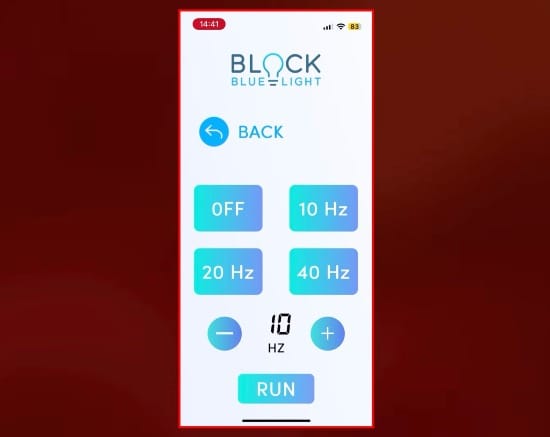
You also get an app and remote control, making it easier to adjust settings without standing directly in front of the device. You can customize wavelengths, intensity, treatment duration, and pulsing, then save those settings as personalized presets.
However, one feature that's missing is built-in smart treatment modes. Some competing panels offer preset programs for different treatment goals, such as skin health or deeper tissue applications.
While I understand why Block Blue Light has chosen not to include these, I think they would make the panel more convenient for beginners. The ability to create and save your own protocols is useful, but it does require you to know which settings you want to use.
Accessories, Stands, and Warranty
The Mega Plus comes with a good selection of accessories, including a remote control, protective goggles, and hanging hardware. The instruction manual is also well presented, which is something I appreciate when testing devices with extensive customization features.
Block Blue Light offers several mounting and stand options, including wall-mounted, floor-standing, and motorized configurations. This flexibility is especially useful if you're planning to expand your setup with additional panels.
The company also offers a five-year warranty, which is excellent compared with many competitors. However, the return period is only 30 days, and I would have liked to see something a little more generous at this price point.
Block Blue Light Mega Plus Price: Is It Good Value?
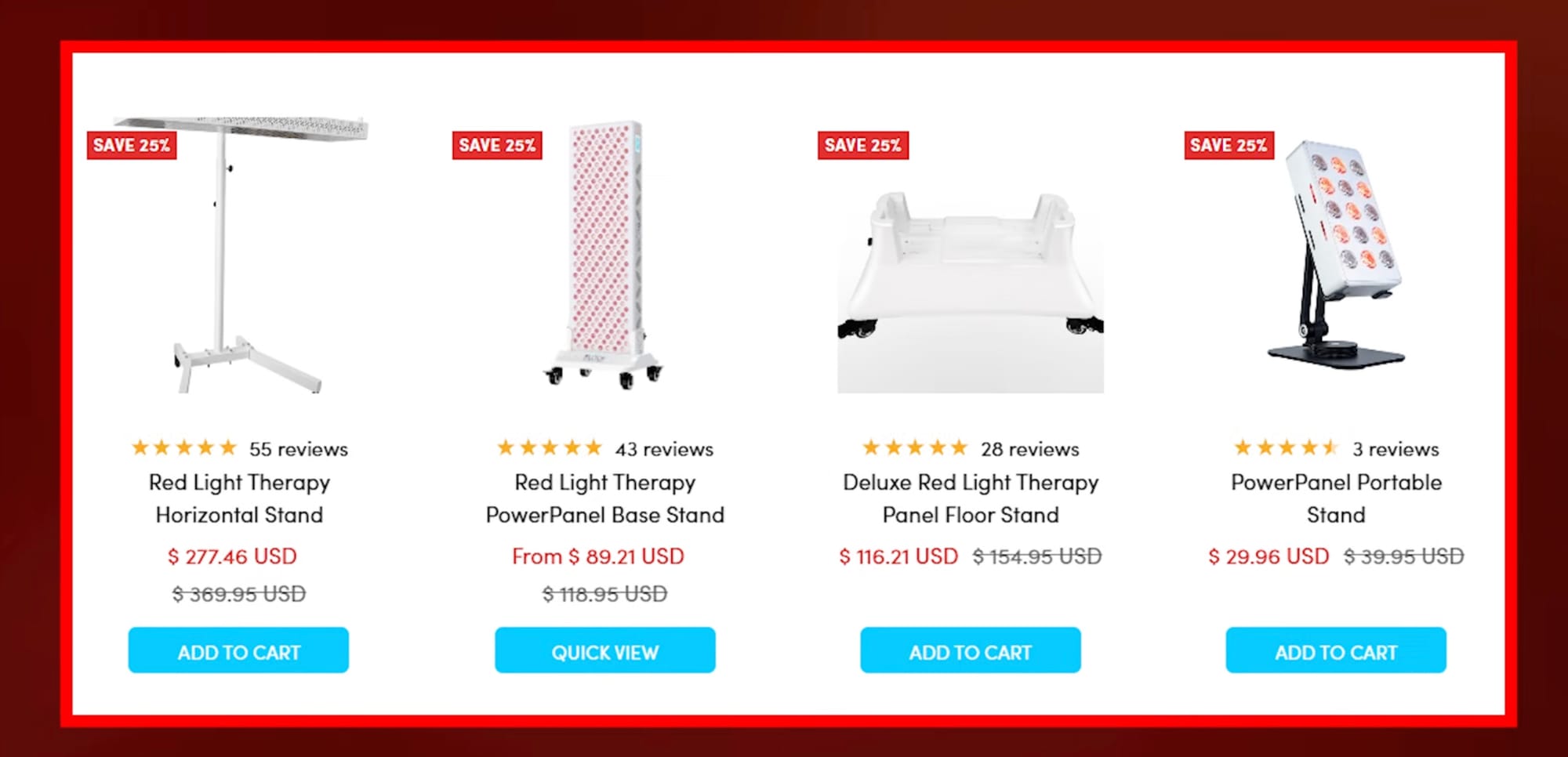
At $2,559, the Mega Plus is firmly positioned in the premium category. That's a considerable investment for a half-body panel, particularly when several competing devices offer strong performance at substantially lower prices.
There is a discount available when ordering through my link, and Block Blue Light also offers international shipping. Their shipping rates are competitive, which is worth considering if you're purchasing from outside their primary market.
However, price remains one of my biggest reservations. You're paying for the wider design, excellent customization, strong build quality, and solid warranty, but you're not necessarily getting the best price-to-performance ratio.
What I Like About the Block Blue Light Mega Plus
There are several things I genuinely like about this panel, starting with its half-body coverage. Its additional width makes a noticeable difference, and the independent testing results place it among the better-performing panels I've evaluated for coverage and uniformity.
I also appreciate the meaningful output across the core red and near-infrared wavelengths, along with its relatively stable performance over a 20-minute session. The touchscreen, app, remote control, and customizable presets make it a particularly enjoyable panel to use.
Finally, Block Blue Light has established a good reputation for product quality and customer support. I've worked with the company for years, and its five-year warranty adds confidence when purchasing an expensive device.
What I Don't Like About the Mega Plus
My biggest concern is the price. Spending more than $2,500 on a half-body panel is a significant commitment, especially when its coverage and uniformity, although good, are still far from perfect.
I'm also disappointed by the extremely low output at the advertised amber and 1060 nm wavelengths. While this issue isn't unique to Block Blue Light, buyers should understand that these wavelengths aren't delivering meaningful amounts of light according to my testing criteria.
The absence of built-in smart modes is another drawback, particularly for people who don't want to create their own treatment protocols. Combined with the relatively short 30-day return period, these limitations make the premium price harder to justify for some buyers.
How Does It Compare to Other Red Light Therapy Panels?
If you're considering the Mega Plus, there are three other panels worth looking at before making your decision.
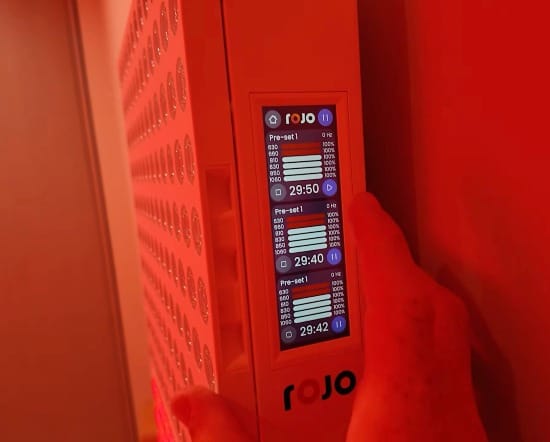
Rojo Switch M3: This is a considerably less expensive alternative that offers innovative features, including built-in smart treatment modes. Its half-body coverage was slightly lower than the Mega Plus, but it could be a better option if you prioritize convenience and value.
MitoLight MitoHacker 5.0: This is probably the Mega Plus's closest competitor. It achieved approximately 75% half-body coverage at the 30 mW/cm² threshold and delivered better uniformity, although its optical stability was weaker. Availability is also limited to the EU and UK.
PlatinumLED BioMax Pro Ultra: This was the overall winner in my 2026 comparison of 11 red light therapy panels. It offers another compelling option, particularly if you're looking for a well-rounded performer rather than focusing primarily on panel width.
Each of these devices has different strengths, so the best choice ultimately depends on which performance measurements and features matter most to you.
Final Verdict: Should You Buy the Block Blue Light Mega Plus?
Overall, I think the Block Blue Light Mega Plus is a very good half-body red light therapy panel. Its wider design, strong coverage, meaningful output across the core wavelengths, and excellent customization features make it an attractive option for someone who wants a premium device.
I'd recommend it if you want a wider half-body panel with strong coverage, flexible treatment settings, excellent usability, and multiple mounting options. The five-year warranty and established company reputation are additional advantages.
However, I'd consider other options if your priority is getting the best performance for your money, achieving exceptionally even full-body coverage, or having built-in treatment programs. The low output at the advertised amber and 1060 nm wavelengths is also worth keeping in mind.
Would I be happy using the Mega Plus as my only red light therapy panel? Absolutely. But whether it's the right choice for you depends on your budget, treatment goals, and which features you value most.
Items Mentioned
⭐ Block Blue Light: use this link, https://aferg.co/BlockBlueLight to get 15% off. Discount appears at checkout.
⭐ Rojo M3 Switch: use this link, https://aferg.co/rojo-rlt to receive 10% off
⭐ Mito Light Mitohacker: use this link, https://aferg.co/mitolight, and use code ALEX to receive 5% off
⭐ The BioMax from PlatinumLED; use this link to receive 5% off. https://aferg.co/redled
⭐ My Lab-Tested Panel Reviews ⭐
Alex's Bio
Alex Fergus wrote this blog post. Alex is an ISSN Sports Nutrition Specialist, Fitness Professional, and certified Superhuman Coach who continues to expand his knowledge base and help people across the world with their health and wellness. Alex is recognized as the National Record Holder in Powerlifting and Indoor Rowing and has earned the title of the Australian National Natural Bodybuilding Champion. Having worked as a health coach and personal trainer for over a decade, Alex now researches all things health and wellness and shares his findings on this blog.